Ontario chinook salmon limit on the Great Lakes
Navigating the specific rules and regulations for fishing in Ontario can sometimes feel like trying to untangle a particularly stubborn fishing line, especially when it comes to specific species like Chinook salmon in the vast waters of the Great Lakes. Many anglers get confused about daily catch limits versus possession limits, and how their license type impacts what they can keep. This comprehensive guide is here to clear up all that confusion, helping you understand the current Chinook salmon limits and ensure you have a fantastic, regulation-compliant fishing experience on Ontario’s magnificent Great Lakes.
Understanding Chinook Salmon in Ontario's Great Lakes
Chinook salmon, often called "Kings" for their impressive size and powerful fight, are a prized catch for many anglers across Ontario's Great Lakes. Their presence adds an exciting dimension to the fishing scene, drawing in enthusiasts from all over.
The Allure of Chinook Salmon in Ontario
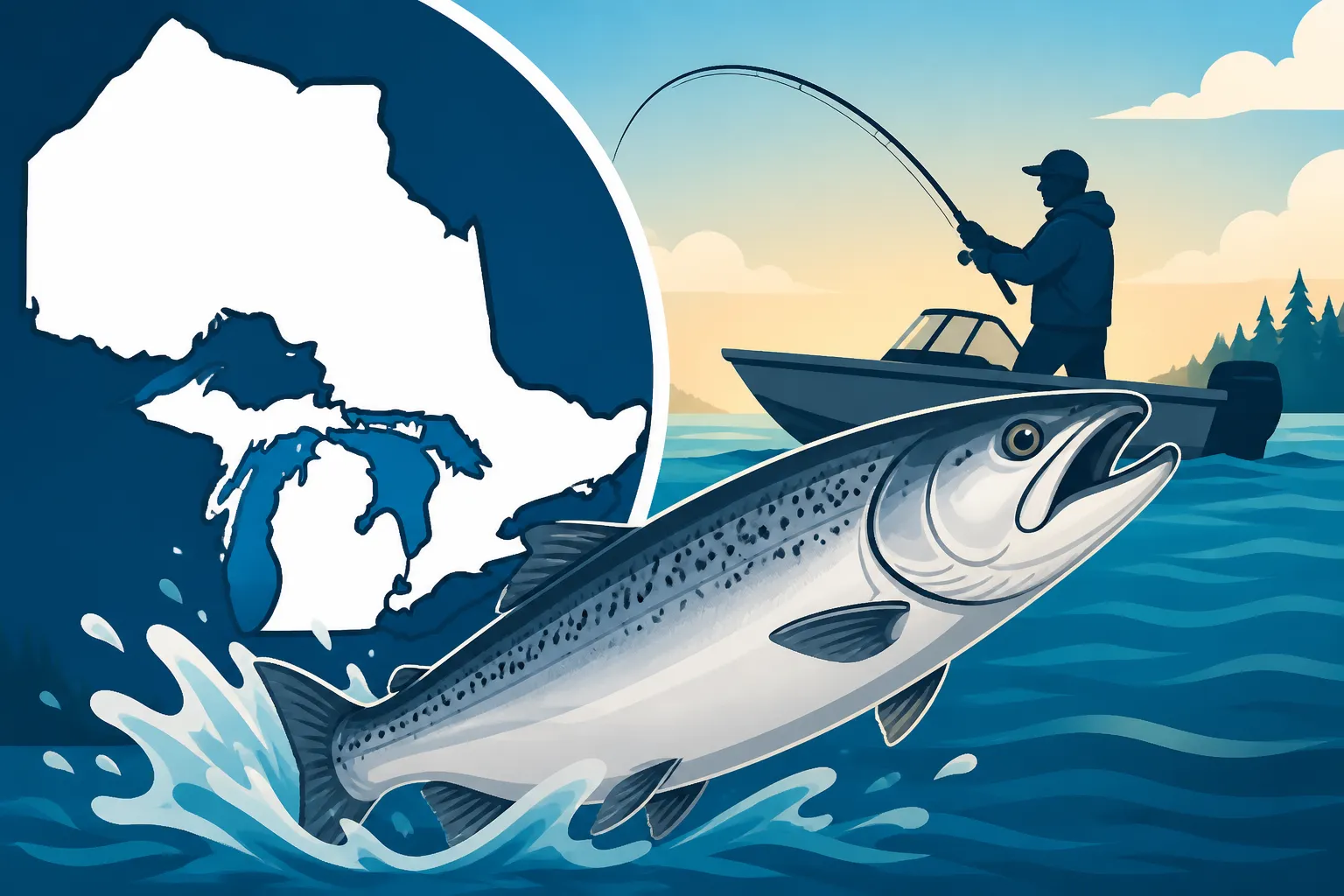
There's something truly special about hooking into a big Chinook salmon. These fish are renowned for their incredible strength, long runs, and acrobatic jumps, making every fight a memorable one. Anglers often dream of landing a trophy-sized King, which can easily tip the scales into the double digits, sometimes even hitting the 30 or 40-pound mark in exceptional cases. They are a staple of the Great Lakes fishery, particularly in Lake Ontario, Lake Huron (including Georgian Bay), and, to a lesser extent, Lake Erie. Their sheer power and impressive stature make them a bucket-list fish for many, offering a thrilling challenge whether you're trolling offshore or casting in tributary mouths during their spawning runs.
Chinook Salmon Life Cycle and Habitat in the Great Lakes
Chinook salmon are not native to the Great Lakes. They were introduced decades ago, primarily from Pacific Northwest stocks, to help control populations of alewife, an invasive forage fish, and to create a world-class sport fishery. Unlike their Pacific counterparts, which typically complete their life cycle by spawning and dying in their natal rivers, Great Lakes Chinook salmon mostly rely on stocking programs to sustain their populations. While some natural reproduction does occur in certain tributaries, the vast majority of the salmon you encounter are a result of these dedicated stocking efforts by the Ministry of Natural Resources and Forestry (MNRF) and various conservation groups.
Throughout most of the year, Chinook salmon inhabit the cooler, deeper waters of the open Great Lakes. They are pelagic fish, meaning they live in the open water column, constantly chasing baitfish like alewife, smelt, and cisco. As summer progresses into fall, mature Chinook salmon begin their migration towards tributary rivers to spawn. This is when shore anglers and those fishing closer to river mouths have their best opportunities. They prefer clean, cold water for their spawning efforts, and these migrations offer a unique chance to target them as they move from the vastness of the lake into more confined areas.
Navigating Ontario's Fishing Regulations for Chinook Salmon
The key to a successful and legal fishing trip in Ontario is a solid understanding of the regulations. While the rules are designed to protect our fisheries, they can sometimes seem complex, especially for newcomers or those targeting specific species like Chinook salmon.
The Ontario Fishing Regulations Summary: Your Essential Guide
Consider the annual Reading the Ontario Fishing Regulations Summary as your fishing Bible. This document, published annually by the Ontario Ministry of Natural Resources and Forestry (MNRF), contains all the vital information you need on seasons, limits, and other rules specific to different water bodies and fish species across the province. It's available online, usually as a PDF download, and often in print at license vendors. The most crucial thing to remember is that these regulations can and do change year to year. What was legal last season might not be this season, so always make it a habit to check the most current summary before you head out. Don't rely on old information or what someone told you years ago. The summary breaks down the province into numerous Fisheries Management Zones (FMZs), each with its own set of rules, and paying close attention to the zone you're fishing in is paramount.
General Great Lakes Fishing Zone Regulations
The Great Lakes are vast, and for regulatory purposes, they are divided into specific Fisheries Management Zones. Lake Ontario, for instance, falls primarily within FMZ 20. Lake Huron, including its expansive Georgian Bay and North Channel, is part of FMZ 13. Lake Erie is covered by FMZ 19. While the Great Lakes themselves are massive, for species like Chinook salmon, the limits tend to be consistent across these major zones. However, it is absolutely essential to cross-reference the specific FMZ map and regulations for the exact body of water you intend to fish. A small bay or tributary might have special regulations that differ from the general lake rules, even if it's geographically close. The general Great Lakes sections within the summary provide a broad framework, but always drill down to the specifics. Understanding these Ontario Fisheries Management Zones, Explained is critical, as they dictate everything from open seasons to species-specific limits.
Specific Chinook Salmon Limits for the Great Lakes
When it comes to Chinook salmon, and indeed all Pacific salmon species in Ontario's Great Lakes, the regulations are designed to ensure sustainable harvesting while providing ample opportunity for anglers. It's not just about what you catch, but also what you keep and how your license plays into that.
Daily Catch and Possession Limits Explained
Understanding the difference between a daily catch limit and a possession limit is fundamental to fishing legally in Ontario. The daily catch limit refers to the number of fish of a particular species you are allowed to catch and keep in a single day. Once you've reached that number, you must stop fishing for that species for the remainder of the day, or switch to strictly catch-and-release fishing with appropriate gear (like barbless hooks). The possession limit, on the other hand, is the maximum number of fish of a particular species that you are allowed to have in your physical possession, regardless of when or where they were caught. This includes fish in your livewell, cooler, freezer at home, or in transit. Your possession limit can never exceed your daily limit, and often, for certain species, the possession limit might be the same as the daily limit.
For Chinook salmon, and other Pacific salmon species (Coho, Pink, Sockeye) when fishing the Great Lakes in FMZ 13 (Lake Huron, Georgian Bay, North Channel), FMZ 19 (Lake Erie), and FMZ 20 (Lake Ontario), the limits are as follows:
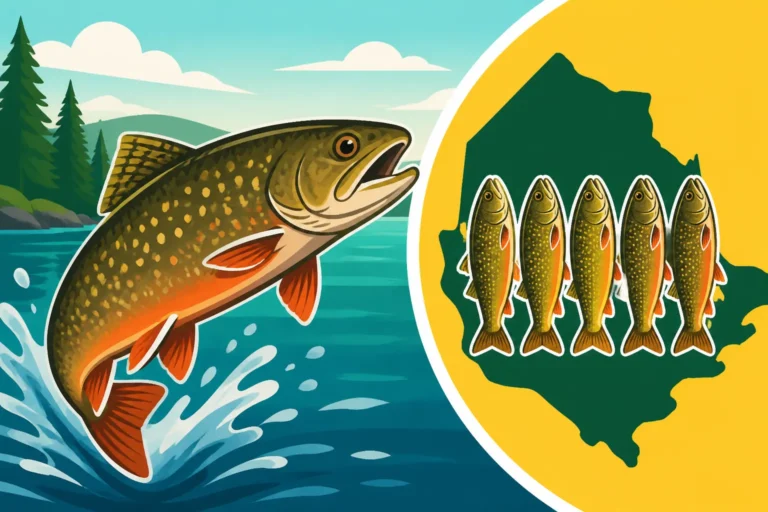
- Sport Fishing Licence: The daily catch limit is 5 Pacific salmon, and the possession limit is also 5 Pacific salmon.
- Conservation Fishing Licence: The daily catch limit is 2 Pacific salmon, and the possession limit is also 2 Pacific salmon.
It's crucial to remember that these limits apply to all Pacific salmon species combined, not 5 Chinook, 5 Coho, etc. If you have a Sport licence and you catch and keep 3 Chinook and 2 Coho, you have reached your daily limit of 5 Pacific salmon.
Great Lakes Zone Breakdown for Chinook Salmon Limits
As noted, the regulations for Pacific salmon, including Chinook, are largely consistent across the main Great Lakes Fisheries Management Zones:
- Lake Ontario (FMZ 20): For anglers fishing the vast waters of Lake Ontario, from Niagara-on-the-Lake all the way up to Kingston, the limits for Chinook salmon fall under the general Pacific salmon regulations. That means 5 Pacific salmon for Sport license holders and 2 for Conservation license holders, with the same possession limits. There are typically no specific size restrictions for Pacific salmon in this zone, but always double-check the most current regulations summary.
- Lake Huron and Georgian Bay (FMZ 13): This expansive zone, which includes the main basin of Lake Huron, the beautiful waters of Georgian Bay, and the North Channel, also adheres to the standard Pacific salmon limits. Whether you're targeting big Kings offshore near Port Elgin or exploring the deep structures of Georgian Bay, your limit will be 5 (Sport) or 2 (Conservation) Pacific salmon. Again, no specific size limits are typically in place for Pacific salmon here.
- Lake Erie (FMZ 19): While Lake Erie is more renowned for its incredible walleye and yellow perch fisheries, Chinook salmon are also present, particularly in the cooler, deeper waters of the eastern basin. The limits for Pacific salmon in Lake Erie are identical to those in Lake Ontario and Lake Huron: 5 for Sport license holders and 2 for Conservation license holders.
- Other Potential Zones: While Chinook salmon are primarily a Great Lakes species, occasionally they may be caught in connecting waters or large rivers influenced by the Great Lakes. Always consult the specific regulations for that particular water body, as river sections or smaller lakes might have different rules, even if they're close to a Great Lake. For instance, a tributary that flows into Lake Ontario might have different rules for its upper stretches than for its mouth during the spawning runs.
It's paramount to understand your Ontario Sport vs Conservation Fishing License differences, as this directly impacts your ability to retain fish. A Conservation license is less expensive and comes with reduced limits, while a Sport license offers higher limits but at a higher cost.
Beyond the Limit: Responsible Angling Practices
Catching Chinook salmon is an exhilarating experience, but being a responsible angler means more than just adhering to the limits. It involves practicing ethical angling, especially when releasing fish.
Catch and Release Best Practices for Chinook Salmon
Even if you're keeping your limit, you'll likely encounter more fish that you'll need or choose to release. Practicing proper catch and release techniques is vital for the survival of those fish, ensuring they can contribute to future generations or be caught another day. Chinook salmon are powerful, and fighting them to exhaustion, especially on lighter tackle, can significantly reduce their chances of survival.
Here are some key practices:
- Minimize Fight Time: Use appropriate tackle (heavy enough rods, reels, and line) to land the fish as quickly as possible without over-stressing it.
- Use Barbless Hooks: Barbless hooks, or hooks with pinched barbs, make hook removal much easier and faster, causing less damage to the fish's mouth. Many anglers proactively switch to barbless hooks, especially when fishing areas known for high catch rates or when targeting protected species.
- Keep the Fish in the Water: The single most important rule for catch and release is to keep the fish in its natural environment as much as possible. A fish out of water cannot breathe, and its delicate slime coat, crucial for protection against disease, can be damaged by contact with dry hands or surfaces.
- Handle with Care: If you must handle the fish, wet your hands thoroughly first. Support the fish horizontally, ideally by cradling its belly and supporting its tail, rather than hanging it vertically by the jaw or gill plate. Avoid squeezing the fish, especially around its internal organs.
- Proper Hook Removal: Use long-nosed pliers or a de-hooking tool to quickly and carefully remove the hook. If the fish is deeply hooked, it's often better to cut the line as close to the hook as possible rather than tearing at the fish's throat.
- Revival: For an exhausted fish, hold it gently in the water, facing into a mild current if available, allowing water to flow over its gills. Move it slowly back and forth if there's no current, but avoid pushing it backward, as this forces water the wrong way through its gills. Wait until the fish shows strong signs of recovery and can swim away on its own before releasing your grip.
A quality rubberized landing net, easily found on Amazon or at most local tackle shops, is an excellent tool for safely bringing a large Chinook alongside the boat, keeping it in the water, and facilitating hook removal.
Avoiding Penalties: Knowing Your Responsibilities
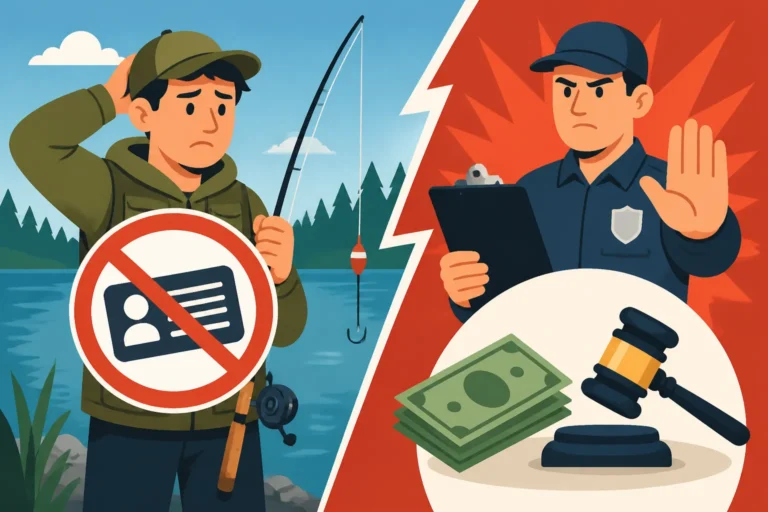
Ignoring fishing regulations in Ontario can lead to serious consequences, and ignorance is rarely accepted as an excuse. Conservation Officers are out on the water, ensuring compliance, and they take their job seriously. Exceeding your Chinook salmon limit, fishing out of season, or fishing without a valid license can result in hefty fines, confiscation of your gear (including your boat and motor in severe cases), and even a ban from fishing in Ontario for a period of time.
Penalties for fishing without a license or exceeding limits can range from hundreds to thousands of dollars, depending on the severity and nature of the offense. It's a risk simply not worth taking. Beyond the legal ramifications, respecting regulations is part of being a responsible steward of our natural resources. Our collective actions directly impact the health and sustainability of Ontario's incredible fisheries. Make sure you understand the potential Fishing Without a License in Ontario: Penalties before you ever cast a line.
Essential Gear and Licensing for Great Lakes Chinook Fishing
Getting ready for a Chinook salmon trip on the Great Lakes involves more than just knowing the limits; it's also about having the right gear and, most importantly, the proper documentation.
What You Need Before You Go
Before you even think about dropping a line for Chinook, ensure you have the necessary licensing. Every angler in Ontario, unless specifically exempted (e.g., during a Free Family Fishing Weekend or if under 18 or over 65, though even then rules apply), needs a valid Outdoors Card and an accompanying fishing license. The Ontario Fishing License Guide for 2026 provides a comprehensive overview of how to obtain these essential documents. Your Outdoors Card is a base identification that lasts for five calendar years, and your fishing license (either one-year or three-year) is printed on the back of it. You can purchase these at ServiceOntario locations, authorized license issuers (like many tackle shops or outdoor stores), or conveniently online.
For gear, Chinook salmon demand robust equipment. Here’s a quick rundown of what you’ll likely need:
- Rods and Reels: Heavy-action trolling rods paired with sturdy baitcasting reels are standard for Great Lakes salmon fishing. The reels should have a good drag system and ample line capacity, usually spooled with 20-30 lb monofilament or braided line. You can find a wide range of suitable heavy-duty rods and reels on Amazon or at your local tackle shop that are perfect for battling these powerful fish.
- Line: Strong monofilament or braided line is essential. Some anglers prefer braided line for its sensitivity and strength, often with a fluorocarbon leader for abrasion resistance and stealth.
- Lures: A variety of spoons, plugs, and flasher/fly combinations are effective. Popular spoon brands like Luhr-Jensen, Dreamweaver, and Michigan Stinger are widely used. Colors can vary greatly depending on water clarity and light conditions.
- Downriggers: For open-water trolling, downriggers are almost a necessity. They allow you to present your lures precisely at the depths where salmon are feeding, which can be anywhere from 30 to over 100 feet deep.
- Electronics: A reliable fish finder with GPS capabilities is invaluable for locating baitfish, marking thermoclines, and navigating the vastness of the Great Lakes.
- Safety Gear: Always remember to have all required boat safety equipment, including life jackets for everyone on board, a sound-signaling device, bailing bucket, and a watertight flashlight.
- Net: A large, sturdy landing net with a long handle and rubberized mesh is crucial for safely landing and releasing big Chinook salmon.
Understanding Your Fishing License Type
As mentioned earlier, the type of fishing license you hold directly impacts your limits for Chinook salmon. Ontario offers two main types of fishing licenses:
- Sport Fishing Licence (S): This license offers the full complement of catch and possession limits for most species, including the 5 Pacific salmon limit on the Great Lakes. It's generally more expensive and is ideal for anglers who plan to keep a reasonable number of fish.
- Conservation Fishing Licence (C): This license is a more economical option, but it comes with reduced catch and possession limits – typically about half of what a Sport license allows. For Pacific salmon on the Great Lakes, this means a limit of 2 fish. It's perfect for anglers who primarily practice catch and release, or who only want to keep a couple of fish for a meal.
It's important to decide which license suits your fishing intentions before you buy, as mistakenly exceeding a Conservation limit with a Sport license in mind is still an offense. The costs for these licenses can vary depending on your residency (resident, non-resident Canadian, or non-resident) and the duration (1-day, 1-year, or 3-year). For instance, understanding the Resident vs Non-Resident Fishing License Costs in Ontario is key for out-of-province anglers, and a Ontario 1-Day Fishing License Cost might be perfect for a quick trip.
Quick Reference for Great Lakes Pacific Salmon Limits
Here’s a handy table summarizing the Pacific salmon (including Chinook, Coho, Pink, and Sockeye) catch and possession limits for Ontario's Great Lakes (FMZ 13, 19, 20):
| License Type | Daily Catch Limit (Pacific Salmon) | Possession Limit (Pacific Salmon) | Applicable Zones |
|---|---|---|---|
| Sport Fishing Licence (S) | 5 | 5 | FMZ 13 (Lake Huron, Georgian Bay), FMZ 19 (Lake Erie), FMZ 20 (Lake Ontario) |
| Conservation Fishing Licence (C) | 2 | 2 | FMZ 13 (Lake Huron, Georgian Bay), FMZ 19 (Lake Erie), FMZ 20 (Lake Ontario) |
Remember, these limits are combined for all Pacific salmon species. Always consult the current year's Ontario Fishing Regulations Summary for the most up-to-date and complete information before your trip.
Disclaimer
The information provided in this guide is intended for general informational purposes only and is subject to change. While we strive to offer accurate and current details, fishing regulations in Ontario are established and enforced by the Ministry of Natural Resources and Forestry (MNRF) and can be updated at any time. It is always the angler's responsibility to consult the most recent official Ontario Fishing Regulations Summary, available from the provincial government, before engaging in any fishing activity. Non-compliance with regulations can result in fines and penalties.