What a tiger trout is and whether they are in Ontario
Many anglers, myself included, have heard whispers or seen stunning photos of what’s called a "tiger trout" and wondered, what exactly is that majestic fish? It's not uncommon to hear tales of an angler catching something truly unique, and the tiger trout, with its distinctive markings, certainly fits that bill. The big question for us here in Ontario, though, often boils down to: are these fascinating fish something we might actually encounter in our own vast and varied waters? This guide aims to clear up the mystery, explaining what a tiger trout is, discussing their presence (or lack thereof) in Ontario, and helping you differentiate them from other trout species you're more likely to reel in here in the province.
What Exactly is a Tiger Trout?
Let's dive right into the heart of the matter. A tiger trout isn't a naturally occurring species in the traditional sense, but rather a unique hybrid, and one that sparks a lot of curiosity among anglers worldwide.
The Hybrid Nature: A Unique Cross
Imagine a brook trout and a brown trout having a baby. That's essentially what a tiger trout is! It's a sterile hybrid, meaning it's created when a male brown trout fertilizes the eggs of a female brook trout. This particular cross, known scientifically as Salmo trutta x Salvelinus fontinalis, usually results in fish that cannot reproduce themselves. This sterility is a key factor in why they're often considered for stocking programs in certain regions – it means they won't compete with native populations for spawning grounds or introduce new genetic material. They're a bit of a genetic marvel, truly, a one-of-a-kind combination that brings out some incredible characteristics from both parent species.
Distinctive Appearance: A Natural Work of Art
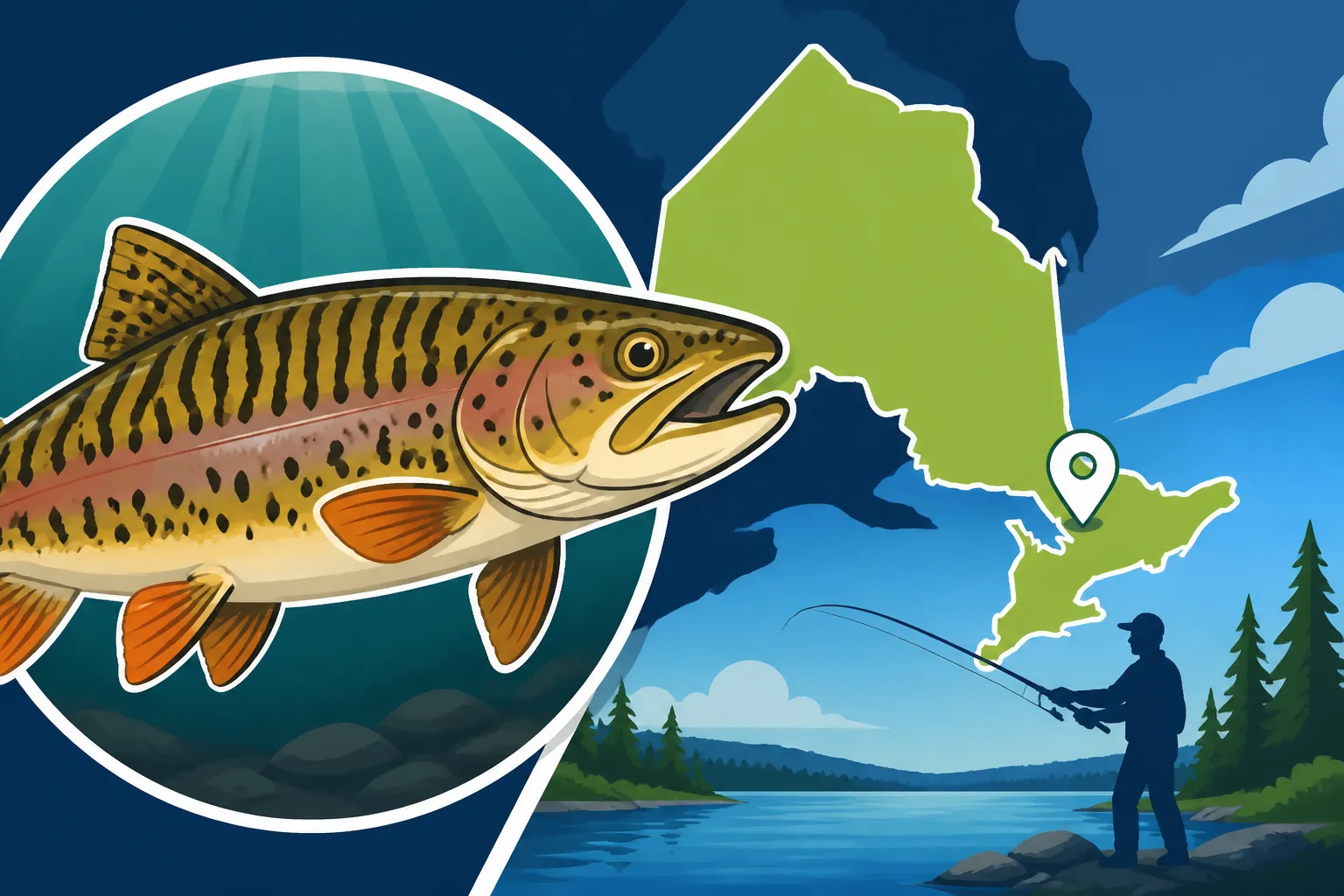
When you see a tiger trout, you'll know it. Their appearance is nothing short of striking, making them easily distinguishable from other trout species once you know what to look for. They possess a worm-like, labyrinthine pattern, often referred to as 'vermiform' markings, across their back and sides, usually a dark, mottled green or brown against a lighter, often yellowish-orange background. This pattern is what gives them their "tiger" name. Unlike the distinct spots of many other trout, these markings intertwine and connect, creating a truly unique camouflage. Their fins might also carry some of the characteristic orange or red hues of a brook trout, sometimes with white leading edges. It’s a beautiful fish that stops you in your tracks, like finding a rare piece of art in the wild.
Growth and Behavior: Aggressive and Elusive
Tiger trout tend to be quite aggressive, often exhibiting a feisty nature that makes them a thrilling catch for sport anglers. They grow at a respectable rate, and because they are sterile, they put all their energy into growth rather than reproduction. This can sometimes lead to them reaching impressive sizes, especially in environments with abundant food. Their diet is primarily carnivorous, often targeting smaller fish and large insects. Because of their hybrid vigour and aggressive feeding habits, they can be excellent game fish. Picture a fish that hits your lure with the ferocity of a pike but fights with the endurance of a river trout – that's often the experience of hooking a tiger trout. This aggressive nature means they respond well to a variety of lures and flies, from spinners and spoons to streamers and nymphs. If you’re ever fishing waters where they are present, you’ll find that a diverse tackle box, easily assembled from options on platforms like Amazon, will serve you well.
Are Tiger Trout Found in Ontario Waters?
This is where the rubber meets the road for many Ontario anglers. While the idea of catching such a distinctive fish in our home waters is exciting, the reality is a bit more nuanced.
Stocking Programs: Not a Regular Feature Here
To date, tiger trout are generally not stocked in Ontario waters as part of any provincial fisheries management program. Other jurisdictions, particularly in the United States, have experimented with or regularly stock tiger trout for various reasons, such as controlling stunted populations of forage fish or providing a unique recreational fishing opportunity. However, Ontario's Ministry of Natural Resources and Forestry (MNRF) has historically focused its stocking efforts on native species like brook trout, lake trout, and splake (which is another trout hybrid, a cross between a male brook trout and a female lake trout), as well as non-native but established species like rainbow trout and brown trout. The province has a robust plan for managing its fisheries, and introducing new, non-native hybrids is a decision not taken lightly. The emphasis is typically on maintaining ecological balance and supporting existing populations. So, while other provinces or states might have active stocking programs for these striped beauties, Ontario has largely chosen a different path.
Natural Occurrence (or lack thereof): The Rarity of the Wild Hybrid
Given that tiger trout are a hybrid of two distinct genera (brook trout are Salvelinus and brown trout are Salmo), natural hybridization is an incredibly rare event. It does happen, but it’s far from common. For a tiger trout to occur naturally, you would need both brook trout and brown trout to be spawning in the exact same location, at the exact same time, with the exact right environmental conditions for the hybridization to occur and for the eggs to survive. Even then, the resulting offspring would be sterile. So, while theoretically possible to find a truly wild, naturally occurring tiger trout in Ontario where both parent species exist, it would be an extreme anomaly – like winning the lottery twice in one day. Anglers shouldn't expect to encounter them routinely. Our province’s vast waters are home to a diverse array of fish, but spontaneous tiger trout sightings are not something that's on the usual list of possibilities.
The "Mystery Fish" Factor: Misidentifications
It's important to remember that sometimes, a fish that an angler thinks might be a tiger trout could actually be something else. Fish can vary widely in their colouration and markings due to genetics, diet, water clarity, and even stress levels. A particularly mottled brown trout, or a brook trout with unusually faded or indistinct spots, could potentially be mistaken for a tiger trout, especially if the angler is unfamiliar with the true markings. Even a splake, which is a common stocked hybrid in Ontario and shares some genetic traits with brook trout, could lead to confusion. When you're out on the water, the excitement of a catch, combined with poor light or simply not having a clear reference, can lead to honest mistakes. This is why having a good Trout Species Identification Guide for Ontario is invaluable, helping you understand the subtle differences between species.
Why Anglers Are Fascinated by Tiger Trout
Despite their rarity in Ontario, tiger trout hold a special place in the hearts of many anglers. There's just something about them that captures the imagination.
The Thrill of the Fight: Aggressive and Strong
For those who have had the chance to hook into a tiger trout, the experience is often unforgettable. They are renowned for their aggressive takes and spirited fights. Unlike some other fish that might give a few strong runs and then give up, tiger trout often continue to battle right up to the boat or the bank. Their hybrid vigour seems to translate into impressive strength and stamina, making them a true challenge on light tackle. Anglers who seek out hard-fighting fish often target tiger trout in the waters where they are stocked. Imagine the thrill of a fish striking your lure, then peeling line off your reel with relentless power – that's the kind of excitement these fish deliver. If you're looking for gear that can handle such battles, a quick search on Amazon for robust Best Fishing Rods for Ontario Lakes or best tackle for Ontario trout fishing can set you up for success, even if the tiger trout isn't your primary target.
Unique Beauty: A Prized Catch
Beyond their fighting prowess, the aesthetic appeal of a tiger trout is undeniable. Their distinct vermiculated patterns are truly stunning, resembling fingerprints or natural artwork on their scales. Every tiger trout seems to have a slightly different pattern, making each one a unique specimen. This beauty makes them a highly prized catch for anglers who appreciate the visual aspects of the fish they pursue. Many anglers choose to practice catch and release with these beautiful fish, opting for a quick photo to preserve the memory before carefully returning them to the water. The chance to see and hold such a distinctive fish is a reward in itself, a testament to the fascinating diversity of the aquatic world.
Conservation Considerations: Their Role in Fisheries Management
Where they are stocked, tiger trout often play a specific role in fisheries management. Because they are sterile, they can be introduced without the risk of interbreeding with native populations or establishing a self-sustaining population that could potentially outcompete other species. This makes them useful in scenarios where fisheries managers want to introduce a sport fish to control populations of overly abundant baitfish or panfish, or simply to provide a unique catch-and-release opportunity without long-term ecological impact. For instance, in lakes where a species of baitfish has become too numerous and is stunting the growth of other fish, tiger trout can be an effective predator. This thoughtful approach to stocking ensures that recreational opportunities are balanced with ecological responsibility. It's a prime example of how science and angling can work hand-in-hand.
How to Distinguish a Tiger Trout from Other Ontario Trout Species
So, how can you be sure if you've landed a true tiger trout versus one of Ontario's more common trout or char species? It boils down to paying close attention to specific features. Recognizing a tiger trout from its parent species and other hybrids like splake requires a keen eye. Thankfully, there are several key indicators that can help you confirm your identification.
Key Identification Features
The most obvious and unmistakable feature of a tiger trout is its worm-like, maze-like pattern. Unlike the distinct spots you'd typically see on a brook or brown trout, the tiger trout's markings are interconnected and irregular, often appearing as dark, swirling lines against a lighter background.
- Body Pattern: The vermiculated pattern is generally present over the entire body, from head to tail, unlike the more isolated spots of other species.
- Coloration: While varying, they often have a dusky yellowish-brown or greenish-yellow base colour, with the darker, intricate patterns overlaid.
- Fins: They typically have an adipose fin (the small fleshy fin near the tail), and their pectoral, pelvic, and anal fins may have a reddish or orange tint, often with white leading edges, inherited from the brook trout side.
- Tail Fin: The tail fin is usually squared or slightly forked, more like a brook trout than the deeply forked tail of a lake trout.
Common Misidentifications
It's easy to get confused, especially with fish that share similar habitats or colouring. Here's how to distinguish them from the most common lookalikes in Ontario:
-
Brook Trout: Brook trout (often called "speckled trout" in Ontario) have distinct light spots (often blue-haloed) on a darker body, and their lower fins are typically orange with a prominent white leading edge. They might have some faint vermiculation on their back, but not the full-body maze of a tiger trout. If you're wondering, How to tell a brook trout from a rainbow trout or How to tell a brown trout from a rainbow trout delves deeper into these specific distinctions.
-
Brown Trout: Brown trout are characterized by dark spots (some with red halos) on a lighter, often golden-brown or silvery body. The spots extend to their tail fin. They lack the intricate, connecting patterns of a tiger trout. While they can have some variation in colour, their spot pattern is quite different from the tiger's.
-
Splake: This is where it gets tricky! Splake are also a hybrid, specifically a cross between a brook trout and a lake trout. They share some characteristics with brook trout, including some vermiculation on their back and sometimes reddish lower fins with white edges. However, their body shape is often more elongated like a lake trout, and their tail is typically more forked than a brook trout's. The vermiculated pattern on a splake is generally less pronounced and widespread than on a tiger trout. Understanding What a splake is a cross between can help clarify this specific hybrid.
To help solidify these differences, here's a quick comparison table:
| Feature | Tiger Trout | Brook Trout | Brown Trout | Splake |
|---|---|---|---|---|
| Parentage | Male Brown x Female Brook | Native Ontario species | Non-native, stocked species | Male Brook x Female Lake Trout |
| Body Pattern | Distinct, interconnected "worm-like" vermiculations over most of body | Light spots (red/blue halos) on darker body; some vermiculation on back | Dark spots (some red halos) on lighter body; spots on tail | Light spots, some vermiculation (less widespread than tiger trout) |
| Overall Color | Dusky yellowish-brown/greenish-yellow with dark patterns | Dark green/brown with light spots | Golden-brown/silvery with dark spots | Dark olive-green to blue-grey with light spots |
| Lower Fins | Often reddish/orange with white leading edge (like brook) | Orange/red with prominent white leading edge | Yellowish to white, no white leading edge | Often reddish/orange with white leading edge (like brook) |
| Tail Fin | Squared to slightly forked | Squared | Squared to slightly forked | Moderately forked (intermediate between brook and lake trout) |
| Sterility | Yes | No (reproduces naturally) | No (reproduces naturally) | Yes (mostly) |
| Ontario Presence | Extremely rare/unlikely (no stocking) | Widespread (native) | Common (stocked) | Common (stocked) |
When in Doubt: Resources
If you find yourself unsure about a fish you've caught, don't fret! There are several ways to get a definitive identification. Take clear photos of the fish, focusing on its full body, head, and fins. Then, consult online resources or reliable fishing forums. Organizations like the Ontario Ministry of Natural Resources and Forestry (MNRF) might have identification guides or biological experts who can help. Many local bait and tackle shops, particularly those that have been around for generations, often have incredibly knowledgeable staff who can help you with identification. You can also refer to comprehensive guides like Trout Species Identification Guide for Ontario or search for detailed fish ID resources. Sometimes, a simple search on Amazon for a good waterproof fish identification chart can be a lifesaver on the water! Ultimately, responsible angling means knowing what you're catching, not just for bragging rights, but to ensure you're following all the local regulations, including specific Ontario Fishing Regulations Explained for species and zones.
While tiger trout remain a fascinating, almost mythical catch for most Ontario anglers, understanding what they are and how they differ from our more common trout species is a rewarding part of expanding your fishing knowledge. Who knows, perhaps one day you'll be one of the incredibly rare few to encounter a wild hybrid in our beautiful province!
Disclaimer
This article is for general informational purposes only and does not constitute professional advice. Laws, prices and regulations vary by location and change over time. Consult a qualified professional for guidance on your specific situation.