Ontario Fishing Regulations Explained
Navigating the intricate web of rules and guidelines that govern fishing in Ontario can feel incredibly daunting, often deterring even seasoned anglers. It's easy to get overwhelmed trying to decipher what's allowed and what's not, especially when you're just trying to enjoy a peaceful day on the water. This comprehensive guide is designed to demystify Ontario fishing regulations, helping you understand the 'why' behind the rules and equipping you with the knowledge to fish legally and responsibly.
The Frustration of Navigating Ontario's Fishing Rules
Let's be honest, few things are as frustrating as planning an exciting fishing trip, only to feel utterly lost when it comes to the local regulations. You've picked out your spot, checked the weather, and dreamt of that trophy catch, but then you open the regulations summary and it feels like reading a legal textbook. The sheer volume of information, the different zones, the seemingly endless lists of species and limits – it can make you want to just pack up your gear and stay home. This isn't just a minor annoyance; it can genuinely diminish the enjoyment of what should be a relaxing pastime. Many anglers, both new and experienced, voice concerns about the complexity and the fear of inadvertently breaking a rule.
Why Regulations Feel So Complicated
One of the biggest reasons Ontario's fishing regulations can feel so overwhelming is the sheer diversity of our province's fisheries. From the massive Great Lakes to the countless small, remote inland lakes and winding rivers, each body of water often has its own unique ecosystem and specific needs. What works to protect walleye populations in Lake Erie is likely very different from what's needed for brook trout in a small, pristine Kawartha Highlands stream. This means a one-size-fits-all approach just isn't feasible, leading to distinct rules for different areas and species.
Moreover, these regulations aren't static. They evolve over time as scientific understanding improves, as fish populations fluctuate, and as environmental conditions change. This constant, albeit necessary, evolution means that what was true last year might have changed this year, adding another layer of complexity for anglers trying to stay current. It’s a lot to keep track of, and it’s completely understandable why many feel a sense of exasperation when trying to wrap their heads around it all.
The Goal of Fishing Regulations
While they might seem like a bureaucratic headache, Ontario's fishing regulations serve a crucial purpose: to ensure the long-term health and sustainability of our aquatic ecosystems and the incredible fish populations within them. Imagine if there were no limits or seasons; our treasured fish stocks would quickly be depleted, impacting not only the fish themselves but also the delicate balance of the natural environment. These rules are put in place by the Ministry of Natural Resources and Forestry (MNRF) to manage resources, protect vulnerable species, allow for natural spawning cycles, and prevent overfishing.
Beyond conservation, regulations also aim to provide fair and equitable fishing opportunities for everyone. By setting limits and rules, it helps distribute the resource more evenly among anglers and ensures that future generations will have the same, if not better, opportunities to experience the joy of fishing in Ontario. It's a delicate balancing act, trying to accommodate recreational anglers, commercial fisheries, and Indigenous rights, all while prioritizing the well-being of the fish. When you understand this overarching goal, the complexity starts to make a little more sense, shifting from arbitrary rules to essential conservation tools.
Understanding Your Ontario Fishing License
Before you even think about casting a line, securing the proper fishing license is your absolute first step in Ontario. It's the foundation of legal angling here, and without it, you're not just risking hefty fines, you're also not contributing to the vital conservation efforts that keep our fisheries healthy. Think of it as your passport to Ontario's incredible waters. Getting your license is usually quite straightforward, and understanding the different options available is key to ensuring you're compliant. For a deep dive into all the options, check out our comprehensive guide, Ontario Fishing License Guide for 2026.
Outdoors Card: Your Key to Ontario Fishing
The Ontario Outdoors Card isn't just a fishing license; it's your essential identification document for fishing and hunting in the province. Think of it as your personal registration with the MNRF. When you purchase an Ontario fishing license, it’s actually printed directly onto your valid Outdoors Card. The card itself is valid for three calendar years and acts as a central record for all your angling and hunting authorizations. This means you only need to buy the card once every three years, then simply purchase your annual or multi-year fishing licenses to go along with it.
It's absolutely crucial to have your Outdoors Card, along with your valid fishing license, with you whenever you're fishing. Conservation Officers can and do ask to see it, and not having it on hand could lead to fines. You can purchase or renew your Outdoors Card and fishing license online, through a ServiceOntario centre, or at participating license issuers across the province. For more detailed information on this foundational document, explore our article, Ontario Outdoors Card, Explained.
Sport vs. Conservation Licenses: Choosing Your Path
Ontario offers two primary types of fishing licenses: the Sport Fishing License and the Conservation Fishing License. The main difference between them boils down to the limits you are permitted to keep. The Sport Fishing License allows you to retain the full daily catch and possession limits for various species as outlined in the regulations. This is typically what most anglers opt for if they enjoy keeping some of their catch for a meal.
The Conservation Fishing License, on the other hand, comes with reduced catch and possession limits – usually about half of what a Sport License allows. It's often chosen by anglers who primarily practice catch and release, or who only wish to keep a very modest amount of fish. The cost difference between the two is minimal, making the choice primarily about your fishing intentions. Both licenses contribute to conservation, but the Conservation License offers an extra layer of protection for fish populations by limiting harvest. You can find more details on this choice in Ontario Sport vs Conservation Fishing License.
Here's a quick comparison of the two license types:
| Feature | Sport Fishing License | Conservation Fishing License |
|---|---|---|
| Purpose | Allows retention of full legal limits | Reduced limits, emphasizes catch and release |
| Catch Limits | Full daily and possession limits for species | Reduced daily and possession limits (approx. half) |
| Cost (Annual, Resident) | Slightly higher | Slightly lower |
| Impact on Fisheries | Moderate harvest | Lower harvest, greater conservation impact |
| Recommended For | Anglers who regularly keep some fish for consumption | Anglers primarily doing catch and release, or minimal harvest |
It’s worth noting that neither license allows you to exceed the slot limits or seasonal closures, regardless of whether you have a Sport or Conservation tag. All regulations around size, season, and specific water bodies still apply universally.
Age and Residency Requirements
Who needs a license, and where do you fit in? Generally speaking, if you are 18 years of age or older and under 65, and you are an Ontario resident, you need both a valid Outdoors Card and a fishing license to fish in Ontario. Non-residents of Ontario also require a valid Outdoors Card and fishing license, regardless of age. There are some important exceptions to these general rules that often cause confusion.
For instance, Ontario residents under 18 years old are exempt from requiring a fishing license, as are residents aged 65 and older. However, even though they don't need a license, these exempt individuals must still abide by the catch and possession limits of a Conservation Fishing License and carry government-issued identification showing their age and residency. This is a common point of misunderstanding, so always double-check these specific rules, especially if you're planning a trip with younger family members or seniors. For non-residents, youth under 18 can fish without a license if accompanied by an adult who holds a valid license, and their catch must be included within the adult's limits. For comprehensive details on who needs a license and who doesn't, refer to Ontario Fishing License Age Requirements.
Diving into the Ontario Fishing Regulations Summary
If there's one document that every angler in Ontario needs to be intimately familiar with, it's the annual Ontario Fishing Regulations Summary. This isn't just a suggestion; it's a critical tool for staying legal and fishing responsibly. Many first-time anglers (and even some seasoned ones) overlook this, assuming they know the rules, but the summary contains all the nuanced details that can make or break your fishing day. It's available both online and in print, and having a copy readily accessible, perhaps even downloaded onto your phone or tablet if you prefer digital over physical (just ensure you can access it where you're fishing!), is highly recommended. You can even find waterproof versions or cases for printouts on platforms like Amazon, ensuring it survives a day on the lake.
Your Essential Reference Document
The Ontario Fishing Regulations Summary is literally the bible for anglers in this province. It outlines everything from general rules that apply province-wide to highly specific regulations for individual water bodies. It details legal fishing methods, bait restrictions, specific species limits, open and closed seasons, and special exceptions. It's updated annually, so it's vital to ensure you're always consulting the most current version. Trying to rely on outdated information is a recipe for trouble and potential fines.
Think of it as your go-to reference whenever you're unsure. Before heading out to a new lake or targeting a different species, a quick skim of the relevant sections can save you from accidentally breaking a rule. The document is logically organized, typically by Fisheries Management Zone (FMZ), making it easier to find the information pertinent to your chosen fishing spot. Don't leave home without knowing how to navigate this crucial guide. To learn how to make the most of this document, read our article Reading the Ontario Fishing Regulations Summary.
Key Sections to Pay Attention To
While the entire summary is important, certain sections demand more frequent attention from anglers. Firstly, always confirm which Fisheries Management Zone (FMZ) you will be fishing in. This is paramount because almost all specific regulations are tied to these zones. Secondly, within your FMZ, locate the section for the particular water body you plan to fish. Many lakes and rivers have special regulations that supersede the general zone rules. For example, some lakes might have catch-and-release only rules for certain species, or specific slot limits not applicable elsewhere in the zone.
Another crucial section details the catch and possession limits for each species, differentiating between Sport and Conservation licenses. Pay close attention to season dates – especially the opener and closure dates for popular species like walleye, bass, and pike – to ensure you're fishing legally. Finally, don't overlook the sections on bait restrictions (e.g., live bait bans in certain areas), fishing methods (e.g., only one line allowed unless ice fishing), and prohibited activities. Being aware of these specific nuances is what truly defines a responsible and compliant angler in Ontario.
Ontario Fisheries Management Zones FMZ Explained
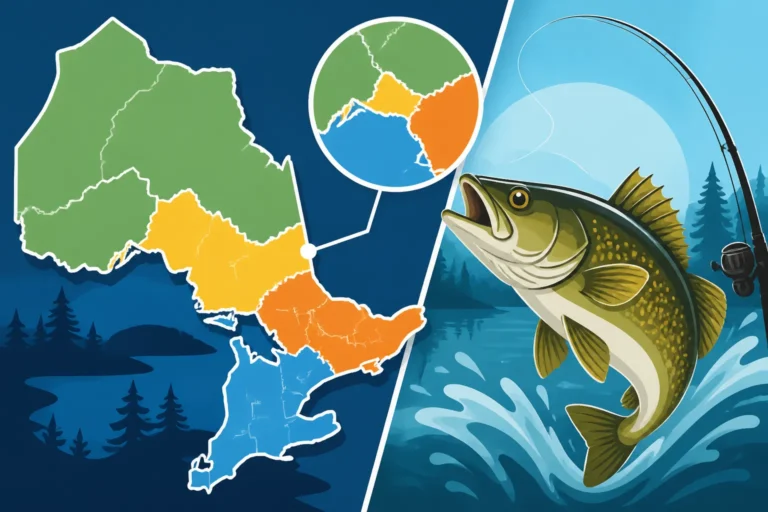
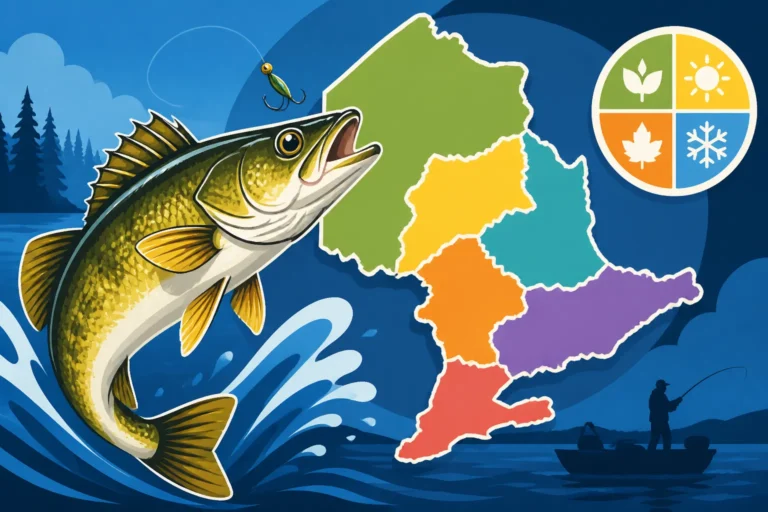
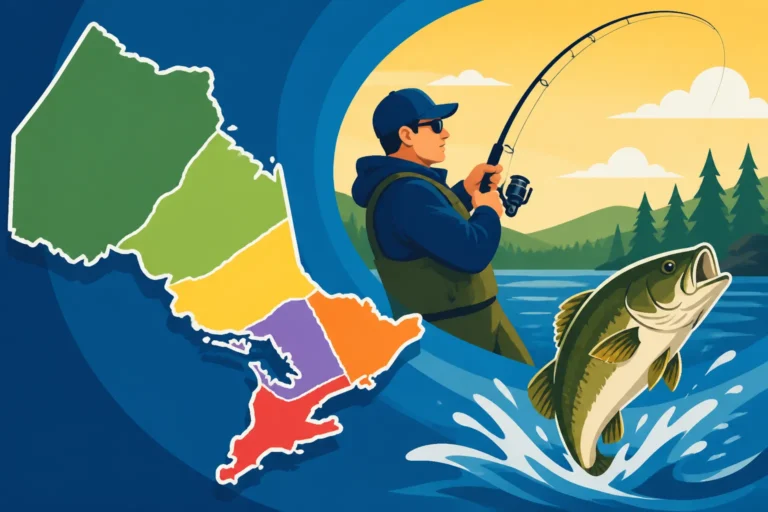
One of the cornerstones of Ontario's fishing regulations is the division of the province into Fisheries Management Zones, or FMZs. If you've ever looked at a fishing regulations map, you've seen these distinct, numbered regions. They are absolutely critical to understand because nearly every specific regulation concerning species limits, season dates, and size restrictions is determined by the FMZ you are fishing in. Ignoring these zones is like trying to navigate a foreign country without knowing its language – you're bound to get lost, or worse, break the law.
Why Zones Matter for Anglers
The concept of FMZs was introduced to allow for more localized and effective management of fish populations. Ontario is a massive province with incredibly diverse aquatic habitats and fish stocks. A walleye population in Lake Erie, for instance, faces different pressures and ecological conditions than a walleye population in a remote Northern Ontario lake. By creating zones, the MNRF can tailor regulations to the specific needs of the fish species and their habitats within that region. This allows for more targeted conservation efforts and ensures that fishing opportunities are sustainable across the province.
For anglers, this means you can't assume that the rules you know for your home lake apply everywhere else. Even travelling a short distance can put you into a different FMZ with completely different regulations. This is why always checking the regulations summary for your specific destination, and making sure you know which FMZ it falls into, is non-negotiable. It’s all about precision in conservation, and you, as the angler, are a vital part of that precision.
Finding Your Zone and Understanding Its Impact
Identifying which FMZ you're in is made easy with the resources provided by the MNRF. The Ontario Fishing Regulations Summary includes detailed maps of all 20 FMZs. Additionally, the MNRF offers an excellent interactive online tool called Fish ON-Line, which allows you to zoom in on any lake or river in Ontario and instantly see its corresponding FMZ and the specific regulations that apply to it. This tool is invaluable for trip planning and on-the-spot verification, especially when you have internet access.
Once you've identified your zone, you then refer to that specific section in the regulations summary for all pertinent information. This will include the general zone rules for common species like Walleye, Northern Pike, Smallmouth Bass, and Lake Trout, as well as any specific exceptions for particular lakes or rivers within that FMZ. For example, some zones might have an earlier walleye opener, while others might have stricter slot limits for pike. Being aware of these variations is key to a successful and legal fishing experience. For more detailed information on each zone, refer to Ontario Fisheries Management Zones, Explained.
Mastering Bag and Possession Limits
Understanding bag and possession limits is another critical piece of the Ontario fishing regulations puzzle that often confuses anglers. It's not just about how many fish you can keep in a day; it's about how many you can have at any given time, regardless of when you caught them. Getting this wrong, even accidentally, can lead to serious penalties. These limits are directly tied to the type of license you hold (Sport or Conservation) and are crucial for sustainable fishing practices, preventing individual anglers from over-harvesting fish stocks.
The Difference Between Bag and Possession Limits
Let's clarify these two important terms, as they are often used interchangeably but have distinct meanings in the eyes of the law. Your daily bag limit refers to the maximum number of fish of a particular species you can catch and keep in a single day. For instance, if the daily bag limit for walleye is 4, you can only keep 4 walleye between sunrise and sunset of that day. Once you've reached that limit, any additional walleye you catch that day must be immediately released.
Your possession limit, however, refers to the maximum number of fish of a particular species you are allowed to have in your possession at any time. This includes fish that are at your campsite, in your cooler, in your vehicle, or even in your freezer at home. So, if the possession limit for walleye is 6, and you already have 4 walleye in your freezer from a previous trip, you can only keep 2 more on your current fishing day, bringing your total possession to 6. You cannot exceed this total possession limit, even if you caught them on different days. This is a common pitfall for many, especially on multi-day trips, so always be mindful of your total count. For detailed breakdowns by species, our article Ontario Bag and Possession Limits by Species is a great resource.
Species-Specific Limits and How to Track Them
Every fish species managed by the MNRF has its own unique set of bag and possession limits, which can further vary by FMZ and by license type (Sport vs. Conservation). For example, walleye limits might be quite generous in one FMZ, but very restrictive in another due to localized population dynamics. Smallmouth bass limits also shift significantly depending on the zone. It's not enough to know the general limits; you must know the specific limits for the species you're targeting in the precise water body and FMZ you are fishing.
To keep track, especially if you're targeting multiple species, many anglers find it helpful to use the digital Fish ON-Line tool or physically mark off their kept fish in their printed regulations summary. Some even use simple tally counters or small notes on a waterproof pad. The key is to be diligent and meticulous. There's no "oops, I forgot" excuse when a Conservation Officer checks your catch. Knowing your limits helps you fish responsibly and protects the future of our fisheries.
Understanding Size Restrictions and Slot Limits
Beyond just the number of fish, many species in Ontario also have size restrictions, which often come in the form of slot limits. These are designed to protect specific sizes of fish, usually the larger, more prolific spawners, or the smaller, younger fish that need more time to grow. A minimum size limit means any fish shorter than that length must be immediately released. Conversely, a maximum size limit means any fish longer than that length must also be immediately released.
Slot limits combine these concepts. For example, a slot limit might state you can only keep fish between 13 and 18 inches. This means fish under 13 inches are too small (need to grow), and fish over 18 inches are too large (valuable breeders), so both must be released. You can only keep fish that fall within that "slot." Slot limits are extremely effective conservation tools because they ensure that the strongest, most genetically valuable fish remain in the water to reproduce, while still allowing anglers to keep some fish for consumption. Always carry a measuring tape or ruler on your boat or in your tackle box – it's an essential piece of gear for ensuring you comply with these often-nuanced size rules. You can find excellent, durable options for these tools on Amazon.
Seasonal Openers and Closures
Understanding fishing seasons is as fundamental to angling in Ontario as knowing your bait. Just like farming seasons, fish populations have specific times of the year when they are vulnerable, typically during spawning. Seasonal openers and closures are designed to protect these crucial periods, ensuring that fish have the opportunity to reproduce successfully and maintain healthy populations for years to come. Fishing outside of these designated seasons, even accidentally, is a serious offense.
Why Seasons Exist
The primary reason for establishing fishing seasons is to protect fish during their reproductive cycles. Many species, such as walleye and bass, gather in specific areas to spawn, making them highly susceptible to overfishing. Allowing a closed season during these times gives them a much-needed reprieve, ensuring eggs are laid, fertilized, and hatch without human interference. This protection is vital for the long-term health and abundance of fish stocks.
Additionally, seasons can also be used to manage fishing pressure during other vulnerable periods, such as immediately after ice-out when fish might be recovering from winter stress, or during extremely hot summer months when fish are more susceptible to handling mortality. These regulations are not arbitrary; they are carefully determined through scientific research and population assessments to promote sustainability and ensure that future generations of anglers have healthy fisheries to enjoy.
Planning Your Trip Around Key Dates
For anglers, knowing the specific opening and closing dates for the species you wish to target in your chosen FMZ is absolutely essential. The dates can vary significantly from one FMZ to another. For instance, the walleye opener in FMZ 13 (Southern Ontario) might be weeks earlier than in FMZ 2 (Northern Ontario). Missing these dates means you could arrive at your destination only to find your target species is out of season, leading to disappointment and wasted travel.
Always consult the most current Ontario Fishing Regulations Summary or the Fish ON-Line tool to confirm these dates well in advance of your trip. Popular species like walleye, northern pike, and both smallmouth and largemouth bass are usually among the first to have their seasons open, often coinciding with late spring or early summer. Trout species often have different seasonal considerations, particularly for specific streams or lakes. Our guide, Ontario Fishing Season Dates by Zone, provides a detailed overview to help you plan. Marking these key dates on your calendar is a smart move for any dedicated Ontario angler.
Special Regulations and Protected Waters
While general regulations provide a framework, Ontario's diverse aquatic landscapes often require more nuanced rules. This is where "special regulations" come into play, applying to specific water bodies within a larger FMZ. It's not enough to know your zone; you need to know if the exact lake or river you're fishing has its own unique set of rules. Missing these local details is a common mistake and can easily lead to non-compliance. These special rules are often critical for protecting particularly sensitive fisheries or recovering fish populations.
Waters with Unique Rules
Many lakes and rivers across Ontario are subject to special regulations that override or modify the general rules for the FMZ they are located within. These can include anything from different size limits for a particular species (e.g., a specific lake might have a tighter walleye slot limit than the rest of its zone) to bans on certain types of bait (e.g., live bait bans to prevent the spread of invasive species). Some waters might have reduced possession limits, or even be designated for specific fishing methods only, such as "fly fishing only" sections on certain trout streams.
These unique rules are put in place for a variety of reasons: to protect a unique local stock of fish, to aid in the recovery of a declining population, to manage fisheries that receive heavy fishing pressure, or to prevent the introduction of aquatic invasive species. Always check the specific water body's entry in the Ontario Fishing Regulations Summary – often found towards the back of the summary in a comprehensive list – before you wet a line. Ignorance of these special rules is no defense if you're caught breaking them.
Catch and Release Only Zones and Their Importance
A particularly important type of special regulation is the "Catch and Release Only" designation. In these waters, or for specific species within these waters, you are legally required to immediately release any fish you catch back into the water, unharmed. There is no keeping fish allowed, regardless of your license type or how delicious that fish might look. These zones are typically established in areas with extremely vulnerable fish populations, critical spawning habitats, or in locations where specific conservation efforts are underway to rebuild stocks.
Respecting catch and release only rules is paramount. It means taking extra care when handling fish: minimizing air exposure, using wet hands, de-hooking quickly, and ideally using barbless hooks to reduce injury. The goal is to maximize the fish's survival chances after release. These areas are truly sanctuaries for fish, and they play a vital role in ensuring the long-term health of Ontario's diverse aquatic life. Understanding and adhering to these regulations demonstrates a true commitment to responsible angling. Many prime trout streams, for instance, are designated as Ontario Catch and Release Only Waters to protect fragile wild populations.
Boating Laws and Safety for Anglers
For many anglers, a fishing trip involves a boat, whether it's a small canoe, a kayak, or a powerful bass boat. While the focus of this guide is on fishing regulations, it's critical to remember that if you're operating any type of motorized or even non-motorized vessel in Ontario waters, you are also subject to federal and provincial boating laws. These laws are in place for your safety, the safety of others on the water, and to protect the aquatic environment. Ignoring them can lead to dangerous situations and significant legal repercussions.
Navigating the Water Legally
The first and most important requirement for operating most motorized boats in Ontario is having a Pleasure Craft Operator Card (PCOC). This card proves you have successfully completed a boating safety course and understand the fundamental rules of the water. Just like a driver's license for a car, you must carry your PCOC with you whenever you're operating a pleasure craft. Even if you don't own the boat, if you're driving it, you need the card. There are very few exemptions, mostly for very small, non-motorized vessels or foreign visitors.
Beyond the PCOC, you must also be aware of rules of the road on the water, such as navigation lights for night operation, speed limits (especially near shore or in restricted areas), and safe operating practices to prevent collisions. Alcohol consumption is also strictly regulated; operating a boat while impaired is just as illegal and dangerous as impaired driving a vehicle, with severe penalties. For a detailed look at all boating rules for anglers, our article Ontario Boating Laws for Anglers covers everything you need to know.
Essential Safety Equipment You Need
The Canadian Coast Guard mandates specific safety equipment for all pleasure craft, and as an angler, you must ensure your vessel is properly equipped. The required items vary slightly depending on the size and type of your boat, but some universally critical items include:
- Life Jackets or PFDs: You must have a Canadian-approved life jacket or PFD (Personal Flotation Device) for every single person on board your vessel. They must be easily accessible and in good condition. For children, they must fit properly.
- Bailing Device: A bailer or pump to remove water from your boat.
- Sound-Signalling Device: A whistle or air horn for signalling.
- Heaving Line: A floating rope for throwing to someone in the water.
- Navigation Lights: If operating after sunset, before sunrise, or in periods of restricted visibility.
- Flares or Other Visual Signals: For distress signalling, typically required on larger boats.
- Watertight Flashlight: With spare batteries, for night operations or emergencies.
- Paddle or Anchor: Depending on vessel size, a secondary means of propulsion or holding position.
This isn't an exhaustive list, and it's your responsibility to know what your specific vessel requires. Many items can be conveniently purchased online from retailers like Amazon. Having the correct safety gear isn't just about avoiding fines; it's about protecting lives. Boating conditions on Ontario's large lakes can change rapidly, and being prepared is paramount. Always check your equipment before heading out, and dress for the water temperature, not just the air temperature.
Consequences of Non-Compliance
It's tempting to think that minor infractions might go unnoticed, or that a little bending of the rules won't hurt. But the reality is that Conservation Officers are active across Ontario's waterways, diligently enforcing regulations. The consequences of non-compliance can range from monetary fines to seizure of equipment and even imprisonment, making it a serious matter that can quickly turn a fun day into a nightmare. Understanding these potential penalties should be a strong motivator for every angler to know and follow the rules.
The Risks of Not Knowing the Rules
The most common misconception among anglers is that ignorance is a valid excuse. Unfortunately, in the eyes of the law, it isn't. It is your responsibility as an angler to know and understand the current regulations for the specific area and species you are targeting. Claiming you didn't know about a slot limit, a closed season, or a bait restriction won't absolve you of responsibility if you're caught. This is why consistent reference to the Ontario Fishing Regulations Summary and tools like Fish ON-Line is so critical.
Beyond the legal risks, not knowing the rules also carries an ethical risk. Every regulation is designed with conservation in mind. When an angler unintentionally breaks a rule, they contribute to the very problems the regulations aim to prevent, potentially harming fish populations or critical habitats. Being a responsible angler means actively educating yourself and making informed choices on the water.
Penalties and What to Expect
The penalties for fishing violations in Ontario can be significant. Minor offenses, such as not carrying your Outdoors Card or exceeding a daily bag limit by a small margin, typically result in fines. These fines can quickly add up, easily costing you hundreds or even thousands of dollars, depending on the severity of the offense and the species involved. For a clear understanding of the financial risks, see our article Fishing Without a License in Ontario: Penalties.
More serious offenses, such as fishing in a closed area, using illegal methods, or egregious over-possession, can lead to much harsher consequences. These may include the seizure of your fishing equipment (rods, reels, tackle), your boat, and even your vehicle. In extreme cases, repeat offenders or those involved in commercial poaching can face significant jail time. Furthermore, a conviction can result in a fishing license suspension, meaning you might be prohibited from fishing in Ontario for a period of time. These aren't just theoretical threats; they are real consequences that Conservation Officers are authorized to enforce to protect Ontario's natural resources.
Staying Informed and Where to Get Help
With regulations constantly evolving and so many specific rules to remember, staying informed can feel like a full-time job. But it doesn't have to be overwhelming. There are several reliable resources available to anglers that make keeping up with the latest rules much more manageable. Actively using these tools will ensure you're always fishing legally and responsibly, eliminating guesswork and boosting your confidence on the water.
Reliable Sources for Up-to-Date Information
The absolute best and most official source for Ontario fishing regulations is the Ontario Ministry of Natural Resources and Forestry (MNRF). They are the governing body responsible for setting and enforcing these rules. Their website is a treasure trove of information, hosting the full annual Ontario Fishing Regulations Summary, interactive maps, and updates on any changes.
Beyond the official MNRF channels, local tackle shops and guide services can also be excellent resources. They often have printed copies of the regulations summary and possess hyper-local knowledge about specific water bodies or recent changes that might not be immediately obvious online. However, always double-check any anecdotal advice against the official MNRF documentation, just to be safe. Reputable fishing forums and dedicated Ontario fishing blogs (like this one!) also strive to disseminate accurate, up-to-date information and explain complex rules in an accessible way.
Utilizing Digital Tools for Anglers
In this digital age, staying informed is easier than ever, even when you're out on the water. The MNRF's Fish ON-Line interactive zone map is an indispensable tool. You can access it via a web browser on your smartphone or tablet (where cell service allows), pinpoint your exact location, and instantly see the FMZ, species-specific limits, and any special regulations for that particular body of water. This eliminates the need to carry bulky paper maps or flip through hundreds of pages in a book. Our detailed guide, How to use the Fish ON-Line interactive zone map, can walk you through its features.
Furthermore, consider downloading a digital copy of the Ontario Fishing Regulations Summary to your device. This way, even if you lose cell service, you'll still have access to all the information you need. Many anglers also find great value in fishing apps that integrate GPS with regulations, although it's always wise to ensure these apps are sourcing their data directly from the MNRF to guarantee accuracy. Remember, having your fishing license digitally on your phone is now an accepted way to carry it, as long as you can reliably display it to a Conservation Officer. For more info on this, check out Printing or Carrying a Digital Fishing License in Ontario. These digital conveniences truly make responsible angling more accessible than ever before.
Disclaimer
The information provided in this guide is intended for general informational purposes only and does not constitute legal advice. While we strive to ensure accuracy, fishing regulations in Ontario can change. It is the responsibility of every angler to consult the most current official Ontario Fishing Regulations Summary, available from the Ontario Ministry of Natural Resources and Forestry (MNRF), before engaging in any fishing activities. Compliance with all federal, provincial, and local laws is mandatory.