Ontario Bag and Possession Limits by Species
One of the most common headaches for any angler in Ontario, whether you've been casting lines for decades or are just starting out, is truly understanding the maze of fishing regulations. It’s not just about having your Ontario Fishing License Guide for 2026 in hand; it’s about deciphering the specifics, especially when it comes to how many fish you can actually keep. This guide aims to clear up the confusion surrounding Ontario’s bag and possession limits by species, ensuring you can enjoy your time on the water without worry.
Understanding Bag and Possession Limits in Ontario
Before we dive into the nitty-gritty of specific species, it’s absolutely essential to grasp the fundamental concepts of "bag limit" and "possession limit." These aren't just technical terms; they are the bedrock of sustainable fisheries management here in Ontario and misunderstanding them can quickly lead to an unintended violation.
What is the Difference Between Bag and Possession?
This is where many anglers get tripped up, and honestly, it’s not always intuitively clear. Let's break it down in plain language.
The bag limit, sometimes referred to as the "daily catch limit," is the maximum number of fish of a certain species you are allowed to catch and keep in a single day, from midnight to midnight. Think of it as your daily quota. Once you’ve kept your limit for that species, any additional fish of that species caught on the same day must be immediately released, and often, released in a manner that minimizes harm, especially if they are within a slot size or protected. This limit resets every day, allowing you to catch and keep more fish the following day, provided you haven't exceeded your possession limit. For example, if the daily bag limit for walleye is four, you can keep four walleye today, then four more tomorrow, and so on.
The possession limit, on the other hand, is the total number of fish of a certain species that you are allowed to have at any given time, regardless of when or where they were caught. This includes fish that are in your cooler, in your livewell, at your camp, in your freezer at home, or even processed and packaged. The possession limit is designed to prevent anglers from accumulating excessive amounts of fish over multiple days. It’s the total aggregate number you can personally account for. So, if the possession limit for walleye is four, once you have four walleye in your possession (whether they were caught today, yesterday, or brought from a previous trip), you cannot keep any more walleye until you have consumed or given away some of your current stash. This limit is often the same as or slightly higher than the daily bag limit, but it's crucial to always check as it varies significantly by species and Fisheries Management Zone (FMZ).
Why These Limits Exist
These limits aren't just arbitrary rules designed to make your life harder; they are critical tools in the Ministry of Natural Resources and Forestry (MNRF)'s strategy for the long-term health and sustainability of Ontario's fish populations. Without them, it would be far too easy for overfishing to occur, depleting fish stocks and ruining the fantastic angling opportunities we cherish.
Conservation is the primary driver. By regulating the number of fish an individual can take, the MNRF helps to ensure that enough fish remain in the system to reproduce and sustain future generations. This is particularly important for species that are slower growing, have specific spawning habits, or are heavily targeted by anglers. For instance, species like lake trout and muskellunge often have lower limits because they mature slowly and are more vulnerable to overharvesting. The limits also help distribute the catch more equitably among anglers, giving everyone a fair shot at a successful outing. It's about balancing recreational opportunity with ecological responsibility, a delicate act that constantly evolves based on scientific data and population assessments.
General Rules and Important Exemptions
While we'll dive into species-specific limits, there are some overarching rules and vital exemptions you need to be aware of when navigating Ontario Fishing Regulations Explained.
Firstly, your fishing license type dramatically impacts your limits. An Ontario Sport vs Conservation Fishing License dictates whether you can keep a "Sport" limit or a reduced "Conservation" limit. Conservation limits are always lower, sometimes even half of the Sport limit, and are intended for anglers who wish to keep some fish for a meal but prioritize catch-and-release. Always check your license to ensure you are adhering to the correct limits.
Secondly, specific waters often have unique regulations that supersede the general zone rules. These "Special Regulation Waters" might have different season dates, size restrictions (slot limits), or even catch-and-release-only rules for certain species. It’s absolutely vital to check the current Ontario Fishing Regulations Summary for the specific lake, river, or even section of a river you plan to fish. You can find this critical information in the printed guide, often available at ServiceOntario locations or tackle shops, or through the online version.
Finally, while most fish species are subject to bag and possession limits, some non-native or invasive species, like common carp or round gobies, may have no limits or even encourage removal, as they can negatively impact native ecosystems. Always consult the regulations for clarity. Also, remember that baitfish collection and use have their own strict rules, including possession limits on specific species like minnows and leeches. Many anglers find carrying a small waterproof pouch, perhaps one you can easily order from Amazon, for their fishing license and the regulations summary invaluable.
Walleye and Sauger Limits
Walleye are undoubtedly one of Ontario's most sought-after game fish, revered for their delicious fillets and challenging fight. With such high demand, their populations are carefully managed, leading to quite specific bag and possession limits that vary significantly by zone and even by specific waterbodies. Sauger, a close relative of walleye, often share the same limits.
Daily Catch Limits for Walleye
The daily catch limit for walleye is typically one of the most scrutinized regulations, and it's where anglers need to pay close attention to the details of their license. For a Sport fishing license, the daily bag limit for walleye can vary but is often set at a higher number, sometimes up to four or six depending on the FMZ. This allows a passionate angler to keep a decent meal or two from their day's efforts. However, for a Conservation fishing license, the daily bag limit is considerably lower, frequently set at two walleye. This reduced limit is designed for those who want to enjoy the experience and keep a small portion for the table, while still heavily contributing to the conservation of the species.
It's critical to remember that this limit applies to the combined total of walleye and sauger. So, if the limit is four, you can keep four walleye, four sauger, or any combination thereof totaling four fish. What you cannot do is catch your limit, go home, clean your fish, and then head back out the same day to catch more. The "midnight to midnight" rule is firm. Any fish you intend to keep must be within your daily limit, and any additional fish caught must be immediately released, regardless of their size or condition, to avoid exceeding that daily quota.
Possession Limits for Walleye and Sauger
The possession limit for walleye and sauger is where the long-term management truly comes into play. As discussed, this is the total number of fish you can have on hand, anywhere, at any time. Similar to the daily limit, the possession limit for a Sport fishing license will typically be higher, often mirroring the daily limit or sometimes slightly more, say four or six, depending on the zone. This means if you have a Sport license and the possession limit is four, you can keep four walleye from one day's fishing and store them. Once those four are in your freezer or cooler, you cannot keep any more walleye until you have consumed or given away some of your existing catch.
For Conservation fishing licenses, the possession limit is, predictably, much lower. It's frequently set at two walleye, directly matching the daily bag limit. This reinforces the conservation ethic, encouraging anglers to only keep what they immediately need or will consume in a short period. Imagine you're on a multi-day trip up to the Best Walleye Lakes in Ontario. If your possession limit is two, once you’ve kept two walleye, you can continue fishing for them, but any subsequent walleye caught must be released until those first two are eaten. Keeping a reliable cooler, perhaps one you scouted out on Amazon for its insulation capabilities, is essential to properly store your catch within these limits, especially if you plan to bring them home.
Zone-Specific Regulations and Slot Sizes
Ontario is divided into 20 Ontario Fisheries Management Zones, Explained, each with its own set of rules, and walleye regulations are a prime example of this complexity. The daily and possession limits mentioned above are general guidelines, but the precise numbers, and crucially, the implementation of slot sizes, vary dramatically by zone.
A slot size regulation means that only fish within a specific length range can be kept. For instance, a common slot might be "no walleye between 40-55 cm (15.7-21.7 inches) may be kept." This means smaller fish (below 40 cm) and larger fish (above 55 cm) might be legal to keep, while those in the middle — often the prime breeding stock — must be released. Other slot limits might be "no fish over X length may be kept," protecting those large, older breeders. The goal of slot limits is to protect specific age classes of fish, ensuring there are enough large spawners to maintain the population and enough smaller fish to grow into larger ones. You might find a zone with a daily limit of four walleye, but only one of them can be over 60 cm (23.6 inches), or entirely different rules apply.
It is absolutely paramount that you check the Ontario Fishing Regulations Summary specifically for the FMZ you intend to fish. For example, if you're planning to target walleye during the Ontario Walleye Opener Dates by Zone, you'll need to know not only when the season opens but also the exact limits and slot sizes for that particular zone and potentially for specific lakes within it. The How to use the Fish ON-Line interactive zone map is an invaluable resource for pinpointing these exact regulations before you even leave your driveway. Always carry a measuring device to ensure your catch complies with any length restrictions.
Northern Pike and Muskellunge Limits
Northern Pike and Muskellunge, often simply called "muskie," are two of Ontario's most formidable freshwater predators. While they are related and share some characteristics, their management and corresponding fishing limits are quite distinct, largely due to their differing growth rates, sizes, and population dynamics.
Pike Daily and Possession Limits
Northern Pike are widely distributed throughout Ontario and are a popular target for many anglers due to their aggressive strikes and respectable size. Because they are generally more abundant and reproduce more quickly than muskie, their limits are often a bit more generous, though still carefully regulated.
For a Sport fishing license, the daily bag limit for Northern Pike typically ranges from four to six, depending on the Fisheries Management Zone. This allows anglers to keep a good number of these feisty fish, which are excellent table fare, especially when filleted properly. The possession limit for Sport licenses usually mirrors the daily limit or is slightly higher, ensuring you don't accumulate an excessive stock. So, if you're allowed four daily, you're likely allowed four in possession.
Conservation fishing license holders will, as always, face a reduced limit, usually two Northern Pike daily and in possession. This allows for a couple of good meals while still promoting a strong catch-and-release ethic for the majority of their angling. Just like with walleye, always verify the specific FMZ regulations. Some zones might have different rules, especially in areas where pike populations need more protection or where they are considered more invasive. For instance, the Ontario Northern Pike Winter Season in FMZ 20 might have specific nuances to its limits.
Muskellunge Catch and Release Rules
Muskellunge are the true giants of Ontario's freshwater system, often referred to as "the fish of 10,000 casts." Due to their incredibly slow growth rates, late maturity, and relatively low population densities, muskie are almost universally managed as a catch-and-release-only species in Ontario. This means that if you are lucky enough to hook into one of these magnificent fish, you are expected to release it immediately and unharmed.
The regulations for muskie are designed entirely around preserving these trophy fish. Even a single muskie kept can have a significant impact on local populations because it takes many years for them to reach trophy size and contribute meaningfully to spawning. There are virtually no open seasons for keeping muskellunge in Ontario. When you read the regulations, you'll typically see "C" for Catch-and-Release or a zero daily/possession limit. This policy has been highly successful in helping maintain Ontario's reputation as a world-class muskie fishery, with lakes like Lake St. Clair and the Georgian Bay yielding truly enormous specimens.
Trophy Waters and Special Rules
While the general rule for muskellunge is catch and release, it's worth noting that some truly exceptional waters or specific areas might have even more stringent regulations, or conversely, very rare and limited harvest opportunities that are strictly controlled. These are often designated as "trophy waters" where the goal is to produce the largest possible fish.
For Northern Pike, while limits are generally more generous, certain lakes or rivers that hold exceptionally large pike or have a delicate ecosystem might also have specific slot limits or reduced bag limits to protect larger, breeding fish. An example could be a regulation stating "no pike over 90 cm (35 inches) may be kept," effectively turning larger pike into catch-and-release fish to maintain the trophy potential of the fishery. These special rules are often highlighted in the Ontario Fishing Regulations Summary for the specific zone. It's crucial for anglers targeting these species to not only understand the general rules but also to meticulously check for any site-specific regulations. When handling these toothy predators, proper tools like long-nose pliers or a jaw spreader, easily sourced from Amazon, are essential for a quick and safe release, ensuring the fish's best chance of survival.
| Species | Sport Daily/Possession Limit (General) | Conservation Daily/Possession Limit (General) | Common Exceptions / Notes |
|---|---|---|---|
| Walleye/Sauger | 4 | 2 | Highly variable by FMZ, often with slot limits or size restrictions. |
| Northern Pike | 6 | 2 | May have size restrictions or lower limits in specific zones. |
| Muskellunge | 0 (Catch & Release Only) | 0 (Catch & Release Only) | Strictly catch and release. |
| Largemouth Bass | 6 | 2 | Combined with smallmouth bass. Season varies by FMZ. |
| Smallmouth Bass | 6 | 2 | Combined with largemouth bass. Often has slot limits. |
| Lake Trout | 2 | 1 | Variable by FMZ, some specific lakes have lower limits or size rules. |
| Brook Trout (Native) | 5 (Sport/Native) | 2 (Conservation/Native) | Often lower for native populations, sometimes catch & release only. |
| Rainbow/Brown Trout | 5 (Sport) | 2 (Conservation) | Generally higher for stocked populations. |
| Chinook/Coho Salmon | 5 (Great Lakes) | 2 (Great Lakes) | Great Lakes specific rules. |
| Yellow Perch | 50 | 25 | May be lower on specific lakes like Simcoe, Erie. |
| Black Crappie | 30 | 15 | Generous limits for panfish, but check local rules. |
| Sunfish (Pumpkinseed, Bluegill) | 30 | 15 | Combined total for all sunfish species. |
Note: This table provides general guidelines only. Always consult the current Ontario Fishing Regulations Summary for the specific Fisheries Management Zone and waterbody you are fishing, as regulations are subject to change and local exceptions are common.
Bass Species Limits: Largemouth and Smallmouth
Ontario is a fantastic destination for bass fishing, boasting healthy populations of both Largemouth and Smallmouth Bass. These two popular game fish offer exciting angling experiences, but like all species, their harvest is regulated to ensure sustainability. Understanding the nuances of their limits, especially when they are combined, is key.
Largemouth Bass Daily and Possession
Largemouth Bass, often found in weedy, shallow waters, are known for their explosive topwater strikes and powerful fights. Their daily and possession limits generally align with the overall approach to popular game fish, but with some specific considerations.
For anglers with a Sport fishing license, the daily bag limit for Largemouth Bass is commonly set at six. This generous limit allows for multiple fish to be kept for consumption over a fishing trip. The possession limit typically mirrors this, also being six. This means that at any given time, you can have up to six Largemouth Bass in your cooler, livewell, or freezer. If you're planning a trip to one of the Best Bass Fishing Techniques for Georgian Bay, ensure you are well-versed in these numbers.
For Conservation fishing license holders, the limit is significantly reduced, usually to two Largemouth Bass daily and in possession. This reflects the Conservation license's focus on enjoying the sport with minimal harvest. It’s important to note that bass seasons can vary by FMZ, with some zones having later openers to protect spawning fish, especially the Ontario Bass Opener Dates by Zone which should always be checked prior to your trip.
Smallmouth Bass Slot Limits and General Rules
Smallmouth Bass, the "bronzebacks" of Ontario's clear, rocky lakes and rivers, are renowned for their acrobatic leaps and relentless fighting spirit. While their general limits are often the same as Largemouth Bass, Smallmouth are more frequently subject to slot limits due to their growth patterns and vulnerability in certain fisheries.
A common scenario for Smallmouth Bass might be a daily limit of six for Sport license holders and two for Conservation, but with a protected slot. For example, the regulations might state that only one bass (of either species) over a certain length (e.g., 45 cm or 17.7 inches) can be kept, or that no bass within a certain size range (e.g., 30-40 cm or 11.8-15.7 inches) can be kept. These slot limits are crucial for protecting the primary breeding stock and ensuring healthy future populations, particularly in lakes that are prone to heavy angling pressure.
Because Smallmouth Bass often school up, it can be easy to catch many fish in a short period. Anglers need to be diligent about measuring their catch and releasing fish that fall outside the legal harvestable slot. Carrying a good, readable measuring board or tape, perhaps one designed for bass that you can easily find on Amazon, is not just helpful but a necessity for legal compliance.
Combining Bass Species in Your Limit
This is another area that can cause confusion: how do you manage limits when both Largemouth and Smallmouth Bass are present and you're catching both? In Ontario, the daily and possession limits for bass typically apply to the combined total of both Largemouth and Smallmouth Bass.
This means that if your daily Sport limit for bass is six, you can keep six Largemouth, six Smallmouth, or any combination that totals six fish. You cannot keep six Largemouth and six Smallmouth. The total aggregate number of both species must not exceed your specified limit. The same principle applies to possession limits. If your possession limit is six, you can have a total of six bass, regardless of whether they are Largemouth, Smallmouth, or a mix of both, in your possession at any time.
Always refer to the Ontario Fishing Regulations Summary for the specific zone you are fishing, as these combined limits, along with any slot limits, are clearly outlined. For instance, specific waters might have "zero possession" limits for one species while allowing harvest for the other, or unique slot limits that apply only to Smallmouth. Being prepared with the correct information ensures a smooth and legal fishing experience.
Trout and Salmon Limits
Ontario offers diverse trout and salmon fishing opportunities, from native brook trout in pristine wilderness streams to giant Chinook salmon in the Great Lakes. Each species, and often their location (inland waters vs. Great Lakes), comes with its own set of specific regulations and limits, reflecting varying population dynamics and conservation strategies.
Lake Trout Daily and Possession
Lake Trout are iconic cold-water predators, often found in deep, clear lakes across Northern Ontario. They are slow-growing and can live for decades, making them particularly vulnerable to overfishing. As such, their limits are generally quite conservative.
For a Sport fishing license, the daily bag limit for Lake Trout is typically two, with a possession limit also of two. In many specific lakes and Fisheries Management Zones (FMZs), this limit is further reduced to one, or even "zero" (catch and release only) to protect fragile populations. For Conservation fishing license holders, the daily and possession limit for Lake Trout is almost universally one. This strict management aims to maintain healthy populations of these magnificent fish for future generations.
It is absolutely crucial to check the specific regulations for the lake you are targeting, as the Ontario Lake Trout Limit and Possession Rules can vary wildly. For example, some remote lakes might have different rules than more accessible ones, or certain large, productive lakes might have slightly more lenient limits. Always measure your Lake Trout, as some specific regulations may include minimum or maximum size limits, or "slot limits" designed to protect prime breeding-sized fish.
Stream and Inland Trout Limits
When we talk about "stream and inland trout," we are generally referring to Brook Trout (also known as speckled trout), Rainbow Trout (steelhead when migrating to the Great Lakes), and Brown Trout. Their limits often depend on whether they are native populations, stocked fish, or wild, self-sustaining populations.
Brook Trout, being Ontario's provincial fish and often found in fragile, headwater ecosystems, frequently have lower limits. For native brook trout populations, a Sport limit might be five daily with a possession limit of five, but often only one or two larger fish can be kept. For Conservation licenses, this might be two daily and in possession. Many pristine "Crown Land" lakes or designated "trout streams" will have even stricter rules, including catch-and-release only, or a maximum size limit to protect larger, breeding fish.
Rainbow Trout and Brown Trout, particularly in waters where they are regularly stocked, might have slightly higher limits. A typical Sport limit could be five daily and in possession, and a Conservation limit of two. However, rivers known for their wild brown trout populations or migratory steelhead runs often have much tighter restrictions, sometimes with strict slot limits or only allowing the harvest of fin-clipped (stocked) fish. The specifics are heavily dependent on the FMZ and the particular river or lake. When fly fishing for trout in these streams, understanding these detailed rules is paramount.
Great Lakes Salmon Species
The Great Lakes (Ontario, Huron, Erie, Superior) are renowned for their fantastic salmon fisheries, primarily Chinook (King) Salmon and Coho Salmon. These fish spend most of their lives in the vast open waters of the Great Lakes and migrate into tributaries to spawn.
The limits for Chinook and Coho salmon in the Great Lakes are generally more generous than for inland trout, reflecting their prolific nature and the vastness of their habitat. For Sport fishing license holders, the combined daily bag limit for Chinook and Coho salmon is typically five, with a possession limit of five. For Conservation fishing license holders, this limit is reduced to two daily and in possession. These limits apply to the aggregate of both species.
It's important to remember that these limits apply to fishing in the Great Lakes. When salmon migrate into tributary streams for their spawning runs, very specific and often much stricter regulations come into play, including different season dates, tackle restrictions (e.g., no live bait, single barbless hooks only), and often reduced or catch-and-release-only limits. This is to protect the spawning fish. Always check the regulations for the specific tributary you are fishing, as these can change annually based on stock assessments.
Panfish and Other Common Species Limits
While trophy walleye and muskie often grab the headlines, Ontario's diverse waters are also home to an incredible array of panfish and other common species that provide fantastic angling opportunities, especially for families and beginners. These species are often abundant, and their limits tend to be more generous, but they are by no means unregulated.
Yellow Perch Limits on Major Lakes
Yellow Perch are arguably Ontario's most popular panfish, beloved for their delicious, flaky white meat and their willingness to bite. They school up in large numbers, making them a prime target for both open-water and ice anglers. Their limits are generally quite high to reflect their abundance.
For a Sport fishing license, the daily bag limit for Yellow Perch is often 50, with a corresponding possession limit of 50. This allows anglers to fill a cooler for a large family fish fry or to stock up for several meals. For Conservation fishing license holders, the limit is typically 25 daily and in possession. These are quite generous numbers, and rightly so, given the perch's prolific nature.
However, it’s absolutely critical to be aware of special regulations for certain highly-pressured or unique fisheries. For instance, on some parts of Lake Erie and Lake Simcoe, where perch populations are heavily targeted, special limits may apply. These might include reduced daily or possession limits, or specific rules around sorting your catch. Always check the Ontario Fishing Regulations Summary for the specific lake or bay you are fishing, especially if it's a well-known perch hot spot like Long Point Bay or specific areas of Lake Simcoe.
Crappie and Sunfish General Limits
Black Crappie, Pumpkinseed, Bluegill, and other sunfish species are fantastic targets for light tackle and provide endless fun. Like Yellow Perch, they are generally abundant, and their limits reflect this.
For Sport fishing license holders, the combined daily bag limit for Black Crappie is often 30, with a possession limit of 30. Similarly, for all sunfish species (Pumpkinseed, Bluegill, Rock Bass, etc., combined), the Sport limit is usually 30 daily and in possession. This means you can keep a mix of sunfish and crappie, but the total for each group cannot exceed its respective limit. For Conservation fishing license holders, these limits are generally halved, meaning 15 Crappie and 15 Sunfish (combined) daily and in possession.
These panfish species are excellent for introducing new anglers to the sport due to their cooperative nature. Just like with perch, always do a quick check of the regulations for the specific waterbody. While rare, some lakes with smaller or more vulnerable populations might have reduced limits for crappie or sunfish, especially if they are heavily fished.
Other Species: Whitefish, Cisco, Ling
Beyond the common game fish and panfish, Ontario's waters also hold other important species that are targeted by anglers, often regionally or seasonally. These include Whitefish (both Lake Whitefish and Round Whitefish), Cisco (also known as Lake Herring), and Ling (also known as Burbot or Eelpout).
Whitefish and Cisco are cold-water species, often caught by deep-water anglers or through the ice. Their limits tend to be quite generous, reflecting their commercial importance in some areas and their general abundance. For Sport licenses, the combined limit for Whitefish and Cisco might be 12 daily and in possession. Conservation limits would typically be six. These limits can vary regionally, especially in Northern Ontario.
Ling (Burbot) are unique, cod-like fish found in deeper, colder waters. They are often caught incidentally while targeting other species, but some anglers specifically seek them out, particularly during the ice fishing season. Their limits are also generally quite high, sometimes up to 12 daily for Sport licenses and six for Conservation, again reflecting their widespread distribution and robust populations.
As always, the golden rule applies: always consult the current Ontario Fishing Regulations Summary for the specific FMZ and waterbody you are fishing to get the precise limits for these and any other less common species you might encounter. This is especially true for any designated Special Regulation Waters in Ontario, where standard limits may not apply.
Navigating Special Regulations and Exceptions
The generalized bag and possession limits discussed so far are a great starting point, but Ontario's fishing landscape is incredibly diverse, and with that diversity comes a complex web of special regulations and exceptions. Failing to understand these can inadvertently lead to a violation, even for well-intentioned anglers.
Reading Your Fishing Regulations Summary
This cannot be stressed enough: the single most important tool in any Ontario angler's kit, besides their rod and reel, is the Ontario Fishing Regulations Summary. It's a comprehensive document, updated annually, that outlines every single rule, limit, and season for all of Ontario's Fisheries Management Zones (FMZs) and thousands of specific waterbodies.
The summary is broken down by FMZ, then by specific exceptions within those zones. It details:
- Season Dates: When you can and cannot fish for a particular species.
- Bag and Possession Limits: The exact numbers you can keep for each species, broken down by Sport and Conservation license.
- Size Restrictions: Minimum, maximum, or slot limits for certain fish.
- Tackle Restrictions: Rules on bait, hooks, and line for specific waters (e.g., barbless hooks, artificial lures only).
- Other Restrictions: Rules on ice huts, motor restrictions, etc.
Reading this document thoroughly before you head out is non-negotiable. Don’t rely on hearsay or what you remember from last year, as regulations can and do change. You can pick up a physical copy at most tackle shops, ServiceOntario locations, or provincial parks. Alternatively, the Ministry of Natural Resources and Forestry (MNRF) website provides a digital, searchable version that is always the most up-to-date. Many anglers download the PDF to their phones or tablets, perhaps even investing in a durable, waterproof case from Amazon for easy and safe access on the water. This document is your ultimate authority on the rules.
Understanding Fisheries Management Zones
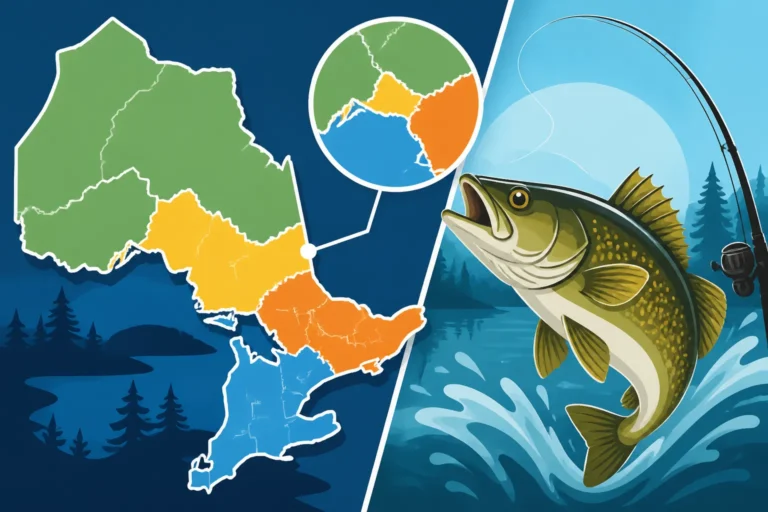
Ontario is vast, and its fisheries vary dramatically from the far north to the Great Lakes. To manage these diverse ecosystems effectively, the province is divided into 20 Ontario Fisheries Management Zones (FMZ), Explained. Each FMZ has its own general set of regulations, and understanding which zone you are in is the first step to knowing the rules.
The zones are geographical areas, and they account for differences in fish populations, habitat, angling pressure, and even climate. What's legal in FMZ 13 (Southern Ontario) might be completely different from FMZ 2 (far Northwestern Ontario). For example, walleye limits and season dates can differ significantly between zones. Knowing your FMZ is paramount.
Within each FMZ section of the regulations summary, there will be a list of "Exceptions to the Zone Regulations." These exceptions override the general zone rules for specific lakes or rivers. For example, a particular lake might have a lower walleye limit, a specific slot size for smallmouth bass, or a catch-and-release-only rule for lake trout, even if the general FMZ rule is different. It's these specific exceptions that often catch anglers off guard. Always double-check your exact fishing location against this list of exceptions.
Catch and Release Only Waters
Some of Ontario's most precious and sensitive fisheries are designated as Ontario Catch and Release Only Waters. These designations are typically applied to protect fragile populations of specific species, such as native brook trout in pristine streams, muskellunge in certain trophy waters, or lake sturgeon. In these waters, the bag and possession limit for the designated species is zero. If you catch one of these fish, it must be released immediately and unharmed.
Catch and release regulations are a powerful conservation tool, ensuring that valuable breeding stock remains in the water to sustain populations. Anglers fishing these waters are expected to practice responsible catch and release techniques, including:
- Using appropriate gear to minimize fight time.
- Handling fish gently with wet hands.
- Using barbless hooks to facilitate easy hook removal.
- Keeping fish in the water as much as possible, especially for photography.
- Knowing how to properly revive a fish before release.
While catch and release fishing can be incredibly rewarding, it comes with a heightened responsibility. Always respect these designations and prioritize the fish's well-being. Failure to adhere to catch-and-release-only rules is a serious violation.
Penalties for Exceeding Limits and Responsible Angling
Understanding Ontario's bag and possession limits isn't just about adhering to the law; it's about being a responsible steward of our incredible natural resources. Ignoring or intentionally violating these limits can have severe consequences, both for the individual angler and for the fishery itself.
Consequences of Violating Limits
The penalties for exceeding bag or possession limits in Ontario are significant and can range from hefty fines to the seizure of your fishing gear, vehicle, or boat, and even potential jail time for repeat or severe offenses. The Ministry of Natural Resources and Forestry (MNRF) conservation officers are authorized to enforce these regulations strictly, and they regularly patrol popular fishing spots.
If you are caught with more fish than your allowed limit, or with fish that are outside legal size restrictions, you could face:
- Fines: These are often substantial, with minimum fines for over-limits starting in the hundreds of dollars per fish, and escalating significantly based on the species, quantity, and whether it's a repeat offense.
- Seizure of Property: Your fishing rods, reels, tackle, cooler, boat, motor, and even your vehicle can be seized as evidence and potentially forfeited.
- License Suspension: Your fishing license can be suspended for a period of time, effectively banning you from fishing in Ontario.
- Criminal Charges: For serious or repeated offenses, you could face criminal charges, which carry even more severe penalties, including potential jail time.
The intent behind these strict penalties is to act as a strong deterrent against overharvesting and poaching, which directly threaten the sustainability of our fisheries. The MNRF takes these matters very seriously, and ignorance of the law is not considered a valid defense. Understanding Fishing Without a License in Ontario: Penalties is just as important as knowing your bag limits.
Ethical Angling and Conservation
Beyond the legal requirements, adhering to bag and possession limits is a fundamental aspect of ethical angling and conservation. As anglers, we have a responsibility to protect the resources that provide us with so much enjoyment. Overharvesting, even if it's just a few extra fish, can collectively have a detrimental impact on fish populations, particularly for slower-growing or less abundant species.
Responsible anglers understand that the ability to catch fish tomorrow depends on the choices we make today. This means:
- Respecting Limits: Always staying within your legal bag and possession limits.
- Practicing Catch and Release: When you've reached your limit, or if you're targeting species designated as catch and release, do so carefully to maximize the fish's survival rate.
- Minimizing Waste: Only keeping what you will consume, and doing so responsibly.
- Reporting Violations: If you witness someone violating fishing regulations, report it to the MNRF. This helps protect the fishery for everyone.
By being mindful of our impact and prioritizing the health of the fish populations, we contribute to a sustainable future for Ontario fishing.
Reporting Violations
If you witness a suspected fishing violation, such as someone exceeding their bag limits, keeping undersized fish, or fishing out of season, it's your responsibility as a concerned angler and conservationist to report it. The MNRF relies heavily on the public's eyes and ears to help protect our natural resources.
To report a natural resource violation, contact the MNRF TIPS line at 1-877-TIPS-MNR (847-7667). If the situation is urgent or involves public safety, call 911. When reporting, try to provide as much detail as possible, including:
- Date and Time of the incident.
- Exact Location (e.g., specific lake, river, access point, nearest town).
- Description of the Violation (e.g., "saw individuals keeping more than their limit of walleye," "observed someone fishing for bass out of season").
- Description of Individuals Involved (e.g., number of people, clothing, distinguishing features).
- Description of Vehicles/Boats (e.g., make, model, color, license plate, boat registration number).
- Photos or Videos (if safe and legal to obtain).
Your report can be anonymous, but providing contact information allows conservation officers to follow up if they need more details. By actively participating in reporting violations, we all play a crucial role in safeguarding Ontario's fisheries for ourselves and for future generations.
Disclaimer
The information provided in this guide is intended for general informational purposes only and is not a substitute for the official Ontario Fishing Regulations Summary. Fishing regulations in Ontario are subject to change, and specific rules, limits, and season dates can vary significantly by Fisheries Management Zone and individual waterbody. Always consult the most current official Ontario Fishing Regulations Summary published by the Ministry of Natural Resources and Forestry (MNRF) before engaging in any fishing activity. It is the angler's sole responsibility to understand and comply with all applicable regulations.