How to tell a brown trout from a rainbow trout
One of the most common questions I get from fellow anglers out on the water, especially when we're pulling a beautiful trout from an Ontario stream or lake, is, "Is this a brown or a rainbow?" It's a fantastic question, and one that trips up even seasoned vets sometimes! While both species are incredible fighters and a joy to catch, they have distinct characteristics that, once you know them, make identification much easier. This guide is all about helping you confidently tell the difference between a brown trout and a rainbow trout, so you know exactly what you've got on the end of your line.
The Core Differences: A Quick Visual Guide
Let's dive right into the physical traits that will immediately help you distinguish between these two beautiful trout species. It's often a combination of factors, not just one, that gives the clear answer. Think of it like identifying family members – you look at the eyes, the nose, the hair, the overall build. It’s the same with fish!
Body Shape and Overall Coloration
When you first land a trout, take a moment to observe its general build and the dominant colours dancing across its scales. This initial impression can give you a strong hint.
Brown Trout (Salmo trutta) are often described as stockier, more robust fish, especially as they get older and grow into those impressive river monsters we all dream about. Their body profile can be a bit more "chunky" than a rainbow. The primary body colour tends to range from a golden-brown or olive on the back, fading to cream or yellowish on the belly. You might even see a beautiful bronze sheen, especially on larger, wild specimens. This earthy, camouflaged tone helps them blend into the rocky, woody, and silty bottoms of the rivers and lakes where they often reside. Younger brown trout might be a bit more silver, but that golden-brown hue usually develops with age. They really are masters of disguise in their natural environment, often blending into the shadows under an undercut bank or submerged log.
Rainbow Trout (Oncorhynchus mykiss), on the other hand, tend to have a more streamlined, torpedo-like body. They often appear more "athletic" or elongated, built for speed and fighting the current in faster waters. Their base colour is typically a vibrant silver or iridescent grey on the sides, which brightens to a white or creamy belly. The most iconic feature, and where they get their name, is the prominent, often brilliant pink or reddish lateral stripe running horizontally along their side, from their gill plate right down to their tail. This stripe can vary in intensity, from a subtle blush to a fiery band, depending on the fish's diet, habitat, and even its mood. In some highly oxygenated, clear rivers, this stripe can be absolutely stunning.
Spotting Patterns – The Key Indicator
If you learn nothing else, remember the spots! This is arguably the most reliable characteristic to differentiate the two, assuming you have a clear view of the fish.
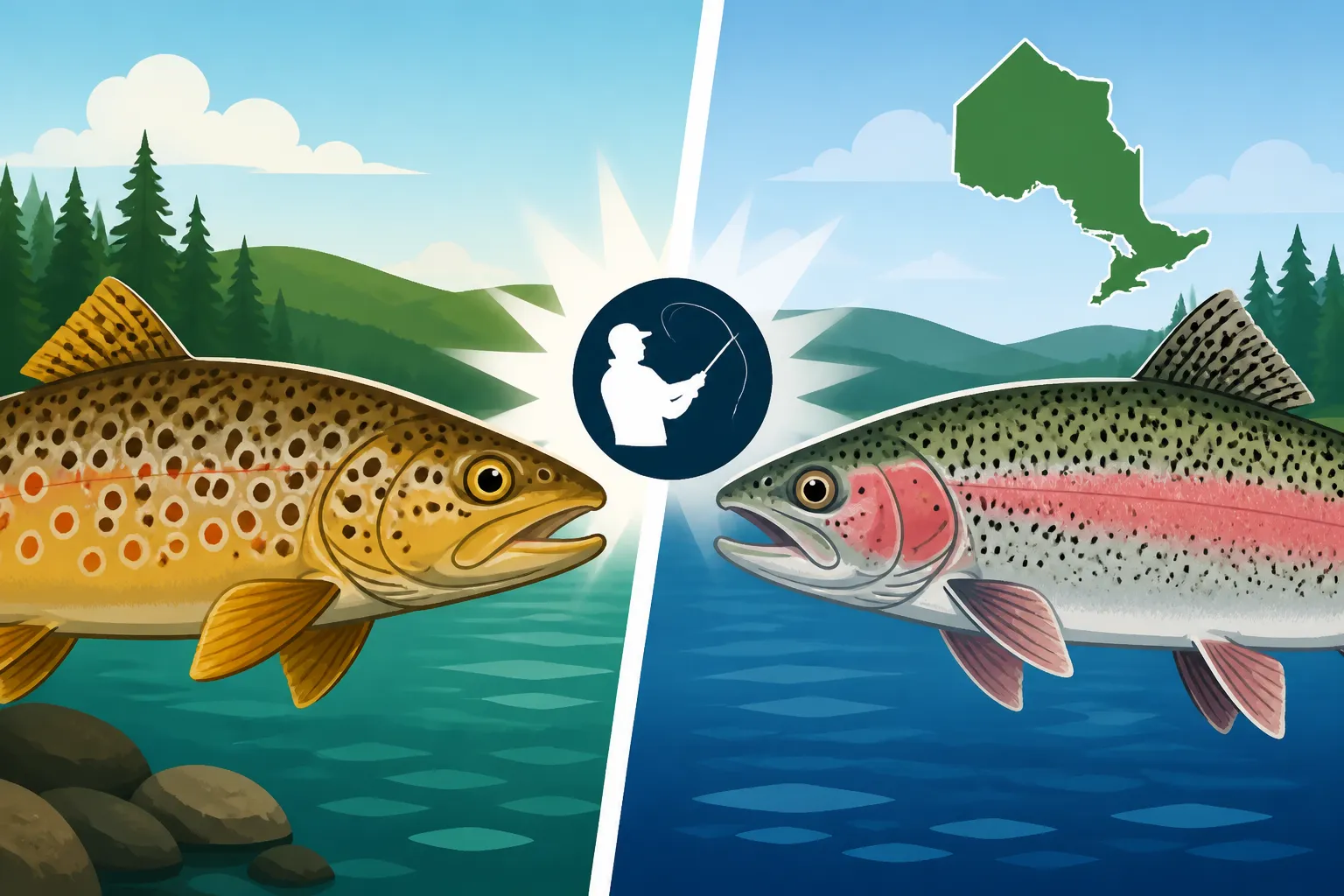
Brown Trout are characterized by their distinct, often larger, dark spots. These spots are usually black or dark brown, and here’s the kicker: many of them will have a lighter "halo" or ring around them, almost like a target. What truly sets them apart, however, is the presence of red or orange spots, sometimes with blue halos, scattered along their sides, especially on their flanks. These red spots are a dead giveaway for a brown trout. The spots are typically irregular in size and distribution, and importantly, they often extend below the lateral line, covering a good portion of the fish's lower sides. The tail fin also usually has few, if any, spots, or they are very faint. Imagine a canvas of golden-brown liberally sprinkled with various sized dark spots, some with light rings, and a scattering of jewel-like red dots.
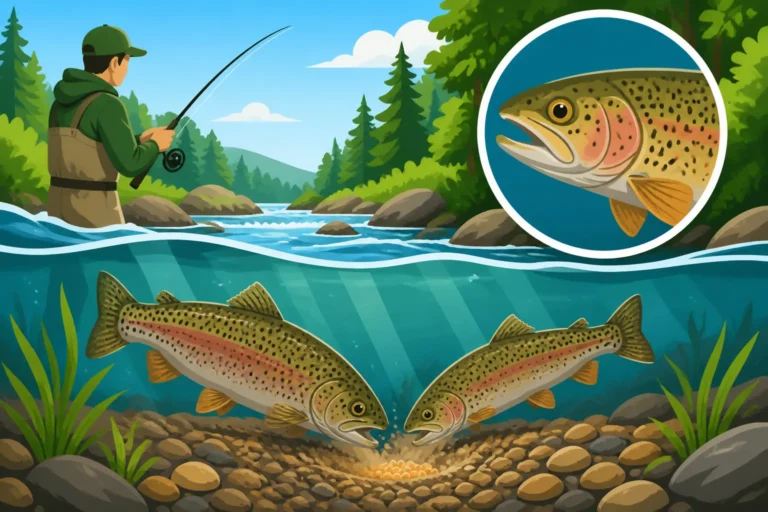
Rainbow Trout boast a completely different spotting pattern. Their bodies are covered in numerous, small, uniform black spots. These spots are typically very concentrated on the back, dorsal fin, and the tail, often giving the impression of a heavily peppered surface. Critically, these spots usually remain above and on the lateral line, very rarely extending significantly below it. There are no red or orange spots on a rainbow trout's body. The tail fin, unlike the brown trout, is typically heavily spotted, with spots often extending all the way to the very tips of the fin rays. Think of a shimmering silver fish with a distinct pink stripe, covered head to tail in tiny, precise black freckles. This spotting pattern is consistent whether you're catching a wild rainbow in a pristine stream or a recently stocked fish in a local pond.
Tail and Fin Characteristics
Beyond the spots on the body, take a moment to examine the fins, especially the tail, as they offer additional valuable clues.
Brown Trout often have a tail fin (caudal fin) that is square or only very slightly forked (emarginate). As mentioned, this fin typically has minimal to no spotting, or the spots are extremely faint and don't extend far down the fin. Their adipose fin (the small, fleshy fin between the dorsal and tail fins) is often a bit larger than that of a rainbow and can have a reddish or orange tint. The pectoral, pelvic, and anal fins can sometimes have a yellowish or dusky appearance, adding to their overall earthy tone.
Rainbow Trout will generally have a more distinctly forked tail fin compared to a brown trout, though it's not as deeply forked as a brook trout or a salmon. What really stands out is that their tail fin is almost always heavily spotted, with those small black spots radiating out onto the fin rays, sometimes right to the very edge. This heavily spotted tail is a strong indicator of a rainbow. Their fins usually appear clearer or a bit dusky, lacking the yellowish tint often seen in browns. The adipose fin is typically smaller and more uniformly coloured. When you're trying to quickly identify a fish on the water, glancing at the tail for those prominent spots can be a real time-saver.
Habitat and Behaviour Clues for Identification
Sometimes, just knowing where you caught the fish and how it fought can offer subtle hints about its identity, even before you get a good look at its physical features.
Preferred Waters and Locations
Both species are trout, and thus generally prefer cooler water, but their preferred microhabitats within a body of water can differ.
Brown Trout are renowned for their cunning and wariness. They tend to prefer slower, deeper pools, undercut banks, and areas with plenty of overhead cover like fallen trees, brush piles, or large rocks. They're often found hugging the bottom or holding tight to structure, using it for ambush points and protection. While they thrive in many of Ontario’s coldwater rivers and streams, they are also very successful in larger lakes, especially those with good coldwater oxygen at depth during summer months. They are remarkably tolerant of slightly warmer water temperatures than rainbow or brook trout, which is one reason they can persist in some streams that might be marginal for other trout species. If you're fishing a slower, darker pool with plenty of hiding spots, there's a good chance you might encounter a brown. They are often less concentrated in open, fast-moving runs unless they are actively feeding or spawning. Their behaviour is less about flash and more about stealth and survival. You'll find excellent brown trout fishing in some of the larger, more complex river systems in Ontario, often alongside other species. Want to know more about their habits? Check out Brown Trout Habits in Ontario Streams.
Rainbow Trout are often associated with faster-flowing sections of rivers and streams, such as riffles, runs, and the heads of pools where the current is strong and oxygen levels are high. They are more active in open water and seem to enjoy facing into the current, waiting for food to drift by. In lakes, they'll often cruise closer to the surface or in the upper water column, especially in areas where insects are hatching or baitfish are schooling. Because rainbow trout are widely stocked across Ontario (and indeed, North America), you're more likely to encounter them in a broader variety of accessible waters, including smaller ponds, urban park rivers, and heavily fished areas. They're generally less shy than brown trout and more prone to chasing down lures or flies in open water. Their love for cooler, well-oxygenated water makes them a favourite target for fly anglers in pristine streams.
Feeding Habits and Fight Style
How a trout takes your fly or lure, and how it behaves once hooked, can also give you a strong inkling of its species.
Brown Trout are often described as more nocturnal or crepuscular (active at dawn and dusk) feeders, especially as they grow larger. They are ambush predators, often holding tight to structure and darting out to snatch prey. While they will certainly eat insects, smaller fish, crayfish, and even mice or frogs become significant parts of their diet as they mature. When hooked, a brown trout typically puts up a strong, deep fight. They tend to bulldog and make powerful runs along the bottom, trying to rub off the hook on structure. Head shakes are common, and they are less likely to jump clear of the water compared to a rainbow, preferring to stay down and dirty. Their fight is often described as a determined, heavy tug-of-war.
Rainbow Trout are generally more active and opportunistic feeders throughout the day. They will readily take a variety of insects, nymphs, small fish, and even pellets if they're hatchery-reared. They are often less picky than brown trout and more willing to chase down a retrieved lure or strike a fly in open water. When hooked, rainbow trout are famous for their acrobatic displays. They are much more prone to jumping clear of the water, shaking their head violently, and making fast, exhilarating runs. Their fight is often characterized by speed, aerial antics, and a relentless energy that can be quite thrilling. If your fish is leaping out of the water like a tiny silver torpedo, it's very likely a rainbow!
Important Ontario Context and Species Management
Understanding a bit about how these fish are managed and where they naturally occur in Ontario can further aid your identification efforts. Our provincial fisheries teams work hard to manage these populations, and knowing a little about their efforts can help you understand what you're seeing. For example, it's always good to consult the Ontario Fishing Regulations Explained to be sure of species-specific rules.
Wild vs. Stocked Populations
The origin of the trout you're catching can significantly impact its appearance and behaviour.
Wild Trout (both brown and rainbow) that have spent their entire lives in natural streams and lakes without hatchery influence tend to be more vibrant in colour, often displaying more intense spotting and fin coloration. Their fins are typically perfect, without any nicks or wear. Wild fish are usually leaner, more muscular, and incredibly wary, reflecting their constant struggle for survival in a natural environment. They've had to develop sharp instincts to find food and evade predators, making them challenging but incredibly rewarding to catch.
Stocked Trout can sometimes look a bit different. Hatchery-raised fish might have slightly faded colours or show signs of fin wear (especially on the dorsal or pectoral fins) from rubbing against concrete raceways or other fish during their time in confinement. While they are still beautiful fish, their colours might not be as intense, and their bodies can sometimes appear a bit heavier-set due to consistent feeding. They are also often less wary initially, having been fed regularly and not hunted by predators. However, once released into wild waters, they quickly adapt, regain their vibrant colours, and develop those wild instincts. Many of Ontario's rainbow trout populations in accessible areas are sustained through stocking programs, providing fantastic fishing opportunities for anglers of all skill levels. Learning about Ontario's Trout Species Identification Guide for Ontario can help with identification.
Hybrids and Local Variations
Nature, and sometimes human intervention, can throw a curveball into identification, though these are less common for pure brown vs. rainbow.
Occasionally, you might encounter fish that don't perfectly fit the mould, due to local environmental factors affecting coloration or, more rarely, hybridization. For instance, a brown trout living in extremely clear, gravel-bottomed water might appear lighter and more silvery, while one from tannin-stained water might be much darker.
It's also worth noting that other trout species exist in Ontario, and some are hybrids. For example, the Splake is a hybrid between a brook trout and a lake trout, and it has its own unique appearance (often a blend of both parents, with a deeply forked tail like a lake trout but more worm-like markings and lighter spots like a brook trout). The very rare Tiger Trout is a sterile hybrid between a brown trout and a brook trout, characterized by a striking, worm-like (vermiculated) pattern that resembles a tiger's stripes. While these can cause confusion, they are distinct from pure brown or rainbow trout and are much less common in most waters. These hybrids are usually quite distinct and rarely mistaken for a pure brown or rainbow by those who know what to look for.
Why Accurate Identification Matters
Beyond the satisfaction of knowing what you've caught, accurate trout identification is incredibly important for responsible angling and conservation.
Regulations and Limits: Ontario has specific Ontario Bag and Possession Limits by Species, and these often differ between brown trout and rainbow trout, or even between wild and stocked populations. Knowing which species you have allows you to adhere to these rules, ensuring you're not inadvertently exceeding limits or keeping a fish from a protected population. Misidentifying a fish could lead to penalties if you unknowingly violate regulations.
Conservation Efforts: Certain trout populations in Ontario are wild and self-sustaining, while others rely heavily on stocking. Being able to identify a wild fish (especially if it's a native species like a brook trout, or a self-sustaining population of brown or rainbow) versus a stocked one can help you make informed catch-and-release decisions, contributing to the health of the fishery. Catch and release is a great option for many anglers, and knowing more about Ontario Catch and Release Only Waters can be helpful.
Understanding Your Fishery: Over time, being able to consistently identify the trout you're catching helps you understand the health and dynamics of a particular fishery. Are you catching more browns than rainbows? Are the fish healthy? This information, even if just anecdotal for yourself, contributes to a greater appreciation and understanding of Ontario's diverse aquatic ecosystems.
Practical Tips for Anglers on the Water
So, you're out there, rod in hand, and you hook into something spectacular. What's the best way to make that identification in the moment? Here are some practical tips to help.
Photography for Post-Release Identification
In this day and age, a picture is worth a thousand words – and can save a lot of debate back at the cottage!
Quick, Clear Photos: If you're practicing catch-and-release (which many trout anglers do), try to get a quick, clear photo of the fish while it's still in the net or briefly held gently over the water. Focus on getting a shot that clearly shows its side, including the spotting pattern and any lateral band. A close-up of the tail can also be very helpful. Remember, the less time the fish is out of the water, the better for its survival, so practice makes perfect for that quick snapshot. You can then analyze the photo later, share it with friends, or consult a field guide if you're still unsure.
Avoid Harsh Flash: If it's low light, try to avoid using a harsh flash that can wash out colours and make spots less distinct. Natural light is always best. If you're planning a full day on the water, having a reliable waterproof camera or phone case is a must. Many anglers find durable, waterproof cases on Amazon to protect their tech.
"When in Doubt, Release"
This is perhaps the most important rule of thumb, especially when it comes to trout in Ontario.
If you've caught a beautiful trout and you're truly unsure whether it's a brown or a rainbow (or perhaps even another species like a brook trout or splake), the most responsible action is to release it unharmed. This ensures you comply with regulations you might not be certain of and contributes to the overall health and sustainability of our precious fisheries. It's a simple ethos that supports conservation and allows those fish to grow, spawn, and be caught another day. Always handle fish gently with wet hands, supporting their body, and use a rubberized landing net to minimize scale and slime coat damage. When you're looking for that perfect, knotless rubber net to safely handle your catch, you can find a good selection on Amazon.
Essential Gear for Visual ID
A few pieces of gear can make on-the-water identification much easier and more enjoyable.
Polarized Sunglasses: These are an absolute game-changer. Polarized lenses cut through glare on the water's surface, allowing you to see deeper into the water. This can help you spot fish before they bite, but more importantly for identification, it helps you see the fish more clearly when it's just below the surface, even before you land it. You can often make out fin shapes or general body patterns. If you're wading Ontario's many beautiful trout streams, a good pair of polarized sunglasses is indispensable. You'll find many reputable brands and styles on Amazon that cater to anglers.
Clear Landing Net: A rubberized, knotless landing net is excellent for the fish's health, but a net with a clear or lightly coloured mesh can also aid in identification. With the fish temporarily in the net, submerged in the water, you can often get a clearer view of its colours and spot patterns without removing it from its element. This allows for a more careful observation before release, ensuring the fish is minimally stressed.
Field Guide or App: Carrying a small, waterproof field guide specific to Ontario fish species, or having a reliable identification app on your phone, can be incredibly helpful for quick reference. Sometimes, just seeing a side-by-side comparison illustration can confirm your suspicions. It's also a great way to learn about other species you might encounter.
Telling the difference between a brown trout and a rainbow trout really boils down to paying attention to a few key details: the overall body shape and colour, the size and distribution of spots (especially the presence of red spots on browns), and the spotting pattern on the tail fin. With a little practice and these tips in mind, you'll soon be able to confidently identify these magnificent fish whenever you hook into one in Ontario's stunning waters! Happy fishing!
Disclaimer
This article is for general informational purposes only and does not constitute professional advice. Laws, prices and regulations vary by location and change over time. Consult a qualified professional for guidance on your specific situation.