Aurora Trout: Ontario’s Rare Rotational Species
Oh, the Aurora Trout! If you’ve ever found yourself pouring over Ontario’s fishing regulations, trying to decipher cryptic notes about "rotational closures" and "special regulations" for a species you barely know, you're not alone. It can feel like these beautiful fish are shrouded in mystery, reserved only for the most dedicated and in-the-know anglers. This guide is going to pull back the curtain on Ontario’s truly rare and captivating Aurora Trout, explaining what makes them so special, where (and when) you might have a chance to encounter them, and how you can be a part of their ongoing conservation story.
What Exactly is an Aurora Trout?
Let's be honest, for many anglers, the term "Aurora Trout" conjures up images of something almost mythical. Are they a separate species? A unique colour phase? Understanding what an Aurora Trout truly is, and its incredible journey from the brink of extinction, is key to appreciating this Ontario gem.
A Unique Genetic Marvel
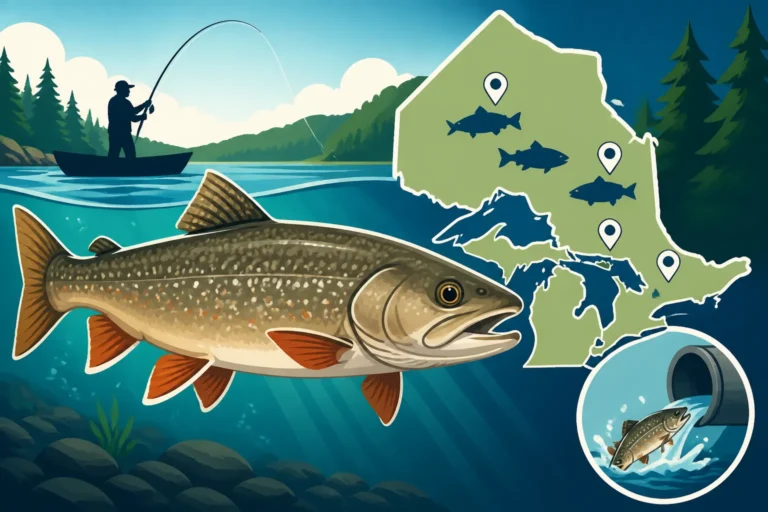
At its heart, the Aurora Trout isn't an entirely distinct species in the way a Walleye is from a Smallmouth Bass. Instead, it’s a genetically unique and isolated population of Brook Trout ( Salvelinus fontinalis ). What makes them stand out, both visually and biologically, is their stunning appearance and their incredibly specific habitat requirements. Unlike the more common Brook Trout you might find in countless Ontario streams and lakes, Aurora Trout boast an almost iridescent, silvery-purple hue on their flanks, transitioning to a dark blue-black back. Their fins can have a reddish tint, and they lack the distinct worm-like patterns (vermiculations) that are typical of other Brook Trout. They also tend to have fewer, larger spots, if any, along their sides. This striking colouration isn't just for show; it's an adaptation to the clear, often deep, and cold waters of their native lakes, providing camouflage that’s perfectly suited to their environment. They are truly a product of their specific, isolated evolutionary path.
Historical Discovery and Early Conservation Efforts
The story of the Aurora Trout is one of discovery, loss, and remarkable recovery. These fish were first officially documented by scientists in the early 1900s, living in a handful of small, isolated lakes in the Temagami region of Northern Ontario. Imagine the excitement of those early researchers, stumbling upon a population of trout so distinct and vibrant! However, their discovery was quickly followed by a stark realization: their existence was incredibly precarious. These native populations were extremely localized, found only in those specific lakes, and naturally, this made them highly vulnerable. Human activity and environmental changes, particularly in the mid-20th century, began to take a severe toll. Their habitat was already fragile, and it didn't take much to tip the scales. It became clear very quickly that if these beautiful fish were to survive, immediate and intense conservation efforts would be required to protect their remaining strongholds.
Why are Aurora Trout so Rare and Special?
If you’ve heard anything about Aurora Trout, it's probably about their rarity and the extreme measures taken to protect them. This isn't just about preserving a pretty fish; it's about safeguarding a unique piece of Ontario's natural heritage, a testament to what can be lost and what can be recovered with dedicated effort.
The Legacy of Acid Rain and Habitat Loss
The primary reason for the Aurora Trout's near disappearance and continued rarity stems from one of the most significant environmental crises of the 20th century: acid rain. The Temagami region, where these trout called home, was particularly susceptible to the fallout from industrial pollution. Airborne pollutants, particularly sulfur dioxide and nitrogen oxides, dissolved in rainwater, making it highly acidic. When this acidic rain fell into the naturally soft-water lakes of the Temagami area, it dramatically lowered their pH levels, making the water too acidic for many aquatic organisms to survive, especially sensitive species like the Aurora Trout.
The consequences were devastating. Lake after lake became inhospitable, leading to the collapse of their native populations. It wasn't just the fish that suffered; the entire aquatic food web was disrupted. For a time, it looked as though the Aurora Trout would be lost forever, a tragic casualty of human progress. However, thanks to significant policy changes in both Canada and the United States to reduce industrial emissions, acid rain levels began to decrease. This allowed for the monumental, decades-long recovery effort to begin, slowly and painstakingly restoring the health of these once-poisoned lakes. This ongoing battle highlights just how fragile these ecosystems are and why their preservation is paramount.
The Rotational Fishery Explained
Because of their unique history and continued vulnerability, Aurora Trout are managed under one of the most stringent and unique fishing regulations in Ontario: the rotational fishery. This isn't just a suggestion; it's a carefully planned and executed strategy vital to their survival. What this means is that only a select few of the designated Aurora Trout lakes are open to fishing at any given time, and usually only for a limited number of years. Then, they are closed again, sometimes for a decade or more, to allow the populations to recover and stabilize without fishing pressure. This staggered opening and closing of lakes ensures that there are always robust, undisturbed breeding populations, preventing overfishing and giving these slow-growing, sensitive fish the best chance to thrive.
Imagine the frustration of planning a trip, only to find the lake you dreamed of fishing has been closed for years. It's tough, but it's absolutely necessary. This system allows the Ministry of Natural Resources and Forestry to closely monitor population numbers, assess habitat health, and ensure sustainable angling opportunities when a lake is open. It’s a testament to long-term conservation thinking, recognizing that immediate gratification must sometimes be sacrificed for the health of the species. Keeping track of which specific lakes are open requires diligent research, often through the annual fishing regulations summary, as the schedule can change. For a deeper dive, you'll want to check out resources like Ontario Aurora Trout Rotational Lake Closures which detail the specifics of this critical management approach.
Where Can You Find Aurora Trout in Ontario?
Alright, let's talk about the burning question: where exactly do these elusive beauties live? You won't find them in every provincial park lake or popular fishing destination. The search for Aurora Trout leads you to a very specific, and often remote, corner of Ontario.
The Temagami Core: Aurora Trout Lakes
The heartland of the Aurora Trout is firmly rooted in the Temagami region of Northeastern Ontario. This isn't a vast area, but rather a collection of relatively small, pristine, and often very deep lakes nestled within the Canadian Shield. These lakes are characterized by their clear, cold, and often oligotrophic (low nutrient) waters, which are crucial for the Aurora Trout's survival. They are generally remote, requiring significant effort to access. We're talking about canoe portages, float plane access, or long drives down gravel roads, followed by more strenuous travel. This remoteness is, in a way, part of their protection.
Think of lakes like Whirligig Lake or Whitepine Lake as historic strongholds, but remember that access and open status are strictly controlled. These aren't lakes you just stumble upon. Preparing for a trip to these areas requires a good map, a reliable compass or GPS, and a healthy respect for the wilderness. The pristine nature of these environments is what defines the Aurora Trout's existence, and experiencing them is part of the allure for dedicated anglers.
Understanding the Rotational Closures
As mentioned, the "where" for Aurora Trout isn't a static answer; it changes year to year, or more accurately, cycle to cycle. The rotational closure system means that only a small number of these specific Temagami lakes will be open for fishing at any given time. This makes planning an Aurora Trout trip exceptionally challenging but also incredibly rewarding when you succeed. The key is to check the current Ontario Fishing Regulations Summary before you even think about packing your bags. This document is your bible for understanding which lakes are currently open, what the specific season dates are, and the mandatory catch-and-release rules that apply.
For example, a lake might be open for angling for two or three seasons, then be closed for the next five, ten, or even fifteen years. This ensures genetic diversity and allows fish populations to rebound significantly. Missing this crucial step could lead to fines, but more importantly, it could jeopardize the future of the Aurora Trout. You absolutely must confirm the open lakes directly with the official regulations before heading out. For precise details on which specific lakes might be accessible in any given year, an angler needs to consult the official documentation. You can also look into resources like Ontario Borealis Lake closure explained to understand the reasoning behind specific lake management decisions.
Here's a simplified illustration of how the rotational system might work, though remember, real-world dates and lakes are strictly defined by official regulations:
| Lake Name (Hypothetical) | Typical Open Season Duration | Typical Closed Season Duration | Fishing Allowed (When Open) | Access Considerations (General) |
|---|---|---|---|---|
| Borealis Lake | 2-3 Years | 8-10 Years | Catch & Release Only | Float plane, remote portage |
| Northern Lights Lake | 3-4 Years | 10-12 Years | Catch & Release Only | Canoe, long portage |
| Crystaline Lake | 2 Years | 7-9 Years | Catch & Release Only | Backcountry hike, remote |
| Emerald Depths Lake | 4 Years | 12-15 Years | Catch & Release Only | Float plane, challenging terrain |
(Note: The lake names and durations in this table are purely illustrative examples to explain the concept of rotational closures. Always refer to the official Ontario Fishing Regulations Summary for actual open/closed statuses and rules.)
This table is a good example of why checking the regulations is paramount. The system is designed for maximum conservation impact, so it requires anglers to be equally diligent.
Fishing for Aurora Trout: Regulations and Best Practices
So, you've done your homework, found an open lake, and are planning your trip. Now comes the exciting part: actually trying to catch one of these magnificent fish. But before you cast a line, it's critical to understand that fishing for Aurora Trout isn't like any other trout fishing experience in Ontario. It's a privilege, governed by extremely strict rules designed for the fish's survival.
Strict Catch and Release Rules
This cannot be emphasized enough: Aurora Trout fishing is strictly catch and release only. There are no exceptions, no possession limits other than zero. This rule is absolute, and violating it carries significant penalties. Every single Aurora Trout caught must be carefully and immediately returned to the water unharmed. This means preparing before you even hook a fish.
First, minimize handling. Use wet hands if you absolutely must touch the fish, to protect its delicate slime coat. Avoid squeezing or holding the fish by the gill plates. Use a rubberized, knotless landing net, as traditional knotted nets can strip off scales and slime. If the fish is deeply hooked, which is rare with the right gear, cut the line as close to the hook as possible rather than trying to remove it, which can cause more damage. Get the fish back into the water quickly, ideally without ever removing it completely from the water. Allow it time to recover, supporting it gently until it swims away on its own. Remember, the goal is to leave the fish in as good, or better, condition than when you found it. This species is too precious to risk for a photo or a trophy. These are truly Ontario Catch and Release Only Waters.
Essential Gear and Ethical Angling
Given the delicate nature of these fish and their environment, your gear choices and angling approach are crucial.
Hooks: Absolutely mandatory are single, barbless hooks. If your hooks aren't barbless, crimp down the barbs with a pair of pliers. This makes hook removal quick and minimizes injury to the fish. You can find a wide selection of suitable barbless hooks on Amazon for all your fly-tying or lure-modifying needs.
Rods and Reels: Generally, light to ultra-light tackle is appropriate. A 4- or 5-weight fly rod is perfect for casting small streamers or nymphs. If you're using spinning gear, a light-action rod with 4-6 lb test line is ideal. Precision and finesse are usually more effective than heavy gear.
Lures and Flies: Small spoons, spinners, and especially small flies (nymphs, streamers, and dry flies imitating native insects) are often very effective. Bright colours can sometimes work, but natural patterns mimicking minnows or aquatic insects are often a safer bet.
Waders and Boots: The lakes are often surrounded by rugged terrain, and you might find yourself wading in cold water. Quality waders and sturdy wading boots are essential. Many anglers find durable options on Amazon that stand up to backcountry conditions.
Beyond the gear, embrace ethical angling. Pack out everything you pack in – absolutely no garbage should be left behind. Be mindful of wildlife, avoid disturbing sensitive areas, and respect the solitude and beauty of these remote places. Your actions, positive or negative, reflect on the entire angling community and directly impact the future of these rare fish. This kind of respect for the environment is paramount, especially when fishing in protected or sensitive areas. Before you head out, make sure your Ontario Outdoors Card, Explained is valid and you have a current Ontario Fishing License Guide for 2026. You'll want to ensure you know about Printing or Carrying a Digital Fishing License in Ontario too, as service can be spotty in remote areas.
Conservation and the Future of Aurora Trout
The story of the Aurora Trout isn't over; it's an ongoing saga of recovery and dedicated stewardship. Anglers who seek out these fish aren't just looking for a catch; they're becoming part of a larger, vital conservation effort.
Ongoing Research and Monitoring
The work to save the Aurora Trout didn't end with the reduction of acid rain. Scientists and fisheries managers are continually monitoring these lakes and their fish populations. This involves regular water quality testing to track pH levels and other environmental indicators, ensuring the habitat remains viable. They also conduct population surveys, using various methods to estimate fish numbers, assess age structures, and monitor overall health and genetic diversity. This data is absolutely crucial for informing the rotational fishing schedule and making adjustments as needed to ensure long-term sustainability.
Research also delves into genetic studies, understanding the unique traits of the Aurora Trout and how best to preserve their distinct lineage. This scientific diligence is the backbone of the entire conservation program, demonstrating a long-term commitment to this species. Without this continuous effort, the future of the Aurora Trout would be far more uncertain.
The Angler's Role in Protection
As an angler, your role in the protection of Aurora Trout is more significant than you might realize. By adhering strictly to the catch-and-release regulations, using appropriate gear, and practicing responsible angling techniques, you directly contribute to the survival of individual fish and the population as a whole. Every fish released unharmed is a victory for conservation.
Beyond that, supporting organizations involved in habitat protection and fisheries research is invaluable. Spreading awareness about the Aurora Trout's unique story and the importance of conservation can also make a difference. These are not just fish; they are living symbols of environmental recovery and the power of dedicated effort. Consider purchasing durable outdoor gear, like insulated jackets or high-quality binoculars, from Amazon that also contributes to conservation through a portion of sales if you want to combine your passion for fishing with supporting the environment.
Planning Your Aurora Trout Adventure
An Aurora Trout trip is more than just a fishing excursion; it's an adventure into one of Ontario's most wild and precious natural areas. It requires meticulous planning, a spirit of adventure, and a deep respect for the wilderness.
Permits, Preparation, and Patience
First and foremost, beyond your valid Ontario fishing license and Outdoors Card (make sure to review Ontario resident license class details if you’re unsure), always check if any specific permits are required for the remote access points or if you'll be camping in certain areas. Sometimes, there are Crown land camping permits, especially in popular or sensitive regions. Understanding Ontario fishing rules on Crown land lakes is crucial. The lakes are often located in remote, unserviced areas, so you need to be entirely self-sufficient. This means packing all your food, water purification systems, shelter, first-aid supplies, and emergency communication devices. You won't find convenience stores or cell service out there.
The weather in Northern Ontario can be unpredictable, even in summer, so be prepared for all conditions. Tell someone your itinerary and expected return date. And finally, patience. The Aurora Trout is a challenging fish to find, let alone catch. The journey itself, the stunning scenery, and the chance to be in such a pristine environment are often as rewarding as the fishing itself. Don't go expecting easy limits; go expecting a wilderness experience with the potential for a truly special encounter.
Respecting the Wilderness
When venturing into these remote Aurora Trout territories, embracing "Leave No Trace" principles isn't just a suggestion, it's a necessity. The pristine nature of these lakes and surrounding forests is what makes them suitable for Aurora Trout, and it’s up to every visitor to keep it that way. This means packing out all your garbage, including food scraps and fishing line. Use established campsites where possible, or if camping in the backcountry, minimize your impact by choosing durable surfaces. Be mindful of campfires, ensure they are completely out before leaving, and only use dead and downed wood.
Wildlife encounters are common in these remote areas, from moose and bears to various bird species. Store food properly to avoid attracting animals, and know how to react in a wildlife encounter. The goal is to leave the area exactly as you found it, if not better, preserving it for the Aurora Trout and for future generations of adventurers. It's an opportunity to connect with nature on a profound level, and an appreciation for the unspoiled landscape is part of the package when seeking out this rare species. If you're looking for guidance on specific fishing techniques for these areas, you might find valuable insights in general trout fishing guides like Fly Patterns for Ontario Trout Streams or Best Fly Fishing Rivers in Ontario, which offer broader advice applicable to similar cold-water environments.
Disclaimer
This article is for general informational purposes only and does not constitute professional advice. Laws, prices and regulations vary by location and change over time. Consult a qualified professional for guidance on your specific situation.