Lake Sturgeon in Ontario Rivers
If you've ever spent time on one of Ontario's majestic rivers, perhaps you've heard whispers of a truly ancient creature lurking in the depths – the Lake Sturgeon. For many anglers, encountering this prehistoric fish is a lifelong dream, often met with confusion about where to even begin, or how to respectfully interact with such a vulnerable species. This comprehensive guide is here to demystify the incredible Lake Sturgeon, exploring their unique biology, the specific Ontario rivers they call home, and the crucial conservation efforts dedicated to their survival.
The Majestic Lake Sturgeon: An Ontario Living Fossil
Imagine a fish that has swum the waters of Ontario since the time of the dinosaurs, a true survivor that has witnessed millennia of change. That's the Lake Sturgeon for you. These incredible fish are not just big; they're living relics, offering a tangible link to a primordial past right here in our own provincial waters. It’s no wonder they inspire such awe and a sense of wonder among those lucky enough to glimpse them. Yet, their long history also means they've faced significant challenges, and understanding their story is key to their future.
A Glimpse into Prehistory: Why Sturgeon are Unique
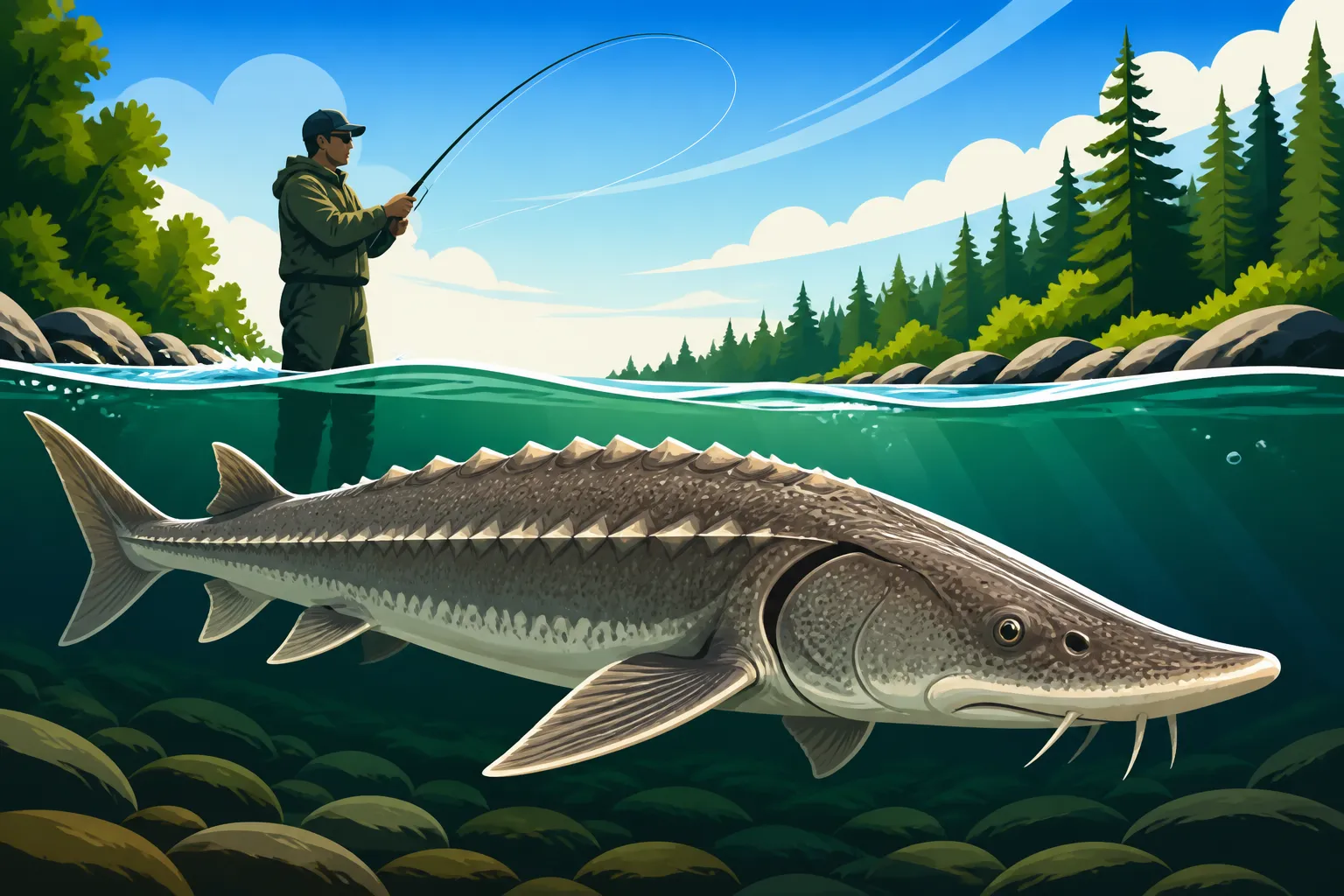
Lake Sturgeon belong to a family of fish that has remained largely unchanged for millions of years. When you look at a sturgeon, you're essentially looking back in time. They don't have scales like most fish; instead, their bodies are protected by five rows of bony plates, called scutes, which run along their back and sides. These scutes are a defining characteristic, giving them an armored, almost reptilian appearance. Their elongated, torpedo-shaped bodies and shovel-like snouts, equipped with sensitive barbels for sifting through the river bottom, are perfectly adapted for a life spent foraging in deep, silty waters. They're slow-growing, incredibly long-lived, and reproduce infrequently, all traits that make them incredibly fascinating, but also incredibly vulnerable.
Conservation Status and Why It Matters in Ontario
Sadly, despite their ancient lineage and resilience, Lake Sturgeon populations in Ontario have faced immense pressure over the centuries. Habitat loss, dam construction, pollution, and historical overfishing all took a severe toll, leading to drastic declines in many areas. Today, Lake Sturgeon are listed as a species of Special Concern in Ontario, meaning their populations are low or declining, and they are particularly sensitive to human activities. This conservation status is not just a label; it’s a critical call to action that dictates strict regulations for anglers and guides all conservation efforts. It underscores why every encounter with a sturgeon, whether accidental or intentional, must be handled with the utmost care and respect. Anglers play a vital role in their recovery, even if it's simply by knowing not to target them or how to properly release one if caught incidentally.
Identifying Ontario's Lake Sturgeon: Key Features
When you're out on the water, especially in a river system where large fish might be present, it's essential to be able to identify what you've caught. The Lake Sturgeon has some very distinct features that set it apart from other large fish in Ontario. Getting it right is not just about bragging rights; it's about adhering to the strict regulations designed to protect this ancient species. Mistaking a sturgeon for another fish could lead to serious legal trouble and, more importantly, harm to a vulnerable creature.
Distinguishing Sturgeon from Other Ontario Fish
It's easy to be overwhelmed by a large, powerful fish on the end of your line. However, the unique anatomy of a Lake Sturgeon makes it quite distinctive. Unlike catfish, which have smooth skin and barbels around their mouths, sturgeon possess those prominent bony scutes. They also lack the adipose fin found on trout or salmon species. While other fish like Northern Pike or Muskie can grow very large, their sleek, scaled bodies and sharp teeth are a stark contrast to the sturgeon's prehistoric armor and suction-cup mouth. Knowing these key differences is vital, especially since other large fish, like the Common Carp, are often found in similar river habitats.
Size, Shape, and Those Iconic Scutes
A Lake Sturgeon's body is typically elongated and cylindrical, tapering towards the tail. Their most striking feature, as mentioned, are the five rows of bony scutes: one along the middle of their back, two along each side, and two along their belly. These are particularly sharp on younger fish and tend to smooth out with age. Their mouth is located on the underside of their head, designed for vacuuming up food from the bottom, and is preceded by four fleshy barbels which they use to "taste" and locate prey. Their tail fin is heterocercal, meaning the upper lobe is longer than the lower, similar to sharks, another nod to their ancient lineage. They can vary in colour from grey to olive green on their backs, with lighter bellies.
Consider this quick comparison table for identification:
| Feature | Lake Sturgeon | Channel Catfish | Common Carp | Longnose Gar |
|---|---|---|---|---|
| Body Covering | 5 rows of bony scutes | Smooth, scaleless skin | Large, distinct scales | Diamond-shaped ganoid scales |
| Mouth Position | Ventral (underneath), protrusible | Terminal (front), with whiskers | Inferior (underneath), small | Long, toothy snout |
| Barbels | 4, in front of mouth | 2 around mouth, long | 2 pairs, on upper lip | None |
| Tail Fin | Heterocercal (upper lobe longer) | Forked | Forked, with longer lower lobe | Abbreviated heterocercal |
| Snout | Shovel-like | Rounded | Blunt | Long, slender, toothed |
| Size | Can exceed 200 lbs, over 6 feet | Up to 50 lbs | Up to 80 lbs | Up to 5 feet |
Where to Find Lake Sturgeon in Ontario's Rivers
While Lake Sturgeon were once much more widespread, today their populations are concentrated in specific river systems across Ontario. Finding them isn't like casting a line for bass; it requires knowledge of their preferred habitats and where healthy populations have managed to persist or recover. Their presence is a good indicator of a healthy, mature river ecosystem. These fish are not only about deep water; they need a variety of river features to thrive throughout their long lives.
Major River Systems Known for Sturgeon Populations
Ontario is fortunate to still have several river systems that host viable Lake Sturgeon populations. Some of the most notable include the French River, which flows into Georgian Bay, the Rainy River connecting Rainy Lake and Lake of the Woods, and parts of the Ottawa River. Other systems with historical or recovering populations include the Lake St. Clair and Detroit River system, and certain tributaries to Lake Huron and Lake Superior. These rivers often have significant stretches of uninterrupted flow, crucial for migration and spawning, and a connection to larger lake systems that provide ample foraging grounds. Anglers looking to explore these waters will often find local outfitters or guides who are knowledgeable about these unique fish and the regulations surrounding them. For a deeper dive into these waterways, you might consult resources like Best Fishing Rivers in Ontario.
Understanding Sturgeon Habitat: What They Look For
Lake Sturgeon are primarily bottom-dwellers, and their habitat preferences reflect this. They seek out rivers and large lakes with soft, muddy, or sandy bottoms where they can easily root around for food using their sensitive barbels. During spawning season, however, they migrate to faster-flowing river sections with gravel and rock bottoms, often at the base of rapids or waterfalls, where their eggs can settle into crevices and receive sufficient oxygen. Deep pools and channels are essential for refuge and overwintering, while adjacent shallower areas provide feeding opportunities. Intact shorelines and minimal development along riverbanks also contribute to healthier populations by reducing sedimentation and maintaining water quality. Understanding these habitat needs is crucial, not just for finding sturgeon, but for appreciating why protecting these environments is so vital for their continued existence.
Life Cycle and Habits of Ontario's Lake Sturgeon
The life cycle of a Lake Sturgeon is a marathon, not a sprint. These fish are incredibly long-lived, sometimes reaching ages well over 100 years! This longevity, combined with their slow growth and delayed maturity, makes their reproductive cycle particularly fascinating and, again, highlights their vulnerability. Everything about their life cycle is designed for long-term survival, which unfortunately also means they're slow to bounce back from any setbacks.
Spawning Rituals and Nursery Grounds
Lake Sturgeon are unique in that they don't spawn every year, especially the females. Males might spawn every 1-2 years, while females typically spawn every 3-7 years, depending on their size and environmental conditions. This infrequent reproduction is a major factor in their slow population recovery. Spawning usually occurs in late spring or early summer, when water temperatures reach suitable levels, typically between 13-18 degrees Celsius. They undertake significant migrations from their lake habitats up into rivers, seeking out fast-flowing areas with clean gravel and rock substrates – often rapids or the churning water below dams. Here, they broadcast their sticky eggs over the bottom, which adhere to the rocks and develop. These areas become critical nursery grounds for the vulnerable fry. You can learn more about specific timing in resources like When lake sturgeon spawn in Ontario rivers.
Feeding Habits and What They Eat
Lake Sturgeon are opportunistic bottom feeders. Their unique, protrusible mouth acts like a vacuum cleaner, allowing them to suck up a wide variety of invertebrates from the river or lake bottom. Their diet primarily consists of insect larvae (like chironomids and caddisflies), crayfish, leeches, small clams, and snails. They're not active predators chasing down other fish in the water column, but rather methodical foragers, constantly sifting through sediments. Their barbels are key to this process, acting as highly sensitive sensory organs that can detect food particles even in murky water. This specialized feeding niche means they play a vital role in the ecosystem, helping to process organic matter on the riverbed.
Migration Patterns and Seasonal Movements
Sturgeon are known for their significant migrations. Depending on the river system, they can travel dozens or even hundreds of kilometers between their feeding grounds in large lakes and their spawning grounds in upstream river sections. These movements are often triggered by seasonal changes, particularly water temperature and flow. After spawning, they typically return to deeper lake or river sections for the summer, where they spend their time foraging. In winter, they tend to congregate in deep pools or sections of rivers that remain unfrozen, entering a state of reduced activity. These migratory habits mean that dams and other barriers can severely impact their ability to complete their life cycle, isolating populations and preventing them from reaching critical habitats. Understanding these movements is fundamental for effective conservation.
Fishing for Lake Sturgeon in Ontario: Regulations and Best Practices
If you're an angler in Ontario, it's absolutely crucial to understand the regulations surrounding Lake Sturgeon. These aren't just suggestions; they are strict rules designed to protect a vulnerable species. For most of Ontario, Lake Sturgeon fishing is entirely catch and release, and in some areas, it’s completely prohibited. The thrill of encountering such an ancient fish is undeniable, but it comes with a profound responsibility to ensure its health and survival after release. Always consult the current Ontario Fishing Regulations Explained summary before heading out.
Understanding Catch and Release Only Rules
Let's be crystal clear: for the vast majority of Ontario waters where Lake Sturgeon are present, fishing for them is strictly catch and release only. This means that if you accidentally catch a sturgeon, you must immediately release it back into the water with minimal harm. In many Fisheries Management Zones (FMZs), particularly where populations are most vulnerable, there are specific seasons and size restrictions that effectively make it illegal to retain any sturgeon. The intent is to eliminate harvest pressure entirely. Failing to comply with these rules can result in significant fines and penalties, as outlined in resources such as Fishing Without a License in Ontario: Penalties (which also applies to other regulatory infractions). The goal is to allow these slow-growing, late-maturing fish the chance to survive, reproduce, and contribute to the recovery of their species.
Essential Gear for Responsible Sturgeon Angling
While you might not be specifically "targeting" sturgeon in many areas, if you are fishing in known sturgeon waters for other large species like walleye or muskie, there's a chance you could hook one. Therefore, being prepared with the right gear for a safe catch and release is paramount. This means using robust tackle that can handle a large, powerful fish quickly, minimizing the fight time and stress on the animal.
- Heavy Rod and Reel: A medium-heavy to heavy action rod (7-9 feet) paired with a sturdy baitcasting or spinning reel spooled with strong braided line (50-80 lb test) is ideal. This allows you to bring the fish in efficiently.
- Strong Terminal Tackle: Use heavy-duty swivels, snaps, and hooks. Circle hooks are often recommended as they are more likely to hook in the corner of the fish's mouth, reducing the chance of deep hooking which can be fatal.
- Large, Knotless Landing Net: This is perhaps the most critical piece of equipment. A large, rubberized or knotless mesh landing net is essential for safely cradling the sturgeon alongside the boat or from shore. Standard fishing nets can damage their delicate fins and slime coat. You can find excellent options for these types of nets on platforms like Amazon, often searching for "muskie landing net" or "trophy fish net."
- Long-Nose Pliers or Hook Removers: Essential for safely and quickly removing hooks, especially if they are difficult to reach.
- Measuring Tape: While often catch and release, having a tape can help you quickly estimate size if required for reporting or just personal curiosity, without unduly prolonging the handling time.
- Gloves: Heavy-duty gloves can protect your hands from the rough scutes and help you get a better grip.
Handling and Releasing Sturgeon Safely
The safe handling and release of a Lake Sturgeon are absolutely critical for its survival. These fish are delicate despite their armored appearance.
- Minimize Fight Time: Use appropriate gear to land the fish as quickly as possible. A prolonged fight can exhaust the sturgeon, reducing its chances of survival post-release.
- Keep it in the Water: Whenever possible, keep the sturgeon in the water. Avoid dragging it onto sharp rocks, gravel, or hot surfaces. If you must remove it briefly for a photo, do so as quickly as possible, ensuring it is supported horizontally. Never hold a sturgeon vertically by its tail or gills; this can cause severe internal damage.
- Support its Body: If lifting, support the fish's entire body horizontally with both hands, one under the head/pectorals and one supporting the tail. A large net or cradle can greatly assist in this.
- Quick Hook Removal: Using your long-nose pliers, carefully and quickly remove the hook. If the hook is deeply embedded and cannot be removed easily without causing further trauma, cut the line as close to the hook as possible. Circle hooks greatly minimize this risk.
- Revive if Necessary: If the sturgeon appears lethargic, hold it upright in the water, facing into a gentle current, allowing water to flow over its gills until it regains strength and can swim away under its own power.
- Avoid Crowding: If multiple boats are in the area, be mindful not to overcrowd a freshly released sturgeon, allowing it space to recover undisturbed.
Adhering to specific guidelines, such as those found in Ontario Sturgeon Catch and Release Rules, is paramount for the long-term health of these populations.
The Future of Lake Sturgeon in Ontario: Conservation Efforts
The journey of the Lake Sturgeon in Ontario has been a challenging one, but it's not without hope. Dedicated individuals, conservation organizations, and government agencies are working tirelessly to understand, protect, and restore these ancient fish populations. Anglers, too, play a crucial role, whether through reporting sightings, participating in citizen science, or simply by adhering to regulations and practicing responsible angling. The future of Lake Sturgeon depends on a collective effort.
Government Initiatives and Research Programs
The Ontario Ministry of Natural Resources and Forestry (MNRF) leads many of the province's Lake Sturgeon conservation efforts. This includes extensive research into their biology, habitat use, population dynamics, and genetic diversity. Monitoring programs track population sizes and health in key river systems, providing vital data to inform management decisions. Habitat restoration projects, such as improving spawning grounds or addressing barriers to migration (like old dams), are also underway in various locations. Furthermore, strict fishing regulations, like the catch and release mandates across most of the province, are a direct result of these conservation strategies. Understanding the complex Ontario Fisheries Management Zones, Explained can give you a better grasp of how these efforts are localized.
How Anglers Can Contribute to Sturgeon Recovery
As anglers, we are often the eyes and ears on the water, and our actions can make a real difference.
- Report Sightings: If you encounter a Lake Sturgeon, especially in an unusual location or if you observe any injured fish, reporting it to the MNRF or a local conservation authority can provide valuable data for researchers. You can often find contact information through local fisheries offices or by checking the Ontario Ministry of Natural Resources license agent list.
- Adhere to Regulations: This is non-negotiable. Always know and follow the specific rules for the waters you're fishing, particularly those pertaining to protected species like sturgeon. Ignorance is not an excuse.
- Practice Safe Handling: As discussed, master the techniques for safe catch and release to minimize stress and injury to these vulnerable fish. Invest in the right gear, like a large, knotless net (easily found on Amazon by searching for "conservation net" or "rubberized landing net"), to ensure proper handling.
- Support Conservation: Consider donating to or volunteering with organizations dedicated to freshwater conservation in Ontario. Many groups are actively involved in sturgeon recovery projects.
- Educate Others: Share your knowledge with fellow anglers and outdoor enthusiasts. The more people who understand and respect Lake Sturgeon, the better their chances of recovery.
- Avoid Illegal Activity: Never participate in or condone poaching or any other illegal activities that threaten sturgeon. Fishing without the proper license or violating catch limits for other species can also indirectly impact the health of the ecosystem sturgeon rely on.
The Lake Sturgeon is a magnificent part of Ontario's natural heritage. By respecting these ancient fish and understanding our role in their conservation, we can help ensure that they continue to grace our rivers for generations to come.
Disclaimer
This article is for general informational purposes only and does not constitute professional advice. Laws, prices and regulations vary by location and change over time. Consult a qualified professional for guidance on your specific situation.