Which Ontario lake holds the province’s biggest muskie catch
Every angler who's ever wet a line in Ontario dreams of a trophy catch, but for muskie enthusiasts, the quest is for a true giant—a fish that tests patience, skill, and gear to its absolute limits. If you've spent countless hours casting, wondering where the legendary "fish of 10,000 casts" grows to truly epic proportions, you're not alone. This guide will take a deep dive into the waters that have historically produced Ontario's biggest muskie, exploring what makes them special and how you can pursue your own encounter with a freshwater titan.
The Legend of Ontario's Muskellunge: A Quest for the Giants
There’s a certain mystique surrounding the muskellunge in Ontario. It's not just a fish; it's an obsession, a challenge, and for many, the ultimate freshwater angling achievement. The sheer size and predatory nature of a muskie make it a creature of legend, lurking in the depths, waiting for the opportune moment to strike.
Why the Quest for a Record Muskie is So Captivating
The pursuit of a record muskie is more than just fishing; it’s an adventure steeped in anticipation and perseverance. These magnificent predators are often dubbed the "fish of 10,000 casts" for good reason. They are elusive, intelligent, and incredibly powerful. When you finally connect with one, especially a truly massive specimen, it's an adrenaline rush unlike any other. The dedication required to target muskie, from understanding their habits to mastering specialized techniques, builds a deep respect for the species. Many anglers spend decades chasing these elusive giants, and the thought of breaking a provincial record, or even just catching a personal best, fuels that relentless drive. It's a testament to patience, an angler's skill, and sometimes, a little bit of pure luck.
The dream of a provincial record isn't just about personal glory; it's about connecting with the wild, understanding the pinnacle of what nature can produce in our freshwater systems. The stories of monumental muskie catches become part of local angling folklore, inspiring others to pick up heavier rods and spend more time on the water. It’s this collective passion that makes the pursuit so enduringly captivating. For anyone who’s been humbled by a muskie follow-up or a missed strike, the allure of the truly colossal fish is a powerful motivator.
Understanding Ontario's Trophy Muskie Potential
Ontario is renowned worldwide for its incredible muskie fishing, and for good reason. The province boasts an abundance of prime habitats, from vast Great Lakes expanses to intricate inland river systems. Understanding what makes a waterbody capable of producing trophy muskie is key to appreciating where these giants come from. Factors like ample forage, diverse habitat, excellent water quality, and sufficient growing seasons all play critical roles. Muskie are apex predators, and their growth is directly tied to the health and richness of their ecosystem.
A robust prey base, including abundant populations of species like ciscoes, whitefish, suckers, and various panfish, provides the fuel for muskie to grow exceptionally large. When these food sources are plentiful, muskie don't have to expend as much energy hunting, allowing them to conserve resources and pack on the pounds. Coupled with expansive, diverse habitats that offer deep-water sanctuaries, shallow weed beds for ambushing prey, and rocky structures for spawning, these conditions create the perfect environment for muskie to not only survive but thrive to trophy sizes. Ontario's vast network of lakes and rivers provides exactly these kinds of opportunities, making it a hotspot for those seeking truly immense fish.
Unveiling the Record-Holding Lake: The Home of Ontario's Biggest Muskie Catch
When we talk about the biggest muskie caught in Ontario, one name consistently comes up in angling circles, a body of water synonymous with giant fish. It’s a place that embodies the rugged beauty and vastness of the province, offering endless opportunities for those willing to put in the time.
The Lake That Holds the Crown
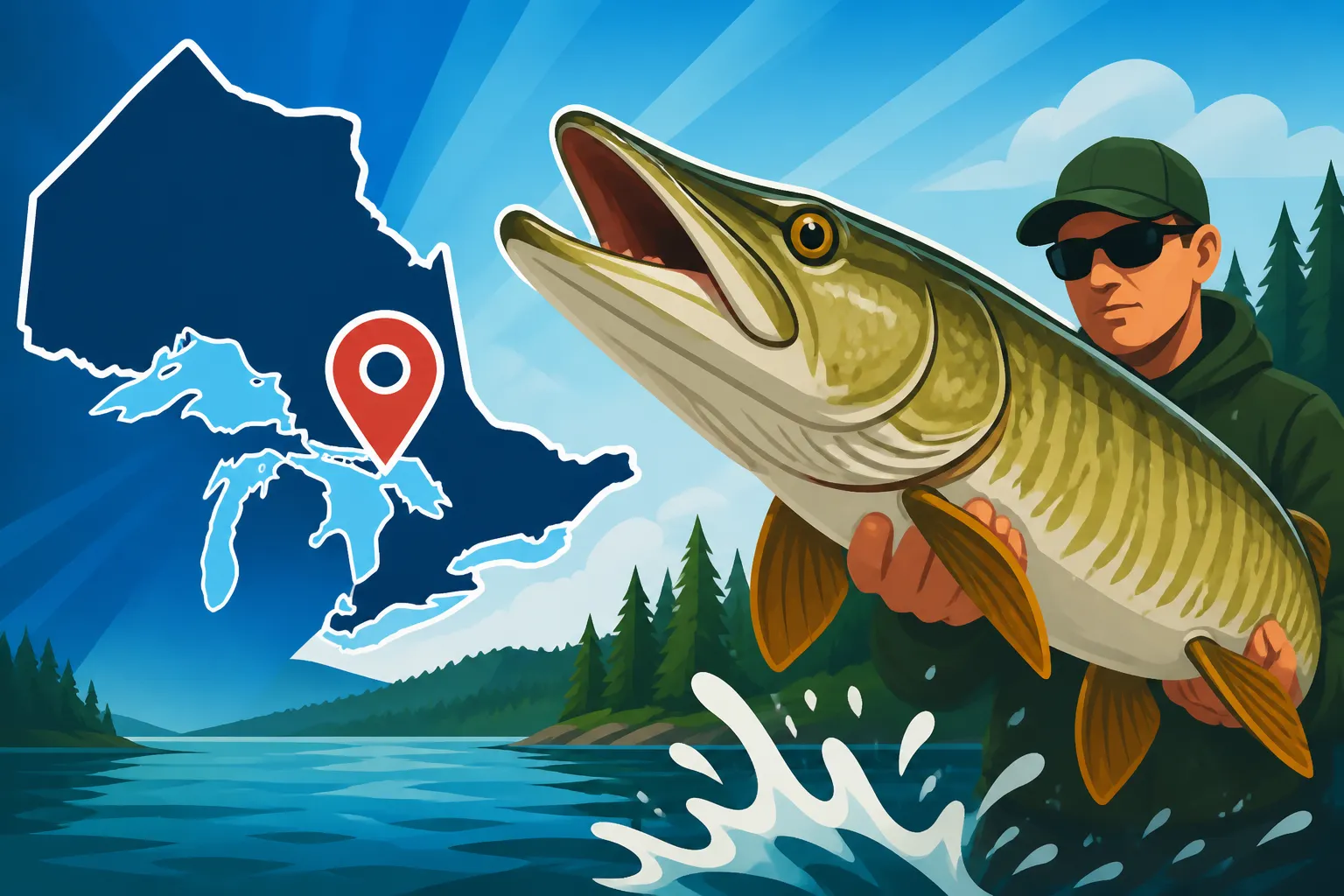
For decades, the undisputed champion among Ontario's muskie waters, particularly concerning the biggest recorded catches, has been Georgian Bay, part of the magnificent Lake Huron. This isn't just a rumour among anglers; Georgian Bay's reputation for producing monstrous muskellunge is well-earned, rooted in historical catches that set the bar incredibly high. The lake's vast, complex system of islands, shoals, deep channels, and abundant forage species provides the perfect environment for muskie to reach sizes that are truly awe-inspiring. It's a place where legends are born, and where the dream of a world-class muskie becomes a tangible possibility.
Georgian Bay isn't just big; it's a diverse ecosystem that fuels muskie growth. Its clear, cold waters are highly oxygenated, which is vital for the health and vitality of large, active predators like muskie. The endless structure—from the exposed granite bedrock and labyrinthine island chains of the Thirty Thousand Islands to the submerged reefs and extensive weed beds in its shallower arms—offers ideal ambush points and protective cover. This incredible variety of habitat supports a rich diversity of baitfish, providing muskie with an all-you-can-eat buffet that allows them to pack on incredible amounts of weight. Anglers specifically targeting these giant fish often focus on areas where these ecological factors converge, knowing that's where the biggest predators will be found.
The Story Behind the Catch
The lore of Georgian Bay includes tales of truly monumental muskie. While official records and specific dates can sometimes be subject to interpretation or historical context, the general understanding among Ontario anglers is that the largest muskie ever documented from Ontario waters came from Georgian Bay. We're talking about a fish that tipped the scales at an astounding weight, a fish that most anglers can only dream of. The exact circumstances of such a catch often involve an incredible blend of skill, persistence, and pure, unadulterated luck. Imagine the moment: a massive muskie, a true freshwater leviathan, inhaling a lure designed for giants. The ensuing battle would be epic, a testament to the fish's raw power and the angler's unwavering resolve.
While I can't provide the exact year or the angler's name (as specifics vary by historical account and data cutoffs), the general narrative is that of a colossal muskie, caught decades ago, which became the benchmark for all future trophy muskie in the province. It validated Georgian Bay as the place to hunt for true giants. The achievement resonates even today, as current anglers continue to pursue these incredible fish, striving to match or even exceed such a monumental catch. Such stories remind us that these incredible fish are out there, swimming in our waters, waiting for that one special day when an angler's path crosses with a true legend.
Characteristics of a Trophy Muskie Lake: What Makes Georgian Bay So Special?
What is it about Georgian Bay that makes it such a powerhouse for producing massive muskellunge? It's not just one factor but a perfect storm of environmental conditions and ecological blessings that combine to create an ideal habitat for these freshwater titans. Understanding these characteristics can help anglers appreciate the complexity and fragility of such a world-class fishery.
Abundant Forage and Diverse Habitat
Georgian Bay truly stands out when it comes to a thriving food web. It's teeming with a variety of prey species that muskie feast upon, acting like a natural grocery store for growing giants. You'll find a healthy population of ciscoes, often called lake herring, which are a primary high-fat, high-protein food source for large muskie. Whitefish and various sucker species also contribute significantly to their diet. These larger, energy-rich meals are crucial for muskie to reach and maintain incredible sizes. Imagine a muskie, already a powerful predator, having access to an endless supply of large, nutritious fish; it's the perfect recipe for growth.
Beyond the food source, the habitat itself is a masterpiece of complexity. Georgian Bay offers an unparalleled diversity of structure. There are vast expanses of deep, open water where large baitfish schools roam, alongside intricate maze-like island chains with rocky shoals and granite outcroppings. These provide ideal ambush points for muskie. Then there are the expansive weed beds in shallower bays and protected inlets, offering cover and hunting grounds. This blend of deep-water access, intricate rocky structure, and vegetative cover allows muskie to move between different feeding and resting areas with ease, optimizing their energy expenditure and growth potential. Muskellunge Habits in Georgian Bay are intimately tied to this rich and varied environment.
Size, Depth, and Water Quality
The sheer scale of Georgian Bay plays a monumental role in its ability to produce trophy muskie. It's an enormous body of water, offering immense territory for muskie to roam without excessive competition for resources. This vastness means less pressure on individual fish and more room for them to develop without constant disturbance. Deep sections plunge hundreds of feet, providing critical cold-water sanctuaries during the warmer months when muskie seek stable temperatures and higher oxygen levels. These deep, cool havens are essential for large, mature muskie, allowing them to stay comfortable and healthy throughout the year.
The water quality of Georgian Bay is another crucial element. Its waters are generally very clear and exceptionally clean, a testament to the region's natural beauty and the geological composition of the Canadian Shield. Highly oxygenated water is vital for any fish, but especially for large, active predators that require a significant amount of oxygen for their metabolism. The clean environment also contributes to the health of the entire ecosystem, from the smallest invertebrates to the largest fish. This pristine environment, combined with the depth and size, creates a stable and nourishing home for muskie to grow to truly legendary proportions, making it one of the Best Muskie Waters in Ontario.
Fishing Pressure and Management
Despite its reputation as a trophy fishery, Georgian Bay, like all valuable natural resources, faces fishing pressure. However, ongoing management efforts and a strong catch-and-release culture among dedicated muskie anglers have been instrumental in maintaining its quality. Many anglers understand the value of these long-lived, slow-growing fish and practice careful catch-and-release, ensuring that these giants can continue to reproduce and challenge future generations of anglers.
Regulations often include specific slot limits or minimum size requirements, designed to protect the breeding stock and allow muskie to reach larger sizes before they can be legally harvested. This forward-thinking approach, combined with the responsible actions of the angling community, helps preserve the integrity of the fishery. Organizations and individuals actively promote best practices for handling muskie, emphasizing quick releases and minimizing stress, which is vital for the survival of these big fish. It’s a collective effort that underscores the appreciation for muskie and the desire to keep Georgian Bay a premier destination for trophy encounters. If you're looking for more details on these regulations, check out Ontario Muskellunge Season Dates and Limits.
Tips for Pursuing Your Own Ontario Trophy Muskie
Chasing trophy muskie isn't for the faint of heart, but with the right preparation and mindset, you can significantly increase your chances of success. It's about combining specialized gear with specific techniques and, perhaps most importantly, having an abundance of patience.
Gear Up for Giants
When targeting muskie, particularly the giants that Ontario is known for, your equipment needs to be up to the task. This isn't a finesse game; it's about brute strength and durability. You'll need heavy-action or extra-heavy-action casting rods, typically ranging from 8 to 10 feet in length, to handle the heavy lures and the immense power of a battling muskie. Pair these with robust baitcasting reels featuring strong drags and high line capacities. Spool up with heavy braided line, often in the 80 to 100-pound test range, followed by a heavy fluorocarbon or wire leader to withstand their razor-sharp teeth.
Lures for muskie are also in a league of their own. We're talking about large bucktails, oversized crankbaits, massive jerkbaits, and big glide baits—many of which can measure 8 inches or more. These aren't cheap, but they're essential for attracting the attention of big fish. You might find that looking for specialized muskie gear takes a bit of searching, but you can find a fantastic selection of muskie rods, reels, and even those specialized giant lures on platforms like Amazon, ensuring you're ready for the fight of a lifetime. A sturdy landing net designed specifically for muskie, with a wide hoop and rubberized mesh, is also non-negotiable for safe handling and release. For a deeper dive into what you need, check out Best Muskie Gear for Ontario Waters.
Mastering the Techniques
Muskie fishing techniques are as varied as the lures themselves, but they all demand precision and persistence. Trolling large crankbaits at specific depths and speeds is a popular method, especially on large bodies of water like Georgian Bay, allowing you to cover vast areas and present your lure to muskie that might be suspended or cruising deep structure. Casting, however, is often the most engaging method. It involves repeatedly casting massive lures to prime muskie habitat—weed lines, rocky points, submerged timber, and deep breaks. The "figure-eight" boat-side maneuver, where you trace your lure in a large "8" pattern next to the boat before lifting it out of the water, is a crucial technique that often provokes a last-second strike from following fish.
Patience is perhaps the most important technique of all. Muskie fishing can involve long periods without action, punctuated by sudden, explosive strikes. Being mentally prepared for this rollercoaster of emotions is key. Pay attention to subtle changes in retrieve speed, pauses, and twitches that might trigger a bite. Best Lures for Muskie Fishing in Ontario offers more specific guidance on what to throw and how to work it.
Respecting the Resource: Catch and Release
Catching a muskie, especially a trophy, is an incredible experience, but the responsibility to ensure its survival after the catch is paramount. Muskie are slow-growing and long-lived, and a healthy population depends on conscientious angling. Always use a large, knotless, rubberized landing net to minimize damage to their fins and slime coat. Once the fish is in the net, handle it as little as possible. Keep it in the water if you can. If you need to bring it aboard for a quick photo, do so gently and quickly.
Heavy-duty long-nosed pliers or jaw spreaders are essential for removing hooks safely and efficiently. Avoid lifting a large muskie by its jaw for extended periods, as this can cause internal damage. Support its body horizontally with one hand under its belly and the other gripping the lower jaw. Measure and photograph quickly, then release the fish gently, allowing it time to recover, often by holding it upright in the water until it swims away under its own power. These practices, outlined in Muskie catch and release survival tips, are crucial for sustaining Ontario's incredible muskie fisheries for generations to come.
| Muskie Handling Best Practices | Do's | Don'ts |
|---|---|---|
| Landing | Use a large, knotless, rubberized net. | Use gaffs or small nets. |
| Handling | Keep fish in water as much as possible. | Hold vertically by jaw for long periods. |
| Hook Removal | Use long-nosed pliers/jaw spreaders. | Use hands to dig for hooks; risk injury to self/fish. |
| Photos | Prepare camera beforehand; quick, support fish horizontally. | Multiple poses, extended time out of water. |
| Release | Gently revive until strong enough to swim away. | Toss fish back into water without revival. |
Beyond the Record: Other Prime Ontario Muskie Waters
While Georgian Bay may hold the crown for Ontario's biggest muskie, it's far from the only place where you can tangle with these magnificent fish. Ontario is blessed with numerous other world-class muskie fisheries that consistently produce impressive catches, offering diverse angling experiences across the province.
Notable Muskie Fisheries Across the Province
Beyond Georgian Bay, several other Ontario waters have earned legendary status among muskie anglers. Lake St. Clair, located between Ontario and Michigan, is renowned for its sheer abundance of muskie, often described as having one of the highest densities of muskie in the world. While perhaps not consistently producing the absolute largest giants like Georgian Bay, it's an incredible fishery for numbers of quality fish. The relatively shallow, fertile waters with extensive weed beds and stable forage populations contribute to its phenomenal muskie population. For more on this, check out Lake St Clair Muskie Fishing.
The Ottawa River, forming a significant portion of the border between Ontario and Quebec, is another phenomenal muskie destination. Its diverse habitat of rocky sections, deep holes, and vast weed flats supports a healthy population of big fish. Anglers here often report multiple encounters with large muskie in a single day, a testament to the river's productivity. Further north, Lake Nipissing is famous for its muskie fishery, offering a different challenge with its expansive, shallower waters and unique structure. It's a vast lake that requires careful navigation but rewards persistent anglers with excellent opportunities. You can find more details on this body of water in Lake Nipissing Muskie Fishing.
The French River, flowing from Lake Nipissing into Georgian Bay, provides a picturesque and productive riverine muskie experience. Its winding channels, rocky shorelines, and numerous bays are prime muskie territory. The river's historical significance and pristine wilderness setting make for an unforgettable angling adventure. French River Fishing Guide can help you plan a trip to this iconic waterway. These various waters offer different challenges and rewards, but all share the potential for true trophy muskie.
The Ongoing Hunt for the Next Giant
The beauty of muskie fishing in Ontario is that the quest for the "next big one" is never-ending. While historical records give us benchmarks, there's always the thrilling possibility that a new, even larger muskie is swimming somewhere in the province's vast waters, just waiting to be caught. Improved conservation practices, responsible angling, and a greater understanding of muskie biology mean that these fish continue to have the opportunity to grow to incredible sizes. Every season brings new stories of massive muskie caught and released, proving that the giants are still out there.
The pursuit isn't just about breaking a record; it's about the connection to the wild, the patience learned, and the respect fostered for these incredible creatures. Whether you're casting on Georgian Bay, drifting the Ottawa River, or exploring Lake St. Clair, the spirit of the muskie angler is one of relentless optimism and dedication. The next cast, the next retrieve, the next turn of the boat—it could always be the one that brings you face-to-face with the muskie of a lifetime. Ontario Provincial Fish Records by Species is always something to aspire to, but the experience of the hunt is a reward in itself.
Disclaimer
This article is for general informational purposes only and does not constitute professional advice. Laws, prices and regulations vary by location and change over time. Consult a qualified professional for guidance on your specific situation.