Muskellunge Habits in Georgian Bay
Georgian Bay is a legendary destination for serious anglers, and among its many treasures, the muskellunge stands out as the ultimate prize. These formidable predators, often elusive and always challenging, command respect. Many anglers spend years trying to crack the code of Georgian Bay's muskie, struggling to understand their movements and habits in such a vast and complex fishery. This guide is dedicated to pulling back the curtain on the fascinating life of the Georgian Bay muskellunge, helping you better understand these magnificent fish and increase your chances of a memorable encounter.
The Mystique of Georgian Bay Muskellunge: An Introduction
Georgian Bay isn't just a body of water; it's an intricate maze of islands, shoals, deep channels, and sprawling weed beds, all of which contribute to the unique challenges and rewards of chasing muskellunge here. These fish aren't just big; they're incredibly smart, adaptable, and have a remarkable ability to blend into their environment. Understanding their habits is less about luck and more about appreciating the delicate balance of their ecosystem. For a general overview of these incredible fish, you might want to check out Muskellunge Fishing in Ontario.
What sets Georgian Bay muskellunge apart is their environment. Unlike many inland lakes, Georgian Bay offers a diversity of structure and forage that influences everything from their growth rates to their preferred hunting grounds. The clear, cold waters of the bay, combined with its immense size and complex geology, create a habitat perfectly suited for these apex predators. It’s a place where muskie grow to truly impressive sizes, testing the limits of tackle and angler patience.
Anglers often come to Georgian Bay with expectations set by other muskie fisheries, only to find that the bay's muskie have their own distinct rhythms. They can be incredibly particular, turning their nose at presentations that would be deadly elsewhere. This is why gaining insight into their specific behaviours within this unique landscape is so crucial. It’s not just about what they eat, but when and where they choose to eat it, influenced heavily by the bay's dynamic conditions.
What Makes Georgian Bay a Premier Muskie Destination?
Georgian Bay's reputation as a muskie haven isn't just angler lore; it's backed by the sheer numbers of large fish caught and the consistent challenges it presents. The expansive nature of the bay means less fishing pressure on any single area, allowing muskie populations to thrive and individuals to reach substantial sizes. It’s common knowledge that if you want a true trophy, Georgian Bay is high on the list.
The diverse structure is a huge factor. From the rocky, windswept shores of the Thirty Thousand Islands to the vast weed flats of the southern end, there's a habitat for every stage of a muskie's life and every foraging mood. These diverse environments provide ample hiding spots, ambush points, and rich food sources, contributing to the health and size of the muskie population. This complexity can be intimidating, but it's also what makes success here so incredibly rewarding. Delving into Georgian Bay Muskie Fishing can provide even more localized insight.
Furthermore, the overall health of the ecosystem contributes significantly. The water quality is generally excellent, supporting a robust forage base of cisco, whitefish, suckers, and various baitfish, which are crucial for the growth and vitality of muskellunge. A healthy environment means healthy fish, and Georgian Bay certainly delivers on that front, continually producing some of the biggest and most spirited muskie encounters in the province.
Understanding the Muskie's Place in the Ecosystem
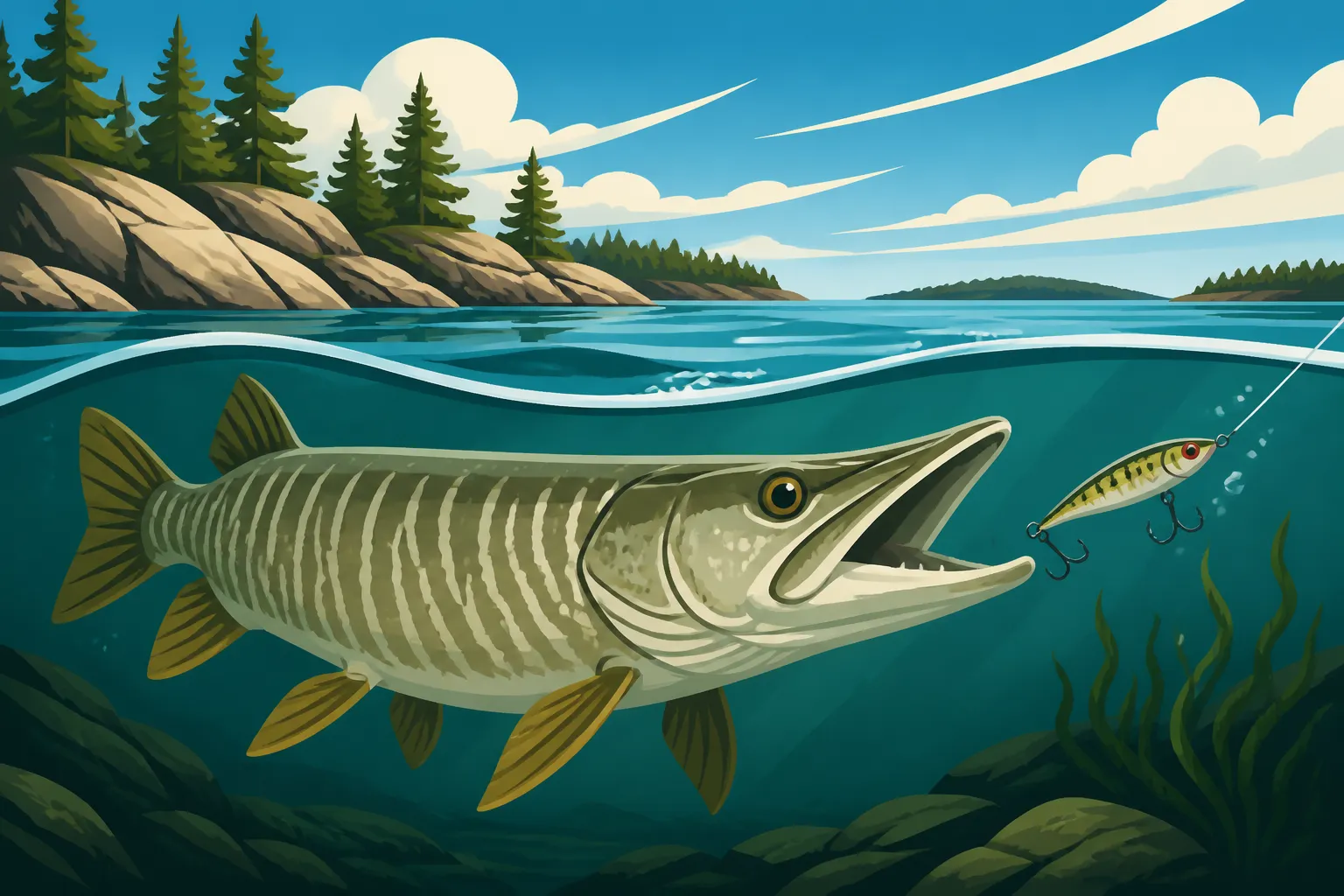
Muskellunge sit right at the top of the food chain in Georgian Bay. They are true apex predators, helping to maintain the balance of the fish populations below them. This role means they are keenly attuned to the movements and densities of their prey, which dictates much of their behaviour. They are ambush predators by nature, relying on stealth and explosive bursts of speed to capture their meals.
Their presence signifies a healthy aquatic environment. Muskie are sensitive to changes in water quality, habitat degradation, and overfishing. When muskie populations are thriving, it’s often a good indicator that the entire ecosystem is in good shape. Anglers who target these fish are often among the most passionate conservationists, understanding that protecting the muskie’s environment is paramount to their continued existence.
The interplay between muskie and other species is constant. They might prey on smaller pike, bass, or even other muskie. This predatory pressure keeps populations of other fish in check, preventing overpopulation and promoting stronger, healthier individuals within the forage base. It’s a magnificent, brutal ballet played out beneath the surface, with the muskie as the lead dancer.
Seasonal Rhythms: How Muskellunge Move Through Georgian Bay
Muskellunge in Georgian Bay are highly migratory, with their movements dictated primarily by water temperature, forage availability, and spawning instincts. They don't just stay in one spot; they're constantly shifting, sometimes covering vast distances in search of optimal conditions. Understanding these seasonal patterns is perhaps the single most important factor in consistently finding fish. Knowing Ontario Muskellunge Season Dates and Limits is also crucial for responsible angling.
The sheer size of Georgian Bay means that localized conditions can vary significantly, even within the same general area. What applies to muskie in the northern, more open parts of the bay might be slightly different from those in the more protected, shallower southern sections. It's a dynamic fishery that demands continuous observation and adaptation from anglers.
These movements aren't random; they follow predictable patterns year after year, though specific timing might shift slightly with weather and climate. Early season, mid-summer, and late fall all present unique challenges and opportunities, requiring different approaches and strategies. Anglers who can key into these transitions are often the ones who find consistent success.
Spring and Early Summer Movements
As the ice recedes and water temperatures begin to climb in spring, muskie move out of their deeper wintering grounds. Their first priority after the long winter is often spawning, which typically occurs in shallow, vegetated bays and river mouths once water temperatures reach around 10-15°C (50-59°F). Post-spawn, they are often lethargic, recuperating from the energy expenditure.
Once they've recovered, usually as early summer progresses, they start to spread out, often frequenting warmer, shallower bays and points where new weed growth is abundant. These areas are rich in baitfish, offering easy meals as the muskie rebuild their strength. They’ll often be found cruising the edges of emergent weed lines or sitting in ambush within denser patches, particularly in areas with darker bottoms that warm up faster.
During this time, particularly in protected inlets, you might find them in depths of 5 to 15 feet. They are more active in these shallower zones, and surface temperatures play a significant role. If you're looking for gear to tackle these early season fish, you'll find a wide selection of appropriate baits and tackle on Amazon, from smaller bucktails to jerkbaits designed for shallower presentations.
Mid-Summer Patterns and Deepwater Transitions
As summer peaks and water temperatures continue to rise, muskie often transition to deeper, cooler water, particularly during the heat of the day. This doesn't mean they abandon shallow areas entirely, but their activity often shifts to dawn, dusk, or periods of cloud cover in those locations. During bright, hot days, they'll retreat to thermal refuges – deeper rock humps, steep breaks, or submerged timber where cooler water can be found.
In these deeper zones, they might suspend over open water chasing baitfish schools like cisco or whitefish, or they could be relating to structure at depths of 20 to 40 feet or even more, depending on the specific area of Georgian Bay. They become highly opportunistic, ambushing prey that moves into their strike zone. Trolling larger baits or using deep-diving crankbaits becomes more effective during this period, particularly over deeper humps and along channel edges.
The key to mid-summer success is often finding that cooler, oxygenated water. This might be in the main basin, around deep island structures, or near current breaks. The availability of their preferred forage, which also seeks comfortable water temperatures, heavily influences these deeper movements. Understanding these deepwater transitions is a game-changer for summer muskie fishing.
Fall Feeding Frenzy and Wintering Habits
Fall is arguably the most anticipated season for Georgian Bay muskie anglers, and for good reason. As water temperatures cool, muskie enter a "feeding frenzy" phase, aggressively putting on weight for the long winter ahead. They move back into shallower areas, but often associate with deeper access points. Main lake points, rocky reefs, and vast weed flats adjacent to deep water become prime locations.
They are incredibly active during this time, often willing to chase larger baits and put on spectacular aerial displays. Depths might vary from 10 to 30 feet, but they are generally more tolerant of shallower water than in mid-summer, especially during overcast days. This is the time when anglers have their best shot at catching truly giant fish. For specific techniques, consider exploring Best Techniques for Fall Muskie Fishing.
As late fall turns to early winter, and water temperatures plummet towards freezing, muskie will migrate to their deepest wintering grounds. These are typically vast, deep basins where water temperatures remain stable above the thermocline (if one still exists) or in large, protected bays with deep water access. During the coldest parts of winter, their metabolism slows dramatically, and they become far less active, conserving energy until spring. Ice fishing for muskie is generally not permitted or practical in many areas of the bay, making the open water fall season the last hurrah.
Here's a quick overview of seasonal movements:
| Season | Typical Depth Range | Habitat Preference | Forage Activity | Fishing Strategy Notes |
|---|---|---|---|---|
| Spring (Post-Spawn) | 5-15 feet | Shallow bays, new weed growth, darker bottom areas | Baitfish moving shallow, opportunistic feeding | Jerkbaits, smaller bucktails, stealthy approaches |
| Early Summer | 10-20 feet | Weed edges, rocky points, transition zones | Active, growing baitfish populations | Bucktails, glide baits, medium-diving crankbaits |
| Mid-Summer | 20-40+ feet | Deep rock humps, steep breaks, main lake basins | Cisco, whitefish, suspending bait | Deep trolling, large soft plastics, jigging |
| Fall | 10-30 feet | Main lake points, rocky reefs, deep weed edges | Intense feeding on all available prey | Large bucktails, big jerkbaits, deep-diving crankbaits, gliders |
| Winter | Deep basins, stable temp zones | Deepest sections of large bays, main basin | Slow metabolism, minimal feeding | Generally inaccessible / out of season for open water fishing |
A Finicky Feeder: Diet and Foraging Strategies
Muskellunge have a reputation for being finicky, and for good reason. They are not always actively feeding, and when they are, they can be incredibly selective about what they eat. Their diet in Georgian Bay is diverse, primarily dictated by the available forage in their specific hunting grounds. Understanding what muskie eat in Georgian Bay is key to selecting the right baits and presentations.
These fish are highly efficient predators, capable of consuming prey up to one-third of their own body length. They have a lightning-fast strike and a mouth full of razor-sharp teeth designed to grasp and hold slippery fish. Their foraging strategies vary from passive ambush to active pursuit, depending on the environment and the activity level of their prey.
Anglers often get frustrated by muskie that follow a bait right to the boat but refuse to strike. This "follow but no hit" behaviour is classic muskie, indicating they're curious, perhaps evaluating the prey, but not committed to a strike. It’s part of the challenge and allure of fishing for them.
Primary Food Sources in Georgian Bay
The backbone of the Georgian Bay muskie diet consists of pelagic baitfish like cisco (also known as lake herring) and various species of whitefish. These cold-water species thrive in the deeper, cooler waters of the main bay and its larger channels, providing a high-fat, high-protein food source essential for muskie growth. Targeting areas where these baitfish congregate is often a winning strategy.
Beyond these primary forage species, muskie will also readily consume suckers, yellow perch, burbot, and even smaller northern pike or bass. In shallower, weedier environments, they might feed on panfish, frogs, or ducklings if the opportunity arises, showcasing their opportunistic nature. The diversity of prey available in Georgian Bay ensures a well-rounded diet for these top predators.
Anglers selecting lures should always consider the dominant baitfish in the area they are fishing. If you're over deep structure in the main bay, a lure mimicking a cisco or whitefish might be more effective than a bright, flashy bait meant for shallow, murky water. This thoughtful approach to lure selection, often informed by observing baitfish schools on your fish finder, can greatly improve your success.
Ambush vs. Active Hunting: Muskie Foraging Tactics
Muskellunge are masters of ambush. They will often position themselves in prime ambush points – along weed edges, behind submerged rocks, at the base of steep drop-offs, or near current breaks. Here, they wait patiently, camouflaged by their markings, until an unsuspecting prey fish swims by. Their strike is a sudden, violent lunge, often surprising both the prey and the angler.
However, they are also capable of active hunting, particularly when schooling baitfish are abundant or during periods of high activity, like the fall feeding frenzy. In these scenarios, muskie might cruise open water, actively tracking and pursuing schools of cisco or whitefish. This is when trolling large baits can be particularly effective, as it covers water and intercepts actively feeding fish.
The choice between ambush and active hunting often depends on the muskie's mood, the time of year, and the specific habitat. A muskie tucked into a dense weed bed is likely ambushing, while one suspended over a deep basin is more likely to be on the prowl. Recognizing these patterns and adapting your fishing technique accordingly is what separates successful muskie anglers from those who struggle.
Life's Cycle: Spawning and Reproduction in Georgian Bay
The perpetuation of the muskellunge species in Georgian Bay relies on successful spawning and the subsequent survival of their young. This annual ritual is a critical period, and understanding it is not only fascinating but also vital for conservation. Muskie are known to be broadcast spawners, scattering their eggs over vegetation or soft bottoms in shallow water.
Their spawning habits are closely tied to water temperature, making them somewhat predictable in terms of timing, though specific dates can vary annually based on the progression of spring. Disturbing spawning muskie is not only illegal but also detrimental to the fishery, so respecting these sensitive periods is paramount for all anglers.
After spawning, the adult fish are incredibly vulnerable, having expended significant energy. They need time to recover and replenish their reserves before resuming their predatory activities. Protecting their spawning habitats and allowing them undisturbed recovery periods are key components of sustainable muskie management.
The Spawning Ritual
Muskellunge typically spawn in late spring, generally from late April to early June, once water temperatures in shallow bays consistently reach 10-15°C (50-59°F). They seek out shallow, vegetated areas with soft bottoms, often in protected bays or river mouths that warm up quickly. These areas provide cover and substrate for their adhesive eggs.
The female muskie will release tens of thousands of eggs, which are then fertilized by several males. The eggs sink and stick to aquatic vegetation, submerged wood, or even sandy/silty bottoms. There is no parental care; once the eggs are laid and fertilized, the adults leave the spawning grounds.
The incubation period for muskie eggs is relatively short, usually around two weeks, depending on water temperature. The newly hatched fry are tiny and extremely vulnerable, relying on their yolk sac for initial sustenance before they begin feeding on zooplankton. The survival rate of fry is naturally very low, making successful spawning events even more critical for the population.
Early Life Stages and Habitat Requirements
Muskellunge fry, after exhausting their yolk sac, begin feeding on microscopic organisms and small invertebrates. As they grow, their diet rapidly shifts to larger prey, including insect larvae and tiny fish. During this crucial early life stage, dense, shallow vegetation provides essential cover from predators and a rich source of food.
These nursery habitats are incredibly important. Without adequate shallow, weedy areas that are protected from strong winds and currents, the survival rate of young muskie plummets. Any form of habitat degradation, such as shoreline development that removes aquatic vegetation, can have a severe impact on the future of the muskie fishery.
Over time, as the young muskie grow larger, they begin to mimic the predatory habits of their parents, moving into slightly deeper water and targeting larger baitfish. Muskellunge Growth Rate to Trophy Size is a fascinating topic that highlights just how long it takes for these fish to reach their impressive mature dimensions, underscoring the importance of protecting every stage of their life cycle.
Key Habitat Preferences of Georgian Bay Muskellunge
Georgian Bay's immense and varied landscape offers a smorgasbord of habitats for muskellunge, from rocky offshore structures to vast, fertile weed beds. Understanding where these fish prefer to spend their time is fundamental to finding them. It's not just about one type of structure; muskie utilize different habitats for different purposes throughout the year.
The key is often finding a combination of elements: structure, cover, and proximity to forage. A single element might hold a muskie temporarily, but the most productive spots typically offer a rich confluence of these factors. This is where experience on the water, combined with good topographic maps and a reliable fish finder, really pays off.
It's easy to get overwhelmed by the sheer size of Georgian Bay, but by breaking it down into distinct habitat types, you can narrow your search considerably. Each type of habitat has its own nuances and typically holds muskie in specific ways.
Rocky Reefs and Shoals
Georgian Bay is famous for its rocky, Precambrian shield geology, which creates an abundance of reefs, shoals, and islands. These structures are muskie magnets, particularly during the early and late seasons. Rock provides excellent ambush points, attracts baitfish that feed on algae and invertebrates, and offers thermal refuge.
Muskie will often position themselves on the deeper side of a sharp break, along the edge of a rocky point, or right on top of a submerged rock hump that rises dramatically from deeper water. They use these areas to ambush baitfish that are cruising the structure or transitioning between different depths. Looking for distinct changes in depth or areas where rock transitions to sand or weeds can be highly productive.
The clarity of Georgian Bay's water means that muskie can see a long way, and anglers need to be mindful of their approach. Long casts and quiet boat control are crucial when fishing these clear, rocky areas. Using a good sonar system is indispensable for identifying subtle changes in bottom composition and structure that might hold a monster muskie. A quality fish finder, which you can research and purchase on Amazon, can make all the difference in locating these elusive fish.
Weeds, Wood, and Bays
While Georgian Bay has plenty of rock, it also boasts extensive weed beds, especially in its shallower, more sheltered bays and southern reaches. Weeds provide unparalleled cover for muskie, allowing them to disappear into the thick vegetation and ambush passing prey. Coontail, cabbage, and milfoil are common types of aquatic vegetation that muskie adore.
Muskie will often be found right on the inside or outside edge of a weed line, in pockets within a large weed flat, or relating to isolated clumps of weeds. Any significant patch of submerged wood – fallen trees, stumps, or old docks – within or near these weed beds only enhances its appeal to muskie, offering additional cover and ambush opportunities.
These shallower, warmer habitats are particularly important during the post-spawn and early summer periods when muskie are recovering and actively feeding on baitfish that also frequent the weeds. However, don't rule out deep weed lines even in late summer and fall; some muskie will always prefer the cover and forage offered by dense vegetation, even if it's adjacent to deeper water.
Conservation Efforts and Sustainable Fishing Practices
The allure of Georgian Bay muskellunge brings many anglers to its waters, and with that popularity comes a responsibility to protect this magnificent species. Conservation efforts are crucial to ensure healthy muskie populations for future generations. These fish are slow-growing, long-lived, and not highly fecund, meaning they are particularly susceptible to overfishing and habitat degradation.
Anglers are often the first line of defence when it comes to reporting concerns or participating in stewardship programs. Our collective commitment to ethical angling practices directly impacts the sustainability of the fishery. Catch-and-release is a cornerstone of muskie fishing, reflecting the understanding that these fish are too valuable to only be caught once.
Regulations are put in place by the Ministry of Natural Resources and Forestry (MNRF) to manage these populations, and understanding and adhering to these rules is non-negotiable. These regulations are designed to protect spawning fish, allow young fish to mature, and maintain a healthy age structure within the population.
Catch and Release Best Practices
For Georgian Bay muskellunge, catch and release isn't just a suggestion; it's a practice adopted by the vast majority of dedicated muskie anglers. These fish take many years to reach trophy size, and releasing them ensures they can continue to grow, spawn, and contribute to the fishery. Proper handling is absolutely critical to their survival after release. You can find more comprehensive details on Muskie catch and release survival tips.
Here are some key practices:
- Minimize Fight Time: Use heavy tackle appropriate for muskie to bring the fish in quickly. A prolonged fight can exhaust the fish to the point of no return.
- Keep it in the Water: Whenever possible, avoid removing the muskie from the water. If you must lift it for a quick photo, support its body horizontally with both hands, one under the belly and one near the tail. Never hang a muskie vertically by its jaw or gill plate.
- Use Proper Tools: Have long-nosed pliers, bolt cutters (for cutting hooks if necessary), and a large, knotless rubber landing net or a cradle ready. These tools minimize handling time and injury to the fish. Many anglers find these essential tools readily available on Amazon.
- Quick Hook Removal: Work quickly and carefully to remove hooks. If a hook is deeply embedded or difficult to remove, cut the hook rather than tearing flesh. Barbless hooks can also make removal much easier.
- Revive Gently: If the muskie appears stressed or lethargic, hold it gently in the water by the tail, facing into the current or moving it back and forth to force water over its gills until it regains strength and swims away on its own. Don't let it go until it's actively trying to swim out of your grasp.
Habitat Protection and Angler Stewardship
Beyond responsible catch-and-release, protecting the vital habitats of Georgian Bay muskellunge is paramount. This means advocating for responsible shoreline development, supporting efforts to maintain water quality, and participating in habitat restoration projects when opportunities arise. Healthy muskie habitats mean healthy muskie populations.
Anglers can play an active role by reporting any suspicious activities like pollution or poaching to the proper authorities. Joining local fishing clubs or conservation organizations that focus on Georgian Bay's fisheries is another excellent way to contribute. These groups often work directly on projects that benefit muskie, such as monitoring populations or improving spawning grounds.
Ultimately, the future of the Georgian Bay muskellunge fishery rests on the shoulders of those who cherish it most – the anglers. By embracing a conservation-minded approach and continually educating ourselves on best practices, we can ensure that these magnificent freshwater giants continue to thrill and challenge anglers for generations to come.
Disclaimer
This article is for general informational purposes only and does not constitute professional advice. Laws, prices and regulations vary by location and change over time. Consult a qualified professional for guidance on your specific situation.