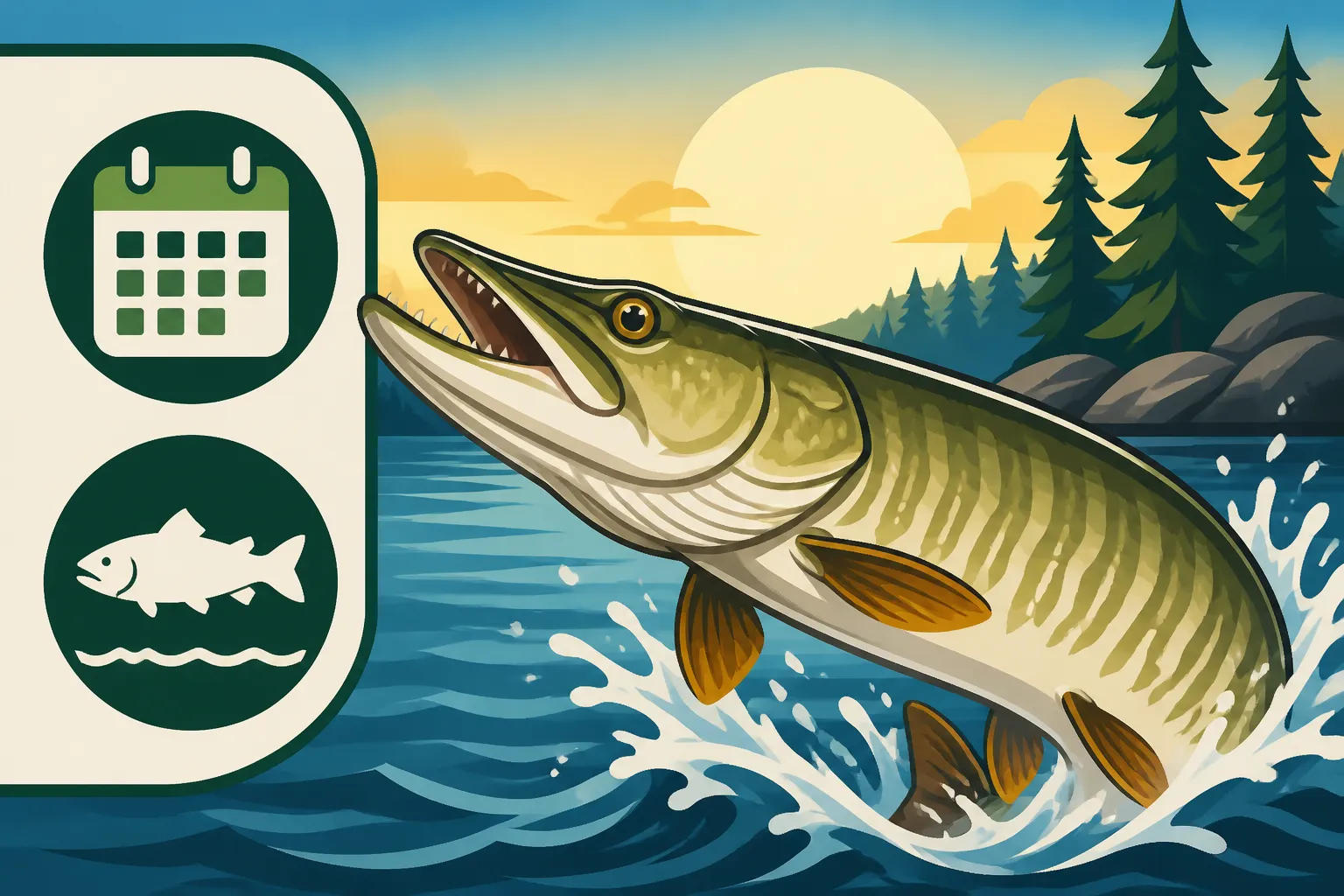
Ontario Muskellunge Season Dates and Limits
For many anglers, the pursuit of muskellunge in Ontario is less of a hobby and more of an obsession. These incredible freshwater titans are famous for their elusive nature and explosive strikes, making every encounter an unforgettable moment. However, the excitement of chasing these "fish of 10,000 casts" can quickly turn into frustration if you're not absolutely clear on the ever-important season dates and limits. There's nothing worse than landing a trophy muskie only to realize you're out of season or that it's the wrong size, so this comprehensive guide will help you navigate Ontario's muskie regulations with confidence.
Understanding Muskie Fishing in Ontario
Muskellunge, often simply called "muskie," are truly a special fish. They are the apex predators of many Ontario waters, growing to impressive sizes and demanding a unique blend of skill, patience, and specialized tackle. Anglers travel from far and wide to experience the thrill of a muskie hunt, but this also means that responsible management is critical to sustain these prized fisheries.
The Allure of the Apex Predator
There's something undeniably captivating about muskie fishing. It's not just about catching a fish; it's about the challenge, the anticipation, and the sheer power of these magnificent creatures. They are often dubbed the "freshwater barracuda" due to their long, slender bodies, sharp teeth, and predatory instincts. A muskie strike is unlike anything else – a sudden, violent ambush that can send your heart into your throat. Many anglers spend countless hours casting massive baits, knowing that a single follow or strike could be the moment of a lifetime. The sheer size potential, with fish regularly exceeding 40 or even 50 inches, sets them apart from most other freshwater species, making every muskie caught a true trophy.
Challenges and Rewards of Muskie Pursuits
The reputation of the muskie as the "fish of 10,000 casts" isn't entirely unfounded, though it's certainly an exaggeration on many productive waters. Still, it speaks to the significant challenge involved. Muskie are notoriously difficult to entice, often following a lure right to the boat only to turn away at the last second. This requires incredible focus, persistence, and often, an advanced technique known as the "figure-eight" boat-side maneuver. The gear itself is heavy-duty – robust rods, strong reels, heavy line, and large, expensive lures. It's an investment, both in time and money, and it can be disheartening when the fish aren't cooperating. However, these challenges only amplify the reward. When that rod doubles over, and you feel the immense weight and head shakes of a powerful muskie, all the effort, expense, and previous "follows" fade away. It's a testament to your dedication, a thrilling battle, and a memory that will last a lifetime. For those who embrace the grind, the rewards are immeasurable.
Ontario's Fisheries Management Zones (FMZs) and Their Impact on Muskie Seasons
One of the most crucial aspects of understanding muskie regulations in Ontario, or any fishing for that matter, is grasping the concept of Fisheries Management Zones, or FMZs. Ontario is a vast province, and its diverse waterways necessitate a tailored approach to fisheries management. What applies to Lake of the Woods in the northwest isn't necessarily going to apply to the Bay of Quinte in the southeast.
Decoding the FMZ System for Muskie
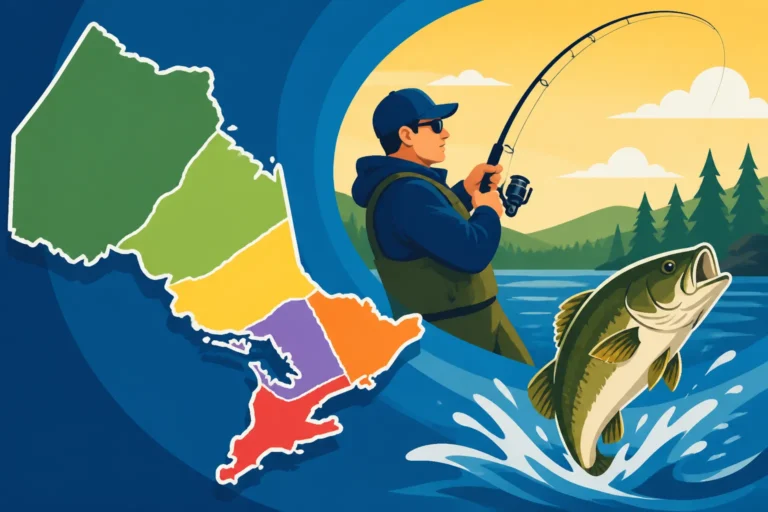
The Ministry of Natural Resources and Forestry (MNRF) has divided Ontario into 20 distinct Fisheries Management Zones. Each zone has its own set of specific regulations, including different opening and closing dates for various species, as well as varying size and possession limits. This system is designed to protect local fish populations, account for different ecological conditions, and support sustainable fishing practices. For muskie anglers, this means you absolutely cannot assume that the regulations you followed in one area will be the same just a few hours' drive away. It's a common frustration for anglers who travel across the province, but it's an essential part of effective conservation. You can dive deeper into this topic by reading our detailed guide on Ontario Fisheries Management Zones, Explained.
Where to Find Your Muskie Zone
Before you even think about putting a boat in the water or making that first cast for muskie, your absolute first step should be to identify which FMZ you'll be fishing in. This information is readily available through the official Ontario Fishing Regulations Summary, which you can access online via the Ontario government website or pick up a physical copy at most license issuers and bait shops. Many mapping apps and specialized fishing apps also integrate FMZ boundaries, making it easier than ever to confirm your location.
A quick check on a tool like the Ontario Fish ON-Line Interactive Zone Map, Explained can clarify exactly which zone you're in, removing any guesswork. Don't rely on word-of-mouth or last year's memory; regulations can change annually, and knowing your zone is the foundation for understanding all other rules, including Ontario Fishing Season Dates by Zone.
Muskellunge Season Dates Across Key Ontario Zones
The season dates for muskellunge in Ontario are arguably the most critical piece of information for any muskie angler. These dates are meticulously chosen to protect muskie during their spawning periods, ensuring that future generations of these incredible fish continue to thrive. Violating season dates, even accidentally, can lead to significant penalties, including fines and the loss of fishing privileges.
Northern Ontario Muskie Hotspots and Their Dates
Northern Ontario is home to some legendary muskie fisheries, boasting vast, pristine lakes and rivers where these giants can truly thrive. Regions like FMZ 2 (e.g., Lake of the Woods, Rainy Lake), FMZ 4 (e.g., Eagle Lake), FMZ 5, and FMZ 6 often see slightly later opening dates compared to some southern zones, primarily due to colder water temperatures and a later spring thaw. Generally, in these northern zones, the muskie season will open around mid-June, typically the third Saturday of the month, and run until mid-December. This allows for a robust spawning period to conclude and gives the fish time to recover before anglers begin their pursuit. Always consult the current year's regulations for exact dates, as they can sometimes shift slightly.
For example, in FMZ 2, which includes the iconic Lake of the Woods and Rainy Lake, the muskie season usually kicks off on the third Saturday in June, providing a long season extending well into the ice-fishing period for other species. These sprawling waters offer incredible opportunities for trophy muskie, but they also demand respect for the regulations. Anglers often stock up on their specialized muskie lures and gear from retailers like Amazon well in advance, getting ready for that much-anticipated opener.
Central and Southern Ontario Muskie Destinations
Moving into central and southern Ontario, you'll find a mix of earlier and later season openers, often reflecting different ecological conditions and fishing pressures. Lakes in FMZ 11 (e.g., Georgian Bay, parts of Lake Huron) and FMZ 12 (e.g., Lake Nipissing, French River) might see muskie seasons opening around the first or second Saturday of June. Other zones, like those further south or with more unique environmental factors, can have different start dates.
For instance, the incredibly popular Lake Nipissing in FMZ 12 typically opens for muskie on the first Saturday in June, drawing in countless anglers eager to tackle its legendary muskie population. Further south, the renowned Lake St Clair Muskie Fishing and Georgian Bay Muskie Fishing areas, often falling under FMZ 11 and FMZ 20, also have specific dates. It's crucial to cross-reference your specific location within these zones. The end dates for these regions are generally similar to the north, extending into mid-December.
Great Lakes Tributaries and Boundary Water Specifics
The Great Lakes themselves, and their connecting rivers, offer some world-class muskie opportunities, often with unique regulations. For example, the waters of Lake Erie and Lake St. Clair, falling mostly within FMZ 20, have their own distinct muskie season. These areas are globally recognized for their trophy muskie potential. Typically, the season in these boundary waters with the United States opens later, often in the first week of June, extending until mid-December. This later opening is often coordinated with regulations on the American side to ensure consistent management across shared waters.
It's also worth noting that some specific river systems or smaller lakes might be designated as Special Regulation Waters in Ontario, which could mean even further deviations from the general FMZ rules. Always check the "Exceptions to the Zone Regulations" section in the official summary. For instance, the St. Lawrence River, a major muskie fishery, has specific nuances that can apply to portions of it. Knowing the ins and outs of these specific regional rules, beyond just the broad FMZ, is key to staying compliant and having a successful trip.
Here's a simplified table summarizing typical muskie season opening dates in some key Ontario FMZs. Always consult the current official Ontario Fishing Regulations Summary for the precise, up-to-date dates for your specific fishing year and location.
| Fisheries Management Zone (FMZ) | General Location (Examples) | Typical Muskie Opening Date (General) | Typical Muskie Closing Date |
|---|---|---|---|
| FMZ 2 | Lake of the Woods, Rainy Lake | Third Saturday in June | December 15 |
| FMZ 4 | Eagle Lake, Dryden Area | Third Saturday in June | December 15 |
| FMZ 11 | Georgian Bay, parts of Lake Huron | First or Second Saturday in June | December 15 |
| FMZ 12 | Lake Nipissing, French River | First Saturday in June | December 15 |
| FMZ 13 | Kawartha Lakes | First or Second Saturday in June | December 15 |
| FMZ 20 | Lake Erie, Lake St. Clair | First Saturday in June | December 15 |
Disclaimer: This table is for general informational purposes only. Consult the official Ontario Fishing Regulations Summary for exact and current dates.
Muskellunge Size and Possession Limits
Beyond just the season dates, understanding the size and possession limits for muskellunge is equally vital. Ontario's regulations are heavily geared towards protecting these long-lived, slow-growing fish, often emphasizing catch-and-release practices for the vast majority of anglers.
Minimum Size Requirements: Protecting the Giants
For muskellunge, minimum size requirements are often quite generous, meaning the fish must be of a considerable length before it can legally be kept. This is a critical conservation measure because muskie are very slow to reach maturity and grow to trophy sizes. Allowing smaller fish to be kept would deplete the breeding stock and the potential for those truly massive "wall hangers." In many Ontario FMZs, you'll find minimum size limits for muskie in the range of 40 to 54 inches (or roughly 100 to 137 cm). These aren't small fish!
For example, in popular muskie zones, a 44-inch minimum is not uncommon. This means that if you catch a muskie shorter than that, it must be immediately released unharmed. The intent is clear: protect the younger, still-growing fish so they can reproduce and contribute to the fishery, eventually growing into the legendary giants that Ontario is known for. Always have a reliable measuring device on your boat, easily accessible, to quickly and accurately measure your catch.
Daily Catch and Possession Limits: What You Can Keep (if anything)
When it comes to daily catch and possession limits for muskellunge, most Ontario anglers will find that the rules strongly encourage, if not mandate, catch-and-release. In many FMZs, the daily limit for muskie is often one fish, but only if it meets a very stringent minimum size requirement. The possession limit is usually the same as the daily limit. This means that if you legally harvest a muskie, that's your one for the day, and it contributes to your possession limit.
However, many dedicated muskie anglers choose to release all muskie, regardless of size, due to their appreciation for the species and their commitment to conservation. The sheer rarity of legally sized muskie, combined with their slow growth, means that most encounters are, by default, catch-and-release scenarios. This is why having the right Best Landing Net for Muskie and proper handling tools are so important – most of the time, you'll be releasing that magnificent creature. For a more general overview, you can always consult Ontario Bag and Possession Limits by Species.
Sport vs. Conservation License Impact
The type of fishing license you hold – a Sport Fishing License or a Conservation Fishing License – also plays a role in your muskie limits, though for muskie, the difference is often less about keeping more fish and more about simply being allowed to fish. For many species, a Sport License typically allows for a higher daily catch and possession limit than a Conservation License. However, for muskellunge, given their high minimum size and low limits, the difference might be negligible in terms of actual harvest.
A Conservation License is usually designed for anglers who are primarily interested in catch-and-release or keeping only a very modest number of fish. While a Sport License might technically allow for one muskie (if it meets the often immense minimum size), a Conservation License might not allow for any harvest at all, or perhaps one at an even higher minimum size. It's crucial to understand these distinctions, which are clearly laid out in the Ontario Sport vs Conservation Fishing License guide, and adhere to the limits corresponding to your specific license. The goal, regardless of license type, is to preserve the muskie population for future generations.
Conservation and Catch & Release Practices for Muskie
Given the challenging nature, impressive size, and slow growth rate of muskellunge, conservation is truly at the heart of muskie fishing in Ontario. Most dedicated muskie anglers are passionate advocates for catch-and-release, understanding that these magnificent fish are too valuable to harvest indiscriminately.
Why Catch and Release is Paramount for Muskie
Muskellunge can live for 15 to 30 years or more, taking many years to reach the impressive sizes that make them so sought after. They are not prolific spawners, and their populations are often fragile. Every large muskie, especially the females, represents a significant reproductive asset to the fishery. Removing a large muskie means removing years of growth and future spawning potential. For these reasons, widespread catch-and-release ensures the sustainability of muskie populations, allowing more anglers to experience the thrill of encountering these giants.
When you release a muskie, you're not just letting go of a fish; you're investing in the future of the sport and the health of Ontario's ecosystems. The adage "a picture is worth a thousand words" certainly applies here, as most muskie anglers are far more interested in a great photo of a released fish than a fillet. Our guide on Is It Legal to Release a Muskie You Catch in Ontario? further emphasizes this important practice.
Best Practices for Handling and Releasing Muskie
Responsible handling is just as important as catch-and-release itself. A muskie, even after a tough fight, needs to be handled with care to maximize its survival chances. Avoid bringing the fish into the boat if possible. Instead, use a large, rubberized landing net (never knotted nylon, which can damage fins and slime coat) to contain the fish boat-side. Keep the fish in the water as much as possible while removing hooks.
When lifting, support the fish horizontally with one hand under the gill plate (avoiding the gills themselves) and the other under the belly. Never lift a muskie vertically by its jaw alone, as this can cause severe internal damage. Use long-nosed pliers, bolt cutters, or specialized muskie hook removers to quickly and efficiently dislodge hooks. If hooks are deeply embedded, cut the line and leave the hook in place rather than tearing tissue. Finally, gently revive the fish by holding it upright in the water, facing into the current, until it can swim away strongly on its own. For more detailed advice, check out Muskie catch and release survival tips.
Essential Gear for Responsible Muskie Angling
Having the right gear isn't just about catching muskie; it's about doing it responsibly. A heavy-duty muskie rod and reel combo, capable of handling large lures and powerful fish, is a must. You'll also need strong braided line and a bite-proof leader (fluorocarbon or wire, depending on your preference). When it comes to handling, a truly essential piece of equipment is a large, knotless rubberized landing net, often 36-48 inches deep, designed specifically for muskie. Don't skimp on this; it's the safest way to control a large, thrashing fish.
In addition, a good pair of extra-long needle-nose pliers or hook-out tools, and a pair of sturdy bolt cutters (to quickly snip hooks that are too deep to remove), are non-negotiable. A reliable measuring tape that won't damage the fish's slime coat is also important. Many anglers purchase these specialized items, like specific muskie pliers or nets, from online retailers like Amazon to ensure they have exactly what they need for a safe and ethical release. Consider investing in high-quality gear; it protects both you and the fish. You can find more recommendations in our guide on the Best Muskie Gear for Ontario Waters.
Common Misconceptions and FAQs About Muskie Regulations
Even seasoned anglers can sometimes get tripped up by the nuances of muskie regulations. With varying rules across zones and the sheer size and reputation of the fish, it's easy for confusion to arise. Addressing these common questions can help ensure you're always fishing within the law.
Distinguishing Muskie from Northern Pike
One of the most frequent points of confusion, especially for those new to muskie fishing, is how to tell a muskie apart from a northern pike. They are both long, toothy, predatory fish found in many of the same waters, but their regulations, and indeed their average sizes, are often quite different. The key differences lie in their markings, tail fin shape, and the number of pores on their lower jaw.
Muskie typically have dark markings (spots, bars, or stripes) on a lighter background, while pike usually have lighter, bean-shaped spots on a darker background. The tail fin of a muskie is often more pointed or "V-shaped" than the rounded tail of a pike. The most reliable way to tell them apart, however, is to count the sensory pores on the underside of the lower jaw. Muskie will typically have 6-9 pores on each side, while northern pike have 5 or fewer. While pike are more common and can be caught more readily, muskie are the true giants. Knowing the difference is crucial, especially when dealing with limits or minimum sizes. Our article How to tell a muskie from a northern pike offers a detailed breakdown.
Navigating Special Regulation Waters
Beyond the general FMZ rules, Ontario also has specific bodies of water designated as "Special Regulation Waters." These are lakes or rivers where, due to unique conservation needs or specific management goals, the general FMZ regulations for certain species, including muskie, may be altered. This could mean different season dates, higher or lower size limits, or even unique tackle restrictions. Ignoring these special regulations, even inadvertently, is not an excuse for non-compliance.
These special rules are always clearly outlined in the official Ontario Fishing Regulations Summary. It's not uncommon for a highly pressured lake, or a lake with a particularly sensitive muskie population, to have its own set of rules. For example, some lakes might have a 'no harvest' rule for muskie, making them entirely Ontario Catch and Release Only Waters. Always double-check the "Exceptions to the Zone Regulations" section for the specific lake or river you intend to fish. This diligence will save you potential headaches and ensure you're contributing to the health of the fishery.
Checking for Last-Minute Changes and Updates
Fishing regulations in Ontario are reviewed annually, and while major changes aren't constant, subtle tweaks or updates can occur. It's easy to assume that last year's rules are still valid, but that's a risky assumption. Always make it a habit to consult the most current version of the Ontario Fishing Regulations Summary before your first trip of the season, and certainly before any trip to an unfamiliar area. The MNRF website is the most reliable source for the most up-to-date information.
You can download the PDF directly to your phone or tablet, or even pick up a physical copy at a ServiceOntario location or a bait and tackle shop. Keeping abreast of changes demonstrates respect for the resource and ensures you remain compliant. Even if you've done your research, a quick mental refresh or a final check of the online summary the night before a trip, perhaps even double-checking the regulations using a resource found on Amazon, is a wise practice. Remember, ignorance of the law is not a valid defense. Our overarching guide to Ontario Fishing Regulations Explained emphasizes the importance of these annual checks.
Disclaimer
Please remember that fishing regulations, including season dates and limits, are subject to change. While this guide provides comprehensive information, it is not a substitute for the official Ontario Fishing Regulations Summary. Always consult the most current version of the summary published by the Ontario Ministry of Natural Resources and Forestry (MNRF) before heading out on the water. Following official regulations is the angler's responsibility.