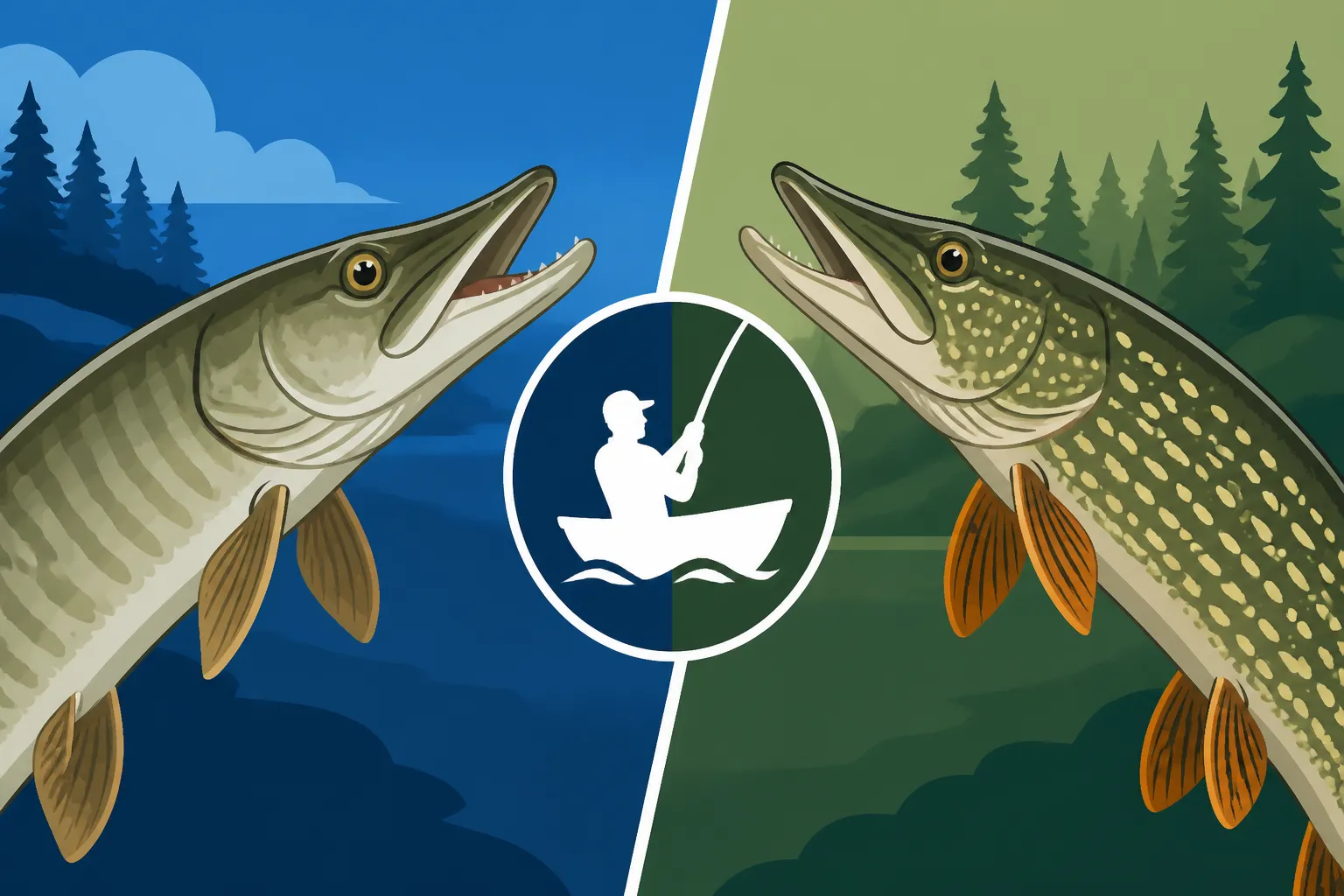
How to tell a muskie from a northern pike
It's happened to the best of us: you're out on a beautiful Ontario lake, you feel that unmistakable tug, and after a thrilling fight, you land a long, toothy fish. But then the questions start swirling. Is this a northern pike, or have you just landed your first muskellunge, often called a muskie? The truth is, these two apex predators can look incredibly similar, leading to understandable confusion, especially with varying regulations for each. Don't worry, you're not alone in wondering, and this guide is here to help you confidently tell the difference.
The Classic Jawline Test: Scales, or Lack Thereof
When trying to distinguish between a northern pike and a muskellunge, the most reliable and often cited method involves looking at the fish's lower jawline and gill plate. This isn't just about subtle differences in pattern; it's about a fundamental anatomical distinction that holds true across almost all specimens.
The Northern Pike's Fully Scaled Cheek and Gill Plate
Imagine you've just brought a fish boatside, perhaps on a legendary pike lake like Lake Nipissing. You're holding it carefully (and safely, of course!), and you look at its head. A northern pike will have scales completely covering its cheek and the upper half of its gill plate. If you were to run your finger gently across the entire cheek area, right up to the eye, it would feel consistently scaly. The same goes for the operculum, or gill plate, especially the top half. This full coverage gives the pike a more uniformly armoured appearance on its head, extending well back from its snout.
This characteristic is a dead giveaway, and once you know what to look for, it becomes second nature. Pike are built for ambush, and this scaling is just part of their streamlined, predatory design. They often lurk in weed beds, and this robust scaling probably offers some protection in their chosen habitat. So, if you see a full, unbroken patch of scales from the cheek all the way to the top of the gill plate, you're almost certainly looking at a northern pike. This distinction is crucial, especially since different species have different Ontario Bag and Possession Limits by Species.
The Muskellunge's Scaleless Lower Half
Now, let's talk about the muskie. Picture a formidable muskie from the waters of Georgian Bay, perhaps after a long day chasing them with big baits. When you examine its jaw and gill plate, you'll notice a distinct difference. A muskellunge will have scales on the upper half of its cheek and gill plate, but the lower half of both will be bare, lacking scales entirely. It's like a clear demarcation line, almost as if someone drew a line halfway down. This bare skin will often feel smooth and fleshy, a stark contrast to the scaly upper portion.
This is the key identifier, the "acid test" for differentiating these two fish. Even if the fish is thrashing a bit in the net, try to get a quick, careful look at that lower cheek and gill plate. Is there smooth, exposed skin there, or is it covered in scales like the top half? If it's bare, you've got a muskie. This anatomical difference is so reliable that it's often the first thing experienced anglers check. Understanding this primary difference is vital not just for bragging rights, but for adhering to regulations, especially if you're pursuing Muskellunge Fishing in Ontario or Northern Pike Fishing in Ontario.
Pattern and Colouration: More Than Just Spots
While the jawline test is the most foolproof method, the colouration and pattern of these fish also offer strong clues. However, this method can be a bit trickier because fish patterns can vary depending on their specific environment, water clarity, and even their mood. Still, understanding the typical markings can give you a good head start.
Northern Pike: Light Spots on a Dark Background
Northern pike typically feature a dark, often olive-green to brownish background colour, adorned with numerous lighter, bean-shaped or irregular spots. Think of it as a dark canvas splattered with lighter paint. These spots are usually yellowish, cream, or off-white and are distributed across their flanks. The darker background can sometimes be quite pronounced, especially in clear, tannin-stained waters of northern Ontario, making those lighter spots really pop.
Sometimes, a pike's pattern might appear more mottled or blotchy, especially in different lighting or when the fish is stressed. However, the consistent theme is always lighter markings on a darker body. This camouflaged appearance helps them blend into submerged vegetation and ambush prey like perch and small baitfish. If you're out ice fishing on Lake Simcoe and pull up a fish with these light-on-dark markings, you're almost certainly looking at a pike.
Muskellunge: Dark Marks on a Lighter Background (or Bars/Spots)
Muskies, on the other hand, usually present with a lighter, often greenish-silver to bronze background colour, over which dark markings are overlaid. These markings can take several forms:
- Barred Muskie: These are perhaps the most classic muskie look, featuring distinct vertical bars running down their sides. These bars can be solid, broken, or wavy.
- Spotted Muskie: Some muskies have dark spots scattered over their lighter body, but critically, these spots are darker than the background colour.
- Clear Muskie: Less common, but some muskies can appear almost entirely clear or unmarked, with very faint or absent patterns. They might simply have a uniform, silvery-green hue.
The key takeaway here is that if there are distinct markings, they are typically darker than the primary body colour, contrasting with the light-on-dark pattern of a pike. For example, a muskellunge caught from the Georgian Bay might display pronounced dark bars, perfectly illustrating this difference. This variation in pattern is part of what makes Muskellunge Growth Rate to Trophy Size so fascinating, as their appearance changes over time.
| Feature | Northern Pike | Muskellunge |
|---|---|---|
| Cheek & Gill Plate | Fully scaled cheek and upper half of gill plate | Upper half of cheek and gill plate scaled, lower half bare |
| Body Pattern | Light, bean-shaped spots on a darker background | Dark spots or vertical bars on a lighter background, or sometimes clear |
| Tail Fin | More rounded, less deeply forked lobes | More pointed, often deeply forked lobes |
| Overall Shape | Often appears stockier, more "torpedo-like" | Typically longer, more slender, "serpentine" |
| Spots on Fins | Fins are often unspotted or faintly mottled | Fins are often spotted with dark markings |
Fin Details and Body Shape: Subtle But Telling Clues
While not as definitive as the jawline test, looking at the fins and the overall body shape can provide supplementary clues, helping you confirm your initial assessment. These are often the subtle hints that experienced anglers pick up on subconsciously.
Fin Edges and Tail Shape
Pay close attention to the fins, particularly the caudal (tail) fin. Northern pike tend to have more rounded lobes on their caudal fin, almost like a gentle curve. Their dorsal and anal fins, while still sharp, often appear less pronounced and might have a slightly softer edge.
Muskies, on the other hand, generally boast a more pointed and often deeply forked caudal fin. The lobes of the tail will seem sharper and more defined. Their dorsal and anal fins also tend to be more sharply pointed, contributing to their overall streamlined, almost dagger-like appearance. It's a subtle difference, but once you've seen enough of both, you'll start to notice the muskie's fins just seem a bit more angular and aggressive. This distinction can be particularly helpful when comparing fish that are similar in size.
Overall Body Proportions
This is perhaps the most subjective of the identification methods, but it's worth considering. Northern pike often have a somewhat stockier, more "torpedo-like" body shape. They can appear quite robust and muscular for their length, especially around the midsection. Their head might seem proportionally larger compared to their overall body length.
Muskies, especially trophy specimens, tend to be longer and more slender, giving them a serpentine or snake-like appearance. While they are incredibly powerful, their length often gives them a more elongated, graceful profile. This difference in proportionality can be more noticeable in larger fish. For example, a 40-inch pike might appear quite chunky, whereas a 40-inch muskie often looks sleeker and more stretched out. This is part of what contributes to their reputation as true freshwater giants and why targeting them requires specific strategies, as detailed in Best Techniques for Fall Muskie Fishing.
Practical Tips for On-the-Water Identification (and Safe Handling)
Being able to tell a muskie from a pike confidently in the heat of the moment, especially when a big fish is thrashing, is a skill that comes with practice. But it's also incredibly important for conservation and adhering to fishing regulations.
When to Use Which Method: Quick Checks and Confident IDs
When you've got a fish on the line, the priority is always safe handling, especially for these fragile apex predators. Get the fish into a large landing net as quickly and gently as possible.
- Prioritize the Jawline Test: As soon as the fish is secured, try to get a quick, clear view of its lower jaw and gill plate. This is your fastest and most reliable ID. If you see bare skin on the lower half, it's a muskie. If it's fully scaled, it's a pike.
- Confirm with Patterns: Once you've made your primary ID, you can quickly double-check the pattern. Are there light spots on a dark background (pike) or dark spots/bars on a lighter background (muskie)?
- Note Fin Shape: A quick glance at the tail fin can further confirm – rounded for pike, pointed for muskie.
Remember, the goal is to identify the fish as quickly and safely as possible, minimizing its time out of the water. Both species are prone to stress, and a proper release ensures they can swim away strongly. This is particularly important for Muskellunge Habits in Georgian Bay, as these fish are prized for their fighting spirit and growth potential.
Essential Gear for Safe Handling and Measurement
Handling these toothy fish requires specific tools, not just for your safety, but for the fish's well-being. Keeping a set of these handy in your boat or tackle bag (many are available on Amazon) will make the whole process smoother and safer.
- Large Landing Net: This is non-negotiable. A large, rubberized, knotless net is ideal. The rubber coating helps protect the fish's slime coat and fins. Make sure it's big enough to fully engulf the head and at least half the body of a potential trophy. The Best Landing Net for Muskie will be much larger than what you'd typically use for bass or walleye.
- Long-Nose Pliers or Hook Removers: These fish have incredibly sharp teeth. Never put your fingers near their mouth. Long pliers or specialized hook removers allow you to quickly and safely extract hooks.
- Jaw Spreader (Optional but Recommended for Muskie): A jaw spreader can gently hold the muskie's mouth open, giving you better access to hooks, especially if they're deeply set. Use with extreme care to avoid injury to the fish.
- Heavy-Duty Gloves: For your own protection, a good pair of puncture-resistant gloves can save your hands from sharp gill rakers or unexpected tooth encounters.
- Measuring Device: A bump board or a flexible measuring tape is essential if you plan to measure your catch for photos or to compare against length limits. Always place the fish gently on a wet surface for measurement to protect its slime coat.
Keeping these tools organized in your Best Tackle Box Setup for Ontario Anglers ensures you're always ready. The quicker you can identify, photograph (if desired), and release the fish, the better its chances of survival. Knowing the regulations for each species in your specific Ontario Fisheries Management Zones, Explained is also paramount, as size limits and seasons can differ dramatically between pike and muskie.
Disclaimer
This article is for general informational purposes only and does not constitute professional advice. Laws, prices and regulations vary by location and change over time. Consult a qualified professional for guidance on your specific situation.