How to tell a largemouth from a smallmouth bass
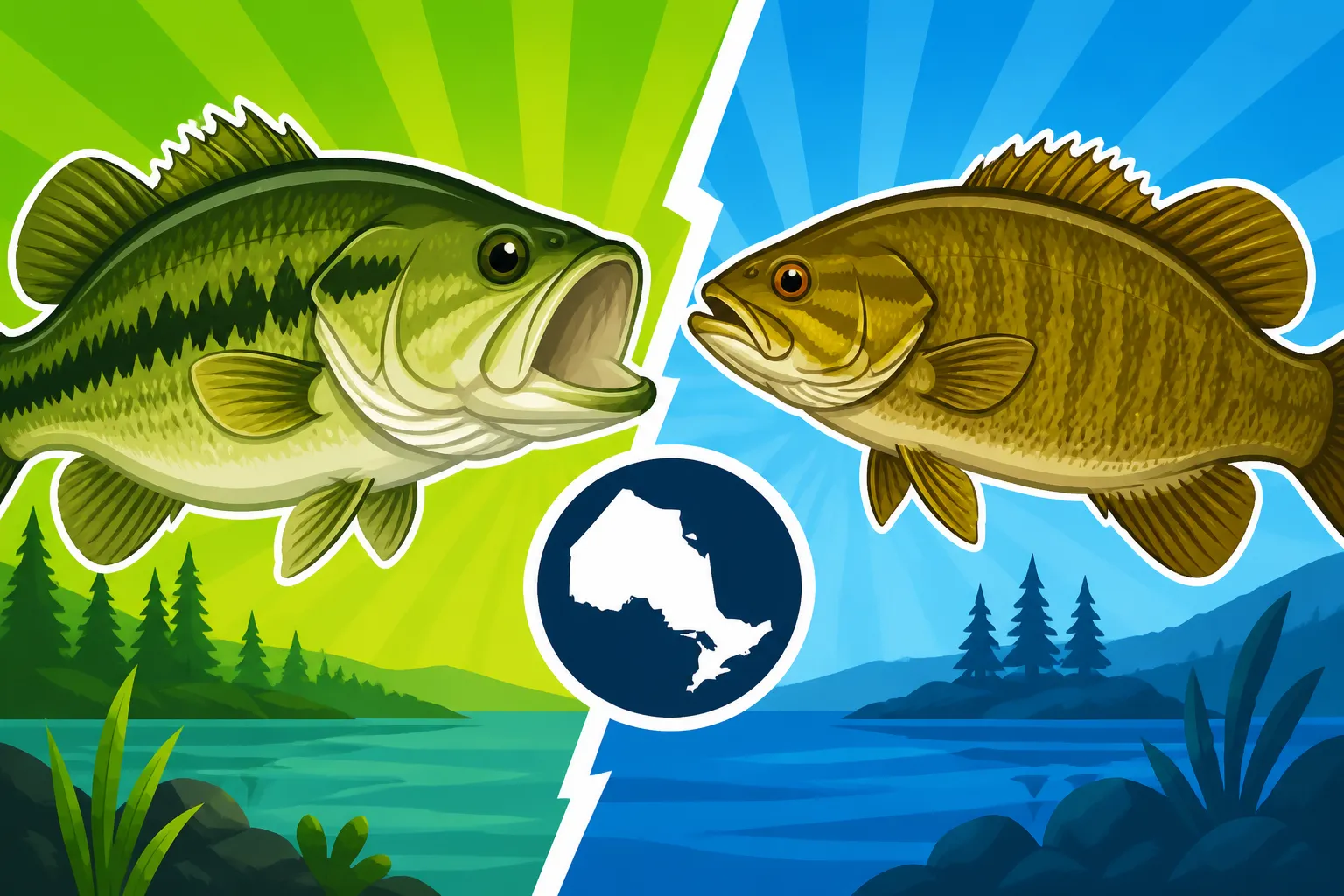
One of the most common head-scratchers for anglers hitting Ontario's diverse waters is figuring out whether that feisty bass on the end of your line is a largemouth or a smallmouth. It's a question that can spark a friendly debate on any dock or boat, and honestly, it's easy to get them mixed up, especially if you're new to bass fishing or catching fish that are somewhere in between a 'typical' example of each. This guide is here to clear up that confusion, giving you all the pointers you need to confidently identify these two incredible sport fish, no matter where you're casting in Ontario.
The Key Visual Differences: A Side-by-Side Look
When you've got a bass in hand, there are several distinct visual cues that can immediately tell you if it's a largemouth or a smallmouth. Forget the old wives' tales about colour alone; we're going to dive into the anatomical features that really set them apart. Understanding these differences isn't just about showing off your knowledge; it's crucial for adhering to local regulations, as bag and possession limits, and even season dates, can sometimes differ between the two species.
Jawline and Mouth Size
This is often the first and most reliable indicator, especially if the fish is already out of the water. Take a good look at where the corner of its mouth extends in relation to its eye.
For a largemouth bass, you'll notice that the jaw extends quite far back, typically past the rear margin of the eye. Imagine drawing a vertical line down from the back of the eye; the corner of the largemouth's jaw will almost always cross that line. This gives the largemouth its characteristic "big mouth" appearance, which is where it gets its name. It's built for gulping down larger prey, from frogs and mice to big shiners.
On the flip side, a smallmouth bass has a noticeably smaller mouth opening. When you look at its jaw, the corner will usually only extend to about the middle of the eye, or perhaps just slightly beyond it, but rarely past the rear margin. It's a more proportionate, 'normal-sized' mouth compared to its head. This smaller mouth is still incredibly effective for its preferred diet of crayfish and smaller baitfish, but it won't have that exaggerated, almost cartoonish, jawline of its cousin. It’s one of those things that once you see it, you can’t unsee it, and it really helps when you're trying to quickly identify a fish.
Body Shape and Colouration
Beyond the mouth, the overall body shape and the patterns on the fish's skin offer clear distinctions. These can sometimes be influenced by local habitat and water clarity, but generally, they follow a reliable pattern.
A largemouth bass tends to have a more elongated, somewhat cylindrical body, often described as "football-shaped" or "torpedo-like." Its dominant colouration is typically a dark green to olive green on its back, fading to lighter green or white on its belly. The most striking feature, and where the "largemouth" part of its other common name, "black bass," comes from, is a prominent, irregular horizontal stripe or series of blotches running down its side, from its gill plate to its tail. This lateral line pattern can be quite distinct in some fish, almost like a broken stripe, while in others, it might be more faded into a general mottled appearance. They often have larger, more random dark blotches scattered across their body.
The smallmouth bass, in contrast, has a stockier, more compact, and often deeper body for its length. They are built like little tanks, incredibly powerful for their size. Their colour ranges from a bronze or golden-brown to a darker brown or even an almost black colour on their back, transitioning to a lighter, creamy white or yellow belly. Instead of a horizontal stripe, smallmouth typically display a series of vertical bars or blotches on their sides. These bars can be very pronounced, especially in clear water or when the fish is excited, giving them a tiger-striped appearance. Sometimes these bars can fade in certain waters, but you'll usually still detect the vertical orientation rather than the horizontal band of a largemouth.
Dorsal Fin Separation
This is a subtle but consistent anatomical feature that, once you know to look for it, makes identification a breeze. It involves the two dorsal (back) fins.
The largemouth bass has two dorsal fins, but they are almost completely separated by a very deep notch, making it look like two distinct fins. If you run your finger along the top of its back, you'll feel a significant dip where the spiny front dorsal fin ends and the soft-rayed rear dorsal fin begins. This deep separation is a hallmark of the largemouth bass. You can clearly see a break in the fin structure, which is quite different from other bass species.
For a smallmouth bass, while it also has two dorsal fins, they are joined or only very shallowly notched. The connection between the spiny front fin and the soft-rayed rear fin is much more continuous. Instead of a deep canyon, it's more like a subtle saddle. If you run your finger along the smallmouth's back, you'll feel a gradual curve rather than a distinct break between the two parts of the dorsal fin. This continuous dorsal fin is a reliable characteristic that differentiates it from the largemouth, and it's something you can quickly check even if the fish is still partially in the water.
Habitat and Behaviour Clues
Beyond the visual, knowing where and how these fish typically behave can give you strong hints about which species you're dealing with before you even see them. Ontario's vast network of lakes and rivers offers a perfect laboratory to observe these differences. If you're targeting smallmouth, you might be heading to certain types of water, and the same goes for largemouth. Best Fishing Lakes in Ontario or Best Fishing Rivers in Ontario will often host one or both species, but in different areas.
Where They Live: Structure Preferences
Different species thrive in different environments, and bass are no exception. Their preferred homes reflect their hunting strategies and dietary habits.
Largemouth bass are often dubbed "weedline warriors" or "timber lurkers." They absolutely love heavy cover. Think dense aquatic vegetation like lily pads, cattails, submerged grass beds, and thick hydrilla. They also gravitate towards flooded timber, brush piles, fallen trees, and docks. They prefer warmer, shallower, often murkier waters, which are common in many of Ontario's fertile lakes, especially in the central and southern regions. They use this dense cover for ambush hunting, darting out to snatch unsuspecting prey. You'll often find them lurking in the shady pockets of these areas, waiting for an easy meal to swim by. If you’re fishing a shallow, weedy bay, odds are good you’re in largemouth territory.
Smallmouth bass, on the other hand, are the "rock stars" of the bass world, literally. They thrive in cooler, clearer waters, often preferring rocky structures like points, shoals, boulders, gravel flats, and drop-offs. They are also at home in rivers and streams with good current and plenty of rock formations. You'll find them holding near current breaks, scouring rocky bottoms for crayfish, or chasing schools of baitfish in open water. Many of Ontario's expansive Great Lakes, like Lake Erie, Lake Ontario, and Georgian Bay, are renowned smallmouth havens due to their vast rocky expanses and deep, clear waters. If your sonar shows a lot of hard bottom and sharp contours, you’re probably in prime smallmouth country. Sometimes, in larger lakes, you might find both species, but typically in different sections, with smallmouth favouring the deep, rocky main lake and largemouth sticking to the weedy, protected bays.
Fight Style on the Line
When you hook into a bass, the way it fights can be a dead giveaway long before you get a visual. Each species has a distinctive way of battling.
A largemouth bass is known for its powerful initial surge and its tendency to "dig" into cover. When hooked, they often try to bury themselves in weeds or wrap around submerged timber, using the cover to their advantage. They'll also make spectacular, acrobatic leaps out of the water, shaking their head violently in an attempt to throw the hook. It’s an exciting, strong, and often dirty fight, trying to get you tangled up. You'll feel a solid, heavy pull, and then often a thrashing, splashing jump. When you’re trying to haul a largemouth out of dense lily pads, you’ll definitely know you’ve got one!
The smallmouth bass is often hailed as pound-for-pound one of the hardest fighting freshwater fish. When hooked, they are absolute torpedoes. They make long, fast, blistering runs, often peeling line off your reel. They don't typically dive into cover as much as largemouth, but they'll pull hard and deep, testing your drag. Their signature move is often a series of multiple, high-flying jumps, sometimes clearing the water completely several times in a single fight, head-shaking all the while. The smallmouth fight is characterized by speed, stamina, and incredible aerial displays. If you feel a fish make several powerful, zingy runs and then start leaping repeatedly, you can bet it’s a smallmouth. This is why lighter tackle can make catching them such a thrill, as discussed in Best Fishing Rods for Ontario Lakes.
Practical Identification Tips for Anglers
Having these key markers in your angler's toolkit will save you time and ensure you're always on the right side of the regulations. It's about building confidence and becoming a better, more observant angler. Many fishing essentials, like a good pair of polarized sunglasses available on Amazon, can even help you spot these details before you make your cast.
Quick Checkpoints on the Water
When that bass finally comes boatside or to shore, you want to identify it quickly, especially if you're practicing catch and release. Here's a rapid-fire checklist:
- Jawline Check: Does the corner of the mouth extend past the eye (largemouth) or stop before or at the middle of the eye (smallmouth)? This is your number one, quickest, most reliable indicator.
- Dorsal Fin Check: Are the two dorsal fins deeply separated, almost like two distinct fins (largemouth), or are they more connected with a shallow notch (smallmouth)? Run a finger gently along the top of the back.
- Body Pattern: Does it have a distinct horizontal band or series of blotches (largemouth)? Or does it have vertical bars or splotches on its sides (smallmouth)? Remember, colours can vary, so look for the pattern rather than just the shade.
- Overall Build: Is it more elongated and streamlined (largemouth), or stockier and more robust (smallmouth)?
If you can check two out of these three primary visual cues, you'll be pretty certain about your identification. It becomes second nature after a while, especially if you spend a lot of time on waters with both species. Many anglers even keep a fish identification chart handy, perhaps laminated and stored in their tackle box or dry bag purchased from Amazon.
Why Accurate Identification Matters
Beyond bragging rights, correctly identifying your catch is surprisingly important for several practical reasons, especially in Ontario.
Firstly, and perhaps most importantly, fishing regulations often differ between largemouth and smallmouth bass. There might be different open seasons, different size limits (e.g., slot limits), and different daily catch and possession limits for each species, depending on the specific Fisheries Management Zone (FMZ) you're fishing in. For instance, Ontario Bass Opener Dates by Zone or Ontario Smallmouth Bass Slot Limits could be very different from their largemouth counterparts. Misidentifying a fish could inadvertently lead to you keeping a fish illegally, which could result in fines or penalties. Always check the current Ontario Fishing Regulations Explained summary for your specific zone before you head out.
Secondly, understanding their habitat and behaviour helps you become a more effective angler. If you know you're in largemouth country, you'll rig up with lures and techniques suited for heavy cover, like weedless jigs or topwater frogs. If you're in smallmouth territory, you'll opt for presentations like drop shots, tube jigs, or crankbaits that imitate crayfish and baitfish around rocky structures. Knowing your target helps you choose the Best Tackle for Ontario Walleye (though this article is about bass, the principle applies) or the best tackle for bass, optimizing your chances of success.
Finally, for conservation efforts, accurate data on fish populations is vital. Fisheries biologists rely on anglers' reports and surveys to understand population health. Knowing which species are being caught, and where, contributes to better management of our precious fisheries. It's all part of being a responsible steward of Ontario's natural resources.
Common Misconceptions and Nuances
Even with all the clear differences, some old myths persist, and environmental factors can occasionally throw a wrench in straightforward identification. Let’s tackle a couple of these.
Size Isn't Everything
It's a common misconception that smallmouth bass are always smaller than largemouth bass, or that a truly giant bass must be a largemouth. While largemouth bass generally have a higher maximum growth potential and can often reach heavier weights, especially the "bucketmouths" from warmer southern waters, smallmouth bass can also grow to impressive sizes in Ontario.
Ontario is home to some truly massive smallmouth bass, particularly in the Great Lakes and larger inland waters where they have abundant food and long lifespans. A five-pound smallmouth is a brute, and seven or eight-pound fish are caught regularly by dedicated anglers. The current provincial record smallmouth is certainly nothing to scoff at, weighing in at a substantial amount. Conversely, you can catch very small largemouth bass, especially in waters where they are abundant but food is limited, or amongst younger fish. So, don't let the fish's size be your only guide. A small fish could be a juvenile of either species, and a big one could very well be a trophy smallmouth. Always defer to the anatomical features for definitive identification.
Colour Variation Across Waters
Another common trap is relying solely on colour. While we've discussed typical colouration, it's important to remember that fish colours can vary significantly based on their environment. This is especially true for camouflage.
A largemouth bass caught from clear, sandy bottom areas might appear much lighter green or even silvery, with a faded lateral line. The same species caught from dark, tannin-stained waters with heavy cover might be almost black on the back, with a very pronounced lateral stripe. Similarly, a smallmouth bass from dark, deep water might be very dark brown or bronze, while one from shallow, gravelly flats might be a brilliant golden colour with very distinct bars. Water clarity, bottom composition, diet, and even the fish's stress level can influence its exact hue. For instance, smallmouth caught from exceptionally clear Great Lakes waters can sometimes appear quite light, almost silver-bronze, making their vertical bars harder to distinguish.
Therefore, while colouration provides a general guideline, it should never be the sole factor in your identification. Always cross-reference with the more reliable anatomical markers like jaw length and dorsal fin separation. If you're really stumped, a quick online search for "Smallmouth Bass Habits on Lake Erie" or "Largemouth Bass vs Smallmouth Bass Identification" might show you photos of how colours change locally. Tools like a high-quality fish identification app, which many anglers download to their phones from Amazon, can also be a helpful reference on the water.
Here's a handy table to summarize the key differences:
| Feature | Largemouth Bass | Smallmouth Bass |
|---|---|---|
| Jawline | Extends past the rear margin of the eye | Extends to or slightly past the middle of the eye |
| Dorsal Fins | Deeply separated, appears as two distinct fins | Joined or very shallowly notched, appears more continuous |
| Body Shape | More elongated, somewhat cylindrical, "football-shaped" | Stockier, more compact, often deeper body for its length |
| Colour Pattern | Dark green/olive, prominent horizontal stripe/blotches | Bronze/golden-brown, vertical bars/blotches on sides |
| Preferred Habitat | Weeds, lily pads, submerged timber, docks, warm, shallow water | Rocks, gravel, shoals, current, cool, clear water |
| Fight Style | Powerful surges, digs into cover, head-shaking jumps | Long, fast runs, multiple acrobatic leaps |
By paying attention to these details, you'll quickly become an expert at telling a largemouth from a smallmouth, making your time on Ontario's fantastic bass waters even more rewarding.
Disclaimer
This article is for general informational purposes only and does not constitute professional advice. Laws, prices and regulations vary by location and change over time. Consult a qualified professional for guidance on your specific situation.