Ontario Provincial Fish Records by Species
There's a special kind of thrill that comes with pulling a truly magnificent fish from Ontario's waters, the kind that makes you wonder, "Could this be it? Could this be a record?" But let's be honest, trying to find definitive, up-to-date information on provincial fish records can feel like navigating a dense northern forest without a compass. It's often scattered, sometimes confusing, and always leaves you craving more detail than just a number. This comprehensive guide is here to cut through the confusion, offering a clear, detailed look at Ontario's provincial fish records, how they're established, and what makes these colossal catches so legendary among anglers.
Understanding Ontario's Record-Keeping System
Before we dive into the impressive numbers and the fish that hold them, it’s crucial to understand how Ontario keeps track of its angling legends. It's not just a free-for-all; there’s a structured system in place to ensure integrity and respect for these incredible catches. For many, simply knowing what constitutes an official record, as opposed to a personal best or a local lodge record, is the first step toward appreciating the true giants of our waters.
The Official Source: Who Keeps the Records?
In Ontario, the official custodians of provincial fish records are not a government agency directly, but rather a trusted and long-standing organization deeply rooted in the angling community: the Ontario Federation of Anglers and Hunters (OFAH). For decades, the OFAH has meticulously collected, verified, and maintained these records, serving as the central authority for recognizing the largest fish caught by anglers across the province. They provide the criteria, the forms, and the ultimate validation that turns a big fish story into an official piece of Ontario's angling history. It’s their dedication that gives these records their weight and credibility, making them the gold standard for anyone dreaming of catching a true behemoth.
This centralized approach helps prevent misinformation and provides a single, reliable point of reference for anglers, researchers, and anyone simply curious about the monsters lurking beneath the surface. When you hear about an "Ontario provincial record," you can be confident that it has passed through a rigorous verification process, scrutinized by folks who understand angling and the importance of preserving the integrity of these achievements. This system ensures that every record fish is celebrated not just for its size, but also for the fair and ethical manner in which it was caught, upholding the values that define our vibrant angling community.
The Difference Between Weight and Length Records
When you look at fishing records, you’ll often notice two primary categories: records based on weight and records based on length. While both celebrate truly impressive fish, they tell slightly different stories and require different types of documentation. Traditionally, weight records have been the gold standard, particularly for species where girth and overall mass are the primary indicators of a truly massive specimen. Think of a thick-bodied walleye or a bulging lake trout; their weight often speaks volumes about their age and growth.
However, in recent years, there's been a growing appreciation for length records, especially for species where catch-and-release is strongly encouraged or even mandatory, like muskellunge. Measuring a fish's length allows for accurate documentation without requiring the fish to be harvested, thus promoting conservation. Many anglers now carry portable measuring boards (you can find various types on Amazon that are perfect for this) specifically for this purpose. Both weight and length offer valid ways to measure a trophy, and understanding the distinction helps paint a fuller picture of the fish's impressive stature and the evolving ethics of angling.
Historical Context of Record Keeping
The tradition of keeping fish records in Ontario dates back many decades, reflecting a deep-seated human desire to measure, compare, and celebrate exceptional catches. In the early days, record keeping was often a less formal affair, relying on local reports, newspaper clippings, and the honour system among anglers. As angling grew in popularity and organizations like the OFAH began to formalize their roles, the process became more structured, introducing stricter verification methods, witness requirements, and official documentation.
This evolution mirrors the broader changes in angling itself, moving from a subsistence activity to a sport with a strong conservation ethic. Early records often focused solely on weight, as catch-and-release was less common. Today, while weight records remain prestigious, there's a greater emphasis on acknowledging length, particularly for vulnerable or slow-growing species. The records themselves provide a fascinating snapshot of Ontario's fisheries over time, sometimes highlighting areas that once produced giants but have since seen changes, or revealing the resilience of certain species in new environments.
The Ontario Provincial Fish Records: A Deep Dive
This is the heart of it, isn't it? The sheer numbers, the impressive dimensions, and the legendary stories behind Ontario's biggest fish. It's truly inspiring to look at these benchmarks, knowing that these colossal creatures swim in the same waters we fish. Keep in mind that these records represent extraordinary achievements, often the culmination of years of angling experience, a bit of luck, and being in the right place at the right time.
Let's dive into some of the most sought-after species and the incredible fish that hold the provincial records. While records can change, the enduring legacy of these catches remains.
| Species | Record Type | Size | Date | Location (General) |
|---|---|---|---|---|
| Muskellunge | Weight | 65 lbs | 1988 | Georgian Bay |
| Lake Trout | Weight | 63 lbs 2 oz | 1970 | Lake Superior |
| Walleye | Weight | 22 lbs 4 oz | 1947 | Fort Erie |
| Northern Pike | Weight | 42 lbs 1 oz | 1946 | Little Vermilion Lake |
| Smallmouth Bass | Weight | 10 lbs 14 oz | 1954 | Birch Lake |
| Largemouth Bass | Weight | 10 lbs 7 oz | 1976 | Preston Lake |
| Brook Trout | Weight | 14 lbs 8 oz | 1916 | Nipigon River |
| Rainbow Trout | Weight | 40 lbs 6 oz | 1990 | Lake Huron |
| Brown Trout | Weight | 34 lbs 6 oz | 2009 | Lake Huron |
| Chinook Salmon | Weight | 46 lbs 10 oz | 1999 | Lake Ontario |
| Yellow Perch | Weight | 3 lbs 6 oz | 1986 | Lake Erie |
| Black Crappie | Weight | 3 lbs 7 oz | 2008 | Lake Simcoe |
Note: This table provides a snapshot of some key provincial records. For the most current and exhaustive list, always consult the official record-keeping authority.
Muskellunge (Muskie): The Freshwater Predator
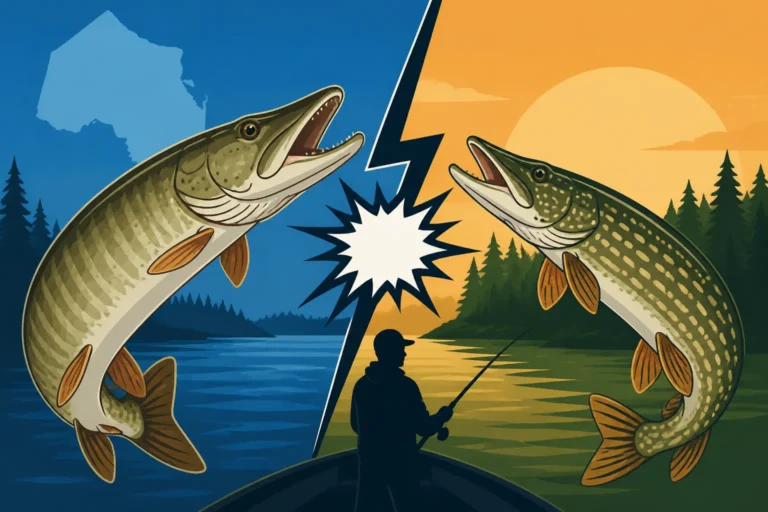
The muskellunge, often simply called "muskie," is the apex predator of many Ontario lakes and rivers, known for its elusive nature and explosive strikes. Chasing muskie is often described as "the sport of 10,000 casts," a testament to their challenging nature. The provincial record for muskellunge is a truly legendary fish, tipping the scales at an astounding 65 pounds. This monstrous muskie was caught in the vast waters of Georgian Bay back in 1988, a testament to the incredible forage base and potential for growth in that iconic fishery.
When you think about the size and power required to land a fish of this magnitude, it's easy to understand why the muskie holds such a revered place in Ontario angling. Anglers often spend entire seasons, even years, targeting these giants, meticulously choosing their lures and honing their techniques. Muskellunge Fishing in Ontario is a deep dive into how you can pursue these incredible fish. Landing a muskie of any size is an achievement, but a record-breaker from Georgian Bay is a truly rare feat that still inspires awe.
Lake Trout: Deepwater Giants
Lake trout are the undisputed heavyweights of Ontario's deep, cold, and clear waters, thriving in the expansive depths of our northern lakes and the Great Lakes. They are a powerful, long-lived species, and the provincial record holder perfectly illustrates their potential. The current Ontario record lake trout weight stands at an incredible 63 pounds, 2 ounces. This behemoth was caught in 1970 from Lake Superior, a body of water renowned for its deep, frigid waters and massive lakers.
Imagine the battle that must have ensued with a fish of that size from the depths of Lake Superior! It's a fight that would test any angler's tackle, endurance, and resolve. Catching large lake trout often requires specialized gear and techniques, from deep trolling with heavy weights to sophisticated sonar to locate them in their deepwater haunts. These fish represent the wild, untamed spirit of Ontario's vast northern wilderness.
Walleye: The Golden Catch
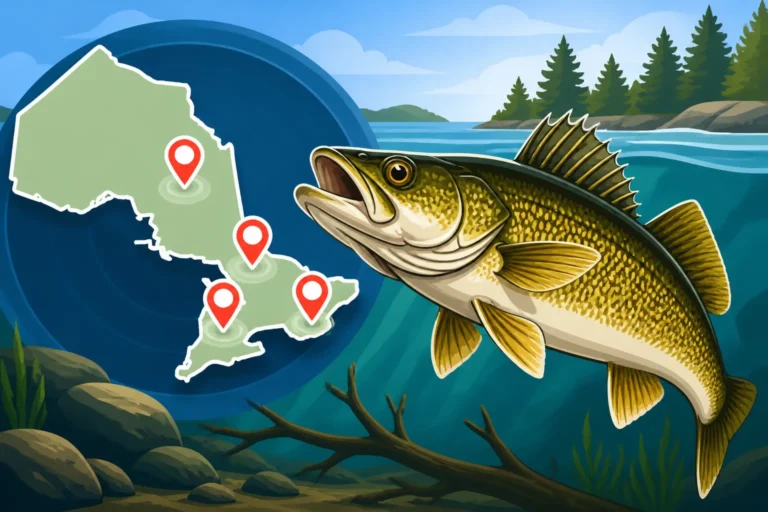
Walleye, affectionately known as "pickerel" by many Ontarians, are perhaps the most popular sportfish in the province, cherished for their delicious table fare and challenging fight. Anglers across Ontario spend countless hours pursuing these elusive yet plentiful fish. The provincial record for walleye is a truly astonishing specimen, weighing in at 22 pounds, 4 ounces. This monumental catch was made way back in 1947 near Fort Erie, showcasing the incredible potential of the Great Lakes and their connecting waters.
A walleye over 20 pounds is an absolute rarity today, making this historical record all the more impressive. It speaks to a time when these waters held incredible populations of trophy-sized fish. Modern anglers still dream of such a catch, spending hours mastering techniques like jigging, trolling, and drift fishing. For those looking to understand the habits of these sought-after fish, our guide on Walleye Fishing in Ontario offers extensive tips and strategies.
Northern Pike: Aggressive Ambush Predators
Northern pike are aggressive, hard-hitting fish that are widely distributed across Ontario, found in everything from small inland lakes to the expansive Great Lakes. Known for their toothy grins and powerful runs, pike provide exciting angling opportunities for many. The provincial record northern pike is a true monster, weighing in at 42 pounds, 1 ounce. This incredible fish was caught in 1946 from Little Vermilion Lake, a testament to the rich, fertile waters of Northern Ontario.
Imagine the sheer size and ferocity of a pike that could weigh over 40 pounds! Landing such a fish requires stout tackle and a strong leader to contend with their razor-sharp teeth. Pike often lie in wait in weed beds or near structure, ambushing unsuspecting prey. Understanding their habits and preferred habitats is key to targeting these toothy giants, as detailed in our comprehensive Northern Pike Fishing in Ontario guide.
Smallmouth Bass: Pound-for-Pound Fighters
Smallmouth bass are revered by many anglers as one of the hardest-fighting freshwater fish, often punching well above their weight class. Found in clear, rocky lakes and rivers throughout Ontario, they provide thrilling topwater action and powerful underwater battles. The provincial record for smallmouth bass is an absolute beast, weighing 10 pounds, 14 ounces. This colossal bronzeback was caught in 1954 from Birch Lake, illustrating the potential for truly massive smallmouth in Ontario's diverse waters.
A smallmouth approaching 11 pounds is a fish of a lifetime, representing a truly exceptional specimen. These fish are known for their strong runs, acrobatic jumps, and never-say-die attitude. Targeting them often involves finesse techniques, crankbaits, or topwater lures, especially around rocky points, shoals, and submerged timber. Our guide to Smallmouth Bass Fishing in Ontario offers detailed strategies to help you land your own trophy bronzeback.
Largemouth Bass: The Heavy Hitters
While perhaps not as widely distributed as their smallmouth cousins in Ontario, largemouth bass thrive in warmer, weedier lakes and ponds, particularly in the southern and central parts of the province. They are famous for their explosive topwater strikes and their tendency to bury themselves in thick cover. The provincial record for largemouth bass stands at an impressive 10 pounds, 7 ounces, caught in 1976 from Preston Lake.
This record fish is a testament to the incredible growth potential of largemouth in prime habitat. Imagine the explosive fight from a bass of that size, pulling hard for the thickest weeds. Anglers targeting largemouth often employ techniques like flipping, pitching, and working frogs or soft plastics over lily pads and dense vegetation. While the records are incredible, even catching a 5 or 6-pound largemouth is a significant achievement in Ontario.
Brook Trout: Ontario's Native Jewels
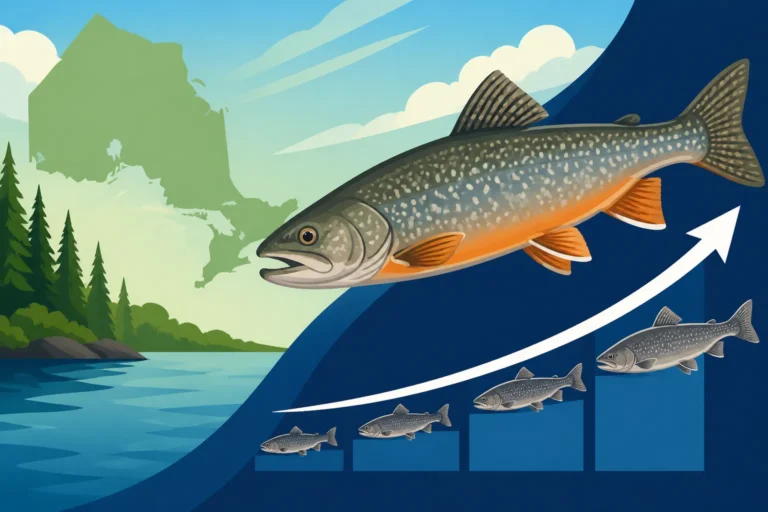
The brook trout, often considered Ontario's most beautiful native fish, is cherished for its vibrant colours and the pristine wilderness it inhabits. While many brook trout caught are pan-sized, they can grow to surprising dimensions in the right environments. The provincial record brook trout is truly astounding, weighing 14 pounds, 8 ounces. This monumental fish was caught way back in 1916 from the Nipigon River, a legendary waterway known for producing world-class brook trout.
The Nipigon River record is historic and almost mythical, representing a time when these waters held truly gargantuan brookies. Today, catching a brook trout over 5 pounds is considered a trophy by most. These fish thrive in cold, clean, oxygenated water, making them indicators of healthy ecosystems. You can learn more about these beautiful fish and where they live in Brook Trout in Ontario's Crown Land Lakes. The pursuit of brook trout often involves exploring remote, pristine waters, offering a unique blend of angling challenge and wilderness adventure.
Rainbow Trout: Beautiful and Athletic
Rainbow trout are a popular sport fish in Ontario, celebrated for their athletic fights and beautiful, iridescent colours. While many are stocked, wild populations and "steelhead" (lake-run rainbow trout) provide incredible angling opportunities. The provincial record rainbow trout is a massive fish, weighing an astonishing 40 pounds, 6 ounces. This giant was caught in 1990 from Lake Huron, highlighting the immense growth potential of rainbows in the Great Lakes.
A rainbow trout over 40 pounds is an absolutely phenomenal catch, a true testament to the rich forage base of Lake Huron. These powerful fish are known for their aerial acrobatics and long, fast runs, making them a favourite target for many anglers. Whether you're fishing a tributary for steelhead or trolling the open waters of a Great Lake, rainbow trout offer an exciting challenge.
Brown Trout: Elusive and Wary
Brown trout, though not native to Ontario, have established themselves in many of our rivers and lakes, particularly in the Great Lakes system. They are known for being wary and elusive, often growing to impressive sizes. The provincial record brown trout is a substantial 34 pounds, 6 ounces, caught in 2009 from Lake Huron.
This record fish demonstrates the incredible size brown trout can attain in the Great Lakes, where they have access to an abundant food supply. Brown trout are often pursued by fly anglers in rivers, where their cunning nature makes them a formidable opponent. Their dark, spotted flanks and aggressive takes make them a rewarding catch for those patient enough to pursue them.
Chinook Salmon: Pacific Powerhouses
Chinook salmon, another introduced species from the Pacific, have established thriving populations in the Great Lakes, particularly Lake Ontario. They are renowned for their immense power and incredible runs, especially during their spawning migrations. The provincial record Chinook salmon weighed 46 pounds, 10 ounces, caught in 1999 from Lake Ontario.
These are truly powerhouse fish, and a Chinook of almost 47 pounds is a staggering catch. Anglers often target them by trolling the open waters of Lake Ontario or casting for them in the tributaries during their fall spawning runs. The fight from a fresh, chrome Chinook salmon is legendary, testing both angler and gear to their limits.
Other Notable Species
While the glamour species often steal the headlines, Ontario is home to a vast array of other fish that hold significant provincial records, showcasing the incredible diversity of our aquatic ecosystems. Take the Yellow Perch, a panfish favourite; the provincial record stands at 3 pounds, 6 ounces, caught in 1986 from Lake Erie. Imagine a perch that big – it's a true "jumbo" in every sense of the word! Similarly, the Black Crappie record, 3 pounds, 7 ounces, from Lake Simcoe in 2008, proves that even common panfish can grow to monumental sizes in the right conditions.
These records highlight that trophy potential isn't limited to just a few species. From Whitefish in the Great Lakes to Splake in stocked inland waters, nearly every fish that swims in Ontario has a provincial benchmark. These records remind us that every cast holds the potential for an unexpected giant, underscoring the richness and vitality of Ontario's fishing heritage. Our guide on Yellow Perch Fishing in Ontario offers tips for targeting these popular panfish, whether you're after a meal or a potential record-breaker.
Beyond the Records: Catch and Release and Ethical Angling
While chasing a provincial record is undoubtedly an exciting goal for many, it's increasingly important to balance this pursuit with responsible angling practices, especially catch and release. Modern anglers understand the importance of conservation and ensuring the sustainability of our fisheries for future generations. The thrill of a truly large fish doesn't always have to end with a trip to the taxidermist.
The Catch and Release Ethos
The philosophy of catch and release has gained tremendous traction in the angling world, and for good reason. It allows anglers to enjoy the thrill of the catch, photograph their prize, and then return the fish to the water to grow larger and spawn again. This is particularly crucial for large, mature fish that are often the best breeders, contributing significantly to the health of the fishery. For species like muskellunge, where survival rates of released fish are a critical concern, practicing careful catch and release is paramount.
Many anglers now view the pursuit of a record as an opportunity to learn and grow as an angler, pushing their skills and understanding of fish behaviour, rather than just securing a spot in a record book. They might still measure and weigh a potential record, but with the intent of releasing it after documentation. This approach ensures that the thrill of the chase continues, not just for them, but for everyone who loves Ontario's waters. Our article on Muskie catch and release survival tips provides valuable insights into how to handle these big fish with care.
Balancing Conservation and Competition
Finding the sweet spot between the competitive spirit of record-chasing and the vital principles of conservation is a challenge, but one that responsible anglers embrace. While there's no denying the allure of a provincial record, it’s vital that the methods used to pursue and document such a catch are as ethical and low-impact as possible. This means utilizing proper fish handling techniques, minimizing the time a fish is out of the water, and making quick, accurate measurements.
For many species, especially large, long-lived predators, the potential harm of harvesting a record-sized fish for a weight record can be significant to the overall population. This is why length records are becoming more popular, as they allow for recognition of monumental catches without requiring the fish's demise. The true competition should be with the fish itself – outsmarting it, fighting it fairly – and not at the expense of its future or the health of the fishery. Organizations like the OFAH, while maintaining weight records, also champion conservation, understanding that the health of our waters is paramount.
How Records Are Verified: The Process
You've caught a giant! Your heart is pounding, your hands are shaking, and you just know this could be the one. But what happens next? Submitting a potential provincial record fish isn't as simple as posting a photo online. There's a stringent verification process in place to ensure that every record is legitimate, accurately documented, and worthy of its place in Ontario's angling history. This rigorous approach maintains the integrity of the records and gives credibility to the extraordinary achievements they represent.
The Steps to Submitting a Potential Record Fish
So, you think you’ve caught a provincial record? First off, congratulations! That's an incredible achievement. The process for submitting a potential record typically involves several critical steps, all designed to ensure the catch is legitimate and accurately documented. The primary authority for this is the Ontario Federation of Anglers and Hunters (OFAH). You'll usually need to obtain a specific application form from them, either from their website or by contacting them directly.
This form will ask for detailed information about the catch: the species, date, time, location (as precise as possible), and the methods used (lure, bait, rod, reel, line). You'll also need to provide crucial evidence: clear photographs of the fish, preferably with an identifiable object for scale, and photos of the official measurement and weight. Crucially, a signed statement from at least one witness who observed the catch and subsequent measurement/weighing is usually required. This multi-faceted approach ensures that all angles are covered, leaving little room for doubt.
The Importance of Accurate Measurement and Weight
When it comes to breaking a provincial record, precision is absolutely everything. A small error in measurement or an imprecise weight can mean the difference between a new record and a truly memorable catch that just falls short. For weight records, the fish must be weighed on a certified scale, often at a reputable facility like a tackle shop, marina, or even a grocery store that has a government-inspected scale. The scale should be zeroed out before use, and the weighing process witnessed. Photos of the fish on the scale, with the dial or digital reading clearly visible, are non-negotiable.
For length records, a flat, rigid measuring device is essential. Fish should be laid flat, mouth closed against a bump board, and the tail gently squeezed to get the maximum length. Again, clear, unambiguous photos showing the measurement are vital. Many serious anglers now carry a high-quality, government-inspected digital scale (many excellent, reliable options are available on Amazon) and a rigid bump board specifically for documenting big fish. This level of meticulousness is why Ontario's records are so respected – they are built on verifiable facts, not just tall tales.
Witness and Photo Requirements
Beyond accurate measurements and weights, the human element of verification is incredibly important: witnesses and photographic evidence. It’s simply not enough to say you caught a giant; you need someone else to corroborate your story. A witness, preferably someone who is not a direct family member or someone who stands to gain from the record, must be present during the catch, the weighing, and the measuring process. Their signed statement on the record application form provides crucial third-party validation, adding an extra layer of integrity to the claim.
Photographs are equally, if not more, critical. These aren't just for bragging rights; they are visual proof. Clear, well-lit photos should show the entire fish, the angler, the scale, and the measuring device, with the numbers clearly legible. It's often recommended to include an item of known size, like a fishing license or a ruler, next to the fish in some photos for additional scale reference. The OFAH will meticulously review these images, looking for any inconsistencies or ambiguities. This strict approach ensures that when a new record is proclaimed, it's beyond a shadow of a doubt, celebrated by the entire angling community.
The Thrill of the Chase: Why Records Matter to Anglers
For many, fishing is a relaxing pastime, a way to connect with nature and unwind. But for a dedicated few, it's also a quest—a constant pursuit of something bigger, rarer, or more challenging. Provincial fish records play a significant role in fueling this passion, acting as benchmarks of excellence and inspiring anglers to push their limits and explore the depths of Ontario's vast waters. It's more than just a number; it's a dream.
Personal Accomplishment and Bragging Rights
There’s an undeniable satisfaction in achieving a personal best, let alone a provincial record. The moment that colossal fish is finally in the net, after a grueling battle, is a culmination of skill, perseverance, and often, years of dedication. This personal accomplishment goes beyond just the act of catching; it's the feeling of having outsmarted, outfought, and ultimately connected with a truly magnificent creature. It's an experience etched into memory forever.
And let's be honest, part of the fun is the bragging rights! Sharing the story of a record or near-record catch with fellow anglers, recounting every detail of the battle, and showing off the photos—it's all part of the tradition. These stories become legends passed down through generations, inspiring others to pick up a rod and experience the same thrill. It's a way for anglers to leave their mark, not just on the water, but within the rich tapestry of Ontario's fishing culture.
Understanding Fish Biology and Habitats
Chasing provincial records isn't just about pure luck; it's often a deep dive into the science of angling. Anglers who consistently catch large fish become experts in Ontario Fisheries Management Zones, Explained, understanding specific fish behaviours, preferred habitats, and seasonal patterns. They study water temperatures, forage availability, moon phases, and structure, all in an effort to pinpoint where the biggest fish are likely to be found. This intense focus on record-breaking fish often leads to a profound understanding of the ecosystem.
For instance, an angler targeting a record muskellunge will spend countless hours researching the specific characteristics of waters like Georgian Bay or Lake St. Clair, learning about the types of cover, depth contours, and baitfish that support such giant predators. This deep biological understanding isn't just for competition; it often fosters a greater appreciation and respect for the fish and their environment. The pursuit of records, in a way, turns dedicated anglers into citizen scientists, contributing to a broader knowledge base about our incredible fisheries.
Distinguishing Between Provincial, Lodge, and Local Records
It's easy to get excited when you hear about a "record fish" from a friend, a fishing lodge, or a local bait shop. But it's important to understand that not all records are created equal. While every big fish is special, there's a clear hierarchy when it comes to official recognition. Being able to distinguish between these different types of records will help you appreciate the true significance of a provincial achievement versus a more localized one.
The Hierarchy of Records
At the top of the pyramid sits the Provincial Record, maintained by a recognized authority like the OFAH in Ontario. These are the official, verified, and widely acknowledged benchmarks for the largest fish caught by anglers in the entire province. They involve a rigorous submission and verification process, requiring witnesses, certified scales, and clear photographic evidence. When you dream of breaking a record, this is usually the one you're aiming for.
Below that, you'll find Lodge Records or Outfitters Records. Many fishing lodges, particularly in Northern Ontario, keep records of the largest fish caught by their guests. These are fantastic for friendly competition among visitors and can be a source of immense pride for the lodge and its clients. However, they are internal to that specific operation and are not officially recognized by the province. Similarly, Local Records might be kept by tackle shops, marinas, or even local angling clubs, celebrating the largest fish caught in a particular lake or river by their community. These local achievements are still incredibly impressive and contribute to local angling lore, but they lack the provincial-level verification and recognition.
Respecting All Achievements
While only provincial records hold the official stamp of approval, it’s truly important to respect and celebrate all big fish achievements. Landing a "lodge record" muskie on a remote northern lake is still an absolutely incredible feat, one that demands skill, perseverance, and often, a bit of wilderness adventure. That personal best walleye that tipped your local bait shop's unofficial scale at over 10 pounds? That's a memory that will last a lifetime, regardless of whether it makes the provincial books.
The beauty of angling lies in its accessibility and the joy it brings at all levels. Not everyone has the opportunity or the resources to pursue provincial records, but everyone can share in the excitement of a monumental catch, big or small, within their own fishing community. These localized records create a sense of pride and friendly competition that fuels the passion for fishing right down to the grassroots level, inspiring anglers to get out on the water and make their own memories.
Preparing for a Potential Record Catch
So, you're dreaming of that truly monumental fish. That's fantastic! But just dreaming isn't enough; you need to be prepared. When that once-in-a-lifetime fish hits your line, you won't have time to scramble for equipment or figure out how to handle it. Having the right gear and knowledge ready before the strike is crucial, not just for documentation but also for the fish's well-being if you plan to release it.
Essential Gear for Record Keepers
If you're serious about documenting a potential provincial record, you need more than just your fishing rod and tackle. Think of yourself as a detective, ready to gather evidence. First and foremost, a certified, accurate digital scale is non-negotiable. Look for models that can handle substantial weight and are rugged enough for boat or shore use. Many excellent options, including highly rated digital scales, are readily available on Amazon. Pair this with a sturdy, rigid measuring board or a fabric measuring tape designed for fish, ensuring it goes up to the maximum potential length for your target species. Avoid flimsy tape measures that can stretch or bend.
Next, a high-quality camera or smartphone with a fully charged battery is vital for clear photos and potentially video. Consider a waterproof case or a lanyard to prevent accidental drops. A large, conservation-friendly landing net with rubberized mesh is essential for safely subduing and handling large fish without causing damage. Finally, a small first-aid kit for fish (containing things like pliers for hook removal, bolt cutters for deeply-set hooks, and perhaps a hook degorger) can be invaluable for minimizing stress and injury, especially if you plan on releasing your potential record. Being prepared makes all the difference.
Practicing Proper Fish Handling
Catching a potential record-breaking fish is only half the battle; ensuring its survival, especially if you intend to release it, is equally important. Proper fish handling is paramount. As soon as the fish is landed, try to keep it in the water as much as possible. If it must be brought into the boat, use a large, wet landing net or cradle. Avoid laying the fish on dry surfaces like boat carpets or hot ground, which can remove their protective slime layer.
When holding the fish for photos or measurements, always support its belly, especially for larger, heavier species. Avoid holding fish vertically by the jaw or gills, as this can cause internal damage. Wet your hands before touching the fish to protect its slime coat. Work quickly and efficiently: get your measurements, weigh the fish if necessary, snap a few clear photos, and then return it to the water gently. If the fish is lethargic, hold it upright in the water, facing into the current or gently moving it back and forth to help oxygenate its gills until it swims away under its own power. These practices not only increase the fish's survival chances but also demonstrate respect for the incredible creature you’ve just encountered. Our guide on Is It Legal to Release a Muskie You Catch in Ontario? also touches on best practices for specific species.
Disclaimer
This article is for general informational purposes only and does not constitute professional advice. Laws, prices and regulations vary by location and change over time. Consult a qualified professional for guidance on your specific situation.