Yellow Perch in Lake Erie and Lake Simcoe
There’s nothing quite like the thrill of a feisty yellow perch tugging at the end of your line, especially when you’re out on Ontario’s magnificent waters. But let's be real, figuring out the nuances of fishing for these widespread panfish can be a bit overwhelming, particularly when comparing two giants like Lake Erie and Lake Simcoe, each with its unique personality and challenges. This guide is going to walk you through everything you need to know about targeting yellow perch in both of these incredible fisheries, helping you understand their habits, the best techniques, and how to make the most of your time on the water.
The Allure of Yellow Perch in Ontario's Iconic Lakes
Yellow perch hold a special place in the hearts of many Ontario anglers, and it’s not hard to see why. They're a truly accessible species, offering fantastic sport for everyone from seasoned pros to kids casting their very first line. When you combine their feisty nature with their reputation as excellent table fare, you have a recipe for fishing success that's hard to beat.
Why Anglers Love Yellow Perch
One of the biggest draws of yellow perch is their sheer abundance. These fish are prolific breeders and tend to school in large numbers, which means when you find them, you can often enjoy fast and furious action. There’s a distinct satisfaction in pulling up one after another, filling a pail with golden-striped beauties that will later become a delicious meal. They’re not as glamorous as a trophy walleye or a monstrous muskie, but the consistent action they provide is incredibly addictive. Plus, they’re found in such a wide variety of waters, making them a go-to target for many.
Beyond their numbers, yellow perch are just plain fun to catch. Even though they don't reach massive sizes, they put up a surprisingly strong fight on light tackle. That distinctive "thump-thump-thump" as they try to shake the hook is a feeling that brings a smile to any angler's face. They’re also a fantastic entry point for new anglers, as the techniques for catching them are relatively straightforward, allowing beginners to experience success quickly and build confidence. And let's not forget, a fresh perch fry, lightly battered and pan-fried, is a culinary delight that many anglers cherish.
A Tale of Two Lakes: Erie vs. Simcoe Perch
While yellow perch are widespread, how you approach them can differ significantly between Ontario’s massive Lake Erie and the equally famous, but very different, Lake Simcoe. Lake Erie, often touted as the "Walleye Capital of the World," also holds an incredible population of jumbo yellow perch, drawing anglers from across the continent. Its vast, open waters and diverse structure create a dynamic environment for perch fishing, often requiring different tactics than its northern counterpart.
Lake Simcoe, on the other hand, is renowned for its incredible ice fishing opportunities, particularly for yellow perch. While it offers excellent open-water perch fishing too, it's the winter bite that truly defines its perch reputation. The lake’s unique characteristics, including extensive shallow flats and numerous humps, create prime winter habitat. Anglers often face a different set of challenges and employ specialized techniques when chasing Simcoe perch, making both lakes distinct and exciting destinations for perch enthusiasts.
Understanding Yellow Perch Biology and Behavior
To consistently put yellow perch in your cooler, it's crucial to understand a bit about their biology and how they behave throughout the year. Knowing what makes them tick and where they like to hang out will give you a significant edge, whether you're battling the waves on Lake Erie or drilling holes on Lake Simcoe.
Key Characteristics and Identification
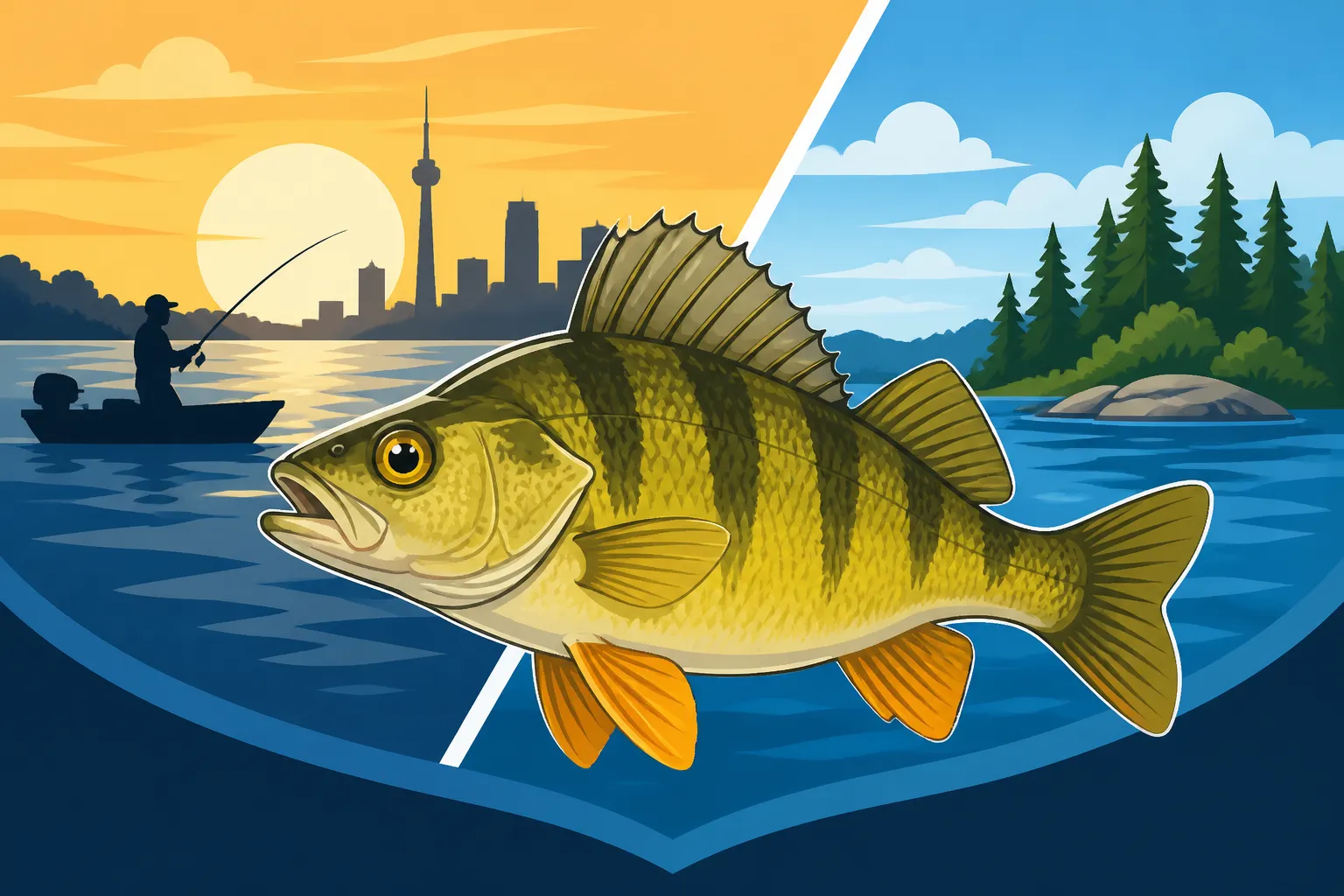
Yellow perch are easily recognizable, even for novice anglers. They typically have a brassy green to yellow body with six to eight dark, vertical bars on their sides, which gives them their distinctive "tiger" stripes. Their fins often have a reddish or orange hue, especially their pectoral and pelvic fins. They possess two dorsal fins, the first being spiny and the second soft-rayed, a common characteristic among many perch family members.
Size-wise, most yellow perch you'll encounter will be in the 6- to 10-inch range, but both Lake Erie and Lake Simcoe are famous for producing "jumbo" perch, often exceeding 12 or even 14 inches. These larger specimens are sought after for their fighting ability and their more substantial fillets. Identifying them from other panfish is relatively easy due to their distinct barring and coloration; you won't mistake a yellow perch for a bluegill or crappie once you've seen a few.
Perch Habits and Habitat Preferences
Yellow perch are classic schooling fish, meaning they typically travel and feed in groups. This is fantastic news for anglers because if you find one, you're likely to find many more. They are primarily bottom-dwellers, often associating with various types of structure and cover. On big lakes like Erie and Simcoe, this can mean anything from rocky reefs and shoals to sandy flats, gravel bottoms, and dense weed beds. They particularly favour areas with a good supply of aquatic vegetation, which provides both cover from predators and a rich feeding ground.
Their movements and depth preferences change with the seasons and water temperatures. In cooler waters of spring and fall, they might be found in shallower bays and nearshore areas. As summer progresses and water temperatures rise, they'll often move to deeper, cooler sections of the lake, especially during the brightest parts of the day. They also have a keen preference for areas where baitfish are abundant, as minnows, insect larvae, and small crustaceans make up a large portion of their diet. Looking for baitfish on your sonar is often the first step to finding perch.
Spawning Cycles and Their Impact on Fishing
Yellow perch typically spawn in the spring, often shortly after ice-out, when water temperatures rise into the 40-50°F (4-10°C) range. In both Lake Erie and Lake Simcoe, this usually happens in April or early May, depending on the year and the specific location. They are unique in that they lay their eggs in long, gelatinous, accordion-like strands over submerged vegetation, brush, or fallen trees in shallow water.
During the pre-spawn period, perch are often very active feeders as they bulk up for the energy-intensive spawning process. This can be a fantastic time to target them, especially in shallower bays and protected areas. During the actual spawn, fishing can be a bit more hit-or-miss as their focus shifts from feeding to reproduction. Post-spawn, they may be a bit lethargic for a short period before resuming their aggressive feeding habits to recover. Understanding these cycles helps anglers anticipate their movements and adjust their strategies accordingly throughout the Ontario Fishing Seasons by Zone and Month.
Yellow Perch in Lake Erie: A Jumbo Perch Paradise
Lake Erie is nothing short of legendary for its yellow perch fishery. The sheer size of the lake, coupled with its immense forage base, allows perch to grow to impressive "jumbo" sizes. It's a vast body of water, so knowing where to start and what techniques to use is absolutely key to success. You can spend a lifetime fishing Lake Erie and still discover new hotspots and patterns. Lake Erie Fishing Guide provides a broad overview, but let's dive into the perch specifics.
Locating Perch in Lake Erie's Vast Expanse
Finding perch in Lake Erie often begins with understanding the lake's vast contours and underwater features. Unlike smaller lakes, Erie has huge expanses of open water, so anglers rely heavily on their electronics and knowledge of productive zones. Major bays like Long Point Bay are renowned for their incredible jumbo perch fishing, offering sheltered waters and abundant food. These bays often have gradual slopes, scattered weed beds, and areas of mixed bottom composition that perch love. Long Point Bay Jumbo Perch Fishing is a prime example of a celebrated perch location.
Beyond the bays, look for areas where there are subtle depth changes, underwater humps, or the edges of historical shipping channels. Perch will often congregate along these breaks, particularly if there are schools of baitfish present. When scouting, pay close attention to what your fish finder is showing; dense schools of bait, often appearing as "clouds" or "arcs" on the screen, are a strong indicator that predatory fish like perch are nearby. Trolling or drifting slowly while watching your sonar is an effective way to cover water and pinpoint these concentrations.
Best Techniques and Baits for Erie Perch
When it comes to techniques, drifting is king for Lake Erie yellow perch. Anglers often drift with the current or wind, presenting multiple baits at varying depths. A popular setup is a simple perch rig, which typically consists of two snelled hooks tied above a weight, allowing you to present two baits simultaneously. These rigs are widely available, and anglers often find great deals on these items, from sensitive rod blanks to bulk terminal tackle, on platforms like Amazon. Another effective method is drop-shotting, which allows for precise bait presentation directly in a school of fish.
As for bait, live minnows are arguably the number one choice for Lake Erie jumbo perch. Shiners, emerald shiners, or small fathead minnows are all excellent options. Threading a minnow through the lips or hooking it lightly behind the dorsal fin allows it to swim naturally and attract attention. Alternatively, small pieces of worm, maggots, or even artificial baits like small soft plastics resembling grubs or minnows can be incredibly effective, especially when tipped with a piece of real bait for added scent. Some anglers also have success with small spoons or blade baits jigged vertically.
Seasonal Strategies for Lake Erie Yellow Perch
Lake Erie perch fishing offers different opportunities throughout the open water seasons. In spring, after the ice recedes, perch will move into shallower, warmer waters to spawn. This is a great time to target them in protected bays and nearshore areas using lighter jigs and live minnows. As summer progresses, the perch tend to move deeper, seeking cooler temperatures and stable food sources. This is when drifting over deeper flats and structural elements becomes most effective. Focus on finding those thermocline breaks and baitfish concentrations.
Fall can be an incredible time for jumbo perch on Lake Erie as the fish actively feed in preparation for winter. They will often move back to shallower, accessible depths as the water cools, offering some of the year's best action. While Lake Erie does freeze in spots, extensive ice fishing for perch isn't as prevalent as on other smaller, more predictable lakes. However, in certain protected harbors or nearshore areas that freeze safely, local anglers will venture out.
Yellow Perch in Lake Simcoe: An Ice Fishing Mecca
Lake Simcoe is a truly special fishery, famous not just for its monstrous lake trout and whitefish, but also for its consistently excellent yellow perch population. While you can catch them year-round, Simcoe's perch truly shine during the hardwater season, cementing its reputation as an ice fishing mecca for these striped beauties. For a more general overview, see the Lake Simcoe Fishing Guide.
Finding Perch Hotspots in Lake Simcoe
Locating yellow perch on Lake Simcoe often involves targeting specific types of underwater structure that they prefer. Large, shallow flats are prime hunting grounds, particularly if they are dotted with weed beds or subtle humps and depressions. Cook's Bay, for instance, is a well-known hotspot, offering extensive shallow areas and rich forage. However, don't overlook areas like Kempenfelt Bay or the main lake basin, especially around shoals or deep weed lines. Lake Simcoe Jumbo Perch Fishing is a testament to the quality of perch found here.
During open water, focusing on the edges of weed beds, transition zones from hard to soft bottom, and areas with submerged timber can be highly productive. In winter, under the ice, perch will often school up in vast numbers on these same flats and humps. Using a good portable fish finder or even just a detailed contour map is essential for identifying these structural elements. Look for depths between 15 and 30 feet, but don't be afraid to explore shallower or deeper based on baitfish presence and angler reports.
Go-To Techniques and Baits for Simcoe Perch
Jigging is the quintessential technique for Lake Simcoe yellow perch, especially through the ice. Small jigging spoons, like Swedish Pimples, Kastaic, or similar flashy baits, tipped with a minnow head or a few maggots, are incredibly effective. The idea is to attract attention with the flash and vibration, then entice the bite with the natural scent and movement of the bait. Ultralight spinning rods with sensitive tips are perfect for detecting the subtle bites of winter perch. Jigging for Perch Through the Ice explores this technique in more detail.
For open water, jigging soft plastics or small crankbaits around weed lines works well. Another popular technique for both open water and ice is using a tip-up or a deadstick rod, presenting a live minnow just off the bottom. This passive approach often accounts for some of the larger perch. Many anglers will set up multiple lines (within legal limits) to cover more water and present different baits. From portable ice huts to propane heaters, many ice fishing essentials can be conveniently purchased through Amazon, often with a wide selection.
Mastering Simcoe Perch Through the Seasons, Especially Winter
Lake Simcoe truly comes alive for perch fishing in the winter. Early ice, when the fish are still active and often shallower, can be phenomenal. As mid-winter sets in, the fish might move to slightly deeper humps and flats, but they remain catchable. Late ice often sees perch become very aggressive again as they prepare for the spring spawn, moving back into shallower water. Ice Fishing in Ontario offers broader insights into this popular pastime.
During the open water seasons, spring and fall offer excellent opportunities as perch move into accessible shallower bays to spawn and feed heavily. Summer can be a bit trickier, as the perch will often move to deeper, cooler waters, but they can still be found around deep weed lines and structural elements. The key is to adapt your depth and location based on water temperature and baitfish movements. When you find a school, the action can be non-stop.
Ontario Regulations and Conservation for Yellow Perch
Fishing in Ontario is a privilege that comes with responsibility. Adhering to the regulations isn't just about avoiding fines; it's about ensuring the health and sustainability of our incredible fisheries for future generations. Yellow perch, being such a popular and abundant species, have specific rules that all anglers must follow in both Lake Erie and Lake Simcoe. Always check the current Ontario Fishing Regulations Explained for your specific zone before heading out.
Understanding Bag and Possession Limits
Yellow perch are subject to bag and possession limits, which vary depending on whether you hold a Sport Fishing License or a Conservation Fishing License, and also by the specific Fisheries Management Zone (FMZ) you are fishing in. Lake Erie and Lake Simcoe fall into different zones, and their regulations can vary significantly. Generally, a Sport Fishing License allows for a higher daily bag and possession limit compared to a Conservation Fishing License, which is designed for catch-and-release or more modest harvests.
For instance, the Ontario Sport vs Conservation Fishing License explains these differences in detail. It’s absolutely critical to know your limits and stick to them. Bag limit refers to the number of fish you can catch and keep in one day, while possession limit refers to the total number of fish you can have at any given time, including those at your camp or home. These limits are in place to prevent overfishing and protect the perch populations, especially during vulnerable times like spawning. Always consult the official Ontario fishing regulations summary for the most up-to-date and specific numbers for Lake Erie and Lake Simcoe. Ontario Bag and Possession Limits by Species is a good resource to review.
Catch and Release Best Practices
While many anglers keep yellow perch for their delicious fillets, practicing responsible catch and release, especially for larger "jumbo" perch, is vital for maintaining healthy populations. These bigger fish are often the prime breeders and contribute significantly to the genetic strength of the fishery. When you decide to release a perch, do so quickly and carefully. Minimize its time out of the water.
Handle the fish gently, supporting its body, and avoid squeezing its internal organs. If using barbed hooks, consider pinching the barbs down with pliers; this makes removal much easier and less damaging to the fish's mouth. A good pair of long-nosed pliers or a de-hooker, readily available on Amazon, is crucial for quick releases. For deep-hooked fish, it's often better to cut the line as close to the hook as possible rather than trying to remove it, which can cause more harm. Ensure the fish is revived and can swim away strongly before letting it go.
Sustainability and the Future of Perch Fishing
The health of Ontario’s yellow perch fisheries relies heavily on the collective actions of anglers. Regulations are designed based on scientific assessment to manage the resource sustainably, but individual responsibility is the cornerstone of conservation. This means not only adhering to bag and possession limits but also being mindful of habitat, avoiding littering, and reporting any suspicious activities that could harm the fishery.
By taking only what you need and releasing larger, breeding-size perch, we can ensure that both Lake Erie and Lake Simcoe continue to be world-class destinations for yellow perch fishing for many years to come. Supporting local conservation efforts and staying informed about changes in regulations also plays a crucial role in safeguarding this beloved species.
Essential Gear and Tackle for Perch Anglers
Having the right tools for the job can make a world of difference when targeting yellow perch. While they aren't typically known for breaking lines or rods, selecting appropriate gear will enhance your experience, allow you to detect subtle bites, and handle those jumbo specimens with ease. Whether you’re fishing from a boat, shore, or through the ice, a well-thought-out tackle setup will lead to more success.
Rod and Reel Setups
For yellow perch, sensitivity is key. You'll want to opt for light to ultralight spinning rods, typically ranging from 5 to 7 feet in length. The lighter action allows you to feel those faint taps and subtle strikes that heavier rods might miss. A fast or extra-fast tip is ideal, as it provides that crucial sensitivity while still offering enough backbone to set the hook. A good quality, sensitive rod also lets you feel the bottom composition and any subtle changes in structure where perch might be hiding.
Pair these rods with small, lightweight spinning reels, in the 1000 to 2500 size range. These reels are perfectly balanced for ultralight rods and have smooth drags, which are important for handling those surprisingly strong runs of a big perch without snapping your line. Spool them with light line, as discussed below, to maximize casting distance and sensitivity. Many anglers find that these smaller setups are a joy to fish with all day long. Best Tackle for Panfish provides more recommendations for this type of fishing.
Line, Leaders, and Terminal Tackle
When it comes to line, you'll want to go light to enhance sensitivity and make your baits appear more natural. 4 to 6-pound test monofilament or fluorocarbon line is generally ideal. Monofilament offers good knot strength and some stretch, which can be forgiving, while fluorocarbon is nearly invisible underwater and has less stretch, providing excellent feel. Some anglers also use thin braided line (6-10 lb test) for its incredible sensitivity and zero stretch, often pairing it with a 4 to 6-pound fluorocarbon leader for stealth. Buying bulk tackle on Amazon can be a cost-effective way to keep your line and terminal tackle stocked.
Your terminal tackle should be equally light. Small, sharp hooks are paramount – think size 6, 8, or even 10 Aberdeen or Octopus hooks. These hooks are light enough not to impede the bait's natural action and sharp enough to penetrate a perch's mouth with minimal effort. Use small split shots or light sinkers, just enough weight to get your bait down to the desired depth. Swivels can help prevent line twist, especially when drifting. For ice fishing, small, weighted jigs and jigging spoons in sizes around 1/16 to 1/8 ounce are perfect.
Electronics and Accessories
Modern electronics can significantly boost your perch fishing success, especially on vast lakes like Erie and Simcoe. A good fish finder is invaluable for locating schools of perch and baitfish, identifying bottom structure, and even telling you the depth. For boat fishing, a console-mounted or transom-mounted unit with clear display and good sonar capabilities is excellent. For ice fishing, portable flasher units or small LCD fish finders are incredibly popular, allowing you to see your bait and the fish in real-time beneath the ice. Best Fish Finders for Ontario Lakes reviews many options.
Beyond electronics, a few essential accessories will make your perch fishing trips more enjoyable and efficient. A good bait bucket with an aerator is crucial for keeping live minnows healthy. A cooler or livewell for keeping your catch fresh is also important. For ice fishing, an ice auger (manual or power) for drilling holes, a comfortable bucket or chair, and a portable ice hut for shelter on cold days are must-haves. A quality landing net with fine mesh can help safely land those jumbo perch, especially if you plan to release them.
Yellow Perch Fishing: Erie vs. Simcoe Comparison
Here's a quick comparison to highlight the key differences and similarities when targeting yellow perch on these two fantastic Ontario lakes:
| Feature | Lake Erie Yellow Perch | Lake Simcoe Yellow Perch |
|---|---|---|
| Typical Size | Known for "jumbo" perch (10-14+ inches common) | Also produces "jumbo" perch (10-14+ inches common) |
| Primary Appeal | Open water boat fishing, drifting, abundance, table fare | Ice fishing mecca, strong winter bite, accessible ice fishing |
| Key Habitats | Vast open flats, deep water breaks, major bays (e.g., Long Point Bay), subtle structure, baitfish schools | Shallow flats, extensive weed beds, humps, shoals, popular bays (e.g., Cook's Bay) |
| Top Techniques | Drifting with perch rigs, drop-shotting, vertical jigging | Ice jigging with spoons/jigs, deadsticking live minnows, sight fishing |
| Go-To Baits | Live minnows (emerald shiners, fatheads), worms, soft plastics | Live minnows (fatheads), maggots, wax worms, minnow heads, small artificials |
| Best Seasons | Spring, Summer, Fall (open water) | Winter (ice fishing is prime), Spring, Fall (open water) |
| Regulations | Specific to Lake Erie FMZ (e.g., FMZ 19) | Specific to Lake Simcoe FMZ (e.g., FMZ 16) |
This table provides a general snapshot, but remember that conditions and fish behaviour can change, so always be prepared to adapt!
Disclaimer
This article is for general informational purposes only and does not constitute professional advice. Laws, prices and regulations vary by location and change over time. Consult a qualified professional for guidance on your specific situation.