Lake Simcoe Jumbo Perch Fishing
For many anglers, the dream of hooking into a truly massive yellow perch often feels like a distant fantasy. The reality of finicky bites and smaller fish can be incredibly frustrating, especially when you're looking for that rewarding tug of a "jumbo." If you've ever dreamt of consistently catching those plump, plate-sized perch, this guide is your definitive resource for navigating Lake Simcoe's renowned waters and unlocking the secrets to its legendary jumbo perch fishery.
Understanding Lake Simcoe's Jumbo Perch
Lake Simcoe isn't just another body of water; it's a unique ecosystem that consistently produces some of the largest yellow perch in Ontario, making it a true bucket-list destination for panfish enthusiasts. Anglers travel from all over to experience the thrill of a Simcoe jumbo, but understanding why these fish thrive here is key to unlocking their patterns.
Why Simcoe Grows Big Perch
Lake Simcoe is often called the "ice fishing capital of Canada," but its reputation extends year-round, especially for its jumbo yellow perch. The primary reason for their impressive size lies in a perfect storm of environmental factors. Firstly, Simcoe is a large, deep, cold-water lake with an incredibly rich forage base. Think about a perch's diet: minnows, insect larvae, tiny crustaceans, and even other smaller fish. Simcoe provides an abundance of these food sources, allowing perch to feed aggressively and grow quickly. The sheer volume of nutrients and diverse habitat, from sprawling shallow bays to extensive deep-water shoals, offers ample hunting grounds and protective cover.
Secondly, the cold, oxygen-rich waters of Lake Simcoe contribute significantly to fish health and growth rates. While perch in warmer, shallower lakes might mature faster, the slower metabolism in colder water often allows fish to live longer and reach larger sizes, provided there's enough food. This combination of plentiful high-quality forage and ideal water conditions creates a dynamic environment where yellow perch don't just survive, they absolutely flourish and pack on the pounds, often reaching lengths of 12-15 inches and sometimes even more.
Identifying Jumbo Perch
When we talk about "jumbo perch," we're not just throwing around a fancy term. These are genuinely impressive fish, much larger than the typical panfish you might catch in smaller inland lakes. A true Lake Simcoe jumbo yellow perch typically measures over 10 inches, with many anglers specifically targeting fish in the 12 to 15-inch range. Their bodies are deep and thick, often with a noticeable hump behind their head, distinguishing them from their leaner, smaller counterparts.
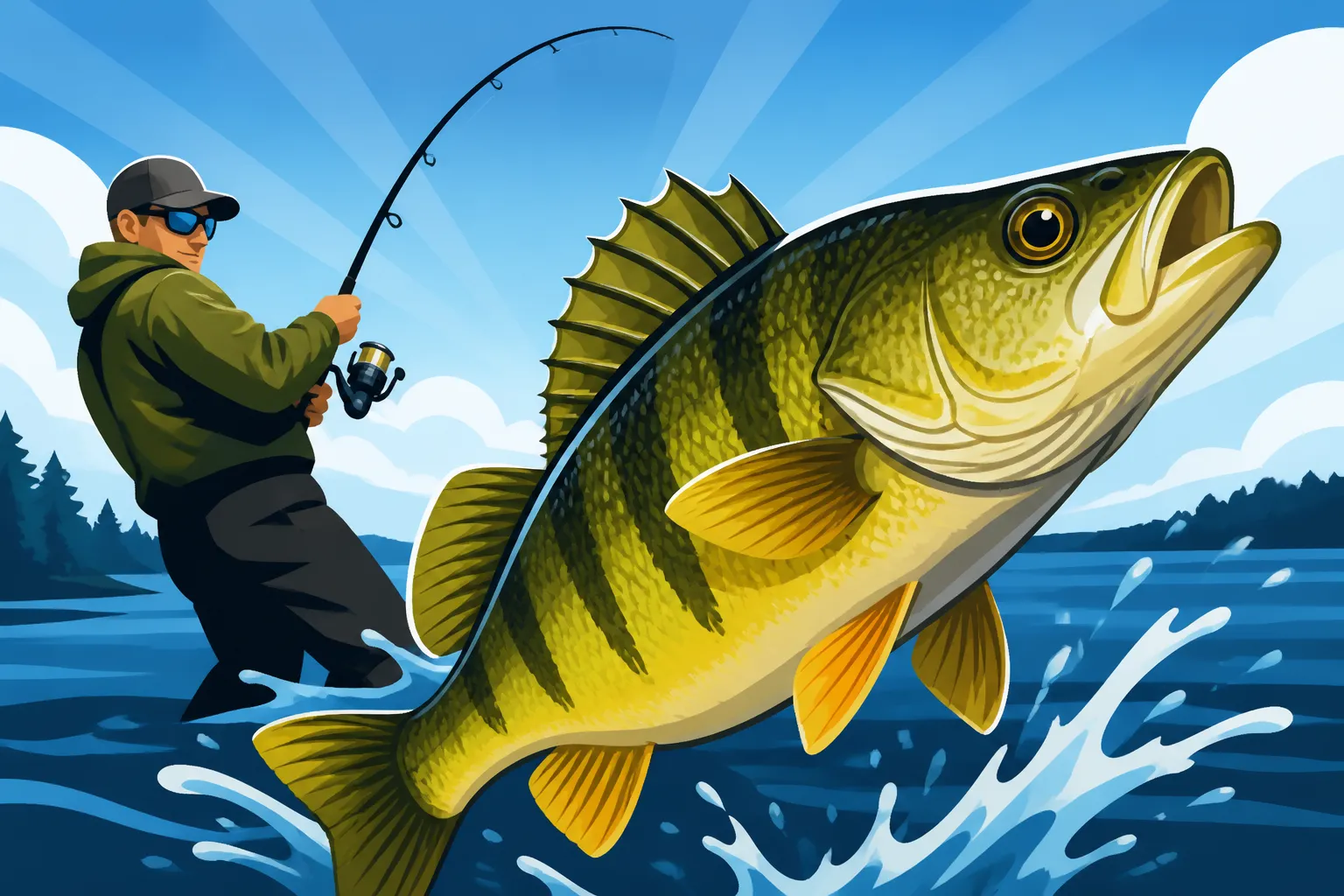
The vibrant colours are also more pronounced on a jumbo perch. Their distinct vertical black stripes stand out against their bright yellow-gold flanks, often with a hint of orange or red in their fins, especially the pectoral and pelvic fins. When you pull one of these beauties through the ice or into your boat, there's no mistaking it for a regular perch; their weight and sheer presence are unmistakable. Anglers should always be mindful of the Ontario Bag and Possession Limits by Species, particularly for yellow perch on Lake Simcoe, as regulations are in place to help sustain this incredible fishery.
Prime Locations for Jumbo Perch on Lake Simcoe
Lake Simcoe is vast, covering over 700 square kilometers, and pinpointing the exact spot where jumbo perch are schooled up can feel like finding a needle in a haystack. However, these fish are creatures of habit, and understanding the types of structure and depth they prefer seasonally will dramatically increase your chances of success.
Shallow Bays and Weed Lines
During the warmer months, especially in spring and early summer, and again in the fall, jumbo perch frequently move into shallower bays and congregate around dense weed lines. These areas, like the vast expanses of Cooks Bay, the more intricate shores of Big Bay near Barrie, or some of the shallower northern stretches, offer a dual advantage: abundant food and cover. Weeds provide refuge from predators like pike and muskellunge, and they host a buffet of insect larvae, small minnows, and other invertebrates.
When fishing these areas, look for transitions in weed types (e.g., coontail meeting milfoil), the edges of weed beds where they drop off into slightly deeper water, or pockets within the weeds themselves. Often, specific species of weeds like broad-leaf pondweed or cabbage weeds will hold more baitfish and, consequently, more perch. The key is to cover water, perhaps drifting with the wind or using a trolling motor to explore the weed edges until you mark fish or get bites. Keep an eye out for changes in bottom composition as well, as a hard bottom interspersed with weeds can be a prime holding area.
Deep Water Structure and Shoals
As water temperatures rise in mid-summer or drop significantly in winter, jumbo perch often shift their focus to deeper water structures and prominent shoals. These features, scattered throughout the main body of Lake Simcoe, provide cooler, more stable temperatures and act as natural congregation points for both baitfish and the predators that follow them. Think about areas like the famous "Perch Hump" in the middle of the lake, or the various shoals and humps off Oro-Medonte and Hawkestone.
These deep-water haunts typically range from 20 to 60 feet, though sometimes even deeper, depending on the time of year and specific lake conditions. Key structures include rock piles, gravel beds, sudden drop-offs, and underwater points. These features break up the monotony of the lake bottom and create current eddies that concentrate food. Using a good fish finder is absolutely critical here to locate these subtle contours and, more importantly, to mark schools of perch hovering near them. Sometimes, the perch will be right on the bottom; other times, they might be suspended 5 to 10 feet up, chasing bait. Exploring various depths along a structure until you find the active zone is a common and effective strategy. If you're new to the lake, hiring a local guide through platforms like FishingBooker can provide invaluable insight into these specific deep-water hotspots.
Ice Fishing Hotspots
Lake Simcoe transforms into an ice fishing mecca during the winter months, and its jumbo perch fishery becomes even more accessible. The key ice fishing hotspots often mirror the open-water locations but with a slightly different emphasis on access and safety. Popular areas include the expansive ice towns that pop up in Cooks Bay, the deeper basins of Kempenfelt Bay near Barrie, and the numerous access points along the eastern shore from Oro-Medonte to Beaverton.
During early ice, perch will still relate to shallower weed lines, similar to fall fishing, making areas like Gilford or Duclos Point fantastic for shore access. As the ice thickens and winter progresses, the main-lake humps and deeper shoals become primary targets, accessible to anglers willing to travel further out. Many ice hut operators set up on these known productive grounds, taking the guesswork out of locating fish. Remember that perch often move in schools, so if you find one, there are likely many more. Being mobile, especially during "prime time" (dawn and dusk), can be incredibly rewarding. For a deeper dive into winter angling, check out our guide on Ice Fishing in Ontario.
Essential Gear and Tackle for Simcoe Perch
Catching Lake Simcoe's jumbo perch isn't just about finding them; it's about presenting the right tools for the job. These are smart, often finicky fish, and having the appropriate gear can make all the difference between a tough day and a banner one.
Rods, Reels, and Line Choices
When targeting jumbo perch, don't underestimate them with flimsy gear. While they are panfish, their size and strength demand a slightly more robust setup than for smaller bluegills or crappies. For open water, a light to medium-light spinning rod, typically 6 to 7 feet in length, is ideal. Look for a fast action tip to detect subtle bites, but with enough backbone to handle a strong, heavy perch. Pair this with a small, smooth spinning reel (size 1000 or 2000) spooled with 4-6 lb test monofilament or fluorocarbon. Monofilament offers a bit of stretch, which can be forgiving, while fluorocarbon provides excellent sensitivity and invisibility in clear Simcoe waters.
For ice fishing, a 28-32 inch medium-light action ice rod is perfect. Again, a sensitive tip is paramount for those light winter bites, especially when jigging small baits. Match this with a small, smooth spinning reel. Line choice is critical on the ice; many anglers opt for 4 lb test fluorocarbon or a light braid (like 6 lb test) with a 4 lb fluorocarbon leader. Braid offers incredible sensitivity for detecting light taps in deeper water, while the fluorocarbon leader maintains stealth. When looking for new gear, our article on Best Tackle for Panfish offers more detailed recommendations.
Terminal Tackle and Baits
This is where the nuances of Simcoe perch fishing truly come alive. Jumbo perch can be incredibly selective, and having a variety of terminal tackle and bait options is key. Small jigs are the bread and butter for Simcoe perch. Think tiny tungsten jigs in sizes 1/16 to 1/8 ounce, often tipped with a soft plastic micro-bait like a Berkley Gulp! Minnow, a small worm imitation, or a grub tail. Popular colours include chartreuse, glow-in-the-dark, orange, and white, but don't be afraid to experiment. When the fish are finicky, a more natural presentation, like black or brown, can be effective.
Often, a combination approach works wonders. Many successful anglers use a "double-header" rig or a drop-shot setup with two small jigs or a jig and a bare hook. Tip one jig with live bait—like a minnow head, a wax worm, or a maggot—and the other with a small plastic. This allows you to present two different profiles or scents simultaneously. Small spoons (1/16 to 1/4 ounce) like the Williams Wabler or a Swedish Pimple can also be incredibly effective, especially when tipped with a minnow head, as their flash and wobble attract aggressive perch from a distance. For those looking for local expertise, a charter arranged through FishingBooker can provide insights into specific local bait preferences.
Best Techniques and Strategies for Success
Lake Simcoe's jumbo perch often move in schools, and once you find them, the action can be fast and furious. However, getting them to bite consistently, especially when they're scattered or finicky, requires a strategic approach.
Jigging and Deadsticking
These two techniques are fundamental to successful perch fishing on Lake Simcoe, particularly during ice fishing season, but also applicable in open water.
Jigging: This involves actively working a small jig or spoon to attract and entice perch. The retrieve can vary wildly depending on the fish's mood, but a common approach is a series of short, sharp lifts (an inch or two) followed by a pause, allowing the bait to flutter or "dance" in the water. Sometimes, a slow, subtle quiver is all it takes; other times, an aggressive "rip and fall" presentation is necessary to trigger a reaction strike. The key is to experiment until you find what the fish want on a given day. Watch your line and your fish finder closely; often, bites are incredibly subtle, appearing as a slight twitch, a momentary slackening of the line, or just a heavy feeling. For more specific ice fishing jigging tips, our guide on Jigging for Perch Through the Ice is an excellent resource.
Deadsticking: This technique is exactly what it sounds like – using a second rod (where regulations allow) or simply holding a rod very still, with bait presented motionless or with minimal movement. Often, a deadstick rig will have a small minnow on a plain hook or a very lightly weighted jig, positioned just above or within the school of perch. The deadstick acts as a tantalizing, easy meal for perch that might be wary of more aggressive jigging presentations. Many anglers combine jigging on one rod to attract fish, while keeping a deadstick nearby for those more cautious eaters. The contrast between the active jig and the passive deadstick can be incredibly effective, often leading to strikes on the "lazy" bait.
Electronics and How to Use Them
In an immense lake like Simcoe, electronics are not a luxury, but a necessity for consistently finding and catching jumbo perch. Whether you're in a boat or on the ice, a quality fish finder will dramatically improve your success rate.
Open Water: For boat anglers, modern side-imaging and down-imaging sonar units are powerful tools for scouting large areas. These allow you to scan expansive flats, locate subtle humps, and identify weed lines, all while looking for schools of baitfish and the larger arches that indicate perch. Once you've marked fish or promising structure, traditional 2D sonar can then be used to pinpoint their exact depth and activity level. Pay close attention to bottom composition, indicated by the thickness and hardness of the return on your screen; perch often relate to hard-bottom areas like rock or gravel. Using GPS to mark productive spots is also essential, allowing you to return to them later or share coordinates with others. Our comprehensive guide on Best Fish Finders for Ontario Lakes can help you choose the right unit for your needs.
Ice Fishing: On the ice, portable fish finders like flasher units (e.g., Vexilar, Marcum, Humminbird Ice Helix) are indispensable. These units provide real-time updates of what's directly beneath your hole. You can see your jig descending, watch fish approach it, and even see their reaction to your presentation. This immediate feedback allows you to adjust your jigging cadence, depth, and bait choice in real-time. Learning to read your flasher, identifying baitfish schools, individual perch, and your own lure, takes practice but is arguably the single most important skill for consistent ice fishing success on Simcoe. When perch show up on the screen but don't bite, it's a signal to change something – presentation, bait, or even location.
Seasonal Considerations for Lake Simcoe Perch
Lake Simcoe's jumbo perch fishery changes dramatically with the seasons. Understanding these shifts and adapting your approach accordingly is key to year-round success.
Spring and Summer Strategies
Spring: As the ice recedes and water temperatures begin to climb in late April and May, perch become incredibly active. This is often pre-spawn or early post-spawn, and they're looking to feed aggressively. Focus on shallower bays and areas where the water warms up first, often around incoming creeks or sheltered shores. Depths of 5-15 feet are common. Small jigs tipped with minnows or soft plastics are effective, as are small crankbaits or spinnerbaits worked slowly along weed edges. The perch are often found in large schools, so once you locate them, the action can be non-stop.
Summer: As the season progresses into July and August, the shallow waters can become quite warm, pushing larger perch out to deeper, cooler haunts. This is prime time for targeting the deep water structure, humps, and shoals mentioned earlier. Depths can range from 20 to 60 feet or even more. Vertical jigging with heavier spoons (1/4 to 1/2 ounce) or blade baits becomes effective, as does drift fishing with live minnows or worm harnesses over these deep structures. The challenge in summer is covering enough water to find the scattered schools, so a good boat with advanced electronics is crucial. Look for concentrations of baitfish, as the perch won't be far behind.
Here's a comparison table of summer vs. winter perch fishing:
| Feature/Aspect | Summer Open Water Perch Fishing | Winter Ice Fishing Perch |
|---|---|---|
| Primary Location | Deep water humps, shoals, offshore structures (20-60+ ft), weed edges in bays | Shallow bays (early/late ice), deep water humps, shoals (20-60+ ft) |
| Key Gear | Boat with side/down imaging sonar, light-medium spinning rods, minnows, worms, small crankbaits, blade baits, jigs | Portable flasher/sonar, medium-light ice rods, ice auger, ice hut, tungsten jigs, small spoons, minnows, wax worms, maggots |
| Techniques | Vertical jigging, drift fishing, slow trolling, casting to weed lines | Vertical jigging, deadsticking, "run & gun" mobility |
| Bite Detection | Rod tip movement, line twitch, weight on the line | Flasher signal, rod tip movement, line slackening |
| Mobility | High mobility with boat to cover vast areas | Variable: "Run & gun" with portable gear, or fixed hut fishing |
| Environmental Factor | Water temperature, wind, current, boat traffic | Ice thickness, snow cover, barometric pressure, cold fronts |
Fall and Winter Ice Fishing Tactics
Fall: As autumn progresses, Lake Simcoe's waters begin to cool, and perch once again make a strong push into shallower areas, especially large bays like Cooks Bay and Kempenfelt Bay. This "fall bite" can be phenomenal as perch gorge themselves in preparation for winter. Focus on depths of 10-25 feet, often relating to the remaining green weed beds or the edges of deeper channels within bays. Jigging spoons, blade baits, and drop-shot rigs with minnows are highly effective. This is a fantastic time for boat anglers, often leading right up to the formation of the first safe ice.
Winter Ice Fishing: This is arguably the most iconic time for jumbo perch on Lake Simcoe. Early ice typically sees perch congregating in shallower bays (8-20 feet) around remaining weeds and soft bottoms, as covered in our guide to Best Ice Fishing Lakes in Ontario. As winter progresses and oxygen levels change, and the colder temperatures stabilize, the perch often shift to the main lake's deep water humps and shoals (20-60+ feet). "Run and gun" tactics, where anglers drill many holes and move frequently to locate active schools, are crucial, especially during mid-day lulls. However, during prime feeding windows at dawn and dusk, once a school is located, it might stay put for extended periods. Combining active jigging with a deadstick bait is a tried-and-true winter strategy. Make sure to consult the Ontario Fishing Seasons by Zone and Month to confirm specific dates for Lake Simcoe.
Conservation and Responsible Angling Practices
Lake Simcoe's jumbo perch fishery is a precious resource, and its continued health depends on the responsible actions of every angler. Adhering to regulations and practicing ethical angling ensures that future generations can enjoy the thrill of catching these magnificent fish.
Understanding Limits and Regulations
Ontario's Ministry of Natural Resources and Forestry (MNRF) sets specific regulations for Lake Simcoe (which is entirely within Fisheries Management Zone 16) to manage its diverse fish populations. For yellow perch, these regulations include daily catch limits and possession limits, which can differ between Sport and Conservation fishing licenses, and sometimes even change based on the specific body of water. For Lake Simcoe specifically, there are often unique rules for yellow perch. For example, the Ontario Yellow Perch Limit on Lake Erie and Simcoe outlines these specific rules, which may differ from general zone regulations.
It is absolutely crucial to consult the most current Ontario Fishing Regulations Explained summary before heading out. Regulations can change annually, and ignorance is not a valid excuse for non-compliance. Always carry your valid Ontario fishing license and Outdoors Card, and be prepared to identify your catch to ensure you are within legal limits. These rules are not arbitrary; they are scientifically determined to ensure the sustainability of the fishery, preventing overfishing and protecting spawning stock.
Catch and Release Best Practices
While many anglers target perch for their delicious table fare, practicing responsible catch and release, especially for the largest "jumbo" specimens, is vital for the health of the Lake Simcoe fishery. The largest perch are often the most productive spawners, contributing significantly to the next generation of fish. Releasing these prime breeding fish helps ensure a robust population for years to come.
When practicing catch and release, handle fish minimally and with wet hands to protect their protective slime coat. Use de-barbed hooks, which make hook removal much easier and less damaging. If a fish is deeply hooked, it's often better to cut the line as close to the hook as possible rather than attempting to rip the hook out, which can cause internal damage. Support the fish horizontally, especially larger ones, and avoid squeezing their internal organs. For perch caught from deeper water, particularly in summer, they might suffer from barotrauma (swim bladder expansion). If the fish struggles to swim down, gentle assistance or a descending device might be necessary, though it's less common for perch than for deeper-dwelling species like lake trout. The goal is to return the fish to the water quickly and gently, allowing it the best chance of survival.
Disclaimer
Please note: Fishing regulations, season dates, and limits are subject to change. Always consult the official Ontario Fishing Regulations Summary for the most current and accurate information before planning your fishing trip.