Whitefish in the Great Lakes
For many anglers, the thought of fishing in Ontario immediately conjures images of battling fierce walleye, elusive muskie, or hard-fighting smallmouth bass. But tucked away in the cold, clear depths of the Great Lakes is a truly remarkable fish often overlooked: the whitefish. This guide is here to shed light on these fascinating and delicious creatures, helping you understand their role in our waters, where to find them, and how you might just add one to your fishing stories.
The Enigma of Great Lakes Whitefish: More Than Just a Fish
Great Lakes whitefish, often referred to simply as "whitefish," are a cornerstone of the Great Lakes ecosystem and have played an incredibly significant role in the history and economy of Ontario. Yet, for many recreational anglers, they remain a bit of a mystery, dwelling in depths unseen, often preferring subtle presentations over aggressive strikes. It can be frustrating to know such a valuable species is out there but not quite understand how to connect with them.
Biology and Identification of Coregonus clupeaformis
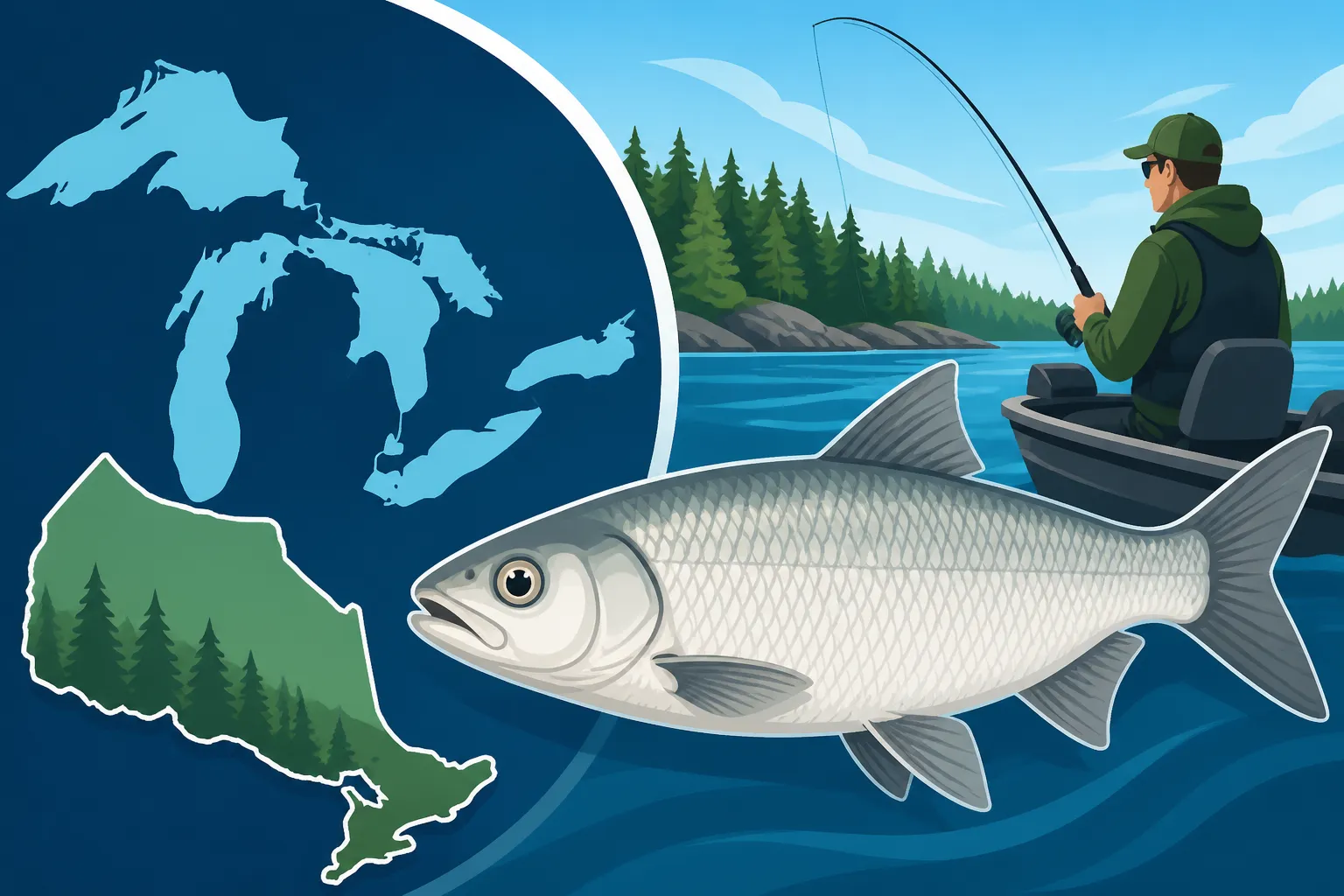
The primary species we're discussing is the Lake Whitefish (Coregonus clupeaformis). These fish are distinct, with a silvery body, large scales, and a small, almost toothless mouth positioned slightly underneath their snout – a tell-tale sign of a bottom feeder. They generally have a forked tail and relatively small fins. Unlike trout or salmon, whitefish lack the adipose fin between their dorsal and tail fins, which helps differentiate them from some other salmonids they might be confused with, especially if you're pulling them from deeper waters where various species coexist. Their overall appearance is sleek and streamlined, built for navigating the often powerful currents and vast expanses of the Great Lakes. They can grow to impressive sizes, with large adults often exceeding five pounds, and some even reaching double digits in weight, making for a substantial catch.
When you're out on the water, whether you're fishing Lake Erie Fishing Guide or the deep waters of Superior, identifying your catch correctly is key, not just for bragging rights but for adhering to regulations. Whitefish have a distinctive look that, once you've seen it a few times, is hard to mistake. Their subtle beauty truly represents the clean, cold waters they inhabit.
Ecological and Historical Importance
Whitefish are more than just a potential target for anglers; they are a critical component of the Great Lakes food web. Historically, they were the backbone of a massive commercial fishery, providing sustenance and livelihood for countless communities around the Great Lakes for centuries. Indigenous peoples relied on them heavily, and early European settlers quickly recognized their value, leading to a booming industry that shaped the coastal towns of Ontario.
These fish are primarily benthivores, meaning they feed on organisms living on or in the lakebed, such as insect larvae, crustaceans, and small mollusks. This feeding habit helps to process nutrients and keep the lake bottom healthy. Their eggs and juveniles, in turn, become a food source for larger predatory fish, creating a vital link in the food chain. Understanding this ecological role deepens our appreciation for whitefish, making them not just a target species but a symbol of the Great Lakes' natural heritage. While commercial fishing practices have evolved, and some populations have faced challenges, the whitefish continues to be a resilient and essential part of these vast inland seas.
Where to Find Great Lakes Whitefish: Decoding Their Habits
Finding whitefish can feel like a treasure hunt, especially if you're used to casting for bass along shorelines. These fish are creatures of habit, but their habits are often tied to deeper, colder water, which can be intimidating for newcomers. Don't worry, once you understand their preferences, you'll have a much better chance of locating them.
Preferred Habitats and Depths
Whitefish are coldwater species through and through. They thrive in oxygen-rich, deep, cool waters, typically preferring depths ranging from 50 to over 200 feet, especially during the warmer months. You'll often find them congregating near underwater structures like humps, shoals, reefs, and sharp drop-offs. Areas with rocky or gravel bottoms are also prime real estate for whitefish, as these provide ideal foraging grounds for the benthic invertebrates they feast upon.
Think of the vastness of Lake Superior, with its immense depths and cold waters – it's a whitefish paradise. Even in shallower Great Lakes sections like parts of Lake Huron Fishing Spots, you'll find whitefish retreating to the deepest, coolest pockets available when surface temperatures rise. The key is to look for structure in these deepwater zones. Submerged islands, underwater points that extend far from shore, and steep contours revealed on a good fish finder (available on Amazon for all budgets) are excellent starting points. Without a good understanding of the underwater topography, you're essentially just guessing, which can be frustrating.
Seasonal Movements and Concentrations
Whitefish don't just stay put all year; they undertake significant seasonal migrations, primarily driven by temperature and spawning urges.
- Spring: After ice-out, whitefish might be found slightly shallower as the water is uniformly cold. They'll still be near structure but can be more active in the 30-80 foot range before the thermal stratification of summer truly sets in. This can be a good time for open water anglers to target them before they dive really deep.
- Summer: This is when whitefish go deep. They seek out the thermocline and below, often holding in 80-200+ feet of water where temperatures are consistently in their preferred range (around 4-10 degrees Celsius). Locating them requires good electronics and patience to find those deepwater structures.
- Fall: As lake temperatures begin to drop and the water column starts to mix, whitefish will begin to move shallower, especially as they prepare for their spawning run. They often stage in 20-60 feet of water near traditional spawning grounds, which are usually rocky shoals or gravel beds. This can be an excellent time for open water fishing.
- Winter: For ice anglers, winter is prime whitefish time. They can be found in a variety of depths under the ice, often shallower than their summer haunts, especially if there's good oxygenation and food availability. Depths of 20-80 feet are common, but they can still be found deeper. Ice Fishing in Ontario offers a unique opportunity to access these fish.
Understanding these movements is crucial. If you're fishing for whitefish in July, you'll be targeting entirely different areas and depths than if you're out in November or February. Knowing when and where to adjust your approach is what separates a lucky catch from consistent success.
Effective Fishing Techniques for Great Lakes Whitefish
Successfully targeting whitefish requires a different approach than many other popular species. They have small mouths, subtle bites, and a preference for precise presentations. It’s less about power and more about finesse and knowing your electronics.
Ice Fishing Tactics
Ice fishing is arguably the most popular and effective way for recreational anglers to target whitefish in Ontario. The ability to directly position yourself over deepwater structure makes a huge difference.
- Jigging: This is the bread and butter of whitefish ice fishing. Small, heavy jigs tipped with a minnow head, a piece of emerald shiner, or even just maggots are incredibly effective. A common setup involves using a small spoon, like a Swedish Pimple or a Williams Wabler, often dressed with a small, coloured dropper fly or grub tied above it. The spoon acts as an attractor, while the smaller offering below is often what the whitefish actually eat. The key is a subtle jigging motion – a lift, a pause, maybe a few small shakes, then a long pause. Whitefish are curious but cautious. Many anglers find the most success jigging just off the bottom, or suspending their baits at the depth where they mark fish on their sonar.
- Baits: Live emerald shiners are absolute killer bait. If you can't get them, minnow heads, chunks of salted minnow, or even wax worms and maggots can work wonders. Presentation is everything; a small, subtle offering often outperforms a big, flashy one.
- Electronics: A good flasher or a portable fish finder is non-negotiable for whitefish ice fishing. These tools allow you to mark fish, see your jig, and understand how the fish are reacting to your presentation. You can tell if they're coming in to investigate, if they're ignoring your bait, or if they're about to strike. Investing in a solid fish finder (many great options are available on Amazon) will dramatically increase your success rate. For more general ice fishing gear tips, check out Best Ice Fishing Gear for Ontario.
Open Water Methods
Catching whitefish in open water, especially during summer, can be more challenging but equally rewarding.
- Downrigging: For boat anglers, downrigging is a highly effective technique. This involves using a heavy lead ball to get your lure down to a precise depth, often over deepwater humps or along sharp break lines. Small spoons, crankbaits, or even flasher/fly combos designed for trout and salmon can entice whitefish. The key is targeting the correct depth where fish are marked on your sonar, often deep, deep down.
- Bottom Bouncing/Jigging: For those without downriggers, a heavy bottom bouncer or a three-way rig can get your bait to the bottom. A small spoon or jig tipped with bait, slowly trolled or drifted, can be productive. Vertical jigging directly over marked fish with specialized deepwater jigs is also an option, though it requires precise boat control and excellent electronics.
- Float Fishing (Limited): In certain specific scenarios, typically in fall near spawning rivers or shallower staging areas, float fishing with live bait or a small jig can work. However, this is less common for the typical Great Lakes deepwater whitefish.
- Gear: Light to medium-light spinning rods with sensitive tips are ideal, paired with reels spooled with thin, low-stretch braided line to help detect those subtle bites in deep water. A fluorocarbon leader (6-10 lb test) is often used for stealth. For more specific gear needs, consider looking at Best Fishing Rods for Ontario Lakes or Best Tackle for Ontario Walleye – some of the tackle crosses over.
Essential Gear and Tips
Beyond the specific techniques, some general gear considerations can significantly improve your whitefish fishing experience.
- Rod and Reel: A fast-action, sensitive rod is crucial for feeling the delicate whitefish bite, especially when you're fishing in 80 feet of water. A spinning reel spooled with 6-10 lb braided line and a fluorocarbon leader will give you the sensitivity and strength needed.
- Lures and Baits: Always have a variety of small spoons, jigs, and small plastics that imitate crustaceans or minnows. Tipping with a small piece of natural bait (minnow head, worm) is often the difference maker. Consider brands that make quality small lures, which you can often find readily available on Amazon.
- Fish Finder/Sonar: We've said it before, but it bears repeating: a good fish finder is your best friend. Learning to read your sonar to identify baitfish, whitefish schools, and bottom structure is paramount. Check out Best Fish Finders for Ontario Lakes for detailed advice.
- Patience and Persistence: Whitefish can be finicky. Sometimes they'll bite aggressively, other times you'll need to work your lure for a long time before they commit. Don't be afraid to try different depths, jigging cadences, and bait combinations until you crack the code.
Regulations and Conservation: Protecting Whitefish for Tomorrow
Responsible angling means not just knowing how to catch fish, but also understanding and respecting the rules that protect them. Ontario has specific regulations in place to ensure the sustainability of whitefish populations in the Great Lakes. It's not just about avoiding fines; it's about being a good steward of our natural resources.
Understanding Bag and Size Limits
Every angler in Ontario is responsible for knowing and adhering to the current fishing regulations. Whitefish, like other species, have specific bag and possession limits that vary depending on the Fisheries Management Zone (FMZ) you are fishing in. Some zones might have a daily limit of 5 whitefish, while others might be more restrictive or have size minimums. The intent behind these limits is to prevent overfishing and allow populations to remain healthy and reproduce successfully.
It's common to see a distinction between "Sport" and "Conservation" licenses, which affects your limits. A Sport fishing license typically allows for higher catch limits, while a Conservation license has reduced limits to promote catch-and-release and reduce harvest pressure. Always consult the official Ontario Fishing Regulations Explained summary before you head out, or specifically look up Ontario Bag and Possession Limits by Species. These rules are updated regularly, so what was true last year might have changed this year. A quick check of the online regulations or the printed summary booklet is a must-do before any fishing trip.
| Fishing License Type | Whitefish Daily Catch Limit (Example) | Whitefish Possession Limit (Example) |
|---|---|---|
| Sport License | 5 | 10 |
| Conservation License | 2 | 4 |
| Under 18 (No License) | Same as Sport License Holder Accompanying | Same as Sport License Holder Accompanying |
| Over 65 (Resident) | Same as Sport License | Same as Sport License |
Note: These limits are illustrative examples. Always check the current official Ontario Fishing Regulations Summary for the specific FMZ you are fishing in, as limits and sizes can change and vary by location.
The Importance of Sustainable Fishing Practices
Beyond just following the letter of the law, adopting sustainable fishing practices is crucial for the long-term health of whitefish populations. This includes:
- Catch and Release: If you've met your consumption needs or are targeting trophy fish, practicing careful catch and release can reduce pressure on the population. Whitefish are generally robust, but deepwater fish can suffer from barotrauma when brought up quickly. If releasing, ensure they are handled gently, minimize air exposure, and use a descender device if fishing very deep to help them recover.
- Proper Identification: As mentioned earlier, correctly identifying your catch ensures you're applying the right regulations. Misidentifying a whitefish for another species with different limits could lead to unintended violations.
- Respecting Spawning Areas: Whitefish spawn in the fall, often on shallow, rocky shoals. While fishing might be open in some areas during this time, being mindful of these vulnerable periods can contribute to healthier future stocks.
- Reporting Violations: If you witness illegal fishing activities, reporting them to the Ministry of Natural Resources and Forestry (MNRF) helps protect our fisheries from exploitation.
The commercial whitefish fishery has faced significant challenges over the decades, from habitat degradation to invasive species. Recreational anglers play a vital role in the ongoing conservation efforts. By understanding and respecting the rules and embracing ethical fishing practices, we can all help ensure that whitefish continue to thrive in the Great Lakes for generations to come.
Whitefish as Table Fare: A Culinary Delight
After all the effort of locating and carefully catching these deepwater denizens, you might be wondering: are whitefish good to eat? The answer, for many, is a resounding yes! Whitefish are highly regarded for their delicate, flaky, and mild-tasting white flesh, making them a true culinary gem of the Great Lakes.
Preparing Your Catch: Cleaning and Filleting
Cleaning a whitefish is similar to cleaning most other panfish or smaller species, but their scales can be quite tough.
- Scaling: You'll want a good scaler. Running the fish under cold water while scaling can help keep the scales from flying everywhere. Scale from tail to head on both sides.
- Gutting: Make a shallow cut from the vent to just under the chin, being careful not to puncture the intestines. Remove all internal organs, ensuring the bloodline along the spine is scraped clean. Rinse thoroughly.
- Filleting: For larger whitefish, filleting is straightforward. Start behind the gill plate, cut down to the spine, and then turn your knife flat, running it along the backbone towards the tail. Repeat for the other side. You'll end up with two boneless fillets. The skin is usually left on for cooking, as it helps hold the delicate flesh together and crisps up nicely.
If you're unsure about filleting, a quick search online will provide plenty of video tutorials. Practice makes perfect, and the reward is delicious.
Simple and Delicious Cooking Methods
The mild flavour of whitefish makes it incredibly versatile in the kitchen. It doesn't need much fuss to shine.
- Pan-Fried: This is a classic for a reason. Dredge the fillets in seasoned flour or cornmeal (salt, pepper, a little paprika) and pan-fry in butter or oil over medium-high heat until golden brown and flaky. This method really highlights its delicate texture. Serve with a squeeze of lemon.
- Baked/Roasted: For a healthier option, brush fillets with olive oil, sprinkle with herbs (dill, parsley, chives are excellent), salt, and pepper, and bake at 375°F (190°C) for 10-15 minutes, or until it flakes easily with a fork. You can also add some thinly sliced vegetables to the pan.
- Grilled: If you're cautious about delicate fish sticking, you can grill whitefish on a cedar plank after soaking it. This imparts a wonderful smoky flavour. Otherwise, ensure your grill grates are clean and well-oiled before placing the skin-on fillets directly over medium heat for a few minutes per side.
- Smoking: Whitefish takes exceptionally well to smoking. The rich, smoky flavour complements the mild flesh beautifully, making it a fantastic appetizer or addition to a charcuterie board.
- Fish Tacos: Flake cooked whitefish into warm tortillas with your favourite toppings like cabbage slaw, salsa, and a creamy sauce. It’s a fresh, healthy, and incredibly satisfying meal.
Whitefish, with its lean protein and mild taste, is often celebrated by chefs and home cooks alike. Many anglers consider it among the best-eating fish in freshwater, right up there with walleye. Don't let its deepwater habits deter you; a properly caught and prepared whitefish is a true Ontario delicacy.
Challenges and the Future of Great Lakes Whitefish
While whitefish remain a vital part of the Great Lakes, their populations face ongoing challenges from a variety of sources. Understanding these pressures helps us appreciate the fragility of our ecosystems and the importance of continued conservation.
Invasive Species and Environmental Factors
The Great Lakes ecosystem has been dramatically altered by invasive species, and whitefish, like many native species, have felt the impact.
- Zebra and Quagga Mussels: These invasive mussels, which are prevalent throughout the Great Lakes, have profoundly changed the food web. They filter vast quantities of water, increasing clarity but also removing plankton that forms the base of the food chain for many native species, including some of the invertebrates whitefish rely on. This can shift food availability and competition.
- Round Goby: Another invasive species, the round goby, competes with whitefish for food sources, particularly benthic invertebrates. Gobies are also voracious egg predators, and in some areas, they have been observed preying on whitefish eggs during spawning, further impacting recruitment. While whitefish can sometimes prey on gobies, the competition and predation pressures are significant.
- Alewife: While not strictly invasive in the same way as mussels or gobies in all Great Lakes, alewives, which are an introduced species, can also impact whitefish. They compete for planktonic food when young and can indirectly affect whitefish survival.
- Habitat Degradation: While whitefish prefer deep, clean water, their shallow spawning grounds are vulnerable to shoreline development, pollution runoff, and siltation. Degradation of these critical habitats can limit successful reproduction.
- Climate Change: Changes in water temperature and stratification patterns due to a warming climate could also impact whitefish, a coldwater species that relies on specific thermal regimes. Shifts in lake currents, oxygen levels, and the distribution of their prey could all have long-term consequences.
These factors create a complex web of challenges for whitefish, making their continued presence a testament to their resilience and the ongoing efforts of fisheries managers.
Ongoing Conservation and Management Efforts
Despite these challenges, there are significant efforts underway to protect and manage whitefish populations across the Great Lakes.
- Fisheries Management: Government agencies, including Ontario's Ministry of Natural Resources and Forestry (MNRF), work in collaboration with U.S. counterparts, First Nations, and research institutions to monitor whitefish populations. This includes tracking catch rates, assessing population health, and conducting research on their life cycles and habitat needs.
- Regulations: The regulations we discussed earlier regarding bag and possession limits are direct tools used to manage harvest and protect spawning stocks. These are often adjusted based on scientific assessments of population health.
- Habitat Protection and Restoration: Efforts to protect critical spawning and nursery habitats are ongoing. This might involve restricting development in sensitive areas, improving water quality, or even specific restoration projects to enhance spawning substrates.
- Invasive Species Management: While completely eradicating invasive species is often impossible, control efforts and monitoring programs are in place to mitigate their impacts. This includes research into biological controls and public awareness campaigns to prevent the spread of new invasives.
- Research and Monitoring: Continuous scientific research helps us better understand the intricate dynamics of the Great Lakes ecosystem and how whitefish respond to changes. This data-driven approach informs management decisions and helps predict future challenges.
The future of whitefish in the Great Lakes relies on a concerted effort from all stakeholders – anglers, commercial fishers, scientists, and policymakers. By staying informed, adhering to regulations, and supporting conservation initiatives, we can all contribute to the health and abundance of these remarkable fish in Ontario's vast inland seas.
Disclaimer
This article is for general informational purposes only and does not constitute professional advice. Laws, prices and regulations vary by location and change over time. Consult a qualified professional for guidance on your specific situation.