Difference between a tiger trout and a brown trout
It's easy to look at a stunning trout pulled from an Ontario stream or lake and admire its beauty, but sometimes you catch one that just looks… different. You might hear whispers of a "tiger trout" and wonder if that's what you've got, especially when its patterns don't quite match the brown trout you're used to seeing. This guide is here to clear up that confusion, diving deep into the fascinating biological and visual distinctions between a true brown trout and the elusive tiger trout, so you'll know exactly what you're admiring (or releasing!) on your next fishing adventure.
The Enigmatic Tiger Trout: A Hybrid's Tale
When you hear "tiger trout," the first thing that should come to mind isn't a single species in the traditional sense, but rather a unique, often man-made, hybrid. This fish is truly special, a genetic anomaly that captures the imagination of anglers who are lucky enough to encounter one. It's a cross between a male brown trout ( Salmo trutta) and a female brook trout (Salvelinus fontinalis), two different species that don't typically interbreed naturally with any regularity.
What Makes a Tiger Trout Unique?
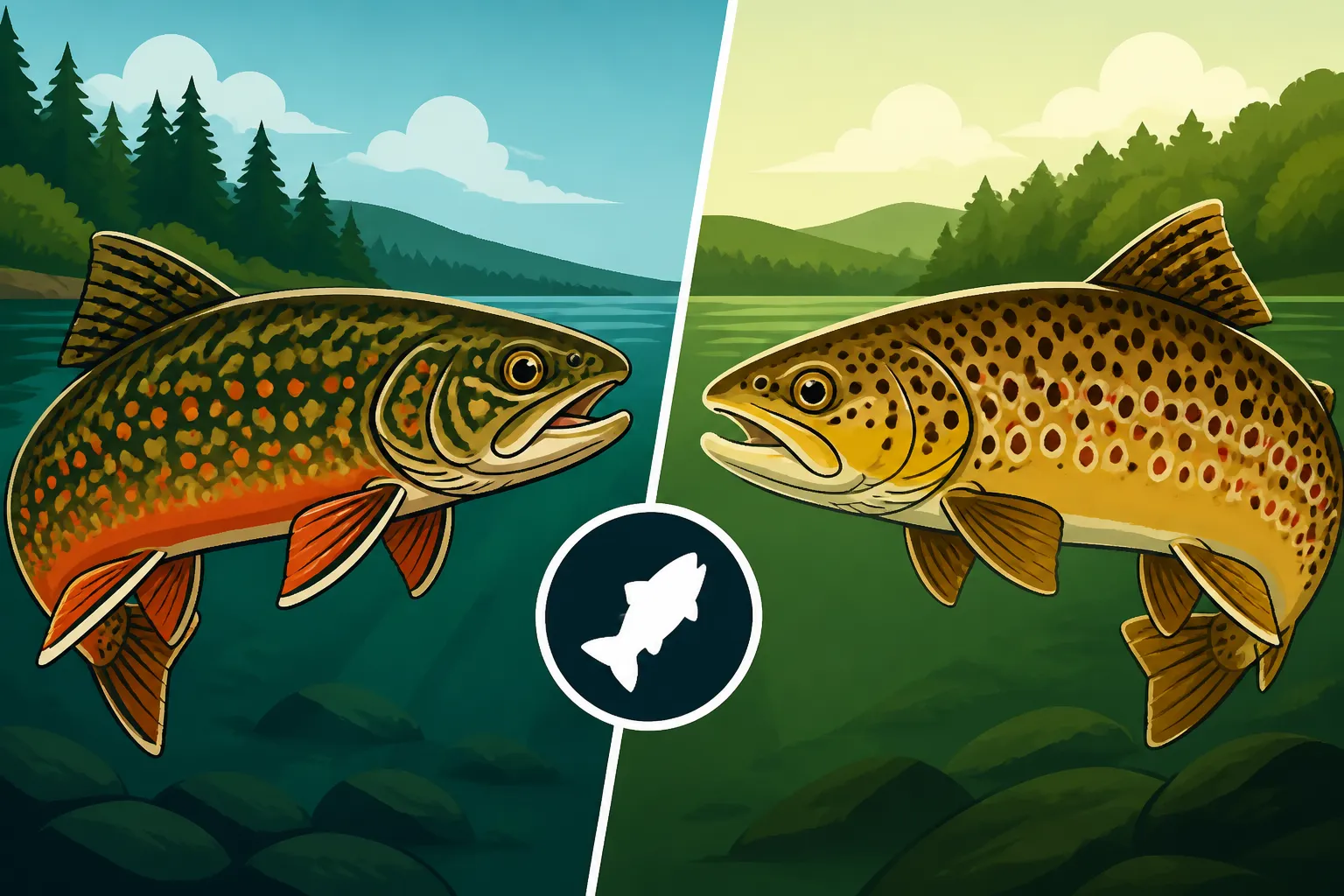
The most striking feature of a tiger trout, and indeed where it gets its name, is its incredible appearance. These fish display a breathtaking pattern of dark, maze-like, worm-like markings (known as vermiculations) across a lighter, often yellowish-brown to silvery-grey body. This intricate pattern covers much of their sides and back, creating a striking contrast that is truly unlike any other trout species you'll typically find. It's as if an artist meticulously painted each one. You won't find the distinct spots or red halos that are characteristic of other trout; instead, it's all about those mesmerizing, labyrinthine lines.
Biologically, tiger trout are almost always sterile, meaning they cannot reproduce. This is a common characteristic of interspecies hybrids, much like a mule (a cross between a horse and a donkey). While they can occur naturally in very rare instances where both parent species coexist and suitable spawning grounds overlap, they are far more commonly produced in hatcheries for stocking programs. These hatchery-reared fish are valued for their vigorous growth, hardiness, and aggressive feeding habits, which make them exciting for anglers. They can also be a valuable tool in fisheries management where managers might want to stock a fish that won't compete with native populations for spawning resources.
Where You Might (Rarely) Find Them
In Ontario, encountering a tiger trout is a genuinely rare event. While brown trout are well-established in many of our rivers and lakes, and brook trout are native to a vast array of cold, clear waters, the conditions for a natural cross are infrequent. However, tiger trout have occasionally been part of experimental stocking programs in various jurisdictions, often to provide a unique angling experience or to control populations of unwanted forage fish. If you were to stumble upon one in Ontario, it would likely be in a specific, perhaps isolated, water body where a stocking program once took place, or a truly exceptional natural occurrence. It's definitely a "unicorn" catch for most local anglers. If you're passionate about identifying all the different species, investing in a good, waterproof fish identification guide from Amazon can be a real game-changer for those rare encounters.
Getting to Know the Brown Trout: Ontario's Resilient Introduced Species
Now, let's talk about the brown trout, a fish that holds a special place in the hearts of many Ontario anglers. Unlike the tiger trout, which is a hybrid, the brown trout (Salmo trutta) is a distinct species with a long and storied history. Originally native to Europe and parts of Asia, brown trout have been widely introduced across the globe, including here in Ontario, where they have thrived in many diverse environments.
The Classic Marks of a Brown Trout
When you catch a brown trout, you'll immediately notice its characteristic markings. Their bodies are typically golden-brown to olive-brown on the back, fading to a silvery or yellowish belly. What truly sets them apart are the prominent dark spots, often encircled by a lighter "halo," scattered across their sides and back. Many of these spots, particularly on the flanks, will have a reddish or orange hue, adding to their striking appearance. The tail fin is usually square or only very slightly forked, and it often has some spotting, though typically less pronounced than on the body.
Brown trout are incredibly adaptable. They can be found in a wide range of habitats, from small, cold headwater streams to larger rivers and even deep, cold lakes. They're known for their wariness and intelligence, often making them a challenging target for anglers – a trait that only adds to their allure. These fish are also quite predatory, feeding on everything from aquatic insects and small baitfish to frogs and even mice, especially as they grow larger. This aggressive feeding behaviour is why they respond so well to various fishing techniques.
Brown Trout in Ontario's Waters
In Ontario, brown trout have firmly established themselves in many waterways, particularly in the southern and central regions where they were initially introduced. They are often found in cooler streams and rivers that flow into the Great Lakes, such as the Grand River, the Credit River, and the Ganaraska River. These fish require clear, cold, well-oxygenated water, especially for spawning. They can tolerate slightly warmer water than brook trout, which is one reason they've adapted so well to some of our more developed watersheds.
You can learn a lot about their behaviour by delving into articles like Brown Trout Habits in Ontario Streams, which provides fantastic insights into their typical haunts and feeding patterns. Anglers frequently target them using various methods, from fly fishing with delicate dry flies or nymphs to spinning with small spoons, spinners, and minnow imitations. They're powerful fighters, known for strong runs and acrobatic jumps, making every catch a memorable one. They're a staple for many who enjoy trout fishing in this province.
Key Differences: Identification and Angling Implications
So, how do you definitively tell these two apart when you're standing on the bank, rod in hand? While both are undeniably beautiful fish, their distinctions are quite clear once you know what to look for. Beyond their appearance, there are subtle differences in their biology and where you might encounter them that impact the angling experience.
Visual Distinctions: Patterns and Markings
The most obvious difference lies in their skin patterns.
- Tiger Trout: Think "worm track" or "maze-like" patterns. Their dark vermiculations are intricate and interconnected, almost like fingerprints, running across a lighter background. They completely lack the distinct spots or red halos you'd associate with a brown trout. Their tail fins can sometimes appear more square or slightly truncated.
- Brown Trout: Picture distinct, often circular or oval, dark spots. Crucially, many of these spots, especially on their sides, will have a reddish or orange centre, often surrounded by a light "halo." These spots are generally separate, not interconnected in a maze. Their tail fin is typically square or just slightly forked, and may have some spotting.
It's helpful to remember that even within the same species, individual fish can have variations in colour depending on their diet, habitat, and even stress levels. However, the type of marking—vermiculations versus distinct spots with halos—is the key identifier. If you're ever in doubt, a quick photo and a review of a reliable fish identification guide can help. Many anglers keep a small, laminated guide in their tackle box, or have a digital version on their phone for quick reference, perhaps a sturdy, waterproof phone case purchased from Amazon to keep it safe.
Biological and Habitat Differences
Beyond the visual, their biological makeup and typical habitat can also tell them apart.
- Tiger Trout: As a sterile hybrid, they don't have natural populations reproducing in the wild on a widespread basis. Any tiger trout you encounter is either an extremely rare natural anomaly or, more likely, a product of a hatchery stocking program. This means their presence is often localized to specific, managed waters. They grow well and fight hard, but their existence is usually a human-assisted one.
- Brown Trout: These are a true, self-sustaining species. They reproduce naturally in many Ontario rivers and streams, contributing to a wild population. They are often found in cooler sections of rivers and larger creeks, particularly those with good cover, deep pools, and gravel beds suitable for spawning. While they can be stocked, wild populations are a significant part of Ontario's fishery. They're a prime example of a non-native species that has successfully integrated into local ecosystems.
Understanding these foundational differences helps you appreciate not just the fish itself, but the broader aquatic environment you're fishing in. Are you in a wild brown trout stream, or a lake that might see experimental stocking?
Here's a quick comparison table to keep things straight:
| Feature | Tiger Trout | Brown Trout |
|---|---|---|
| Species Type | Sterile Hybrid (Brook Trout x Brown Trout) | True Species (Salmo trutta) |
| Primary Origin | Hatchery-reared (rare natural cross) | Native to Europe/Asia, introduced widely |
| Body Markings | Distinctive maze-like, worm-like (vermiculations) all over body and fins. No red/orange spots or halos. | Prominent dark spots, many with red/orange centers and light halos. Spots are typically separate, not interconnected. |
| Tail Fin | Often more square, sometimes slightly rounded or truncated, minimal spotting. | Square to slightly forked, often with some dark spots. |
| Ontario Status | Extremely rare, primarily from experimental stocking if present. | Well-established, wild, and stocked populations in many waters. |
| Reproduction | Sterile, generally cannot reproduce. | Reproduces naturally where conditions are suitable. |
Angling Implications: What Does This Mean for You?
For the Ontario angler, recognizing these differences can be more than just a fun fact; it can sometimes influence your approach or appreciation of a catch.
Firstly, if you ever catch a tiger trout, know that you've landed something truly special and rare. Many anglers might choose to carefully release such a unique catch, especially given their rarity and often limited numbers. Catch-and-release practices are vital for sustaining all fish populations, and even more so for unique or less common species.
Secondly, knowing the preferences of brown trout can greatly enhance your success. They are often found holding in current, near structure, or in deep pools. Articles like Fly Fishing for Trout in Ontario will give you excellent strategies. Their often wary nature means you need to be stealthy, and a good pair of polarized sunglasses (which you can easily find on Amazon) can help you spot them before they spot you, or at least identify the subtle differences in their markings.
Understanding the typical habitats for brown trout, as explored in pieces like Best Fly Fishing Rivers in Ontario, will guide you to where they are most likely to be found. While fishing for brown trout, you might occasionally hear stories or see evidence of other stocked trout, such as rainbow trout (often covered in Rainbow Trout Stocking in Ontario). The more you learn about each species, the better equipped you'll be to target them effectively and appreciate their individual qualities.
Why This Matters to Ontario Anglers
For those of us who love to fish in Ontario, understanding the different species, even the rare ones, adds so much to the experience. It's not just about catching fish; it's about connecting with the natural world, appreciating biodiversity, and becoming a more knowledgeable and responsible angler.
Beyond the Fight: Conservation and Appreciation
Knowing the difference between a tiger trout and a brown trout is a testament to your growing expertise. It allows you to appreciate the intricate details of each fish. When you see those distinct red-haloed spots, you know you've got a resilient brown trout, a species that has made a new home here. If, by some incredible stroke of luck, you land a tiger trout with its labyrinthine patterns, you'll instantly recognize it as a rare gem, perhaps even a product of innovative fisheries management. This knowledge fosters a deeper respect for each individual fish and the role it plays, or doesn't play, in the larger ecosystem.
Conservation efforts for wild brown trout populations often focus on habitat protection and water quality, as they require specific conditions for natural reproduction. For tiger trout, if they are present, their management is typically tied to specific stocking goals, rather than natural population dynamics. Learning about the Trout Species Identification Guide for Ontario can further expand your understanding of all the different trout you might encounter.
The Thrill of Identification and the Story it Tells
Imagine you're casting on a favourite river, maybe one known for its healthy brown trout population. You feel a strong tug, and after a good fight, a beautiful fish comes to the net. As you carefully handle it, you examine its markings. Are those distinct red-haloed spots? Or are they mesmerizing, swirling vermiculations? That moment of identification, of knowing exactly what you've caught, adds another layer of satisfaction to the catch. It’s a moment of discovery, of confirming your knowledge in the field.
This deeper understanding also empowers you to engage more meaningfully with fellow anglers, share your knowledge, and even contribute to citizen science if you encounter something truly unusual. It makes every catch a potential learning opportunity and every fishing trip an adventure in natural history. So next time you're on the water, take a moment to really look at your catch. It might just tell you a fascinating story.
Disclaimer
This article is for general informational purposes only and does not constitute professional advice. Laws, prices and regulations vary by location and change over time. Consult a qualified professional for guidance on your specific situation.