Best Rain Gear for Ontario Anglers
There’s nothing quite like the feeling of being out on the water, rod in hand, embracing the tranquility of an Ontario morning. That is, until the skies open up and you find yourself drenched to the bone, shivering, and cutting your trip short. We’ve all been there, and it’s a truly miserable experience that can turn a fantastic day of fishing into a regrettable one. This comprehensive guide is here to help you navigate the often-confusing world of angling rain gear, ensuring you stay dry, comfortable, and focused on landing that next big catch, no matter what the unpredictable Ontario weather throws your way.
The Absolute Necessity of Quality Rain Gear for Ontario Fishing
Ontario's weather is, shall we say, a bit of a character. One minute you're basking in glorious sunshine, the next, a squall rolls in from Lake Huron, or a cold front drops out of the north, bringing with it a steady, bone-chilling drizzle. For anglers, this unpredictability isn't just an inconvenience; it can be the difference between a memorable day and a miserable, potentially even risky, one. Having the right rain gear isn't a luxury; it's an essential piece of your fishing kit, as vital as your rods and reels.
The Unpredictable Ontario Weather
Picture this: You’re out on Lake Simcoe, the sun is shining, and the perch are biting. You're in your t-shirt, feeling great. Then, out of nowhere, dark clouds gather on the horizon, and within minutes, a sudden downpour hits. Without proper rain gear, that sunny afternoon turns into a scramble for cover, and even if you make it back to shore, you’re left with wet clothes, a chill to your core, and potentially a ruined day. Ontario's vast lakes and exposed rivers, like the French River or the Ottawa River, offer little shelter when the weather decides to turn.
It's not just about heavy rain either. Even a light, persistent drizzle on a cool fall day can leach away your body heat and leave you feeling cold and fatigued. Think about those crisp autumn mornings on the Bay of Quinte, chasing walleye. The air might be cool, but the fish are active. If you’re not prepared for the inevitable dampness, you’ll be heading home before the bite even gets good. Good rain gear allows you to shrug off these minor inconveniences and continue fishing comfortably, extending your time on the water and increasing your chances of success.
Beyond Comfort: Safety and Performance
While comfort is a huge factor, staying dry also directly impacts your safety and fishing performance. Hypothermia isn't just a winter concern; prolonged exposure to wet and cold conditions can lead to it even in milder temperatures. When your core body temperature drops, your decision-making abilities and dexterity suffer, which can be dangerous when you're handling sharp hooks, navigating a boat, or wading through slippery riverbeds.
Furthermore, being uncomfortable and distracted by the cold and wet isn't conducive to good fishing. When you're shivering and thinking about how soaked your socks are, you're not focusing on your retrieve, reading the water, or feeling those subtle bites. Quality rain gear keeps you warm and dry, allowing you to concentrate fully on the task at hand. It means you can stay out longer, fish more effectively, and enjoy the experience, rather than just enduring it. This can be particularly crucial during an intense fight with a trophy muskie on Georgian Bay or trying to gently release a delicate brook trout on a small Crown land stream.
Key Features to Look For in Angling Rain Gear
Choosing the right rain gear isn't as simple as grabbing the first waterproof jacket you see. Anglers have unique needs that differ from hikers or urban commuters. Our gear needs to withstand boat spray, constant movement, sharp hooks, and often abrasive environments. Knowing what features to prioritize will help you find a system that truly performs when you need it most.
Waterproof Rating and Seam Sealing
The most critical feature, of course, is waterproofing. But "waterproof" isn't a single standard; there are different levels. A fabric's waterproofness is often measured in millimeters (mm) of water column pressure it can withstand before water penetrates. For serious angling in Ontario, especially if you're on a boat, you'll want something with a higher rating – generally 10,000mm or more. Anything less might handle a light drizzle but will quickly fail in a sustained downpour or when sitting on a wet boat seat all day.
Equally important to the fabric itself is the construction of the seams. Even the most waterproof fabric is useless if water can seep through the stitching. Look for "fully seam-sealed" or "taped seams" as a non-negotiable feature. This means that all the seams have been sealed with a waterproof tape or coating, creating an impenetrable barrier. Many brands now use advanced ultrasonic welding for even stronger, more watertight seams. If you're considering a more budget-friendly option, inspect the seams closely to ensure they appear robust and properly sealed.
Breathability: Staying Dry Inside and Out
This is where many less expensive rain gear options fall short, turning a rainy day into a steamy, sweaty one inside your suit. Breathability refers to a fabric's ability to allow moisture vapour (sweat) to escape while preventing liquid water from entering. If your rain gear isn't breathable, your sweat will condense on the inside, leaving you feeling just as wet as if you were getting rained on.
Breathability is measured in grams of water vapor that can pass through a square meter of fabric in 24 hours (g/m²/24hr). For active fishing, such as wading a river or constantly casting, aim for a breathability rating of 8,000 g/m²/24hr or higher. Materials like Gore-Tex are renowned for their excellent balance of waterproofing and breathability, using microscopic pores that are too small for water droplets to enter but large enough for sweat vapor to escape. Without good breathability, you’ll find yourself unzipping your jacket and letting rain in, just to cool down – defeating the entire purpose of wearing rain gear.
Durability and Abrasion Resistance
Angling isn't a gentle sport. We're constantly brushing against rough boat surfaces, rocks, docks, and even sharp fish fins. Your rain gear needs to be tough enough to withstand this abuse without tearing or developing pinholes. Look for fabrics with a higher denier (D) count, especially in high-wear areas like the knees, seat, and elbows. Denier refers to the thickness of the individual fibers; a higher number means a more robust fabric.
For example, a jacket made with 70D nylon will be more durable than one made with 30D, though it will also be heavier and potentially less packable. Reinforced patches, especially on the knees of rain pants or bibs, are a huge plus. Consider the type of fishing you do most often. If you’re primarily bank fishing or kayak fishing, you'll be putting more stress on your gear from kneeling, sitting, and moving against rough surfaces, making durability an even higher priority. You don't want to buy a new rain suit every season because it couldn't handle the realities of fishing the rugged shores of Lake Superior or the rocky rivers of Northern Ontario.
Ergonomics and Angler-Specific Design
Generic rain gear often lacks the thoughtful features that make an angler's life easier. Look for designs specifically tailored for fishing. This includes a full range of motion in the shoulders and arms for casting, articulated knees for comfortable bending, and ample, strategically placed pockets that are easy to access even with wet hands or while wearing a life jacket. Waterproof zippers on pockets are a must for keeping your phone, keys, and other essentials dry.
Adjustable cuffs with watertight seals (often Velcro or neoprene) are crucial to prevent water from running down your arms when you're reaching into the water to land a fish. An adjustable hood that moves with your head and allows for good peripheral vision is also key, especially on a rocking boat. Some jackets even feature D-rings for attaching tools or kill switch lanyards, and internal mesh linings to prevent clamminess. These small details might seem minor, but they significantly enhance your comfort and overall fishing experience.
Types of Rain Gear Systems for Anglers
When it comes to outfitting yourself, you generally have a few different options for how your rain gear is configured. Each has its pros and cons, and the best choice often depends on your specific fishing style and the conditions you expect to encounter most often in Ontario.
Two-Piece Systems: Jacket and Pants/Bibs
This is arguably the most popular and versatile choice for most Ontario anglers. A two-piece system consists of a separate rain jacket and a pair of rain pants or bibs. The primary advantage here is flexibility. You can wear just the jacket in light rain, or just the pants if you’re wading and the upper body is protected by something else. If the rain intensifies, you simply put both pieces on. This modularity allows for better temperature regulation; you can shed a layer if the weather warms up or the rain stops.
Rain pants typically have an elastic waistband and may feature ankle zippers for easy on-off over boots. Rain bibs, on the other hand, extend higher up the torso with shoulder straps, offering superior protection against spray, wind, and rain, especially when seated in a boat or fighting a fish. For serious boat anglers on large bodies of water like Lake Erie or Lake Ontario, bibs are often preferred for their enhanced coverage. Many anglers find high-quality two-piece sets from brands often seen at Bass Pro Shops to be a great investment for their versatility.
Full Suits and Overalls
While less common for general angling, full rain suits or overalls offer maximum, uninterrupted protection. These are single-piece garments that combine the jacket and pants into one unit. Their main benefit is the complete elimination of any gap where water could potentially enter, such as at the waistline where a jacket and pants meet. This makes them exceptionally good for extremely heavy rain, strong winds, or situations where you're constantly exposed to spray.
However, the trade-off is often a lack of versatility and potentially less mobility, depending on the design. They can be cumbersome to put on and take off, and adjusting your layers underneath can be more of a hassle. They also tend to be warmer, which might be a drawback on mild, rainy days. These are often seen in more specialized contexts, like commercial fishing or extreme weather expeditions, but some anglers who regularly face the harshest conditions, perhaps ice fishing in late winter or early spring on Lake Nipissing when the slush and rain come, might consider them for their impenetrable barrier.
Layering for Optimal Protection
No matter which type of rain gear you choose, understanding the concept of layering is crucial for comfort and performance in Ontario's varied climate. Your rain gear is your outer "shell," designed to keep external moisture out. What you wear underneath is just as important for managing internal moisture (sweat) and regulating your body temperature. Avoid cotton next to your skin, as it absorbs moisture and stays wet, chilling you rapidly.
Instead, opt for moisture-wicking base layers made of synthetic materials or merino wool. These fabrics pull sweat away from your skin, helping it evaporate and keeping you dry and warm. On colder days, add an insulating mid-layer like a fleece jacket or a puffy vest. The combination of a breathable outer shell and effective inner layers ensures that you stay dry and comfortable in a wide range of conditions, from a cool spring rain to a warm summer downpour, or a cold, blustery day on the water. This strategic layering approach is what truly allows you to maximize your time outdoors without sacrificing comfort.
Material Matters: Understanding Waterproofing Technologies
The technology behind keeping you dry has come a long way from simply wearing a heavy rubberized coat. Today's angling rain gear employs sophisticated materials and coatings designed to offer a delicate balance of waterproofing, breathability, and durability. Knowing a bit about these technologies will help you make an informed decision and appreciate why some gear carries a higher price tag.
High-Performance Membranes: Gore-Tex and Alternatives
When people think of high-end waterproof-breathable fabrics, Gore-Tex often comes to mind, and for good reason. It’s a PTFE (polytetrafluoroethylene) membrane with billions of microscopic pores per square inch. These pores are too small for liquid water droplets to pass through, but large enough for water vapor (sweat) to escape. This allows it to keep rain out while letting your body breathe, preventing that clammy feeling. It's a gold standard for many, known for its consistent performance and durability.
However, many other brands have developed their own proprietary waterproof-breathable membranes that offer similar performance at various price points. Brands like Simms, Helly Hansen, and Frogg Toggs, for instance, utilize their own technologies, which often include polyurethane (PU) based membranes or specialized laminates. While the specific chemical composition may differ, the underlying principle is the same: a semi-permeable barrier that keeps water out and lets sweat vapor escape. These alternatives can be excellent choices, often providing competitive performance, and are readily available from retailers like Amazon, offering a wider range of options for anglers looking for specific features or budgets.
Water-Repellent Coatings: DWR Explained
Beyond the internal membrane, most quality rain gear fabrics also feature a Durable Water Repellent (DWR) coating on the outer surface. This is what causes water to bead up and roll off your jacket or pants, rather than soaking into the fabric. The DWR treatment is a chemical application that reduces the surface tension of the fabric, preventing water from "wetting out" the outer layer.
While the DWR coating doesn't make a garment waterproof on its own (that's the job of the membrane), it's crucial for the garment's breathability. If the outer fabric wets out, it creates a barrier that prevents the breathable membrane from doing its job effectively. Over time, DWR coatings wear off due to abrasion, dirt, and detergents. When you notice water starting to soak into your jacket rather than beading up, it's a sign that your DWR needs to be revitalized, which can often be done with specific wash-in or spray-on products. Care and Maintenance for Longevity covers this in more detail.
Understanding Fabric Denier and Construction
The "face fabric" – the outer layer of your rain gear – plays a significant role in its durability and feel. This is where denier comes in, indicating the thickness and strength of the yarn used. Higher denier fabrics (e.g., 70D, 150D, 300D) are more resistant to snags and tears, which is vital for fishing where you might be brushing against trees, rocks, or boat components. However, higher denier often means a stiffer, heavier, and sometimes noisier fabric.
Lower denier fabrics (e.g., 20D, 30D) are lighter, more flexible, and pack down smaller, making them great for emergency rain gear you stash in your bag, but they won't hold up to constant abuse. The way the fabric is constructed (e.g., ripstop weave) also adds to its tear resistance. For serious angling, especially if you’re navigating tight spots or dealing with heavy gear, a mid-to-high denier fabric with ripstop construction in key areas is often the sweet spot, providing a good balance of durability and comfort.
Essential Components of a Complete Rain Gear Setup
While a good rain jacket is often the first thing anglers think about, truly effective rain protection is a system. It involves more than just a single piece of clothing. To stay completely dry and comfortable during an unpredictable Ontario fishing trip, you need to consider how each component works together.
Rain Jackets: Features for the Upper Body
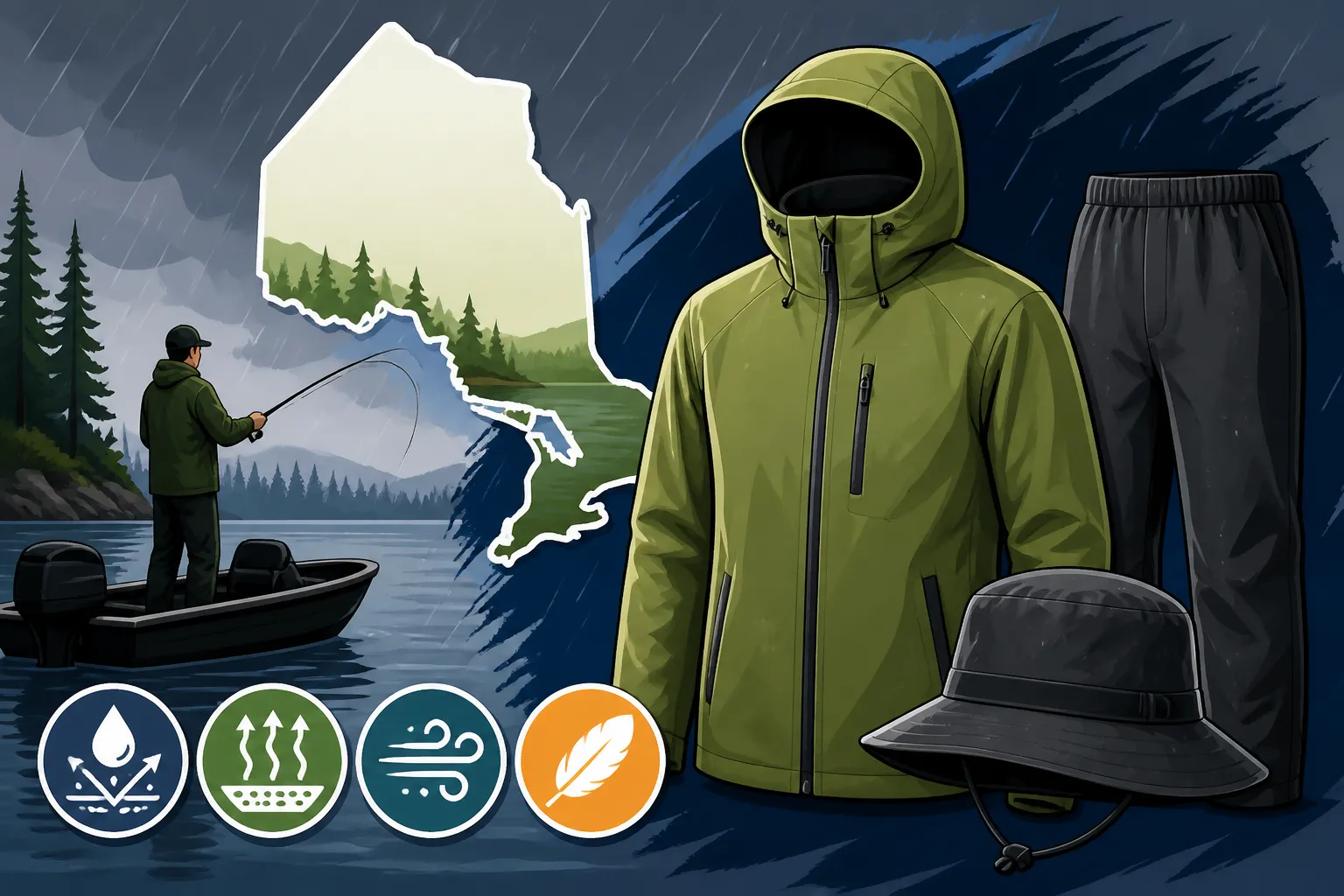
The rain jacket is the cornerstone of your wet weather defense. Beyond waterproofing and breathability, specific features make an angling jacket stand out. A well-designed hood is paramount; it should be adjustable in multiple ways (volume, circumference) to provide a snug fit that turns with your head without obscuring your vision. A stiff brim helps keep rain out of your eyes. Some premium jackets even have a "hood garage" to neatly stow the hood when not in use, preventing it from flapping in the wind.
Pockets are another critical consideration. They should be plentiful, easily accessible, and, most importantly, truly waterproof, often featuring storm flaps or water-resistant zippers. Chest pockets are great for storing essentials like a phone or wallet. Hand-warmer pockets are a welcome addition on cold days. Look for durable main zippers, often with a storm flap or double storm flap, to prevent any water ingress. Cuffs with an internal gasket or a robust Velcro closure are essential to create a watertight seal around your wrists, especially when you're casting or handling fish in the water.
Rain Pants and Bibs: Protecting Your Lower Half
Often overlooked, good rain pants or bibs are just as important as the jacket. Without them, you'll quickly find yourself with a wet backside and cold legs, especially if you're sitting in a boat, kneeling to unhook a fish, or wading. Rain pants offer convenience, easily slipping over your regular pants. Look for adjustable waistbands for a comfortable fit and ankle zippers or snap closures to make it easy to put them on or take them off over boots. Reinforced knees and seat are a huge bonus for durability.
For maximum protection against boat spray and driving rain, rain bibs are often the preferred choice among serious anglers. They extend higher up the torso, often reaching your chest, and are held up by adjustable shoulder straps. This design prevents water from entering at the waistline, a common weak point in two-piece systems, particularly when bending over or sitting. Many bibs feature waterproof cargo pockets, reinforced knees with articulation for easy movement, and sometimes even a plier sheath. Both pants and bibs should be breathable to prevent sweat buildup during active fishing.
Headwear, Gloves, and Footwear: The Often Overlooked Details
A truly complete rain gear system extends beyond your jacket and pants. Keeping your head, hands, and feet dry makes a world of difference to your overall comfort and warmth. A good waterproof hat or cap worn under your jacket hood provides an extra layer of protection and helps keep rain out of your face, especially when dealing with wind. Some dedicated rain hats feature wide brims for superior face and neck coverage.
Waterproof gloves are a game-changer on cold, wet days. They prevent your hands from getting numb and losing dexterity, which is crucial for tying knots, handling gear, and operating electronics. Look for gloves that offer good grip even when wet. Lastly, your footwear is critical. Waterproof boots, whether rubber or insulated, are essential for keeping your feet dry. If you're wading, a good pair of Best Waders for Ontario Trout Streams is invaluable, paired with wading boots that offer excellent traction on slippery rocks. Don't forget waterproof socks as an extra line of defense, even inside waterproof boots, for those unexpected splashes or slips.
| Component | Primary Function | Key Angler Features | Best for |
|---|---|---|---|
| Rain Jacket | Upper body waterproofing & breathability | Adjustable hood, sealed cuffs, waterproof pockets, D-rings | General fishing, casting, layering over insulation |
| Rain Pants | Lower body waterproofing & mobility | Ankle zippers, reinforced knees/seat, elastic waist | Moderate rain, easy on/off, layering over regular pants |
| Rain Bibs | Max lower & torso waterproofing | High chest coverage, adjustable straps, reinforced zones | Heavy rain, boat fishing, prolonged exposure to spray |
| Waterproof Hat | Head and face protection | Wide brim, snug fit, quick-dry material | Keeping rain off face, sun protection in varied weather |
| Waterproof Gloves | Hand warmth & dexterity in wet conditions | Good grip, insulated options, touchscreen compatibility | Cold/wet weather, handling fish, knot tying |
| Waterproof Boots | Foot dryness & traction | Rubber or insulated, non-slip soles, comfortable fit | Wading, boat decks, muddy banks, general wet conditions |
Care and Maintenance for Longevity
Investing in quality rain gear for your Ontario fishing adventures is a smart move. But like any good piece of equipment, it needs a little love to perform its best and last for many seasons. Proper care and maintenance aren't just about cleanliness; they're crucial for maintaining the waterproof and breathable properties of your gear. Neglecting these steps can quickly degrade performance and shorten the lifespan of your expensive investment.
Proper Cleaning Techniques
After a long day of fishing, your rain gear is likely to be covered in a mix of lake water, fish slime, bait residue, and possibly mud. It's tempting to just toss it in a corner, but resist! Dirt and oils can clog the microscopic pores of breathable membranes, reducing their effectiveness and causing the DWR coating to break down faster. Always clean your rain gear according to the manufacturer's instructions, which are usually found on an inside tag.
Generally, this involves a gentle machine wash (or hand wash) with a technical cleaner specifically designed for waterproof-breathable fabrics. Avoid conventional detergents, fabric softeners, and bleach, as these can strip the DWR and leave residues that impair breathability. Zip all zippers, close all flaps and Velcro, and turn the garment inside out before washing. After washing, a rinse cycle with extra water can help ensure all cleaning agents are removed. A good cleaning removes the grime that hinders performance, much like keeping your reels clean for Best Spinning Rods for Walleye.
Re-Waterproofing and DWR Restoration
As mentioned earlier, the Durable Water Repellent (DWR) coating on the outer fabric will eventually wear off. You’ll notice this when water stops beading up and starts to soak into the fabric (known as "wetting out"). When this happens, it's time to re-apply the DWR. There are many excellent DWR restoration products available, often found at outdoor retailers or on online marketplaces like Amazon. These come in two main types: wash-in treatments and spray-on applications.
Wash-in treatments are convenient as they treat the entire garment in one go, but they can also treat the inside of the garment, which you don't necessarily want if it hinders the wicking properties of your base layers. Spray-on treatments allow you to target specific areas, like high-wear zones, and avoid internal linings. After applying the DWR, many products recommend a low-heat tumble dry or careful ironing to activate the treatment. This heat helps bond the DWR chemicals to the fabric, restoring that satisfying water-beading effect and ensuring your membrane can breathe effectively again.
Storage Tips to Prevent Damage
How you store your rain gear when it’s not in use is just as important as how you clean it. Never store damp or wet rain gear in a confined space. This creates a perfect breeding ground for mildew, which can permanently damage the fabric, compromise its waterproofness, and leave an unpleasant odour. Always ensure your gear is completely dry before storing it.
Ideally, hang your rain gear in a well-ventilated closet or on a hanger, away from direct sunlight and extreme temperatures. Avoid compressing it tightly for long periods, as this can crush the membranes and potentially damage the DWR coating. If you need to pack it away for extended periods, rolling it loosely rather than stuffing it can help maintain the integrity of the fabric and coatings. By following these simple cleaning and storage practices, your investment in quality rain gear will serve you well for many seasons of comfortable, dry fishing across the magnificent waters of Ontario.
Disclaimer
This article is for general informational purposes only and does not constitute professional advice. Laws, prices and regulations vary by location and change over time. Consult a qualified professional for guidance on your specific situation.