Best Sunglasses for Sight Fishing Clear Water
There’s nothing quite as frustrating as seeing a shadow or a ripple, knowing a trophy fish is lurking, but being completely blinded by glare on the water’s surface. When you're trying to spot subtle movements, dark shapes against a bright bottom, or follow a delicate fly line in clear Ontario waters, ordinary sunglasses just don't cut it. This guide is all about helping you cut through that watery veil, understand what truly makes a pair of fishing sunglasses exceptional for sight fishing in clear water, and how to choose the perfect pair to elevate your angling experience.
Why Quality Sunglasses Are Non-Negotiable for Clear Water Sight Fishing
Many anglers treat sunglasses as an afterthought, a simple accessory to block the sun. But for sight fishing, especially in the pristine, clear lakes and rivers of Ontario, they are as crucial as your rod and reel. Without the right pair, you're essentially fishing blind, missing out on countless opportunities that a keen eye could exploit. It’s not just about protecting your eyes from harmful UV rays – though that's incredibly important – it's about gaining a distinct advantage over the fish.
The Problem with Glare
Glare is the arch-nemesis of any sight fisherman. It’s that blinding reflection of sunlight off the water's surface that turns an otherwise clear view into a shimmering, impenetrable mirror. This isn't just annoying; it actively hides fish, structure, and subtle takes. Imagine you're on a tranquil northern lake, the sun high, trying to spot a cruising Lake Trout Fishing in Ontario over a rocky shoal, or a Smallmouth Bass Fishing in Ontario lurking near submerged logs. Without the ability to cut that glare, those fish simply disappear into the reflections, turning what should be an exciting visual hunt into a guessing game.
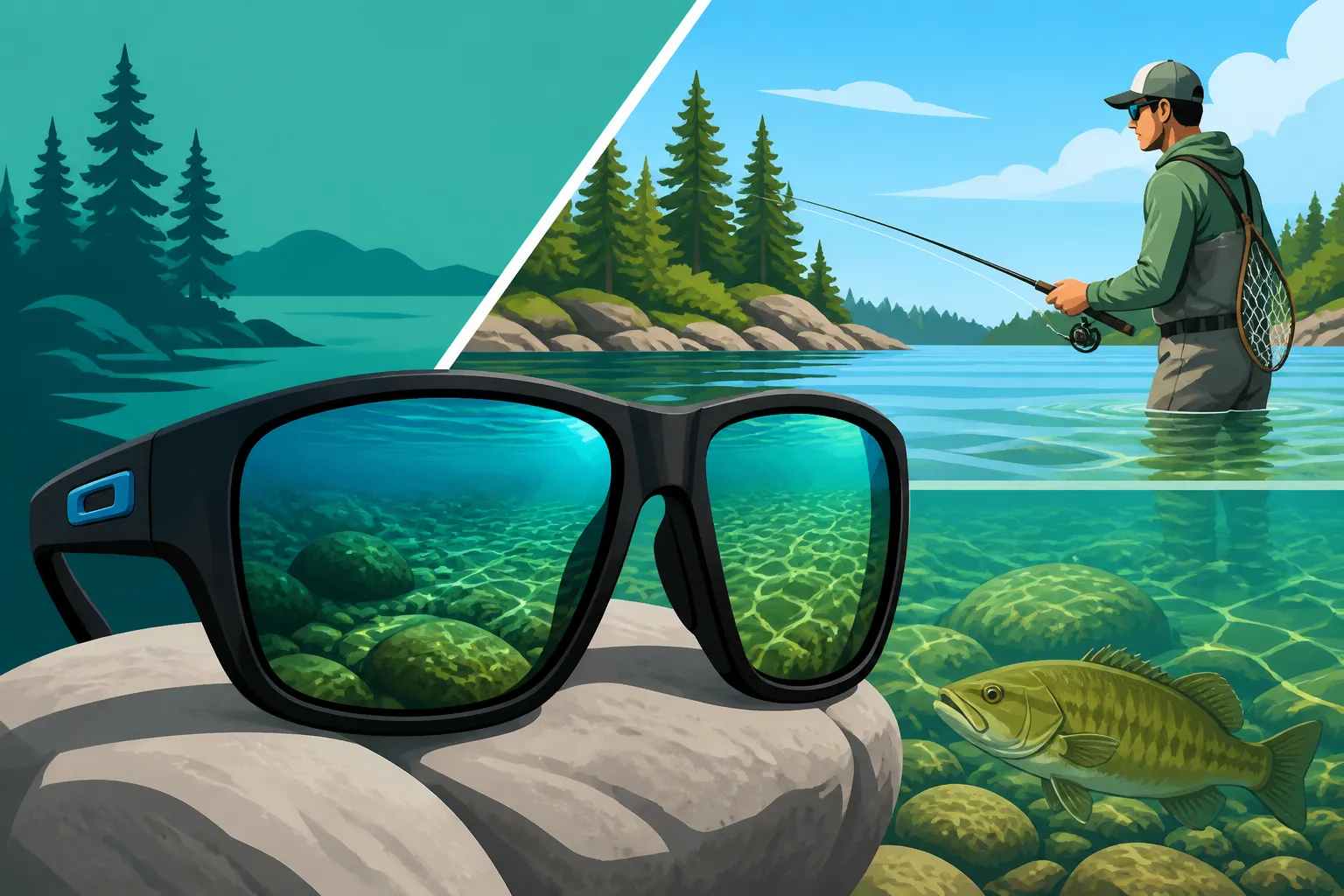
The science behind glare involves sunlight hitting the water and scattering in all directions, but much of it reflects horizontally. Our eyes, unfortunately, don't distinguish between useful light (the light reflecting off the fish) and useless, glaring light. This is where specialized fishing sunglasses come into play. They act like a filter, selectively blocking those horizontal light waves while allowing vertical light waves (which carry the visual information from below the surface) to pass through.
The Advantage of Polarization
This selective blocking is achieved through polarization, the single most important feature for any fishing sunglass. A polarized lens contains a special chemical filter that absorbs horizontal light waves, effectively eliminating glare. It's a game-changer that lets you see into the water, rather than just at its surface. With polarized lenses, you can suddenly discern bottom contours, weed lines, drop-offs, and most importantly, the fish themselves.
Think about it: instead of seeing a flat, bright surface, you can peer through it, almost as if the water has become a window. You'll spot the subtle flash of a walleye turning, the dark outline of a pike holding in a weed bed, or the tell-tale tail flick of a feeding trout in a crystal-clear stream. This ability to literally see what you're fishing for completely transforms the experience, making you a more effective and engaged angler. It's the difference between casting blindly and making a precise, targeted presentation to a fish you've already identified.
Key Features to Look for in Fishing Sunglasses
When you’re staring at a wall of sunglasses, trying to pick out the perfect pair for your next Ontario fishing adventure, it can be overwhelming. Beyond polarization, there are several other critical features that separate a good pair of fishing sunglasses from a truly great one. These elements contribute to clarity, comfort, and durability, all of which are essential for long days on the water.
Lens Material and Clarity
The material your lenses are made from directly impacts their clarity, weight, and durability. You generally have a few main options:
- Polycarbonate: This is a popular choice due to its exceptional impact resistance. If you're prone to dropping your gear or concerned about hooks flying around, polycarbonate offers a great balance of safety and optical clarity. It's also lightweight, making it comfortable for extended wear. However, it can be more susceptible to scratching than other materials if not treated with a hard coating. Many reputable brands offer excellent polycarbonate lenses that perform admirably in the field, making them a solid choice for most anglers.
- Glass: Often considered the gold standard for optical clarity, glass lenses provide the sharpest, most distortion-free vision. They are also highly scratch-resistant, which is a huge plus for longevity. The trade-off, however, is that they are heavier and more brittle than polycarbonate. Dropping glass lenses on a hard surface can result in shattering, so they require a bit more care. For those who prioritize absolute pristine vision above all else and are willing to be careful, glass lenses are hard to beat.
- CR-39 (Plastic): This material sits somewhere between polycarbonate and glass in terms of clarity and impact resistance. It offers good optical quality and is lighter than glass, but not as impact-resistant as polycarbonate. It’s often used in fashion eyewear but can be found in some fishing-specific models, particularly those that aim for a balance of performance and weight.
Regardless of the material, look for lenses that are optically correct, meaning they don't introduce any distortion or magnification. Poor quality lenses can cause eye strain and headaches over time, which is the last thing you want when you're trying to focus on a subtle bite.
UV Protection
While glare reduction helps you see into the water, UV protection safeguards your eyes from the sun's damaging rays. This isn't just about comfort; it's about long-term eye health. Prolonged exposure to UVA and UVB rays can lead to serious conditions like cataracts, macular degeneration, and even certain types of eye cancers. A quality pair of fishing sunglasses should block 100% of both UVA and UVB rays.
Most reputable fishing sunglass brands proudly state their UV protection ratings. Don't compromise on this feature; it's a non-negotiable aspect of protecting your vision for years to come. Even on cloudy days, a significant amount of UV radiation can penetrate cloud cover and reflect off the water, so protection is important no matter the weather. Think of it as sunscreen for your eyes – absolutely essential for every trip, whether you're targeting Ontario Walleye Opener Dates by Zone or Ontario Lake Trout Limit and Possession Rules.
Anti-Reflective Coatings
While the polarization itself is the star for cutting external glare, anti-reflective (AR) coatings are crucial for eliminating internal glare. This is the reflection that can bounce off the back surface of your lenses and into your eyes. You know, when the sun is behind you, and you get that annoying reflection of your own eye or cheek in the lens? That's internal glare.
An AR coating applied to the inner surface of the lens absorbs this stray light, providing an even clearer and more comfortable viewing experience. It reduces eye strain and improves overall visual acuity, especially during bright conditions. This detail might seem minor, but it makes a significant difference during long hours of intense sight fishing. Many premium sunglasses, whether you find them at a specialized outdoor retailer or browse a vast selection on Amazon, will feature these coatings to enhance overall performance.
Understanding Lens Tints and Their Applications
Choosing the right lens tint is almost as important as having polarization itself, especially when you're dealing with the varied light conditions of Ontario's clear waters. Different tints enhance specific colors and light wavelengths, making them better suited for certain environments and weather patterns. Picking the right tint can make the difference between spotting that subtle movement and missing it entirely.
Grey/Smoke Lenses
Grey or smoke lenses are often considered the most versatile "all-around" tint. They reduce overall brightness without distorting colors, providing a very natural view of the world. This makes them excellent for bright, sunny days and open water conditions where light intensity is high. If you're out on a large body like Lake Erie or Lake Ontario on a bluebird day, grey lenses will cut the glare effectively and keep your vision comfortable without altering the true colors of the fish or the environment.
However, their neutrality can be a slight disadvantage in lower light conditions or heavily overcast days. They simply dim everything, which might not be ideal when you need to maximize every bit of available light to spot fish in shadows or murky pockets. They're a fantastic choice if you only plan on having one pair of fishing sunglasses, offering reliable performance across a broad range of conditions, particularly when the sun is high and bright.
Copper/Brown Lenses
Copper and brown tints are arguably the favorite among many serious sight fishermen, and for good reason. These lenses excel at enhancing contrast and depth perception, especially in varying light conditions. They filter out blue light, which can create haze, making greens and reds pop. This means that weed lines, rocky structures, and the subtle variations in bottom composition become much more apparent.
Imagine you’re exploring a clear smallmouth river where the bottom is a mosaic of gravel, boulders, and dark crevices. A copper or brown lens will help you distinguish those bottom features with incredible clarity, revealing where a smallmouth might be ambushing prey. They are particularly effective on partly cloudy days, in moderate light, or when fishing rivers and streams with varying depths and light penetration. They also work well in tannic or slightly stained waters where some color enhancement can be beneficial. Many anglers swear by these tints for chasing Brook Trout in Ontario's Crown Land Lakes or spotting Walleye Fishing in Ontario in clearer sections of larger systems.
Yellow/Amber Lenses
Yellow or amber lenses are designed for low light conditions, overcast skies, dawn, and dusk. They significantly brighten your field of vision and enhance contrast, making them fantastic for early morning starts or late evening bites. If you've ever tried to pick out a faint splash or a dark shape against a dim background, you know how challenging it can be. Yellow lenses cut through haze and increase visual acuity in these tough conditions.
However, they are absolutely not suitable for bright, sunny days. They will overwhelm your eyes with light and can cause significant eye strain due to the excessive brightness they permit. Think of them as specialty lenses for specific low-light scenarios. If you often find yourself fishing at first light or pushing into dusk, or if you regularly face heavily overcast skies, having a pair of yellow/amber lenses in your tackle bag can be a real asset. They can be incredibly useful for situations like Night Fishing for Walleye in Ontario right as the sun dips below the horizon, extending your effective sight fishing window.
Here's a quick comparison of popular lens tints for fishing:
| Lens Tint | Best Conditions | Key Benefits | Potential Drawbacks | Ideal For |
|---|---|---|---|---|
| Grey/Smoke | Bright, sunny days; open water | Natural color perception, reduces overall brightness | Can dim vision in low light | General purpose, offshore, large clear lakes |
| Copper/Brown | Variable light, partly cloudy, river/stream | Enhances contrast and depth perception, blocks blue light | Can slightly alter natural colors | River fishing, detecting structure, inshore, moderate light |
| Yellow/Amber | Low light, overcast, dawn/dusk, hazy | Brightens vision, boosts contrast significantly | Too bright for sunny conditions, color distortion | Early/late fishing, heavily overcast days, murky water |
Frame Styles and Fit: Comfort and Coverage
Beyond the lenses, the frame of your sunglasses plays a crucial role in comfort, coverage, and how effectively they stay on your face during active fishing. A fantastic pair of lenses is useless if the frames are constantly slipping, pinching, or allowing light to sneak in from the sides. The right frame style ensures that your eyes receive maximum protection and that your visual field remains clear and unobstructed.
Wrap-Around vs. Traditional Styles
When it comes to fishing sunglasses, you’ll typically encounter two main frame philosophies:
- Wrap-Around Frames: These are the champions of coverage. Wrap-around styles curve significantly around your face, minimizing gaps between your skin and the frame. This design offers superior peripheral protection from stray light, wind, and debris. For sight fishing, blocking light from the sides is paramount, as even a small amount of peripheral glare can degrade your vision into the water. They also tend to stay put better during vigorous casting, boating, or hiking to a remote stream. Many serious anglers prefer wrap-around frames for their enhanced performance in bright, reflective environments. Brands like Costa Del Mar or Oakley are well-known for their robust wrap-around designs.
- Traditional (or Lifestyle) Frames: These frames offer a more classic, flat profile. While they might look more stylish for everyday wear, they often leave larger gaps at the temples and underneath, allowing more stray light and glare to reach your eyes. This can significantly reduce the effectiveness of even the best polarized lenses for sight fishing. While perfectly fine for casual use, they aren't ideal for the focused visual demands of seeing fish in the water. If you prioritize maximum visual performance for fishing, especially in glaring conditions, a wrap-around style is almost always the better choice.
Material and Durability
The material of your frames impacts their weight, flexibility, and overall durability. Fishing environments can be tough on gear, with exposure to sun, saltwater or freshwater, sunscreen, and inevitable bumps and drops.
- Nylon/Plastic Composites: These are the most common and often the best choice for fishing. They are lightweight, flexible, and surprisingly durable. Many modern composites are designed to withstand extreme temperatures without warping and are resistant to corrosion from salt and sweat. They also tend to have good grip properties, helping the frames stay secure on your face even when wet. Look for frames with integrated rubberized components on the nose pads and temple arms for enhanced grip.
- Metal Frames: While metal frames can offer a premium look, they are generally less common for serious fishing sunglasses. They can be heavier, less flexible, and are susceptible to corrosion in marine environments. If dropped, they might bend or break more easily than flexible nylon. They also tend to conduct heat, which can be uncomfortable in direct sun.
A Snug, Comfortable Fit
No matter the style or material, a snug and comfortable fit is essential. Sunglasses that are too loose will constantly slip down your nose, forcing you to adjust them and disrupting your focus. Too tight, and they'll cause pressure points and headaches. When trying on sunglasses, pay attention to:
- Nose Pads: Look for soft, grippy nose pads that prevent slipping, especially when your face is wet or sweaty. Adjustable nose pads can be a huge bonus for custom fit.
- Temple Arms: These should grip your head securely but without pinching. Rubberized temple tips can help keep them in place.
- Overall Balance: The weight of the frames and lenses should feel evenly distributed, avoiding any forward tipping.
Many anglers find that trying on sunglasses in person, perhaps at a Bass Pro Shops, is the best way to assess fit. If buying online from Amazon, always check return policies and consider trying a few different pairs to find your perfect match. Remember, you'll be wearing these for hours on end, so comfort is not a luxury, it's a necessity.
Care and Maintenance for Your Fishing Sunglasses
You've invested in a fantastic pair of fishing sunglasses, a true tool for success on the water. Now, to ensure they continue to perform at their peak and last for many seasons, proper care and maintenance are absolutely crucial. Neglecting them can quickly degrade their performance, diminish their clarity, and shorten their lifespan, turning a valuable asset into a frustrating hindrance.
Proper Cleaning Techniques
It might seem obvious, but how you clean your lenses makes a huge difference. Fishing sunglasses are exposed to all sorts of elements: water spots, sunscreen residue, bug guts, fish slime, and general grime.
- Rinse First: Always start by rinsing your lenses thoroughly under clean, running water. This washes away any abrasive particles (like sand or dried salt) that could scratch the lenses if you were to wipe them dry.
- Use Lens Cleaner or Mild Soap: Apply a dedicated lens cleaning spray or a very small drop of mild, pH-neutral dish soap to the lenses. Gently rub with your fingertips to loosen dirt and oils.
- Microfiber Cloth Only: Never, ever use your shirt, a paper towel, or any abrasive material to wipe your lenses. These can scratch even the most durable coatings. Instead, use a clean, soft microfiber cloth specifically designed for optics. Wipe gently in circular motions until clean and dry.
- Avoid Harsh Chemicals: Steer clear of window cleaners, ammonia-based sprays, or anything with alcohol, as these can damage lens coatings, especially anti-reflective and anti-scratch layers.
Making a habit of rinsing your sunglasses at the end of each fishing day, especially if you've been on Lake Erie Fishing Guide where spray and residue are common, will extend their life and keep your vision crystal clear.
Storage and Protection
How you store your sunglasses when not in use is just as important as how you clean them. Leaving them loose in a tackle box, on the boat deck, or tossed into a bag is a recipe for disaster.
- Hard Case is Your Best Friend: Always store your sunglasses in a sturdy, hard-shell case when they're not on your face. This protects them from crushing, bending, and scratches. Most quality fishing sunglasses come with a good case, but if yours didn't, invest in one immediately.
- Avoid Extreme Temperatures: Don't leave your sunglasses in direct sunlight on your car dashboard, for instance. Extreme heat can cause frames to warp and lens coatings to delaminate or bubble. Similarly, extreme cold isn't ideal for long-term storage, though brief exposure during ice fishing is usually fine.
- Use a Lanyard/Retainer: For active fishing, a good quality floating lanyard or retainer is an indispensable accessory. This prevents your expensive sunglasses from ending up at the bottom of the lake if they fall off your head. There's nothing worse than seeing your brand new polarized lenses slowly sink out of sight. You can find a vast selection of these on Amazon or at local tackle shops.
When to Consider Replacement
Even with the best care, sunglasses don't last forever. Over time, coatings can wear down, frames can become brittle, and lenses might accumulate micro-scratches that degrade performance.
- Visible Scratches: If you notice a significant number of scratches that impair your vision, especially in your central field of view, it's time for a new pair. Scratches scatter light and reduce clarity, defeating the purpose of quality optics.
- Coating Degradation: If you see peeling, bubbling, or discoloration on your lens coatings, particularly the anti-reflective or hydrophobic layers, their performance is compromised. This often manifests as a rainbow effect or blurry patches.
- Frame Damage: If the frames are cracked, bent beyond repair, or no longer hold the lenses securely, they won't provide the necessary protection or comfort.
- Reduced Polarization: While harder to detect without a new pair for comparison, if you feel your sunglasses aren't cutting glare as effectively as they once did, the polarization film might be degrading. This is less common in high-quality lenses but can happen over many years of heavy use and sun exposure.
Regularly inspecting your sunglasses will help you identify when it’s time to retire an old pair and invest in a new one to maintain your edge on the water.
Top Considerations When Buying Your Next Pair
Choosing the right fishing sunglasses can feel like a big decision, especially when you consider them an essential tool rather than just an accessory. Before you commit, take a moment to reflect on these key points to ensure your investment truly enhances your time on the clear waters of Ontario.
Budget vs. Value
It’s tempting to grab the cheapest pair of polarized sunglasses you see, but for serious sight fishing, this is almost always a false economy. Cheap lenses often have poor optical quality, inconsistent polarization, and flimsy frames. They might offer some glare reduction, but they won’t give you the crisp, distortion-free vision and durability you need.
Think of fishing sunglasses as an investment in your success and eye health. High-quality polarized sunglasses from reputable brands (like those you’d find at Bass Pro Shops or online retailers such as Amazon) will typically cost more, but they offer superior clarity, UV protection, durability, and comfort. They’ll last longer and perform better, ultimately saving you money in the long run by not needing frequent replacements. Consider the value they add to your fishing experience – spotting more fish, reducing eye strain, and protecting your vision.
Intended Use and Fishing Environment
Your primary fishing environment in Ontario should heavily influence your choice.
- Open Lakes (e.g., Lake Simcoe Fishing Guide, Lake Nipissing Fishing Guide): These environments often involve wide-open spaces, intense sunlight, and extensive glare. You’ll want maximum glare reduction, excellent UV protection, and likely a darker lens tint like grey or a strong copper to manage the brightness. Wrap-around frames are especially crucial here to block light from all angles.
- Rivers and Streams (e.g., Best Fly Fishing Rivers in Ontario): Fishing rivers often means dealing with varied light conditions – bright stretches, shaded pools, and reflections off moving water. A versatile lens tint like copper or brown is often preferred for its contrast enhancement, helping you read water depth and structure. Good peripheral vision is also key for navigating changing currents and obstacles.
- Overcast Days or Low Light: If you frequently fish during these conditions, a lighter tint like amber or yellow might be a valuable second pair, or at least a consideration if you're selecting a single pair that leans towards versatility over extreme brightness.
Understanding where and when you'll be using them most will help you narrow down the best lens tint and frame style for your needs.
Trying Them On (Seriously!)
This point cannot be stressed enough. While online shopping offers convenience, if at all possible, try on several pairs of fishing sunglasses before you buy. Even if you ultimately purchase online, knowing what fits your face and feels comfortable is invaluable.
When you try them on:
- Check the Fit: Do they sit comfortably on your nose without slipping or pinching? Are the temple arms secure but not too tight? Do they feel balanced on your face? Shake your head gently – do they stay put?
- Look for Gaps: Stand in front of a mirror or outdoors. Do you see light leaking in from the top, sides, or bottom? Even small gaps can allow glare to enter and reduce the effectiveness of the polarization. Wrap-around styles generally minimize these gaps.
- Assess Comfort: Wear them for at least a few minutes. Do they cause any pressure points behind your ears or on your nose? Remember, you’ll be wearing these for hours.
- Optical Clarity: While inside a store, it's hard to test polarization, you can still assess overall optical clarity. Look for any distortion or blurriness, especially at the edges of the lenses.
Taking the time to ensure a proper fit and comfort will prevent buyer's remorse and guarantee that your new fishing sunglasses become a beloved and indispensable part of your angling arsenal, helping you truly see what's happening beneath the surface of Ontario's beautiful waters.
Disclaimer
This article is for general informational purposes only and does not constitute professional advice. Laws, prices and regulations vary by location and change over time. Consult a qualified professional for guidance on your specific situation.