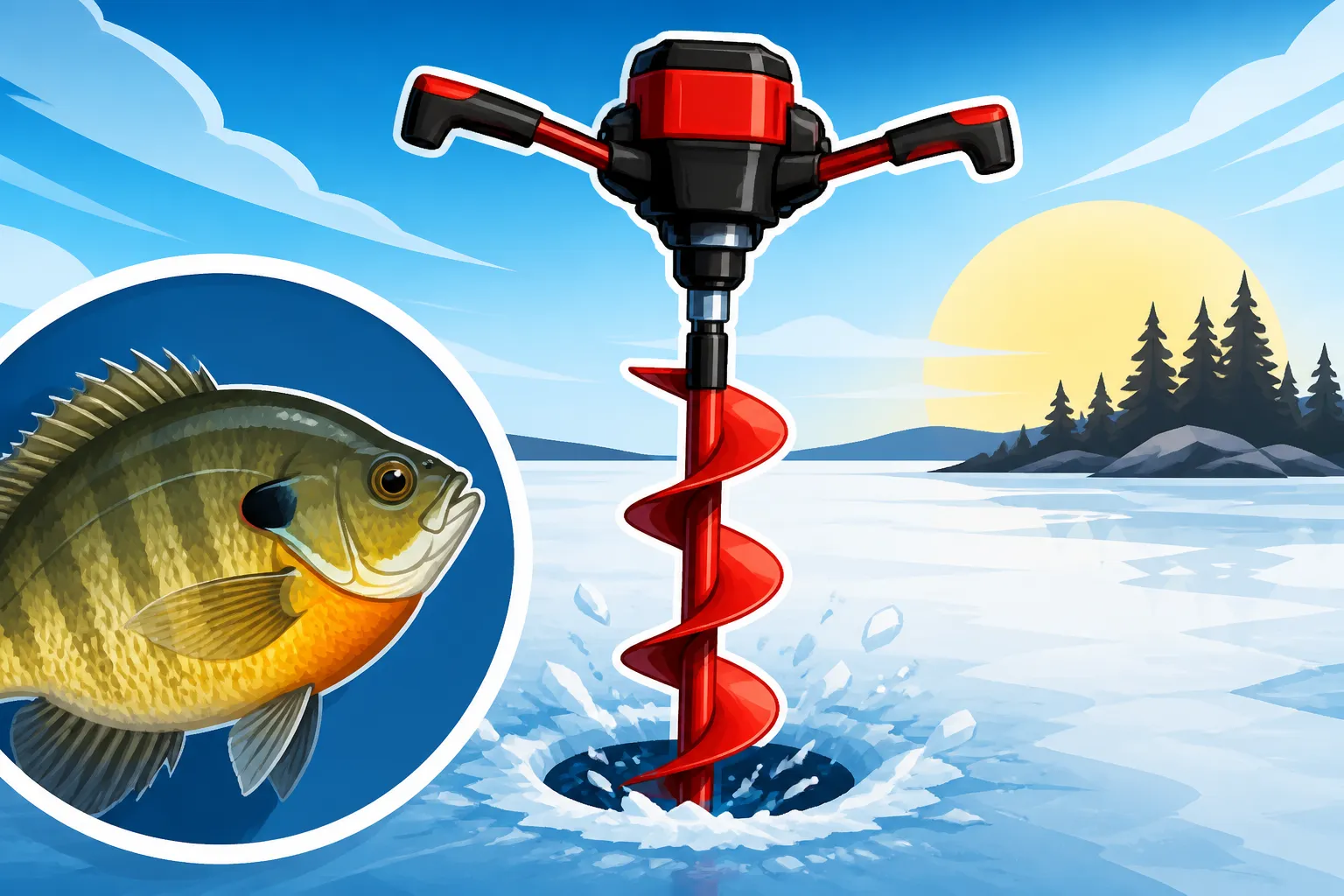
Best ice auger for panfish holes
One of the most common frustrations for avid ice anglers targeting panfish here in Ontario is dealing with an auger that's simply overkill for the job. You're out there, trying to be nimble, hop from hole to hole, and chase those schools of crappie or jumbo perch, only to find yourself wrestling with a heavy, cumbersome machine that drills holes far bigger than you need. This guide is all about helping you cut through the ice efficiently and enjoyably, by finding the absolute best ice auger specifically designed for those fantastic panfish holes.
Understanding Panfish Ice Fishing and Auger Needs
When you're out on a frozen lake like Simcoe or one of the many smaller inland gems, hunting for panfish, your approach is often quite different from stalking a trophy pike or lake trout. Panfish, like crappie, perch, and bluegill, are often found in schools, and they can move! This means you might need to drill a lot of holes quickly, exploring different depths and structures until you find where they're holding. The last thing you want is an auger that slows you down or exhausts you before you even get a bite.
Why Panfish Require a Specific Auger Approach
Think about it: a 10-inch hole is fantastic for landing a massive walleye or a thrashing lake trout, but for a 7-inch perch, it's just unnecessarily large. A smaller diameter hole is quicker to drill, requires less energy, and keeps you from having to lug around a heavier auger and power source. Plus, when you're moving around a lot, covering ground, or even just shifting a few feet to stay on a school, a lightweight, efficient auger makes all the difference. You want to be able to drop a Best Spoons for Ice Fishing Panfish or a tiny jig into a fresh hole almost instantly.
The physical exertion of drilling can quickly take the fun out of a panfish trip, especially on days when you're literally drilling dozens of holes. A heavy, powerful auger designed for big game just doesn't make sense when you're primarily targeting smaller species. It's like bringing a bulldozer to dig a flowerbed – massive overkill and far less practical.
The Trade-offs of Auger Size for Panfish vs. Larger Species
The primary trade-off is hole size versus effort and portability. A larger auger (8-10 inches) is great for:
- Larger Fish: Allowing you to comfortably land big fish without getting stuck in the hole.
- Two Lines: If you're using two lines (where regulations allow), a larger hole provides more space.
- Bait Buckets/Heaters: Being able to drop equipment like a minnow bucket or a small heater into the hole.
However, for panfish, these advantages often turn into disadvantages:
- Increased Drilling Time: A bigger hole takes longer to cut, even with power.
- More Effort: Especially true for manual augers, but even power augers use more fuel/battery.
- Heavier Equipment: Larger augers, especially gas-powered ones, are significantly heavier.
- Less Mobility: The extra weight and bulk make "run and gun" panfish tactics much harder.
When you're chasing perch and crappie, especially in a popular spot like Lake Simcoe where you might be sharing ice with many others, a smaller hole is perfectly adequate. It also means you're leaving a smaller footprint on the ice, which can be a courtesy to other anglers and a slight safety consideration, especially when How thick ice needs to be to fish safely in Ontario is on your mind.
Types of Ice Augers for Panfish Anglers
The world of ice augers has come a long way from just manual hand drills. Today, you've got a fantastic array of options, each with its own benefits and drawbacks for the dedicated panfish angler. Knowing the differences can really help you dial in your choice for the most efficient and enjoyable day on the ice.
Manual Augers: The Lightweight, Budget-Friendly Choice
Ah, the good old manual auger. For many of us, this is where we started our ice fishing journey. These are essentially big hand drills, and they're often overlooked in the age of power, but they are absolutely fantastic for panfish, especially when the ice isn't ridiculously thick.
- Pros:
- Extremely Lightweight: Easy to carry, perfect for walking out to remote spots or when you're covering a lot of ground.
- Quiet: No motor noise to spook fish or disturb the peaceful solitude of the ice.
- No Fuel/Battery Concerns: No need to worry about gas, oil, or dead batteries. Just pure muscle power.
- Affordable: Generally the most budget-friendly option.
- Simple to Maintain: Very few moving parts.
- Cons:
- Physical Exertion: Drilling through thick ice can be a workout, especially for many holes.
- Slower: Not as fast as a power auger, particularly in deeper ice.
For panfish, a 4-inch or 5-inch manual auger can be incredibly efficient. You can zip a hole through 10-12 inches of ice in less than a minute with minimal effort. They are ideal for the angler who enjoys the simplicity and isn't afraid of a little exercise, or for those who don't venture out onto very thick, late-season ice. Many anglers keep a manual auger as a backup or for quick scouting missions even if they own a power auger.
Cordless Drill Augers: The Hybrid Solution
This is perhaps the biggest game-changer for panfish anglers in recent years. Cordless drill augers combine the portability and clean operation of manual augers with the effortless cutting of power augers. Essentially, it's a lightweight auger bit designed to attach to a high-torque cordless electric drill. This setup offers an incredible balance of power, weight, and convenience, making it a stellar choice for chasing those elusive perch and crappie.
- Pros:
- Lightweight & Portable: Much lighter than dedicated electric or gas augers. You're mostly carrying the drill and the bit.
- Fast Drilling: A good drill with a sharp bit can cut holes almost as fast as many dedicated electric augers.
- Quiet: Only the hum of the drill.
- Versatile: Your drill can be used for other tasks too.
- Clean: No gas fumes or oil spills.
- Cons:
- Battery Life: Dependent on your drill's battery capacity. Carrying spare batteries is essential, especially in cold weather.
- Drill Quality: Requires a powerful, high-torque brushless drill (usually 18V or 20V) to perform well, which can be an investment. Standard household drills won't cut it.
- Cold Weather Performance: Batteries lose efficiency in extreme cold.
For panfish, a 5-inch or 6-inch drill auger setup is incredibly efficient. You can drill numerous holes without breaking a sweat, move quickly between spots, and enjoy the quiet on the ice. Brands like ION and Eskimo offer excellent auger bits specifically designed for this purpose. You can often find great drill options and adapters at stores like Bass Pro Shops or online retailers like Amazon. This system really shines for the mobile panfish angler.
Propane/Gas Augers: When Power is Overkill
Propane and gasoline-powered augers were once the kings of the ice, offering unmatched power for drilling through thick ice. However, for panfish, they are usually a case of severe overkill.
- Pros:
- Raw Power: Can bore through virtually any thickness of ice with ease.
- Long Runtime: Can drill many holes on a single tank of fuel.
- Cons:
- Heavy: Significantly heavier and bulkier than other options.
- Noisy: The engine noise can be disruptive and potentially spook fish.
- Fumes: Gas or propane fumes can be unpleasant, especially in an Best Ice Hut for Ontario Lakes.
- Maintenance: Require more maintenance (fuel mix, spark plugs, oil changes).
- Expensive: Generally the most expensive upfront cost.
While they have their place for larger holes for species like Walleye Fishing in Ontario or Muskellunge Fishing in Ontario, for panfish, the weight, noise, and fumes simply aren't worth the hassle. You're sacrificing mobility and peace for power you just don't need to cut a 4- or 5-inch hole.
Electric Augers: The Quiet, Clean Option
Dedicated electric augers are self-contained units powered by large rechargeable batteries. They offer a fantastic blend of power and convenience, sitting somewhere between gas augers and the drill-powered setups.
- Pros:
- Quiet & Clean: No fumes, minimal noise.
- Good Power: Can easily cut through thick ice.
- Reliable: Push-button start, no pull cords.
- Specifically Designed: Built from the ground up for ice fishing, often with features like reverse.
- Cons:
- Heavier than Drill Augers: While lighter than gas, they are typically heavier than a cordless drill setup.
- Battery Life/Cost: Batteries are proprietary and can be expensive to replace. Carrying spares is often necessary for long days.
- Cold Weather Performance: Batteries can still be affected by extreme cold, though dedicated units are often optimized.
For panfish, a 6-inch or 8-inch electric auger is a very solid choice. They offer excellent performance without the noise and fuss of gas. If you're looking for a fully integrated, powerful, yet clean option and don't mind a bit more weight than a drill adapter, a dedicated electric auger is a strong contender. They represent the high-end for electric drilling without using a gas motor.
Key Features to Look for in a Panfish Auger
Choosing the right auger for panfish isn't just about picking the first one you see. There are specific features that truly enhance your experience when you're focusing on those schooling crappie, perch, and bluegill. Let's dive into what really matters.
Auger Diameter: The Sweet Spot for Panfish
For panfish, less is definitely more when it comes to auger diameter. A 4-inch or 5-inch auger is the sweet spot.
- 4-inch Auger: This is ideal for pure speed and minimal effort. A 4-inch hole is perfectly adequate for even the largest jumbo perch or crappie. You can cut holes incredibly fast, allowing you to move with the fish as they roam the structure. It’s like a hot knife through butter, even with a manual auger.
- 5-inch Auger: A great all-around size for panfish. It’s still very quick to drill, offers a tiny bit more leeway for slightly larger panfish or if you happen to hook a small incidental walleye, and is easy to manage. Most drill-powered auger bits come in this size or slightly larger.
- 6-inch Auger: This is generally the largest you'd want to go for a primary panfish auger. It offers a good balance if you occasionally target small walleye or pike alongside your panfish, or if you prefer a bit more room to jig. It's still significantly easier to drill than an 8-inch or 10-inch.
Going larger than 6 inches for panfish is usually counterproductive. It takes more energy, more battery, and more time, all for a fish that can easily come through a smaller opening. Keep it tight, keep it fast!
Weight and Portability: Mobility is Key on the Ice
Panfish anglers are often on the move. Whether you're following contour lines, hopping from one weed bed to another, or drilling a grid to find that elusive school, portability is paramount.
- Manual Augers: These are champions of portability. Many weigh under 10 pounds and are easy to strap to a sled or carry over your shoulder. For anglers who love to walk out to spots, or use a smaller Best Kayak for Lake Erie in open water before ice-up, and want to pack light, a manual auger is tough to beat.
- Cordless Drill Augers: Another excellent choice for portability. The auger bit itself is lightweight, and you're just adding your cordless drill. The total package can be surprisingly light, often under 15 pounds for the combined unit, making it perfect for "run and gun" tactics across a big lake or through dense treelines to reach remote access points.
- Dedicated Electric Augers: While heavier than drill setups, they are still significantly lighter than gas augers. Many 6-inch models come in around 15-20 pounds, which is manageable for most anglers, especially if you're using a sled or an ATV.
Consider how you get to your fishing spots and how much walking you typically do. If you're frequently moving or venturing far from plowed roads, prioritizing a lighter, more portable auger will pay dividends in comfort and stamina.
Blade Type and Durability: Cutting Through Ontario Ice
The sharp blades are what make an auger efficient. When fishing in Ontario, you'll encounter all sorts of ice conditions, from clear, hard black ice to slushy, layered ice.
- Blade Material: Most quality auger blades are made from hardened steel. Look for blades that are easily replaceable, as even the best blades will dull over time or get nicked if you hit something unexpected.
- Blade Style:
- Chipper Blades: Common on some older or more budget-friendly augers. They "chip" away at the ice. Less efficient but often more forgiving if you hit something.
- Shaving Blades (Mora Style): These blades are incredibly sharp and "shave" through the ice, making for a much faster, smoother cut. They are prevalent on most modern manual, drill-powered, and electric augers. They require more care to prevent dulling.
- Protective Cover: Always ensure your auger comes with a durable blade cover. Not only does this protect the sharp blades from damage, but it also protects you from those incredibly sharp blades.
Investing in sharp, durable blades is non-negotiable. A dull auger, regardless of its power source, is a frustrating experience. Consider carrying an extra set of blades or ensuring you have a sharpening service nearby if you're hitting the ice frequently.
Battery Life (for electric/drill augers): Staying Powered Up
For any electric-powered auger, battery life is a critical factor, especially when chasing panfish requires many holes.
- Amp-Hours (Ah): This rating tells you how much juice the battery holds. Higher Ah means longer run time. For a day of panfish fishing with a drill auger, a 4Ah or 5Ah battery is often sufficient, but carrying at least one spare is highly recommended. Some anglers even use 8Ah or 12Ah batteries for extended power.
- Voltage (V): For drill augers, stick to 18V or 20V brushless drills for adequate torque. Dedicated electric augers usually come in 24V, 40V, or even 80V systems, offering robust power.
- Cold Weather Impact: Batteries lose efficiency in the cold. Keep spare batteries in a warm pocket or insulated bag to maximize their performance.
- Charging: Understand your charging times and always charge your batteries the night before your trip. There's nothing worse than getting to your spot, ready to drill, and realizing your battery is dead!
When planning your trip, consider how many holes you anticipate drilling and the thickness of the ice. A single 5Ah battery might drill 50-70 holes through 12 inches of ice on a 5-inch auger, but that number can drop significantly if the ice is thicker or the temperature is frigid. Having an Ontario Outdoors Card, Explained means you're likely out on the ice often, so reliable power is key.
Top Recommendations and Where to Find Them
Alright, let's talk about some specific types of augers that truly shine when you're targeting panfish in Ontario. Remember, for panfish, we're almost always talking about 4, 5, or 6-inch diameters for maximum efficiency and enjoyment.
Best Manual Augers for Panfish
If you love the simplicity, quiet, and exercise, a manual auger is your ticket. Look for models known for sharp, easy-to-replace blades and comfortable handles.
- Mora Ice Augers: These are legendary for their razor-sharp, replaceable "Mora-style" shaving blades that glide through ice. They come in various diameters, but a 4-inch or 5-inch model is perfect for panfish. They are exceptionally lightweight and efficient.
- Strikemaster Mora: Another fantastic option, often with comfortable ergonomic handles. The 4.5-inch or 6-inch models are excellent choices for quick hole-drilling.
- Eskimo Hand Augers: Known for their robust construction and sharp blades, Eskimo offers great manual augers in panfish-friendly sizes.
You can often find a good selection of these manual augers at your local Canadian tire, or specialized fishing stores like Bass Pro Shops. For sheer convenience and sometimes better selection, checking online platforms like Amazon can also yield great results.
Best Cordless Drill Augers for Panfish
This category offers the best blend of power and portability for panfish. The key here is a robust, high-torque cordless drill paired with a purpose-built auger bit.
- Clam Drill Plate/Auger Bit: Clam makes excellent drill plates and auger bits specifically designed to handle the torque of a power drill. Their 5-inch and 6-inch auger bits are incredibly popular for panfish.
- ION G2 6-inch Auger Bit: While ION is famous for its dedicated electric augers, they also offer a fantastic 6-inch auger bit that can be used with a high-quality cordless drill. It’s incredibly fast and efficient.
- Eskimo Pistol Bit: Eskimo offers lightweight, high-performance drill-compatible auger bits in 6-inch diameters that are perfect for panfish.
When choosing a drill, aim for a well-regarded brand like DeWalt, Makita, Milwaukee, or Ryobi, with at least an 18V or 20V brushless motor and a minimum of 4Ah batteries (preferably 5Ah or higher, and bring spares!). These combinations are widely available at hardware stores and online at Amazon. Remember to also get a safety cover and a drill plate or adapter that prevents the auger from falling down the hole if it detaches!
Best Dedicated Electric Augers for Panfish
If you want the convenience of an electric auger without the separate drill, these units are fantastic, especially in the 6-inch range.
- ION G2 6-inch Electric Auger: The ION G2 is a top-tier electric auger, and its 6-inch model is absolutely perfect for panfish. It's relatively lightweight, incredibly quiet, and boasts excellent battery life, even in cold conditions. It's often considered one of the quietest and most efficient electric augers on the market.
- Eskimo Stingray 6-inch Electric Auger: Eskimo's electric offerings, like the Stingray, provide great value. The 6-inch model is powerful enough for panfish, has good battery life, and often comes at a competitive price point.
- Garmin Force Electric Ice Auger: While newer to the market, Garmin's foray into electric augers with its Force series has been impressive. Their smaller diameter options are very strong contenders for panfish.
These dedicated electric augers are fantastic for anglers who might fish a wider range of depths for Yellow Perch Fishing in Ontario or crappie, or those who prefer the integrated design. You'll find these high-performance electric augers at major retailers such as Bass Pro Shops, or through specialty fishing gear suppliers.
Here’s a quick comparison of the auger types best suited for panfish:
| Auger Type | Pros for Panfish | Cons for Panfish | Ideal Diameter (inches) | Typical Weight (lbs) | Noise Level |
|---|---|---|---|---|---|
| Manual | Lightweight, quiet, affordable, no power needed | Requires physical effort, slower on very thick ice | 4-6 | 5-10 | Silent |
| Cordless Drill (Hybrid) | Lightweight, fast, quiet, clean, versatile | Battery life dependent on drill, requires high-torque drill | 4-6 | 10-15 (with drill) | Low Hum |
| Dedicated Electric | Fast, quiet, clean, reliable, purpose-built | Heavier than drill setups, higher upfront cost | 6-8 | 15-25 | Low Hum |
Choosing the right auger for your panfish adventures in Ontario will undoubtedly enhance your time on the ice. Consider your fishing style, the thickness of the ice you typically encounter, and how much mobility you need. Whether you go with the simple efficiency of a manual auger, the versatile power of a cordless drill setup, or the dedicated performance of an electric model, focusing on a smaller diameter will be your key to success. This lets you quickly drill a Best ice auger for panfish holes to get your lure down to those schooling fish, just like you would for Jigging for Perch Through the Ice or trying out Best Techniques for Panfish in Ontario. You'll spend less time struggling with equipment and more time enjoying the thrill of the catch!
Disclaimer
This article is for general informational purposes only and does not constitute professional advice. Laws, prices and regulations vary by location and change over time. Consult a qualified professional for guidance on your specific situation.