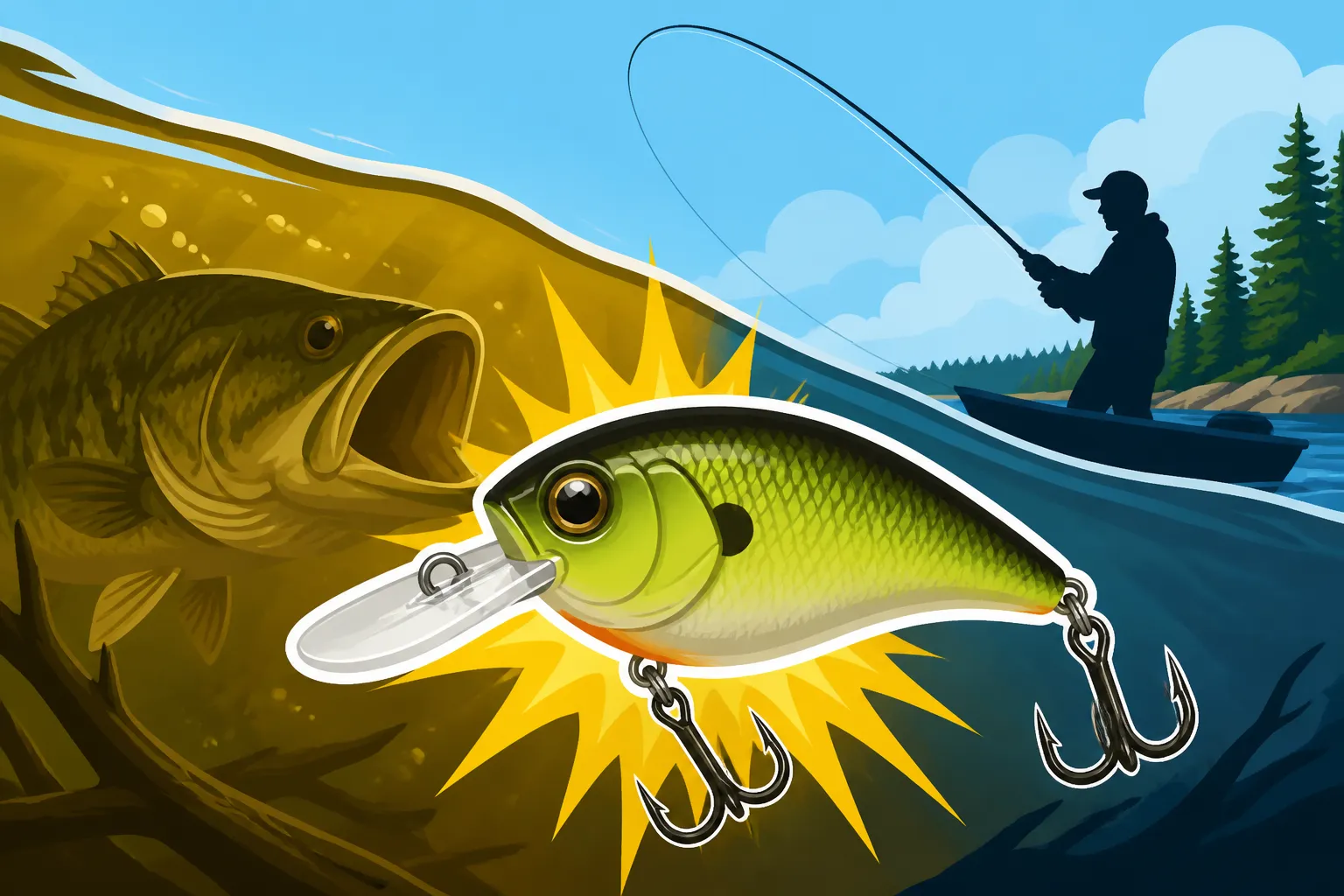
Best crankbait for stained lake water
One of the biggest frustrations for any angler hitting the water is staring down into murky, stained conditions, wondering how on earth the fish are ever going to see your carefully selected lure. It’s a common scenario across countless Ontario lakes and rivers, and it can leave you scratching your head, wondering if you should even bother. But don't despair! This comprehensive guide is all about equipping you with the knowledge to pick the absolute best crankbait for stained lake water, turning those challenging conditions into prime fishing opportunities.
Understanding Stained Water and Its Impact on Crankbait Selection
Before we dive into specific lures, let's really get to grips with what "stained water" means and why it changes the game for fishing. It's not just "dirty water"; there's a science to it, and understanding that science is key to making smart choices.
What Exactly is "Stained Water"?
When we talk about stained water, we're usually referring to water that has a brown, tea-like, or sometimes greenish tint due to dissolved organic matter, tannins from decaying vegetation, or suspended sediment. It's different from truly "muddy" water, which often has a high concentration of inorganic solids like clay, making it completely opaque. Stained water, on the other hand, might still have some degree of visibility, but it significantly reduces light penetration. Think of the rich, dark waters you might find in parts of the Kawartha Lakes Fishing Guide system, or the tannin-rich flow of a river winding through dense forests. These waters are often perfectly healthy and teeming with fish, but they present a visual challenge for both you and your quarry.
The causes of stained water are varied. It could be runoff from bogs and swamps, decaying leaves and other plant matter in slow-moving areas, or even certain types of algae blooms that give the water a green stain. Heavy rains can stir up bottom sediments, creating temporary stained conditions, while many northern shield lakes naturally possess that characteristic tea-stained hue year-round due to the surrounding environment. Regardless of the specific cause, the consistent factor is reduced visibility, forcing fish to rely more on their other senses. This is where your crankbait choice becomes absolutely critical.
How Stained Water Affects Fish Behavior and Visibility
Imagine trying to navigate a dark room – you'd be bumping into things, relying on sound and touch more than sight. Fish in stained water operate on a similar principle. Their primary hunting tool, their vision, is severely hampered. This doesn't mean they stop eating; it just means they adjust their hunting strategies.
First and foremost, fish in stained water will often hold tighter to cover. This provides them with ambush points, allowing them to shorten the distance needed to strike prey without being seen from afar. They also become much more receptive to non-visual cues. Their lateral line system, a remarkable sensory organ that detects vibrations and pressure changes in the water, becomes paramount. A subtle throb, a strong wobble, or even the distinct clack of a rattle can be the primary signal that tells a fish, "Hey, there's food here!"
Furthermore, because visibility is limited, fish tend to be less spooky. You can often get closer to them, and they might not be able to identify your boat or your presence as a threat until you're practically on top of them. This can be a huge advantage for anglers willing to adjust their presentations. They're also often more willing to take a "leap of faith" on a lure that provides strong sensory signals, even if they can't fully see it. This is why aggressive, high-vibration, and noisy crankbaits often outperform subtle, realistic presentations in stained conditions. The fish are actively seeking something they can feel or hear first, and then see at the last second.
Key Crankbait Features for Stained Water Success
When visibility drops, your lure needs to scream "Eat me!" in ways that don't rely solely on a fish's eyes. This means focusing on specific characteristics that cut through the murk.
Colour Choices: Why Bright and Contrasting Hues Rule
Forget the ultra-realistic baitfish patterns for a moment. In stained water, subtlety often gets ignored. You need colours that stand out, create a strong silhouette, and, ideally, possess some UV reflectivity to catch any ambient light that penetrates the gloom.
- Firetiger: This is arguably the king of stained water colours for good reason. The combination of bright greens, yellows, oranges, and often black stripes creates an incredibly vivid and contrasting profile. It's a "loud" colour that fish seem to track effectively, even when they can barely make out details. It's a staple for Walleye Fishing in Ontario and works wonders for bass and pike too.
- Chartreuse: Whether solid chartreuse or mixed with other colours, this neon green hue is a fantastic choice. It glows, literally, in low light conditions, making it incredibly visible. It also has a powerful UV signature that fish can often pick up on, even if it appears dull to the human eye under the surface.
- Orange/Red: Especially in situations where fish might be feeding on crayfish or other bottom-dwelling prey, bright oranges and reds can be deadly. These colours can also appear darker in deeper, stained water, creating a strong silhouette effect. A bright orange belly on a crankbait can be a real game-changer.
- Black/Blue: This might seem counterintuitive, but black and blue combinations create an incredibly strong, opaque silhouette against any light source, even dim ones. It provides maximum contrast and can be very effective, particularly on darker days or in very heavily stained conditions. The blue adds a bit of flash that can sometimes entice a strike.
- Gold/Silver (with contrast): While solid metallics might not be ideal, a crankbait with a gold or silver flash paired with a contrasting back (like black or dark green) can be very effective. The flash acts like a beacon, catching and reflecting any available light.
The key is contrast. You want something that doesn't just blend in. The goal is to maximize the visual signal, however limited it may be, to ensure your crankbait gets noticed.
Vibration and Sound: The Non-Visual Cues that Attract Fish
Since fish can't see well, you need to appeal to their other senses, primarily their lateral line. This is where vibration and sound come into play, making your crankbait a veritable sonar beacon.
- Wide Wobble: Crankbaits designed with a wide, aggressive wobble displace a lot of water. This creates a powerful pressure wave that fish can detect with their lateral lines from a considerable distance. Think of a big, thumping crankbait that you can almost feel vibrating up your rod – the fish feel it too, and often more intensely. This wide wobble also ensures the lure "pushes" more water, making its presence known.
- Rattles: The internal rattles within a crankbait are like a dinner bell in stained water. Some crankbaits have subtle, high-pitched rattles, while others have loud, thumping chambers filled with large BBs. For stained water, generally, the louder and more distinct the rattle, the better. These sounds travel far and provide a crucial auditory cue for fish. Experiment with different rattle types; sometimes a "one-knocker" rattle (a single large ball) can elicit a more aggressive response than a chamber full of smaller BBs, or vice-versa, depending on the fish's mood. Brands like Strike King or Rapala offer a wide variety of crankbaits with different rattle systems, which you can often find at local tackle shops or online at places like Bass Pro Shops or Amazon.
- Buoyancy and Deflection: A crankbait that deflects off cover creates an erratic, sudden change in direction and vibration. This unexpected movement often triggers a reaction strike, even from fish that might not have been actively feeding. In stained water, fishing crankbaits that make contact with submerged wood, rocks, or even the bottom can be incredibly effective because the sudden change in vibration and sound is amplified.
Combining a strong, wide wobble with a loud rattle creates a powerful one-two punch that allows fish to locate and home in on your lure even when they can barely see it.
Dive Depth and Profile: Getting Your Bait into the Strike Zone
Even with the brightest colours and loudest rattles, your crankbait needs to be in the right place. Stained water often means fish are holding closer to structure or tight to specific depth contours.
- Matching Forage & Depth: In stained water, fish often aren't chasing prey long distances. They’re ambushing. This means you need your crankbait to run at the depth where the fish are holding, or slightly above their line of sight. If fish are suspended 5 feet down over a 15-foot flat, a crankbait that dives 4-6 feet is likely to be far more effective than one that dives to 10 feet.
- Wider Profile: A crankbait with a slightly wider, bulkier profile can present a larger silhouette in stained water. While extreme bulk isn't always necessary, a little extra "meat" on the lure can make it more noticeable without making it unwieldy. The goal is to maximize its visual presence in a diminished environment. This also relates to how much water it displaces, contributing to the overall vibration signature.
- Snag Resistance: When fishing stained water, you're often targeting areas with heavy cover because that's where the fish will be hiding. Choosing crankbaits with specific lip designs (like squarebills) that help deflect off snags can be crucial. You want to spend more time fishing and less time re-tying!
Understanding the preferred depth of the target species in the specific stained water body is crucial. For instance, knowing the typical depth of Walleye Spawning Season in Ontario or where Smallmouth Bass Habits on Lake Erie dictate they might be holding can inform your crankbait depth choice.
Top Crankbait Styles and Considerations for Ontario's Stained Waters
Now that we understand the principles, let's talk about the specific types of crankbaits that shine in stained conditions, and how to best utilize them in Ontario's diverse fisheries.
Squarebill Crankbaits: The Shallow Water Brawler
Squarebill crankbaits are absolute workhorses in stained, shallow water, especially when there's cover around. Their distinct square-shaped lip is designed to deflect off wood, rocks, and even thick weeds without getting hung up easily. This deflection creates an incredibly erratic, natural-looking action that triggers aggressive strikes.
Imagine fishing a winding, stained river like the French River, with fallen trees and rock outcroppings lining the banks. A squarebill, particularly in a firetiger or chartreuse colour, becomes your best friend. Cast it right into those snaggy areas, let it bang off the cover, and watch it bounce and dart. That sudden change in direction, combined with its strong wobble and often loud rattles, is exactly what a territorial pike or an ambush-minded smallmouth bass is looking for in low visibility. They don't have time to inspect; they react. How to Fish a River for Smallmouth Bass often involves this exact technique.
These baits typically run shallower, usually in the 1 to 6-foot range, making them ideal for covering expansive shallow flats, weed lines, or rocky points that might otherwise be too risky for other crankbait styles. Brands like KVD (Strike King) or Rapala's Scatter Rap series have excellent squarebill options. When fishing around wood, don't be afraid to use heavier braided line to help rip it free if it does get hung up.
Medium-Diving Crankbaits: The Versatile Workhorse
For those slightly deeper edges, drop-offs, or submerged weed lines where fish might be holding in 6 to 12 feet of stained water, the medium-diving crankbait is your go-to. These baits have a more elongated bill than squarebills, allowing them to reach moderate depths.
The key with medium-divers in stained water is still to focus on the elements we've discussed: bright, contrasting colours and prominent rattles. A shad-bodied crankbait in chartreuse with a black back, or a crawfish-patterned bait with a lot of orange and brown, can be incredibly effective. Consider areas like the deeper bays of Lake Simcoe, or the transition zones in the Rideau Lakes Fishing Spots. Fish will often stage on these contours, and a medium-diver allows you to present a tantalizing target right in their face.
When retrieving, a steady retrieve with occasional pauses or twitches can be very effective. The pause lets the bait float up slightly, or slowly sink if it's a suspending model, mimicking a dying baitfish. In stained water, this brief lull can give a hesitant fish just enough time to home in on the last bit of vibration or visual cue before it gets away. This versatility makes them essential for tackling a wide range of stained water scenarios, from pre-spawn walleye holding on breaks to aggressive summer bass patrolling weed edges.
Lipless Crankbaits: The Vibration King
Lipless crankbaits are incredibly versatile and excel in stained water, especially when you need to cover a lot of water quickly or present a bait vertically. These baits, as the name suggests, lack a traditional diving lip, instead relying on their flat, angled nose and internal weighting to create a tight, rapid wobble and intense vibration on the retrieve. They are often packed with loud rattles, making them true "vibration kings."
Think about fishing large, stained flats in spring, targeting walleye or pike that are actively cruising for baitfish. A lipless crankbait, like a Rapala Rippin' Rap or a Strike King Red Eye Shad, can be cast a mile and retrieved at varying speeds, creating a huge amount of commotion. The tight wobble and aggressive rattle send out powerful signals that travel far through murky water, drawing fish in from a distance. They are also incredibly effective for fishing through emergent weeds; the lack of a prominent bill means they slide through cover relatively well.
Another fantastic application for lipless crankbaits in stained water is vertical jigging, either from a boat or through the ice. In areas like Lake Simcoe Ice Fishing where the water can be stained, dropping a lipless crankbait down and ripping it up creates an irresistible flash and vibration that can trigger strikes from perch, pike, and even walleye. The loud rattle calls fish in, and the erratic darting action on the rip makes them commit.
| Crankbait Type | Best Conditions (Stained Water) | Key Features for Stained Water | Common Target Species in Ontario |
|---|---|---|---|
| Squarebill | Shallow (1-6 ft), heavy cover (wood, rock, weeds), rivers, creeks | Wide wobble, deflecting lip, loud rattles, bright colours (Firetiger, Chartreuse) | Smallmouth Bass, Largemouth Bass, Northern Pike |
| Medium-Diver | Mid-depth (6-12 ft), drop-offs, submerged weed lines, open flats | Medium wobble, prominent rattles, contrasting colours (Chartreuse, Orange/Brown) | Walleye, Smallmouth Bass, Northern Pike, Lake Trout |
| Lipless Crankbait | All depths (when retrieved/jigged), covering water, emergent weeds, ice fishing | Intense vibration, loud rattles, tight wobble, bright/contrasting colours (Chrome/Blue, Firetiger) | Walleye, Northern Pike, Largemouth Bass, Perch, Crappie |
Advanced Tips for Crushing It with Crankbaits in Stained Water
Choosing the right crankbait is just the first step. How you present it, and with what gear, makes all the difference in truly maximizing your success in stained water.
Retrieval Speed and Cadence: Making Your Crankbait Talk
In stained water, it's not always about a consistent, steady retrieve. You need to give the fish something to react to, something that screams "easy meal" or "distressed prey."
- Vary Your Speed: Don't be afraid to experiment. Sometimes a slow, steady wobble is all it takes, especially in colder water or when fish are lethargic. Other times, a fast, aggressive retrieve that really makes the rattles sing will provoke a reaction strike. The fish often can't get a good look, so a fast-moving bait can trigger that instinctual "eat it now or miss out" response.
- Stop-and-Go: Incorporating pauses into your retrieve can be deadly. Reel a few cranks, pause for a second or two, then resume. This mimics a baitfish struggling or pausing to feed, and that sudden change in action can be just enough to trigger a strike. For suspending crankbaits, a longer pause can allow the bait to hang tantalizingly in the strike zone.
- Deflection: As mentioned before, actively engaging with cover is crucial. If your crankbait hits a rock or a submerged log, don't try to pull it over gently. Instead, give your rod a sharp twitch or rip. The bait will deflect erratically, often triggering a strike as it "escapes" the snag. This works exceptionally well for Best Techniques for Ontario Walleye Opener when walleye are often shallow and aggressive.
Remember, in stained water, the fish are relying on feel and sound. These variations in retrieve speed and cadence create a dynamic sensory experience that's hard for them to ignore.
Line Selection and Rod Action: Optimizing Your Presentation
Your gear plays a vital role in how effectively your crankbait performs and how well you can detect strikes in stained conditions.
- Monofilament for Crankbaits: For most crankbait applications, especially those where you're trying to achieve maximum depth or want a little stretch, monofilament line is an excellent choice. Its inherent stretch acts like a shock absorber, preventing hooks from tearing out when a fish strikes hard. It also helps with casting distance and allows the crankbait to achieve its designed wobble more freely.
- Braided Line for Cover & Sensitivity: If you're fishing extremely heavy cover with squarebills or lipless cranks, braided line can be a huge asset. Its lack of stretch provides incredible sensitivity, allowing you to feel every bump and tick. More importantly, its strength and abrasion resistance mean you can often rip a snagged crankbait free that would otherwise be lost with mono. Consider a fluorocarbon leader (1-2 feet) attached to your braid if you feel the fish are line-shy, but in heavily stained water, this is often less critical.
- Rod Action: A medium-heavy power rod with a moderate or moderate-fast action is typically ideal for crankbait fishing. The moderate action allows the rod to load up properly on the cast, helping to launch those heavier baits, and provides enough flex to absorb violent strikes without pulling the hooks. It also has enough backbone to control bigger fish once hooked. A dedicated crankbait rod, often with a slightly softer tip, can make a huge difference in how your bait performs and how many fish you land. For species like Muskellunge Fishing in Ontario, you'll naturally want a heavier setup, but the principle of a moderate action for crankbait presentation still applies.
Matching your line and rod to your crankbait and fishing situation ensures you're getting the best possible performance out of your lure.
Seasonal Adaptations for Stained Water Crankbait Fishing
Ontario's seasons bring different fish behaviours, and stained water fishing is no exception. Adapting your crankbait strategy seasonally can yield impressive results.
- Spring (Pre-Spawn/Spawn): As ice recedes and water warms, many species move shallow for spawning. In stained waters, these fish might be even shallower than in clear water, seeking out warmer pockets. This is prime time for squarebills and lipless crankbaits, fished slowly around emergent weeds, rocky shorelines, and log jams. Walleye, smallmouth, and pike are all targets. Think bright, attention-grabbing colours.
- Summer (Post-Spawn/Summer Patterns): During the heat of summer, fish in stained water will often relate to weed edges, deeper drop-offs, or any source of cooler, oxygenated water. This is when medium-diving crankbaits truly shine, allowing you to target those 6-12 foot contours. Lipless crankbaits can still be used to cover large areas of shallower, stained water, especially during low light periods or overcast days. Best Time of Day to Catch Walleye often aligns with these conditions in summer.
- Fall (Feeding Frenzy): As water temperatures drop, many fish go on an aggressive feeding binge, bulking up for winter. This is a fantastic time for crankbaits in stained water. Fish are often less selective and more willing to chase. Experiment with both medium-diving and squarebill crankbaits, running them along obvious structure like rock walls, bluff ends, and the edges of remaining green weeds. Aggressive retrieves and loud rattles can really pay off now. Even Best Techniques for Fall Muskie Fishing often involve large crankbaits that put out a lot of vibration.
By understanding how fish behaviour changes with the seasons in stained water, you can fine-tune your crankbait selection and presentation to consistently find success.
Disclaimer
This article is for general informational purposes only and does not constitute professional advice. Laws, prices and regulations vary by location and change over time. Consult a qualified professional for guidance on your specific situation.