How to Fish a River for Smallmouth Bass
If you've ever stood on the banks of an Ontario river, looking at that rushing water and wondering how on earth to catch anything in it, let alone a feisty smallmouth bass, you're definitely not alone. River fishing can feel intimidating compared to the calm of a lake, with currents, submerged structure, and ever-changing conditions. This guide is here to break down the complexities, helping you confidently target and land some incredible smallmouth bass in Ontario's diverse river systems.
Understanding River Smallmouth Bass and Their Habitat
Smallmouth bass are incredibly adaptable fish, but in river systems, they really come into their own. They're built for current, possessing a torpedo-like body that allows them to navigate swiftly and ambush prey. Unlike their largemouth cousins who prefer weedy, still waters, smallmouth thrive in moving water, using the current to their advantage rather than fighting against it. Understanding this fundamental difference is key to locating them.
Why Smallmouth Love Current and Structure
Smallmouth bass are highly efficient predators in a river environment, and their entire existence revolves around conserving energy while maximizing feeding opportunities. This is why you'll almost always find them in or near areas where the current creates a distinct advantage for them. They use current breaks, eddies, and various forms of structure to hold in comfortable positions, darting out to snatch unsuspecting baitfish or crayfish as they drift by. Think of them as opportunistic ambush predators, perfectly positioned to strike.
These current breaks can be anything from a large boulder, a fallen tree, a significant change in bottom contour, or even the seam where faster water meets slower water. The fish will sit just out of the main flow, in the slower water, waiting. When a meal comes by, they'll surge into the current, grab it, and quickly retreat to their sheltered spot. This behavior is crucial to remember when you're deciding where to cast your line. Ontario's rivers, like the Grand River or parts of the Rideau River system, are textbook examples of places where anglers can find this classic smallmouth behavior around varied structure.
Key River Features that Hold Smallmouth
Rivers are incredibly dynamic ecosystems, offering a smorgasbord of features that smallmouth bass find irresistible. Knowing what to look for can drastically cut down your search time and increase your success. It's not just about finding water; it's about finding the right water.
- Eddies and Seams: These are perhaps the most crucial features. An eddy is a spot where the water circles back upstream, providing a slack water refuge right next to a strong current. Seams are the lines where fast water meets slow water. Smallmouth will stack up in these areas, enjoying the reduced current while keeping an eye on the main flow for passing food. Cast into the faster water upstream of the seam and let your lure drift into the slower water where the fish are holding.
- Rocks and Boulders: Rocky bottoms and large boulders create prime current breaks and ambush points. Smallmouth love to hug these features, especially if there are crevices or ledges where crayfish (a favourite food!) might hide. Look for stretches of river with significant rock formations.
- Fallen Trees (Laydowns) and Log Jams: These provide excellent cover, shade, and current breaks. Fish will often sit deep within the branches, so presenting your lure accurately and being prepared for snags is essential. These can be particularly productive after a rain event when water levels are higher, allowing smallmouth to access previously shallow cover.
- Depth Changes: Even subtle changes in depth, like a drop-off from a shallow flat to a deeper channel, can concentrate smallmouth. They use these transitions as travel lanes and feeding stations. Your fish finder, if you're in a boat or kayak, can be invaluable for identifying these underwater contours.
- Bridge Pilings and Docks: Man-made structures offer similar benefits to natural ones. The pilings of a bridge create significant current breaks and vertical cover that smallmouth will utilize. Docks, especially those with deeper water underneath, also provide shade and shelter.
- Riffles and Runs: While smallmouth won't usually sit directly in the fastest, shallowest riffles, the deeper runs directly downstream are often highly productive. These areas are oxygenated and act as conveyor belts for food.
Essential Gear for River Smallmouth Bass Fishing
Having the right gear makes all the difference when you're battling a hard-fighting smallmouth in a river. You need a setup that's sensitive enough to detect subtle bites but robust enough to handle strong currents and heavy fish. River smallmouth fight dirty, using the current and any available structure to try and shake the hook.
Rod and Reel Combos for River Battles
For river smallmouth, versatility is key. You'll want a rod and reel combination that offers a good balance of power and sensitivity. This isn't your average panfish setup; these fish hit hard and pull harder.
Most anglers find a medium-light to medium power spinning rod, typically between 6'6" and 7'3" in length, to be ideal. The extra length can help with casting distance and controlling fish in current. A fast action tip is crucial for detecting those subtle taps and setting the hook quickly. Pair this with a 2000 or 2500 series spinning reel, known for its smooth drag and reliable performance. Brands like Shimano, Daiwa, or even more budget-friendly options found on Amazon, offer excellent choices that will serve you well. A good quality reel is paramount, as you'll be constantly casting and retrieving, and a smooth drag system is essential for preventing line breaks when a big smallmouth makes a powerful run downstream. For those interested in Best Spinning Rods for Walleye, many of those principles, like rod action and power, transfer well to river smallmouth.
Line Choices and Terminal Tackle
Your line is the direct connection to the fish, so choosing wisely is non-negotiable. Many river smallmouth anglers opt for braided line as their main line, typically 10-15 lb test. Braid offers superior sensitivity, zero stretch, and incredible strength for its diameter. This sensitivity helps you feel every rock, every subtle bump, and every bite in the current.
Because braid is visible in clear river water, it's almost always paired with a fluorocarbon leader. A 6-10 lb test fluorocarbon leader, about 2-4 feet long, provides invisibility and abrasion resistance against rocks and logs. Connect your braid to your fluorocarbon leader using a strong knot like an FG knot or an Albright knot. Ensure your knots are tied correctly; a knot failure means a lost fish, and potentially, a lost favourite lure. When you're fishing around sharp rocks and woody debris, having that fluorocarbon buffer can save your day.
Your terminal tackle essentials should include a variety of jig heads (1/8 oz to 1/2 oz, depending on current and depth), snap swivels for quickly changing crankbaits, and a good selection of hooks for rigging soft plastics. A sturdy pair of fishing pliers is also a must-have for unhooking fish and cutting line, especially when dealing with those sharp treble hooks found on many smallmouth lures.
River Fishing Watercraft and Wading Gear
How you access the river will largely dictate your approach. Many of Ontario's smaller rivers and streams are perfect for wading, while larger, deeper rivers might require a boat or kayak.
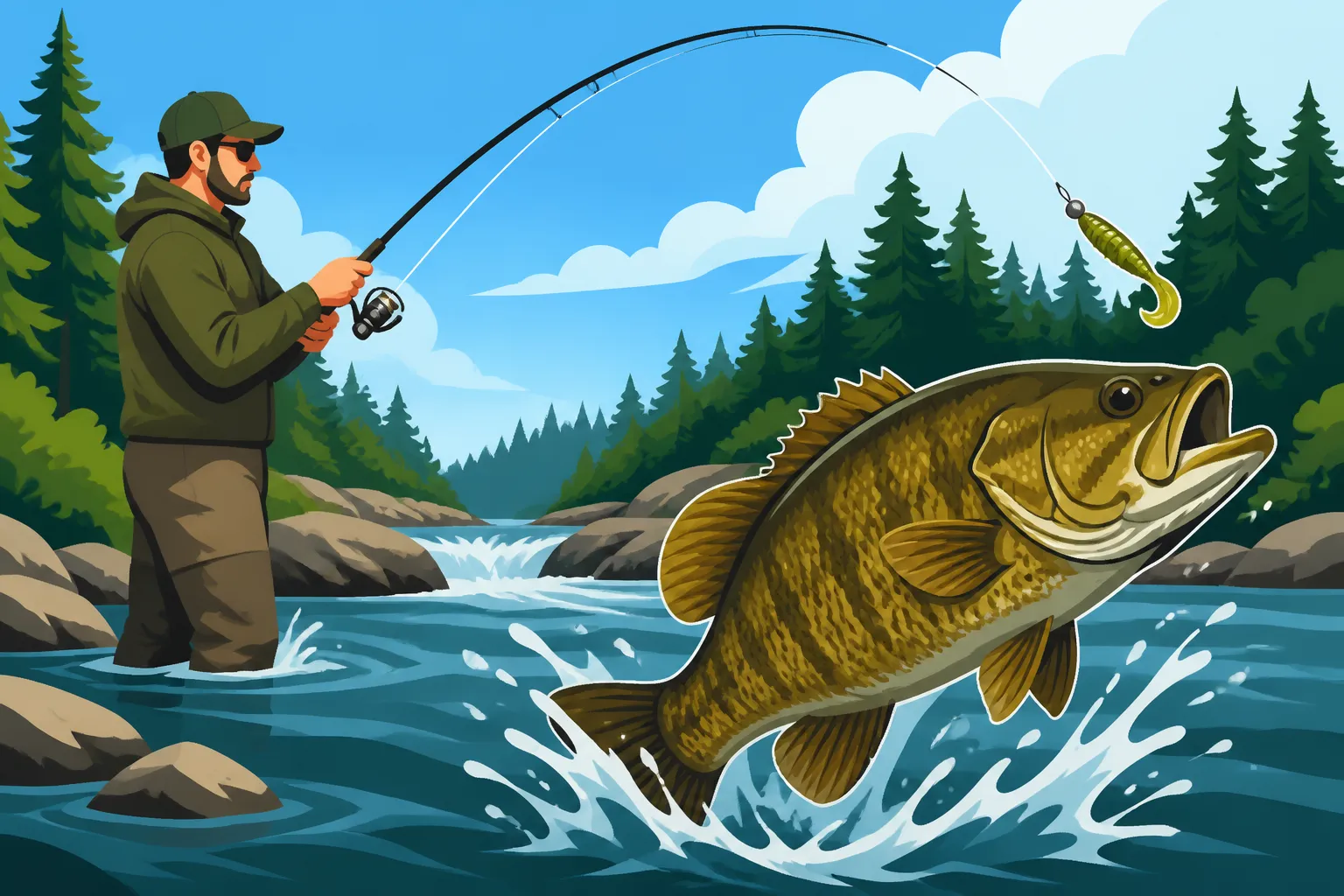
- Wading Gear: If you plan to wade, investing in good quality chest waders and sturdy wading boots is crucial. Rivers often have slippery, uneven bottoms, so boots with good traction (felt soles are excellent for slippery rocks, but rubber is more versatile for varied terrain) and a wading staff for stability are highly recommended. Always be mindful of current strength and water depth – safety first! Wading allows for stealthy approaches and the ability to fish specific pockets and seams thoroughly. For anglers targeting trout, many of the same wading principles apply, and resources like those on Best Waders for Ontario Trout Streams can offer valuable insights.
- Kayaks and Canoes: For accessing stretches of river that are too deep to wade but too shallow or obstacle-filled for a powerboat, a fishing kayak or canoe is a fantastic option. They allow for quiet navigation, precise positioning, and access to areas bigger boats can't reach. Look for stable models designed for fishing, often found with features like rod holders and storage. When choosing, consider what's highlighted in guides like Best Kayak for River Fishing in Ontario. Remember to always wear a PFD (Personal Flotation Device) when on the water, regardless of your vessel.
- Small Powerboats/Jon Boats: On wider, deeper rivers, a small powerboat or a jon boat can be effective, especially for covering long distances or fishing larger pools. Ensure your boat is suitable for the river's conditions, including potential rapids or shallow sections. Always be aware of Ontario Boating Laws for Anglers before heading out.
Key Techniques for River Smallmouth Bass
River smallmouth fishing is an active pursuit, requiring constant adjustments to your presentation to match the conditions and the fish's mood. It's less about letting a bait sit and more about working it effectively through the current.
Lure Selection and Presentation
Smallmouth bass are aggressive feeders, and a variety of lures can be highly effective. The key is to present them in a way that mimics natural prey and takes advantage of the current.
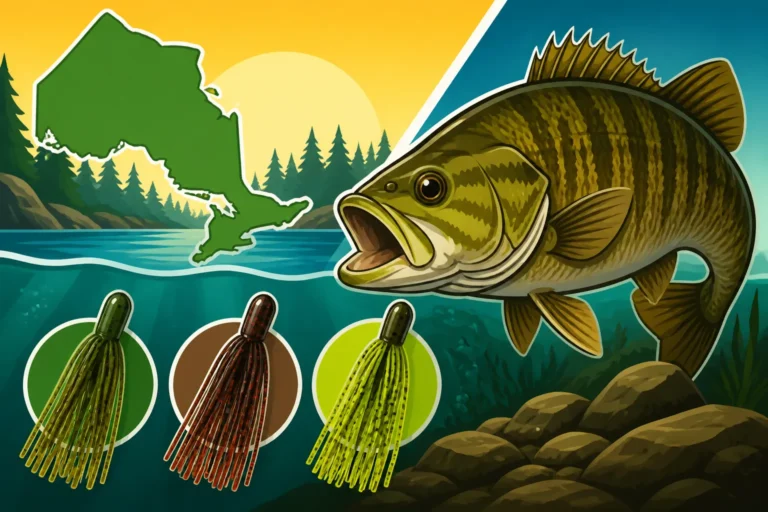
- Jigs and Soft Plastics: These are arguably the most versatile and effective lures for river smallmouth. Tube jigs (like the classic Yamamoto Pro Senko Tube or a locally made equivalent) are phenomenal, especially in green pumpkin, black, or brown colours, to imitate crayfish. Rig them with an internal jig head, or an exposed jig head with a weedguard for fishing around snags. Cast upstream or across current and let the jig tumble and bounce along the bottom with the flow, imparting subtle twitches. Grubs, creature baits, and small paddle-tail swimbaits on a jig head are also fantastic choices. The goal is to keep the lure near the bottom, where crayfish and baitfish often dwell.
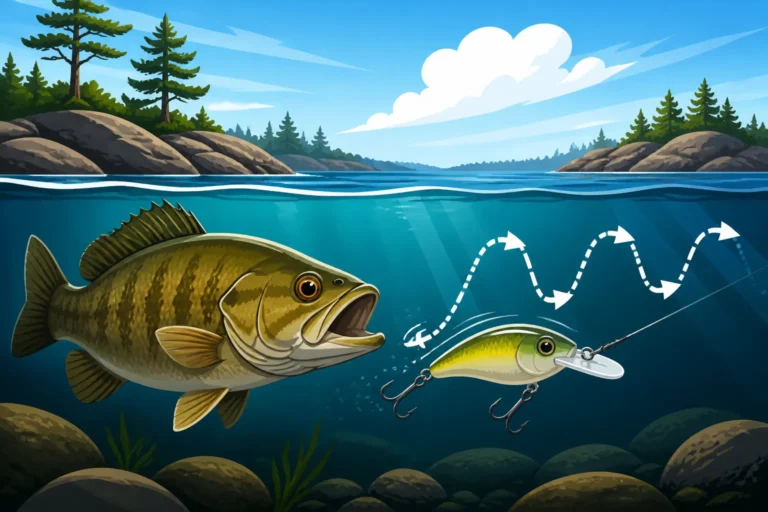
- Crankbaits and Jerkbaits: Diving crankbaits that mimic baitfish are excellent for covering water, especially in deeper runs or along current seams. Choose colours that match the local forage (silver/blue for minnows, brown/orange for crayfish). Cast across or slightly upstream, and retrieve with a steady pace, allowing the lure to deflect off rocks and structure. This erratic action often triggers strikes. Jerkbaits, particularly suspending models, work wonders in cooler water. Give them a sharp twitch, pause, and let them hang in the current – that pause is often when a smallmouth will strike. For those curious about which specific lures might work for other species, information on Best Crankbaits for Ontario Walleye can often be adapted for river smallmouth if they share similar forage.
- Topwater Lures: When water temperatures rise, usually from late spring through early fall, topwater fishing for smallmouth can be absolutely exhilarating. Poppers, walk-the-dog baits (like Heddon Super Spook Jr.), and prop baits can draw explosive strikes. Focus on throwing these lures into slower-moving eddies, along shaded banks, or around visible cover early in the morning, late in the evening, or on overcast days. The sheer visual thrill of a smallmouth blowing up on a topwater lure is something every angler should experience.
- Spinners and Spinnerbaits: These are reliable workhorses, especially in slightly stained water or when fish are highly active. Inline spinners (like Mepps or Rooster Tail) are simple to use: cast and retrieve, letting the blade flash and vibrate. Spinnerbaits, particularly smaller ones (1/4 to 3/8 oz), are excellent for fishing around woody cover or through weeds, as they are relatively snag-resistant.
| Lure Type | Ideal Conditions | Key Presentation / Retrieve | Best Imitates |
|---|---|---|---|
| Tube Jigs | All conditions, especially clear water & rocky bottom | Cast upstream or across, let drift and bounce on bottom. Subtle hops and twitches. | Crayfish, Goby, Small Baitfish |
| Crankbaits | Deeper runs, current seams, covering water quickly | Cast across/slightly upstream, steady retrieve. Allow deflection off structure. Vary speed. | Baitfish, Larger Crayfish |
| Jerkbaits | Cooler water, clear water, around defined structure | Cast, retrieve with sharp twitches followed by pauses. Length of pause varies by fish activity. | Baitfish |
| Topwater Lures | Warm water, low light, slack water, visible cover | Poppers: pop-pause. Walk-the-dog: steady side-to-side cadence. Focus on eddies and shaded areas. | Injured Baitfish, Frogs, Insects |
| Inline Spinners | Active fish, slightly stained water, faster currents | Cast across/upstream, steady retrieve. Maintain blade spin. Effective in riffles leading into deeper pools. | Baitfish, Leeches |
Reading the Water and Current
This is perhaps the most critical skill for river smallmouth fishing. The river is constantly moving, and smallmouth are masters at using that movement to their advantage. You need to become an expert at identifying where they're likely to be holding.
- Identify Current Breaks: As mentioned, these are paramount. Look for anything that disrupts the flow: large rocks, logs, submerged humps, bridge pilings, or even bank erosion that creates a pocket. Fish the downstream side of these breaks.
- Look for Seams: The distinct line where fast water meets slow water is a smallmouth highway and feeding station. Often, you'll see a slight change in water colour or surface texture marking these seams.
- Observe Eddies: Water that swirls back upstream is a tell-tale sign of an eddy. These can be prime holding spots, especially larger ones behind substantial obstacles.
- Understand Depth and Flow: Deeper pools and runs often hold larger fish. In faster, shallower water, fish will tuck behind even small pieces of cover. Pay attention to how the current dictates where food might concentrate.
- Watch for Baitfish and Insects: If you see schools of baitfish flickering on the surface or insects hatching, smallmouth are likely nearby, or will be soon. These are direct indicators of feeding activity.
- Look for Cover: Beyond current breaks, any form of cover is a potential smallmouth hideout. Overhanging trees, submerged weeds (though less common in strong currents), and undercut banks all provide shelter and ambush points.
Seasonal Strategies for River Smallmouth Bass
Smallmouth bass behavior in rivers changes dramatically with the seasons, largely influenced by water temperature, current, and spawning cycles. Adapting your approach to these seasonal shifts is crucial for consistent success. Knowing Best Time of Year to Fish in Ontario for smallmouth often means understanding these specific river dynamics.
Spring: Post-Spawn and Pre-Spawn Activity
Spring in Ontario rivers can be a magical, albeit sometimes challenging, time for smallmouth. As ice recedes and water temperatures begin to climb (typically into the 40s and 50s Fahrenheit), smallmouth transition from their deep wintering holes to shallower, warmer areas.
- Pre-Spawn: In early spring, smallmouth will congregate in deeper pools near potential spawning grounds, often larger flats or bays with rocky bottoms in the river. They are hungry and aggressive as they prepare for the spawn. This is a great time to target them with jigs, suspending jerkbaits, and even slow-rolled spinnerbaits. Focus on the edges of strong current and deeper sections adjacent to warmer, sun-exposed flats.
- Spawning Season: Smallmouth typically spawn when water temperatures reach the mid-60s Fahrenheit. During this time, they move onto gravelly or rocky flats in shallower water (2-10 feet deep), often near cover. While it's legal to fish for them during this period in many zones, many anglers choose to leave them undisturbed to protect the spawn. If you do fish, exercise extreme caution and quickly release any bass caught off a bed. Be aware of Ontario Bass Opener Dates by Zone to ensure you're fishing legally and ethically.
- Post-Spawn: After the spawn, male bass guard the fry for a period, making them very aggressive towards anything threatening their offspring. Once the fry disperse, both male and female bass are often quite hungry and recuperating. They'll spread out and can be found transitioning to summer patterns, often relating to current and structure as they did pre-spawn, but with a bit more energy. Focus on areas with abundant food sources, like crayfish beds or baitfish concentrations.
Summer: High Activity and Feeding Frenzies
Summer is prime time for river smallmouth fishing in Ontario. Warmer water temperatures (from the high 60s into the 70s Fahrenheit) mean the bass are highly active and feeding aggressively. This is when you can experience some incredible topwater action.
During the heat of summer, smallmouth will often hold in the faster, more oxygenated parts of the river, especially around strong current breaks, deep pools, and shaded areas. Look for them around large boulders, log jams, and bridge pilings. They'll also patrol the edges of weed beds if the river has them, ambushing baitfish.
This is the season to throw a wide variety of lures. Topwater baits are incredible early morning and late evening. Jigs and soft plastics are effective all day, especially when bounced along the bottom in deeper runs. Crankbaits and spinnerbaits are great for covering water and triggering reaction strikes. When the sun is high and bright, smallmouth might tuck into heavy shade or deeper holes, so presenting your lures precisely into these spots is key. This is also a fantastic time for Kayak Fishing Techniques for Ontario Lakes, which can be adapted for wider river sections.
Fall: The Feed Before Winter
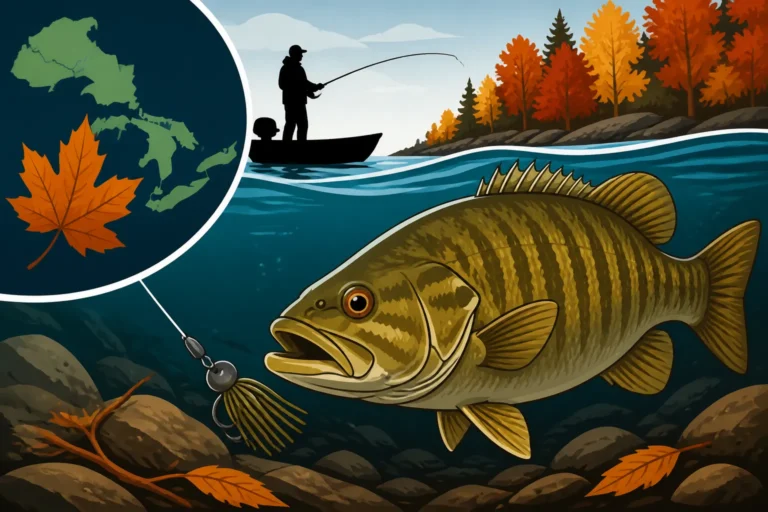
As water temperatures begin to drop in the fall (from the high 60s down to the 50s Fahrenheit), smallmouth bass enter a "feedbag" period, bulking up for the lean winter months. This can be one of the most productive times of year for trophy-sized fish.
Smallmouth will actively chase baitfish and gorge on crayfish. They tend to concentrate in deeper pools and runs, especially those with good current. They may also move into larger river sections or even into the main body of a lake if the river connects to one, often following schools of baitfish.
Focus on larger profile baits during the fall. Big crankbaits, jerkbaits, spinnerbaits, and jigs with large soft plastic trailers can all be highly effective. The retrieve might need to be slower than in summer as the water cools, but don't be afraid to experiment with aggressive pauses and jerks, as fall smallmouth are still very willing to chase. Look for them around significant structure in deeper water, and be prepared for some powerful fights as these fish are at their peak health.
Winter: Deep and Slow
While many Ontario rivers freeze over, some larger, faster-flowing sections remain open throughout the winter. Fishing for smallmouth in winter is a much slower affair and generally less common, but it can be done.
When water temperatures are in the 30s and 40s Fahrenheit, smallmouth bass become very lethargic. They move to the deepest, slowest-moving holes in the river, often congregating in large schools. They'll conserve energy and only feed opportunistically.
If you target them in winter, use small, subtle presentations. Downsize your jigs and soft plastics, and work them extremely slowly along the bottom. Vertical jigging in deeper holes from a boat (if ice-free) or from shore can be effective. Your bites will be incredibly subtle, often feeling like just a slight weight or tap. Winter river fishing requires immense patience and attention to detail.
Safety and Conservation on Ontario's Rivers
Fishing on rivers, especially those with strong currents, demands a strong emphasis on safety. Beyond that, responsible angling practices ensure these incredible fisheries remain healthy for generations to come.
Navigating River Currents Safely
River currents are no joke, and underestimating them can lead to serious situations. Always prioritize safety, whether you're wading or in a boat.
- Wading Safety: If you're wading, always test the depth and strength of the current with a wading staff before stepping. Wear sturdy wading boots with good grip. Move slowly and deliberately. If the current feels too strong, or the water too deep, turn back. Avoid wading alone, especially in unfamiliar waters. Be aware of changing water levels, particularly after heavy rains. Many rivers in Ontario, such as parts of the Credit River, can have deceptively strong currents even in seemingly calm areas.
- Boating Safety: If you're in a boat or kayak, always wear a PFD. Know your vessel's capabilities and limitations, especially concerning rapids and shallow areas. Be aware of submerged hazards like rocks and logs. Always let someone know your float plan – where you're going and when you expect to return. For general information, understanding the Ontario Pleasure Craft Operator Card Requirement is a must for anyone operating a powered watercraft. Even though a PCOC isn't always required for non-motorized boats, a life jacket is critical for safety on any watercraft.
- Weather Conditions: Keep a close eye on the weather forecast. High winds can make boating dangerous, and thunderstorms can bring dangerous lightning and sudden downpours, leading to rapidly rising water levels and stronger currents.
Practicing Responsible Catch and Release
Smallmouth bass are a prized sportfish, and practicing responsible catch and release helps sustain healthy populations, particularly in high-pressure river systems.
- Minimize Handling: Handle fish as little as possible. Wet your hands before touching the fish to protect its slime coat, which is vital for disease resistance.
- Use Barbless Hooks: Crushing the barb on your hooks with pliers makes hook removal much easier and less damaging to the fish. This is a simple step with a huge impact.
- Proper Hook Removal: Use appropriate tools like forceps or long-nosed pliers to quickly and gently remove the hook. If the fish is deeply hooked, especially in the gills, it's often best to cut the line as close to the hook as possible.
- Revival: If a fish is exhausted from the fight, hold it gently in the water, facing upstream, allowing water to flow over its gills until it regains strength and can swim away on its own. Avoid dragging the fish onto dry land or over rough surfaces.
- Respect Limits: Always adhere to Ontario Bag and Possession Limits by Species for smallmouth bass in your specific fishing zone. If you plan to keep fish for a meal, only keep what you're legally allowed and what you will eat.
By understanding the unique behaviors of river smallmouth, equipping yourself with the right gear (easily found on platforms like Amazon), and practicing safe and ethical angling, you'll open up a whole new world of fishing adventure on Ontario's incredible rivers.
Disclaimer
The information provided in this guide is for general informational purposes only and is subject to change. Always consult the official Ontario Fishing Regulations Summary, available from the Ontario Ministry of Natural Resources and Forestry (MNRF), for the most current and accurate regulations, season dates, and limits before heading out on the water. Fishing regulations can vary significantly by zone and specific waterbody.