Best tube jig color for smallmouth bass
There's nothing quite like the exhilarating fight of an Ontario smallmouth bass, but anyone who's spent hours on the water without a bite knows the frustration of trying to crack their code. One of the biggest puzzles anglers face is choosing the right lure, and when it comes to tube jigs, the color selection can feel overwhelming. This guide is here to demystify the best tube jig colors for smallmouth bass in Ontario, helping you understand why certain hues work and when to tie them on.
Understanding Smallmouth Bass Vision and Forage
Before we dive into specific colors, it’s crucial to understand a bit about how smallmouth bass perceive their underwater world. These bronze battlers are primarily sight feeders, and their vision plays a huge role in how they react to a lure.
How Smallmouth See Color Underwater
It’s a common misconception that fish see colors exactly as we do. The reality is, water itself acts as a filter, absorbing different wavelengths of light at varying depths and clarities. Red, for example, is often the first color to disappear in water, while blues and greens penetrate much deeper. This means that a vibrant red tube jig might appear as a muted brown or even black just a few feet down, depending on the conditions. Smallmouth bass have excellent vision, particularly in low light, and are highly attuned to contrasts and movement. They're looking for something that looks natural, either by mimicking prey or by creating a silhouette that suggests an easy meal. This understanding is foundational to making informed color choices that go beyond just aesthetics.
Think about fishing on a bright, sunny day in crystal-clear water on a lake like Lake Erie. The full spectrum of light is penetrating, and fish can distinguish subtle color variations. In this scenario, a tube jig with realistic patterns and natural shades will likely be more effective because the smallmouth can clearly see all the details. Conversely, on an overcast day, or in stained, tannin-rich waters, the available light is diminished, and high-contrast colors might be more visible and therefore more attractive. Knowing how light interacts with water helps you mentally adjust the perceived color of your lure, giving you an edge over simply picking what looks good to you out of the tackle box.
Mimicking Natural Forage: The Key to Success
Smallmouth bass are opportunistic predators, and their diet primarily consists of what’s readily available in their environment. In many Ontario waters, their staple foods include crayfish, gobies, and various species of baitfish. The most effective tube jig colors are those that convincingly imitate these natural food sources. When you're fishing, you're essentially trying to fool the smallmouth into thinking your lure is a living, breathing meal.
Crayfish are a huge part of the smallmouth diet, especially in rocky habitats. These crustaceans come in various shades of brown, green, and even reddish-orange depending on their environment and molting stage. Mimicking these colors, along with the erratic movement of a tube jig, can be incredibly effective. Similarly, the round goby, an invasive but prolific species in many Great Lakes and interconnected waterways, has become a significant food source for smallmouth. Gobies are typically mottled browns, greys, and olive greens, making those color families excellent choices. And of course, minnows and other baitfish, which are often silver, white, or translucent, are always on the menu. A tube jig that flutters and darts like a wounded baitfish can trigger aggressive strikes. Your goal isn't just to present a color, but to present a color that tells a convincing story to a hungry smallmouth.
Top Tube Jig Colors for Smallmouth Bass in Ontario and When to Use Them
When it comes to tube jigs for smallmouth, a few core color families consistently produce results across Ontario's diverse fishing grounds, from the deep clear waters of Georgian Bay to the flowing rivers rich with current.
Greens and Browns: The Crayfish and Goby Connection
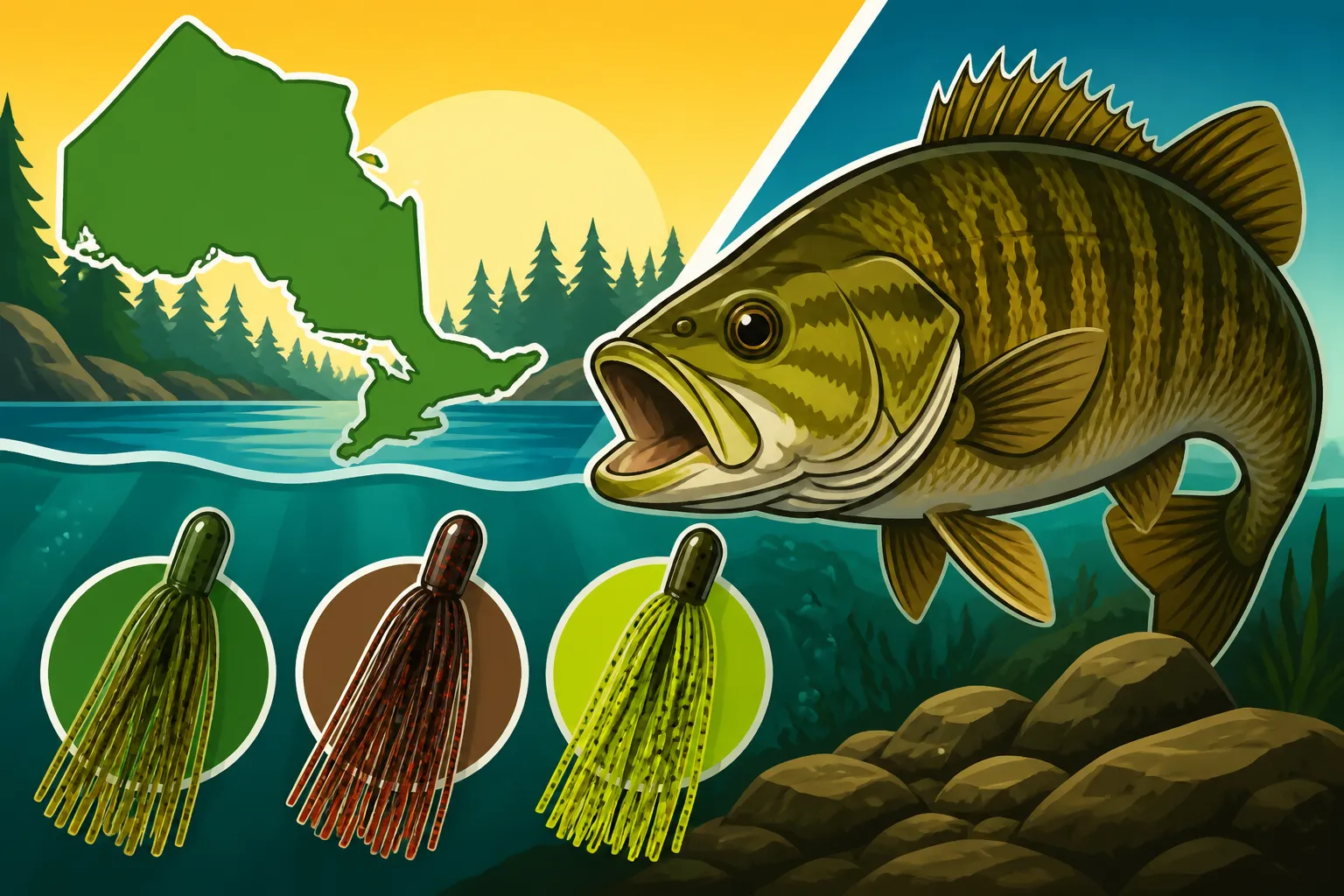
Without a doubt, greens and browns are perhaps the most essential tube jig colors for smallmouth bass in Ontario. These hues perfectly mimic the smallmouth’s primary forage: crayfish and gobies. Colors like "Green Pumpkin," "Watermelon," "Smoke," and "Coffee" are absolute staples in any serious smallmouth angler's tackle box. "Green Pumpkin" with black flake, for instance, is incredibly versatile; it looks like a crayfish scurrying along the bottom or a goby blending into the rocks. This color is a fantastic choice when you're fishing clear, rocky points on lakes like Lake Simcoe, where smallmouth are actively hunting crayfish and gobies. You can often find multi-packs of these essential tubes on Amazon, making it easy to stock up for your next trip.
"Watermelon" is another excellent option, often with red or black flake, giving it that subtle reddish tint of a crayfish preparing to molt or one that's recently had a run-in with a predator. This color truly shines in clear water conditions, allowing the natural translucence to play a role. When you're working a tube jig in a way that causes it to "hop" and "skitter" along the bottom, these green and brown variations come alive, fooling even the most wary smallmouth. For specific regulations on what you can target, always consult an Ontario Fishing License Guide for 2026 and familiarize yourself with the nuances of Ontario Fishing Regulations Explained.
Whites and Silvers: Imitating Baitfish
While crayfish and gobies are primary forage, smallmouth bass also feast on various baitfish species. This is where whites, silvers, and translucent options with metallic flakes come into play. Colors like "White," "Pearl," and "Smoke with silver flake" are incredibly effective when smallmouth are keying in on shiners, smelt, or other minnows. These colors are fantastic for presenting a lure that looks like a wounded or disoriented baitfish, especially when fished higher in the water column or over open water where schools of baitfish are present.
Imagine you're casting near a drop-off on Lake Huron, and your fish finder shows schools of baitfish suspended just off the bottom. A white or pearl tube jig, fished with a swimming or gliding retrieve, can perfectly imitate a stray baitfish. These lighter, brighter colors are also very effective on overcast days or in slightly stained water, as they provide a strong silhouette and flash. It's often during these conditions that smallmouth are less shy and more willing to chase a perceived easy meal. Don't overlook these colors, especially when you suspect smallmouth are feeding on more pelagic prey rather than bottom dwellers.
Darker Hues for Low Light and Stained Water
Sometimes, the conditions demand a different approach. When the light is low – think dawn, dusk, deep water, or heavily overcast skies – or when the water is particularly stained or muddy, darker tube jig colors can be incredibly effective. "Black," "Dark Blue," "Dark Green," and even "Junebug" (a dark purple-green) are excellent choices. These colors create a strong silhouette against the lighter sky or water surface, making the lure more visible to fish in poor visibility.
Consider fishing a river with heavy spring runoff, where the water is murky and visibility is low. A black or dark blue tube jig will offer the best contrast, making it stand out as a potential meal. Similarly, if you're targeting deep structure where light penetration is minimal, a dark color will be easier for the smallmouth to detect. These darker tones can also mimic leeches or large, silhouetted crayfish. The beauty of these colors is their simplicity; they don’t rely on intricate patterns or translucence but rather on their stark profile. Having a selection of these darker tubes on hand is crucial, especially when fishing challenging conditions or exploring new waters where understanding Ontario Fisheries Management Zones, Explained can also prove beneficial.
| Tube Jig Color Family | Primary Forage Mimicked | Ideal Water Clarity | Ideal Light Conditions | Best Presentation |
|---|---|---|---|---|
| Greens & Browns | Crayfish, Gobies | Clear to Lightly Stained | Sunny to Overcast | Bottom hopping, dragging, subtle lifts |
| Whites & Silvers | Baitfish (minnows, shiners) | Clear to Moderately Stained | Sunny to Overcast | Swimming, gliding, jigging mid-water |
| Dark Hues | Leeches, Silhouetted Prey | Stained, Murky, Deep | Low light (dawn/dusk), Overcast | Strong erratic hops, steady retrieve |
Factors Influencing Tube Jig Color Choice Beyond the Basics
While mimicking natural forage is a great starting point, smallmouth bass fishing often requires a dynamic approach. Several environmental factors play a significant role in how effective a particular tube jig color will be.
Water Clarity and Light Conditions
These two factors are perhaps the most critical considerations after forage imitation. As discussed earlier, water acts as a filter, and the amount of light penetrating the water directly impacts how colors appear. In gin-clear waters, like those you might find in parts of the Rideau Lakes or many northern Ontario shield lakes, more natural, subtle, and translucent colors tend to excel. Smallmouth in these conditions have excellent visibility and can easily discern unnatural hues or patterns. Think "Green Pumpkin," "Watermelon," or "Smoke" with a hint of natural flake. For a deeper dive into optimal fishing times, you might find our guide on the Best Time of Day to Catch Walleye insightful, as some principles apply to smallmouth too.
Conversely, in turbid or stained waters, which can result from heavy rains or natural tannins, visibility is significantly reduced. Here, vibrant, high-contrast, or dark colors often perform best because they create a more distinct silhouette. Chartreuse, bright orange, or even plain black can be highly effective in these conditions. Similarly, bright, sunny days often call for more natural, muted colors, while heavily overcast days, dawn, or dusk can make brighter or darker, high-contrast colors more appealing to the fish. Understanding these dynamics means you're not just throwing a color out there, but making a strategic choice based on the environment. For techniques relevant to specific locations, exploring resources like Best Bass Fishing Techniques for Georgian Bay can enhance your understanding.
Seasonal Patterns and Smallmouth Behavior
Smallmouth bass behavior changes drastically throughout the year, and so should your tube jig color choices. In the spring, during the pre-spawn phase, smallmouth are often shallow and aggressive, feeding heavily to build energy for spawning. They might be less picky, but natural crayfish and goby colors (greens, browns) are still excellent as they target these primary food sources in their shallow haunts. Post-spawn, they can be lethargic, requiring subtle presentations with natural colors.
Summer often sees smallmouth move to deeper structures, reefs, and rocky points to escape the heat and find cooler, oxygen-rich water. At these greater depths, colors that retain visibility (blues, greens, purples) or high-contrast dark colors become more important. Also, if they're suspended over open water chasing baitfish, white or silver tubes can be deadly. As fall approaches and water temperatures drop, smallmouth enter a feeding frenzy phase, aggressively bulking up for winter. During this time, they might chase larger baits, and bolder, sometimes even brighter, colors can trigger reaction strikes. Understanding the specific Ontario Fishing Season Dates by Zone for smallmouth is crucial for capitalizing on these seasonal behaviors.
Experimentation and Local Knowledge
No matter how much theoretical knowledge you accumulate, nothing beats real-world experimentation and tapping into local wisdom. Smallmouth bass can be finicky, and what works one day or in one lake might not work the next. Always start with colors that mimic local forage and suit the water conditions, but don't be afraid to deviate. If the bite slows down, try a different shade of green, or switch to a completely different color family. Sometimes a subtle change, like going from "Green Pumpkin" to "Watermelon Red," can make all the difference.
Talking to local bait shop owners, experienced anglers, or even observing what others are catching fish on can provide invaluable insights into the current bite. Lake-specific nuances, such as an abundance of a particular baitfish or a unique water tint, can make certain colors exceptionally productive. Keep a journal of your successes and failures with different colors under various conditions; this personal database will become one of your most potent tools. And remember, sometimes the best tube jig color is simply the one you have the most confidence in and fish most effectively. To further enhance your versatility, consider a versatile Best Rod and Reel Combo for Beginners that can handle various techniques and lure types.
Disclaimer
This article is for general informational purposes only and does not constitute professional advice. Laws, prices and regulations vary by location and change over time. Consult a qualified professional for guidance on your specific situation.