How to fish rocky points for smallmouth
You know that feeling when you're out on an Ontario lake, gliding past shorelines, and you spot that classic rocky point jutting out into the water? It just screams "smallmouth bass," doesn't it? But then you cast, and cast again, maybe catch nothing, or just a few small ones, and you start to wonder if those points are really the hotspots everyone claims. It can be incredibly frustrating to know these bronzebacks love structure, yet struggle to unlock the secrets of fishing these prime locations effectively. This guide is all about demystifying those rocky points, helping you understand why smallmouth are drawn to them, how to read them like a book, and what techniques and gear will consistently put more of these hard-fighting fish in your boat or on your shore.
Why Rocky Points Are Smallmouth Goldmines
Rocky points are veritable magnets for smallmouth bass, and it's not just a coincidence. These geological features create a dynamic underwater environment that caters perfectly to a smallmouth's survival instincts and predatory nature. Understanding why they congregate here is the first step to truly mastering these spots.
The Allure of Structure and Cover
Smallmouth bass are quintessential ambush predators, and rocky points offer a smorgasbord of hiding spots and attack lanes. Think about it: a point isn't just a uniform slope; it's a tapestry of crevices, boulders, ledges, and transition zones. These irregularities create perfect lies for smallmouth to tuck into, camouflaged against the dark rock, waiting for an unsuspecting baitfish or crayfish to wander by.
Imagine a large boulder at the tip of a point, casting a shadow on the bottom, or a deep crevice running perpendicular to the shoreline. These aren't just rocks; they're tactical positions for a smallmouth. They provide shelter from overhead predators like ospreys and eagles, offer a break from strong currents, and serve as excellent ambush points. A smallmouth can dart out from behind a rock, snatch its prey, and disappear back into the safety of the structure in a flash. This constant interplay of cover and open water makes rocky points highly efficient feeding grounds, attracting smallmouth year-round.
Current and Oxygen: How These Factors Play In
Rocky points, especially those that extend into larger bodies of water or are exposed to prevailing winds, often experience increased current and wave action. This might seem like a minor detail, but it's crucial for understanding smallmouth behavior. Moving water does a couple of important things. First, it oxygenates the water, which is particularly appealing to smallmouth, especially during warmer months when oxygen levels can fluctuate in calmer bays. Second, and perhaps more importantly, current acts like a conveyor belt, bringing food right to the smallmouth's doorstep.
Think of it like a natural food delivery service. Baitfish, insects, and other aquatic organisms are swept along by the current, becoming easy targets for smallmouth positioned in strategic eddies or behind larger rocks. The turbulence around a point can also dislodge crustaceans and other invertebrates from the rocks themselves, providing an additional food source. Smallmouth are incredibly efficient hunters, and they'll naturally gravitate to areas where they can expend minimal energy to get a maximum caloric reward. A well-positioned smallmouth on a current-swept rocky point is essentially waiting for dinner to be served.
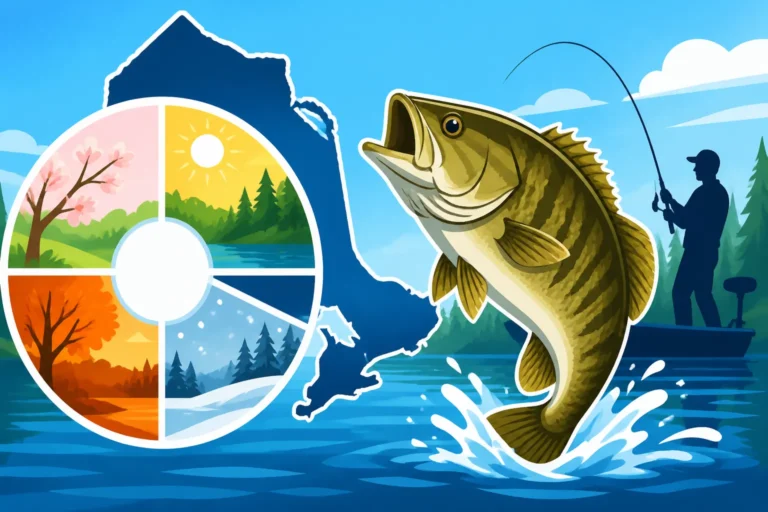
Seasonal Movements: How Smallmouth Use Points Throughout the Year
Smallmouth bass don't just hang out on rocky points randomly; their usage of these features changes significantly with the seasons. Understanding these patterns is key to success.
- Spring (Pre-spawn & Spawn): As water temperatures rise in early spring, smallmouth will often move from deeper wintering grounds to shallower, sun-warmed rocky points. These points are critical staging areas before the spawn. They provide the perfect blend of warmth, food, and proximity to spawning beds, which are often nearby in protected, rocky-bottomed areas. After the spawn, the males will guard the nests, and nearby rocky points offer quick access to food while still being close to their progeny. This is often the time when you'll find some of the biggest fish of the year aggressively feeding. Many anglers target these areas right after the Ontario Bass Opener Dates by Zone.
- Summer (Post-spawn & Summer Patterns): During the heat of summer, smallmouth may utilize both the shallower and deeper sections of rocky points. Early mornings and evenings might find them shallow, chasing baitfish. But as the sun climbs higher and water temperatures peak, they often retreat to the deeper flanks of the point, seeking cooler, more oxygenated water. They'll relate to deep structure, drop-offs, and submerged boulders. Rocky points that offer a quick transition from shallow to deep water are particularly productive during this time, providing an easy retreat route.
- Fall (Feeding Frenzy): As water temperatures begin to drop in the fall, smallmouth enter a major feeding period, packing on weight for the upcoming winter. Rocky points become prime feeding locations once again, as baitfish gather around them. Smallmouth will aggressively chase down schools of bait, often moving into shallower water during cloudy days or low light conditions. This can be one of the most exciting times to fish rocky points, as the bass are often very active and willing to strike a variety of lures. This "feeding frenzy" is a critical part of the Best Time of Year to Fish in Ontario.
- Winter (Deep Water): While ice fishing for smallmouth isn't as common as for walleye or perch, if you're targeting them through the hard water, rocky points that drop off into significant depths are still important. Smallmouth will typically move to the deepest parts of the lake or river and often suspend over deep structure, but the deep edges of rocky points can still hold schools of inactive fish, especially where deep water is accessible.
Reading the Water: Identifying Productive Rocky Points
Not all rocky points are created equal, and simply casting at every rockpile you see won't guarantee success. The real art lies in "reading the water" and understanding the subtle nuances that make one point a smallmouth magnet and another just a pile of rocks.
Subtleties Matter: How to Spot the "Sweet Spots" Within a Point
When you approach a rocky point, don't just see a single structure. It's a collection of micro-habitats, and the smallmouth will be concentrated in the most advantageous spots. Look for:
- Irregularities: Is there a larger boulder among smaller rocks? A distinct seam where the rock type changes? A cluster of submerged logs or a small weed patch nestled among the rocks? These subtle changes create unique cover and ambush opportunities. Even a slightly larger rock can create a current break that smallmouth will gravitate towards.
- Depth Changes: Pay close attention to how the point drops off. Is it a gradual slope, or are there sudden ledges, humps, or depressions? Smallmouth often relate directly to these depth contours. A "lip" where a flat rock bottom suddenly transitions to a steep drop-off is often a high-percentage spot.
- Shallow Water Access to Deep Water: The most productive points often offer a clear path for smallmouth to move quickly between shallow feeding grounds and deeper, safer holding areas. A point that extends far out and then drops dramatically off its tip or sides can be incredibly productive, as it acts as a highway for migrating fish. Using your electronics to identify these rapid depth changes is key.
Depth Transitions and Drop-offs: Key Features to Look For
The intersection of depth changes and rock creates magic for smallmouth. Your fish finder isn't just for looking at the bottom; it's for painting a picture of the underwater topography.
- Sharp Drop-offs: Smallmouth absolutely adore a sharp drop-off. Whether it's a sheer rock face or a steep transition from 10 feet to 30 feet, these "walls" allow bass to hold in deeper water and shoot up into shallower feeding zones quickly. They also act as natural funnels for baitfish.
- Underwater Humps and Saddles: Sometimes a rocky point isn't just a single protrusion. It might have a secondary hump or a "saddle" (a dip between two humps) just off its main body. These submerged features, often unnoticed by the naked eye, can be fantastic ambush points, especially if they are also covered in rock. Scan around the main point with your sonar for these hidden gems.
- The "Wash" Line: Where waves crash against the rocks, creating a foamy "wash," is often a high-activity zone. This turbulence dislodges food and disorients baitfish, making them easy prey. Smallmouth are not afraid of rough water and will often feed aggressively in these churned-up areas. This is where a boat that can handle a bit of chop, or a sturdy kayak like the Best Kayak for Lake Erie, comes in handy.
The Role of Baitfish: Where the Food Is, the Smallmouth Will Follow
It sounds obvious, but you can't overstate the importance of baitfish. Smallmouth bass are predators, and they'll always be where the food is.
- Visual Cues: Look for schools of baitfish on your fish finder, or even better, look for them jumping or flicking on the surface. If you see signs of baitfish activity around a rocky point, you're in the right place. Seagulls diving can also be a tell-tale sign of baitfish being pushed to the surface.
- Crayfish Country: Smallmouth have a serious craving for crayfish. Rocky environments are prime crayfish habitat. If you see signs of crayfish (shed exoskeletons on shore, or even catch one in a minnow trap), you know smallmouth will be nearby. Many popular smallmouth lures are designed to imitate crayfish.
- Insects and Larvae: Don't forget the smaller stuff. Rocky points can also be rich in aquatic insects and their larvae, which are a food source for smaller baitfish, which in turn attract the bass. Pay attention to any insect hatches you observe on the water.
Essential Gear and Tackle for Rocky Point Smallmouth
Tackling rocky points effectively requires specific gear. You're dealing with structure that can be abrasive to lines and unforgiving to lures. Having the right tools for the job will not only increase your hook-ups but also reduce frustration from lost lures and broken lines.
Rods, Reels, and Line: Matching Your Setup to the Challenge
When fishing rocky points, you need a balance of sensitivity to detect subtle bites and backbone to pull fish out of cover.
- Rods: A medium-heavy to heavy power spinning or casting rod, typically 6'6" to 7'6" in length, is ideal. The heavier power allows you to cast heavier baits, set the hook firmly, and control a strong smallmouth trying to dive back into the rocks. A fast action tip provides sensitivity for detecting bites and working lures, while the strong backbone gives you leverage. For lighter finesse techniques like drop-shotting, a medium-light to medium power rod with a fast action might be more appropriate.
- Reels: For spinning setups, a 2500-4000 series reel offers a good balance of line capacity and drag power. For baitcasting, a reel with a moderate to high gear ratio (6.X:1 to 7.X:1) is versatile, allowing for both slow retrieves and quick pickups of slack line. Ensure your reel has a smooth, reliable drag system, as smallmouth can make powerful, unexpected runs. While specific models vary, something comparable to what many use for Best Spinning Rods for Walleye could work, just ensure it has the right balance for your smallmouth rod.
- Line: This is perhaps the most critical component when fishing around jagged rocks.
- Main Line: Braided line (15-30 lb test) is an excellent choice for its incredible strength, lack of stretch, and abrasion resistance. Its sensitivity helps you feel every bump and tick.
- Leader: You absolutely need a fluorocarbon leader (8-15 lb test) when using braid. Fluorocarbon is nearly invisible underwater and, crucially, offers superior abrasion resistance compared to mono. A good quality Best Fluorocarbon Line for Clear Lake Water will make a noticeable difference. The length of your leader can vary, but typically 3-6 feet is a good starting point. This setup protects your main line from rock damage while keeping your presentation subtle.
Lure Selection: Top Choices for Rocky Environments
The best lures for rocky points are those that mimic smallmouth prey (crayfish, baitfish) and can be worked effectively without constantly snagging.
- Jigs: Without a doubt, jigs are king on rocky points.
- Tube Jigs: These soft plastic tubes, rigged with an internal jig head, perfectly imitate crayfish and injured baitfish. They are incredibly versatile, can be dragged, hopped, or even swam. Colours like green pumpkin, brown, or black with some fleck are perennial favourites. For deeper water or heavier current, use a heavier jig head. If you're wondering about specific colours, check out Best Tube Jig Color for Smallmouth Bass.
- Football Jigs: Named for their head shape, football jigs are designed to "walk" over rocky bottoms, reducing snags. Pair them with a crawfish-imitating soft plastic trailer.
- Ned Rigs: A finesse option, the Ned rig is a mushroom-shaped jig head paired with a short, buoyant stickbait. It stands up on the bottom, looking like a feeding baitfish or crayfish, and is incredibly effective for lethargic or pressured smallmouth.
- Crankbaits and Jerkbaits:
- Deep Diving Crankbaits: For deeper points, crankbaits that dive to match the depth of the point are excellent for covering water. Choose models with durable bills that can deflect off rocks. Natural baitfish patterns or crawfish colours are usually best.
- Jerkbaits: Especially in colder water or for aggressively feeding fish, jerkbaits can be deadly. They imitate an injured baitfish with their erratic darting action. Suspending jerkbaits are excellent as you can pause them over prime rock structure. You might find some ideas in Best Jerkbait for Early Spring Bass.
- Topwater Lures: When smallmouth are actively feeding near the surface, especially during low light or calm conditions, topwater baits are thrilling. Poppers, walk-the-dog baits, and prop baits can all draw explosive strikes. For those early morning bites, try something from the Best Topwater Lure for Dawn Smallmouth Fishing category.
- Soft Plastics (Carolina Rigs, Drop Shots):
- Carolina Rig: This rig, using a weight, bead, swivel, and a leader to a soft plastic bait (often a lizard or creature bait), is excellent for dragging across large rocky areas. The weight makes contact with the bottom, while the bait floats tantalizingly above.
- Drop Shot: An incredibly effective finesse technique, the drop shot allows you to present a soft plastic bait (worm, minnow imitation) suspended at a specific depth above a weight. This is fantastic for targeting smallmouth you've marked on your fish finder that are holding tight to structure.
Essential Accessories: The Little Things That Make a Big Difference
Beyond rods and lures, a few key accessories can significantly improve your rocky point fishing experience.
- Pliers/Forceps: Essential for safely unhooking fish, especially when they've swallowed a lure deep. Long-nosed pliers are a must-have.
- Net: A good landing net, preferably with rubberized mesh (which is gentler on fish and prevents hooks from tangling), is invaluable for landing active smallmouth, especially if you're catch-and-release fishing.
- Polarized Sunglasses: These are not a luxury; they're a necessity. Polarized lenses cut glare, allowing you to see submerged rocks, depth changes, and even cruising smallmouth that would otherwise be hidden.
- Map/GPS/Fish Finder: An absolute game-changer. Use your electronics to mark productive spots, identify contours, humps, and drop-offs. Understanding the underwater landscape is paramount. Modern units like those from Humminbird or Lowrance (check their websites for current models and features) can show you incredible detail.
- Anchor: A reliable anchor system is crucial, especially if you're fishing from a boat or kayak in windy conditions. It allows you to hold your position and thoroughly work a specific section of a rocky point.
- Tackle Management: Keep your tackle organized. A well-stocked tackle box or bag (many are available on Amazon for different fishing styles) with spare lures, hooks, weights, and leader material means you won't be scrambling when the bite is hot.
| Lure Type | Best Conditions / Retrieve | Imitates | Key Features |
|---|---|---|---|
| Tube Jigs | Drag, hop, twitch on bottom; various depths | Crayfish, injured bait | Soft plastic, internal jig head, excellent feel |
| Football Jigs | Drag & crawl on bottom, deeper rocky flats | Crayfish | Heavy, wide head designed to crawl over rocks, less snagging |
| Ned Rigs | Finesse, slow drag, subtle hops; pressured fish | Feeding baitfish | Buoyant plastic stands up on bottom, very subtle |
| Jerkbaits | Erratic twitch, pause, twitch; colder water, aggressive fish | Injured baitfish | Darts, suspends, generates reaction strikes |
| Deep Crankbaits | Steady retrieve, deflection off rocks; covering water | Baitfish, crayfish | Large diving lip, strong vibration, deflects off cover |
| Topwater Lures | Calm water, low light, active fish; twitch, walk-the-dog | Baitfish | Creates surface commotion, exciting strikes |
| Drop Shot | Vertical presentation, subtle shakes; marked fish, finesse | Minnows, worms | Bait suspended above weight, excellent for deep structure |
| Carolina Rig | Slow drag, long casts; covering large bottom areas | Crayfish, worms | Weight and bead create sound, bait trails freely |
Tactics and Techniques for Dominating Rocky Points
Now that you understand why smallmouth love rocky points and what gear you need, let's talk about how to fish them. It's all about presentation, positioning, and adapting to what the fish are telling you.
Positioning Your Boat or Kayak: Angles and Approaches
Your approach to a rocky point can make all the difference. Often, it's not about casting directly onto the point, but rather positioning yourself to make the most effective presentations.
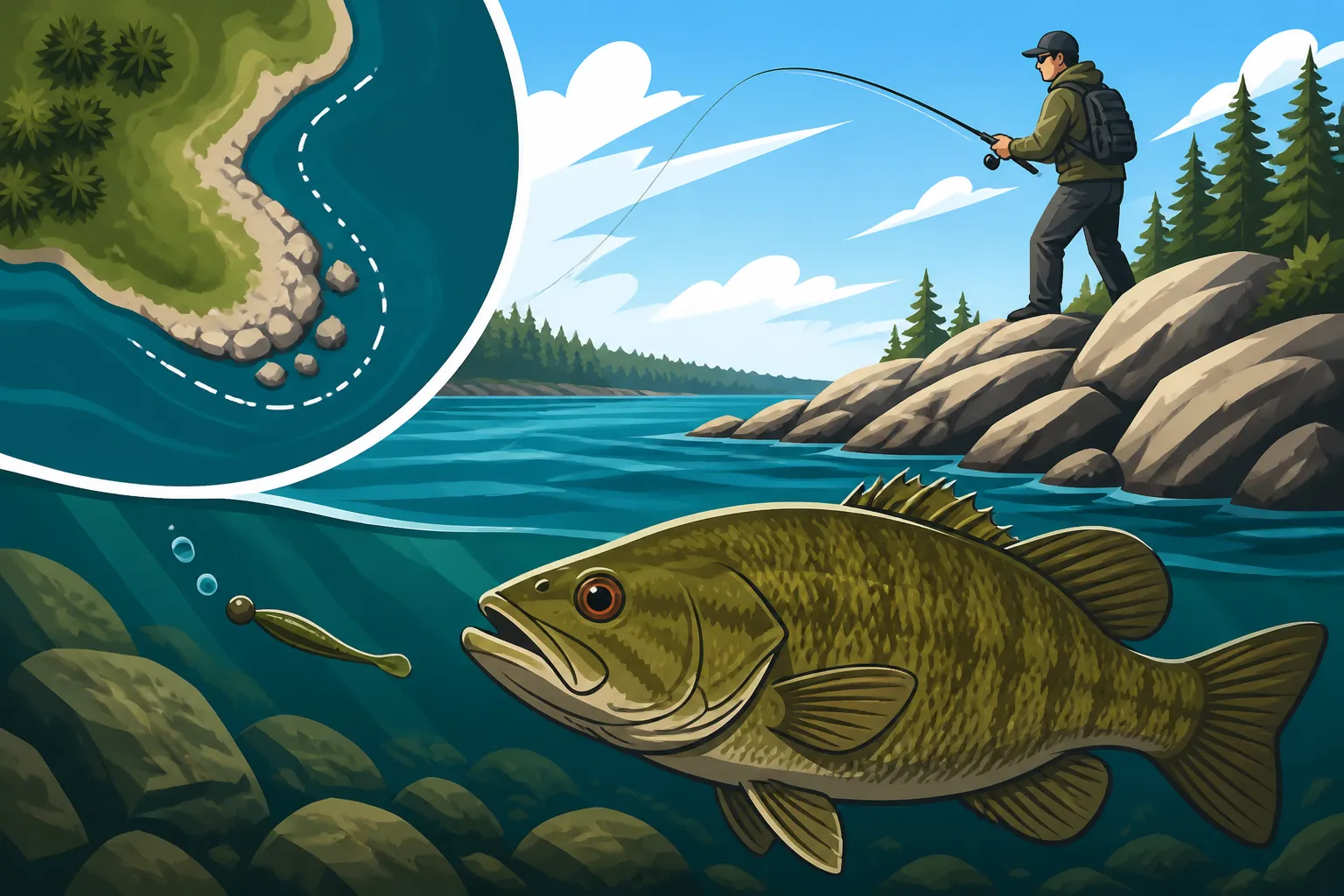
- Fan Casting: Start by positioning your boat or Best Kayak for River Fishing in Ontario slightly off the point, in deeper water. Make casts in a fan-like pattern, covering the shallowest parts of the point, the flanks, and the deeper water off the tip. This allows you to quickly locate where the fish are holding.
- Parallel to the Edge: Once you've identified a productive depth or section, try positioning your boat parallel to the rocky edge or drop-off. This allows you to make long, accurate casts that run your lure along the contour, keeping it in the strike zone for a longer period. For example, if smallmouth are holding in 15 feet of water along a submerged ledge, try to keep your boat in 20-25 feet of water and cast parallel to that 15-foot contour line.
- Up-Current/Up-Wind: If there's a noticeable current or wind pushing bait along the point, try to position yourself up-current or up-wind. This allows you to cast your lure down into the current, letting it drift naturally into the strike zone, mimicking how baitfish would approach the point. This also means you can cover more water as your boat drifts.
- Stealth is Key: Smallmouth in clear Ontario waters can be wary. Use your trolling motor to approach quietly, or if you're in a kayak, paddle slowly and deliberately. Avoid loud noises or casting shadows over the prime areas.
Presentation Matters: Working Your Lures Effectively
The best lure in the world won't work if it's not presented correctly. Each lure type has its optimal retrieve, and subtle adjustments can trigger strikes.
- Jig Tactics:
- Dragging: For tube jigs and football jigs, a slow, steady drag along the bottom is often deadly. Every now and then, give your rod tip a subtle shake or a short hop to imitate a crayfish scurrying or an injured baitfish. Feel for distinct "ticks" or "thumps" as your jig makes contact with the rocks.
- Hopping: Lift your rod tip sharply, let the jig fall back to the bottom on a semi-slack line, then reel in the slack and repeat. This creates a "jump and fall" action that often triggers reaction strikes.
- Crankbait/Jerkbait Tactics:
- Deflection: For crankbaits, actively try to make them hit the rocks. When your crankbait deflects off a rock, it often triggers a predatory instinct in smallmouth. A steady retrieve with occasional pauses or changes in speed can also be effective.
- Rip and Pause: For jerkbaits, a retrieve consisting of two or three sharp jerks of the rod tip, followed by a pause, is standard. The length of the pause can be critical—experiment until you find what the fish prefer. Sometimes a longer pause in clear, cold water is more effective.
- Topwater Tactics:
- Walk-the-Dog: For stick baits, master the "walk-the-dog" retrieve, creating a side-to-side zig-zagging action. For poppers, a "pop-pause" retrieve, making a splash and then letting it sit, is effective. The key with topwater is often patience; wait for the fish to commit.
- Finesse Tactics (Drop Shot, Ned Rig):
- Subtle Shakes: For drop shot and Ned rigs, extremely subtle movements are often best. Barely shake your rod tip to impart a quiver to the bait. Let the current do some of the work. These techniques are fantastic for picky fish or when the bite is tough.
Adapting to Conditions: Wind, Light, and Water Clarity
Smallmouth fishing is rarely static; conditions change, and so should your approach.
- Windy Conditions: Don't shy away from wind. Wind creates current, which can stack baitfish and smallmouth on the wind-blown side of a point. Fish with the wind or into it, using heavier lures to maintain bottom contact. Windy days are often excellent for How to fish a spinnerbait for Ontario lake bass, as the vibration and flash can penetrate the choppy water. Just be mindful of boat control.
- Bright Sun vs. Cloudy Days: On bright, sunny days with clear water, smallmouth often retreat to deeper, shadier parts of the point, or tuck tight to large boulders. You might need to slow down your presentation and use more natural colours. On cloudy days or during low light (dawn/dusk), smallmouth are often more comfortable roaming shallower, and you might have success with aggressive retrieves and topwater lures.
- Water Clarity:
- Clear Water: In ultra-clear Ontario waters, presentation is paramount. Use fluorocarbon leaders, smaller lures, and natural colours. Long casts are important to avoid spooking fish. This is where subtle finesse techniques really shine.
- Stained/Murky Water: In stained water, smallmouth rely more on vibration and profile. You can often get away with bolder colours (chartreuse, orange) and lures that displace more water (crankbaits with rattles, spinnerbaits). Increase your retrieve speed to cover water, as fish might be less concentrated.
By understanding the intricate dynamics of rocky points and combining that knowledge with the right gear and adaptive tactics, you'll be well on your way to consistently hooking into some of Ontario's finest smallmouth bass. It's a challenging but incredibly rewarding experience!
Disclaimer
This article is for general informational purposes only and does not constitute professional advice. Laws, prices and regulations vary by location and change over time. Consult a qualified professional for guidance on your specific situation.