How to fish a jerkbait for early spring bass
Many anglers know the struggle of trying to tempt sluggish bass in the early spring, when the water is still biting cold and these fish seem to have lockjaw. It can be incredibly frustrating to hit the water eager for that first big bite of the season, only to come up empty-handed because your usual tactics just aren't cutting it. This guide is all about equipping you with the knowledge to conquer those early season challenges, specifically by mastering the art of fishing a jerkbait for early spring bass in Ontario, giving you a real edge before the crowds descend.
Why Jerkbaits Shine for Early Spring Bass in Ontario
When the ice has just melted or the spring thaw is really taking hold, bass are in a peculiar mood. They're starting to become active after a long winter, but their metabolism is still quite slow. This is where a jerkbait truly shines, offering an irresistible presentation that capitalizes on their unique early spring behavior.
Understanding Early Spring Bass Behavior
Think of early spring bass as waking up from a long nap. Their bodies are telling them to start feeding to build up energy for the upcoming spawn, but the cold water means they can't chase down fast-moving prey. They're often lethargic, conserving energy, and holding tight to cover or structure that offers a slight warmth or ambush point. You'll typically find them congregating in areas adjacent to deeper wintering grounds, like rocky points, secondary humps, or the mouths of bays that connect to main lake basins. Their movements are often subtle, not the aggressive, wide-ranging patrols you'd see in summer.
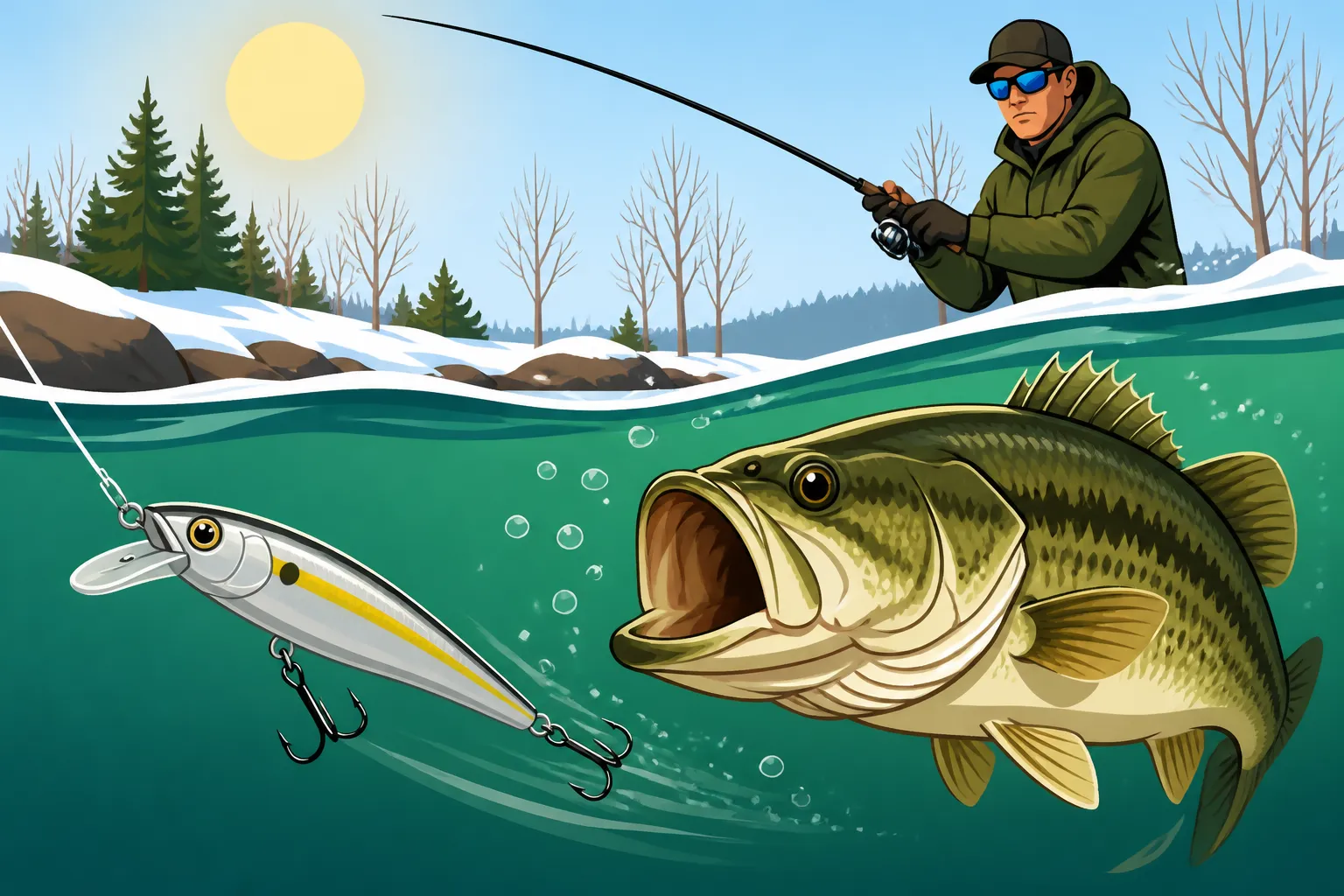
Because their metabolism is slowed by the chilly water, these bass aren't going to expend much energy chasing down a fast-moving crankbait or spinnerbait. They need something that looks easy to catch, something that practically begs to be eaten without a strenuous pursuit. This is precisely why the slow, tantalizing dance of a jerkbait can be so effective. It perfectly mimics a disoriented, injured, or dying baitfish that represents an easy meal.
The Irresistible Action of a Jerkbait
A jerkbait, when fished correctly, is the epitome of "slow and subtle" in cold water. Its magic lies in its ability to suspend motionless in the water column during pauses, mimicking a baitfish that's either stunned, dying, or simply struggling. This suspending characteristic is absolutely crucial. Unlike a floating lure that pops to the surface or a sinking lure that drops to the bottom, a suspending jerkbait stays right in the bass's strike zone for extended periods.
The erratic "darting" or "jerking" action you impart with your rod tip sends the lure unpredictably from side to side, then, just as suddenly, it stops dead. This "stop-and-go" motion is what triggers the predatory instinct in even the most lethargic bass. They might ignore a lure zooming past, but a baitfish that darts, then hangs motionless, looks vulnerable. That pause is often when the strike happens. It gives the bass ample time to approach, inspect, and finally commit, often out of irritation or the instinct to simply eliminate an easy threat. This is especially true when targeting weary fish in places like Lake Simcoe or even smaller provincial park lakes.
Essential Jerkbait Gear and Setup for Ontario Waters
Having the right gear makes a world of difference when you're trying to fool those finicky early spring bass. It’s not just about having a jerkbait; it’s about having the right tools to make that jerkbait dance exactly how the bass want it to.
Rod, Reel, and Line Selection
Choosing the right rod, reel, and line is foundational for effective jerkbait fishing. For rods, a medium-light to medium power rod, typically 6'6" to 7'2" in length, with a moderate-fast or fast action, is ideal. The length offers good casting distance, and the moderate-fast action provides enough tip flexibility to work the bait effectively while still having the backbone to handle a strong bass. You want a rod that loads well on the cast but doesn't feel overly stiff, allowing the lure to work its magic. When searching for a new rod, many anglers find a fantastic selection and competitive prices on Amazon, perfect for building your specialized jerkbait setup.
For reels, a baitcasting reel with a gear ratio in the 6.2:1 to 7.1:1 range is generally preferred. This allows for efficient line pickup after a long cast and during pauses, without being so fast that you're constantly overworking the lure. A smooth drag system is also paramount, especially when you hook into a feisty smallmouth in cold water, as their initial runs can be quite strong despite the temperature. As for line, fluorocarbon is your best friend for jerkbait fishing in early spring. Its low stretch allows for excellent sensitivity and precise lure control, and its near-invisibility underwater is a huge advantage in often clear, cold water. Opt for 10-12lb test fluorocarbon; this provides a good balance of strength, castability, and subtle presentation.
Choosing the Right Jerkbait
The world of jerkbaits is vast, but for early spring bass in Ontario, you’ll want to focus on a few key characteristics. Size matters: typically, jerkbaits ranging from 3.5 to 5 inches are very effective, mimicking common baitfish like shiners, smelt, or juvenile perch. When considering the best walleye lures for Lake Erie in summer, you might look at different sizes, but for early spring bass, that smaller profile is often key.
Color is another crucial factor. In clear, cold water, natural baitfish patterns like chrome/blue, perch, or silver/black are often highly productive. If the water has a bit more stain or cloudiness, something with a bit more flash or contrast, like a gold/black or even a chartreuse accent, might be better. The most important aspect, however, is the lure's dive depth and its suspension quality. For early spring, you'll generally want jerkbaits that suspend or very slowly rise/fall, allowing for those crucial long pauses. Look for models that dive to 3-6 feet, as early season bass often hold in these shallower transition zones. Brands like Rapala, Lucky Craft, and Megabass offer fantastic jerkbait options, and you can easily browse their extensive selections on Amazon to find the perfect match for your local waters.
Mastering Jerkbait Techniques for Early Spring Success
Now that you've got the gear, let's talk about the "how-to." Fishing a jerkbait isn't just about reeling it in; it's a rhythmic dance, a conversation between you and the lure, designed to entice even the most reluctant bass.
The Cadence: Twitch, Pause, and Retrieve
The retrieve cadence is the heart and soul of successful early spring jerkbait fishing. Unlike other lures where a steady retrieve is often the norm, the jerkbait demands a series of twitches and, more importantly, long pauses. For the coldest water, think "long pause, short pause, long pause." You might make two or three sharp, downward twitches of the rod tip, then pause for what feels like an eternity – sometimes 10, 20, or even 30 seconds. This extended pause allows the lure to hang enticingly in the strike zone, giving sluggish bass plenty of time to approach and commit. As the water warms slightly, you can shorten those pauses, maybe down to 5-10 seconds, and increase the number of twitches between them.
The key is to experiment and let the fish tell you what they want. Start with those super long pauses and gradually decrease them if you're not getting bites. Pay attention to how the lure feels during the twitch; you want a sharp, erratic dart, not a lazy wiggle. And always, always be ready on the pause. Many, many strikes happen when the lure is completely motionless, so don't let your guard down. This nuanced approach is a huge component of learning how to catch smallmouth bass in Ontario during the colder months.
Targeting Key Early Spring Structures
Finding early spring bass often means focusing on transition areas – spots where deep wintering grounds meet shallower feeding flats. These areas can include rocky points, especially those exposed to sunlight, which can warm the water a degree or two. Look for specific breaks or changes in bottom composition, like where a rocky bottom transitions to sand or mud. These are often ambush points.
Shallow flats adjacent to deep water are also prime real estate, particularly those with scattered cover like sparse weeds, stumps, or even old docks. Bass will often move up onto these flats during periods of warmer weather or sunshine to feed, then retreat to the safety and thermal stability of deeper water when conditions cool. River mouths and current seams in larger systems can also be productive, as the influx of slightly warmer water and nutrients can attract baitfish, and thus bass. Using a sensitive rod will help you feel those subtle changes in bottom composition. To better understand these prime locations, you might want to delve into resources like the Kawartha Lakes Fishing Guide for local insights, or even the Ottawa River Fishing Spots for river-specific strategies.
Seasonal Adjustments and Troubleshooting
Early spring weather in Ontario can be wildly unpredictable, and your jerkbait technique needs to be just as adaptable. If you're faced with an unseasonably cold snap or heavy rain, the fish will likely be even more lethargic. In these scenarios, lean heavily into those extremely long pauses and keep your twitches subtle. You might even consider using a very slow, almost gliding retrieve with minimal jerks, simply letting the suspending lure do its work.
Conversely, if you get a few days of consistent sunshine and rising temperatures, you can afford to be a bit more aggressive. Shorten your pauses, increase your twitches, and perhaps even introduce a "rip-pause" retrieve where you pull the lure hard to create a bigger dart, followed by a shorter pause. If fish are following but not committing, try changing up your lure's color or size slightly. Sometimes a more translucent color is needed in very clear water, or a slightly larger profile if the bass are keying on bigger bait. Remember, knowing what water temperature smallmouth bass prefer is crucial, as even a few degrees can make a big difference in their activity level.
Maximizing Your Catch: Tips and Best Practices
Beyond the core mechanics, there are several finer points that can significantly increase your success rate with jerkbaits for early spring bass.
Water Temperature and Clarity Considerations
Water temperature is the ultimate dictator of early spring bass activity. For jerkbaits, the sweet spot is generally when water temperatures are anywhere from 40°F (4°C) up to about 55°F (13°C). Below 40°F, fish can be almost completely shut down, and above 55°F, they start to become more active, and you might find other techniques like cranking or jigging becoming equally effective. Always carry a reliable water thermometer and use it to gauge where you are in the early spring progression.
Water clarity also plays a significant role in lure selection. In very clear water, which is common in many Ontario lakes after the spring melt, natural baitfish patterns and more translucent jerkbaits tend to excel. The transparency of fluorocarbon line also becomes a major asset here. If the water is stained or slightly muddy, perhaps from runoff, bolder colors with more contrast, or even metallic finishes that reflect what little light penetrates, can be more visible and provoke strikes. You want your lure to be seen, but not necessarily screaming "fake" at a cautious fish.
Sharpening Hooks and Proper Hooksets
This might seem basic, but it's astonishing how many anglers overlook it: ensure your jerkbait's hooks are razor-sharp. Jerkbaits typically come with treble hooks, and cold water bass often "mouth" the bait or swipe at it without fully committing. A dull hook will result in missed strikes and lost fish. Carry a small hook sharpener and give your trebles a quick touch-up frequently throughout your fishing day, especially after bumping rocks or getting snagged.
When you do get a bite, don't set the hook like you're trying to rip its lips off with a jig. A jerkbait strike in cold water can sometimes feel like a subtle "thump" or simply added weight on your line. Instead of a violent upwards sweep, use a firm, sideways sweep of the rod. This helps to drive those treble hooks home effectively without tearing a large hole, increasing your chances of landing the fish. Remember, with those light fluorocarbon leaders, a softer but firm hookset is often more effective. This is a crucial skill, much like understanding the nuances of how to fish a river for smallmouth bass.
Early Spring Jerkbait Retrieve Cadence Guide
Here's a quick reference for adjusting your jerkbait retrieve based on water temperature:
| Water Temperature Range | Typical Bass Activity | Recommended Retrieve Cadence |
|---|---|---|
| Below 40°F (4°C) | Extremely sluggish | 1-2 subtle twitches, 20-30 sec pause |
| 40-45°F (4-7°C) | Sluggish to moderately active | 2-3 firm twitches, 10-20 sec pause |
| 45-50°F (7-10°C) | Moderately active | 3-4 sharp twitches, 5-10 sec pause |
| 50-55°F (10-13°C) | Increasingly active | 2-5 aggressive twitches, 2-5 sec pause |
Remember, these are starting points. Always let the fish dictate the retrieve!
Disclaimer
This article is for general informational purposes only and does not constitute professional advice. Laws, prices and regulations vary by location and change over time. Consult a qualified professional for guidance on your specific situation.