Euro Nymphing Ontario Trout Streams
If you've spent any time trying to coax wary trout out of Ontario's diverse and often challenging streams, you know the frustration. Sometimes, your traditional indicator setup just doesn't cut it, especially when the currents are tricky, the fish are finicky, or you need to get your flies deep, fast. That's where Euro Nymphing shines, offering a highly sensitive, precise, and incredibly effective method to connect with those hard-to-reach trout. This comprehensive guide will break down everything you need to know to master Euro Nymphing on Ontario's beautiful trout waters.
Understanding the Art of Euro Nymphing
Euro Nymphing isn't just another way to fish a nymph; it's a completely different philosophy of presentation. Born from the competitive angling circuits of Europe, it's designed for maximum contact and sensitivity, allowing you to detect the most subtle takes and consistently put flies in the strike zone. If you've ever felt like your indicator nymphing was more about guesswork than precision, you're in for a treat.
What Sets Euro Nymphing Apart?
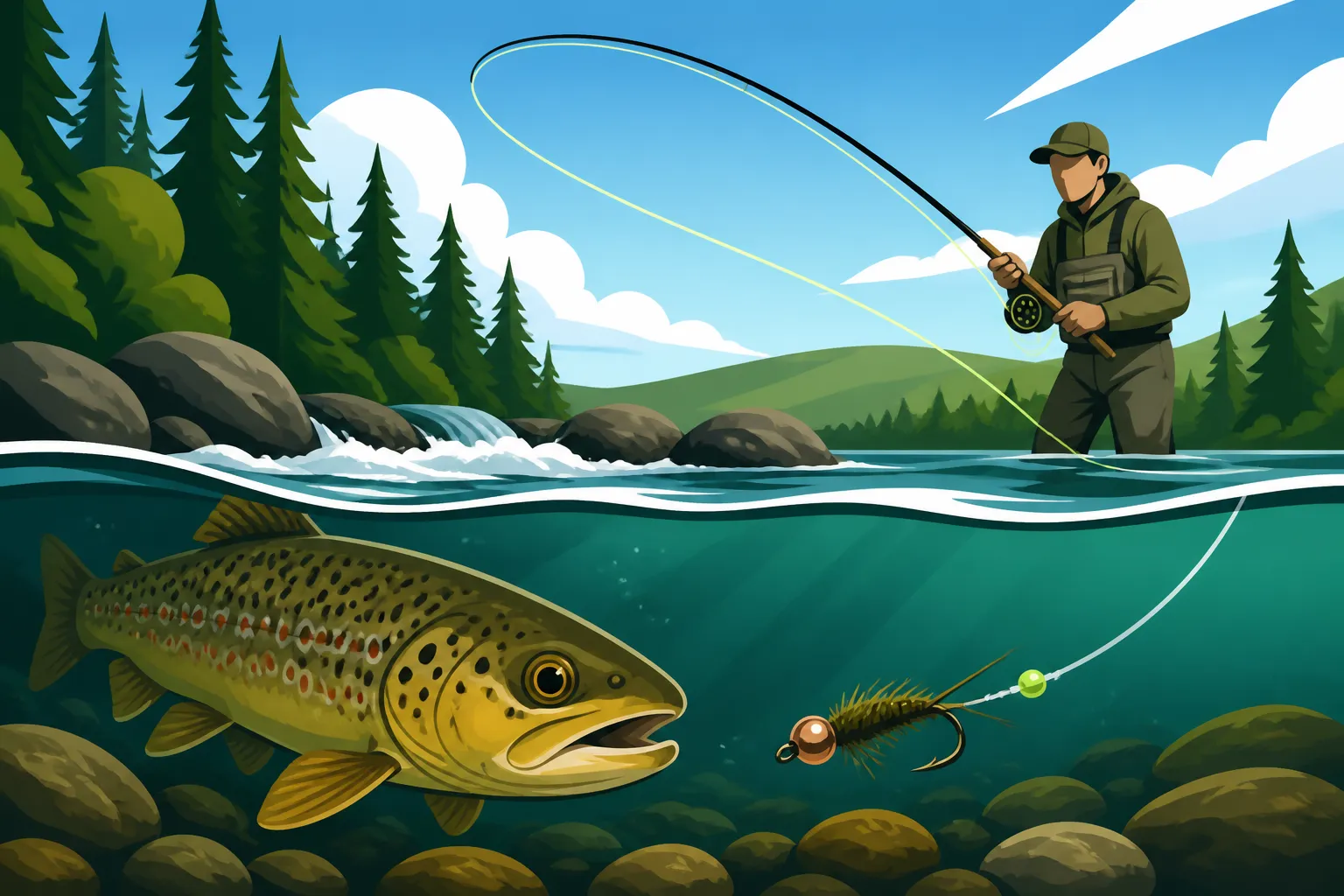
The core principle of Euro Nymphing revolves around maintaining an uninterrupted, direct connection between your rod tip and your flies. Unlike traditional indicator nymphing, where a buoyant bobber-like indicator suspends your flies and signals a bite, Euro Nymphing eliminates the indicator entirely. Instead, a specialized leader system, often with a highly visible "sighter" section, serves as your strike detector. This direct connection means no slack line to mask subtle takes, no drag from a buoyant indicator pulling your flies unnaturally, and an unparalleled ability to "feel" the bottom and detect even the slightest bump.
Imagine trying to feel a feather gently touch your hand through a thick, heavy blanket – that's often what traditional indicator nymphing can feel like in complex currents. Now imagine feeling that same feather directly on your fingertips. That's the difference Euro Nymphing offers. Your flies tumble naturally with the current, unencumbered by a floating indicator, allowing them to penetrate the water column quickly and drift precisely where the trout are feeding. It's a method that emphasizes precision, stealth, and an almost intuitive understanding of how your flies are behaving beneath the surface.
A Brief History and Its Evolution
Euro Nymphing, as we know it today, didn't just appear overnight. Its roots trace back to competitive fly fishing teams in Eastern Europe in the late 20th century, particularly from countries like the Czech Republic, Poland, France, and Spain. Faced with highly pressured fish in challenging river conditions, these anglers developed highly specialized techniques to maximize their catch rates. They experimented with long, light rods, ultra-thin lines, and weighted flies, all designed to achieve perfect drifts and detect the faintest strikes.
What started as "Czech Nymphing," "Polish Nymphing," or "French Nymphing" techniques eventually coalesced under the broader umbrella of "Euro Nymphing" as their effectiveness spread globally. Initially shrouded in a bit of mystery and competitive secrecy, these methods slowly made their way into the mainstream angling world. Recreational anglers quickly realized that what worked for competitive success also worked wonders for simply catching more fish, especially in rivers with varying currents and wary trout. The evolution continues today, with new leader materials, fly patterns, and rod designs constantly emerging, all pushing the boundaries of sensitivity and presentation. It’s a testament to the fact that when you need to be precise and effective, sometimes you have to break away from tradition.
Why Euro Nymphing Excels in Ontario's Trout Waters
Ontario boasts an incredible array of trout streams, from small, intimate creeks on Crown land to larger, more powerful rivers like the Grand and Credit. While each presents its own unique challenges, Euro Nymphing offers distinct advantages that make it an incredibly potent tool for any Ontario angler.
Navigating Diverse Currents and Depths
One of the most common frustrations for anglers in Ontario is dealing with our wildly diverse currents. You can have a fast riffle emptying into a deep, slow pool, or a complex stretch of pocket water with eddy lines and undertows. Traditional nymphing can struggle here, as indicators get dragged, creating unnatural drifts, or simply can't get flies down to the feeding zone quickly enough in deeper, faster water.
Euro Nymphing, however, is built for this kind of complexity. With a direct line connection and strategically weighted flies, you can maintain a drag-free drift through turbulent water, allowing your flies to sink rapidly to the bottom where trout often hold. The long rod helps you mend your line effectively and keep as much line off the water as possible, minimizing surface drag. This makes it exceptionally effective in those choppy sections of the Grand River or the deep, fast runs of the Nottawasaga. You can precisely control the depth and speed of your drift, ensuring your flies are presented naturally in the fish's feeding lane, regardless of the current's whims. If you're looking to consistently fish effectively in various types of flows, mastering "How to fish a run and pool trout stream" with Euro Nymphing is a game-changer.
Adapting to Ontario's Finicky Trout
Let's be honest, trout in many popular Ontario streams see a lot of flies. They're not always easy to fool, especially after they've been pressured by countless anglers. This is where Euro Nymphing's stealth and precision become invaluable. The absence of a large, brightly colored indicator disturbing the surface means a much more subtle presentation. Your flies enter the water with minimal splash, and your leader system is designed to be as inconspicuous as possible.
The ability to control your drift precisely, even in micro-currents, means your flies behave more like natural insects drifting downstream. This natural presentation can often trigger strikes from wary trout that have become accustomed to ignoring less-than-perfect drifts. Whether you're targeting selective rainbow trout in a clear spring creek or trying to entice a spooky brown trout from under a log, Euro Nymphing gives you the edge. When considering "Best flies for brook trout on Crown land lakes", remember that even the perfect fly needs a perfect presentation, and Euro Nymphing delivers that in spades.
Year-Round Effectiveness for Ontario Anglers
While many think of fly fishing as a fair-weather activity, Euro Nymphing proves its worth across all four distinct Ontario seasons.
- Spring: As water temperatures rise and fish become more active, melting snow can lead to higher, murkier flows. Euro Nymphing allows you to get weighted flies down through the turbid water to newly active fish.
- Summer: When streams run lower and clearer, and fish can be more sluggish or concentrated in deeper, cooler pockets, the stealth and depth control of Euro Nymphing are paramount. Even when "When Ontario trout streams get too warm to fish" for traditional methods, you can often find trout hunkered down in deep, oxygenated runs, perfectly accessible to a Euro Nymph rig.
- Fall: During autumn, trout are often feeding aggressively to put on weight for winter, but they can still be selective. Euro Nymphing allows you to target those active fish with precision, especially as insect activity changes.
- Winter: For the dedicated cold-weather angler, Euro Nymphing truly shines. Trout are typically hugging the bottom in slower, deeper water to conserve energy. Getting your flies down to them and maintaining constant contact to detect the ultra-subtle winter takes is exactly what this technique is designed for.
This versatility makes Euro Nymphing a fantastic investment in your angling skills, as it's a technique you can reliably employ almost any time of year when targeting trout in Ontario.
Assembling Your Ontario Euro Nymphing Arsenal
To truly excel at Euro Nymphing, you'll need some specialized gear. While you might be able to get by with a standard fly rod in a pinch, having the right tools makes a world of difference in sensitivity, control, and overall enjoyment.
The Specialized Rod, Reel, and Line Setup
The rod is arguably the most critical component in your Euro Nymphing setup.
- Rod: Forget your typical 9-foot, 5-weight all-arounder. For Euro Nymphing, you're looking for something longer, lighter, and more sensitive. Most Euro Nymphing rods are between 10 to 11 feet long and are typically 2, 3, or 4 weight. The extra length provides several advantages:
- Reach: Allows you to keep more line off the water, minimizing drag and extending your effective drift.
- Leverage: Provides better control over fish, especially in strong currents, with lighter tippets.
- Sensitivity: These rods are designed with extremely sensitive tips (often quite soft) that amplify every subtle bump and take.
You'll find excellent options from brands like Orvis, Redington, Echo, and Moonshine Rod Co. on platforms like Amazon. Look for a rod with a soft tip but a strong backbone. If you're serious about your trout fishing, investing in a dedicated "Best Fly Rods for Ontario Trout Streams" specifically designed for Euro Nymphing will elevate your game significantly.
- Reel: The reel is less critical than the rod for Euro Nymphing, as you're rarely casting long distances or playing fish off the reel in the traditional sense. Its primary function is to balance the long rod and hold your specialized line. Look for a lightweight reel that properly balances your chosen rod. A large arbor reel is a plus for quick line retrieval if a fish makes a strong run.
- Line: This is where it gets really different. Traditional fly line, with its thicker diameter and weight, creates too much drag and sag for effective Euro Nymphing. Instead, Euro Nymphing typically uses level monofilament lines or extremely thin, specialized Euro Nymphing fly lines. These lines are incredibly thin and light, often just thick enough to be legal in competitive scenarios, and they minimize sag between your rod tip and the water. This lack of sag is what gives you that unparalleled direct connection and sensitivity.
Crafting the Perfect Euro Nymphing Leader
The leader system is the heart and soul of your Euro Nymphing rig. It’s what connects you directly to your flies and allows for precise strike detection. A typical Euro Nymphing leader is much longer and more complex than a standard tapered leader.
Let's break down the components:
- Butt Section (Mono/Fluoro): This is the thickest part of your leader, typically 10-20 feet of 8-12 lb monofilament or fluorocarbon. Its purpose is to transition from your thin fly line and provide enough mass for energy transfer during casting, though it's still very thin compared to a traditional leader butt.
- Sighter (or Indicator Tippet): This is the crucial strike detection component. It’s usually 2-4 feet of two-tone (e.g., pink and chartreuse) or bright monofilament or fluorocarbon. The contrasting colors make it highly visible against various backgrounds, allowing you to detect the slightest twitch or pause that signals a bite. This section is often tied with blood knots to create alternating colors.
- Tippet Ring: A tiny, strong metal ring (typically 1.5mm to 2mm) that connects your sighter to your tippet. It allows you to quickly change tippet sizes without cutting back into your sighter and acts as a strong, reliable knot. You can find these small but essential items on Amazon.
- Tippet: This is the final section of line that connects to your flies. You'll typically run a main tippet section (e.g., 3-5 feet of 4X or 5X fluorocarbon) from the tippet ring. From this main tippet, you'll attach your dropper fly (if using two flies) with a short tag of tippet, and then the heaviest or anchor fly at the very end. The length and diameter of your tippet will vary based on water depth, clarity, and the size of your flies. Fluorocarbon is preferred for its invisibility and fast sink rate.
The magic of this leader lies in its sensitivity. Because it's so thin and light, it cuts through the water with minimal resistance, transmitting every subtle interaction directly to your rod tip.
Essential Euro Nymph Patterns for Ontario
Euro Nymphs are characterized by their slim profiles, heavy weighting, and often jig-style hooks. This design allows them to sink quickly, hug the bottom, and avoid snagging as often. While specific patterns can vary, a few staples are incredibly effective for "Native trout species found in Ontario" like brook, brown, and rainbow trout.
Here are some must-have categories and patterns:
- Perdigons: These are perhaps the quintessential Euro Nymph. They feature super-slim, tapered bodies, often coated in UV resin for durability and a fast sink rate. They come in a multitude of colors, with hot spots (bright colored collars) often incorporated near the tungsten bead head. Common colors for Ontario include olive, brown, black, and natural grey.
- Frenchie Nymphs: A variation of the Pheasant Tail Nymph, but often tied with a tungsten bead and a hot spot. They imitate various mayfly nymphs and are extremely versatile.
- Walt's Worms / Squirmy Wormies: Simple, buggy patterns that imitate aquatic worms. They are incredibly effective, especially in dirtier water or after rain. Squirmy Wormies, with their soft, undulating material, create a lot of movement.
- Hare's Ear & Pheasant Tail Nymphs: While traditional, Euro variations often incorporate heavier tungsten beads and sometimes jig hooks to get them down faster and ride hook-point-up, reducing snags.
- Caddis Larva Imitations: Green Caddis, Peeking Caddis. These are crucial, as caddis are prevalent in many Ontario streams.
- Stonefly Nymphs: Larger, heavier stonefly patterns are excellent for deeper, faster water, especially when targeting larger trout.
The key to choosing Euro Nymphs is to have a range of weights, sizes, and colors. Often, you'll fish two nymphs: a heavier "anchor" fly at the bottom and a lighter "dropper" fly attached to a tag off the main tippet above it. This allows you to control the depth of your presentation while offering the fish two distinct options. While it's great to tie your own, many excellent Euro Nymphs are readily available for purchase from specialty fly shops and online retailers. Don't forget that even with these specialized patterns, it's good to know "Best fly patterns for summer trout hatches" for when dry flies or emergers are the ticket.
Mastering Euro Nymphing Techniques on Ontario Waters
Having the right gear is only half the battle; knowing how to use it effectively is where the real magic happens. Euro Nymphing demands a different approach to casting, drift, and strike detection compared to traditional fly fishing.
The Art of the Controlled Drift and Presentation
The goal of Euro Nymphing is to present your flies in a perfectly drag-free drift, mimicking a natural insect tumbling downstream. This requires a specific casting and mending technique.
- The Cast: Forget long, graceful overhead casts. Euro Nymphing casts are typically short, precise, and more like a lob or a roll cast. You want to cast upstream or slightly up-and-across the current, just enough to get your flies into the desired feeding lane. The key is to get your flies into the water with minimal splash and immediately begin controlling your drift.
- Lifting and Leading: As soon as your flies hit the water, immediately raise your rod tip high, keeping as much of your sighter and fly line off the water as possible. This creates a direct connection and minimizes surface drag. You'll then lead your flies downstream with your rod tip, constantly adjusting its position to maintain a straight, tight line to your sighter. Your rod tip should ideally be slightly ahead of your sighter, allowing the flies to lead the drift.
- Matching Current Speed: The most critical aspect is matching the speed of your rod tip and sighter to the speed of the current where your flies are drifting. If your sighter speeds up or slows down unnaturally, it means your flies are dragging. You want your sighter to move at the same pace as a natural object floating in the water column your flies are in. This often means tracking your sighter with your rod tip as it moves through different current speeds.
The goal is to maintain tension and feel what your flies are doing. You should be able to feel the flies ticking the bottom, discerning rocks from weeds, and, most importantly, detecting the subtle resistance of a fish taking your fly.
Decoding the Sighter: Strike Detection and Hook Sets
Your sighter isn't just a piece of colored line; it's your primary visual indicator of a strike. Learning to read its subtle movements is paramount to success. Unlike an indicator that might plunge dramatically, a Euro Nymphing sighter often gives much more nuanced signals.
Look for:
- A Sudden Stop or Hesitation: If your sighter suddenly stops or pauses in a current where it should be moving, that's a fish.
- A Twitch or Jump: A slight twitch, bump, or movement upstream of the sighter is a definite sign.
- A Change in Speed: If the sighter suddenly accelerates or slows down unnaturally.
- Straightening of the Sighter: If your sighter, which might usually have a slight curve due to current, suddenly straightens out, it means something has pulled on the flies.
When you see any of these subtle signs, or even if you think you felt something, set the hook immediately. Don't wait. Because you have such a direct connection, your hook set will be swift and powerful. A quick, upward flick of the wrist is usually all it takes. The beauty of the sensitive rod tip and direct line is that you'll feel more takes than you see, so trust your instincts. The sensitivity of the system means you need to be constantly vigilant and ready to react.
Wading and Positioning for Optimal Coverage
Euro Nymphing is an active, mobile form of fly fishing that often requires strategic wading. You can't just stand in one spot and cast; you need to work the water meticulously. For a thorough guide on safe stream navigation, refer to "How to wade an Ontario trout stream safely".
- Upstream Approach: Generally, you'll want to wade upstream. This allows you to present your flies to undisturbed water, and any dislodged sediment or debris will flow downstream, away from your target area. Approaching from below also means the fish are less likely to see you.
- Short, Accurate Casts: Euro Nymphing is about precision, not distance. Your casts will typically be short, often 10-25 feet. This keeps more line off the water and maximizes your control. You'll work a section of water methodically, making numerous short casts to cover every likely lie.
- Working a Run: Start by fishing the water closest to you, then gradually extend your casts further out. Once you've thoroughly fished a section, take a few steps upstream and repeat the process. This "upstream leapfrog" approach ensures you cover the water effectively.
- Stealth is Key: Because you're often quite close to the fish, stealth is paramount. Move slowly and deliberately, avoid making too much commotion, and be mindful of your shadow. If you're fishing smaller, clear streams, these factors become even more important. Good "Best Waders for Ontario Trout Streams" can make this process more comfortable and efficient.
Strategic Application in Ontario Trout Habitat
Understanding the mechanics of Euro Nymphing is one thing; knowing where and how to apply it effectively in Ontario's varied trout habitats is another. It's about combining your technique with a keen understanding of the water.
Targeting Specific Stream Features
Ontario's trout streams are mosaics of different features, and Euro Nymphing allows you to dissect each one with precision.
- Seams: These are the golden zones where fast water meets slow water. Trout often hold in the slower current, expending minimal energy while waiting for food to be swept past in the faster flow. Euro Nymphing excels at placing flies right on this seam, letting them drift naturally from the fast water into the slower holding zone.
- Pocket Water: Characterized by numerous rocks and boulders that create small, turbulent pockets of water. These pockets are prime holding lies, offering shelter and ambush points. Euro Nymphing's short, accurate casts and quick-sinking flies are ideal for getting into these tight spaces and quickly covering each pocket. You need to be ready for an immediate strike once your flies hit the water in these areas.
- Riffles: Shallower, fast-moving sections of the stream that are often highly oxygenated and rich in insect life. While they might look too turbulent, trout actively feed here. Heavier Euro Nymphs can penetrate the fast water and get down to the bottom, where trout are often picking off dislodged nymphs.
- Deeper Pools and Runs: These are classic trout holding areas, especially in colder water or during hot summer months. Euro Nymphing's ability to get heavy flies down quickly and maintain contact is a huge advantage here. You can systematically work through the deepest parts of the pool, ensuring your flies are presented at the exact depth the fish are feeding. This is particularly effective on the "Best fly fishing rivers in Ontario" which often feature significant depth changes.
By carefully reading the water and adjusting your presentation to each feature, you'll maximize your chances of success.
Understanding Current Dynamics and Trout Behavior
Successful Euro Nymphing is deeply intertwined with understanding how current works and how trout position themselves within it. Trout are efficient predators; they'll typically lie in areas where they can expend minimal energy while having easy access to passing food.
- Feeding Lanes: These are the specific paths within the current where food is most concentrated. Often, these are parallel to seams, behind current breaks (like boulders), or along drop-offs. Your goal with Euro Nymphing is to identify these lanes and place your flies directly into them, ensuring they drift naturally.
- Protection and Ambush Points: Trout seek out cover not only from predators but also from strong currents. This means you'll find them behind rocks, under undercut banks, next to submerged logs, or in the deeper parts of a pool. These are all prime targets for your Euro Nymphs. The precise control offered by the technique allows you to delicately place your flies into these tight ambush points without spooking the fish.
- Current Speed and Depth: As currents change speed or depth, so too will trout location. In fast, shallow water, trout might hug the bottom. In slower, deeper pools, they might suspend higher. Your ability to adjust fly weight and leader length on the fly (pun intended!) is crucial for hitting the right depth in varying conditions.
Constantly observing the water, looking for current breaks, depth changes, and potential holding lies, will sharpen your Euro Nymphing game immensely.
Adapting Fly Selection and Weight for Conditions
One of the beautiful things about Euro Nymphing is how adaptable it is. You don't just pick a fly and stick with it; you actively adjust your fly selection and the weight of your flies based on the conditions you encounter.
- Water Clarity:
- Clear, Low Water: Opt for smaller, more natural-looking patterns. Think subtle Pheasant Tails, tiny Perdigons in natural colors (olive, grey, black), and lighter tippets (6X or even 7X). Stealth is key here.
- Stained, High Water: This is when you can go a bit bolder. Larger, heavier flies with more pronounced hot spots or flash can be very effective. Squirmy Wormies or larger, dark Perdigons can stand out. You might also be able to get away with slightly heavier tippets.
- Depth and Flow:
- Shallow, Slower Water: You'll need less weight. Perhaps a single weighted fly, or two lighter flies. The goal is to get down but not snag constantly.
- Deep, Fast Water: This calls for more aggressive weighting. Often, you'll use a very heavy anchor fly (e.g., a large tungsten Perdigon or a stonefly imitation) at the bottom, followed by a lighter dropper fly above it. The anchor fly pulls the entire rig down quickly, ensuring your dropper is also in the strike zone.
- Insect Activity: While Euro Nymphing isn't about matching specific hatches as much as dry fly fishing is, observing what natural insects are present (turning over rocks, checking stream banks) can inform your fly choices. If you see lots of small caddis larvae, lean towards caddis imitations. If mayflies are abundant, a Frenchie or Pheasant Tail is a good bet. While this technique primarily focuses on subsurface, understanding "Best fly patterns for summer trout hatches" will give you a better overall picture of the insects present.
Remember, the flexibility to quickly swap out flies and adjust your weight is a huge advantage. Carry a well-stocked fly box with a variety of Euro Nymph patterns in different sizes and weights.
Species-Specific Euro Nymphing in Ontario
While Euro Nymphing is effective for all trout species, understanding the nuances of how "Native trout species found in Ontario" like brook trout, and stocked or wild rainbow and brown trout behave can further refine your approach.
Connecting with Wild Brook Trout
Ontario's native brook trout, or "speckles" as many lovingly call them, are a true gem. They are typically found in smaller, colder, pristine streams, often on Crown land or within provincial parks. These fish, while beautiful, can be incredibly spooky and wary.
Euro Nymphing is arguably one of the most effective techniques for these delicate fish because of its stealth and precision.
- Delicate Presentation: Brook trout streams are often characterized by tight quarters, overhanging vegetation, and very clear water. The gentle, accurate casts of Euro Nymphing are perfect for placing flies into tiny pockets and runs without disturbing the fish.
- Smaller Flies, Finer Tippets: Brook trout often key in on smaller insects. Think tiny Perdigons (size 18-20), small Pheasant Tails, or micro-Squirmy Wormies. Using finer tippets (6X or even 7X fluorocarbon) will increase your hook-ups with these discerning fish.
- Targeting Coldwater Lies: Brook trout thrive in cold, oxygenated water. Focus your efforts on spring-fed areas, deep pockets behind structure, and shaded runs. Euro Nymphing allows you to get your small, natural patterns right into these prime lies. If you're exploring for these beautiful fish, understanding "Brook Trout in Ontario's Crown Land Lakes" will be invaluable.
The reward of a brightly coloured wild brook trout on a Euro Nymph rig is truly something special.
Tackling Robust Rainbow and Brown Trout
Rainbow and brown trout, whether wild or stocked, often inhabit larger, more powerful rivers in Ontario, such as the Grand River, the Credit River, or the Saugeen River. These fish can grow considerably larger than brook trout and often have a more diverse diet, but they can also be highly pressured.
Euro Nymphing remains incredibly effective for these species, but with a few adjustments:
- Heavier Flies, Stronger Tippets: Rainbows and browns can be more aggressive, and they often hold in faster, deeper water. Don't be afraid to use heavier, larger Euro Nymphs (size 12-16) and slightly stronger tippets (4X or 5X) to handle their power and get your flies down quickly. Large stonefly imitations, heavily weighted Perdigons, and substantial Frenchies are good choices.
- Fighting Strong Currents: These fish are adept at using current to their advantage. Your long Euro Nymphing rod will give you excellent leverage to control their runs, especially on lighter tippets. Be prepared for powerful head shakes and long runs.
- Diverse Feeding: Rainbows and browns have a broader diet. While nymphs are always a staple, they might also key in on larger patterns imitating sculpins or even smaller baitfish. Have a variety of patterns that mimic common aquatic insects in these larger rivers. Exploring the "Best fly fishing rivers in Ontario" will give you plenty of opportunities to apply these techniques to rainbow and brown trout.
Euro Nymphing provides the precision needed to dissect complex runs and entice strikes from these robust and often challenging trout.
| Euro Nymphing Leader Component | Purpose | Material typically used |
|---|---|---|
| Sighter (Indicator Tippet) | Strike detection (visual) | Bi-color monofilament/fluorocarbon |
| Butt Section | Energy transfer, connection to fly line | Heavy monofilament/fluorocarbon |
| Tippet Ring | Easy tippet changes, strong knot point | Small metal ring (1.5mm-2mm) |
| Tippet | Connects flies to leader, stealth | Fluorocarbon (various X sizes) |
| Flies (Anchor & Dropper) | Imitate insects, provide weight for sink rate | Tungsten bead nymphs |
Disclaimer
The information provided in this guide is for general informational purposes only. Fishing regulations, seasons, and licensing requirements in Ontario are subject to change. Always consult the most current Ontario Fishing Regulations Summary and obtain the necessary licenses, such as the Ontario Fishing License Guide for 2026, before heading out. Adhere to all local, provincial, and federal laws and regulations. Practice safe wading techniques and responsible catch-and-release practices to preserve our precious fisheries.