How to fish right after the walleye opener
You've made it through the excitement and perhaps the chaos of the walleye opener! But if you're like many anglers, you might be scratching your head a week or two later, wondering why those hot spots are now cold and the fish seem to have vanished. The truth is, walleye behavior shifts dramatically right after that initial rush, and what worked on opening day might leave you empty-handed just a few days later. This guide is dedicated to helping you understand these post-opener changes and equipping you with the strategies to keep catching walleye in Ontario throughout the early season.
The Post-Spawn Shift: Why Walleye Change Their Tune
Right after the walleye opener, especially in the weeks following the initial rush, the walleye population typically enters a phase of significant transition. This isn't just about fishing pressure; it's a fundamental biological shift.
First and foremost, the fish have just completed their grueling Walleye Spawning Season in Ontario. This reproductive effort leaves them physically exhausted and, frankly, a bit worn out. Imagine running a marathon; you're not going to be sprinting again immediately after crossing the finish line! Walleye need time to recover, regain energy, and then start feeding aggressively again. During this recovery period, they're often less interested in chasing down fast-moving baits and more inclined to seek out easy meals.
Secondly, the fish are dispersing from their spawning grounds. Those shallow rivers, rocky shoals, and protected bays that were teeming with activity during the spawn and on opening day often empty out. As the water warms, these areas might become less comfortable, or simply less productive for feeding as the primary food sources move. Walleye will begin to move towards their summer feeding patterns and deeper holding areas. This means they are no longer concentrated in predictable spots, making them harder to locate without understanding their new preferred habitats. This dispersal is a major reason why that "guaranteed spot" from opening weekend suddenly goes quiet. They're still there, just not there.
Lastly, the fishing pressure itself plays a huge role. Those first few days of the season see an armada of boats and anglers hitting every known walleye spot. Fish become wary, educated, and spooked. Bright sunny days with heavy boat traffic can push them deeper or into thick cover, making them extremely difficult to entice with aggressive presentations. They're actively avoiding danger, and a loud boat or a poorly presented lure can send them packing. Understanding these factors is crucial for adapting your approach.
Lure and Presentation Adjustments for Picky Eaters
When walleye are in this post-opener, post-spawn recovery mode, their feeding behavior becomes more subtle and selective. You can't just keep chucking the same crankbaits or jigging aggressively in the same spots. It's time to finesse your approach and offer them something they can't resist, often with less effort on their part.
One of the most effective adjustments is to slow down your presentation. Forget fast retrieves or erratic jigging. Think subtle, enticing movements. This is where live bait often shines. A juicy minnow, a squirming leech, or a lively nightcrawler fished under a slip float or on a slow-drifting bottom bouncer can be incredibly effective. The natural scent and subtle movement of live bait often trigger a bite when artificials fail. For those who prefer artificials, try to mimic this natural movement. Small jigs tipped with soft plastics, like a Mister Twister or a simple paddle tail, can be slowly dragged, hopped, or dead-sticked along the bottom. The key is to keep it in the strike zone for as long as possible with minimal perceived effort from the fish. If you're looking for quality soft plastics and jig heads, a quick search on Amazon will show you countless options perfect for this technique.
Another vital tactic is downsizing your baits. While large profile baits can work wonders during the pre-spawn aggression, post-opener walleye often prefer smaller, more manageable meals. This means switching from large crankbaits to smaller, shallower diving models or even a lipless crankbait if fishing over sparse weeds. For jigging, opt for lighter jigs, perhaps 1/8 to 1/4 ounce, especially in shallower water or when drifting slowly. The smaller profile mimics the baitfish they are likely targeting as they recover and don't require as much energy to consume. This subtle change can make a huge difference in converting curious follows into solid strikes. Remember, sometimes less is more when the bite is tough.
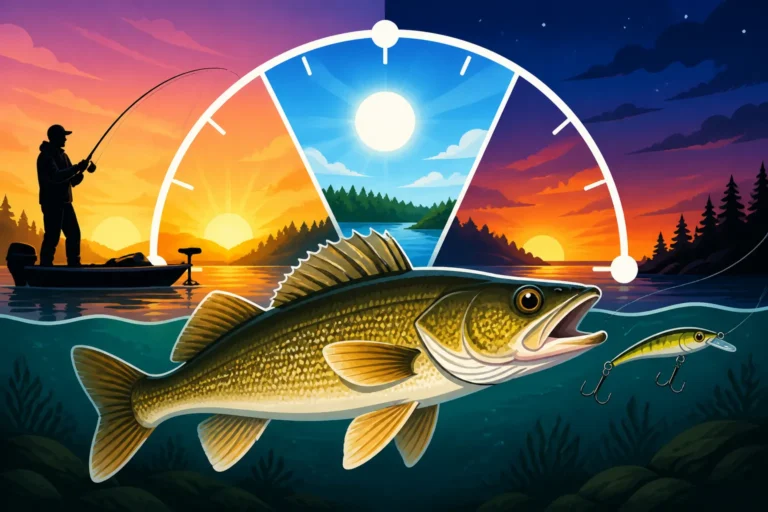
Finally, consider targeting low-light periods. Walleye are notoriously light-sensitive, and after experiencing heavy pressure, they become even more nocturnal or crepuscular (active at dawn and dusk). Early mornings, late evenings, and even night fishing can be incredibly productive. During these times, fish often move shallower to feed aggressively under the cover of darkness or low light, shaking off some of their daytime shyness. This is also when you might have less boat traffic to contend with, allowing the fish to be more at ease. Experiment with suspending jerkbaits or shallow-running crankbaits in these low-light conditions, as their silhouettes are more visible, and they can create just enough disturbance to draw a strike. For more general advice on specific lures, check out our guide on the Best Crankbaits for Ontario Walleye.
Finding the Fish: Key Post-Opener Walleye Locations
Locating walleye after the opener often means abandoning those traditional spawning grounds and focusing on transition zones and deeper structures. These fish are moving, and your success hinges on understanding where they're headed and why.
Transition Zones and Breaklines are goldmines. As walleye leave their spawning areas, they don't just swim aimlessly into the deep. They often stage along the edges where shallow flats drop off into deeper channels, troughs, or basins. These areas, known as breaklines, provide both easy access to shallow feeding areas (especially during low-light conditions) and immediate refuge in deeper, cooler water. Look for specific contour changes on your sonar or mapping unit – a sharp drop-off from 10 feet to 20 feet, a subtle hump rising from a flat, or the edge of an old riverbed. Walleye will often cruise these edges, ambushing unsuspecting baitfish moving between depths. Trolling a bottom bouncer with a crawler harness along these breaklines, or casting jigs up onto the shallower side and working them down the break, can be incredibly effective. You can find excellent pre-tied crawler harnesses on Amazon, saving you rigging time on the water.
Submerged Structure and Cover also become critical holding areas. This includes submerged timber, rock piles, humps, and even areas with dense, green aquatic vegetation. These structures offer walleye protection from predators (like bigger pike or muskellunge), a place to ambush prey, and often, slightly cooler water. Focus on the deep side of these structures or any current seams they create. For example, if there's a submerged rock pile in 25 feet of water, walleye might be right on top of it, or they might be tucked into the current break just behind it. Use your sonar to identify these features and then fish them meticulously with vertical jigging presentations or by slowly dragging a live bait rig over and around them. Our detailed guide on How to Catch Walleye in Ontario covers many of these techniques in depth.
Finally, don't overlook current areas, especially river mouths and narrows. While walleye might be recovering from spawning in rivers, they often linger in the areas where rivers empty into larger lakes. These confluences bring a consistent supply of oxygenated water and baitfish, making them prime feeding grounds. Narrows between islands or sections of a lake also funnel baitfish and create current, concentrating walleye. Again, these spots are often less affected by post-spawn dispersal and offer predictable feeding opportunities. Drift fishing with jigs or a How to Fish a Crawler Harness for Walleye can be very productive in these areas. Always remember to check the specific Ontario Fishing Regulations Explained for any special rules pertaining to river mouths or tributaries in your Ontario Fisheries Management Zones, Explained, as some areas might have delayed openers or specific restrictions.
Smart Gear Choices for Your Post-Opener Arsenal
Having the right gear is always important, but after the walleye opener, when the fish are more finicky and dispersed, it becomes even more critical. Your tackle needs to be versatile and sensitive enough to detect those subtle bites.
First, let's talk about rods and reels. A good medium-light to medium power spinning rod, around 6'6" to 7' in length, with a fast action tip, is ideal. This combination allows for excellent casting accuracy with lighter baits and the sensitivity to feel even the slightest tap. Pair it with a smooth spinning reel in the 2000-3000 size range, spooled with 8-10 lb braided line for maximum sensitivity and casting distance. The no-stretch nature of braid is invaluable for detecting light bites in deeper water. Tie on a 6-8 lb fluorocarbon leader of about 3-6 feet. Fluorocarbon is nearly invisible underwater, which can be a huge advantage for pressured fish, and it offers excellent abrasion resistance against rocks and weeds. If you're looking to upgrade your setup, explore options for Best Fishing Rods for Ontario Lakes.
For lures and baits, diversify your tackle box beyond just your opening day favorites. Jigs remain a cornerstone. Stock up on various sizes (1/8 oz to 3/8 oz) and colours, including classic chartreuse, white, black, and natural baitfish patterns. Pair these with an assortment of soft plastics: paddle tails, grub tails, and simple worm imitations. Having a variety allows you to match the hatch and adjust to water clarity. Crankbaits are still effective, but focus on smaller profile, medium-diving options that mimic perch or shad. Brands like Rapala's Shad Rap or Berkley's Flicker Shad are excellent choices for subtle actions. Don't forget live bait! A good minnow bucket, aerator, and a supply of fathead minnows, leeches, or nightcrawlers can save a slow day. You can easily find these accessories on Amazon.
Lastly, electronics are your best friend during this transition period. A quality fish finder with GPS and mapping capabilities is almost non-negotiable. Use your sonar to meticulously scan those breaklines, humps, and submerged timber. Look for baitfish schools, as walleye are rarely far from their food source. Pay attention to the bottom contour and any hard bottom returns, which often indicate rock or gravel, preferred by walleye. Your GPS allows you to mark waypoints on productive spots, whether it's a single rock, a school of fish, or a productive stretch of breakline, allowing you to return to it precisely. Many modern units also offer side-imaging or down-imaging, which can give you an even clearer picture of the underwater world, helping you identify structure and fish that might be off to the sides of your boat. For more on maximizing your time, consider our advice on the Best Time of Day to Catch Walleye. Always remember to check the Ontario Bag and Possession Limits by Species for any fish you decide to keep.
| Tactic/Lure Type | Post-Opener Condition | Preferred Application | Key Feature |
|---|---|---|---|
| Live Bait (Minnows, Leeches) | Finicky bite, slow retrieve | Slip floats, bottom bouncers, slow drifts | Natural scent & movement, irresistible |
| Jigs & Soft Plastics | Light bite, structured areas | Vertical jigging, slow dragging, hopping along bottom | Subtle action, versatile, match baitfish size |
| Small Crankbaits | Active fish (low light), trolling | Trolling breaklines, casting to shallow points in low light | Medium diving, tight wobble, natural colours |
| Bottom Bouncers | Deep water, drifting, current | Drifting with live bait or crawler harnesses | Presents bait near bottom, avoids snags |
| Finesse Spinners/Inline | Shallow water, weed edges | Casting & slow retrieving near cover | Flash & vibration, smaller profile |
Disclaimer
Please remember that fishing conditions, regulations, and fish behavior can change. Always consult the most current Ontario Fishing Regulations Summary for the specific zone you are fishing in before heading out. Safety first, especially when on the water.