Best water temperature for lake trout fishing
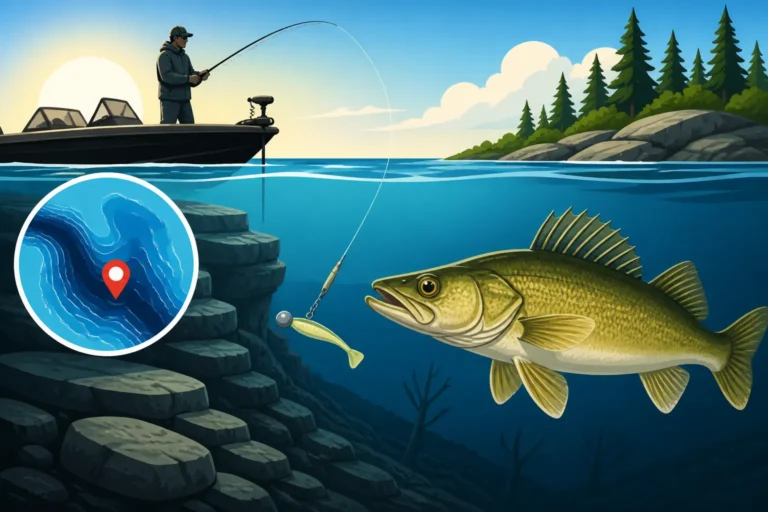
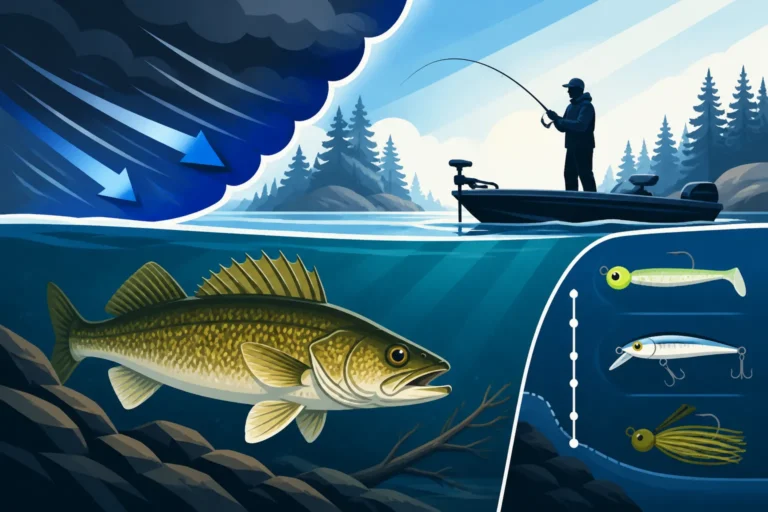
Oh, the elusive lake trout! Anyone who's spent time chasing these incredible fish in Ontario knows the struggle. One minute you're marking fish, the next they've vanished without a trace, leaving you scratching your head and wondering what you're doing wrong. It often comes down to one critical factor: water temperature. Lake trout are incredibly particular about their environment, and understanding their thermal preferences is key to consistent success. This guide will dive deep into how water temperature dictates where these beautiful fish live, how to find them, and the strategies you need to adapt throughout the year.
Understanding Lake Trout Thermal Preferences
Lake trout (Salvelinus namaycush) are true cold-water specialists, remnants of the last ice age, perfectly adapted to the deep, cool, and oxygen-rich waters of Ontario's northern lakes. Unlike their more adaptable cousins, like bass or pike that can handle a broader range of temperatures, lake trout have a very narrow comfort zone. Ignoring this can mean the difference between a triumphant catch and a long, fishless day on the water. It’s not just about comfort; it's about survival. Their physiology is simply not built for warm water.
Ideal Temperature Range for Lake Trout
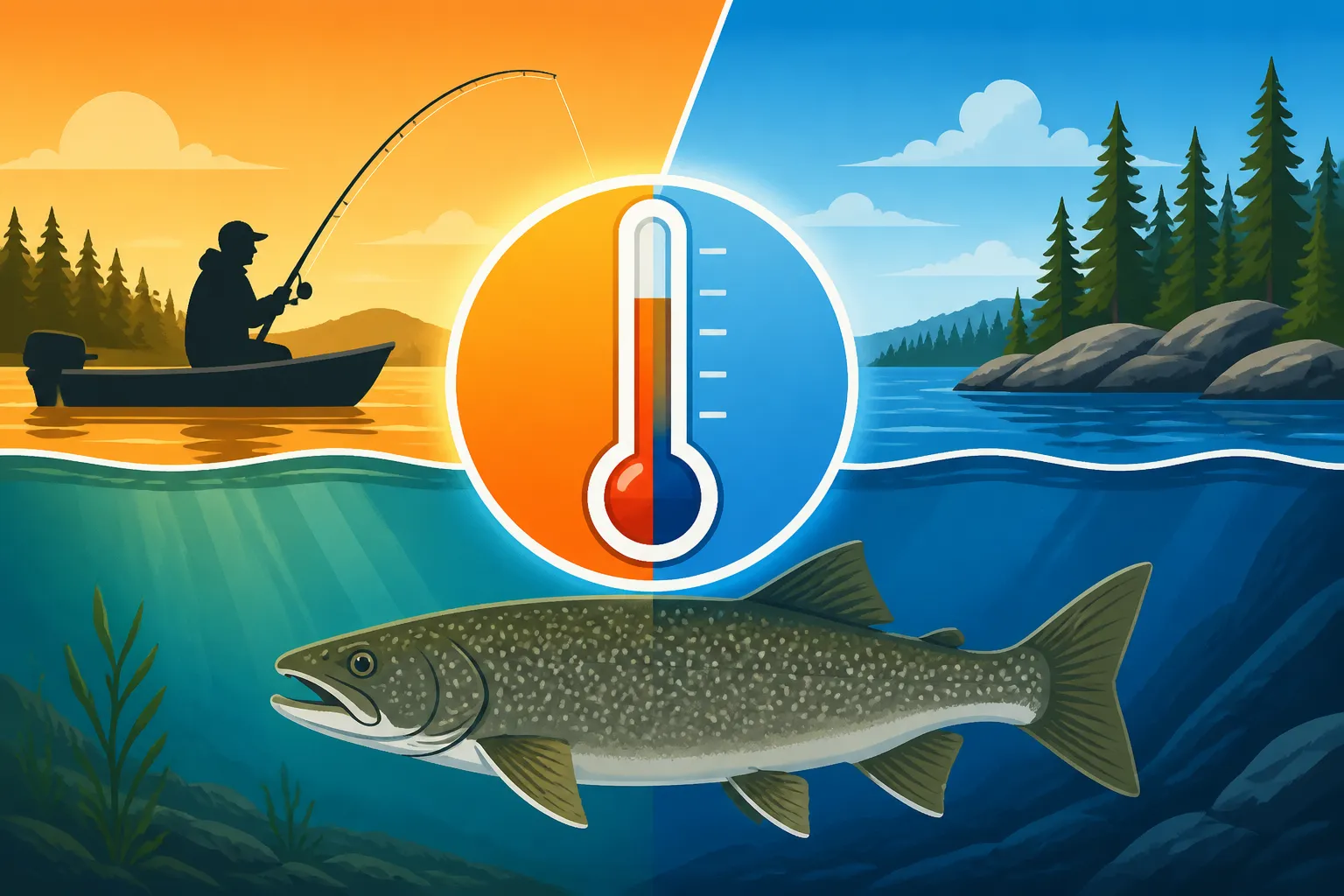
Lake trout thrive in a specific thermal sweet spot, generally preferring water temperatures between 8°C and 15°C (that's about 46°F to 59°F). Within this range, their metabolism functions optimally, allowing them to feed efficiently, grow, and reproduce. Go too far below this, and they become sluggish; go too far above, and they become stressed, seek deeper water, or worse, face physiological distress.
Think of it like this: just as you wouldn't want to spend your day in an oven or a freezer, lake trout have their "just right" conditions. They are constantly searching for this ideal band of water. In spring and fall, this band might be closer to the surface, but come the heat of summer, it plunges deep into the lake, sometimes 50, 80, or even over 100 feet down in larger, deeper lakes. Knowing this range is your first step in understanding their movements. When you're out on a sprawling body of water like Lake Superior or even a smaller deep inland lake, identifying where this temperature zone exists is paramount.
Temperature and Dissolved Oxygen Levels
It's not just the temperature itself that's important; it's also what temperature indicates about dissolved oxygen. Cold water holds more dissolved oxygen than warm water. Lake trout, being highly active predators, require a good supply of oxygen to sustain their energy levels. As the surface waters warm up in late spring and summer, they become less oxygenated. This forces lake trout into the colder, deeper layers where oxygen levels remain higher.
This is a critical, often overlooked, aspect. Even if a certain depth has an ideal temperature, if the oxygen levels are too low, the fish won't be there. This usually isn't an issue in the ideal temperature band of stratified lakes, but it's important to remember that warmer water is intrinsically linked to lower oxygen. When you're looking for Where to Find Walleye in Ontario or even smallmouth, they have different oxygen tolerances, making lake trout unique in their demands. This is why targeting the thermocline (which we'll get to next) is so effective; it’s a zone that usually provides both optimal temperature and sufficient oxygen.
Stratification Explained and Thermocline Tactics
Most deep lakes in Ontario experience a phenomenon called thermal stratification, especially during the summer months. This means the lake layers itself into distinct temperature zones. You have:
- Epilimnion: The warm, upper layer that's exposed to sunlight and wind, often too warm for lake trout in summer.
- Metalimnion (Thermocline): A transitional middle layer where the temperature changes rapidly with depth. This is the magic zone for lake trout! They will often be found right in or just below the thermocline, seeking that perfect cool, oxygenated water.
- Hypolimnion: The cold, deep bottom layer. While cold, this layer can sometimes become deoxygenated in very deep, unproductive lakes or have less active baitfish, so trout don't always hang out right on the bottom.
Understanding the thermocline is your golden ticket for How to Catch Lake Trout in Ontario during the warmer months. Your goal is to find this layer and then fish effectively within or just below it. It's often where the baitfish, like ciscoes (lake herring) or smelt, also congregate because they, too, are seeking comfortable temperatures and food sources found in this rich boundary. You’ll often see this distinct layer on your fish finder, showing as a thick, sometimes blurry line. Fishing above it means you're too warm; fishing below it might be too cold or lack bait.
Seasonal Strategies for Temperature Tracking
The best water temperature for lake trout doesn't actually change, but where that temperature exists in the water column certainly does, depending on the season. This means your fishing strategies need to evolve dramatically from ice-out to ice-on. Many anglers find themselves frustrated because they apply a summer technique in spring or vice-versa, not realizing the fish have moved due to temperature shifts. It's all about adapting to nature's calendar.
Spring Ice-Out Tactics
When the ice finally recedes from Ontario's lakes, usually in late April or early May (check Ontario Fishing Season Dates by Zone for specific zones), the entire water column is still relatively cold and uniform in temperature. This is a fantastic time for lake trout fishing because they are often found cruising the shallower areas of the lake, sometimes within 10-30 feet of the surface. Without a defined thermocline, they can roam freely, pursuing baitfish that are also moving into warmer, shallower bays.
During this period, look for classic lake trout structure like rocky points, shoals, and islands where they might ambush prey. Trolling spoons like a Williams Wabler or a Little Cleo, or casting heavy jigs tipped with minnows, can be incredibly effective. The key is that you don't need specialized deep-water gear yet. They're accessible! This is often considered one of the most exciting times to target these fish, especially if you're not equipped for deep-water summer techniques. Just be mindful of their Lake Trout Spawning Season in Ontario if you happen to be fishing near any traditional spawning grounds from the previous fall, though most spring fishing occurs well after spawning activity has concluded.
Summer Deep Water Techniques
Once summer truly sets in, typically from late June through August, the sun's relentless heat begins to warm the surface waters significantly. This is when the lake stratifies, and the lake trout retreat to the cool, oxygen-rich refuge of the thermocline and hypolimnion. This often means they’re holding anywhere from 40 to over 100 feet deep, depending on the lake's depth and clarity. This is where many anglers get stumped.
To effectively target them during summer, you absolutely need to get your baits down to the fish. This calls for specific deep-water Trolling Techniques for Ontario Lake Trout like using downriggers, dipsey divers, heavy lead core line, or even simple three-way rigs with heavy weights. Your fish finder becomes your best friend, not just for marking fish but for identifying that crucial thermocline layer. The fish aren't gone; they've just gone deep. Understanding this shift is vital for success, as trying to catch them with shallow-running crankbaits will be futile. For those looking for Best Techniques for Deep Water Summer Lake Trout, this is where your strategy truly differentiates from other species.
Fall Turnover Opportunities
As the crisp air of fall arrives, usually in September or early October, the surface waters begin to cool. Eventually, the temperature of the epilimnion (upper layer) drops to match that of the hypolimnion (bottom layer). When this happens, the lake "turns over," and the stratified layers mix, leading to a more uniform temperature throughout the water column once again.
This period, known as "fall turnover," can be tricky. While the uniform temperature means lake trout can theoretically be found at any depth, the mixing can sometimes disorient fish and spread them out. However, once the turnover is complete and the lake stabilizes with uniformly cool water, lake trout often become more active and start moving shallower again, much like in the spring. They are aggressively feeding, bulking up for the winter and their upcoming spawn. This makes it another prime time for anglers who might not have deep-water gear, as the trout can again be targeted with casting and shallower trolling methods over structure. This often leads to some of the biggest and most aggressive fish of the year, especially on Best Fishing Lakes in Ontario that are known for their laker populations.
Gear and Tactics for Temperature Success
Successfully finding and catching lake trout hinges on your ability to locate that ideal temperature zone and then present your bait effectively within it. This requires a combination of modern technology and refined angling skills. Don't worry, you don't need a super-fancy boat to do this, but certain tools certainly make it a whole lot easier.
Tools for Measuring Water Temperature
If you're serious about lake trout, a good water temperature gauge is indispensable. Here’s what can help:
- Fish Finders with Temperature Sensors: Most modern fish finders, especially those from brands like Humminbird, Lowrance, or Garmin, come equipped with a transducer that reads surface water temperature. Many advanced units can even give you a temperature graph of the entire water column, clearly showing the thermocline. This is incredibly helpful for quickly identifying the depth where temperatures change drastically. You can find a good range of these on Amazon.
- Handheld or Probe Thermometers: For those without high-end electronics, a simple handheld thermometer or a probe thermometer on a weighted line can give you accurate temperature readings at various depths. You just drop it down, let it sit for a few minutes, reel it up, and read. It's old school, but effective. Again, Amazon is a great place to check for various options.
- Online Resources and Charts: Believe it or not, some larger lakes have online resources or local fishing reports that might indicate thermocline depths or general temperature trends. While not as precise as your own gear, they can offer a starting point.
Remember, surface temperature alone isn't enough in summer. You need to know what's happening deeper down to truly dial in the lake trout. Investing in a quality Best Fish Finders for Ontario Lakes can truly elevate your game.
Interpreting Sonar for Thermocline and Fish
Your fish finder is more than just a tool to show you fish arches. It’s a window into the underwater world. Learning to interpret its readings is crucial for targeting lake trout:
- Identifying the Thermocline: On many colour displays, the thermocline will appear as a distinct, often hazy or denser band across the screen. This is due to the rapid change in water density and temperature disrupting the sonar signal. Once you locate this band, you know where to start focusing your efforts. It might show up as a darker red or yellow line on some units.
- Locating Baitfish: Lake trout are predators, and they'll be where their food is. Your sonar will often show schools of baitfish (like ciscoes or smelt) congregating near or just above the thermocline. If you see bait, you know the trout won't be far behind. Large clouds of baitfish are often a clearer indicator than individual fish arches sometimes.
- Finding Lake Trout Arches: Once you've identified the thermocline and bait, look for those tell-tale fish arches. Lake trout often appear as strong, elongated arches, sometimes suspended just below the bait schools. Pay attention to how deep these arches are in relation to the thermocline you've identified. This is where you want your lures to be.
Modern fish finders offer incredible detail, allowing you to fine-tune your search. Spend some time learning your specific unit's capabilities; it will pay dividends.
Adjusting Lure Depth and Presentation
Once you know the ideal temperature and have a general idea of the depth, the next step is getting your lure down there effectively and presenting it enticingly. This is where the battle is truly won or lost.
- Downriggers: These are perhaps the most precise tools for deep-water trolling. They use a heavy cannonball weight to carry your lure down to a specific depth, which you can monitor with a counter. When a fish strikes, the line releases from a clip, allowing you to fight the fish directly without the weight. This is paramount for Best Gear for Ontario Trout Fishing when they are deep.
- Lead Core Line: This specialized line changes colour every 10 yards, with each colour section designed to sink your lure a specific amount at a given trolling speed. It’s a less expensive alternative to downriggers but requires more skill to manage and understand depths.
- Dipsey Divers/Planer Boards: These devices use water resistance to dive your lure down or pull it out to the side of the boat, helping you cover more water and achieve specific depths.
- Weighted Jigs and Spoons: For those targeting specific areas or jigging, heavy jigs (e.g., 1-2 oz) or spoons (e.g., a good 1 oz Jigging Rap from Rapala, available on Amazon) can be dropped directly to the desired depth. Vertical jigging requires a good understanding of the bottom contours and where fish are suspended.
- Trolling Speed: Don't forget that trolling speed greatly impacts the depth and action of many lures. Experiment with speeds to find what works best, often correlating to the activity level of the lake trout at that specific temperature. For example, colder water might mean slower presentations.
Matching your presentation to the thermal zone is not just about getting the lure to the right depth, but also making sure it acts naturally in that environment. For deeper drops, consider using a good quality fluorocarbon leader, as it's nearly invisible in water and can withstand the sharp teeth of a lake trout.
Ontario-Specific Considerations for Lake Trout
Fishing for lake trout in Ontario means navigating a vast and diverse landscape, from the colossal Great Lakes to countless inland gems. While the principles of temperature remain universal, certain regional and regulatory factors come into play. Always consult the official regulations! Knowing Ontario Fishing Regulations Explained is just as important as knowing your ideal water temperature.
Fisheries Management Zones and Regulations
Ontario is divided into 20 different Fisheries Management Zones (FMZs), each with its own specific regulations regarding season dates, catch limits, and size restrictions for various species, including lake trout. For instance, the season for lake trout might open earlier in a northern zone like FMZ 2 than in a southern zone like FMZ 20.
It's absolutely crucial to check the current Ontario Fishing Regulations Summary for the specific zone you plan to fish. You don't want to finally locate that perfect thermal sweet spot, catch a magnificent lake trout, only to find out the season is closed or you're over the limit. These regulations are designed to protect fish populations and ensure sustainable angling for future generations. Respecting these rules is paramount, especially for a prized species like the lake trout. Also, be aware of Ontario Lake Trout Limit and Possession Rules which can change year to year.
Top Ontario Lake Trout Lakes
Ontario boasts an incredible array of lakes that hold healthy populations of lake trout. While the specific temperature strategies apply across the board, knowing some of the prime locations can give you a head start:
- Lake Superior & Lake Huron: These massive Great Lakes are legendary for their trophy lake trout. Their sheer size means vast expanses of deep, cold water, making them ideal habitats. Fishing here often requires larger boats and specialized gear to cover water effectively and handle the big waves. Think Lake Huron Fishing Spots for more specific details.
- Lake Nipigon: Located north of Thunder Bay, this immense lake is renowned for its giant lake trout, some pushing truly massive sizes. Its deep, clear waters are perfect for them, and it's a bucket-list destination for many anglers. See the Lake Nipigon Fishing Guide for more on this unique fishery.
- Lake Simcoe: While closer to population centres, Lake Simcoe is famous for its productive ice fishing for lake trout. Even in summer, its deep basins hold good numbers. Learning Lake Simcoe Ice Fishing techniques is a must for winter laker enthusiasts.
- Numerous Northern Inland Lakes: Beyond the giants, countless smaller, deep inland lakes throughout Northern Ontario (e.g., in the Algoma or Temagami regions) offer fantastic lake trout opportunities. Many of these are wilderness lakes, offering a truly remote angling experience. Many of these lakes are featured in lists like Best Fishing Lakes in Ontario.
Each of these lakes will present unique challenges and opportunities based on its specific depth, structure, and temperature profiles. Always research your chosen destination thoroughly.
Conservation and Sustainable Practices
Lake trout are slow-growing and long-lived, making them particularly vulnerable to overfishing. Their deep-water habits also pose a unique challenge for catch and release, especially during warmer months. When you reel a fish up from significant depths, the rapid change in pressure can cause barotrauma, where their swim bladder expands.
To ensure the health of these magnificent fish:
- Handle with Care: Minimize handling time out of the water. Use a large, soft-mesh landing net.
- Consider Venting: If you plan to release a deep-caught fish and it shows signs of barotrauma (e.g., bulging eyes, stomach protruding from mouth), consider carefully venting its swim bladder with a specialized tool. However, this is a technique that requires practice and should only be done if you are confident and skilled.
- Reduce Stress: Keep the fish in the water as much as possible, especially if you're taking photos.
- Know Your Limits: Adhere strictly to Ontario Lake Trout Limit and Possession Rules and consider practicing voluntary catch and release, especially for larger, older fish that are vital for breeding.
Practicing responsible angling helps ensure that future generations can also experience the thrill of catching these iconic Ontario fish. After all, protecting these fish is what allows us to keep enjoying the amazing fishing Ontario offers.
Lake Trout Temperature and Depth Reference
To help you visualize the general relationship between season, water temperature, and typical lake trout depth, here's a handy reference table. Remember, these are general guidelines, and actual conditions will vary based on the specific lake, weather patterns, and even time of day. Always use your on-the-water observations and equipment for precise targeting.
| Season | Surface Water Temp Range (°C) | Optimal Lake Trout Depth Range (feet) | Key Strategy |
|---|---|---|---|
| Early Spring (Ice-Out) | 4-10°C (39-50°F) | 10-40 feet | Trolling/casting shallower structures |
| Late Spring | 10-15°C (50-59°F) | 20-60 feet | Deeper trolling, approaching thermocline formation |
| Summer (Peak Heat) | 18-25°C+ (64-77°F+) | 40-120+ feet (within thermocline) | Downriggers, lead core, deep vertical jigging |
| Early Fall (Turnover) | 15-10°C (59-50°F) | Variable (mixing), then 30-70 feet | Post-turnover, they may spread, then go shallower |
| Late Fall | 10-4°C (50-39°F) | 10-50 feet | Trolling/casting shallower, pre-spawn feeding |
| Winter (Ice Fishing) | 0-4°C (32-39°F) | 20-80+ feet (depending on lake depth) | Jigging through the ice over deep basins |
Disclaimer
Fishing conditions and regulations in Ontario are subject to change. Always consult the most current Ontario Fishing Regulations Summary for the specific Fisheries Management Zone you plan to fish before heading out. This guide is for informational purposes only and should not replace official government resources.