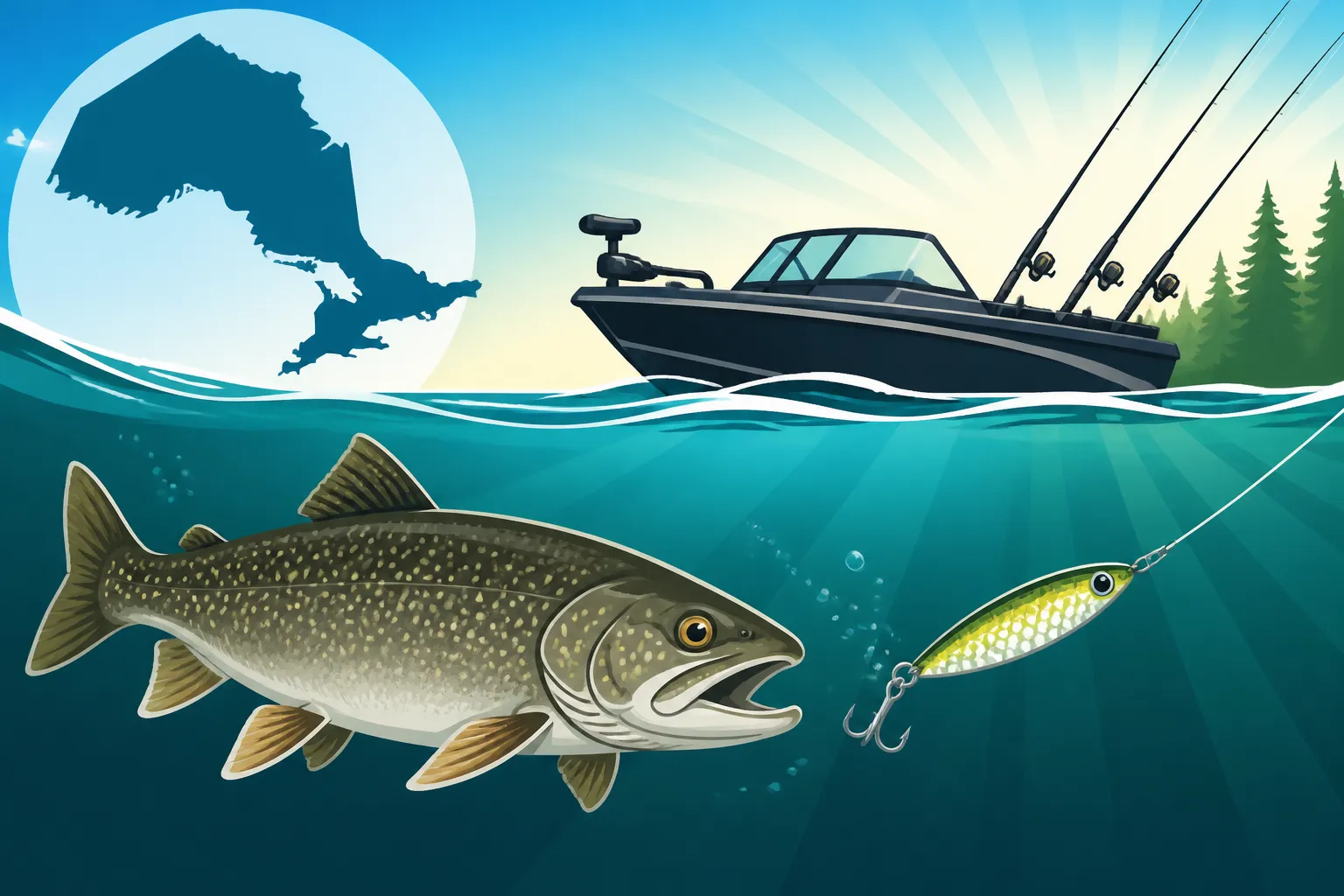
Trolling Techniques for Ontario Lake Trout
If you've spent any time chasing those magnificent lake trout in Ontario, you know they can be incredibly challenging to pin down. These deep-water predators often feel like ghosts on the sonar, and getting your presentation just right at the right depth can be a real head-scratcher. This guide is all about demystifying the art of trolling for lake trout in our vast, beautiful waters, giving you the practical know-how to consistently put more lakers in the boat.
Understanding Ontario Lake Trout Behavior for Trolling Success
To consistently catch lake trout, you first need to understand them. These aren't your typical shallow-water bass; they are cold-water specialists, always seeking out specific thermal refuges and food sources. Trolling effectively means thinking like a laker.
Habitat and Preferred Structures
Lake trout absolutely thrive in cold, oxygen-rich waters, typically found in deeper lakes. In Ontario, this means they often relate to significant underwater structure, especially during certain times of the year. Think about those deep, clear lakes like Lake Superior, Lake Huron, or even larger inland bodies such as Lake Nipigon Fishing Guide. They'll patrol steep drop-offs, underwater points, humps, and even vast open basins where baitfish school.
During the colder months and early spring, they might venture into shallower bays or near rocky shorelines, but as water temperatures rise, they'll retreat to the sanctuary of the deeper, cooler water. Mapping out these features with a good contour map and your fish finder is absolutely essential. Don't just motor around aimlessly; target areas where baitfish are likely to hide or ambush points for predators. These fish are masters of their environment, using structure to their advantage when hunting or resting.
Seasonal Movements and Feeding Patterns
Lake trout movements and feeding patterns are heavily dictated by water temperature and the presence of their preferred forage. In early spring, just after ice-out, lake trout can often be found relatively shallow, sometimes in as little as 10-20 feet of water, feeding aggressively on baitfish that are also moving up. As summer progresses, the thermocline forms, and they'll usually hold just above, within, or just below this transition zone, where the water is coldest and oxygen levels are optimal. This is often where you'll find schools of ciscoes, smelt, or other forage.
During late fall, leading up to their Lake Trout Spawning Season in Ontario, they might move shallower again, especially near rocky shoals or reefs where they prefer to lay their eggs. Understanding these seasonal shifts is crucial for knowing where to start your trolling pass. For a broader overview, check out our guide on the Best Time of Year to Fish in Ontario. They're opportunistic feeders, but their primary diet consists of smaller fish, which influences the size and action of the lures we choose.
Reading Your Electronics for Laker Sign
Modern electronics are an absolute game-changer for lake trout trolling. Your fish finder isn't just for showing you the bottom; it's a window into the underwater world. When looking for lake trout, you're not always going to see huge arches right on the bottom. Often, they'll appear as distinct, strong arches suspended in the water column, especially if they are actively feeding or cruising.
Pay close attention to baitfish schools. If you mark large schools of bait, especially near structure or the thermocline, you can bet that lake trout are not far away. A good fish finder, like those offered by brands such as Humminbird or Garmin, will also show you the thermocline as a distinct layer on your screen, which is invaluable for targeting the right depth. Our article on the Best Fish Finders for Ontario Lakes offers a more detailed breakdown. Learning to interpret these signals – not just the fish themselves, but the bait and the underwater topography – will significantly improve your success rate.
Essential Gear for Effective Lake Trout Trolling in Ontario
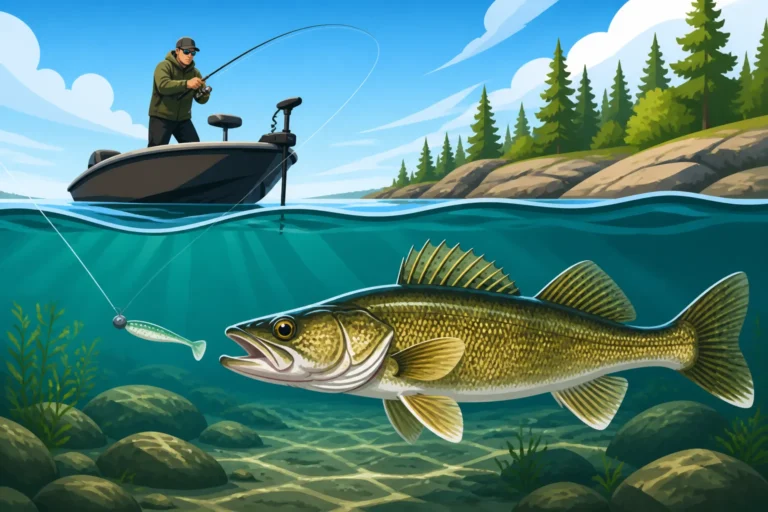
Trolling for lake trout requires a specific setup that can handle deep-water presentations and the powerful fight of a laker. Trying to do it with your regular bass gear will likely lead to frustration and lost fish.
Rods, Reels, and Line Choices
For lake trout trolling, you'll want a rod with a moderate action and a good backbone to handle the weight of your depth control devices and the fish. Rods in the 7 to 9-foot range are ideal, offering enough length to spread lines and absorb the shock of a strike. Ugly Stik rods are a popular, durable choice among many anglers, available readily on Amazon. Pair these with robust baitcasting reels, often line counter models, that can hold a significant amount of line, especially if you're using lead core or copper. A good quality reel like a Shimano Tekota or Daiwa Accudepth is a worthwhile investment.
When it comes to line, braided mainline (30-50 lb test) is an excellent choice for its no-stretch properties, which transmit strikes clearly and allow for better hooksets at depth. However, you'll need a fluorocarbon leader (15-25 lb test, 6-10 feet long) for invisibility in the clear waters lake trout inhabit. If you're using specialized depth control systems like lead core, the line itself is integral to the system. For more on selecting the right gear, consult our guide to the Best Gear for Ontario Trout Fishing.
Downriggers, Dipsy Divers, and Lead Core Systems
These are your primary tools for getting your lures down to where the lake trout live. Each has its strengths:
- Downriggers: These are the most precise depth control method. They use a heavy cannonball weight to carry your fishing line down to a specific depth, where your line is released when a fish strikes. This allows your lure to run freely, unaffected by the weight of the downrigger ball. They are fantastic for targeting suspended fish or staying precisely above structure. Brands like Scotty and Cannon are industry leaders in downriggers.
- Dipsy Divers (or Planer Divers): These diving devices attach directly to your mainline and use water resistance to dive, pulling your lure down to depth. They also help spread your lines out from the boat, covering a wider swath. Different sizes and settings allow for varied depths and angles. They provide a more dynamic, less direct presentation than downriggers.
- Lead Core and Copper Line: These specialized lines are designed to sink on their own, allowing you to achieve specific depths based on how many "colours" of lead core (each colour is 10 yards and sinks a certain amount) you let out, or how many feet of copper. Lead core typically sinks about 5 feet per colour at trolling speeds, while copper sinks much faster. These systems offer a stealthier presentation but require very long rods and significant line capacity on your reels.
The choice often depends on the depth you're targeting, the number of lines you're running, and the precision required. Many experienced anglers use a combination of these methods to cover different depths and presentations simultaneously.
Lure Selection for Ontario Lake Trout
Lake trout are suckers for certain presentations. When trolling, you want lures that have an enticing action at various speeds and mimic their natural forage.
- Spoons: Classic trolling spoons like Williams Wabler, Little Cleo, and Michigan Stinger are absolute staples. Their erratic flutter and flash imitate injured baitfish. Silver, gold, copper, and brightly coloured patterns (like orange or chartreuse) are often productive. Experiment with sizes based on the local baitfish.
- Plugs and Stickbaits: Deeper diving crankbaits and stickbaits, such as Rapala Deep Tail Dancers, Storm ThunderSticks, or Bomber Long A models, can be very effective, especially in spring and fall when fish might be slightly shallower or more aggressive. Their wobbling action is irresistible to hungry lakers.
- Flasher/Dodger Combos: Often paired with a small spoon, fly, or squirt, these attractors create flash and vibration that draw fish in. The flasher/dodger doesn't have a hook; its purpose is purely to attract, while the trailing lure seals the deal. Brands like Pro-Troll and Luhr Jensen make excellent options for these.
When choosing lures, consider the water clarity and the dominant baitfish in the lake you're fishing. Brighter colours often work better in stained water, while more natural patterns excel in clear conditions. You can find a vast array of these lures on Amazon, making it easy to stock up for your next trip.
Mastering Trolling Depths and Presentations
Getting your lure to the right depth and presenting it in a way that triggers a strike is the core of successful lake trout trolling. It’s not just about getting it deep; it’s about getting it to the right deep.
Targeting the Thermocline
In summer, the thermocline is your best friend. This is the thermal barrier in the water column where the temperature rapidly changes from warm to cold. Lake trout, being cold-water fish, will often orient themselves around this zone, as it offers comfortable temperatures and often concentrates baitfish. Use your fish finder to identify the thermocline – it will usually appear as a distinct, often fuzzy, horizontal line on your screen where the density changes.
Once located, you want to present your lures either just above, right in, or just below this layer. Sometimes, fish will be suspended slightly above it, looking up for food. Other times, they'll be tucked into the colder water below, rising to strike. The exact depth of the thermocline varies by lake and time of year, but it's a critical depth range to explore. Remember our discussion on How deep to troll for lake trout in summer for specific depth ranges.
Speed and Direction Variations
Trolling speed is not a one-size-fits-all parameter. It directly affects the action of your lure and how deep it dives. Most lake trout lures are designed to perform best between 1.5 and 3.5 miles per hour (MPH), but the optimal speed can change daily. Start within this range and observe your rod tips; you want to see a consistent, rhythmic wobble from your lures.
Experiment by making subtle S-turns with your boat. As your boat turns, the lures on the inside of the turn will slow down and drop slightly, while the lures on the outside will speed up and rise. This change in speed and depth can often trigger strikes from following fish. A common strategy is to troll straight for a period, then make a wide, sweeping turn, observing which side of the boat gets hit. Varying your speed slightly, even by a fraction of an MPH, can make a huge difference, especially if the fish are finicky.
Lure Action and Attractors
Beyond depth and speed, the action of your lure is paramount. Lake trout are visual predators, and a wounded baitfish imitation or a flashy attractor can be irresistible. Ensure your spoons have a good wobble, your plugs are diving true, and any flashers or dodgers are spinning correctly. Sometimes, adding a small piece of bait, like a minnow or a worm, to a bare hook behind a flasher can provide extra scent and appeal.
Attractors, like flashers and dodgers, are designed to grab attention. They create a large profile and lots of flash, drawing lake trout from a distance. The key is to match the action of the attractor to the action of your trailing lure. Dodgers have a wide, side-to-side roll, imparting a slower, sweeping motion to a trailing fly or spoon. Flashers have a faster, more erratic rotation, giving the trailing lure a rapid, darting action. Choose based on what the fish seem to prefer on a given day. Sometimes a subtle presentation is best, other times, a full-on light show.
Advanced Trolling Strategies for Challenging Conditions
Not every day on the water is perfect. Sometimes the fish are spread out, sometimes they're lethargic, and sometimes they're just plain picky. That's when you need to pull out some advanced tactics.
Contour Trolling and Structure Mapping
When lake trout are relating to structure, like deep points, humps, or underwater islands, contour trolling is incredibly effective. This involves meticulously following a specific depth contour line using your GPS and fish finder. Instead of running straight lines, you're tracing the underwater topography, keeping your lures in the strike zone for longer periods.
Imagine a large underwater hump that rises from 100 feet to 60 feet. You might decide to troll around that hump, always keeping your boat in 70 feet of water, presenting your lures right at the edges where fish might be ambushing bait. Many modern fish finders and chartplotters, including popular models from Lowrance or Raymarine, allow you to create custom contour maps or use highly detailed pre-loaded charts, making this strategy much easier to execute. This precise boat control ensures your baits are always in the highest probability areas.
Open Water Tactics for Suspended Fish
Sometimes, especially in large, deep lakes, lake trout aren't relating to any specific structure. They might be suspended out in the middle of nowhere, following schools of pelagic baitfish like ciscoes or smelt. This is where covering water and paying close attention to your electronics becomes crucial.
In these situations, long trolling passes across vast areas are often necessary. Spread your lines wide using planer boards (if permitted and practical for your boat size) and deploy lures at multiple depths using downriggers and lead core to find the depth where fish are holding. Often, these suspended fish are actively feeding, so faster trolling speeds and flashy lures can be effective. Watch for isolated arches on your sonar in the open water; these are often individual lake trout cruising for a meal. Once you find them, you can focus your passes on that specific depth and area.
Dealing with Finicky Biters
We've all been there: you're marking fish, your lures are in the right zone, but they just won't commit. This is when you need to get creative.
- Change Lure Colour/Size: Sometimes a subtle change in colour from a bright pattern to a more natural one, or a slight reduction in lure size, can make all the difference. Keep a variety of options on hand.
- Vary Speed and Action: As mentioned earlier, those S-turns and speed variations are key. Don't be afraid to try a very slow troll (1.0-1.5 MPH) or a slightly faster one (3.0-4.0 MPH) to see what sparks their interest. A slight "stall" from a quick deceleration can often provoke a hesitant strike.
- Add Scent: Applying scent to your lures, like Pro-Cure or Mike's Liquid Bait Scent, can provide an extra trigger, especially for finicky fish. Even a small piece of dead bait on a treble hook can add that natural scent. You can often find a wide variety of these products on Amazon to try out different options.
- Leader Length: In extremely clear water or for very wary fish, extending your fluorocarbon leader from your main line or downrigger release can make your lure appear more natural and less connected to your boat.
The key to dealing with finicky biters is patience and willingness to experiment. Don't get stuck doing the same thing if it's not working.
Seasonal Considerations for Trolling Lake Trout
Ontario's seasons dramatically influence where and how you should troll for lake trout. Adapting your approach ensures you're always fishing effectively. For specific regulations regarding limits and seasons, refer to the Ontario Lake Trout Limit and Possession Rules and the comprehensive Ontario Fishing Regulations Explained.
Spring Shallow Water Trolling
After the ice melts and the water is still cold, lake trout often move into shallower areas, sometimes as little as 10-30 feet deep, to feed on baitfish that are also staging in these warmer zones. This is a fantastic time for aggressive trolling with slightly larger spoons and crankbaits. Because the fish are shallower, you might not need downriggers as much. Dipsy divers or even simply long-lining your lures with heavier line can be sufficient to get your baits into the strike zone.
Target areas like rocky points, shallow humps adjacent to deep water, and even tributary mouths where warmer water or baitfish might be congregating. Often, the fish are very active and willing to chase. This is a great time to cover a lot of water and experiment with different lure colours, as the water clarity might still be a bit stained from runoff.
Summer Deep Water Tactics
As Ontario heats up, lake trout retreat to the deeper, cooler parts of the lake. This is when your depth control methods – downriggers, lead core, and dipsy divers – become absolutely essential. You'll be targeting the thermocline, as discussed, or deep structure anywhere from 40 to 100+ feet down, depending on the lake and conditions. Our guide on How to Catch Lake Trout in Ontario offers more deep-dive tactics for summer.
The fish might be less aggressive in the deeper, stable temperatures, so presentation matters. Slower trolling speeds and more subtle lure actions can sometimes be more effective. Pay close attention to your electronics to pinpoint suspended fish or bait schools in the deep basins. On large bodies of water like Lake Superior, you might be trolling multiple lines, each at a slightly different depth and with a different lure, until you find what the fish are keying in on.
Fall Transition and Aggressive Feeding
As the water temperatures begin to cool in the fall, lake trout can become incredibly active again. They often move shallower, mirroring their spring behavior, but with an added urgency to feed before winter sets in. This period, especially before their spawning season, is known for some of the best lake trout fishing of the year.
Look for them around rocky reefs and shoals where they will eventually spawn, or patrolling prominent points and drop-offs. They'll be feeding heavily on larger baitfish, so using bigger spoons and plugs can be very effective. This can be a prime time for trophy fish, as they are actively bulking up. Trolling speeds can often be increased, and fish might strike more aggressively than during the summer doldrums. Keep an eye on the water temperature; as it drops, the fish will spread out more across different depths before settling into their winter patterns.
| Depth Control Method | Primary Use Case | Depth Range | Pros | Cons |
|---|---|---|---|---|
| Downrigger | Precise depth, suspended fish | 10 – 200+ ft | Very accurate, clean line presentation, can use lighter tackle | Requires dedicated equipment, more setup time, can be bulky |
| Dipsy Diver | Spreading lines, moderate depth | 10 – 80 ft | Easy to deploy, covers wide area, adds action to lure | Less precise depth, drag on rod, can be difficult to reset |
| Lead Core Line | Consistent depth for long lines | 10 – 60 ft | Stealthy, no extra equipment, simple setup | Requires large capacity reels, very long lines, less precise |
| Snap Weights | Quick depth changes, versatility | 5 – 40 ft | Highly adaptable, no special equipment needed, inexpensive | Less precise, can create line twist, limited deep water use |
Disclaimer
The information provided in this guide is for general informational purposes only and is not intended as legal advice. Fishing regulations in Ontario can change frequently. Always consult the most current official Ontario fishing regulations summary before heading out on the water to ensure compliance with all laws, including specific zone regulations, open seasons, and bag and possession limits.