Best moon phase for muskie fishing
Ever spent countless hours on the water, meticulously casting for that elusive muskie, only to come up empty-handed and wonder if there's some secret factor you're missing? It’s a common frustration for even the most dedicated Ontario anglers. While lure selection and technique are crucial, many seasoned muskie hunters swear by another, often-overlooked influence: the moon. This comprehensive guide will delve into the fascinating world of lunar phases and their potential impact on muskie behavior, helping you plan your next fishing adventure for better odds at hooking one of these freshwater giants.
Understanding the Lunar Influence on Muskie Behavior
It might sound a bit like old wives' tales, but the idea that the moon influences fish activity isn't just folklore. For generations, anglers have observed patterns, noting that certain times of the lunar cycle seem to correspond with increased or decreased success. The moon, of course, plays a massive role in Earth's tides through its gravitational pull, and while most of Ontario's inland waters aren't directly affected by oceanic tides, this same gravitational force can subtly influence water movement and, critically, the behavior of baitfish and the predators that hunt them.
Think about it: muskie are apex predators, keenly tuned into their environment. Any subtle change, whether in light levels, water movement, or baitfish activity, can trigger a feeding response or cause them to hunker down. The moon's phases dictate the amount of natural light available at night, which can dramatically affect nocturnal feeding patterns for forage fish, subsequently influencing when and where muskie decide to ambush their prey. It's a complex web, but understanding the basics can give you an edge.
The Solunar Theory: A Deeper Dive
At the heart of much of the moon phase discussion is the Solunar Theory, first popularized by John Alden Knight. This theory posits that fish and wildlife activity is influenced by the position of the sun and moon relative to Earth. Essentially, the theory predicts specific "major" and "minor" feeding periods each day. Major periods occur when the moon is directly overhead or directly underfoot (new moon and full moon), aligning with high and low tides in coastal areas. Minor periods occur when the moon is halfway between these overhead and underfoot positions, typically during moonrise and moonset.
For muskie anglers in Ontario, where significant tides aren't a factor, the Solunar Theory still offers a framework for understanding potential activity windows. The idea is that even a slight gravitational pull can stimulate fish, making them more active and thus more likely to feed. Many anglers rely on specialized fishing apps, often found on platforms like Amazon, to track these solunar periods, using them as a guide to pinpoint prime fishing windows within a given day or moon phase. It’s not a guarantee, but it certainly offers a methodical approach to timing your efforts.
Best Moon Phases for Muskie: Angler Wisdom and Observations
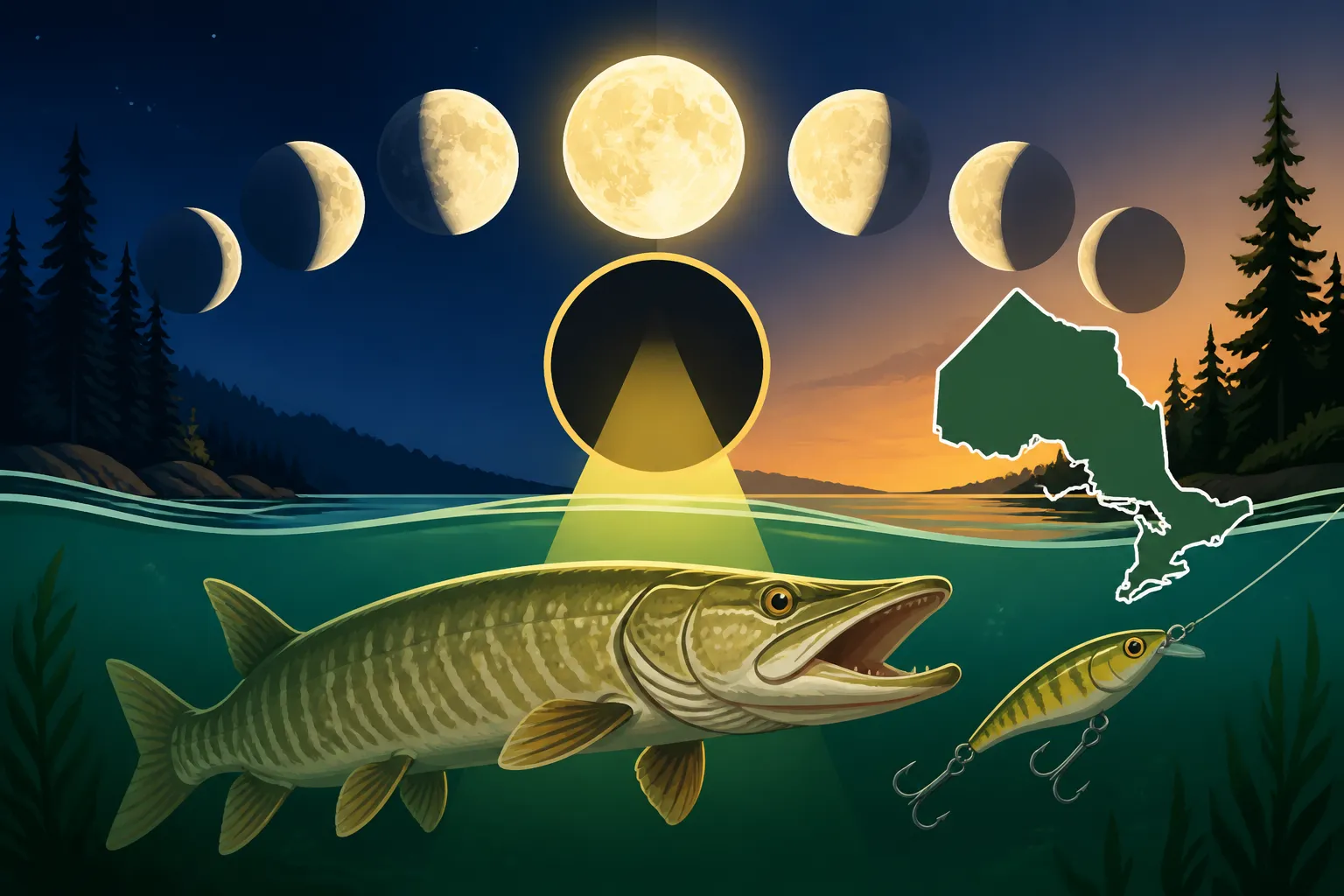
So, what are the "best" moon phases for muskie fishing, according to the collective wisdom of those who pursue these toothy beasts? While there's no magic bullet, many experienced anglers report more consistent success around the new moon and full moon periods. These are the times when the moon's gravitational pull is at its strongest, creating the most pronounced theoretical "solunar" effects. However, it's not always about just one day; the days leading up to and immediately following these peak phases can also be incredibly productive.
It’s crucial to remember that muskie fishing, like anything else in nature, is rarely black and white. What works on one lake might differ slightly on another, and local conditions always play a significant role. However, by understanding the general trends and integrating them into your overall strategy for How to Catch Muskie in Ontario, you can refine your approach and increase your chances of a successful outing. Many anglers keep detailed logs, tracking not just the weather but also the moon phase for each trip, building their own personal data to confirm these patterns.
New Moon and Full Moon Periods
The new moon is often touted as a prime time for muskie. During this phase, the moon is between the Earth and the sun, meaning its face is not illuminated from our perspective. This results in the darkest nights of the lunar cycle. For muskie, these extremely dark nights might encourage increased nocturnal activity, making them bolder and more active during daylight hours as they recover or continue to feed. The stronger gravitational pull during this period is also believed to stimulate baitfish movement, creating more feeding opportunities. Anglers often find success focusing on shallow, cover-laden areas, where muskie might be ambushing confused baitfish under low light conditions.
Conversely, the full moon also gets a lot of attention. With the moon fully illuminated, nights are much brighter. This brightness can extend muskie feeding windows into the night, but it can also mean they might be less active during the bright daylight hours immediately following a night of gorging. However, the strong gravitational pull remains, and many anglers report fantastic daytime bites during the full moon phase, particularly in the days leading up to it. The key here often lies in timing – focusing your efforts around the major and minor solunar windows, which are typically easier to pinpoint during a full moon because of the increased activity. Consider trying different retrieves or lure depths during these times, as muskie might be deeper or holding tighter to structure. If you’re unsure what to throw, check out a guide on the Best Lures for Muskie Fishing in Ontario for some ideas.
Quarter Moons: Often Overlooked Opportunities
While the new and full moons tend to get all the glory, don't write off the quarter moon phases – the first quarter and the last quarter. These periods, when the moon is half-illuminated, represent transitional phases. The gravitational pull is still present, though not as strong as during the new or full moon, and this can lead to more consistent, albeit perhaps less dramatic, feeding windows. Some experienced muskie anglers actually prefer the steadier, more predictable bite that can occur around the quarter moons.
During the first and last quarter moons, you might not experience the frantic feeding frenzies that can happen around the full or new moon, but you can often find reliable patterns. Muskie might be more inclined to feed during regular solunar windows or simply when other environmental factors align, like a stable barometric pressure or favorable water temperatures. It's during these times that consistent effort and a good understanding of Muskellunge Habits in Georgian Bay or other specific waters really pay off. Don't be afraid to put in the hours, even when the moon isn't at its "peak" gravitational influence. Sometimes, the most overlooked periods can yield the most surprising results, especially if you’re fishing a high-pressure system or challenging weather.
Here's a quick overview of moon phases and general muskie activity:
| Moon Phase | Appearance | Gravitational Pull | Potential Muskie Activity | Angler Strategy |
|---|---|---|---|---|
| New Moon | Dark | Strongest | High activity, especially during day after dark nights. | Target shallow cover, focus on solunar peaks. |
| First Quarter | Half-lit | Moderate | Consistent, steady activity. | Adapt to other environmental factors, regular efforts. |
| Full Moon | Fully lit | Strongest | High activity, can be more nocturnal, strong daytime bite. | Target deeper structure, fish solunar peaks hard. |
| Last Quarter | Half-lit | Moderate | Consistent, steady activity. | Remain persistent, observe local patterns. |
Integrating Moon Phases into Your Ontario Muskie Strategy
So, you've got a grasp on the moon phases – now what? Integrating this information into your actual fishing plan is where the rubber meets the road. It's not about exclusively fishing during one phase and ignoring all others; it's about adding another layer of insight to your decision-making process. Think of the moon phase as a potential amplifier or dampener for muskie activity. When combined with other critical factors, it can help you prioritize your efforts, choose your spots, and even select your retrieve.
For example, if you know a new moon is approaching, and you're planning a trip to one of the Best Muskie Waters in Ontario, you might feel more confident in dedicating those days to serious muskie hunting. You might even adjust your work schedule, if possible, to hit those peak periods. This is especially true for those chasing a truly massive fish, as the theory suggests that trophy-sized muskie, those that have achieved significant Muskellunge Growth Rate to Trophy Size, are particularly susceptible to these strong lunar influences.
Beyond the Moon: Other Critical Factors
While moon phases offer a valuable piece of the puzzle, they are by no means the only piece. Muskie are influenced by a multitude of environmental factors, and truly successful anglers learn to blend these insights. Barometric pressure, for instance, is a huge one. Stable or slowly falling pressure often correlates with increased feeding, regardless of the moon phase. Rapidly dropping pressure or a strong cold front can shut down the bite almost instantly, even during a "prime" moon phase.
Water temperature is another non-negotiable factor. Muskie have preferred temperature ranges for feeding and spawning. Time of day also plays a massive role, with dawn and dusk often being prime windows due to lower light and active baitfish. Forage availability – what the muskie are actually eating in that specific body of water – dictates their location and preferred presentation. Your knowledge of Ontario Fishing Seasons by Zone and Month will also inform your strategy, ensuring you're fishing when seasons are open and conditions are right. For example, during the Best Techniques for Fall Muskie Fishing, you might find that combining a strong moon phase with cooling water temperatures can lead to explosive bites.
Tracking Moon Phases and Solunar Times
Thankfully, in this modern age, tracking moon phases and solunar periods couldn't be easier. There are countless fishing apps available on platforms like Amazon and other app stores that provide detailed solunar charts, moonrise/moonset times, and even daily activity ratings. Many of these apps also integrate weather forecasts, barometric pressure readings, and sunrise/sunset times, giving you a comprehensive planning tool right in your pocket.
Beyond apps, a simple search online will provide you with moon phase calendars. The key is to check these resources regularly as you plan your trips. Look for patterns in your own fishing log. Did you have a killer day during a full moon, or was it a new moon that produced your personal best? By consistently noting the moon phase and weather conditions on each trip, you'll start to develop your own insights into what works best for your specific waters and your fishing style. And remember, always adhere to catch and release guidelines, ensuring that Is It Legal to Release a Muskie You Catch in Ontario? is not just answered with a 'yes,' but that you also handle these fish responsibly to ensure their survival.
Disclaimer
This article is for general informational purposes only and does not constitute professional advice. Laws, prices and regulations vary by location and change over time. Consult a qualified professional for guidance on your specific situation.