How to fish deep structure for summer walleye
Summer in Ontario means longer days, warmer waters, and for many walleye anglers, a bit of a head-scratching challenge. Those shallow, easy-to-reach walleye of spring seem to vanish, leaving us wondering where they've gone and how to coax a bite. They haven't disappeared entirely; they've simply retreated to deeper, cooler waters. This guide will help you understand why walleye move deep in summer and, more importantly, equip you with the knowledge and tactics to find and catch them on deep structure.
Understanding Summer Walleye Behavior
When the sun beats down and surface water temperatures soar, walleye, being cool-water predators, seek refuge. This isn't just a preference; it's a physiological necessity. Warm water holds less oxygen and can stress these fish, making them lethargic and less inclined to feed actively in shallow areas. This is why you often hear of folks struggling during the dog days of summer if they stick to their spring patterns.
Why Walleye Go Deep in Summer
The primary driver for walleye moving into deeper water is temperature. As the upper layers of a lake warm significantly, a thermal stratification often occurs, forming distinct layers of water with different temperatures. The key layer for walleye is usually the thermocline – the zone where the water temperature changes most rapidly. This layer offers a comfortable temperature range and often high oxygen levels, making it an ideal summer home. They're not just hiding; they're actively living there, often near food sources that also utilize these cooler, oxygen-rich depths. Understanding this shift is the first step to success.
Identifying Key Deep Water Structures
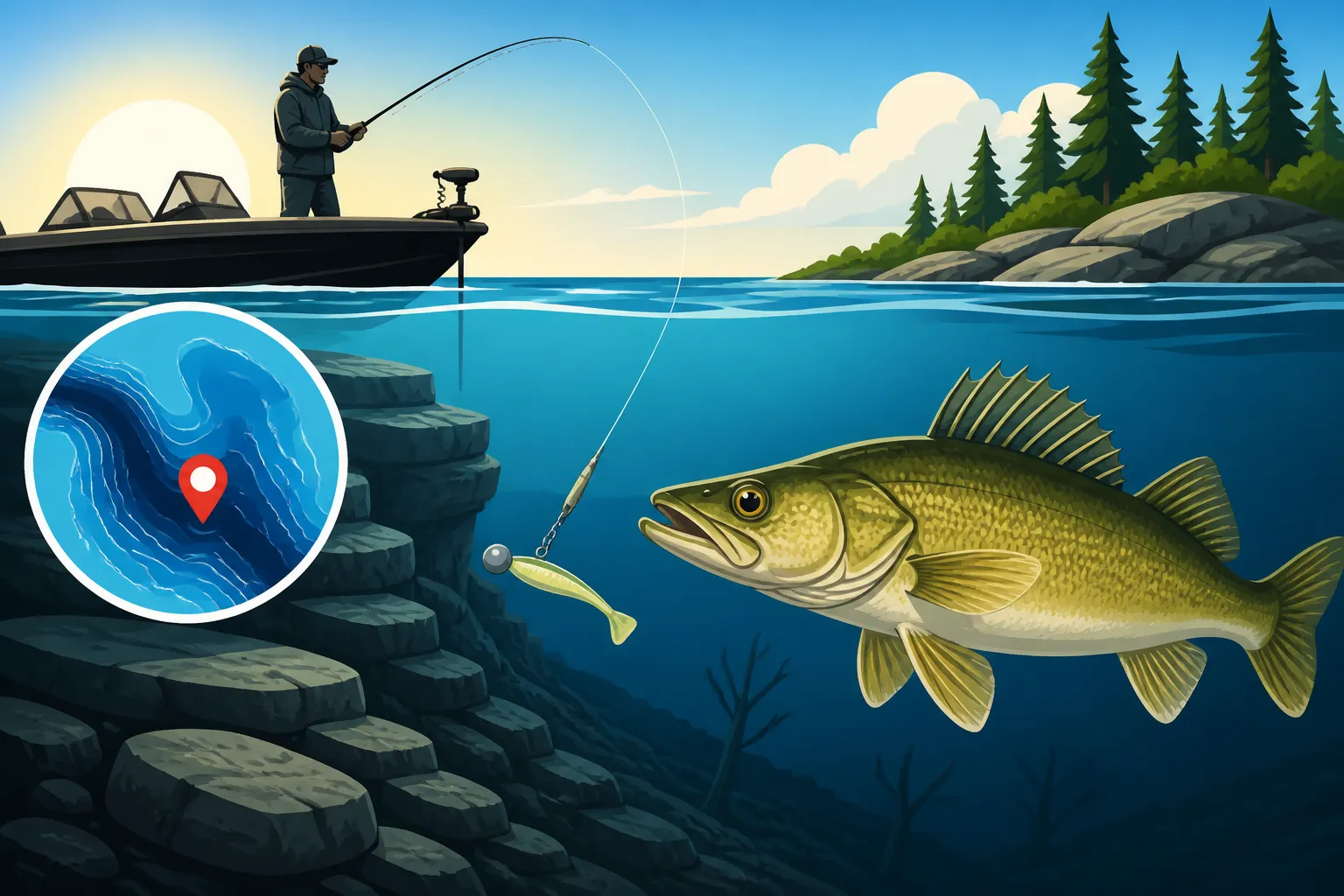
Walleye don't just suspend randomly in the middle of deep water. They relate to structure, just like they do in shallower water, but now that structure is simply deeper. Think about it: deep humps, underwater points, submerged islands, rock piles, sudden drop-offs, and deep weed lines. These are all prime real estate. The edges of these structures, where a flat bottom transitions to a steep break, are particularly important. These contours provide ambush points and act as highways for baitfish, which the walleye will follow. Knowing how to read a contour map or your electronics to identify these spots is absolutely crucial.
Locating Deep Structure for Walleye
Finding these deep-water havens can feel like searching for a needle in a haystack if you're not properly equipped or don't know what to look for. Thankfully, modern technology and a good understanding of lake topography can make this task much more manageable.
Using Electronics Effectively
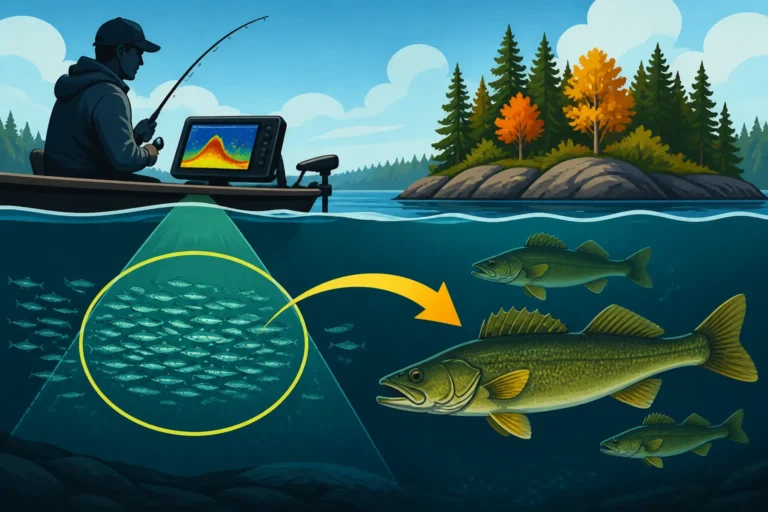
Your fish finder is your best friend when it comes to locating deep structure and, more importantly, the fish holding on or near it. Traditional 2D sonar can show you depth changes, bottom composition (harder bottoms like rock often show a thicker return), and arches that indicate fish. However, to really excel, you'll want to leverage other technologies.
Side imaging or SideScan sonar can sweep large areas to either side of your boat, revealing entire humps, rock piles, or submerged timber that you might otherwise miss directly beneath you. This allows you to quickly cover ground and identify potential holding spots without having to drive directly over them. Down imaging or DownScan sonar provides a photographic-like view directly beneath your boat, making it easier to distinguish between baitfish schools, individual walleye, and the structure they're relating to. Many anglers find excellent deals on versatile fish finders that include these features on platforms like Amazon. Learning to interpret these images takes practice, but the rewards are well worth the effort when you're targeting elusive deep summer walleye.
Interpreting Lake Maps and Charts
Before you even launch your boat, a detailed lake map or chart can give you a massive head start. Look for contour lines that indicate depth changes. Tight contour lines mean steep drop-offs, while widely spaced lines suggest a more gradual slope. Focus on areas where contour lines converge or create distinct features:
- Deep Points: Where a land point extends into the water and continues to drop off sharply beneath the surface.
- Mid-Lake Humps or Reefs: Underwater elevations that rise from the lake bottom. Walleye often hold on the top, sides, or at the base of these, depending on current and baitfish movement.
- Saddles: Depressions between two humps or points, which can funnel baitfish and walleye.
- Channel Edges: Especially in rivers or larger lakes with defined channels, the edges provide consistent deep water access.
Many digital mapping applications offer highly detailed contours, and some even highlight changes in bottom composition. Overlaying these maps with your sonar data in real-time creates an unbeatable combination for finding those honey holes.
Key Techniques for Deep Water Walleye
Once you've located promising deep structure and marked some fish, it's time to present your lure or bait in a way that entices a strike. Deep water fishing requires specific techniques that keep your offering in the strike zone longer and effectively present it at depth.
Vertical Jigging
Vertical jigging is incredibly effective for walleye holding tight to deep structure, whether it's a rock pile, a timber-laden humps, or a sharp break. The goal is to drop your jig straight down to the fish you see on your sonar, maintaining a near-vertical line. This is particularly useful when walleye are grouped up in a specific spot.
The technique involves lowering a jig, often tipped with a minnow, a soft plastic, or a piece of nightcrawler, to the desired depth. Once it hits bottom, or the fish's level, you lift your rod tip a foot or two, then let it fall back, allowing the jig to flutter and mimic a dying baitfish. Pay close attention to your line as it falls; many bites occur on the drop. Key jigs for this technique include traditional lead head jigs, blade baits, and jigging spoons. Blade baits, in particular, generate a lot of vibration on the lift and flutter enticingly on the fall, often triggering reactive strikes. You can find a wide assortment of blade baits suitable for this technique on online retailers like Amazon.
Trolling Deep Diving Crankbaits
When walleye are spread out over a larger deep flat, along a long contour break, or suspended off structure, trolling is often the most efficient way to cover water and find them. Deep diving crankbaits are designed specifically for this purpose, with large bills that allow them to dive to significant depths when pulled behind a boat.
Matching your crankbait's diving depth to the depth where you're seeing fish on your sonar is crucial. Experiment with different lures and trolling speeds until you find what triggers bites. Line choice also plays a role: thinner diameter lines will allow baits to dive deeper than thicker lines. Using planer boards can also help spread your lines out, allowing you to cover an even wider swath of water and present multiple baits at once. When figuring out How deep to troll for lake trout in summer, the principles are quite similar, focusing on bait depth and presentation.
Live Bait Rigging
Sometimes, especially when the bite is tough, live bait is simply irresistible to walleye. In deep water, various live bait rigs can be incredibly effective.
- Crawler Harnesses: These consist of multiple hooks strung along a leader, often with beads or a small spinner blade, designed to be pulled with a nightcrawler. Trolled slowly, often with a bottom bouncer to keep it near the bottom, a crawler harness is a classic walleye catcher. The spinner blade adds flash and vibration, while the wiggling crawler provides scent and natural movement.
- Slip Bobber Rigs: While often associated with shallower water, slip bobbers can be adapted for deep water too. This rig allows you to fish a live minnow, leech, or worm at a precise depth above deep structure. The bobber stopper is set to the desired depth, allowing the line to slide through the bobber on the cast and then stop at the set depth, presenting your bait perfectly. This is great for stationary fishing over a marked hump or a small rock pile.
- Bottom Bouncer Rigs with Minnows or Leeches: A variation of the crawler harness approach, a bottom bouncer rig simply keeps your live bait near the bottom while you slowly drift or troll. This is especially useful on uneven bottoms where snagging might be an issue with a traditional jig.
Essential Gear for Deep Structure Walleye
Having the right tools for the job can make all the difference when you're battling deep-water walleye. From your rod and reel setup to your terminal tackle and specialized electronics, each piece plays a vital role.
Rods, Reels, and Line
For deep water walleye, you need a setup that can handle heavier jigs and crankbaits, provide enough backbone to fight larger fish, and offer the sensitivity to detect subtle bites at depth.
- Rods: A medium-heavy to heavy power spinning or baitcasting rod, typically 6'6" to 7'6" in length, is ideal. The increased power helps with casting heavier lures and setting the hook effectively in deeper water. A fast action tip is also beneficial for sensitivity and quick hook sets. For vertical jigging, a slightly shorter rod (6' to 6'6") can offer more control.
- Reels: Match your reel to your rod. A spinning reel in the 2500-4000 series or a baitcasting reel with a moderate gear ratio (around 6.x:1) will handle most deep-water walleye applications. Smooth drag is paramount, especially when fishing with thinner lines.
- Line: Braided line has become a favorite for deep water applications due to its lack of stretch and thin diameter. The no-stretch property provides incredible sensitivity, allowing you to feel every bump and bite, even in 40+ feet of water. Its thin diameter allows lures to dive deeper and reduces drag in the water. Typically, 10-20 lb braided line is a good choice, often with a fluorocarbon leader (6-12 lb test) tied on for invisibility and abrasion resistance. Many anglers swear by Best fluorocarbon leader for clear water walleye because of how finicky these fish can be.
Lures and Terminal Tackle
Your lure selection needs to cater to the depths you'll be fishing and the techniques you plan to employ.
- Jigs: As mentioned, traditional lead head jigs, often tipped with live bait or soft plastics, are foundational. Look for jig heads ranging from 1/4 ounce to 1 ounce or more, depending on depth and current. Jigging spoons (like a Northland Buck-Shot Rattle Spoon) and blade baits (such as a Sebile Vibe Machine or a Johnson Thinfisher) are also excellent for vertical presentations.
- Crankbaits: Deep diving crankbaits are a must for trolling. Brands like Rapala (Deep Husky Jerk, Down Deep Rattlin' Fat Rap), Berkley (Dredger, Flicker Shad), and Storm (Deep ThunderStick) offer models that dive to various depths. Pay attention to the manufacturer's depth ratings. Check out Best crankbaits for Ontario walleye for more specific recommendations.
- Live Bait Rigs: Always have a supply of bottom bouncers (1/2 oz to 2 oz), snelled hooks (sizes 2-6), beads, and small clevises for building your own crawler harnesses. Swivels are also important to prevent line twist. Don't forget an assortment of fresh live bait – minnows, leeches, and nightcrawlers.
Advanced Electronics and Mapping
Beyond your basic fish finder, consider investing in advanced mapping software or dedicated GPS units. These can store waypoints for every structure you find, every fish you mark, and every successful spot. They also allow you to create custom contour maps of areas that might not be well-charted. Some even integrate with your fish finder to give you a comprehensive view of the underwater world. A good unit can be a significant investment, but for serious deep-water anglers, it's invaluable.
Table: Deep Water Walleye Techniques Comparison
| Technique | Description | Pros | Cons | Ideal Conditions |
|---|---|---|---|---|
| Vertical Jigging | Dropping a jig or blade bait directly to fish marked on sonar, with short lifts and falls. | Highly precise; effective for tight schools; excellent feel for bites. | Requires boat positioning skills; slower coverage. | Fish concentrated on specific, deep structure (humps, points, breaks). |
| Trolling | Pulling deep diving crankbaits or live bait rigs behind the boat at controlled speeds. | Covers large areas efficiently; can trigger reaction strikes; good for suspended fish. | Less precise; requires specific depth-diving baits; can be monotonous. | Walleye spread out over flats or along long contour breaks. |
| Live Bait Rigging | Presenting natural bait (minnows, crawlers, leeches) on bottom bouncers or slip bobbers. | Extremely natural presentation; great for finicky fish; provides scent. | Slower fishing; live bait upkeep; can be more prone to snags. | Tough bites; fish holding tight to bottom; when fish prefer a slower, natural offering. |
Mastering the Approach: Putting It All Together
Fishing deep structure for summer walleye isn't just about dropping a line and hoping for the best; it's a systematic approach that combines scouting, presentation, and adaptability. Think of yourself as a detective, piecing together clues from your electronics, maps, and even the subtle signs nature gives you.
Establishing a Pattern
Once you catch a walleye, don't just move on randomly. Ask yourself:
- What depth was it at?
- What type of structure was it relating to (e.g., top of a hump, base of a break, edge of a weed line)?
- What was the bottom composition (rock, sand, mud)?
- What technique and lure caught the fish?
- What was the speed of your presentation?
This information helps you establish a pattern. If you catch one walleye on the north side of a deep rock hump in 35 feet of water using a chartreuse blade bait, look for similar conditions on other parts of the lake. Walleye are creatures of habit, and if you crack the code in one spot, chances are that pattern will hold true elsewhere in the lake. This is a critical skill for How to pattern walleye on an unfamiliar Ontario lake.
Adapting to Conditions
Summer walleye fishing isn't static. Conditions change daily, sometimes hourly. Wind, cloud cover, boat traffic, and even barometric pressure can influence fish behavior.
- Windy Days: Wind can be your friend, creating current and oxygenating the water, which can activate walleye. Use your trolling motor or drift sock to control your speed and present your baits effectively.
- Calm, Sunny Days: These can be tougher. Walleye might hug the bottom even tighter or suspend in open water. Finesse techniques, smaller baits, or focusing on dawn/dusk periods when they might move up slightly could be more effective.
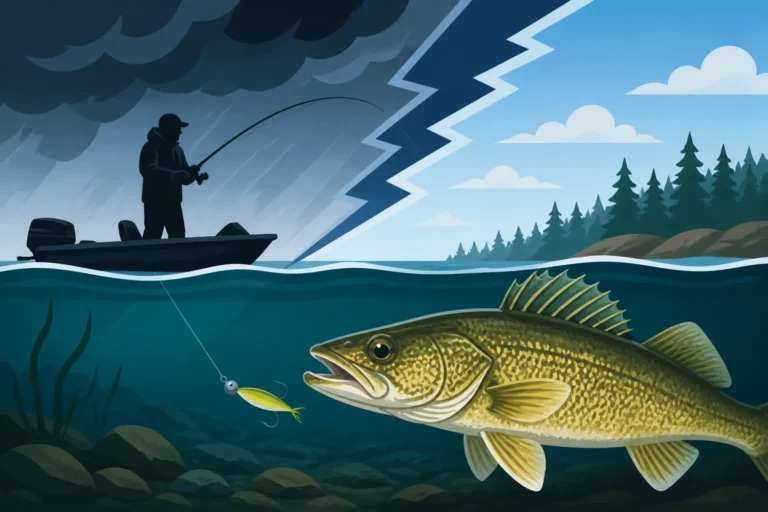
- After a Cold Front: Often results in a tough bite. Walleye become lethargic. Slow down your presentation, use live bait, and focus on subtle movements. The article on How to catch walleye during a cold front in Ontario offers great insights into this challenging scenario.
Always be prepared to switch techniques, adjust your depth, or change lures if what you're doing isn't producing. Carry a diverse tackle box, filled with various sizes, shapes, and colors of deep-diving crankbaits, jigs, and live bait rigging components. Many excellent tackle organizers and a variety of specialized lures can be found on Amazon, ready to ship to your door.
Safety First on Big Water
When you're fishing big, deep Ontario lakes, especially in summer, safety is paramount. Weather can change quickly, and you're often far from shore.
- Monitor Weather: Always check the forecast before heading out and keep an eye on the sky while on the water.
- Life Jackets: Ensure everyone on board has a properly fitting life jacket. In Ontario, there are specific Life Jacket Requirements for Ontario Boaters.
- Communication: Let someone know where you're going and when you expect to return.
- Emergency Gear: Carry a fully charged cell phone, marine radio, first-aid kit, and other essential safety equipment.
- Respect the Water: Big waves can develop quickly. Know your boat's limits and your own.
Fishing for deep structure walleye in summer is a rewarding challenge. It requires patience, a good understanding of walleye behavior, proficiency with your electronics, and the willingness to adapt. But when you crack the code and start bringing in those hard-fighting, great-tasting summer walleye, you'll find it's a whole new level of angling satisfaction in Ontario.
Disclaimer
This article is for general informational purposes only and does not constitute professional advice. Laws, prices and regulations vary by location and change over time. Consult a qualified professional for guidance on your specific situation.