Best fluorocarbon leader for clear water walleye
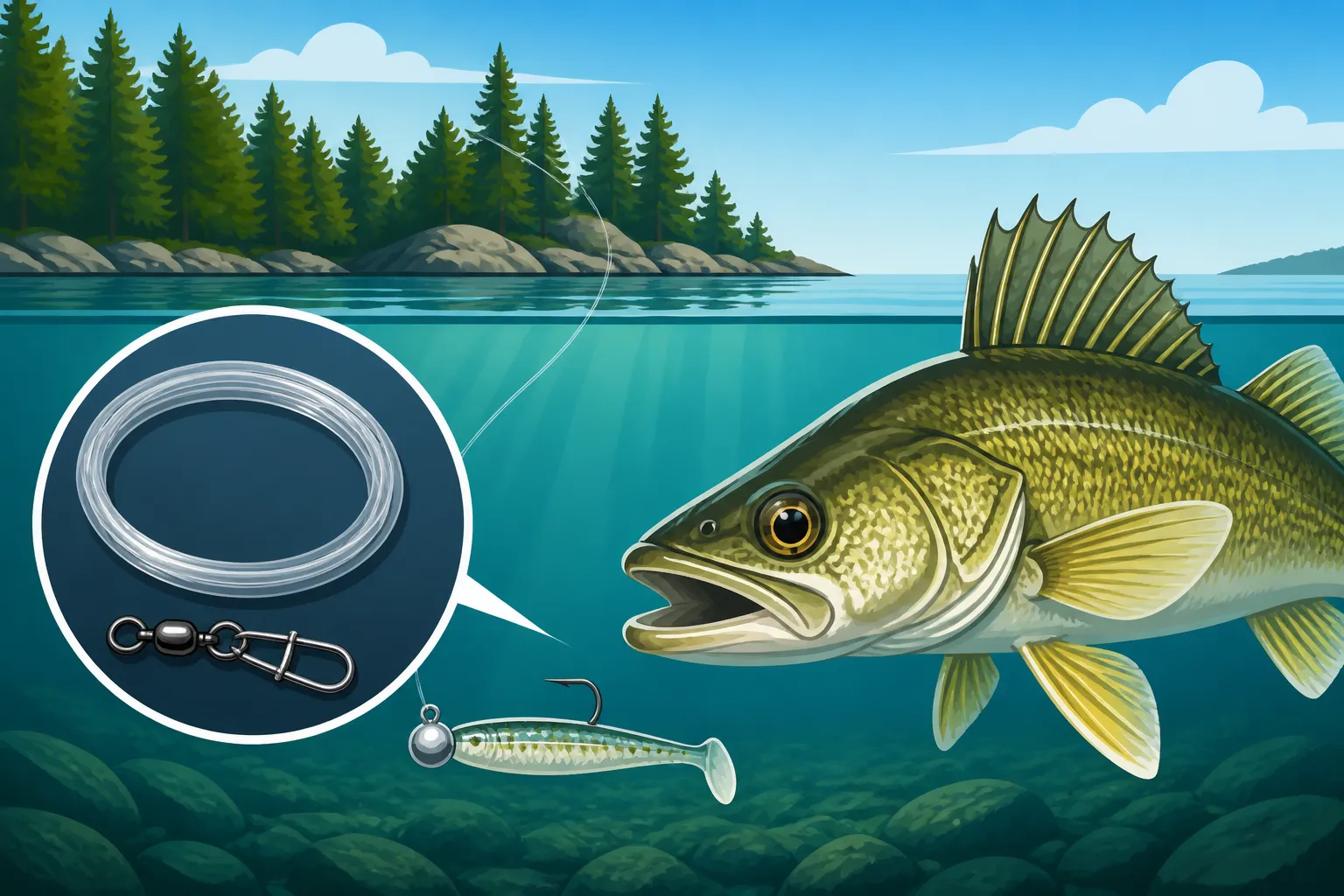
There's nothing quite as frustrating as seeing a trophy walleye follow your lure in gin-clear water, only to spook at the last second and disappear, or worse, feel that light bite and pull back to find your line snapped on a rock or a zebra mussel bed. Clear water in Ontario's vast lakes and rivers can be a real challenge for walleye anglers, making every aspect of your presentation critical. This guide is all about equipping you with the knowledge to select and effectively use the best fluorocarbon leader for clear water walleye, turning those missed opportunities into successful catches.
Why Fluorocarbon is a Game Changer for Clear Water Walleye
When you're out on a pristine Ontario lake, whether it's the crystal-clear waters of Lake Superior's bays or the surprisingly transparent depths of parts of Lake Erie, standard monofilament or even braided mainline can stick out like a sore thumb to wary walleye. This is where fluorocarbon leaders truly shine. They're not just a fancy addition; they're a necessity that can drastically improve your hook-up rates when conditions are tough.
The Invisible Advantage: Blending In with the Environment
One of the most remarkable properties of fluorocarbon is its refractive index. Without getting too technical, this just means it reflects light in a way that's incredibly similar to water itself. When submerged, fluorocarbon becomes virtually invisible. Think about it: a walleye, known for its incredible eyesight, is naturally going to be more cautious of something it can clearly see attached to a lure, especially in bright sunlight or calm, clear conditions. If your line is visible, it creates a "halo" effect that alerts the fish to something unnatural.
This invisibility factor is paramount, especially when targeting those larger, more experienced walleye that have seen it all. They've learned to associate visible lines with danger. By using a fluorocarbon leader, you're essentially presenting your bait or lure as naturally as possible, without a tell-tale connection. This can be the difference between a curious follow and an aggressive strike. It allows your lure to move more freely, unimpeded by a stiff, visible mainline, mimicking injured baitfish or insects that much more effectively.
Abrasion Resistance: Protecting Your Line from Ontario's Structure
Ontario's walleye often hang around structure – rock piles, sharp drop-offs, submerged timber, and especially areas where invasive species like zebra mussels have attached themselves to everything. These environments are notorious for shredding traditional monofilament or even braided lines. Imagine finally hooking into a nice walleye only to have your line part mid-fight because it rubbed against a sharp rock. It's soul-crushing.
Fluorocarbon is significantly more abrasion-resistant than monofilament. It has a much harder surface, which helps it stand up to the constant rubbing and scraping that comes with fishing around heavy cover. This added toughness provides an invaluable buffer between your mainline and the unforgiving underwater terrain. While it's not indestructible, it offers a crucial layer of protection, giving you greater confidence when fishing those high-percentage, high-risk spots. It means fewer re-ties due to nicks and frays, and more time with your lure in the strike zone. This durability is particularly important when you’re fishing deep for walleye, where line checks are harder to do and re-tying can be a lengthy process.
Sensitivity and Hooksets: Feeling Every Nudge
Another fantastic benefit of fluorocarbon is its lower stretch compared to monofilament. While not as inelastic as braid, this reduced stretch translates into increased sensitivity. Walleye bites, especially in cold water or when they're sluggish, can be incredibly subtle – sometimes just a slight tick, a mushy feeling, or even just added weight on your line. With a sensitive fluorocarbon leader, you're much more likely to detect these faint takes.
This enhanced sensitivity allows for quicker reaction times, leading to more successful hooksets. When you feel that subtle "thump," the lack of stretch in the fluorocarbon helps transmit that feeling directly to your rod tip, allowing you to instantly set the hook with authority. It also helps in detecting what your lure is doing underwater – whether it's bouncing off rocks, dragging through weeds, or being bumped by curious fish. This feedback loop is essential for understanding the underwater environment and adjusting your presentation accordingly. It truly connects you to what's happening at the business end of your line.
Key Considerations When Choosing a Fluorocarbon Leader for Walleye
Choosing the right fluorocarbon leader isn't just about grabbing the first spool you see. There are specific characteristics you need to consider to maximize its effectiveness for walleye fishing in Ontario's clear waters. Get these right, and you're well on your way to more fish.
Line Strength (Pound Test): Balancing Stealth and Durability
The pound test of your fluorocarbon leader is a critical decision. You're constantly balancing between the need for invisibility and the demand for strength to handle hard-fighting walleye and abrasive structure. Too light, and you risk break-offs; too heavy, and you might compromise the stealth advantage.
For most clear water walleye fishing applications, a leader in the 6- to 12-pound test range is a good starting point. If you're fishing exceptionally clear, calm waters with very finicky fish, or targeting smaller walleye, you might drop down to 6 or 8-pound test. This is often the case when finesse jigging or using very small baits. However, if you're in an area with heavy cover, sharp rocks, or known for big, aggressive walleye (think some of the expansive stretches of Lake Erie Walleye Fishing or the deeper sections of Lake Nipissing Walleye Fishing), bumping up to 10 or 12-pound test fluorocarbon provides that extra insurance against break-offs. It's about finding that sweet spot where the fish don't see it, but it's strong enough to get them in the net. Remember, while a walleye won't often bite through line like a pike or muskie, their rough mouths and gill plates, combined with heavy head shakes, can test even tough lines.
Leader Length: The Sweet Spot for Presentation
How long should your fluorocarbon leader be? This is a question many anglers ponder, and the answer isn't a single number, but rather a range dictated by conditions and technique. The goal is to maximize the invisible presentation without making casting or handling too cumbersome.
For most casting and jigging applications, a leader between 3 and 6 feet is often ideal. A shorter leader (3-4 feet) is easier to cast, especially if you're not an expert knot-tier, and can be fine in slightly stained water or when fish aren't overly spooky. However, in extremely clear water, or when fish are being particularly finicky, a longer leader (5-6 feet) gives your lure more distance from your potentially visible main line, enhancing that stealth factor. When trolling, especially in clear deep lakes for walleye, some anglers opt for even longer leaders, sometimes up to 10 feet or more, particularly if they are running multiple lines and want maximum discretion. The length is largely dictated by how much "invisible" separation you feel you need from your main line. A good rule of thumb is to start around 4 feet and adjust longer if you suspect fish are seeing your mainline, or shorter if casting becomes an issue.
Quality Matters: Don't Skimp on Your Connection
When it comes to fluorocarbon leaders, you truly get what you pay for. Investing in a high-quality fluorocarbon line from a reputable brand makes a significant difference. Cheaper fluorocarbon can be stiff, have poor knot strength, or simply not offer the same level of invisibility or abrasion resistance. You're creating the critical connection between your expensive lure and your potentially trophy-sized fish; it's not the place to economize.
Look for fluorocarbon that is specifically designed for leader material, often labeled as "fluorocarbon leader" rather than "fluorocarbon mainline." Leader material is typically formulated to be tougher and more abrasion-resistant. Brands like Seaguar, Berkley Vanish, or Sufix Advance are well-regarded for their fluorocarbon lines and are readily available at stores like Bass Pro Shops or through online retailers like Amazon. High-quality fluorocarbon will be more supple, making it easier to tie strong knots, and will retain its strength and invisibility longer. It’s a small investment that can prevent a lot of heartache out on the water.
Tying the Perfect Fluorocarbon Leader: Knots and Connections
Having the best fluorocarbon leader material is only half the battle; the other half is knowing how to tie it properly. A perfectly selected leader is useless if your knots fail. Learning a few reliable knots is essential for connecting your leader to your mainline and your lure securely.
The Uni-to-Uni Knot: A Reliable Mainline to Leader Connection
When joining your braided mainline to your fluorocarbon leader, you need a knot that is strong, compact, and flows smoothly through your rod guides. The Uni-to-Uni knot, sometimes called the Double Uni, is a perennial favourite among anglers for this very reason. It’s relatively easy to tie, even with cold hands, and provides excellent strength with different line types.
Here’s a quick rundown: Overlap the ends of your mainline and leader by about 6 inches. Take the tag end of your leader, form a loop, and pass it around both lines six to eight times, then pull tight to form a uni knot on the braid. Now, take the tag end of your braid, form a loop, and pass it around both lines six to eight times in the opposite direction, pulling tight to form a uni knot on the fluorocarbon. Moisten both knots with saliva, then slowly pull both mainlines away from each other, allowing the two uni knots to slide together and cinch down tightly. Trim your tag ends very close. The key here is equal wraps and moistening the line to prevent friction burns, which weaken the knot. Practice this at home, because a failed knot means a lost fish, and nobody wants that. For more on the basics, consider how to connect different lines for How to Catch Walleye in Ontario.
The Improved Clinch or Palomar: Securely Attaching Your Lure
Once your leader is attached to your mainline, you need a rock-solid knot to connect your lure or hook to the fluorocarbon leader. Two knots stand out for their strength and reliability: the Improved Clinch Knot and the Palomar Knot.
The Improved Clinch is a classic for a reason. Thread your line through the eye of the hook or lure, twist the tag end around the standing line 5-7 times, pass the tag end back through the small loop formed just above the eye, then through the larger loop just created. Moisten, and pull tight. This knot is great for most lures and terminal tackle. The Palomar knot is often considered even stronger, particularly for fluorocarbon, as it doubles the line through the eye of the hook, reducing stress points. Fold about 6 inches of leader in half, push the looped end through the eye of the hook. Tie a simple overhand knot with the loop and the tag end, allowing the hook to hang freely. Pass the loop over the hook, moisten, and pull the standing line and tag end to tighten. This creates an incredibly strong connection. Both are excellent choices, but I tend to lean towards the Palomar for its sheer strength and ease of tying, especially with fluorocarbon. Make sure to cinch it down slowly and steadily.
Pre-Made vs. DIY Leaders: What's Right for You?
When it comes to fluorocarbon leaders, you have two main options: buy them pre-made or tie your own from a spool of line. Each has its pros and cons, and the best choice often depends on your skill level, time constraints, and specific fishing scenario.
Pre-made leaders are fantastic for convenience. They come pre-cut to specific lengths, often with swivels and snaps already attached, saving you precious time on the water, especially if you're battling the elements or don't feel confident in your knot-tying abilities. Brands like Gamakatsu or Spro offer excellent pre-tied fluorocarbon leaders that are consistently strong and reliable. You can find a good selection at any well-stocked tackle shop or online. However, they can be more expensive in the long run, and you might not always find the exact length or pound test you desire. On the other hand, tying your own leaders from a spool of bulk fluorocarbon is more economical and allows for complete customization. You can choose your exact length, pound test, and preferred terminal tackle. It gives you ultimate control over your setup, which can be invaluable when trying to fine-tune your presentation for finicky walleye. The downside is it requires practice to tie strong, consistent knots. For serious walleye anglers who spend a lot of time on the water, investing in a good spool of quality fluorocarbon and honing those knot-tying skills is almost always the way to go.
| Knot Type | Application | Advantages | Disadvantages |
|---|---|---|---|
| Uni-to-Uni Knot | Mainline to Leader | Very strong, relatively easy to tie, good for connecting dissimilar lines (braid to fluoro) | Can be bulky if not tied carefully, requires practice to get consistent |
| Improved Clinch Knot | Lure/Hook to Leader | Simple, strong for mono/fluoro, widely known | Can slip with very slick lines if not tied properly, less strong with braid |
| Palomar Knot | Lure/Hook to Leader | Extremely strong, highly reliable, excellent for fluorocarbon | Can be tricky to tie with very small hook eyes or large lures, uses more line |
Integrating Fluorocarbon Leaders into Your Walleye Rigging
Understanding why and how to use fluorocarbon leaders is one thing, but knowing when and where to deploy them in your walleye fishing strategy is another. Whether you're jigging a deep weed line or trolling open water, the right leader setup can be a game-changer.
Jigging Techniques: Presenting Baits Naturally
Jigging is a highly effective method for walleye, especially when they're holding tight to structure or deep breaks. In clear water, the subtle presentation afforded by a fluorocarbon leader is absolutely crucial. When vertical jigging, the goal is often to keep your bait hovering just above the fish or to impart a natural, erratic action. A nearly invisible leader means the walleye focuses on the jig itself, not the line connecting it to your rod.
For light jigging presentations, like using small jigs tipped with live minnows, worms, or soft plastics, a 6 to 8-pound test fluorocarbon leader about 3-4 feet long is often perfect. This allows your bait to fall naturally and provides incredible sensitivity to detect those light "thumps" or "ticks" that indicate a bite. When you're fishing heavier jigs around aggressive fish or denser cover, you might bump up to 10-pound test for added security. For examples of specific jigging scenarios, check out Best Techniques for Early Spring Pike or even adapting some ideas from Jigging for Perch Through the Ice where subtle presentations are key. The important thing is to ensure your leader doesn't inhibit the jig's action; it should enhance it by making it appear unattached.
Trolling and Drifting: Maintaining Subtlety
Trolling and drifting are fantastic ways to cover water and find active walleye, particularly in larger bodies of water like Lake Erie or Lake Simcoe. Even when your lures are far behind the boat, in clear water, a visible mainline can still spook wary walleye, especially on calmer days or when fishing shallow. This is where a fluorocarbon leader truly shines, acting as a crucial stealth component.
When trolling with crankbaits or spinner rigs, a fluorocarbon leader of 6 to 12-pound test, typically 6-10 feet long, provides that invisible connection to your lure. This length ensures that even if your main line (often braided or monofilament for strength and stretch) is visible, the business end of your presentation is not. The low stretch of fluorocarbon also aids in transferring subtle vibrations from your lure to your rod, helping you detect fouled baits or light strikes. For drifting, especially with bottom bouncer rigs or live bait setups, a similar fluorocarbon leader length and strength can be incredibly effective. It allows your bait to drift naturally with the current, appearing uninhibited by a thick, visible line. Whether you're targeting Lake Erie Walleye Fishing or exploring the vastness of the Great Lakes, this subtle approach can make a world of difference.
Specific Ontario Scenarios: Lake Erie, Lake Simcoe, and Beyond
Ontario boasts an incredible diversity of walleye fisheries, and clear water is a common theme in many of them. Tailoring your fluorocarbon leader choice to the specific body of water and conditions can give you a significant edge.
On lakes like Lake Erie, which can often have incredible clarity, particularly in the western basin, fluorocarbon leaders are practically a requirement for successful walleye fishing. Whether you're casting jigs on the reefs or trolling crawler harnesses, opting for 8-12 pound test fluorocarbon leader is a smart move. The constant threat of zebra mussels means prioritizing abrasion resistance is key. For Lake Erie Walleye Fishing, the clarity can sometimes reach depths of several feet, making invisibility paramount. Similarly, on the famously clear waters of Lake Simcoe, known for its jumbo perch and deep-water walleye, stealth is also critical. Here, a slightly lighter leader, perhaps 6-10 pound test, might be more appropriate for finesse presentations for Lake Simcoe Ice Fishing or targeting suspended fish. Even in many of the clearer Northern Ontario lakes, where walleye might not face as much pressure, an invisible leader can still mean the difference between a timid follow and an aggressive strike. Always consider the water clarity, the amount of structure, and the typical size of the walleye in the specific zone you're fishing when making your final leader choice. A little foresight goes a long way.
Disclaimer
This article is for general informational purposes only and does not constitute professional advice. Laws, prices and regulations vary by location and change over time. Consult a qualified professional for guidance on your specific situation.