Best technique for finding fall baitfish schools
As the leaves start to turn brilliant shades of red and gold, many anglers in Ontario know that fall brings some of the most exciting fishing opportunities of the entire year. But for many, the challenge isn't just knowing what to fish for, but where to find the hungry predators. The truth is, mastering fall fishing often boils down to one critical skill: finding the baitfish schools. This comprehensive guide will equip you with the knowledge and techniques to consistently locate these vital food sources, ensuring you're always on top of the action when the big fish are feeding.
Why Locating Fall Baitfish is Your Secret Weapon in Ontario Fishing
Think about it: fish, just like us, need to eat. And in the fall, that need becomes incredibly urgent. Many species, from walleye and muskie to pike and lake trout, are in a serious feeding frenzy, gorging themselves to build up fat reserves for the long winter ahead. This intense period of feeding is often called the "fall turnover" or "fall bite." But they aren't just swimming around aimlessly hoping for a snack; they're actively hunting, and their primary target is schools of baitfish.
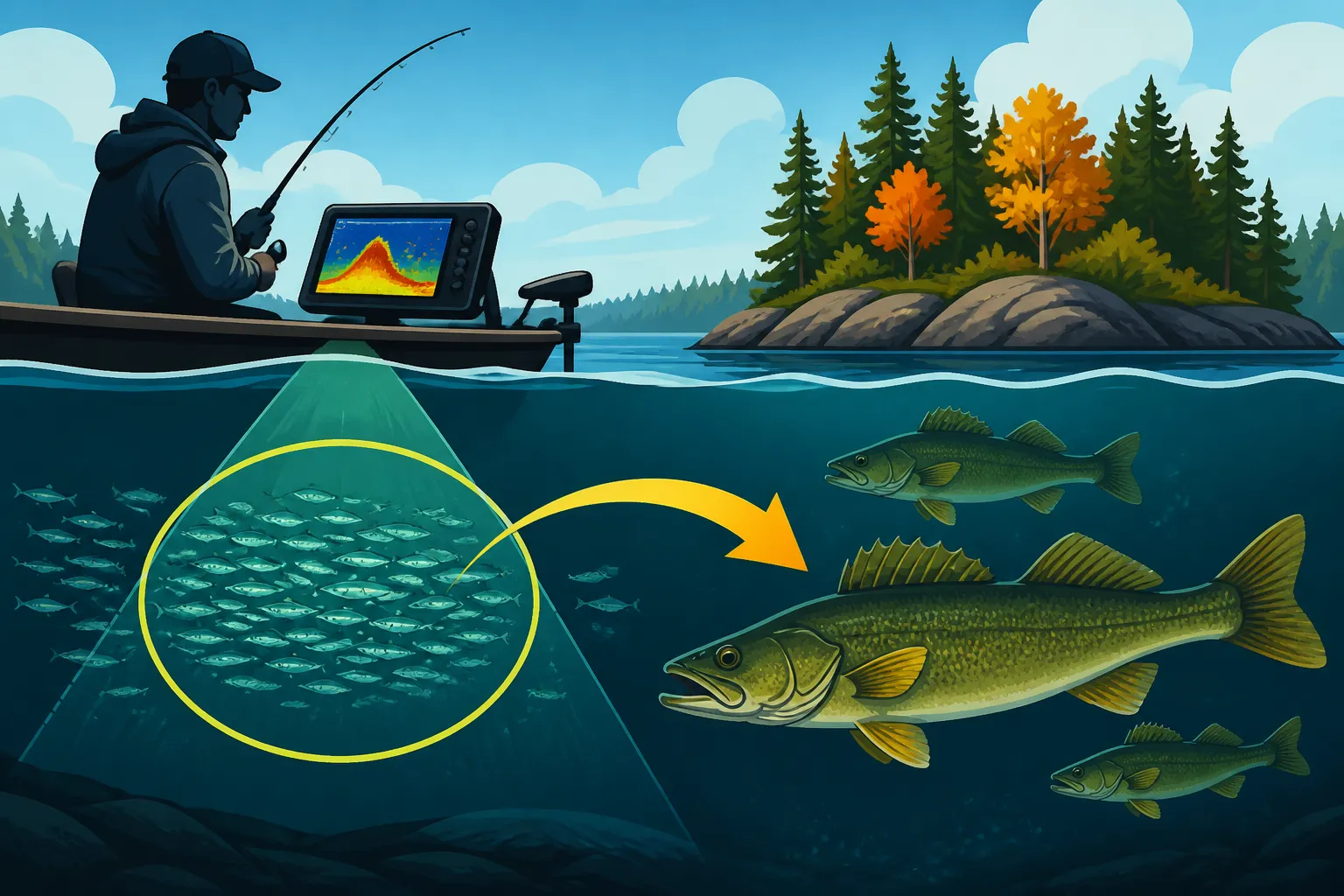
If you can find the bait, you will find the predators. It's that simple. Instead of casting blindly, hoping to stumble upon a hungry fish, you're focusing your efforts on the areas where the entire food chain is concentrated. This isn't just about efficiency; it's about maximizing your chances for success, especially when targeting trophy-sized fish that need significant forage to sustain their bulk. Knowing where the baitfish are staging allows you to present your lures right into the strike zone, increasing your hook-up ratio dramatically. Imagine seeing a dense cloud of bait on your sonar, knowing that just below it, a monster walleye is lurking, ready to ambush. That's the power of finding fall baitfish.
This strategic approach also saves you precious time on the water. Instead of covering miles of unproductive water, you can quickly identify high-potential areas and focus your efforts. This is particularly valuable on vast Ontario lakes like Lake Simcoe or the Bay of Quinte, where covering ground effectively is key. You'll spend less time searching and more time actually fishing, and isn't that what we all want?
Understanding the Fall Frenzy: Baitfish Behavior and Migration
To find baitfish, you first need to understand what makes them tick during the autumn months. As water temperatures begin to drop, a significant shift occurs in the aquatic environment. The thermocline, that distinct temperature boundary, often breaks down, leading to a "turnover" where the entire water column mixes. This process, combined with shorter daylight hours, triggers massive migrations and changes in behavior for many baitfish species.
Seasonal Movements and Preferred Habitats
As fall progresses, many baitfish species, like cisco (lake herring), smelt, shiners, and young perch, start to move out of their shallow summer haunts. They’re often drawn to deeper, more stable water where they can find consistent temperatures and oxygen levels, especially as shallower areas cool rapidly. You'll often find them congregating in large schools over deep flats, along the edges of drop-offs, near submerged humps, or suspended over significant depths. In rivers, they might move into deeper pools or channel bends. These movements are often influenced by prevailing winds, currents, and the presence of their own food sources, like zooplankton.
For instance, on a big body of water like Lake Huron, massive schools of cisco might begin to gather offshore over structure. Knowing this general pattern helps narrow down your search. In smaller, shallower lakes, schools of shiners might hold tighter to deeper channels or rock piles that retain heat longer. Understanding these general patterns for your specific body of water is crucial. Your goal is to intercept these schools as they move, or find where they're actively holding.
Daily and Hourly Activity Patterns
Just like their predators, baitfish also have daily activity patterns. While they might hold in deeper water during bright midday conditions, they often move shallower or become more active in the water column during low light periods like dawn and dusk. This is often when predators are most actively feeding. On cloudy, overcast days, baitfish might remain active and dispersed over a wider range throughout the day, offering a longer feeding window for both them and the game fish pursuing them.
Weather fronts also play a significant role. A stable period of weather with consistent temperatures might lead to predictable baitfish locations. However, a sharp cold front can push baitfish deeper or make them less active, temporarily shutting down the bite. Conversely, warming trends in the fall can invigorate baitfish and reignite a strong feeding response from predators. Keeping an eye on weather patterns and water temperatures can give you a significant advantage in predicting baitfish movements.
Tools and Techniques for Pinpointing Baitfish Schools
Finding these elusive schools can feel like searching for a needle in a haystack on vast Ontario waters, but with the right tools and techniques, you can become incredibly efficient.
The Power of Sonar Technology
This is, without a doubt, your single most valuable tool for finding baitfish schools. Modern fish finders, especially those with high-definition Down Imaging and Side Imaging capabilities, can literally paint a picture of what's beneath and around your boat.
- 2D Sonar: This traditional view is excellent for showing dense clouds of baitfish as "balls" or "columns" on the screen. Adjust your sensitivity to pick up these fainter returns. When you see a large, amorphous cloud, often with distinct arches (individual fish) around or within it, you're usually looking at a baitfish school. Look for larger, more defined arches or lines just below, on the edges, or even right inside these bait clouds – those are your target predators.
- Down Imaging/Side Imaging: These technologies provide photographic-like detail, making it much easier to differentiate between baitfish and bottom structure. Side Imaging, in particular, allows you to scan wide swaths of water on either side of your boat, covering a massive area quickly to locate schools that might be off to the side. If you're running a unit like a Humminbird HELIX or a Lowrance HDS, spend time learning what baitfish schools look like on these different views. You can find excellent instructional videos on YouTube or even through resources like Amazon if you're looking for guides on advanced fish finder usage.
- Waypoint Management: Once you find a school, mark it immediately with a waypoint on your GPS. Baitfish schools often move, but they frequently relate to specific underwater features like humps, points, or deep-water bends. By marking these locations, you build a valuable map of productive areas over time. You can also retrace your path and find them again if they've temporarily dispersed.
Visual Cues and Natural Indicators
Sometimes, the best fish finder is your own set of eyes. There are several visual cues that can tip you off to the presence of baitfish, even before your electronics pick them up.
- Diving Birds: Gulls, terns, and other fish-eating birds are opportunists. If you see them actively diving and swooping down to the water's surface, especially repeatedly in one area, it's a huge sign that baitfish are being driven to the surface, likely by predatory fish from below. This is an unmistakable signal that something big is happening.
- Surface Activity: Look for subtle ripples, nervous water, or even outright explosions on the surface. Small baitfish might be "skipping" or jumping out of the water to escape an attack. Larger game fish might be boiling the surface as they slash through a school. This is often more common during low light periods or on calm days.
- Other Anglers: While you don't want to crowd anyone, observing where other successful anglers are concentrating their efforts can give you clues. If several boats are working a specific breakline or shoal, there's a good chance they've found the baitfish that are attracting the game fish.
- Shoreline Observations: If you're fishing smaller waters or rivers, keep an eye on the shoreline. Predator fish will often push baitfish against structure like docks, fallen trees, or rocky points. You might even see the baitfish flickering in the shallows. This is especially true in early fall before the main deep-water migration begins.
Trolling and Drifting Patterns
Even without immediate visual cues or clear sonar readings, systematic trolling or drifting can help you locate baitfish.
- Contour Trolling: Troll along known depth contours, especially where deep water meets shallow shelves, points, or humps. This is where baitfish often transition. Try different depths and speeds until you start seeing bait or getting bites.
- Zig-zag Patterns: Instead of a straight line, troll in a zig-zag pattern across broader areas. This allows your sonar to cover more ground and helps you understand how the baitfish are distributed. If you're on a large lake, this can be a very effective way to prospect.
- Drift Fishing: On windy days, let the wind and current do the work. Drift over suspected baitfish holding areas. Your boat will cover a wider swath, and you can cast or jig as you go. Many anglers even employ a drift sock to control their speed and angle, which can be found on sites like Amazon.
- Scent and Sound: While not directly for finding baitfish, using baits or lures that mimic the smell or sound of distressed baitfish can sometimes attract predators from a distance, revealing the general area where they are feeding on actual bait.
Putting it All Together: Approaching and Fishing Fall Baitfish
Finding the bait is only half the battle. The next step is effectively approaching the school without spooking it and then presenting your lure in a way that triggers a strike. This requires a bit of finesse and understanding of how these interactions work.
Stealth and Positioning
Once you've located a bait ball, whether visually or on sonar, your approach is critical. Predators are already focused on the bait, so any sudden, unnatural movements or loud noises can send both the baitfish and the game fish scattering.
- Upwind/Upcurrent Approach: Whenever possible, approach the school from upwind or upcurrent. This allows you to drift silently into casting range or use your electric trolling motor at a very low setting to maintain position. Wind and current will carry your boat, masking your presence.
- Electric Trolling Motor: A quiet electric trolling motor is invaluable for precise boat control. It allows you to subtly adjust your position, follow moving schools, and stay on top of the action without the noise and disturbance of a main outboard motor. You can find a wide selection of these motors and accessories on Amazon.
- Long Casts: Make long, accurate casts to the edges or just beyond the bait school. You want your lure to "swim" through the school naturally, mimicking a fleeing baitfish. Avoid casting directly into the middle of a dense school, as this can sometimes scatter them. Instead, cast past it and retrieve through.
Lure Selection and Presentation
Your lure choice should obviously mimic the size, shape, and action of the baitfish you've located. This is where matching the hatch becomes paramount.
- Match the Hatch: Pay attention to what kind of baitfish you're seeing on your sonar or what's being regurgitated by any fish you catch. Are they small, slender shiners, or larger, deeper-bodied cisco? Choose lures that closely resemble these characteristics in terms of size, colour, and profile. Silver, white, and natural baitfish patterns are almost always a good starting point.
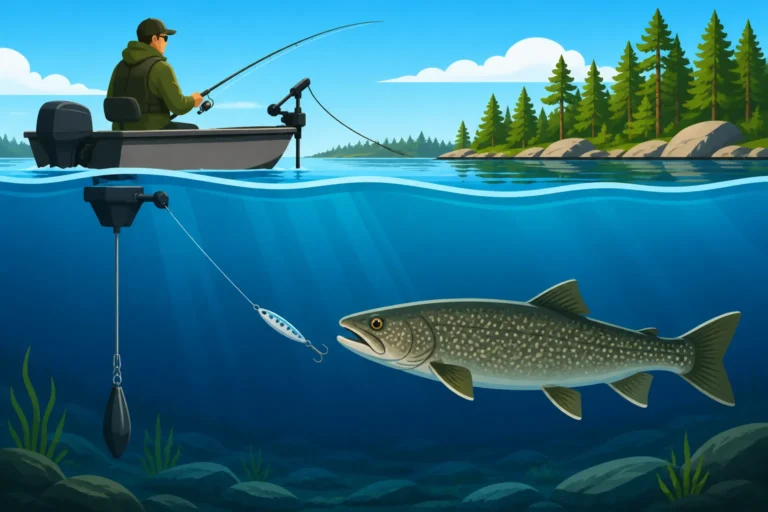
- Vertical Jigging: If baitfish are concentrated in a tight ball, especially in deeper water, vertical jigging can be incredibly effective. Drop a spoon, a blade bait, or a heavy soft plastic right into the school. The predators are often sitting just below or on the periphery, looking up for an easy meal. Jigging spoons like those from Bay de Noc Lure Co. or Williams are perennial favourites for this technique, especially for species like lake trout and walleye that are keying on suspended bait.
- Crankbaits and Swimbaits: For more dispersed schools or when fish are cruising, casting or trolling crankbaits and swimbaits that run at the depth of the baitfish is an excellent strategy. The erratic action of a crankbait or the realistic swim of a swimbait can trigger aggressive strikes from hungry predators. Make sure you're using lines that allow for sensitivity to detect subtle bites, such as a good quality fluorocarbon or braided line. Best Fluorocarbon Line for Clear Lake Water can make a huge difference in presentation.
- Drifting with Live Bait: Sometimes, nothing beats live bait. If allowed by regulations, drifting a live minnow or a dead stick presentation with a smelt on a weight can be deadly. Present it naturally around the edges of the baitfish school. Remember to check Ontario Fishing Regulations Explained for specific bait restrictions in your zone.
Patience and Persistence
Fall fishing, even when you find the bait, sometimes requires patience. Baitfish schools can be active for short bursts and then go quiet. Predators might feed heavily for an hour and then take a break. Don't abandon a productive area too quickly if the bite slows down. Sometimes, simply changing your lure presentation, colour, or working a different depth within the school can reignite the action. The Best Time of Year to Fish in Ontario is often in the fall precisely because of these intense feeding windows, but they are rarely constant. Keep an eye on your electronics, watch for visual cues, and be ready to adapt your approach.
By understanding the migratory patterns of baitfish, leveraging modern sonar technology, and refining your presentation skills, you'll dramatically improve your success rate in Ontario's fall fishing season. The thrill of finding that dense cloud of bait, knowing big fish are lurking beneath, is an experience every angler chases.
| Baitfish Species Common in Ontario | Typical Fall Behavior | Best Ways to Locate | Common Predators |
|---|---|---|---|
| Alewife / Cisco (Lake Herring) | Migrate to deeper, open water; often suspend in columns. | Deep 2D sonar, Side Imaging over open water humps. | Lake Trout, Walleye, Chinook Salmon, Muskie. |
| Emerald Shiner / Spottail Shiner | Form large schools near drop-offs, river mouths, shallow bays. | 2D sonar, visual surface activity in shallower areas. | Walleye, Smallmouth Bass, Northern Pike. |
| Rainbow Smelt | Schools often hold near bottom in deep water, or suspend. | 2D sonar, especially near deep drop-offs and coldwater areas. | Lake Trout, Walleye, Northern Pike. |
| Yellow Perch (Juvenile) | Form large schools near weeds, rocky areas, later moving to deeper flats. | 2D sonar, Side Imaging near structure and transitions. | Walleye, Pike, Muskie, Smallmouth Bass. |
| Sucker (Juvenile) | Tend to be near bottom, often in rivers or near river mouths. | 2D sonar close to bottom, especially in current. | Walleye, Northern Pike, Muskie. |
Learning to read your sonar and connect those blobs on the screen to actual baitfish and predators below is a skill that comes with practice. Consider spending time just observing your electronics on a calm day, moving through different depths and structures, even when you're not actively fishing. This practice will pay dividends when you're looking for How to Catch Walleye in Ontario or How to Catch Muskie in Ontario when the fall bite is on. It's truly a game-changer for any angler serious about improving their success in Ontario's amazing fishing waters.
Disclaimer
This article is for general informational purposes only and does not constitute professional advice. Laws, prices and regulations vary by location and change over time. Consult a qualified professional for guidance on your specific situation.