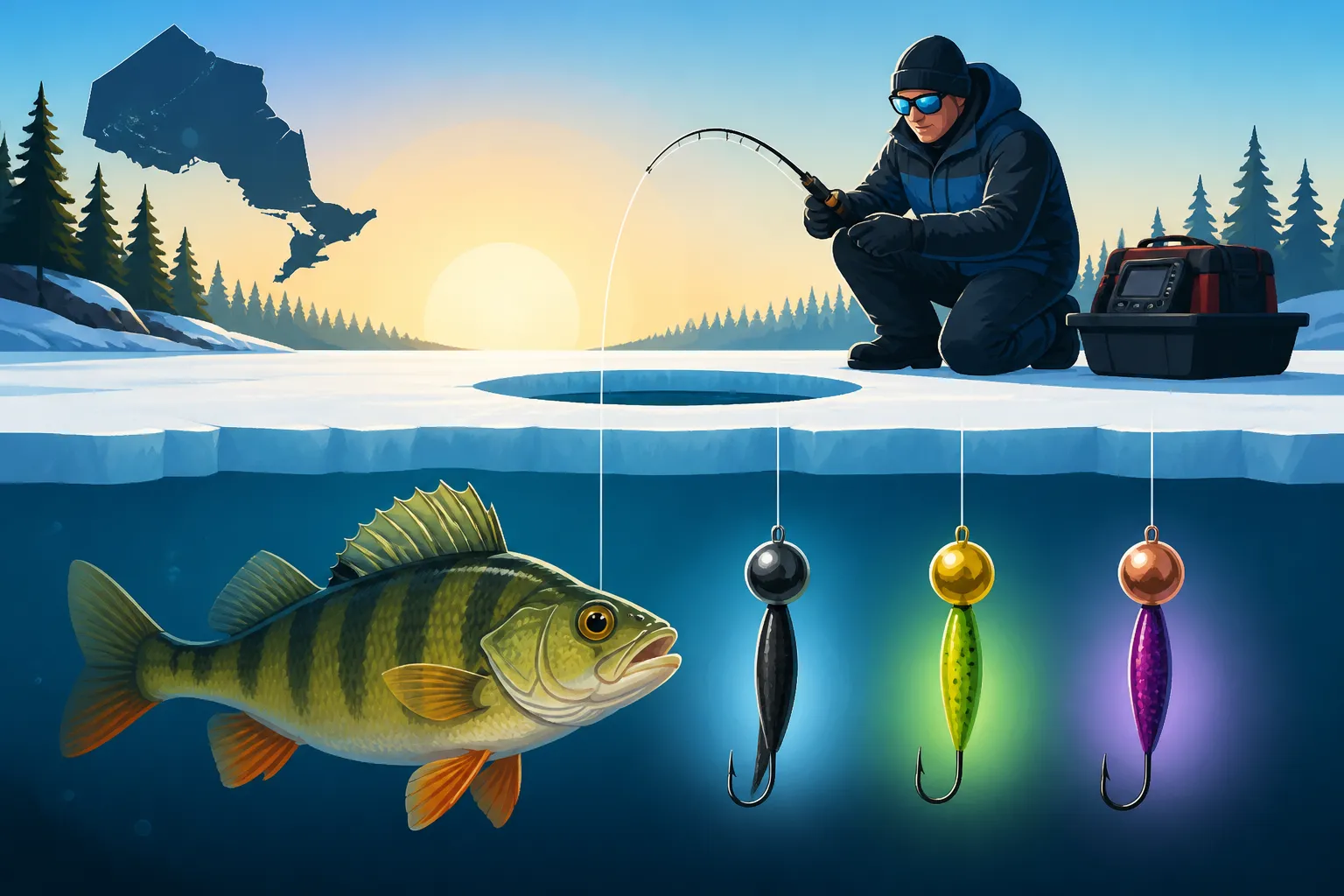
Best jig weight for perch through the ice
There’s nothing quite as frustrating as seeing a school of plump perch on your fish finder, dropping your lure down, and getting absolutely no action – or worse, phantom bites you just can’t feel. We’ve all been there, staring down the hole, wondering if it’s the bait, the colour, or maybe, just maybe, the weight of your jig. When it comes to ice fishing for perch in Ontario, dialling in the right jig weight can be the difference between a sparse bucket and a memorable feast. This guide will dive deep into how to choose the best jig weight for perch through the ice, ensuring you're ready for whatever the fish and conditions throw at you.
The Fundamental Role of Jig Weight in Ice Fishing Perch
Many anglers underestimate the subtle but profound impact of jig weight when ice fishing, especially for a species as sensitive as yellow perch. It's not just about getting your bait to the bottom; it's about how it gets there, how it moves, and how easily a fish can inhale it. Ignoring this critical factor can lead to countless missed opportunities and a lot of head-scratching over a frozen hole.
Why Weight Matters for Fall Rate and Presentation
The fall rate of your jig is paramount. Think about it: when you drop a jig down an ice hole, it's essentially mimicking a dying or injured baitfish or insect larva fluttering through the water. A jig that falls too fast might zoom right past a perch's strike zone before it even registers, or it might appear unnatural, like something trying to escape rather than a helpless meal. Conversely, a jig that falls too slowly, especially in deeper water, can take ages to reach the desired depth, becoming frustrating for you and potentially allowing your line to drift too much in subtle undercurrents.
This is where the "weight" truly comes into play. A lighter jig will flutter and glide more seductively, spending more time in the water column and offering a prolonged visual for hesitant perch. It sinks slowly, imitating a natural descent. A heavier jig, on the other hand, drops quickly, which can be ideal when fish are extremely active and you need to get back down to a biting school fast, or when fishing deeper water where a slow descent would be inefficient. Understanding this balance is the first step in mastering perch jigging.
The Perch's Perspective: How Weight Affects the Bite
From the perch's point of view, the jig's weight isn't just about how it falls; it's about how easy it is to eat. Perch are not typically aggressive predators that smash into baits like a muskie. They are often delicate feeders, especially in the cold water of winter. They'll often "mouth" or "inhale" a bait, testing it before committing. If your jig is too heavy, the perch might feel the unnatural resistance of the weight when it tries to suck it in, causing it to spit the bait out instantly. This results in those frustrating light taps or bumps that you can't seem to set the hook on.
A lighter jig, combined with a sensitive rod, allows a perch to inhale the bait with minimal resistance. This gives them more confidence to hold onto it for that crucial moment longer, giving you time to detect the bite and set the hook. This is particularly important when you're targeting Yellow Perch in Lake Erie and Lake Simcoe, where delicate presentations can make all the difference, especially in pressured areas. The goal is to make your offering seem as effortless to consume as possible, fooling even the most wary fish into taking a full bite.
Key Factors Dictating Your Jig Weight Choice
Choosing the "best" jig weight isn't a simple matter of picking one size and sticking with it all day. It's a dynamic decision based on a confluence of factors unique to your fishing situation. Think of yourself as a detective, gathering clues from the environment and the fish to make an informed choice.
Depth and Water Column Considerations
The depth at which you're fishing is one of the most critical factors influencing jig weight. It's common sense, really: the deeper the water, the more time and friction a lighter jig will encounter on its way down.
-
Shallow Water (Under 15 feet): In shallower water, a very light jig, say 1/32 oz or even 1/64 oz, is often perfect. It gets to the bottom quickly enough, but still has that enticing, slow flutter. This slower fall gives perch more time to notice and react to your bait, which is crucial when they might be scattered or less active. The minimal water resistance at these depths also means you'll feel even the lightest of bites, which is a huge advantage for finicky perch.
-
Moderate Depths (15-30 feet): As you venture into moderate depths, you might find yourself needing to bump up the weight slightly. A 1/16 oz or 1/8 oz jig often hits the sweet spot here. It still provides a good fall rate and natural presentation without making you wait an eternity for your lure to reach the fish. In these depths, subtle currents can also start to become more noticeable, and a slightly heavier jig helps maintain better control and prevents your line from bowing too much, which can mask bites.
-
Deep Water (30+ feet): When you're fishing really deep, perhaps on some of Ontario's larger lakes that offer fantastic winter opportunities, you'll definitely want to consider heavier options like 1/8 oz, 1/4 oz, or even 3/8 oz jigs. Trying to fish a 1/32 oz jig in 40 feet of water is an exercise in futility; it will take too long to get down, you'll lose feel for the bait, and setting the hook will be a nightmare due to line stretch and slack. A heavier jig gets you into the strike zone faster, allows for better control, and helps you maintain contact with your lure, which is essential for detecting those faint perch bites in the depths.
Decoding Perch Activity Levels and Bite Sensitivity
The mood of the fish is perhaps the most challenging, yet crucial, factor to assess. Perch, like all fish, have days when they're ravenous and days when they're lethargic.
-
Aggressive Perch: If you've found a school of active perch that are readily hitting your bait, you can often get away with, or even benefit from, a slightly heavier jig. A 1/8 oz or 1/4 oz jig might be just what you need to get your offering back down to the fish quickly after landing one. This minimizes downtime and keeps the school fired up. On these days, a faster fall can even trigger a reaction strike from competitive fish. This kind of active bite often happens during peak feeding windows or when a fresh school moves in.
-
Finicky or Neutral Perch: These are the days that test your patience and your tackle. When perch are just "nipping" or barely inhaling your bait, it's time to lighten up. This is where those tiny 1/32 oz or 1/64 oz jigs shine. Their slow, tantalizing fall and minimal weight allow the perch to inhale them without feeling resistance, often leading to more solid hookups. You might be seeing fish on the Best Fish Finders for Ontario Lakes that are just hovering below your bait, hesitant to commit. A super light presentation can often seal the deal. This is also where a sensitive rod, like an ultralight rod for panfish, becomes absolutely essential for detecting those almost imperceptible takes.
The Impact of Bait and Lure Size
What you're tipping your jig with also plays a significant role in determining the ideal jig weight. The combination of your jig and bait creates the overall "package" that the perch sees and feels.
-
Small Plastics and Micro Baits: If you're using tiny plastic grubs, maggots, or small wax worms, a lighter jig is almost always the answer. These baits have very little weight or bulk on their own, and pairing them with a heavy jig would completely overpower their natural action. A 1/32 oz or 1/16 oz jig allows these small offerings to flutter and suspend naturally, making them irresistible to perch. Popular options like the Northland Fishing Tackle Bro Bug or a tiny Berkley Gulp! Alive! maggot imitate natural forage perfectly when paired with the right light jig.
-
Live Minnows or Larger Baits: When using larger live minnows, especially those "trout minnow" size offerings that many anglers love for bigger perch, you'll need a heavier jig to properly present them. A 1/8 oz or 1/4 oz jig will help keep that lively minnow in the strike zone and prevent it from swimming off too wildly. The weight also helps to get the minnow down through the water column efficiently. Keep in mind that live bait can add significant bulk and subtle action, so you might go slightly heavier than you would with a bare plastic, allowing the minnow to do most of the work.
Matching Jig Weights to Diverse Ice Fishing Scenarios
Understanding the factors is one thing; putting it all together on the ice is another. Let's break down how to apply this knowledge to common ice fishing situations you'll encounter across Ontario's frozen waters.
Light Jigs for Finicky Fish and Shallow Waters
When the bite is tough, or you're setting up over a shallow flat on a lake like Lake Simcoe, going light is your best bet. We're talking about jigs in the 1/64 oz to 1/32 oz range. These micro-jigs are fantastic for mimicking tiny insect larvae, bloodworms, or small baitfish that perch naturally feed on.
Imagine you're on a sunny winter afternoon, and the perch on your fish finder are hugging the bottom in 10 feet of water, barely moving. Dropping a heavier 1/8 oz jig might spook them or fall too quickly for them to react. But a tiny 1/32 oz jig, tipped with a couple of maggots, slowly dancing in front of their faces, might be exactly what triggers a strike. The minimal disturbance and natural, slow fall can be incredibly enticing. This approach also requires a very sensitive rod and light line (2-4 lb test fluorocarbon or monofilament) to truly feel those subtle "inhale" bites. Many anglers swear by these tiny presentations when the bite shuts down, effectively turning a slow day into a productive one.
Mid-Range Weights for Active Bites and Moderate Depths
For general perch fishing in depths ranging from 15 to 30 feet, or when the perch are showing a decent level of activity, mid-range jig weights are your workhorses. This includes 1/16 oz and 1/8 oz jigs. These weights offer a versatile balance between a good fall rate and a natural presentation.
Consider a scenario on a good day on the French River Fishing Guide where you're fishing a 20-foot basin. The perch are showing up on your electronics, and you're getting consistent bites. A 1/8 oz jig, perhaps a horizontal tungsten jig, allows you to get back down to the school quickly after each catch, keeping the feeding frenzy going. It falls fast enough to be efficient but still offers enough "hang time" for the perch to zero in. If the bites start to slow, you can always drop down to a 1/16 oz jig for a slightly slower presentation without completely sacrificing efficiency. This range is often the starting point for many experienced anglers because it covers a broad spectrum of conditions and fish moods effectively.
Heavier Jigs for Aggressive Presentations and Deep Water Challenges
Sometimes, you need to go heavy, and there's no shame in it! For deep water fishing (30+ feet) or when perch are truly aggressive and you need to punch through a school quickly, jigs from 1/8 oz to 1/4 oz, or even 3/8 oz, become invaluable.
Think about targeting perch in deeper parts of Lake Huron Fishing Spots, where the fish might be suspended over 40 feet of water. Trying to use a feather-light jig here would be a time-consuming and frustrating experience. A 1/4 oz jig with a strong glow finish will get down to those fish fast, allowing you to maximize your time in the strike zone. Furthermore, when perch are truly aggressive, sometimes a faster, more erratic jigging motion with a heavier lure can actually trigger more violent strikes. It mimics a fleeing baitfish, and the aggressive presentation taps into their predatory instincts. These heavier jigs are also crucial for maintaining good contact with your lure in windy conditions, which can be a real issue when ice fishing and trying to feel a light bite through a bowing line.
| Jig Weight Range | Typical Depth (Feet) | Perch Activity Level | Optimal Presentation | Common Uses |
|---|---|---|---|---|
| 1/64 oz – 1/32 oz | 5 – 15 | Finicky, Neutral | Slow, Fluttering | Tough bites, very shallow water, delicate presentations, small live bait (maggots) |
| 1/32 oz – 1/16 oz | 10 – 25 | Neutral, Mildly Active | Controlled, Moderate Fall | General shallow to mid-depth, versatile, good for small plastics |
| 1/16 oz – 1/8 oz | 15 – 35 | Active, Aggressive | Faster Drop, Direct | Mid to deep water, efficient, larger plastics/minnow heads |
| 1/8 oz – 1/4 oz+ | 30+ | Very Active, Aggressive | Fast Drop, Forceful | Deep water, fast retrieve, large live minnows, windy conditions |
Essential Gear and Strategic Approaches for Perch Jigging
Beyond just the jig weight, your overall setup and approach play a massive role in whether you'll be feeling those light perch bites and effectively setting the hook. It's a system where every component works together.
Tungsten vs. Lead: A Material Comparison
When we talk about jig weights, it’s important to distinguish between the materials. Traditionally, lead has been the standard, but in recent years, tungsten jigs have become incredibly popular, and for good reason.
-
Lead Jigs: Lead is a denser material than most metals, making it good for creating compact jigs. However, it's not as dense as tungsten. This means a lead jig of a certain weight will have a larger profile than a tungsten jig of the exact same weight. Lead jigs are generally more affordable and widely available. They are still perfectly effective, especially for casual anglers or when fishing in shallower waters where a larger profile isn't a disadvantage.
-
Tungsten Jigs: Tungsten is significantly denser than lead. This allows manufacturers to create jigs that are much smaller in profile for the same weight. Why does this matter? A smaller profile, heavier jig sinks faster with less water resistance, making it ideal for deep water or when you need to get back down quickly. More importantly, the increased density of tungsten transmits vibrations better up your line, enhancing your sensitivity. Those super light perch bites become much more noticeable. Plus, a smaller profile can be key for finicky perch that might be wary of a larger lure. Brands like VMC, Northland Fishing Tackle, and Clam offer excellent tungsten options, many of which you can easily find on Amazon. If you're serious about ice fishing for perch, investing in a selection of tungsten jigs is a game-changer for sensitivity and efficiency.
Fine-Tuning Your Setup for Optimal Sensitivity
Even the perfectly weighted jig won't help if your gear isn't up to snuff. The goal is to maximize your ability to feel those subtle perch bites.
-
Sensitive Rods: An ultralight or light-action ice fishing rod is crucial. Look for rods with a very soft, fast tip that tapers quickly into a more substantial backbone. This soft tip will visibly twitch with the slightest inhale of a perch, giving you a visual cue even if you don't feel it directly. Many excellent panfish-specific ice rods are available from brands like St. Croix, Fenwick, and Ugly Stik, which provide the necessary sensitivity. A general guide for selecting the right rod is covered in topics like Best Ultralight Rod for Panfish.
-
Light Line: Ditch the heavy monofilament. Light line, typically 2-4 lb test monofilament or fluorocarbon, is paramount. These lighter lines have less memory, less stretch (especially fluorocarbon), and less diameter, which reduces water resistance and increases sensitivity. Fluorocarbon is particularly good for ice fishing because it's nearly invisible underwater and has excellent abrasion resistance. Braided line can also be used, but it requires a monofilament or fluorocarbon leader to maintain stealth and prevent freezing issues with water absorption.
-
Spring Bobbers: For the ultimate in bite detection, especially with super light jigs and finicky perch, consider adding a spring bobber to your rod tip. This small, highly flexible spring attaches to the tip of your rod and will bend or twitch with the absolute lightest of bites, even when the fish simply breathes near your lure. It's an indispensable tool for deciphering those phantom taps from actual bites.
The Art of Experimentation and Electronics
Ultimately, no guide can tell you the exact jig weight for every single situation. Ice fishing is about constant adaptation and learning.
-
Start with a Generalist: On a new lake or when starting your day, begin with a versatile mid-range jig, say 1/16 oz or 1/8 oz. This allows you to quickly assess the depth, any subtle currents, and the initial mood of the perch. From there, you can adjust.
-
Watch Your Electronics: This is where a good fish finder truly earns its keep. Drop your jig down and watch how the fish react on your screen. Do they ignore it? Do they rush up to it and then shy away? Do they follow it slowly? If they're hesitant, lighten your jig. If they're aggressive, maybe go a bit heavier to get down faster. You can literally see their response to different fall rates and jigging motions. For more details on using your tech, check out resources like How to use the Fish ON-Line interactive zone map.
-
Drill Multiple Holes: Don't be afraid to move and drill multiple holes. Perch often school, but they can be spread out. If you're not getting bites in one spot, try moving 10-20 feet away and experiment with a different jig weight or colour. This is particularly easy if you have a reliable Best Ice Auger for Ontario Lakes that makes quick work of drilling. Sometimes the solution isn't just the jig weight, but finding where the most active fish are hiding.
-
Learn from Your Catches: Pay attention to how the fish were hooked. Was it a strong, confident bite, or did they barely mouth the jig? This feedback tells you whether your presentation was too subtle, too aggressive, or just right. Keep a small journal or make mental notes. The more you pay attention to these details, the better you'll become at selecting the perfect jig weight for the day. Remember, ice fishing for perch is an art as much as it is a science, and every day on the ice offers a new lesson. For more general advice on Jigging for Perch Through the Ice, consider exploring specific techniques.
Disclaimer
The information provided in this article is for general guidance only and is based on common fishing practices and available knowledge. Fishing regulations, conditions, and fish behaviour can change rapidly. Always consult the most current Ontario fishing regulations before heading out, and prioritize your safety on the ice.