Best bait for pike in weed beds
There's nothing quite as exhilarating as targeting northern pike, those aggressive, toothy predators that lurk in the watery jungles of Ontario's lakes and rivers. But let's be real, fishing for them in dense weed beds can quickly turn into a frustrating tangle of snags, lost lures, and exasperated sighs. It's a common challenge, whether you're battling lily pads on the Kawartha Lakes or submerged cabbage in a northern shield lake. This guide is here to cut through the green stuff, literally, and show you the best baits and techniques to effectively fish for pike in these challenging, yet highly productive, environments.
Understanding Northern Pike in Weed Beds
Pike don't choose weed beds to be difficult; they choose them because that's where their world revolves. These vegetated areas are absolute magnets for them, offering everything a top-tier predator needs. Understanding why they're there is the first step to figuring out how to catch them.
Why Pike Prefer Vegetated Cover
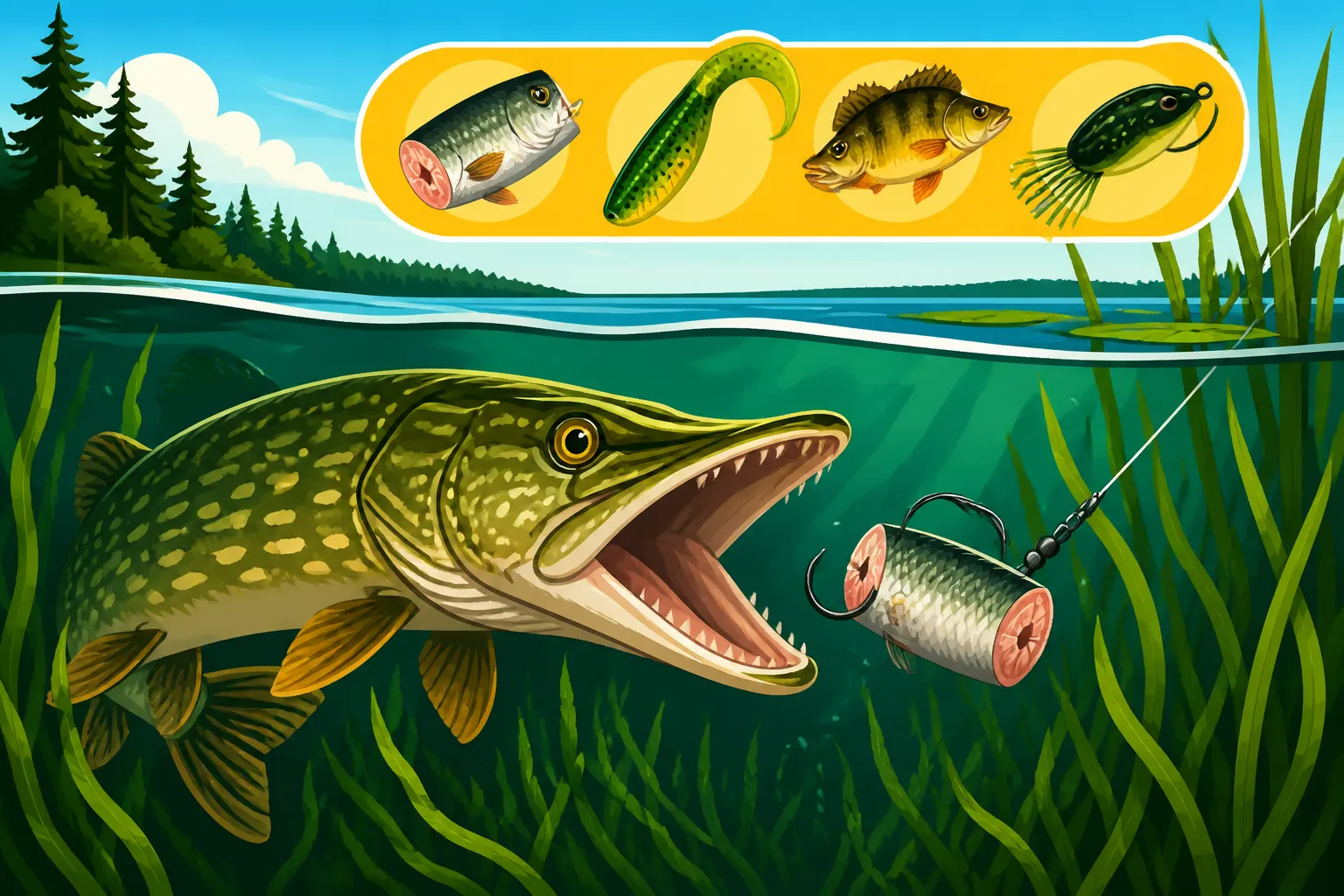
Imagine being a stealth hunter. You wouldn't set up shop in the middle of a wide-open field, would you? Pike are ambush predators, and dense vegetation provides the perfect cover for them to lie in wait, unseen by unsuspecting prey. The thick stalks and broad leaves of aquatic plants—like lily pads, coontail, or various pondweeds—break up their silhouette, allowing them to blend seamlessly into their surroundings. They can remain motionless, conserving energy, until a meal swims by.
Beyond the ambush advantage, weed beds are also critical for thermal regulation, especially during warmer months. The denser canopy of leaves can provide shade, keeping water temperatures a bit cooler below, offering a comfortable retreat when the sun is high. But perhaps most importantly, weed beds are a vibrant ecosystem, teeming with baitfish. Smaller species like minnows, perch, and various panfish species seek shelter and food within the weeds, creating a constant buffet line for hungry pike. If you want to know more about Northern Pike Waters in Ontario, you'll often find these are areas rich in vegetation.
The Angler's Dilemma: Snags and Frustration
For us anglers, this ideal pike habitat presents a significant challenge. The very cover that makes weed beds so attractive to pike also makes them a nightmare to fish. Cast a standard lure with exposed treble hooks into a thick mat of weeds, and you're almost guaranteed to snag. Within seconds, your lure can be fouled with green goo, rendering it useless, or worse, irretrievably stuck. This constant battle with vegetation leads to endless re-casts, lost tackle, and can quickly sap the enjoyment out of a fishing trip. We've all been there, pulling in a clump of weeds instead of a fish, wishing there was an easier way. Retrieving a hooked pike from this jungle is another story entirely, requiring sheer power and grit. This is why having the right strategy, and more importantly, the right bait, is paramount.
Top Baits for Conquering Weed Beds
The secret to fishing weed beds successfully lies in selecting baits designed to either glide over, through, or around vegetation with minimal snagging. "Weedless" is the keyword here, but even semi-weedless options can shine with the right technique.
Spinnerbaits: The Weed-Defying Workhorse
If there's one lure that belongs in every Ontario pike angler's tackle box for fishing weeds, it's the spinnerbait. Their unique design is what makes them so effective: a single, upward-pointing hook protected by a V-shaped wire frame, adorned with a skirt and one or two spinning blades. This configuration allows the lure to deflect off cover, minimizing snags while still providing irresistible flash and vibration.
When choosing spinnerbaits for pike, look for models with sturdy wire frames and larger blades. Willow-leaf blades offer less resistance and a tighter flash, making them excellent for ripping through denser submerged weeds, while Colorado blades provide more thump and lift, ideal for covering water over the top of sparse weeds. Natural skirt colors like white, chartreuse, or black often mimic baitfish, but don't shy away from brighter patterns on overcast days or in stained water. Retrieve them steadily, just fast enough to keep the blades turning and the lure skimming above or through the tops of the weeds. A sudden stop-and-go retrieve can also trigger explosive reaction strikes. Many seasoned anglers heading out on Lake Scugog for pike rely heavily on 1/2 oz to 1 oz spinnerbaits in the marshier sections. You can find a fantastic selection of spinnerbaits on Amazon that are perfectly suited for this type of fishing.
Spoons: Flashing Through the Green
Forget traditional spoons with exposed treble hooks in dense weeds – we're talking about dedicated weedless spoons here. Lures like the classic Johnson Silver Minnow or the Red Eye Wiggler are legendary for a reason. Their single, upturned hook is often protected by a wire guard or the spoon's body itself, allowing them to slide over and through vegetation with surprising ease.
The beauty of a weedless spoon is its irresistible wobble and flash. Pike are highly visual predators, and the shimmering, erratic movement of a spoon perfectly imitates a fleeing baitfish. These are particularly effective for "waking" over top of submerged weed mats or ripping through sparse stands of lily pads. Cast it out, let it sink momentarily (if the weeds allow), then retrieve it with a series of jerks and pauses, allowing it to flutter and flash. On sunny days, silver or gold spoons can be incredibly effective, while painted patterns with red or orange accents work well in darker water.
Soft Plastics: Versatility and Stealth
Soft plastics offer incredible versatility and a more subtle approach, making them excellent choices when pike are a bit finicky or when you need to precisely target pockets within the weeds. The key here is proper rigging for a truly weedless presentation.
- Texas-Rigged Swimbaits and Creature Baits: Rigging a soft plastic swimbait (like a Keitech Swing Impact FAT) or a creature bait (like a Strike King Rage Bug) in a Texas rig fashion—with the hook point buried just under the skin of the plastic—makes it incredibly snag-resistant. Use a wide-gap hook that matches the size of your plastic, and consider a bullet weight to help it penetrate cover if needed. Cast these into weed pockets or along weed edges, slowly jigging them or swimming them back.
- Soft Plastic Frogs: For truly thick, matted vegetation where other lures simply can't go, a soft plastic frog (often hollow-bodied) is your best friend. These lures float and are designed to be fished directly over the top of dense weed mats. When a pike strikes, it's usually an explosive, heart-stopping blow-up on the surface. Walk them across the mats with a twitching retrieve, pausing frequently in open pockets. The key is to wait a second or two after the strike before setting the hook, allowing the fish to fully engulf the bait. These are fantastic for challenging areas like the back bays of the Trent-Severn Waterway where weeds grow thick.
Topwater Lures: Explosive Surface Strikes
While soft plastic frogs certainly fall into this category, other topwater lures can also provide incredible action in and around weed beds, especially during low-light conditions or on calm days. The excitement of a pike blowing up on a surface lure is unmatched.
- Hollow-Body Frogs: As mentioned, these are king for thick mats. Brands like Spro Bronzeye Frog or Livetarget Frog are popular for their realistic profiles and strong hooks. Work them slowly and methodically, allowing pauses for pike to ambush.
- Buzzbaits: These lures feature a propeller blade that churns the water, creating a commotion that pike find irresistible. While not entirely weedless, they can be effective over sparse to moderate submerged weeds, especially those that don't reach the surface. The single upturned hook helps avoid snags.
- Walk-the-Dog Baits: Lures like a Heddon Super Spook or a Rapala Skitter Walk can be incredibly effective when worked along weed edges or over top of scattered clumps. Their side-to-side walking action can draw pike up from surprising depths. Just be mindful of exposed treble hooks in really thick stuff. When choosing topwater baits, particularly frogs, consider models with sturdy hooks. Many reliable options are available on Amazon.
Inline Spinners: The Classics That Still Catch Fish
While not the most weedless option, traditional inline spinners like those from Mepps or Blue Fox still have a place, especially when targeting pike in areas with sparser weed growth or along distinct weed lines. Their constant blade rotation creates strong vibration and flash that pike find hard to ignore.
To make them more weed-friendly, opt for models with a single dressed hook rather than a treble, or replace the treble with a single, larger hook. Fish them with a steady retrieve, just fast enough to keep the blade spinning, allowing them to bump and deflect off submerged weeds rather than burying into them. They're particularly effective in situations where weeds are patchy, or where there are distinct channels running through the vegetation. Many anglers use these as search baits in areas like Rice Lake, which has extensive weed flats. If you're wondering How to Catch Northern Pike in Ontario, inline spinners are often a foundational technique.
Presentation and Retrieval Strategies
Having the right bait is only half the battle. How you present and retrieve that bait through the challenging environment of a weed bed is equally crucial for enticing strikes and minimizing snags. Different weed densities require different approaches.
Skimming the Surface and "Waking"
This technique is primarily for topwater baits like hollow-body frogs and weedless spoons when you're dealing with thick, matted vegetation that extends all the way to the surface. The goal is to keep your lure moving on or just above the weeds, never allowing it to sink and snag.
With a frog, cast it directly onto the mat. Use short, sharp twitches of your rod tip while reeling in slack to make the frog "walk" or "pop" across the surface. Pause occasionally in any open pockets of water; this is often where a pike will ambush. For weedless spoons, a faster, steady retrieve will keep it "waking" just below the surface, creating a subtle bulge or ripple that attracts attention. The key is to adjust your retrieve speed to the density of the weeds – faster over thicker stuff, slower when you hit an open lane. This method is incredibly visual and the strikes can be absolutely explosive.
Ripping and Pausing Through Sparse Weeds
When the weeds are submerged but not quite matted, or when they form distinct clumps and lanes, a more aggressive "ripping" technique can be incredibly effective. This involves baits like spinnerbaits, weedless spoons, or even shallow-diving crankbaits (if the weeds are sparse enough).
Cast your lure past the weed line or into a promising pocket. Let it sink momentarily (if appropriate for the lure), then give your rod a sharp, upward rip. This action will tear the lure free from any vegetation it may have picked up and send it darting erratically. Immediately let the lure fall back on a slack line for a second or two (this is often when the strike occurs), then repeat the rip. This creates a highly erratic, injured-baitfish presentation that triggers a pike's predatory instincts. The goal is to provoke a reaction strike by making the lure appear vulnerable and struggling to escape the weeds. This technique is often fruitful around the deeper weed edges you might find in some of Ontario's Best Fishing Lakes in Ontario.
Punching and Flipping into Thick Mats
For truly impenetrable, dense weed mats—the kind you might find in stagnant backwater areas—the "punching" or "flipping" technique is the only way to get your bait into the strike zone. This is heavy-duty fishing and requires specialized gear.
You'll typically use a heavy Texas-rigged soft plastic, often paired with a substantial bullet weight (1 oz or more) and a punch skirt. The idea is to make a short, accurate cast or "flip" the rig directly onto a small opening or seam in the weed mat. The heavy weight will punch through the vegetation, allowing your bait to fall into the open water directly underneath the mat where pike are often lurking. Once it penetrates, let it fall, then subtly jig or shake the bait a few times before reeling up and repeating in another promising spot. This technique is all about precision and power. When a pike hits, you need to quickly set the hook and immediately start reeling with all your might to pull the fish out of the thick cover before it can wrap you up. This requires specialized gear, which we'll discuss next.
Essential Gear for Weed Bed Pike Fishing
Fishing for pike in weed beds isn't a finesse game. It's often a battle of strength, and you need gear that can withstand the demands of pulling powerful, toothy fish out of dense vegetation. Skimping on tackle here will lead to frustration and lost fish.
Rods and Reels for Heavy Cover
- Rods: Forget your medium-light spinning gear. For weed bed pike, you need a heavy to extra-heavy action casting rod, typically 7'0" to 7'6" in length. A longer rod provides better leverage for casting heavy lures and for steering a hooked fish away from snags. The stiff backbone of a heavy rod is essential for driving the hook home through tough pike mouths and for muscling fish out of thick weeds.
- Reels: Pair your heavy rod with a reliable baitcasting reel that has a strong drag system and a good retrieve ratio (e.g., 7.1:1 or higher). A fast retrieve helps you pick up slack quickly after a strike and keep tension on the fish. A powerful drag is non-negotiable for stopping a pike's initial run and preventing it from burying itself deeper into the weeds. Many anglers consider this type of setup similar to Best Muskie Gear for Ontario Waters, just scaled down slightly.
Line and Leader Choices
This is where many anglers make mistakes, and it can cost you dearly.
- Braided Line: This is the only way to go for weed bed pike fishing. Forget mono or fluorocarbon for your main line. Braided line offers superior strength for its diameter, virtually no stretch for direct hooksets, and excellent sensitivity to feel subtle bites or when your lure touches weeds. Its thin diameter also helps it slice through some lighter vegetation. Aim for 30-65 lb test, depending on the thickness of the cover and the size of pike you expect to encounter. PowerPro and Sufix are popular, reliable brands often found on Amazon.
- Wire or Heavy Fluorocarbon Leaders: Pike have razor-sharp teeth that can sever standard monofilament or even lighter fluorocarbon leaders in an instant. A leader is absolutely mandatory. For maximum bite protection, a short (6-12 inch) wire leader is ideal. If you prefer fluorocarbon for its stealth, you'll need a heavy one—think 80-100 lb test. Regular 20-30 lb fluoro, while strong for other species, is often no match for a large pike's jaws. Ensure your leader knots are strong and check them frequently for fraying. Understanding the various Ontario Fishing Regulations Explained will also include requirements for specific gear in some areas, so always check before you go.
Essential Accessories
Beyond your rod, reel, line, and lures, a few key accessories will make your weed bed pike fishing safer and more successful.
- Long-Nose Pliers or Jaw Spreaders: Pike are notoriously toothy. Removing hooks, especially from deep inside their mouth, requires specialized tools to protect your hands and ensure the fish's safe release. Long-nose pliers are a minimum, but jaw spreaders can be invaluable for holding their mouth open.
- Landing Net: A large, wide-hooped landing net with rubberized, knotless mesh is crucial. The wide hoop helps scoop up a thrashing pike, and the rubberized mesh is less damaging to the fish's slime coat and helps prevent hooks from tangling hopelessly, a common issue with traditional nylon nets.
- Line Cutters/Scissors: Braided line is tough and requires sharp scissors or dedicated braid cutters to snip cleanly. Keep them handy.
- Sun Protection: Days spent targeting pike in Ontario can be long. Good polarized sunglasses are essential not only for eye protection but also for cutting glare off the water, helping you spot weed lines, open pockets, and even cruising pike. A wide-brimmed hat and sunscreen are also key. You can find excellent fishing pliers and sunglasses from brands like Berkley or KastKing on Amazon.
Best Bait for Pike in Weed Beds: A Comparison Table
Here's a quick reference for choosing the right bait for your next weed bed pike adventure:
| Lure Type | Weedless Rating (1-5, 5 being best) | Ideal Weed Density | Key Advantages | Best Presentation |
|---|---|---|---|---|
| Spinnerbaits | 4 | Moderate to Dense Submerged | Versatile, vibration, flash, good hookup ratio, deflects well | Steady retrieve, stop-and-go, rip & pause |
| Weedless Spoons | 5 | Dense Mats, Submerged, Lily Pads | Excellent snag resistance, strong flash, mimics injured bait | Skim, rip, twitch, flutter |
| Hollow-Body Frogs | 5 | Thick Surface Mats | Virtually snag-proof, explosive topwater strikes | Walk-the-dog, twitch, pause in open pockets |
| Texas-Rigged Soft Plastics | 4 | Dense Submerged, Pockets | Versatile, subtle, can penetrate thick cover with weight | Jig, pitch, slow retrieve, punch through |
| Buzzbaits | 3 | Sparse to Moderate, Surface | Creates strong surface disturbance, aggressive strikes | Steady retrieve along weed edges |
| Inline Spinners | 3 | Sparse to Moderate, Weed Edges | Constant flash and vibration, classic appeal | Steady retrieve, bump and deflect off weeds |
Remember, while these are generally the best options, local conditions and pike preferences can vary. Don't be afraid to experiment with colors, sizes, and retrieve speeds until you dial in what the fish want on any given day. With the right selection of baits and a confident approach, those frustrating weed beds will transform into your most productive pike fishing grounds in Ontario.
Disclaimer
The information provided in this guide is for general informational purposes only. Fishing regulations, seasons, and licensing requirements can change, and it is the angler's responsibility to consult the most current official Ontario Fishing Regulations Summary before heading out on the water. Always prioritize safety and practice responsible angling to preserve our fisheries for future generations.