Best technique for fan casting a new lake
There’s nothing quite like the excitement of discovering a brand-new lake in Ontario, brimming with potential. But let’s be honest, that initial thrill can quickly turn into a feeling of overwhelming uncertainty. You pull up to a vast expanse of water, and suddenly, you have no idea where to start. It feels like you're just casting blindly into the blue, hoping for a lucky strike, which is frustrating and often unproductive. This guide is all about giving you a solid strategy – the art of fan casting – to systematically break down unfamiliar waters, increase your chances of finding fish, and turn that uncertainty into confidence.
What Even Is Fan Casting, Anyway? Why It's Your Secret Weapon on New Water
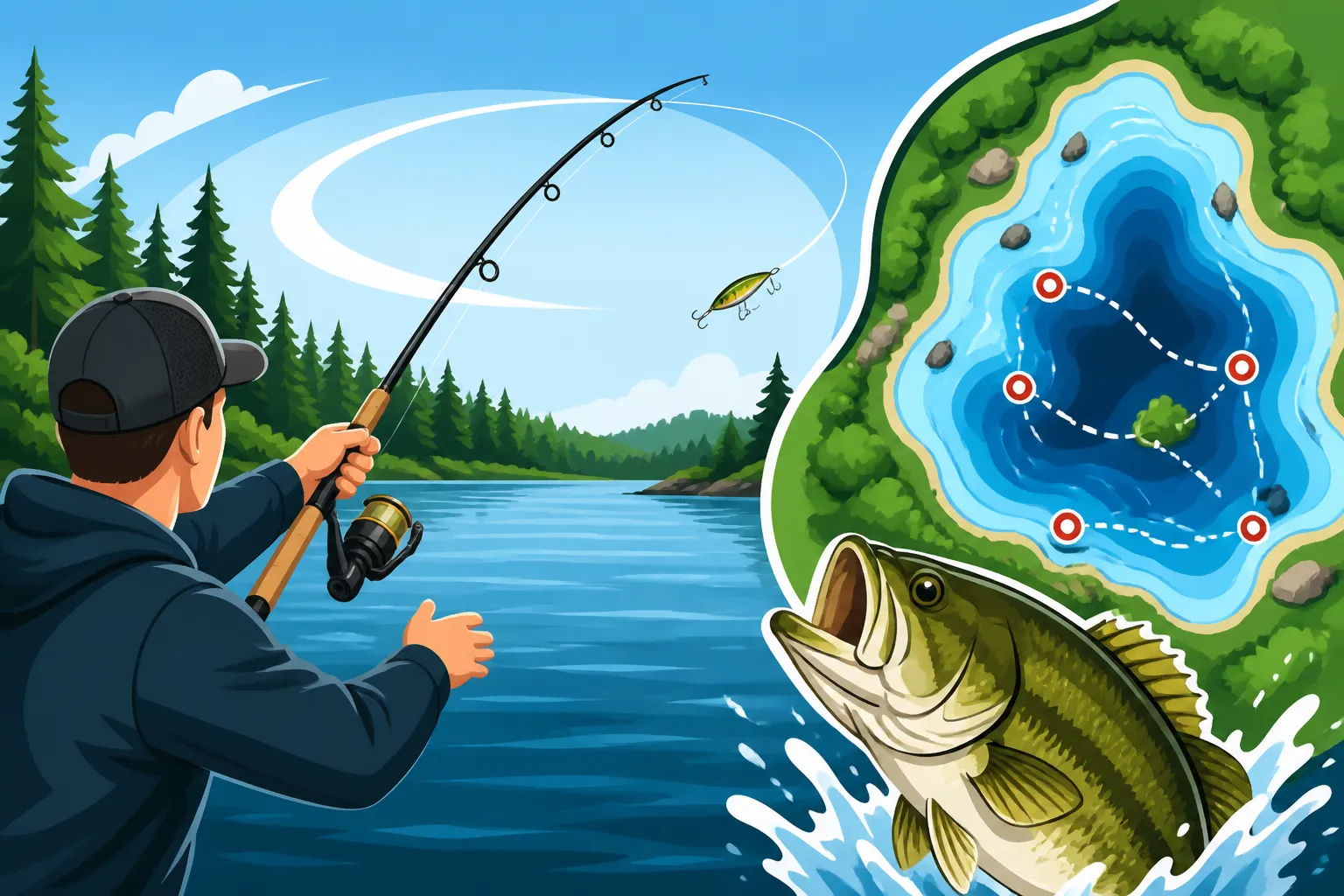
When you hear "fan casting," it might sound like some complicated, high-tech fishing maneuver, but it's actually a wonderfully simple and incredibly effective technique. At its core, fan casting is a methodical approach to covering water by casting your lure in a series of different directions, fanning out like the spokes of a wheel from a central point. Instead of just launching your lure straight out and reeling it in repeatedly, you're systematically working a wide area around you.
Why is this so important, especially on a new lake? Think about it: when you don't know the contours, the drop-offs, the weed lines, or where the baitfish are congregating, you're essentially looking for a needle in a haystack. Random casting is a common pitfall, and it means you're leaving huge swathes of water unexplored. You might be casting over productive structure repeatedly, but never quite hitting the "strike zone." Fan casting helps you eliminate guesswork. It forces you to cover a broad area efficiently, increasing the likelihood that your lure will cross paths with an active fish or uncover a piece of fish-holding structure you never knew was there. It's about building a mental map of the underwater landscape one cast at a time.
This systematic approach is particularly vital in Ontario's diverse lakes. From the massive, rocky expanses of Georgian Bay to the weedy bays of the Kawartha Lakes or the deep, clear waters of Lake Superior, the terrain can vary wildly. Without local knowledge or extensive electronics, fan casting becomes your primary tool for discovery. It allows you to quickly assess a section of water, feel for changes in depth, bottom composition, and identify potential fish hideouts. It's less about catching fish on every cast and more about locating where the fish are, so you can then refine your approach.
Your Fan Casting Game Plan: A Step-by-Step Approach for Unfamiliar Waters
Alright, let's get down to brass tacks. You've launched your boat, or found a promising spot on shore, and you're staring at an unknown stretch of water. Here’s how to implement your fan casting strategy to maximize your chances of finding those elusive Ontario fish.
Divide and Conquer Your Immediate Area
The first step in effective fan casting is to pick a starting point and mentally divide the water in front of you into manageable sections. Don't try to cover the entire lake at once – that's impossible and overwhelming. Instead, focus on a specific area, perhaps a visible point, a weed edge, a rock outcropping, or a transition zone where a shallow flat drops into deeper water.
Imagine you're standing on the bank, or your boat is positioned near a prominent feature. This feature will be your anchor point. Now, mentally draw an arc in front of you, covering maybe 90 to 180 degrees of water. This is your immediate target zone. The idea is to thoroughly explore this segment before moving on. This disciplined approach prevents you from making a few random casts, getting discouraged, and then moving to a new spot only to repeat the same ineffective pattern. Instead, you're dedicating yourself to understanding what's happening beneath the surface in a specific, confined area.
The "Clock Face" Method for Precise Coverage
This is where the "fan" truly comes into play. Once you have your immediate target zone, envision a clock face in front of you, with your position at the center. Your first cast should typically be to the furthest point of your desired coverage, often straight out in front of you (12 o'clock). After that, make your next cast a little to the left (11 o'clock), then further left (10 o'clock), and so on, until you've covered the entire left side of your arc (e.g., down to 9 o'clock). Then, you'll work your way back from 12 o'clock to the right side (1 o'clock, 2 o'clock, 3 o'clock).
The key here is overlap. You don't want gaps in your coverage. Each subsequent cast should land just a little bit away from the previous one, ensuring that your lure's retrieve path covers new water without leaving "dead zones" where a fish could be hiding unnoticed. If you're using a lure that dives, this overlap helps ensure you're probing different depths within that fanned pattern. Some anglers prefer to cast to one extreme (say, 9 o'clock), then gradually move their casts across the fan to the other extreme (3 o'clock). Either way works, as long as you're systematic and covering new water with each successive cast. This method allows you to systematically explore the water column at varying distances and angles from your position, significantly increasing your chances of intercepting a fish.
Varying Your Retrieve and Lure to Unlock the Pattern
Fan casting isn't just about where you cast; it's also about how you retrieve and what you're casting. A common mistake when exploring new water is to use the same lure and retrieve it in the exact same way on every cast. Fish can be incredibly particular about presentation. What worked on your last lake or even an hour ago might not be the ticket now.
As you fan cast, try to vary your retrieve speed. Some fish prefer a fast, aggressive presentation, while others want a slow, methodical approach. Experiment with pauses, jerks, and steady retrieves. Also, don't be afraid to change lures. Start with a "search bait" that covers water quickly, like a lipless crankbait or a spinnerbait, to get a general idea of fish presence. If you don't get any bites, switch to something that can probe deeper or has a different action, like a jig and soft plastic, or a twitch bait. You can find an incredible variety of these at great prices on Amazon, perfect for stocking up your tackle box before your next Ontario adventure. The goal is to figure out the "pattern" – what depth, speed, and lure action the fish are responding to on that particular day. For anglers interested in How to Catch Walleye in Ontario or How to Catch Smallmouth Bass in Ontario, experimenting with retrieve is paramount.
Moving and Adapting: Don't Get Stuck!
Once you've thoroughly fanned out an area, covering it from every angle with varied retrieves and perhaps a couple of different lures, it's time to move. Don't linger in a barren spot hoping fish will magically appear. Move your boat 50-100 feet down the shoreline, or walk a short distance along the bank, and repeat the entire fan casting process.
As you move, always keep an eye out for visual cues. Look for changes in the shoreline, submerged timber, visible weed lines, or rock piles. Pay attention to your electronics if you have them – a quick glance at your fish finder can reveal a sudden drop-off or a school of baitfish that dictates your next fan casting zone. This constant motion and adaptation are crucial for breaking down a large, unfamiliar lake. You're not just fan casting randomly; you're using it as a tool to explore and react to what the water is telling you. If you discover a productive zone, like a specific weed edge or a rocky point, you can then switch from "search mode" (fan casting) to "finesse mode" (focused casting on that structure). How to pattern walleye on an unfamiliar Ontario lake delves deeper into understanding these patterns.
Gear Up for Success: Tools for Efficient Fan Casting
Having the right equipment won't guarantee fish, but it certainly makes the fan casting process more efficient and enjoyable. When you're systematically covering water, you want gear that's versatile and reliable.
Versatile Rod and Reel Combos
For most fan casting scenarios on new Ontario lakes, a medium-light to medium-heavy spinning or baitcasting combo is your best bet. A good 6'6" to 7' medium-action rod offers a great balance of casting distance for covering water and sensitivity for feeling subtle bites or bottom changes.
- Spinning Gear: A 2500-3000 series spinning reel paired with a 7-foot medium action rod is incredibly versatile. It handles lighter lures well, casts easily, and can tackle everything from respectable walleye to decent smallmouth bass. This is often the Best Rod and Reel Combo for Beginners for a reason – it's forgiving and effective.
- Baitcasting Gear: If you're more experienced, a baitcaster with a 7-foot medium-heavy rod is excellent for heavier lures like larger spinnerbaits or crankbaits, and offers more power for pulling fish out of cover.
Many anglers find fantastic deals on versatile setups, from entry-level combos to more specialized gear, right on Amazon.
The Right Line for Feel and Function
Your fishing line is your direct connection to the lure and, hopefully, the fish. For fan casting, a line that offers good casting distance, minimal stretch for sensitivity, and decent abrasion resistance is ideal.
- Braided Line: A 10-20 lb braided main line is a fantastic choice. It casts incredibly far, has virtually no stretch for maximum sensitivity (you'll feel every rock and weed!), and is very strong. Its only downside is visibility in clear water.
- Fluorocarbon Leader: To combat the visibility of braid, tie on a 6-12 lb fluorocarbon leader. Fluorocarbon is nearly invisible underwater, extremely abrasion-resistant, and provides a stealthy presentation. This braid-to-fluoro setup is a go-to for many experienced anglers and is excellent for Best Fluorocarbon Line for Clear Lake Water.
Essential Lure Selection for "Search and Discovery"
When fan casting, your goal is to find fish, not necessarily to trigger every single bite. So, you want lures that can cover water quickly and effectively at various depths.
- Crankbaits: Lipless crankbaits are amazing for covering shallow to medium depths quickly, especially around weed edges or flats. Diving crankbaits help you probe deeper water. Carry a variety of colors, but always have natural baitfish patterns and some bright, attention-grabbing options, especially for Best lure color for muddy water walleye fishing.
- Spinnerbaits: Excellent for working through weeds and covering large areas, spinnerbaits create a lot of flash and vibration, calling fish in.
- Jig and Soft Plastic: A simple jig head (1/8 oz to 3/8 oz) paired with a grub, swimbait, or creature bait is incredibly versatile. It can be worked along the bottom, swam through the water column, or hopped over structure. This setup allows you to present a more subtle offering once you've located a potential fish zone.
- Topwater Lures: If conditions are right (low light, calm water), a topwater popper or walking bait can be exhilarating for drawing aggressive strikes, particularly from bass.
It's always smart to have a good selection on hand, and sites like Amazon offer endless options and customer reviews to help you choose the Best Tackle for Ontario Walleye or for any species you're targeting.
Electronics: Your Underwater Eyes (Optional but Highly Recommended)
While fan casting is a great manual way to find fish, a fish finder can dramatically speed up the process. You don't need a super high-end model; even a basic unit can show you depth, bottom contours, and sometimes even schools of baitfish or larger fish arches.
A portable fish finder is particularly useful for anglers fishing from smaller boats, canoes, or kayaks. Even a simple, portable model, often found readily available on Amazon, can make a huge difference in breaking down new water. It allows you to confirm those depth changes you feel with your lure and pinpoint hidden structure that your casts might be just grazing. This information allows you to refine your fan casting, focusing your efforts on more promising areas. Understanding Best Fish Finders for Ontario Lakes can truly transform your approach to new waters.
Reading the Water: Beyond Just Blind Casting
While fan casting involves a systematic approach to covering water you can't see, it's never truly "blind." The most effective fan casters combine their systematic casting with keen observation and an understanding of fish behaviour. Think of your eyes and your feel for the lure as extensions of your fan casting strategy.
Look for the Obvious (and Not-So-Obvious) Cues
Before you even make your first cast, take a moment to really look at the water and shoreline. Are there visible weed lines, lily pads, or patches of reeds? These are classic ambush points for many Ontario species, particularly pike and bass. Do you see any fallen trees (laydowns) or large rocks along the bank? These provide cover and structure. In clear lakes, you might even spot submerged boulders or dark patches that indicate deeper water or thicker vegetation.
Beyond the visible, pay attention to subtle signs. Are there any birds diving? That often signals baitfish activity, which means predator fish might not be far behind. Do you see any baitfish flicking on the surface? Or perhaps the occasional rise of a feeding fish? These are all clues that can help you prioritize where to focus your fan casting efforts. Instead of casting across an empty bay, you can aim your fan pattern towards that promising point or weed bed.
Feeling the Bottom: Your Lure as a Sonar
One of the most valuable skills you'll develop with fan casting, especially with lures like jigs or bottom-bouncing crankbaits, is learning to "read" the bottom with your rod tip. When your lure makes contact with something, pay attention.
- Soft, squishy feel: Often indicates mud or very dense weeds.
- Gritty, bumpy feel: Likely gravel or small rocks.
- Hard "thunk": A larger rock, a log, or even a piece of man-made structure.
- Sudden drop in resistance: You've just gone over a drop-off or into deeper water.
Each of these sensations provides critical information about the underwater topography. If you start getting bites on a specific type of bottom, you've just found a key piece of the puzzle. This helps you understand How to read structure for walleye on Lake Erie or any other body of water. When you feel a change, make a mental note, and adjust your next casts to thoroughly investigate that new bottom composition or depth transition. This transforms your fan casting from a simple casting motion into an active exploration.
Table: Popular Fan Casting Lures and Their Best Use
To help you get started, here's a quick overview of some effective lures for fan casting on unfamiliar Ontario lakes:
| Lure Type | Best for Depth Range | Key Action/Features | Common Target Species | Notes |
|---|---|---|---|---|
| Lipless Crankbait | Shallow to Mid (3-10 ft) | Rattle, tight wobble, casts far | Walleye, Pike, Bass | Excellent for covering water quickly, especially over flats or weed tops. Retrieve steadily or rip-pause. |
| Spinnerbait | Shallow to Mid (1-10 ft) | Flash (blades), vibration, weedless | Pike, Bass, sometimes Walleye | Great for working through vegetation. Vary retrieve speed; let it helicopter down for reaction strikes. |
| Jig & Soft Plastic | All Depths | Versatile, natural presentation | Walleye, Bass, Perch, Crappie, Trout | Mimics baitfish or crawfish. Hop along bottom, swim, or vertically jig. Experiment with colors and shapes. |
| Diving Crankbait | Mid to Deep (6-20+ ft) | Wobble, dive to specific depths | Walleye, Lake Trout, Bass, Pike | Choose based on desired dive depth. Good for targeting specific depths along drop-offs or humps. |
| Topwater Lure | Surface (0-1 ft) | Popping, walking, splashing (noisy) | Bass, Pike | Best in low light (dawn/dusk) or overcast conditions. High visual appeal. |
| Swimbait (soft) | All Depths | Realistic baitfish profile, natural swim | Bass, Pike, Muskie, Walleye | Can be rigged weightless or with a jig head. Effective when fish are keying on specific baitfish. |
This table highlights just a few versatile options. The key is to select lures that allow you to effectively search different parts of the water column as you fan cast your chosen area. Remember, what works one day might not the next, so always be prepared to experiment! For specific times of year, understanding Ontario Fishing Seasons by Zone and Month can help guide your lure choices too.
The Mental Game: Patience and Persistence
Finally, while having a strategy like fan casting is crucial, the mental game plays a huge role in fishing a new lake. It's easy to get discouraged after an hour of no bites. But remember, the goal of fan casting on new water is primarily discovery. Every cast, every retrieve, every snag, every change in bottom composition you feel, is providing you with valuable information.
Patience and persistence are your best companions. Don't rush your casts. Take your time to retrieve thoroughly, paying attention to what your lure is doing and what you're feeling. If a spot isn't producing after a diligent fan casting effort, don't hesitate to move. There's always another point, another bay, another weed line to explore in Ontario's vast fishing landscape. Embrace the challenge, learn from every cast, and the rewards of unlocking a new lake will be all the sweeter.
Disclaimer
This article is for general informational purposes only and does not constitute professional advice. Laws, prices and regulations vary by location and change over time. Consult a qualified professional for guidance on your specific situation.