How thick ice needs to be to fish safely in Ontario
The allure of ice fishing in Ontario is undeniable – the crisp air, the quiet solitude, and the thrill of pulling a walleye or perch from beneath the frozen surface. But beneath that tempting white blanket lies a serious concern: safety. Many new and even experienced ice anglers struggle to accurately gauge how thick ice needs to be to fish safely in Ontario, leading to dangerous situations that could easily be avoided. This guide aims to clear up the confusion, providing you with the knowledge and practical tips to enjoy Ontario's incredible winter fishing responsibly, ensuring you return home safe and sound.
The Critical Importance of Safe Ice for Ontario Anglers
Stepping out onto a frozen lake or river feels adventurous, but it's a decision that carries significant weight. The ice isn't just a surface; it's a dynamic, ever-changing entity with hidden dangers that demand respect and careful consideration. Understanding these risks is the first step in ensuring a safe and enjoyable ice fishing season.
Beyond the Dip: Understanding the Full Scope of Ice Dangers
When people think about unsafe ice, the immediate image is often falling through. While this is indeed a terrifying and life-threatening prospect, the dangers extend far beyond just a cold dip. Hypothermia can set in rapidly, even in relatively short exposures to frigid water, leading to loss of motor skills, confusion, and eventually unconsciousness. Rescue efforts on ice are incredibly challenging and put emergency responders at significant risk. Beyond personal safety, there's the very real potential for losing valuable equipment – augers, sleds, tackle, and even entire ice huts can be lost to the depths, not just incurring financial loss but also creating environmental hazards. Think about the personal impact: not just the physical danger, but the mental trauma, the expense of replacing gear, and the potential long-term health consequences from a severe cold exposure incident. It's not just about getting wet; it's about survival.
Your Responsibility: Why Ice Safety Isn't Just for You
Ice safety isn't a solo sport; it's a collective responsibility. Every angler who ventures onto the ice has an obligation to themselves, their companions, and even to any potential rescuers. Being prepared means having the right gear, like ice picks around your neck and a rope to throw to someone in distress. It also means making informed decisions about where and when to go out, and recognizing when conditions are too risky. Negligence can have severe repercussions, not only in terms of personal injury but also potentially legal ramifications if your actions endanger others or necessitate a costly rescue operation. You might find yourself in hot water, facing fines or even more serious charges, for putting yourself or others at risk by ignoring basic safety guidelines. It's crucial to remember that your actions on the ice can directly impact the safety of others, whether they are fellow anglers or emergency personnel. Staying informed about the Ontario Fishing Regulations Summary is always a good practice.
Deciphering the Numbers: Recommended Ice Thickness for Activities
Knowing how much ice is "enough" is the cornerstone of ice safety. These aren't just arbitrary figures; they're based on years of experience, engineering principles, and tragic lessons learned. However, it's vital to remember that these are general guidelines for clear, new ice. Other factors, which we'll discuss, can significantly alter the actual strength of the ice.
Walking on Water: Foot Traffic and Individual Anglers
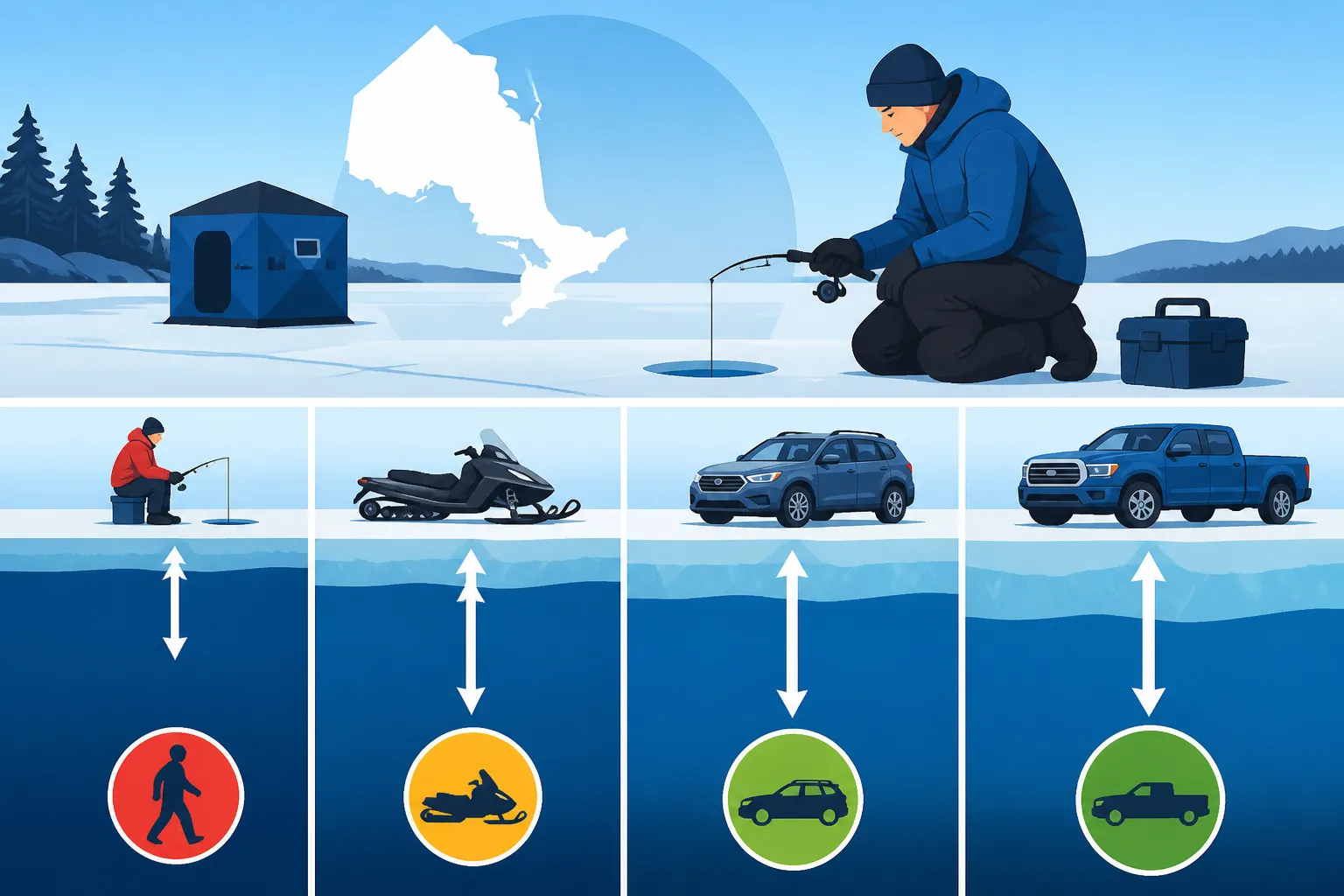
For an individual venturing out on foot, carrying only light gear, the generally accepted minimum thickness for clear, new ice is 4 inches (10 cm). This provides a reasonable margin of safety for a single person. However, if you're planning on carrying a heavy sled with an Best Ice Auger for Ontario Lakes and a full tackle box, or if you're part of a small group walking together, you'll want to increase that minimum. The collective weight and movement can put more stress on the ice. Always test ahead with a spud bar or auger, especially when you first step onto the ice and as you move across it. Never assume the ice is consistent across the entire waterbody. What's safe near shore might be dangerously thin further out.
Bringing the Big Gear: Snowmobiles, ATVs, and Ice Huts
The equation changes dramatically when you introduce motorized vehicles or heavy structures like ice huts. For snowmobiles or ATVs, the recommended minimum thickness for clear, new ice jumps to 5-7 inches (12-18 cm). This accounts for the weight of the vehicle and rider, plus any gear they might be pulling. If you're planning on setting up a larger Best Ice Hut for Ontario Lakes that houses multiple people and their gear, you'll need even thicker ice – generally 7-12 inches (18-30 cm). For a medium-sized car or light truck, a minimum of 12-15 inches (30-38 cm) of clear, new ice is advised, and for heavy trucks, you're looking at 15 inches (38 cm) or more. These heavier loads require substantial, consistent ice thickness, and should only be attempted by experienced individuals who have thoroughly checked conditions. Remember, driving on ice always carries inherent risks, and conditions can change rapidly. Always check local advisories and rules about Ontario Ice Hut Registration Rules before heading out.
Here’s a quick reference table for safe ice thickness, based on clear, new ice:
| Activity / Weight | Recommended Minimum Clear Ice Thickness (Inches) | Recommended Minimum Clear Ice Thickness (Centimeters) |
|---|---|---|
| Single Angler (foot traffic, light gear) | 4 | 10 |
| Small Group / Ice Hut (portable, 2-3 people) | 5-7 | 12-18 |
| Snowmobile / ATV | 5-7 | 12-18 |
| Medium-sized Car / Light Truck | 12-15 | 30-38 |
| Heavy Truck | 15+ | 38+ |
The Illusion of Invincibility: Why Even "Thick" Ice Can Be Tricky
It’s tempting to think that once you hit a certain thickness, you're absolutely safe. But the reality is far more complex. Even what appears to be thick ice can have weak spots that can give way without warning. These "tricky" areas might be caused by underwater currents, natural springs that introduce warmer water, or even variations in how the ice formed. A seemingly solid surface can conceal a hidden pocket of slush or honeycomb ice underneath. Areas around docks, bridges, points, and river inlets are notorious for having inconsistent ice. Additionally, thick ice that has been exposed to periods of thawing and refreezing can lose its structural integrity, becoming less reliable than newly formed, clear ice of the same measured thickness. Always be skeptical and approach ice with a healthy dose of caution, regardless of a preliminary thickness reading. Even on the Best Ice Fishing Lakes in Ontario, vigilance is key.
What Makes Ice Strong? Factors Beyond Just Cold Air
While a sustained cold snap is essential for ice formation, cold temperatures alone don't guarantee strong, safe ice. Many other factors influence the stability and integrity of the frozen surface, and understanding these nuances can literally be a lifesaver.
Not All Ice Is Created Equal: Clear vs. White Ice
One of the most crucial distinctions to make is between clear (black) ice and white (snow) ice.
Clear ice is formed from a direct freeze of water without significant snow cover. It looks dark, almost black, because you can see through it into the water below. This type of ice is the strongest, with a tightly packed molecular structure. The thickness guidelines mentioned earlier primarily refer to clear ice. If you have 4 inches of clear ice, it's generally considered safe for foot traffic.
White ice, on the other hand, is formed when snow falls on thin ice, causing it to depress and absorb water, or when slush freezes. It can also form from freezing rain. This ice appears milky or white due to trapped air bubbles and a less dense, often porous structure. White ice is significantly weaker than clear ice – sometimes only half as strong. This means you might need 8 inches of white ice to achieve the same safety margin as 4 inches of clear ice. It’s a common mistake to assume all ice is equally strong, and this oversight can lead to serious trouble. Always prioritize clear ice when possible and double the thickness requirement when dealing with white ice.
Hidden Hazards: Currents, Springs, and Weather Swings
Ontario's vast network of lakes and rivers is beautiful, but it also presents unique ice formation challenges. Strong currents in rivers or narrows can continually erode ice from below, creating dangerously thin sections that are invisible from the surface. Natural springs, which can be found in many lakes, introduce warmer groundwater, melting the ice from beneath. These areas often appear solid but are treacherous. You'll often see "no ice fishing" signs near these spots or even open water when the rest of the lake is frozen solid.
Weather fluctuations also play a massive role. A week of consistent sub-zero temperatures will build solid ice, but a sudden warm spell, even if temperatures remain below freezing, can rapidly degrade ice quality. Sunlight, wind, and even rain can weaken the top layers, creating slushy, honeycombed ice that loses its structural integrity. Refreezing after a thaw often results in a weaker, layered ice that cracks more easily. Always check the long-range forecast before planning your Ice Fishing in Ontario trip. Cold fronts can also impact fish behavior and ice strength, so understanding how to fish after a cold front in Ontario is also helpful.
Lake Dynamics: How Waterbody Size and Depth Play a Role
The characteristics of the waterbody itself greatly influence ice formation. Smaller, shallower ponds and bays often freeze first and are generally safer early in the season because their water volume is less resistant to temperature changes. Larger, deeper lakes and rivers, like Lake Simcoe or the Bay of Quinte, take much longer to freeze sufficiently and can maintain dangerous currents throughout the winter.
The depth of the water can also affect ice stability. Shallower areas tend to freeze more uniformly, but deep water can hold more heat, making it slower to freeze and more prone to inconsistent ice thickness. Always be particularly cautious over deep sections or areas known to have significant water movement. The Ontario Fish ON-Line Interactive Zone Map, Explained can help you understand the specific characteristics of different zones and water bodies.
Equipping Yourself for Safety: Measuring and Monitoring Ice Conditions
You wouldn't drive a car without checking the fuel, and you shouldn't step onto the ice without assessing its condition. Proper tools and a methodical approach are non-negotiable for a safe ice fishing experience. Preparation starts long before you reach the ice.
Your Essential Toolkit: Spud Bars, Augers, and the Tape Measure
Having the right equipment to test ice thickness is paramount.
- Spud Bar: This is arguably your most important ice safety tool. A heavy steel bar with a chisel-like end, it's used to strike the ice ahead of you. A single, solid strike should reveal the ice thickness. If it goes through easily, you know to back away. Always "spud" your way out, especially at the start of your journey across the ice and in unknown areas. You can find robust spud bars on platforms like Amazon.
- Ice Auger: Once you've determined a safe spot with your spud bar, an ice auger (either manual or power) is essential for drilling holes to fish through and to get accurate measurements. Make sure your auger blades are sharp, as dull blades make testing much harder and less efficient. Many anglers rely on popular brands readily available on Amazon for their reliability.
- Tape Measure: After drilling a hole, use a retractable tape measure to determine the exact ice thickness. Don't just eyeball it; a precise measurement is crucial. Extend the tape down through the hole until it touches the water, then pull it back up and note the water line on the tape.
- Safety Picks: These are small, sharp picks attached by a cord, worn around your neck. If you fall through, you can use them to gain purchase on the ice and pull yourself out. They are inexpensive and can be a true lifesaver. You'll find many options, including sets, on Amazon.
- Personal Flotation Device (PFD) / Life Jacket: Even if you're not in a boat, wearing a PFD or a specialized ice fishing flotation suit can significantly increase your survival chances if you fall through the ice. It provides buoyancy and some thermal protection. Check out options for Life Jacket Requirements for Ontario Boaters and consider a similar personal choice for ice fishing.
The Pre-Trip Checklist and Ongoing Vigilance on the Ice
Safety isn't just about having the tools; it's about a mindset of continuous vigilance. Before you even leave home:
- Check Local Reports: Many bait shops, local outfitters, and online forums provide updated ice condition reports. While helpful, always verify these reports with your own measurements. Conditions can change overnight or vary widely even on the same lake.
- Tell Someone Your Plan: Inform a trusted friend or family member exactly where you're going, when you expect to return, and who you're with. This is critical for any outdoor adventure, especially ice fishing.
- Pack a Safety Kit: Beyond the measuring tools and PFD, carry a fully charged cell phone (in a waterproof bag), a whistle, a headlamp, a first-aid kit, and extra warm, dry clothing.
- Go with a Buddy: Whenever possible, never ice fish alone. A partner can provide assistance if you get into trouble.
Once you're on the ice, your vigilance continues:
- Test as You Go: Continually spud the ice ahead of you, especially when moving to new areas, or if you notice any changes in ice colour or texture.
- Watch for Signs of Weakness: Look for cracks, open water, slushy patches, or discoloured ice. Listen for creaking or groaning sounds – these can indicate stress on the ice.
- Avoid Known Hazards: Stay away from inlets, outlets, narrow points, under bridges, and areas with visible currents. Also be mindful of pressure ridges, which are areas where ice sheets have buckled due to expansion and contraction.
- Spread Out: If fishing with a group, spread out your weight to avoid putting too much stress on one area of ice.
When in Doubt: Identifying and Avoiding Unsafe Ice
If you encounter any of the warning signs, or if your measurements indicate inadequate thickness, the safest course of action is always to turn back. No fish is worth risking your life.
- "When in doubt, don't go out" is more than just a catchy phrase; it's a cardinal rule of ice safety.
- If you see open water where there should be ice, or if the ice looks slushy or honeycombed, it’s not safe.
- If you hear loud cracks or groans, immediately and calmly retrace your steps.
- If you feel uneasy about a spot, trust your gut. It’s better to be safe than sorry, even if it means missing out on the Best time to fish for perch in winter at a specific spot.
Ultimately, ice fishing is a fantastic way to enjoy the winter season in Ontario, but it demands respect for the environment and a commitment to safety. By understanding the factors that affect ice strength, using the right tools, and maintaining constant vigilance, you can ensure your adventures on the frozen lakes and rivers are memorable for all the right reasons. Always prioritize safety, and happy fishing!
Disclaimer
This article is for general informational purposes only and does not constitute professional advice. Laws, prices and regulations vary by location and change over time. Consult a qualified professional for guidance on your specific situation.