Best technique for tailwater trout below a dam
Fishing below a dam can feel like you've unlocked a secret fishing ground, but it often comes with its own unique set of challenges. The constantly flowing, often cold water might seem pristine, but those dam releases and consistent currents can make trout notoriously tricky to pin down. If you've ever felt overwhelmed trying to figure out the best way to approach these powerful, nutrient-rich waterways for Ontario's elusive trout, you're in the right place. This guide will dive deep into the specific techniques and strategies that will help you consistently find success when targeting trout in Ontario's tailwater fisheries.
Understanding Tailwater Dynamics and Trout Behavior
Tailwaters are truly special environments, and understanding what makes them tick is the first step to unlocking their secrets. They're not like your typical natural river or lake; their conditions are largely dictated by the upstream dam, which creates both opportunities and challenges for anglers.
The Unique Environment of Tailwaters
Imagine a river where the water temperature rarely fluctuates much, staying consistently cool even on the hottest summer days. That's often the reality below a dam. The water released from the deeper parts of a reservoir maintains a more stable, cooler temperature year-round. This consistent chill means that trout in tailwaters often behave differently than their counterparts in free-flowing rivers. They can be active even when other trout are sluggish, and their metabolism can be geared towards a more consistent feeding cycle.
What also sets tailwaters apart is the relatively stable flow. While dam operators do release water, leading to fluctuations, these changes are often predictable within certain windows. This constant, regulated flow shapes the riverbed, creating specific current seams, deep pools, and gravel runs that trout call home. These environments are also often incredibly rich in nutrients, supporting a thriving ecosystem of aquatic insects and baitfish, which are the bread and butter of a tailwater trout's diet.
How Trout Adapt to Tailwater Conditions
Trout in tailwaters are masters of energy conservation and opportunistic feeding. They learn to position themselves in prime holding lies where food is delivered directly to them with minimal effort. Think about those subtle eddies behind large rocks, the slower water along a current seam, or the deep troughs where the current isn't as brutal. These are their grocery store aisles.
Because of the consistent flow and often abundant food, tailwater trout can grow quite large and be incredibly strong fighters. Their feeding strategies often revolve around a consistent "hatch" or emergence of aquatic insects, or they'll key in on larger meals like baitfish that are stunned or disoriented by dam releases. They become very efficient, often holding tight to the bottom or structure, waiting for the current to bring them a meal. This means your presentation needs to be impeccable, getting your fly or lure right into their strike zone without alarming them.
Essential Gear for Ontario Tailwater Trout Fishing
Having the right tools for the job can make all the difference, especially in the demanding environment of Ontario's tailwaters. From the rod in your hand to the waders on your legs, each piece plays a crucial role in your success and safety.
Rods, Reels, and Line Choices
For fly fishing in Ontario's tailwaters, you'll generally want a rod in the 4-weight to 6-weight range, usually between 9 and 10 feet long. A longer rod gives you better line control, which is absolutely critical for mending line and achieving those long, drag-free drifts required in strong currents. The extra length also aids in fighting larger fish that use the current to their advantage. Pairing this with a sensitive reel that has a smooth drag system is key, as these trout can make powerful runs. A weight-forward floating line is standard, but you might consider a sinking tip or full sinking line if you're consistently fishing very deep pools or throwing larger streamers. Many anglers find excellent options for these specialized rods and reels on platforms like Amazon, often reading reviews to match their specific needs. You can learn more about choosing the right setup in our guide on Best Fly Rods for Ontario Trout Streams.
If you prefer spinning gear, a sensitive light to ultralight action rod, typically 6 to 7 feet in length, is ideal. Look for a fast action tip that will transmit even the slightest bite. Pair this with a small, high-quality spinning reel loaded with 4 to 6-pound test monofilament or fluorocarbon line. Fluorocarbon is fantastic for its low visibility underwater and its abrasion resistance, which is a big plus when fishing around rocks and current. The goal here is finesse and sensitivity, allowing you to feel subtle takes while maintaining control over your presentation in the current.
Terminal Tackle and Essential Accessories
When it comes to terminal tackle, stealth is the name of the game. For fly anglers, long leaders, often 9 to 12 feet, tapered down to a fine tippet (5X to 7X) are essential for a natural presentation. You'll also need a selection of strike indicators (yarn, buoyant foam, or sighter material for Euro nymphing), various sizes of split shot to get your flies down quickly, and perhaps some small swivels if you're using weighted rigs.
Spinning anglers will want a selection of small weights (split shot, drop shot weights), small swivels to prevent line twist, and a variety of small hooks appropriate for bait or micro-lures. Again, fluorocarbon leaders are highly recommended for their invisibility.
Beyond the immediate fishing gear, safety in tailwaters cannot be overstated. Waders are a must, keeping you warm and dry in the cold water. More importantly, a sturdy Best Wading Staff for Fast Current is not just a recommendation; it's a safety tool that provides crucial balance and stability, especially when navigating slippery, uneven river bottoms and strong currents. You can often find durable, reliable wading staffs and other essential accessories like good quality polarized sunglasses to help spot fish and structure on Amazon, making it easy to prepare for your trip. A small, durable landing net, preferably with rubberized mesh to protect the fish, is also a wise investment for careful catch and release.
Top Techniques for Tailwater Trout in Ontario
Tailwaters demand adaptability, and having a few key techniques in your arsenal will significantly increase your chances of success. While trout can be opportunistic, sometimes they require a very specific presentation.
Nymphing Strategies The Workhorse Technique
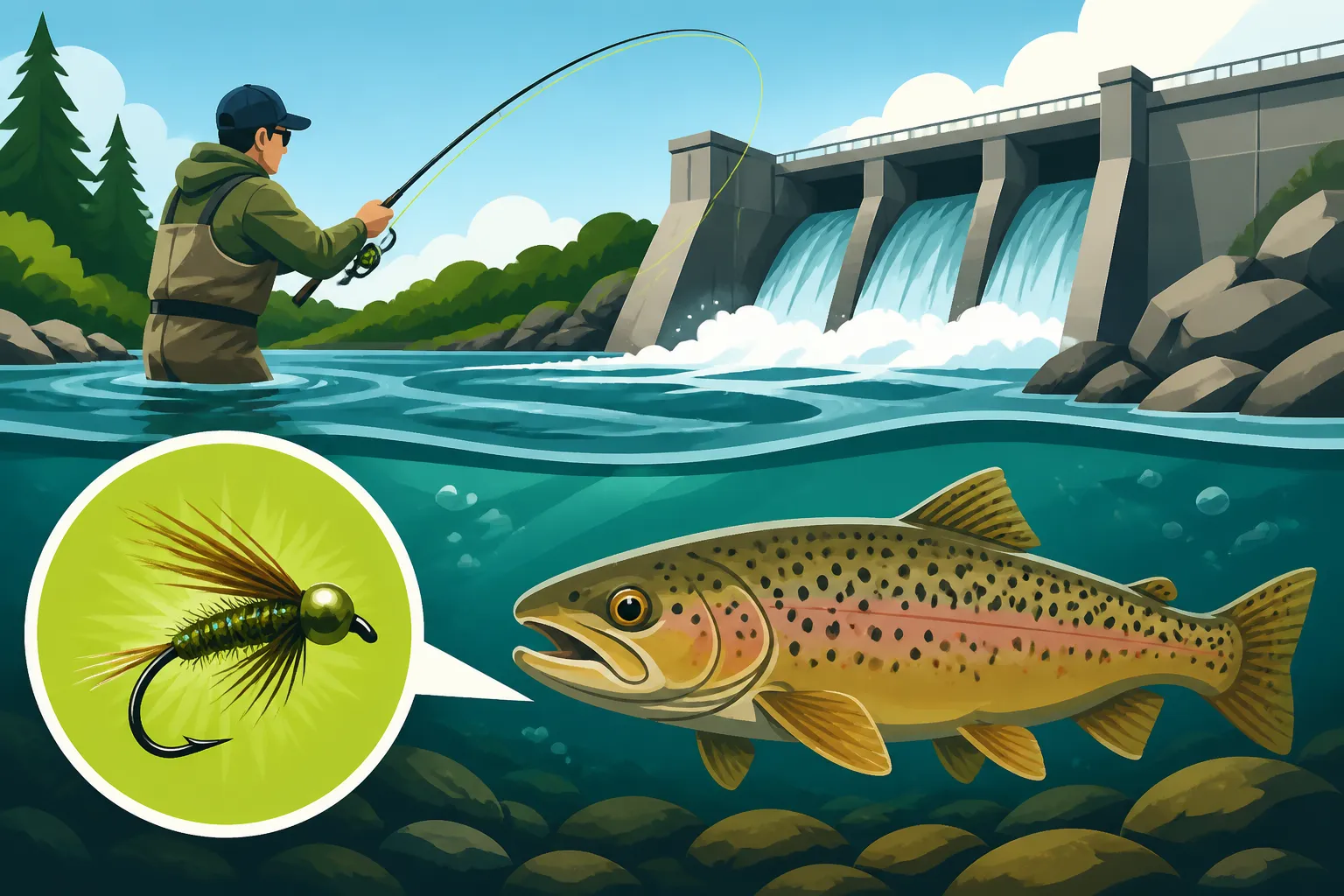
Nymphing is arguably the most consistent and effective technique for tailwater trout fishing, primarily because trout feed on aquatic insects in their nymphal stage for the vast majority of their lives. These insects drift along the bottom, and your job is to imitate that drift perfectly.
European Nymphing (Euro Nymphing): If you're serious about tailwater trout, you absolutely need to explore Euro nymphing. This technique, also known as "tight-line nymphing," uses a long, sensitive rod, a specialized leader with a "sighter" (a high-visibility section of line), and weighted flies to maintain direct contact with your flies as they drift. Instead of relying on a buoyant indicator, you watch the sighter for the slightest twitch, indicating a take. This method allows for incredible sensitivity and control, letting you precisely drift your flies through specific current seams and deep pockets without drag. It's especially effective in faster, deeper runs where traditional indicator nymphing struggles to get flies down quickly and maintain contact. For a deeper dive, check out our guide on Euro Nymphing Ontario Trout Streams.
Indicator Nymphing: This is perhaps the more traditional and widely understood nymphing method. You'll use a buoyant strike indicator attached to your leader, with one or more weighted nymphs tied below it. The indicator's job is to suspend your flies at a desired depth and, more importantly, to show you when a fish takes your fly. Reading the drift is crucial here: you want your indicator to float at the same speed as the surrounding current, mimicking a natural, drag-free presentation. Common nymph patterns that imitate key tailwater insects include Pheasant Tail, Hare's Ear, Prince Nymph, and various caddis larva imitations. The key is to get your flies down to where the fish are feeding, which is often right along the bottom. You may need to experiment with different amounts of split shot and leader lengths to achieve this perfect drift. Our article on the Best Nymph rig for freestone streams offers great insights that are applicable here.
Streamer Fishing for Aggressive Trout
While nymphs are about subtle imitation, streamer fishing is about triggering a predatory response. This technique involves using larger, baitfish-imitating flies that are stripped or swung through the water to mimic a wounded or fleeing minnow.
Streamers are particularly effective when the water is higher or slightly off-colour, often after dam releases or heavy rains, which can dislodge baitfish and make them vulnerable. They are also excellent for targeting larger, more aggressive trout who are looking for a substantial meal. Instead of a delicate drift, you'll be actively retrieving your streamer, imparting movement with strips and pauses. The excitement of a big trout slamming a streamer is hard to beat!
Popular streamer patterns for Ontario tailwaters include various sizes and colours of Woolly Buggers, Sculpzillas, and Clouser Minnows. You can strip them quickly to imitate fleeing prey, or swing them slowly across currents to mimic a dying baitfish. Sometimes, simply dead-drifting a streamer can be surprisingly effective. Don't be afraid to experiment with retrieve speeds and patterns until you find what the trout are keying in on. For specific recommendations, our guide on Best Streamer patterns for Ontario brown trout can be very helpful.
Dry Fly Fishing When Conditions Allow
Ah, dry fly fishing! There’s nothing quite like watching a trout rise to a perfectly presented dry fly. While not always the most consistent technique in fast-flowing tailwaters, when conditions align, it can be incredibly rewarding.
Dry fly fishing in tailwaters usually shines during a specific insect hatch. When you see trout actively rising to take insects off the surface, it’s time to switch to a dry fly. Your goal is to "match the hatch," meaning selecting a fly that closely imitates the size, shape, and colour of the natural insects emerging. Common hatches in Ontario's tailwaters might include various mayflies, caddisflies, or even midges.
The presentation is absolutely critical. You need to cast your dry fly delicately upstream of a rising fish, ensuring it lands softly and drifts naturally, without any drag. Drag occurs when your fly line pulls the fly unnaturally across the surface, which will immediately put down a wary trout. Long leaders, accurate casts, and skillful mending of your fly line are paramount. Dry flies are best used in slower currents, eddies, or along foam lines where insects tend to collect. Patience and observation are key. Wait for a consistent rise pattern, identify the insect, and then present your offering. Check out our Dry Fly Fishing Ontario Rivers guide for more insights on this beautiful technique.
Reading the Water and Approach Strategies
Success in tailwaters isn't just about technique; it's about understanding the environment and approaching it thoughtfully. Every ripple, seam, and structure tells a story if you know how to read it.
Identifying Prime Holding Lies
Trout, especially in strong tailwater currents, are always looking for places to conserve energy while remaining close to a food source. This means they'll often hold in "soft" water adjacent to "fast" water.
- Current Seams: These are the lines where fast water meets slow water. Trout will often sit just on the slower side of the seam, waiting for food to be funneled to them by the faster current.
- Eddies and Back-currents: Areas behind large rocks, logs, or bends in the river create swirling water where trout can rest without fighting the main current. Food also tends to collect in these spots.
- Deep Pools: These offer protection and often have slower currents along the bottom, providing excellent holding water. They're especially good for larger trout.
- Riffles and Runs: The faster, shallower sections where the water tumbles over rocks oxygenate the water and dislodge insects. Trout will often sit in the deeper slots or just behind larger rocks in these areas.
- Submerged Structure: Fallen trees, undercut banks, and large boulders provide both cover from predators and breaks in the current.
Take your time when you arrive at a new section of tailwater. Observe the currents, look for seams and eddies, and try to visualize where a trout might be holding. Often, you can spot subtle rises or even the flash of a fish turning if you're patient and wear polarized sunglasses.
Stealth and Presentation
Tailwater trout can be incredibly wary, especially in clear water. Your approach needs to be as stealthy as possible.
- Approach from Downstream: Whenever possible, approach the water from downstream, moving slowly and quietly. This minimizes the chance of spooking fish that are facing upstream, feeding.
- Stay Low: Keep a low profile. Your silhouette against the sky can be easily spotted by wary trout.
- Cast Upstream: For most fly and spin techniques, casting upstream and allowing your offering to drift naturally back towards you is ideal. This presents the bait or fly to the fish first, before your line or body.
- Minimize False Casts: Excessive false casting can cast shadows or create disturbances that alert fish. Try to make fewer, more efficient casts.
- Mend Your Line: Fly anglers, in particular, need to master the art of mending. This involves lifting and repositioning your fly line on the water to eliminate drag and allow your fly to drift naturally with the current. This is a skill that takes practice but is invaluable.
The cleaner and clearer the water, the more critical stealth becomes. Trout have excellent eyesight, and unnatural movement or disturbances can send them scurrying for cover.
Adjusting to Dam Releases and Flow Changes
One of the biggest variables in tailwater fishing is the dam itself. Water releases can dramatically change the river's character, flow, and trout behavior.
- Check Release Schedules: Many dams publish their release schedules online. Familiarize yourself with these schedules to plan your fishing day. Fishing during stable flows or just before a planned increase can be productive.
- Rising Water: When the dam releases water, the river level will rise, and the current will strengthen. This can dislodge insects and baitfish, sometimes triggering a feeding frenzy. However, it also means trout might move to new, less strenuous holding lies closer to the banks or in newly formed eddies. Be cautious of rapidly rising water, as it can be dangerous.
- Falling Water: As water levels drop, trout might move out of shallower areas back into deeper channels. The fishing can become tougher as fish might feel exposed or go into a holding pattern.
- Turbidity: Dam releases can sometimes stir up sediment, making the water murky. In these conditions, brighter, larger flies or lures that create more vibration can be more effective.
Being adaptable to these changes is key. Don't be afraid to change your location, your technique, or your fly/lure choice when the conditions shift. A river that was productive in low, clear water might require a completely different approach during a heavy release.
Technique Comparison for Ontario Tailwater Trout
Here's a quick look at how the primary tailwater techniques stack up, helping you choose the best approach for different situations.
| Feature | Nymphing (Euro/Indicator) | Streamer Fishing | Dry Fly Fishing |
|---|---|---|---|
| Primary Prey | Aquatic insect larvae, pupae | Baitfish, larger insects, crayfish | Adult aquatic insects on the surface |
| Target Fish | Actively feeding trout, often holding near the bottom | Aggressive, predatory trout (often larger) | Actively rising trout during a hatch |
| Conditions Best | Most consistent year-round, especially in deep or fast water | Higher flows, stained water, targeting trophy fish | During insect hatches, calm water, consistent rises |
| Presentation | Dead drift on or near the bottom, subtle | Active retrieve (strips, swings), imparting movement | Delicate, drag-free drift on the surface |
| Skill Required | Reading currents, depth control, detecting subtle strikes | Casting larger flies, varying retrieves | Accurate casting, matching the hatch, mending line |
| Pros | Highly effective, mimics trout's primary food source | Exciting, can catch bigger fish, covers lots of water | Visually rewarding, pure artistry, can be very effective |
| Cons | Can be technical, less visual, requires precise depth | Not always consistent, can be physically demanding | Highly dependent on specific conditions and hatches |
No matter which technique you favour, remember that the trout in Ontario's tailwaters are a truly special quarry. They are smart, strong, and rewarding to catch. Focus on perfecting your presentation, understanding their habitat, and enjoying the incredible environment around you. Tight lines!
Disclaimer
This article is for general informational purposes only and does not constitute professional advice. Laws, prices and regulations vary by location and change over time. Consult a qualified professional for guidance on your specific situation.