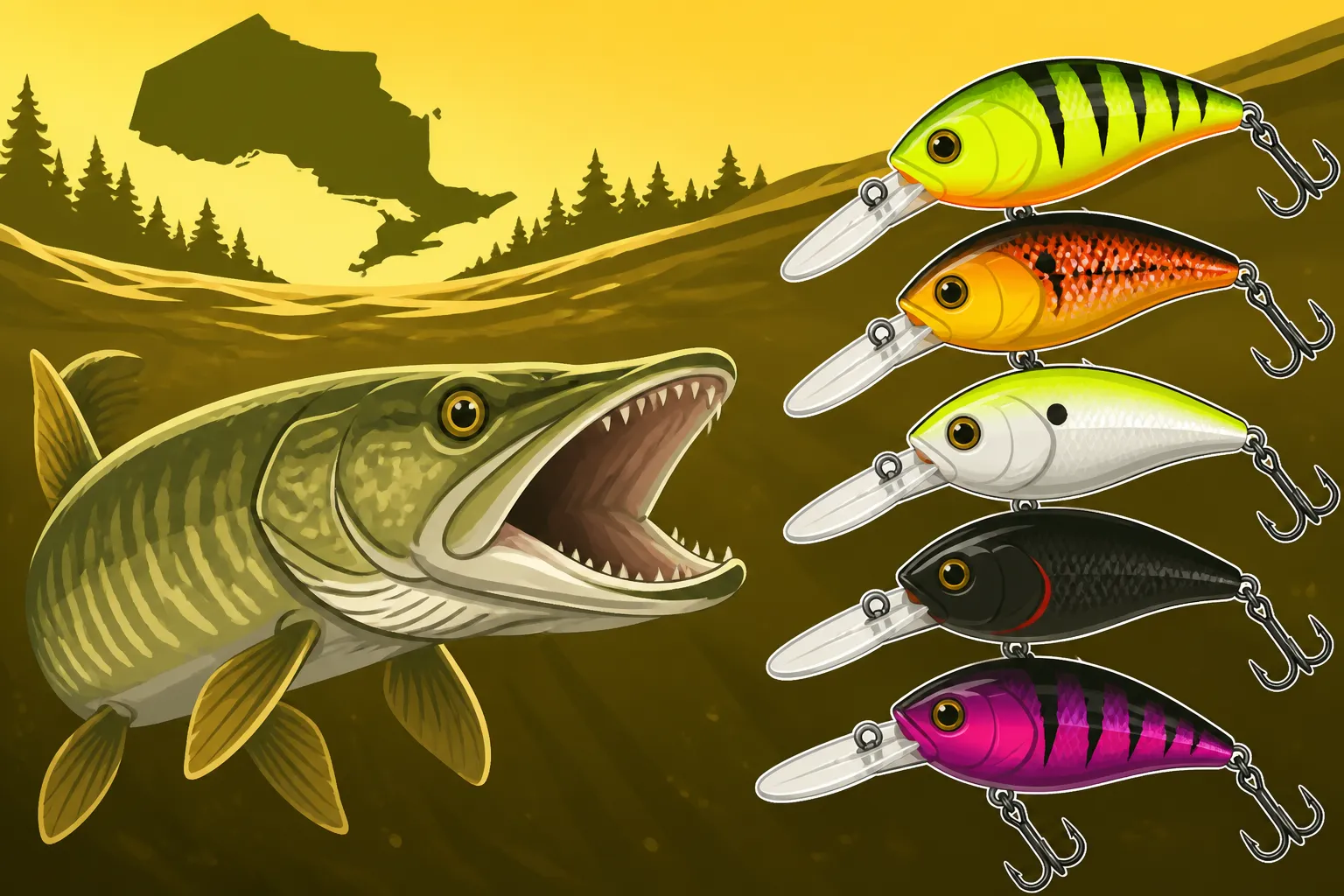
Best crankbait colors for muskie in stained water
Muskie fishing is one of Ontario's most thrilling and challenging pursuits, but throw some stained water into the mix, and it can feel like you're casting into a void. It's frustrating when you know those toothy giants are lurking, but you can't seem to entice a strike because your bait just disappears. This comprehensive guide is all about helping you cut through that murky challenge, focusing on the best crankbait colors to make your lure stand out and trigger those aggressive muskie hits, even when the water clarity isn't on your side.
Understanding Stained Water Conditions and Muskie Behavior
Before we dive into color, let's get a handle on what "stained water" truly means and how it impacts the mighty muskellunge. You see, not all murky water is the same. There's muddy water, often a result of heavy rains or agricultural runoff, which is usually thick with suspended clay or silt particles. This water often has very poor visibility and is a tough bite. Then there's truly clear water, which is fantastic for sight fishing and natural presentations.
Stained water, however, sits somewhere in the middle. It often has a tea-like tint, typically from tannins leaching out of decaying vegetation in swamps, bogs, or wooded shorelines, common in many of Ontario's northern lakes and rivers like the French River or portions of the Kawartha Lakes. This tint might reduce visibility to a few feet, but it's not entirely opaque. Muskie in these conditions still need to see their prey, but they're doing it in a different light spectrum than they would in crystal clear water.
This reduced visibility drastically changes how muskie hunt. They're still ambush predators, but instead of relying solely on keen eyesight from a distance, they'll lean much more heavily on their other senses. Their lateral line, a sensory organ running along their sides, becomes incredibly important. This system detects vibrations and pressure changes in the water, allowing them to sense a bait's movement even if they can't see it clearly. This means that a crankbait's action and the vibrations it produces are just as crucial as its color. Also, muskie might be less spooky in stained water, allowing for closer approaches, but your presentation still needs to be spot-on to compensate for the limited sight window. Knowing how to choose the right gear, including the Best Fishing Rods for Ontario Lakes, can also enhance your ability to feel subtle strikes in these conditions.
The Science of Color and Contrast in Stained Water
Choosing a crankbait color isn't just about what looks good to us; it's about what looks good to a muskie in their environment. In stained water, light penetration is significantly altered. The reddish-brown tint absorbs certain wavelengths of light more readily than others. Blues and violets tend to disappear quickly, while reds and oranges might initially stand out but can also fade as they go deeper or as the stain intensifies.
This is where the concept of contrast becomes paramount. Instead of trying to perfectly mimic a baitfish color, our goal in stained water is often to make the lure highly visible or to create a strong silhouette. Imagine looking at a dark object against a bright sky – it's easy to see the outline, even if you can't discern its color. The same principle applies underwater. A crankbait that creates a distinct silhouette against the lighter surface or the stained water column will be much easier for a muskie to track.
Flash also plays a significant role. Metallic finishes like chrome, gold, or silver can reflect ambient light, creating quick, bright flashes that can catch a muskie's eye from a distance. These flashes act like a beacon, drawing attention to the lure even if the overall color is muted by the water conditions. When muskie fishing in Ontario, especially for trophy fish, you need every advantage you can get, and understanding these visual cues is a huge part of that. Knowing the Muskellunge Growth Rate to Trophy Size often means adapting your approach to conditions like stained water.
Top Crankbait Color Categories for Stained Water Muskie
When faced with stained water, don't despair! There are several categories of crankbait colors that consistently produce results by leveraging the principles of visibility, contrast, and flash.
Bright and Fluorescent Colors
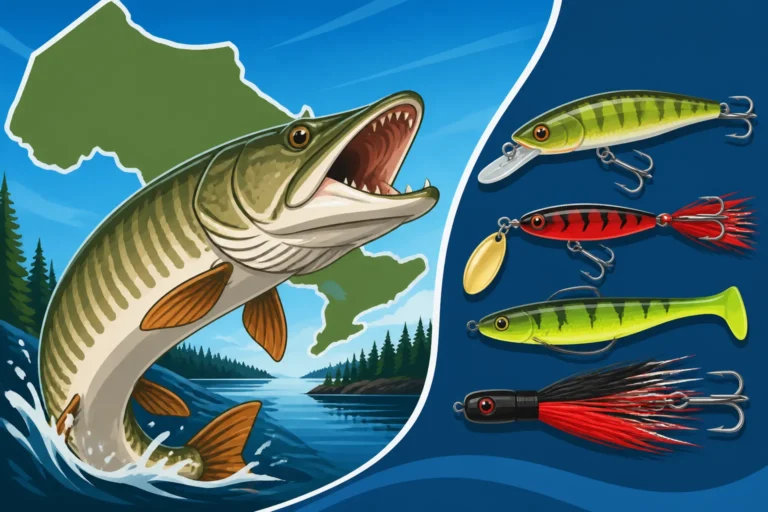
These are your attention-grabbers, designed to punch through the murky water and scream "EAT ME!" Bright and fluorescent colors include chartreuse, firetiger, hot orange, and vibrant pinks.
- Why they work: These colors have pigments that absorb light and re-emit it at a different wavelength, making them appear to "glow" or maintain their vibrancy even in low light conditions. They offer high visibility and sharp contrast against the stained backdrop, often imitating a distressed or unnatural prey that piques a muskie's curiosity. Think of a firetiger pattern – its bold yellow, green, and orange stripes with dark accents create an immediate, unmistakable profile.
- When to use: These are your go-to options for heavily stained water, especially on overcast days, during dawn or dusk, or any other low-light situation where you need maximum visibility. Brands like Rapala offer iconic firetiger patterns in their Super Shad Rap series, which are muskie staples. You can find a wide selection of these effective lures on Amazon, making it easy to stock up before your next trip.
- Real-world scenario: You're fishing a tannic-stained lake in Northern Ontario on a cloudy afternoon. Your natural-colored perch crankbait isn't getting any love. Switching to a bright chartreuse or firetiger pattern suddenly starts drawing followers, and then, boom! A muskie nails it. This isn't coincidence; it's the lure's ability to be seen.
Dark and High Contrast Colors
Sometimes, the best way to stand out isn't to be bright, but to be dark. Dark colors like black, deep purple, or dark green excel at creating a strong, clean silhouette.
- Why they work: Against a lighter sky or the lighter upper water column, a dark lure presents a solid, easy-to-see profile. Muskie are excellent at detecting shapes, and a stark, dark outline in stained water can be just as effective as a bright flash. These colors don't rely on light reflection; they rely on blocking light, creating a distinct form.
- When to use: Paradoxically, these can be fantastic on sunny days in stained water. The sun provides a bright backdrop for the dark lure to silhouette against. They're also excellent for deep presentations, where light penetration is minimal, or when muskie are holding tight to heavy cover, presenting a more "natural" large baitfish profile.
- Real-world scenario: On a bright, sunny day on Lake of the Woods, the water has a typical tea stain. You're casting over rocky reefs. A black or dark purple crankbait, like some offerings from Musky Innovations, retrieved with a wide wobble, is presenting a strong silhouette that muskie can easily ambush from the shadows.
Metallic and Flash Colors
The power of flash cannot be overstated, especially when you need to grab attention in dim conditions. These include chrome, gold, and silver finishes, often combined with other colors.
- Why they work: Metallic surfaces are fantastic at reflecting any available light, sending out quick, intense flashes that mimic the natural shimmer of a baitfish's scales. These intermittent flashes are highly stimulating to predatory fish and can be seen from a surprising distance, even in stained water.
- When to use: Incorporate these anytime there's some ambient light available, from sunny days to partially cloudy conditions. They're versatile and can be the secret weapon when muskie are lethargic or when you're trying to cover vast expanses of water. Many crankbaits, like those from Livingston Lures, integrate metallic sides with colored backs, offering the best of both worlds.
- Real-world scenario: You're working a weed edge on a river with stained water, and the sun is peeking in and out of the clouds. A crankbait with chrome sides and a blue back is throwing off brilliant flashes as it wobbles, drawing muskie from deeper cover who are reacting to the sudden bursts of light. If you're looking for Best Muskie Gear for Ontario Waters, metallic crankbaits should definitely be on your list.
Pattern Combinations
Often, the most effective crankbaits combine these principles. Patterns like firetiger (yellow/orange/black stripes) or specific perch patterns (green/yellow/black bars) are popular for a reason.
- Why they work: They offer a blend of high visibility, strong contrast, and often mimic common muskie forage in Ontario. The contrasting stripes create an irresistible visual disruption in stained water, making the lure appear larger and more erratic.
- When to use: These are excellent all-around choices for stained water and often serve as a great starting point when you're unsure which specific color might be best. Consider specific patterns that resemble local forage if known, but always prioritize visibility in stained conditions. The Best Lures for Muskie Fishing in Ontario often include these patterned crankbaits.
Choosing the Right Crankbait Size and Action for Stained Water
Beyond color, two other critical factors heavily influence your success with crankbaits in stained water: size and action. In low visibility conditions, these attributes can make or break your day.
The Importance of Size
When visibility is limited, muskie aren't going to track a tiny lure from afar. Larger baits simply present a more substantial target.
- Increased Profile: A bigger crankbait creates a larger silhouette, which, as we discussed, is crucial in stained water. It's easier for a muskie to spot and home in on.
- More Vibration: Larger baits typically displace more water, generating stronger vibrations that muskie can detect with their lateral line from a greater distance. This helps them locate the lure even if they can't see it clearly.
- Matching Forage: In many prime muskie waters like Lake St. Clair or the Kawarthas, muskie often feed on substantial baitfish like large perch, suckers, or even smaller pike. A bigger crankbait mimics these larger forage items.
Don't be afraid to go big! Crankbaits in the 8-inch to 12-inch range are common for muskie, and in stained water, pushing the upper end of that scale can often pay off.
Crankbait Action and Vibration
This is arguably the most important factor in stained water. Since visual cues are diminished, the bait's movement and the disturbance it creates become the primary attractants.
- Wide Wobble and Thump: Look for crankbaits known for a wide, aggressive wobble and a strong "thump." These actions push more water, creating significant vibrations that travel through the stained water column, alerting muskie to the lure's presence. Brands like Bucher Tackle and Chaos Tackle are known for their crankbaits with powerful, fish-attracting actions.
- Rattles: This is a no-brainer for stained water. Internal rattles, whether loud BB-style or subtle thumping, add an auditory dimension that can be incredibly effective. Sound travels well through water, and a rattling crankbait gives muskie another sensory input to home in on. Some crankbaits, like certain offerings from Bagley, are specifically designed with internal weight transfer systems that not only aid casting but also create distinctive knocking sounds.
- Diving Depth: Consider the typical holding depth of muskie in the stained water you're fishing. Often, in low visibility, muskie might position themselves shallower or tighter to structure, as their ambush distance is reduced. Choose crankbaits that reach the depth zone you expect the fish to be in. If they're shallower, a shallower running crankbait will be more effective than one digging into the bottom, stirring up silt.
- Retrieve Speed: While a bait's inherent action is important, how you retrieve it also affects its vibration. In stained water, a slightly slower retrieve might give muskie more time to find the bait. However, varying your retrieve with pauses, jerks, and surges can also create erratic movements and varying vibrations that can trigger a strike. For more insights, learning How to Catch Muskie in Ontario involves mastering these retrieve techniques.
Practical Tips for Muskie Fishing in Stained Water
Successfully targeting muskie in stained water isn't just about selecting the right crankbait; it also involves adjusting your overall approach. Here are some practical tips to boost your chances.
Adjusting Your Retrieve and Presentation
As we've discussed, muskie rely heavily on their lateral line in low visibility. This means your retrieve needs to do more than just make the bait swim; it needs to announce its presence.
- Slower is Often Better: While muskie are known for chasing fast, in stained water, a slightly slower retrieve can be beneficial. It gives the muskie more time to pinpoint the lure and commit to the strike. Don't be afraid to slow your boat speed if trolling or reduce your reeling speed if casting.
- Embrace the Pause: Incorporating pauses into your retrieve can be a game-changer. A crankbait that stops and then starts again erratically often mimics a wounded baitfish, and the change in vibration can be exactly what a muskie needs to trigger an attack.
- Vary Your Action: Don't just reel straight in. Twitch your rod, sweep it, or make sharp turns if trolling. These actions impart extra movement and vibration to the crankbait, making it more dynamic and noticeable. For Best Baitcasting Reels for Muskie Fishing, ensure you have a reel with the power and smooth drag to handle these varying retrieve styles.
Focusing on Structure and Cover
In clear water, muskie might suspend or roam more openly. In stained water, however, they often hug structure much tighter.
- Weed Lines and Edges: Muskie will often position themselves right on the edge of a weed line, using the cover for ambush. Present your crankbait right along this transition zone.
- Rock Piles and Drop-offs: Submerged rock piles, boulders, and sharp drop-offs provide excellent ambush points. In stained water, these features become even more critical as muskie rely on them for orientation and cover.
- Woody Debris: Laydowns, submerged logs, and brush piles are muskie magnets. Work your crankbait close to these areas, being mindful of snags.
- Shallow Water: Sometimes, stained water means muskie are shallower than usual, especially if that's where the most light penetration and warmth are found, or where baitfish are concentrating. Don't overlook working flats or shallow bays. Many of Ontario's Best Muskie Waters in Ontario have extensive shallow weed beds and rock structures perfect for this approach.
Utilizing Scent and Sound
Since sight is compromised, appealing to other senses can significantly increase your strike potential.
- Scent Application: Adding a commercial scent to your crankbait can leave a scent trail that muskie can follow, guiding them to your lure even if they can't see it. Pro-Cure or Dr. Juice are popular options.
- Rattles (Again!): We mentioned rattles for bait action, but their role in attracting muskie in stained water through sound cannot be overstated. A loud, rattling crankbait can call fish in from a distance.
- Prop Baits: While not strictly crankbaits, prop baits that create significant surface disturbance and gurgling sounds can be incredibly effective in stained shallow water, especially in low light.
Line and Leader Considerations
Your line choice also plays a role in feeling those subtle takes in stained water.
- Braided Line: A low-stretch braided line is often preferred for muskie fishing, especially in stained water. Its sensitivity allows you to feel subtle bumps or changes in your lure's action that you might miss with monofilament. The lack of stretch also ensures powerful hooksets.
- Fluorocarbon Leader: While you need a stout leader to prevent bite-offs from muskie, a fluorocarbon leader is less visible than wire. In stained water, this might not be as critical as in clear water, but it's still a good practice. Many muskie anglers use a heavy fluorocarbon leader or a high-quality wire leader. Finding the right fishing line is crucial, and you can explore options, including those suitable for heavy fluorocarbon leaders, on Amazon.
Weather and Time of Day
Stained water can actually make certain times of day more productive than in clear water.
- Midday Might Be Best: In clear water, muskie often prefer dawn, dusk, or overcast conditions. In stained water, however, the limited light penetration means midday sun might not bother them as much. In fact, brighter conditions can help those metallic flashes or high-contrast patterns stand out even more.
- Overcast Days are Still Great: Overcast days remain excellent, as the consistent low light levels are favorable for muskie activity, and your bright or high-contrast lures will perform exceptionally well.
Remember, every day is different, but by understanding these principles and adapting your tactics, you'll significantly increase your chances of landing a true Ontario giant, even when the water isn't perfectly clear. You might also find that some of these techniques overlap with those for Best Techniques for Fall Muskie Fishing, which often involves stained waters from seasonal changes.
Best Crankbait Colors for Stained Water: At a Glance
Here’s a quick reference table to help you choose the ideal crankbait colors for stained water muskie, combining insights on visibility, contrast, and conditions.
| Color Category | Primary Colors | Key Effectiveness | Ideal Conditions | Examples (Brands/Patterns) |
|---|---|---|---|---|
| Bright/Fluorescent | Chartreuse, Firetiger, Hot Orange, Pink | Max visibility, high contrast, strong attractant | Heavily stained, overcast, low light (dawn/dusk) | Rapala Super Shad Rap (Firetiger), Livingston Lures (Chartreuse) |
| Dark/High Contrast | Black, Dark Purple, Dark Green | Strong silhouette, distinct profile, less spooky | Sunny days (stained), deep water, heavy cover | Musky Innovations (Black/Purple), Chaos Tackle (Dark Green) |
| Metallic/Flash | Chrome, Gold, Silver (often with color) | Reflects light, creates flash, draws attention | Any light conditions with some ambient light | Shallow Raider (Chrome/Blue), Salmo Fatso (Silver/Black) |
| Pattern Combos | Perch, Sucker, Walleye patterns | Blends visibility/contrast, mimics local forage | Versatile for various stained water types | Storm Swim Shad (Perch), Grandma Lures (Sucker) |
It's always a good idea to have a selection from each category in your tackle box when heading to Ontario's muskie waters. Many excellent options are available on Amazon, making it convenient to equip yourself for any stained water scenario.
Disclaimer
The information provided in this guide is for general informational purposes only. Fishing regulations, seasons, and licensing requirements in Ontario can change. Always consult the most current Ontario Fishing Regulations Summary and obtain the necessary licenses before fishing. Fishing involves inherent risks; please prioritize safety on the water.