Best trolling speed for lake trout
Figuring out the absolute sweet spot for trolling speed when you're after those elusive lake trout can feel like trying to solve a complex puzzle, especially when conditions are constantly shifting on our vast Ontario lakes. It's not just about putting your boat in gear and dragging a lure; it's about understanding how speed affects everything from your lure's action to how a laker perceives its next meal. This guide is going to peel back the layers and help you dial in the best trolling speed for lake trout, ensuring you're presenting your offering in the most irresistible way possible.
Why Trolling Speed Matters for Lake Trout Success
You might think that any speed will do when you're dragging a spoon or a plug behind the boat, but when it comes to consistently catching lake trout, your trolling speed is often the unsung hero. It's a critical component of your presentation, influencing everything from how your lure looks underwater to how the fish react to it. Ignore it, and you could be missing out on a lot of bites.
Mimicking Natural Prey Movements
Lake trout are formidable predators in the cold, deep waters of Ontario's lakes. They're opportunistic, but also highly attuned to the subtle cues of their prey. The speed at which your lure moves directly mimics how a baitfish would behave.
Imagine a school of ciscoes or smelt darting and weaving through the water – a fast, erratic troll might simulate a healthy, fleeing baitfish, which can trigger an aggressive chase response. Now think about a wounded or struggling minnow, limping along, an easy meal. A slower, more deliberate troll with a lure that has a wide, enticing wobble can perfectly imitate that vulnerability. It's all about playing into the lake trout's natural hunting instincts. Understanding the nuances of their feeding habits is key to How to Catch Lake Trout in Ontario.
Lure Action and Presentation
Every lure you tie on has an intended action, a specific way it's designed to move through the water. Trolling speed dictates whether that lure is performing as it should, or if it's just being dragged lifelessly. A spoon might flutter and dart enticingly at one speed, but wash out or spin unnaturally at another. A stickbait might have a tight wiggle at a moderate speed, but a lazy, ineffective sway if you go too slow.
The depth you're fishing at also plays into this. When you're using downriggers or lead core to get your offerings deep, the pressure of the water on your line and lure changes with speed. Too fast, and your lures might blow out of their intended depth or not achieve their designed action. Too slow, and they might just hang there without much appeal. This intricate relationship between speed, depth, and lure action is a cornerstone of effective Trolling Techniques for Ontario Lake Trout.
Factors Influencing Optimal Trolling Speed
There's no single "magic number" for lake trout trolling speed. What works one day, or on one lake, might be completely ineffective on another. That's because several key factors influence what the optimal speed will be. Becoming a truly skilled lake trout angler means being able to read these conditions and adjust on the fly.
Water Temperature and Season
Just like us, fish have different energy levels depending on the temperature around them. Lake trout, being cold-water species, are particularly sensitive to this.
In the colder months, like early spring or late fall, or even during mid-winter ice fishing transitions, lake trout tend to be more lethargic. Their metabolism slows down, and they're less inclined to chase a fast-moving meal. During these times, a slower trolling speed is often more effective, allowing the fish ample time to track, observe, and eventually commit to your lure. Think about those chilly early mornings when you're still half-asleep – you're not sprinting for breakfast, right? Neither are the lakers. This is when understanding What water temperature lake trout prefer becomes incredibly important. Conversely, in the warmer summer months, when lake trout are often found deeper where the water is cooler, they can be quite aggressive. Their metabolism is higher, and they're more willing to chase. This is often when you can pick up the pace a bit, using faster trolling speeds to cover more water and trigger those reactive strikes. The Best Time of Year to Fish in Ontario for lake trout often involves being prepared to adjust speeds.
Baitfish Presence and Activity
Lake trout feed on a variety of baitfish, including ciscoes, smelt, shiners, and sculpins. Observing the activity level of these baitfish, either visually on your sonar or by noting any surface activity (though lakers are often deep), can give you huge clues about what trolling speed to use.
If you're seeing tight schools of baitfish on your Best Fish Finders for Ontario Lakes that are moving quickly, lake trout in the area are likely actively hunting and will respond well to a faster presentation. If the baitfish are more scattered or appearing to hold tight to structure, a slower, more deliberate approach might be better, suggesting the lakers are waiting in ambush rather than actively pursuing. Understanding the general patterns of baitfish migration and congregation throughout the year, even during the Lake Trout Spawning Season in Ontario when baitfish might be less concentrated, is a critical piece of the puzzle.
Lure Type and Depth
As we touched on earlier, not all lures are created equal, and their intended action is highly dependent on speed. Spoons, for instance, often have a specific flutter or wobble that's optimized within a narrow speed range. Too slow, and they don't move right; too fast, and they just spin. Stickbaits often come alive with a medium-to-fast troll, mimicking a swimming baitfish with a tight, enticing wiggle. Dodgers and flashers, which are designed to attract fish to your trailing bait, also have optimal speeds where they flash and kick most effectively.
The depth at which you're fishing also influences the effective speed of your lure. When you're deploying your lures with methods like downriggers, lead core line, or heavy weights to get them down to where the lakers are holding, the resistance of the water on your line and lure changes. A lure that might run perfectly at 2.5 mph on the surface might "blow out" or lose its action at the same boat speed when it's 80 feet down, due to increased water pressure on the line and the lure itself. You might need to adjust your boat speed up or down to get that perfect lure action at depth. Checking your lure's action boatside before deploying, if possible, is a great practice. For a wide variety of specific lures designed for deep-water trolling, you can find a great selection on Amazon, often with detailed descriptions of their optimal speed ranges. Knowing How deep to troll for lake trout in summer is just as important as the speed you're pulling them.
Practical Tips for Dialing in Your Speed
Okay, so we know why speed matters and what influences it. Now, let's talk about the practical "how-to" on the water. It's not always easy, but with a bit of attention and experimentation, you'll get a feel for it.
Using Your Electronics (Fish Finder & GPS)
Your boat's electronics are your best friends when it comes to refining your trolling speed. Your GPS is crucial for maintaining a consistent speed over ground (SOG). This is usually the most important speed to monitor, especially in current, as it tells you how fast your lure is actually moving relative to the lakebed and the fish holding there. Your boat's speed-over-water transducer will tell you how fast you're moving through the water, which can be different in current, but SOG is often the more reliable metric for lure presentation.
Pay close attention to your fish finder. Are you seeing lake trout marks? Are they reacting to your presentation? If you're marking fish but not getting bites, try subtle speed changes. Increase or decrease your speed by 0.1 to 0.2 mph increments and observe the screen. Sometimes, a tiny change is all it takes to trigger a strike. Keep an eye on those bait balls too – are they tight and fast-moving, or spread out? Your sonar can give you invaluable clues about the activity level below. Modern fish finders, readily available on platforms like Amazon, offer incredible detail that can help you read these underwater clues.
The S-Turn Technique
This is an old but gold trick for a reason! Instead of just driving in a straight line, try making gentle, sweeping S-turns with your boat. What this does is constantly vary the speed of your lures. The lures on the inside of the turn will slow down, while the lures on the outside of the turn will speed up.
Often, lake trout will hit when your lure changes speed or direction. By making S-turns, you're giving them a constantly changing target. Pay close attention to which side of the boat gets hit. Did the strike come on the inside rod (slowing down), or the outside rod (speeding up)? This information is gold and tells you what speed the fish are reacting to at that moment. If you consistently get bites on the inside turn, it’s a good sign that slowing down your overall trolling speed might be more effective. If the outside turn rods are firing, try speeding up your baseline.
Watching Your Rod Tips
While your electronics give you the big picture, your rod tips are providing real-time feedback on your lures' performance. Each lure has a characteristic wobble or vibration that translates up the line to your rod tip. Learn to recognize this "happy dance" for each of your lures at different speeds.
A healthy, consistent quiver or pulse in your rod tip usually indicates your lure is running true and performing as designed. If your rod tip goes dead, or starts vibrating erratically, it could mean a few things:
- Weed or Debris: You might have picked up a bit of weed, a leaf, or some other debris on your lure. This instantly kills the lure's action and makes it unattractive.
- Fouled Lure: The lure might have spun around its leader, or one of its hooks might have snagged the main line, causing it to run improperly.
- Speed Issue: The speed might be too slow or too fast for that particular lure to achieve its optimal action.
Carefully watching your rod tips is a habit of truly successful anglers. If a rod tip isn't showing the right action, reel it in, check your lure, and re-deploy. Having the right rod holder setup for a fishing boat will also ensure you can easily monitor your tips while keeping your hands free.
Common Trolling Speed Ranges for Lake Trout
So, after all that discussion, you're probably itching for some concrete numbers. Remember, these are general guidelines, a starting point for your own on-water experimentation. Ontario's lakes are diverse, and lake trout can have different preferences from one body of water to the next, or even day-to-day on the same lake.
General Guidelines
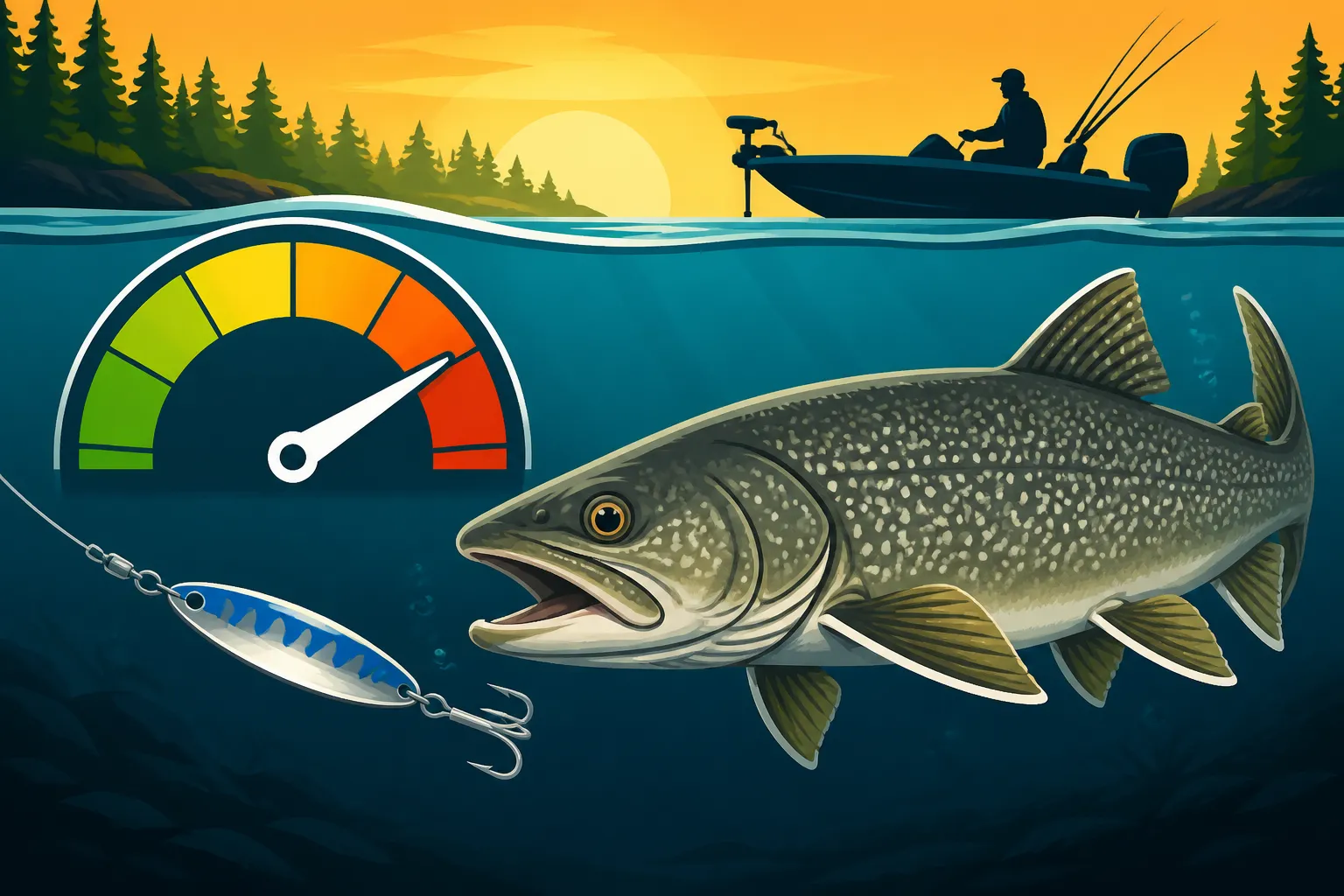
For most lake trout trolling in Ontario, you'll find yourself operating within a relatively consistent speed range. A common starting point that many anglers use falls between 1.8 mph and 3.0 mph (miles per hour).
- Slower Speeds (1.8 – 2.2 mph): These speeds are often effective in colder water conditions, like early spring or late fall, or when the fish seem lethargic or are concentrated in tight schools. It allows the lure to present a more natural, slower-moving target, which can be less intimidating and more enticing to less aggressive fish. Think of those calm, clear days when the fish are easily spooked – a slower speed can make all the difference.
- Moderate Speeds (2.3 – 2.7 mph): This is often considered the "sweet spot" for many lake trout situations, especially during the summer when fish are actively feeding in deeper, cooler waters. It provides a good balance, giving lures enough action to be enticing while still allowing fish a decent window to intercept them. Most spoons, stickbaits, and even dodger/fly combos will perform very well in this range.
- Faster Speeds (2.8 – 3.0+ mph): When the lake trout are aggressive, perhaps after a cold front has stabilized, or when you're trying to cover a lot of water quickly to find active fish, bumping up to the faster end of the spectrum can be productive. Some lures, particularly certain stickbaits and spoons, actually thrive on faster speeds, creating a more erratic, fleeing action that can trigger a reactionary strike. This can also be a good tactic for targeting Best time of year for trophy lake trout in Ontario that are looking for a big, fast meal.
Speed Adjustments for Different Conditions
Being a successful lake trout angler means being adaptable. Here's a quick reference for adjusting your speed based on what the lake is telling you:
| Condition / Situation | Suggested Speed Adjustment | Rationale |
|---|---|---|
| Cold Water (Spring/Fall) | Slower (1.8 – 2.2 mph) | Fish metabolism is low; they're less likely to chase. |
| Warm Water (Summer) | Moderate to Faster (2.3 – 3.0+ mph) | Fish are more active in cooler deep water; willing to chase. |
| Active/Aggressive Fish | Faster (2.5 – 3.0+ mph) | Triggers reactionary strikes; covers more water to find feeders. |
| Lethargic/Neutral Fish | Slower (1.8 – 2.3 mph) | Gives fish more time to inspect; mimics an easy meal. |
| Clear Water / High Sun | Slightly Slower | Fish can be spooky; a slower, more natural presentation is less threatening. |
| Darker Water / Low Light | Slightly Faster | Fish may be more aggressive and less cautious; covers more water effectively. |
| Strong Current | Adjust SOG, not boat speed | Boat speed through water will differ from speed over ground. Use GPS. |
| S-Turns (Inside Rod) | Effective Speed is Slower | Lures on the inside of the turn slow down; fish hitting here want slow. |
| S-Turns (Outside Rod) | Effective Speed is Faster | Lures on the outside of the turn speed up; fish hitting here want fast. |
| Dodger/Flasher Rig | Often Slower (1.5 – 2.5 mph) | Focus on getting maximum "kick" from the dodger/flasher, not lure speed itself. |
Remember, these are starting points. Always experiment! Make small, incremental changes (0.1 to 0.2 mph) and observe your results. Keep track of what works and what doesn't in your logbook – it's one of the best tools for becoming a more consistent lake trout angler on Ontario's fantastic waters. The right Best Gear for Ontario Trout Fishing, from your rod to your reels, can also significantly impact how well you can detect these subtle speed adjustments and the resulting bites.
The next time you're out on a great Ontario lake, pursuing these incredible fish, don't just set your throttle and forget it. Be an active participant in your trolling, constantly adjusting and learning from the fish. It's a journey, not a destination, and every trip offers a chance to fine-tune your approach for bigger, better lake trout. Consider this just one piece of your overall Lake Trout Fishing in Ontario strategy! While the specific Ontario Lake Trout Limit and Possession Rules will always dictate what you can keep, knowing how to consistently get them to bite is a skill that will pay dividends. And having the Best Fishing Rods for Ontario Lakes can make a real difference in feeling those subtle bites at varying speeds.
Disclaimer
This article is for general informational purposes only and does not constitute professional advice. Laws, prices and regulations vary by location and change over time. Consult a qualified professional for guidance on your specific situation.