Best Techniques for High Water Spring Conditions
There’s nothing quite like the anticipation of spring fishing in Ontario, but sometimes Mother Nature throws a curveball: raging, swollen rivers and lakes from snowmelt and heavy rains. It can be incredibly frustrating to see your favourite spots churned up and unfishable, leaving you wondering where the fish have gone and what on earth to do. This comprehensive guide will equip you with the best techniques for high water spring conditions, helping you adapt and find success when the waters are running wild.
Understanding High Water Conditions and Fish Behavior
When spring rains hit hard or the snowmelt is particularly aggressive, the landscape of our favourite fishing spots in Ontario can transform overnight. Rivers swell, lakes rise, and the water turns murky with sediment. This isn't just an inconvenience; it fundamentally alters the aquatic environment and, consequently, how fish behave. Understanding these changes is your first step to adapting and finding success.
Why Water Levels Rise So Dramatically
The primary culprits for high water conditions in Ontario during spring are pretty straightforward: significant snowmelt from a long winter and heavy, persistent spring rainfall. Many of our rivers and lakes are fed by vast watersheds, meaning that snow melting miles upstream, or rain falling across a wide area, all eventually funnels into our fishing grounds. This natural influx can be exacerbated by human factors, like dam operations on controlled waterways, which might release water strategically to manage levels downstream or prevent flooding in urban areas. All these elements combined can create powerful currents and dramatically increase water depth, turning calm pockets into raging rapids and shallow flats into deep, swift channels.
It's not just about the volume of water, though. This increased flow often brings a lot of sediment and debris with it, leading to highly turbid, or muddy, conditions. This lack of clarity significantly impacts a fish's ability to see, pushing them to rely more on other senses. Recognizing these root causes helps you anticipate and plan, rather than being caught off guard when the water starts churning.
How High Water Affects Fish Behavior
Fish are incredibly adaptable creatures, but even they have their limits and preferences. High water, especially when it's cold and murky, can stress them out and change their usual routines. The most immediate impact is on visibility. With all that sediment stirred up, sight-feeding predators like walleye or bass suddenly can't rely on their eyes as much. This means they'll often move to shallower, less turbulent areas where the water might be slightly clearer, or to ambush points where prey items are washed past them.
Increased current also plays a huge role. Fish are constantly trying to conserve energy, so they're not going to fight a strong current all day unless there's a good reason. You'll find them tucking into current breaks, like behind submerged rocks, fallen trees, or along the edges of deeper pools. These spots offer respite from the relentless flow and often present an easy meal as baitfish or insects are swept by. Furthermore, rising water can flood new areas, like grassy banks or timber-filled edges, creating fresh foraging grounds and cover that weren't available before. Understanding these behavioral shifts is crucial for locating fish in otherwise challenging conditions.
Gear and Tackle Adjustments for High Water
Fishing in high, turbid water isn't about throwing your usual setup and hoping for the best. It requires specific adjustments to your gear and tackle to combat strong currents, reduced visibility, and altered fish behavior. Getting this right can mean the difference between a frustrating day and a successful one.
Line Choices and Weights
When the water is ripping and murky, you need to make some strategic changes to your line and weight setup. First off, consider bumping up your main line's strength. Heavier monofilament or braided line can stand up better to potential snags and the sheer force of the current. Braided line, in particular, offers superior sensitivity, which is vital when the water is clouded and you can't see your bite. However, because braid is more visible, you might want to consider a fluorocarbon leader, which is nearly invisible underwater, especially in clearer pockets.
Your weight selection is equally critical. You'll often need to go significantly heavier with your sinkers or jig heads to cut through the strong current and get your bait down to where the fish are holding. Traditional light jigs might just get swept away immediately. Think about using bullet weights, bell sinkers, or even heavier bank sinkers for bottom-bouncing presentations. The goal is to maintain constant contact with the bottom or keep your lure in the strike zone, rather than having it tumble uncontrollably in the current. You can find a wide array of options for heavier weights on Amazon, ensuring you're ready for any flow.
Lure Selection for Turbid Water
In conditions where fish can't see well, you need lures that appeal to their other senses: sound, vibration, and scent. Forget subtle, natural-coloured baits; this is the time for loud, proud presentations. Bright colours like chartreuse, fluorescent orange, or hot pink are fantastic choices because they stand out against the murky backdrop. Dark colours, like black or purple, can also create a strong silhouette against a lighter sky, making them more visible.
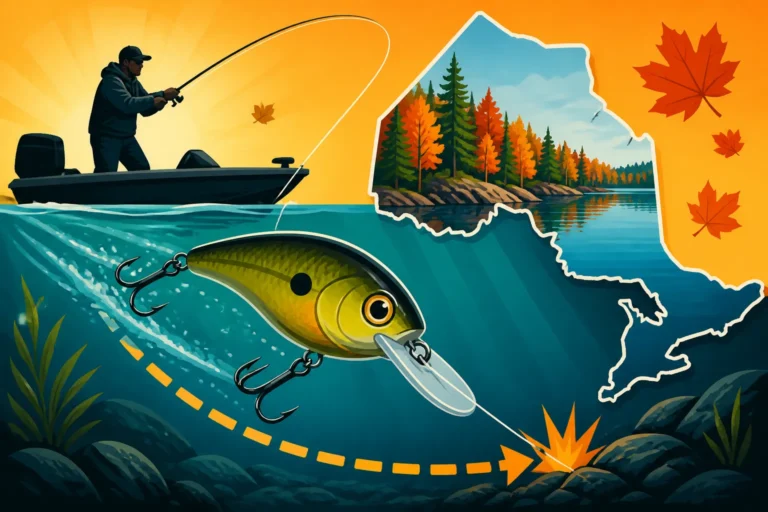
Lures that generate a lot of vibration are paramount. Spinnerbaits, chatterbaits, and lipped crankbaits with aggressive wobbles create a disturbance in the water that fish can feel through their lateral line. Rattle traps and lures with internal rattles add an auditory element, calling fish in from a distance. If you're drifting or slow-rolling, consider adding scent to your lures, either with scent sprays or by tipping jigs with natural bait like minnows or worms. Remember, the fish are relying on their heightened non-visual senses, so give them something they can feel, hear, and smell.
Rod and Reel Considerations
High water conditions demand a more robust rod and reel setup than your typical fair-weather gear. You'll want a rod with a bit more backbone – a medium-heavy or heavy power rod is often ideal, especially if you're targeting species like walleye or northern pike in strong currents. This extra power helps you cast heavier lures, battle stronger fish in current, and maintain control when a fish tries to use the current to its advantage. A fast action tip is still beneficial for detecting subtle bites, even with heavier line and murky water.
For reels, opt for models with a strong, smooth drag system. When a big fish hits in heavy current, that drag is going to get a workout. A high-quality spinning reel in the 3000-4000 series, or a baitcasting reel with a robust braking system, will give you the control you need. Ensure your reel is spooled properly with the appropriate heavy line you've chosen. Having a reliable setup means you can focus on technique, knowing your gear won't let you down when that trophy fish decides to bite. You can find excellent options for durable fishing reels on Amazon, ensuring you're prepared.
Targeting Key Species in High Water
Different fish species react uniquely to high water conditions, largely based on their feeding habits and preferred habitats. Understanding these nuances for popular Ontario game fish will help you refine your approach and increase your chances of success.
Walleye Tactics in High Water
Walleye, being primarily sight-feeders, can become particularly challenging in murky, high water. However, they're still feeding, you just need to adjust your strategy. In rivers, walleye will move out of the main current and seek out current breaks. Think about the seams where fast water meets slow water, eddies behind large rocks or bridge pilings, or submerged log jams. These spots offer them a place to rest while waiting for prey to be swept into their ambush zone.
When fishing for walleye, presentation speed is often key. A slower presentation allows them more time to find your bait in the reduced visibility. Bottom-bouncing rigs with a worm harness or a minnow can be incredibly effective when slowly drifted or retrieved along current breaks. Heavy jigs tipped with a minnow or a scented soft plastic, worked with a slow lift-and-drop motion, are also excellent. Consider bright coloured jigs like chartreuse or fire tiger. Lakes might see walleye moving closer to shore, particularly near areas where rivers or streams are flowing in, bringing food and slightly warmer water. Look for structure in these inflow areas. For more general advice, check out our guide on How to Catch Walleye in Ontario.
Northern Pike and Muskie: Shallow, Flooded Areas
Northern pike and muskellunge, often lurking predators, also adapt to high water. They tend to follow baitfish into newly flooded shallow areas, especially those with new cover like submerged grass, bushes, or fallen timber. These spots provide excellent ambush points and can be a goldmine for these toothy critters. The slightly warmer, often calmer water in these flooded zones can also be more comfortable for baitfish, drawing the predators in.
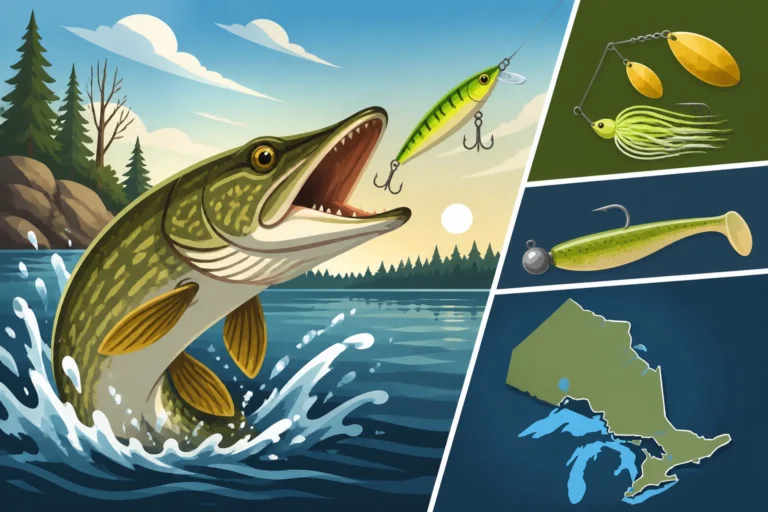
Aggressive, flashy lures that displace a lot of water are your best bet. Large spinnerbaits with big Colorado blades, noisy topwater lures (if conditions allow for calmer pockets), or large crankbaits in bright or dark patterns will grab their attention. Don't be afraid to throw large soft plastic swimbaits, especially those with a paddle tail, which create significant vibration. Cast these lures close to the flooded cover and work them slowly enough to allow the fish to track them in the reduced visibility. Our article on How to Catch Northern Pike in Ontario offers more insights into their habits.
Trout Strategies for High Water Streams
Trout fishing in high, fast-moving spring streams can be exhilarating but also dangerous if you're not careful. Like other species, trout will shy away from the main current and seek refuge in slower water. Look for eddies downstream of obstacles, the inside bends of rivers, or behind large rocks. Undercut banks, log jams, and any submerged structure that creates a current break are prime targets. If the water is rising into the floodplain, flooded grass and brush near the main channel can also hold trout.
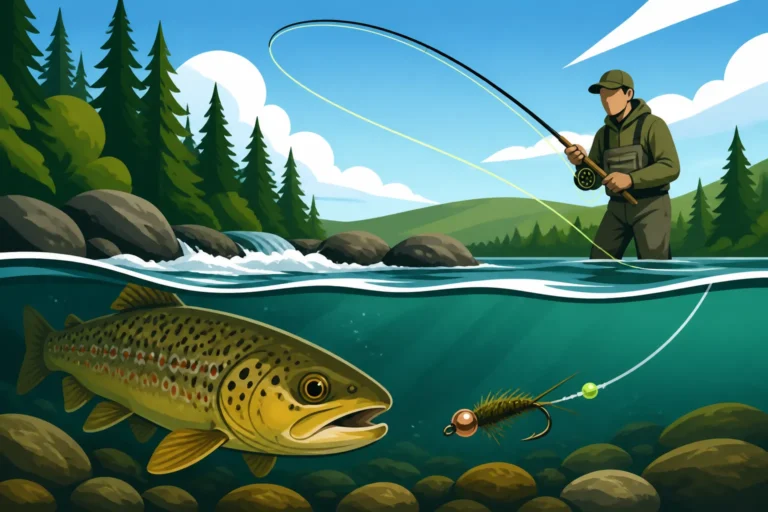
Nymphing is often the most effective technique in these conditions. Heavy nymphs, often in larger sizes or darker patterns to provide a strong silhouette, can be drifted through slower pockets and current seams. You'll need extra weight to get your flies down quickly. Consider using an indicator to help detect subtle bites in the murky water. Streamers, especially those with some flash or movement, can also be very effective when swung through likely holding areas. For those who love the fly rod, understanding Fly Fishing for Trout in Ontario in these conditions is a rewarding challenge. Always prioritize safety when wading, as currents can be deceptive and powerful.
Safety Considerations for High Water Fishing
While the excitement of spring fishing is undeniable, high water conditions bring inherent risks that every angler must respect. Ignoring these dangers can turn a fantastic day on the water into a life-threatening situation. Your safety, and the safety of those fishing with you, should always be the absolute top priority.
Boating and Wading Safety
High water often means increased current, hidden debris, and generally more treacherous conditions for both boating and wading. If you're in a boat, the faster currents can make maneuvering difficult, especially in rivers. Submerged logs, rocks, and other hazards that are usually visible can be completely hidden by the higher water levels and turbidity. Always wear a properly fitted personal flotation device (PFD), no matter how experienced you are. This isn't just a good idea; it's often a legal requirement under Ontario Boating Laws for Anglers. It’s easy to get complacent, but an unexpected wake or a sudden snag can quickly send you overboard.
For waders, the risks are even more immediate. The current can be incredibly strong, even in seemingly calm areas, and can sweep you off your feet. The bottom can be slippery and uneven, with hidden drop-offs or large, rolling rocks. A sturdy wading staff is an absolute must for maintaining balance and probing the bottom ahead of you. Never wade alone, and always let someone know where you're going and when you expect to return. Avoid crossing strong currents, and if in doubt, choose a safer, shallower route or stay on the bank. Before heading out, review the Life Jacket Requirements for Ontario Boaters to ensure you and your companions are fully compliant and safe.
Reading the Water Safely
Beyond the obvious dangers, knowing how to "read the water" in high flow conditions is a critical safety skill. The visual cues you normally rely on can be obscured. Look for changes in water colour and surface texture. Extremely turbid, fast-moving water often indicates a dangerous zone. Pay close attention to current lines, eddies, and boils, as these can signal submerged obstacles or powerful undertows. Areas where the water looks calmer but is still moving fast might be deceptively deep.
Keep an eye out for debris. Large branches, logs, or even entire trees can be carried downstream, posing a significant collision risk for boats or waders. If you see a lot of debris, it’s often a sign that the water is high and powerful, and caution is warranted. Always have an escape route planned, whether you’re in a boat or wading. Knowing which way to head if you encounter trouble, or where the nearest safe bank is, can be life-saving. Don’t push your limits. If conditions feel unsafe, err on the side of caution and either find a safer spot or postpone your trip. There’s always another day to fish.
Specific Techniques for Different Water Bodies
High water doesn't affect all fishing environments in the same way. A raging river presents different challenges and opportunities than a swollen lake. Tailoring your techniques to the specific water body you're fishing is crucial for success and safety.
River Fishing Strategies
Rivers in high water conditions can be intimidating, but they can also offer incredible fishing if you know where to look. The key is to understand that fish will gravitate towards areas of reduced current. Think "seams" – where fast water meets slow water. These are often found along the banks, behind large boulders, downed trees, or bridge pilings. The calmer water allows fish to rest while the adjacent fast current delivers food directly to them.
Focus on presenting your bait or lure in a way that allows it to drift naturally into these current breaks. For walleye, a slow, controlled drift with a bottom-bouncing rig or a heavy jig can be deadly. Cast slightly upstream of your target zone and let the current carry your offering down, maintaining just enough tension to feel subtle bites. For pike and muskie, explore flooded backwaters, oxbows, and sloughs that are connected to the main river but offer respite from the current. Here, you can throw larger, noisier lures or even dead bait under a float. Always be mindful of the current's power and potential snags that are now underwater. Some of the Best Fishing Rivers in Ontario can be fantastic during high water if approached correctly.
Lake and Reservoir Approaches
Lakes and reservoirs respond to high water differently than rivers. While the overall water level rises, currents are generally less of a factor, except near significant inflows. The primary effects here are increased turbidity and the flooding of new shoreline areas. Fish in lakes will often move shallower, especially near these newly inundated zones.
Focus your efforts near any points where tributaries or streams are dumping in. This inflowing water often brings with it food sources, slightly warmer temperatures, and dissolved oxygen, which can attract baitfish and, in turn, predators. Cast crankbaits or spinnerbaits near these inflow areas. Also, look for flooded timber, brush, or emergent vegetation along the shoreline. These areas offer new cover and feeding opportunities. Bass, in particular, will often move into these flooded zones to hunt. Use jigs, Texas-rigged plastics, or spinnerbaits to probe this new cover. In very large lakes, the overall turbidity might be less severe further from shore, but you still want to think about how rising water impacts the fish’s comfort and feeding zones. A good place to start planning is by researching the Best Fishing Lakes in Ontario.
| Lure Type for High Water & Turbid Conditions | Best for (Species) | Key Feature | Presentation Tip |
|---|---|---|---|
| Spinnerbaits | Pike, Bass, Walleye | Flash & Vibration | Slow roll near cover or current breaks |
| Crankbaits (Deep-diving, lipped) | Walleye, Bass, Muskie | Aggressive Wobble & Sound | Target current seams, troll edges of structure |
| Heavy Jigs (1/4 oz +) | Walleye, Trout, Bass | Bottom Contact & Profile | Vertical jigging, slow lift-drop, tip with bait |
| Chatterbaits | Bass, Pike | Unique Vibration & Flash | Cast to flooded cover, retrieve with pauses |
| Scented Soft Plastics | Walleye, Bass, Trout | Scent & Natural Movement | Rigged on heavy jigs, Texas-rigged in cover |
| Large Swimbaits | Muskie, Pike | Large Profile & Vibration | Slow retrieve in slack water or flooded areas |
Navigating Ontario's Fishing Regulations in Spring
Successfully fishing during high water in Ontario isn't just about adapting your techniques; it's also about staying compliant with the ever-important fishing regulations. Spring is a dynamic time, and understanding how rules apply to different species and zones, especially when waters are swollen, is critical.
Understanding Seasonal Openers and Closures
One of the biggest mistakes anglers make in spring, especially when high water might tempt them into new areas, is forgetting about seasonal openers and closures. Many species have specific opening dates, and these dates can vary significantly by species and by Fisheries Management Zone (FMZ). For example, the walleye opener dates by zone can be quite staggered across the province. You might have a lake in one zone where walleye are fair game, while a river just a few miles away in another zone is still closed to protect spawning fish.
High water can sometimes make fish move into areas they don't typically frequent, like flooded fields or backwater ponds. It's easy to get excited and cast, but you must always ensure that the species you're targeting is in season for that specific body of water and FMZ. Double-checking the most current Ontario Fishing Seasons by Zone and Month or your official Ontario Fishing Regulations Summary is absolutely essential before you even leave the house. This vigilance helps protect fish populations and keeps you out of trouble.
Checking Zone-Specific Regulations and Special Rules
Beyond general season dates, high water conditions might inadvertently lead you into areas with special zone-specific rules or even designated "special regulation waters." Ontario has a complex system of Ontario Fisheries Management Zones, Explained, each with its own set of rules regarding catch limits, size restrictions, and bait restrictions. A river that's usually straightforward might, due to flooding, connect to a small creek or pond that has unique catch-and-release rules or is designated as a "fly fishing only" section.
Always assume that high water conditions could temporarily alter the boundaries or accessibility of these special areas. If you find yourself in an unfamiliar flooded area, take a moment to confirm the specific regulations for that location. Some smaller lakes or even specific river stretches might have unique rules designed to protect sensitive populations, such as Ontario Aurora Trout Rotational Lake Closures. Don't rely on assumptions; take the time to consult the official regulations summary. Being prepared by reviewing the Reading the Ontario Fishing Regulations Summary before your trip ensures you're fishing ethically and legally.
Adapting to Unpredictable Spring Weather
Ontario's spring weather is notoriously fickle. One day you're basking in sunshine, the next you're battling horizontal rain and near-freezing temperatures. High water conditions are often a direct result of this unpredictable weather, and adapting to it is a crucial part of a successful spring fishing strategy.
Layering Clothing for Comfort
When you're out fishing in high water spring conditions, the weather can change on a dime. What starts as a mild morning can quickly turn cold and wet, especially with increased moisture from the swollen waterways. The key to staying comfortable, focused, and safe is proper layering. Forget about thick, heavy sweaters that get soaked and stay wet; think breathable, moisture-wicking fabrics that you can add or shed as needed.
Start with a base layer that pulls sweat away from your skin – synthetic materials or merino wool are excellent choices. Next, add an insulating mid-layer, like a fleece jacket, that provides warmth without excessive bulk. Finally, your outer layer should be waterproof and windproof. A good quality rain jacket and pants are non-negotiable for spring in Ontario. Look for options with sealed seams and adjustable cuffs. Brands like Columbia or Patagonia offer reliable fishing-specific outerwear, but you can also find great, affordable options for rain gear on Amazon. Having a quality waterproof outer layer means you can keep fishing comfortably even if a sudden downpour hits, which is often the cause of those high water levels in the first place!
Checking Forecasts and Water Levels Daily
In unpredictable spring conditions, checking the weather forecast and local water level reports isn't just a suggestion; it's a daily ritual for serious anglers. Water levels can change dramatically overnight with heavy rainfall or significant snowmelt. A river that was fishable yesterday might be a raging torrent today, making it unsafe or unproductive to fish.
Before you head out, check not only the immediate forecast but also what's happening upstream in the watershed. Many provincial and federal government websites provide real-time water level data for major rivers and lakes in Ontario. Look for trends: Is the water rising, falling, or cresting? Is more rain expected? This information will help you decide if it's safe to go, where to go, and what techniques might be most effective. A falling water level, for instance, can often mean fish are starting to move back into more predictable holding patterns, while rapidly rising water can push them into flooded cover. Staying informed helps you make smarter, safer fishing decisions every time.
Conclusion and Final Thoughts
Tackling high water spring conditions in Ontario can be challenging, but with the right mindset, gear adjustments, and strategic techniques, it can also be incredibly rewarding. Remember that fish are still actively feeding; they've simply changed their locations and how they prefer to ambush prey. By understanding these shifts, focusing on current breaks, utilizing lures that appeal to senses beyond sight, and prioritizing your safety above all else, you can turn a potentially frustrating day into a memorable fishing adventure. So, embrace the challenge, stay flexible, and enjoy the dynamic beauty of spring fishing in Ontario!
Disclaimer
Please note that fishing regulations in Ontario are subject to change. Always consult the most current official Ontario Fishing Regulations Summary published by the Ontario Ministry of Natural Resources and Forestry (MNRF) before heading out on the water. This guide provides general information and should not be used as a substitute for official regulations. Stay safe and fish responsibly.