Best hair jig technique for winter smallmouth
The winter months can feel like a long, cold stretch for dedicated anglers, and if you're like me, the thought of putting your rods away until spring just doesn't sit right. Trying to entice a bite from a smallmouth bass when the water is frigid can be one of the most frustrating challenges, often leaving you wondering if they've vanished entirely. But don't pack away your gear just yet! This guide is all about perfecting the hair jig technique, a proven method for successfully catching those elusive winter smallmouth in Ontario's cold, clear waters.
Why Hair Jigs Are Your Winter Smallmouth Secret Weapon
When the temperatures drop and the water takes on that icy bite, smallmouth bass become incredibly lethargic. Their metabolism slows to a crawl, and they're not nearly as eager to chase down a fast-moving crankbait or aggressively strike a bulky plastic. This is precisely where the subtle magic of a hair jig truly shines, making it an indispensable tool for winter anglers.
The Irresistible Natural Presentation
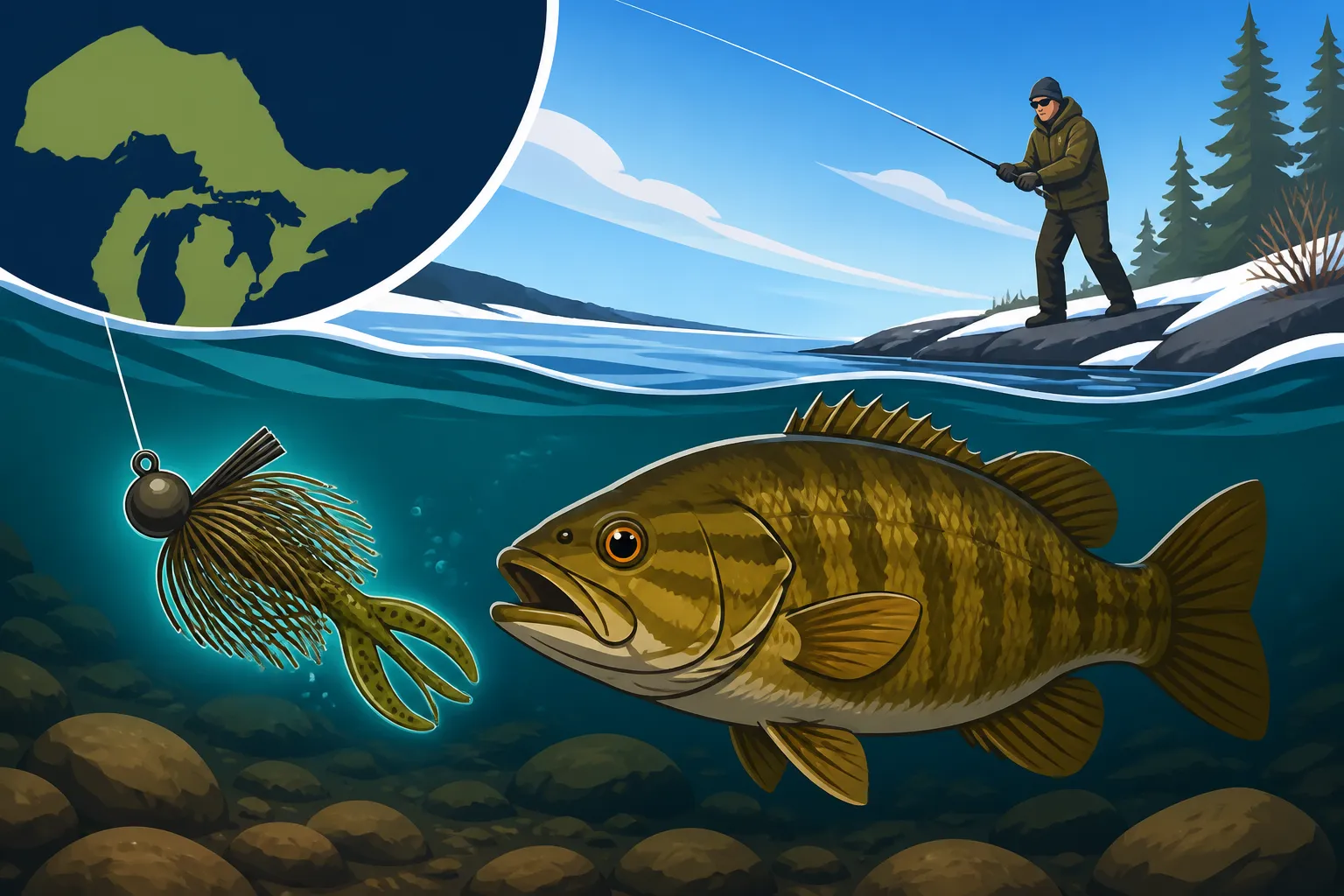
Unlike many artificial lures, a hair jig, crafted from materials like deer hair or marabou, offers an incredibly natural and lifelike presentation in cold water. When paused or subtly twitched, the delicate fibres pulsate and breathe, mimicking the slow, vulnerable movements of a dying baitfish or a crayfish trying to escape. This nuanced action is often just enough to trigger a strike from even the most sluggish smallmouth. It's not about making a big splash or generating a lot of vibration; it's about appealing to their primal instinct with something that looks easy to catch and requires minimal effort for them to pursue. This subtle dance of the hair is something hard plastics or even stiffer soft plastics just can't replicate when the water is cold.
Minimal Resistance, Maximum Feel
Another significant advantage of hair jigs in winter fishing is their minimal water resistance. This allows them to sink naturally and respond to the lightest twitch of your rod tip. Crucially, it also means that when a smallmouth takes the bait, they often don't feel much resistance, making them less likely to spit it out quickly. In winter, bites can be incredibly soft – sometimes feeling like nothing more than a slight weight, a faint tick, or even just your line going slack. A hair jig, paired with the right sensitive rod, allows you to feel these incredibly subtle takes that you might miss with a heavier or bulkier lure. Being able to detect these ghost-like bites is often the difference between a successful outing and a frustrating blank. It gives you a much better chance to set the hook before the bass realizes something is amiss.
Understanding Winter Smallmouth Behavior
To truly master the hair jig technique, it's vital to first understand what those smallmouth bass are up to when winter blankets Ontario. They aren't just chilling out; they've undergone significant behavioral shifts to survive the cold, and knowing these patterns is key to finding them. This knowledge directly influences where and how you present your hair jig.
Deep Water Retreats and Schooling Habits
As water temperatures plummet, smallmouth bass vacate their shallow, rocky summer haunts. They seek the more stable, warmer temperatures found in deeper water. Think about those sharp breaks, deep rock piles, underwater humps, and the edges of main lake basins. They'll often school up in these areas, sometimes in incredibly dense groups, making them challenging to locate but incredibly rewarding once you do. Finding that magic depth can be crucial, and it might vary from lake to lake, or even within different sections of the same lake. These deep-water hideouts offer them both thermal refuge and a place to conserve energy. Learning about Smallmouth Bass Habits on Lake Erie for instance, can give you insights into how these fish behave in large, deep systems.
Low Metabolism and Finicky Bites
The metabolic rate of smallmouth bass drops significantly in cold water. This means they digest food much slower, require less energy, and are generally far less active. They won't chase a lure far, and their strikes will be more a "suck" or a "nip" than the aggressive, rod-bending smash you might be used to in warmer months. They're conserving energy, and they're not going to expend a lot of it for a meal. This is why a subtle presentation, like that offered by a hair jig, is so effective. It looks like an easy meal, something they don't have to work hard for. You might find them suspended over deeper structure or hugging the bottom, waiting for an opportune, low-effort feeding chance.
Mastering the Hair Jig Presentation
This is where the rubber meets the road. Simply tying on a hair jig isn't enough; it's how you fish it that makes all the difference when targeting winter smallmouth. Patience, feel, and a minimalist approach are your best friends.
The Retrieve: Less is More
Forget power fishing or rapid retrieves. Winter smallmouth fishing with hair jigs demands a slow, methodical approach where patience is your greatest virtue. Your retrieve should be incredibly subtle, often consisting of long pauses interspersed with gentle twitches or short lifts.
Imagine your hair jig is a tiny, injured creature barely moving on the bottom. Cast your jig out and let it sink all the way to the bottom. Once it hits, take up the slack. Now, this is crucial: do almost nothing. Let it sit for a good 10-20 seconds. Seriously. Then, with just your wrist, give the rod tip a tiny, subtle twitch, just enough to make the hair fibres pulse. Don't move the jig more than a few inches. Let it sit again. Another long pause. Sometimes, I'll just barely lift the rod tip a foot, let the jig hop, and then let it flutter back down on a semi-slack line, watching for any sign of a bite. The majority of strikes will happen on the pause or as the jig is slowly falling. It's a game of inches and intuition. Many anglers, especially those new to winter smallmouth, move the jig too much. Remember, less is almost always more.
Color and Size Considerations
While presentation is king, your choice of hair jig colour and size can also significantly impact your success. In general, natural colours tend to perform best in the clear, cold waters of winter.
- Natural Tones: Think shades of brown, black, olive, and grey. These colours effectively mimic common forage like crayfish, gobies (a prevalent food source in many Ontario waters, particularly the Great Lakes), and smaller baitfish. A black or dark brown jig can be especially effective on overcast days or in deeper, darker water where it creates a strong silhouette.
- Subtle Accents: Sometimes, a touch of flash or a contrasting colour can make a difference. A black hair jig with a few strands of blue or purple flash, or a brown jig with a hint of orange (mimicking a crayfish) can provide that little extra appeal without being too aggressive.
- Size Matters: When smallmouth are lethargic, a smaller profile is often more appealing. Jigs in the 1/8 to 1/4 ounce range are typically your go-to. However, if you're fishing exceptionally deep water (30+ feet) or in strong current, you might need to bump up to a 3/8 ounce jig to ensure it reaches the bottom and stays there. Always start with the lightest jig you can effectively fish at your target depth. On Amazon, you can find a wide variety of hair jigs in different sizes and colour combinations, allowing you to experiment and find what works best in your local waters.
Gear Up for Success
You can have the perfect technique, but if your gear isn't up to snuff, you'll struggle to detect those incredibly light winter smallmouth bites. Investing in sensitive equipment is non-negotiable for this type of fishing.
Sensitive Rods and Reels
When we talk about sensitivity for hair jig fishing, we're looking for rods that transmit every subtle tap and every change in line tension directly to your hand. A fast-action spinning rod in the 6'6" to 7'2" range with a light to medium-light power is ideal. The fast action means the rod bends mostly in the tip, giving you excellent feel and quick hook-setting power. Graphite rods are generally preferred over fiberglass for their superior sensitivity. Many anglers find that a high-quality rod like those from St. Croix or G. Loomis, while an investment, truly pays off in terms of feel. Paired with a lightweight, smooth-operating spinning reel (size 1000-2500), you'll have a setup that allows for effortless casting of light jigs and excellent line management. If you're looking for a new setup, checking out options on Amazon can help you compare features and reviews.
Line Choices for Feel and Stealth
Your fishing line is the crucial connection between you and the fish, and in winter, it needs to maximize feel while remaining as stealthy as possible.
- Fluorocarbon is King: For hair jigging, 6-8 pound test 100% fluorocarbon line is often the best choice for your main line. Fluorocarbon has several key advantages:
- Low Stretch: This provides excellent sensitivity, allowing you to feel even the most delicate bites.
- Low Visibility: Fluorocarbon is nearly invisible underwater, which is a huge benefit in clear winter conditions where smallmouth can be very line-shy.
- Sinks: Unlike monofilament, fluorocarbon sinks, helping your light jig get down to depth faster and maintaining better contact with the lure.
- You can learn more about the benefits in our guide to Best Fluorocarbon Line for Clear Lake Water.
- Braided Line with Fluorocarbon Leader: Some anglers prefer the ultimate sensitivity of braided line (8-10 lb test) as their main line, especially when fishing deeper water or in windy conditions. However, braid is highly visible. If you go this route, always tie on a 6-10 foot leader of 6-8 pound fluorocarbon line using a strong knot like an FG or Alberto knot. This gives you the best of both worlds: the sensitivity of braid and the stealth of fluorocarbon. You can often find great deals on quality braided lines and fluorocarbon spools on Amazon.
Essential Accessories for Winter Angling
Beyond the rod, reel, and line, a few other items can significantly enhance your winter smallmouth hair jig experience:
- Gloves: Look for thin, fingerless gloves or convertible mittens that allow you to maintain dexterity for knot tying and feeling bites, while still offering some warmth.
- Quality Electronics: A good fish finder or sonar unit is invaluable for locating those deep, schooled-up smallmouth. It helps you identify structure and baitfish, greatly reducing unproductive casting. Check out guides on Best Fish Finders for Ontario Lakes for more information.
- Warm Clothing: Dress in layers! It gets cold out there, even on sunny winter days. Quality thermal underwear, a waterproof outer shell, and warm socks are a must. Our general guide on Best Gear for Ontario Trout Fishing can offer some helpful cold-weather clothing ideas, as many principles apply across species.
- Patience and Persistence: This isn't gear you can buy, but it's arguably the most important "accessory." Winter smallmouth fishing requires a high degree of patience. Bites can be few and far between, but when you connect, the reward of fooling a cold-water smallmouth is immensely satisfying.
Your Winter Smallmouth Hair Jig Checklist
To help you get started, here's a quick summary of key considerations for your next winter smallmouth outing with hair jigs:
| Aspect | Recommendation | Why It Matters |
|---|---|---|
| Jig Weight | 1/8 to 1/4 ounce (up to 3/8 oz for deep water/current) | Ensures slow, natural fall and bottom contact; matches lethargic fish. |
| Jig Color | Natural tones (black, brown, olive, grey) with subtle accents | Mimics natural forage (crayfish, gobies); less intimidating in clear water. |
| Retrieve | Extremely slow: long pauses (10-20 sec), subtle twitches, short lifts, flutter falls | Appeals to low-metabolism fish; triggers strikes on the pause. |
| Rod | 6'6" – 7'2" fast-action, light to medium-light power spinning rod (graphite) | Maximizes sensitivity to detect light bites; quick hook sets. |
| Reel | Size 1000-2500 lightweight spinning reel | Smooth operation for light lines and jigs; reduces fatigue. |
| Line | 6-8 lb 100% fluorocarbon (or braid with fluorocarbon leader) | Excellent sensitivity, low visibility, and good sinking properties. |
| Location | Deep-water structure: humps, rock piles, main lake basins (20-40+ feet) | Where smallmouth retreat for stable temperatures and to school up. |
| Key Mindset | Patience, focus on line watching, minimalist approach | Winter smallmouth bites are subtle; don't overwork the lure. |
Remember, every lake is a little different, and conditions can change rapidly. Don't be afraid to experiment with slight variations in retrieve, jig colour, or even trying different depths until you crack the code. The reward of a feisty winter smallmouth on a hair jig is truly something special. Good luck out there, and stay warm!
Disclaimer
This article is for general informational purposes only and does not constitute professional advice. Laws, prices and regulations vary by location and change over time. Consult a qualified professional for guidance on your specific situation.