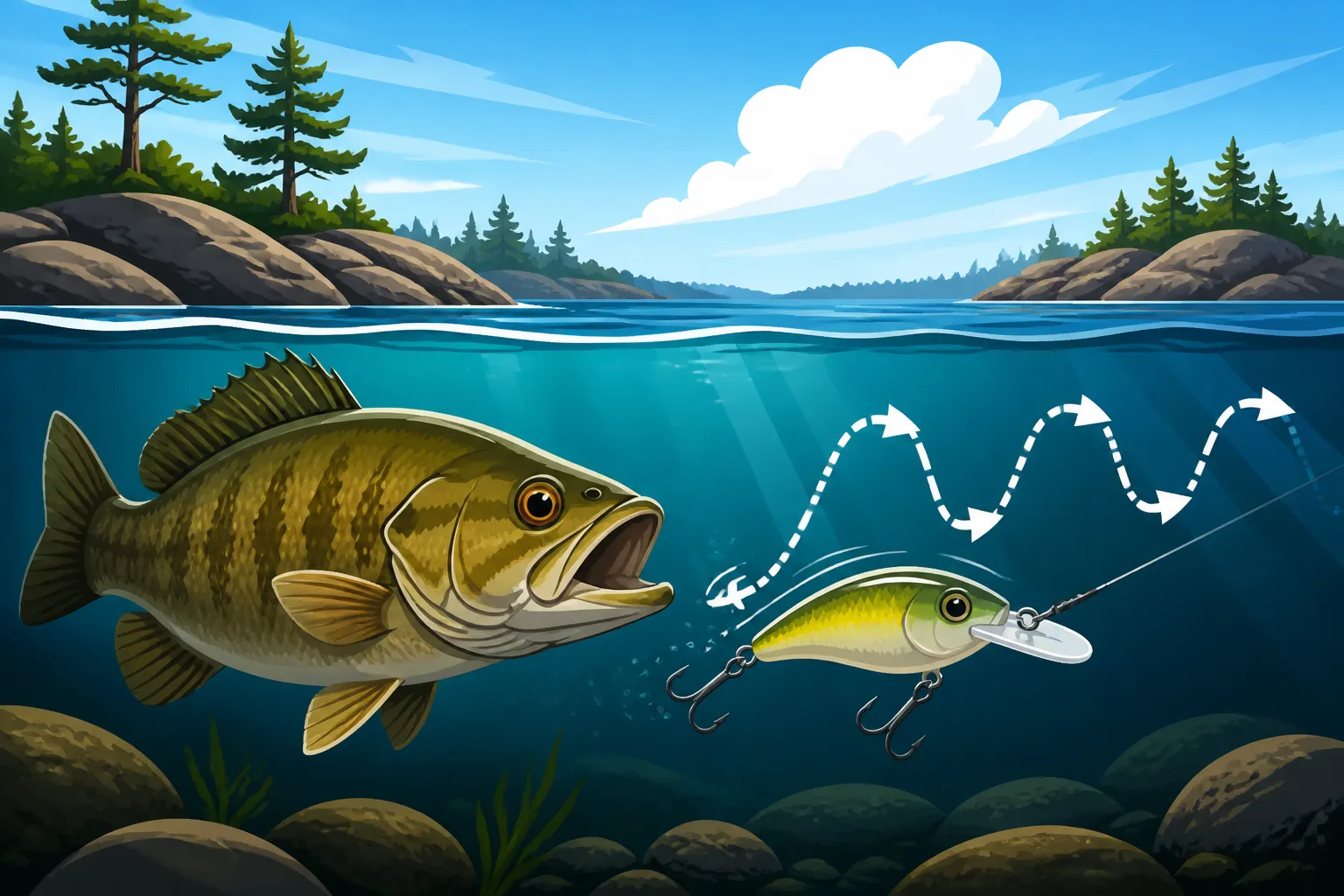
Best crankbait retrieve for smallmouth on Georgian Bay
Fishing for smallmouth bass on Georgian Bay can be incredibly rewarding, but figuring out the best way to present a crankbait in such a vast and varied environment can feel like trying to solve a puzzle with a thousand pieces. Anglers often struggle with inconsistent results, wondering if they're retrieving too fast, too slow, or simply using the wrong motion. This comprehensive guide will dive deep into the nuances of crankbait retrieves specifically tailored for Georgian Bay's feisty smallmouth, helping you unlock more consistent strikes and memorable days on the water.
Understanding Georgian Bay Smallmouth and Crankbaits
Georgian Bay is a truly special place for smallmouth bass, boasting crystal clear waters, endless rocky structure, and a vibrant ecosystem. Unlike some other bodies of water, the smallmouth here often encounter a wide range of baitfish, from emerald shiners and smelt in deeper areas to gobies and crayfish lurking near the bottom. This diverse diet means they can be tricked by a variety of crankbait profiles and actions. However, the sheer size and depth variations of the Bay mean that a "one-size-fits-all" retrieve simply won't cut it. Your approach needs to be adaptable.
When we talk about crankbaits for Georgian Bay smallmouth, we're not just talking about one type. There are lipless crankbaits, square bills, medium divers, deep divers, and even flat-sided models. Each has a different bill design and buoyancy, which dictates its inherent action and running depth. For example, a square bill crankbait, with its short, blunt bill, is designed to deflect off cover in shallow, rocky areas, while a deep-diving crankbait has a longer bill that helps it plummet to those offshore rockpiles and ledges where big smallmouth often hang out. Understanding these basic characteristics is the first step in mastering your retrieve, as the lure itself will determine the baseline action you're working with.
The smallmouth themselves are powerful, aggressive predators, but they can also be notoriously finicky, especially in the clear waters of Georgian Bay. They react strongly to visual cues and vibrations. This makes crankbaits incredibly effective because they mimic injured baitfish or foraging prey, and the retrieve is what brings that imitation to life. Sometimes they want a fast, erratic chase, while other times a slow, methodical crawl is the ticket. It's a constant dance between appealing to their predatory instincts and not spooking them.
Key Crankbait Retrieve Techniques for Georgian Bay Smallmouth
Mastering crankbait retrieves isn't about one secret move; it's about having a repertoire of techniques and knowing when to deploy them. For Georgian Bay smallmouth, a few core retrieves consistently put fish in the boat.
The Erratic Stop-and-Go Retrieve
This is arguably one of the most effective retrieves for smallmouth bass, especially in the clear, rocky environments of Georgian Bay. Smallmouth are opportunistic predators, and an erratic retrieve perfectly mimics a wounded or disoriented baitfish struggling to escape. It triggers their instinct to strike something vulnerable.
To execute this, start with a quick, aggressive crank of your reel handle, maybe 3-5 quick turns. This gets the crankbait down to its running depth and creates a burst of speed and vibration. Immediately after those fast turns, pause for a second or two, letting the crankbait either float up slightly (if it's a floating model) or suspend (if it's a suspending model). This pause is crucial, as often the smallmouth will strike during this momentary lapse in action. Many times, the fish are following the lure, and when it stops, it creates an easy target that they can’t resist. Vary the length of your pauses and the speed of your cranks. Sometimes a longer pause is needed if the fish are lethargic, while shorter, snappier pauses work better when they're aggressive. This technique is particularly effective around rocky points, submerged shoals, and transitions where smallmouth ambush prey. For a deeper dive into how these fish behave, you might find our guide on Smallmouth Bass Habits on Lake Erie helpful, as many of these principles apply to Georgian Bay too.
The Bottom Bouncing and Deflection Retrieve
Smallmouth bass are often found relating directly to structure, especially the abundant rocks, boulders, and ledges of Georgian Bay. They're not always suspended; quite often, they're cruising the bottom or hiding in ambush spots. This is where a bottom-bouncing or deflection retrieve really shines.
For this technique, you want to use a crankbait that dives just deep enough to make intermittent contact with the bottom or the top of submerged rocks. Square bill crankbaits are fantastic for this in shallower water (up to 8-10 feet), while medium or deep divers with robust bills are better for deeper structure. Cast your crankbait out and reel it down quickly until you feel it "thump" against the bottom or a rock. As soon as you feel that contact, give your rod a slight twitch or quickly snap it to the side to make the lure deflect sharply. This deflection is absolutely key. It mimics a fleeing baitfish that just bumped into something, triggering a reaction strike from any nearby smallmouth. It's the sudden, unpredictable movement that gets them to commit. Continue this pattern, reeling, hitting structure, and deflecting. Experiment with how hard you hit the structure and how quickly you snap your rod. Sometimes a subtle bump is enough, other times a violent ricochet is what they want. This approach is phenomenal for dissecting rock piles and rocky shorelines.
The Steady Reel with Speed Bursts
While erratic retrieves are often the most talked about, sometimes smallmouth want something a bit more predictable, or they respond to speed. A steady retrieve with occasional speed bursts can be incredibly effective, especially when baitfish are actively schooling or fleeing.
Start with a consistent, moderate retrieve speed, just fast enough to get the crankbait working correctly. Think of it as a fleeing baitfish swimming along. Then, every 10-15 feet or so, give your reel handle a few quick, aggressive turns, almost like a short sprint. This momentary burst of speed can often be enough to trigger a follower into striking. It mimics a baitfish trying to outrun a predator. The beauty of this retrieve is its versatility. It allows you to cover water efficiently while still incorporating a predatory trigger. It's particularly useful when you're prospecting large flats, trying to locate active schools of smallmouth. Pay attention to how the lure feels through your rod tip. You want to feel its consistent wobble, and when you add the speed burst, feel that surge in vibration. On Georgian Bay, where the water is often clear, smallmouth will follow a lure for a long time before committing, and that sudden burst can be the exact trigger they need. For more general advice on hooking these fish, check out our guide on How to Catch Smallmouth Bass in Ontario.
Adapting Your Retrieve to Conditions
Georgian Bay is a dynamic environment, and the best retrieve technique will often change with the conditions. Being able to adapt on the fly is what separates good anglers from great ones.
Water Temperature and Fish Activity
Water temperature plays a huge role in how active smallmouth are and, consequently, how they prefer their crankbaits presented.
- Cold Water (Early Spring/Late Fall): When water temperatures are below 55°F (13°C), smallmouth are often more lethargic. Their metabolism is slower, and they're less likely to chase down a fast-moving lure. In these conditions, a slower, more deliberate retrieve is usually more effective. Think longer pauses in your stop-and-go retrieve, letting the lure sit motionless for 3-5 seconds. The bottom-bouncing retrieve should be slower, with gentle bumps and longer pauses after deflection. A steady retrieve should be kept at the bare minimum speed to keep the crankbait wiggling. You might also consider using a suspending crankbait that can hang in the strike zone during those extended pauses without floating up too quickly.
- Moderate Water (Late Spring/Early Summer/Early Fall): As water temperatures climb into the 55-70°F (13-21°C) range, smallmouth become much more active and aggressive. This is often when a faster, more erratic retrieve truly shines. Short, snappy pauses, aggressive deflections, and frequent speed bursts can trigger explosive strikes. Don't be afraid to experiment with faster reeling speeds and more violent rod actions. This is often the prime time for a variety of crankbaits to excel.
- Warm Water (Mid-Summer): When Georgian Bay really heats up, especially in sheltered bays, smallmouth might move to deeper, cooler water. While they're still active, they might not always want to chase a shallow-running crankbait. For fish holding deeper, a steady retrieve with a deep-diving crankbait can be excellent. The key here is getting the lure to their depth and keeping it there consistently. However, in the mornings and evenings, when temperatures are cooler, they might push shallow, and those erratic retrieves can still be very effective. It's all about finding where they are comfortable and adjusting your presentation to match their mood.
Water Clarity and Current
Georgian Bay is famous for its exceptionally clear water, but clarity can still vary based on recent weather or specific areas. Current, while not always as prevalent as in river systems, can also impact your retrieve.
- Clear Water (Typical Georgian Bay): In pristine, clear water, smallmouth have excellent visibility, meaning they can scrutinize your lure more closely. This often calls for more natural colour patterns and a retrieve that mimics real baitfish as closely as possible. Subtlety can sometimes be more important than brute force. Erratic retrieves are still great, but the pauses might need to be longer, and the twitches less exaggerated to avoid spooking the fish. Fluorocarbon line is often preferred for its near invisibility in clear water, which helps present your crankbait more naturally. You can find a huge selection of fluorocarbon lines and other fishing gear on Amazon to help you out.
- Stained Water (Less Common, but possible after heavy rain or in certain inlets): If you encounter stained or slightly turbid water, smallmouth rely more on vibration and profile than sight. Here, a more aggressive retrieve can be beneficial. Faster reeling speeds and harder deflections create more disturbance, making it easier for fish to locate your lure. Brighter, more contrasting colours or those with internal rattles can also become more effective.
- Current: While Georgian Bay doesn't have major river-like currents everywhere, some areas, especially around islands or constrictions, can have noticeable flow. When fishing in current, you often want to retrieve your crankbait with the current or slightly across it. Reeling against a strong current will make your lure "blow out" or run unnaturally. A retrieve that allows the current to impart some natural wobble to the lure, interspersed with your own twitches or pauses, can be very effective. The fish will often face into the current, waiting for food to drift by, so presenting your lure to them from an upstream direction can be key.
Advanced Tips for Crankbait Success on Georgian Bay
Beyond the basic retrieves, there are a few advanced strategies that can significantly boost your success when fishing crankbaits for smallmouth on Georgian Bay.
The "Rip and Stop" for Lipless Crankbaits
Lipless crankbaits are fantastic for covering water and targeting both suspended fish and those relating to grass or subtle structure. While they can be reeled steadily, the "rip and stop" retrieve is often deadly for smallmouth.
Cast your lipless crankbait out and let it sink to your desired depth (or the bottom if you're working structure). Once there, give your rod a sharp, upward rip or sweep, pulling the lure several feet through the water. This creates a powerful vibration and flash. Immediately after the rip, let the lure fall back on a slack line. Smallmouth frequently strike as the lure shimmies and flutters back down. The key is to watch your line carefully for any sudden jumps or slack, as these indicate a strike. Repeat this pattern – rip, let it fall, rip, let it fall. The retrieve speed between rips can vary, but the main action comes from the rod work. This technique is particularly effective in fall when smallmouth are aggressively feeding on baitfish, and you might find more tailored advice in articles like Best Lure Retrieve Speed for Smallmouth in Fall.
Matching the Hatch with Retrieve Speed
Just like fly anglers "match the hatch," crankbait fishing involves trying to mimic the prevalent baitfish. This extends beyond just colour and size; it includes retrieve speed.
Pay attention to what baitfish are active in the area you're fishing. Are they fast-moving shiners zipping around? Then a faster retrieve with quick bursts might be the ticket. Are they bottom-dwelling gobies or crayfish scurrying along? Then a slower, bottom-contact retrieve with pauses and deflections will be more realistic. Observe your surroundings. If you see schools of baitfish flickering on the surface, a quicker, more frantic retrieve with a shallow-diving crankbait might be best. If you're marking individual baitfish on your fish finder deeper down, a more controlled, steady retrieve with a deeper diver might be appropriate. Even the size of the crankbait can influence your retrieve speed. A larger bait often requires a slightly slower retrieve to allow its larger profile to work its full action, whereas smaller baits can be burned faster.
Utilizing Your Gear Effectively
Your fishing rod, reel, and line are not just tools; they are an extension of your retrieve. Using the right gear can make a massive difference in how effectively you present your crankbait.
- Rod Action: A medium-heavy power rod with a moderate or moderate-fast action is ideal for most crankbait fishing. The softer tip (moderate action) allows the smallmouth to inhale the bait without the rod pulling it away too quickly, and it helps the fish stay hooked during head shakes. The moderate action also helps to load the rod on the cast, allowing you to cast heavier crankbaits further. For shallow-running square bills, some anglers even prefer a slower, more parabolic action rod to maximize deflection.
- Reel Gear Ratio: For deep-diving crankbaits where you need to cover a lot of water and get the bait down quickly, a faster gear ratio reel (7.1:1 or higher) can be beneficial. However, for shallower crankbaits or when you want to really slow down your retrieve and feel every wobble and deflection, a slower gear ratio (around 6.4:1 or even 5.X:1) can give you more control and less fatigue.
- Line Type: As mentioned, fluorocarbon is a popular choice for crankbait fishing in clear water due to its low visibility and sensitivity. It also sinks, which can help some crankbaits reach their maximum depth. However, some anglers prefer monofilament for its stretch, which acts as a shock absorber, helping to prevent hooks from tearing out during aggressive fights. Monofilament also floats, which can be advantageous for shallow-running crankbaits where you want them to stay higher in the water column when paused. Experiment with both to see what feels best for your specific style and the crankbaits you're throwing. Understanding these gear dynamics is part of a broader understanding of Best Fishing Rods for Ontario Lakes.
Crankbait Retrieve Table for Georgian Bay Smallmouth
To help summarize some of the key retrieve strategies, here's a table outlining different situations and recommended approaches for Georgian Bay smallmouth.
| Situation | Crankbait Type Recommended | Primary Retrieve Style | Key Characteristics & Tips |
|---|---|---|---|
| Shallow Rocks (0-10ft) | Square Bill, Shallow Diver | Bottom Bouncing & Deflection | Cast parallel to shore/structure. Reel fast to hit rocks, then snap rod to deflect. Vary speed. Excellent for ambush points. |
| Deep Rock Piles (10-25ft) | Deep Diver, Medium Diver | Steady Reel with Speed Bursts / Slow Grind | Get bait to depth quickly. For active fish, use speed bursts. For lethargic fish, a slow, methodical retrieve where the bait just touches structure can be effective. |
| Open Water (Suspended Fish) | Medium/Deep Diver, Lipless Crankbait | Erratic Stop-and-Go / Rip and Stop | Use your fish finder to identify depth. Cast and retrieve until you hit the desired depth. Incorporate long pauses to imitate a struggling baitfish. For lipless, sharp rips followed by a slack-line fall. |
| Cold Front Conditions | Suspending Crankbait, Deep Diver | Slow Grind / Long Pause Stop-and-Go | Fish are often sluggish. Slow down your retrieve considerably. Lengthen pauses (3-5 seconds or more). Use a bait that suspends perfectly. Keep the bait in the strike zone as long as possible. |
| Aggressive Post-Spawn | Medium Diver, Lipless Crankbait | Fast Erratic / Quick Steady Reel | Smallmouth are actively feeding and recouping energy. Don't be afraid of fast retrieves. Hard deflections and short, snappy pauses. Covering water quickly to find active fish is key. For more tips on this period, check our Post-Spawn Smallmouth Bass guide (hypothetical, but fits topic). |
| Clear Water | Any, with Natural Colors | Varied, with Subtle Pauses | Fish have excellent visibility. Focus on natural baitfish patterns. Subtle rod twitches and slightly longer pauses can be more effective than violent actions to avoid spooking fish. Fluorocarbon line is recommended. |
| Windy Conditions | Heavier Lipless Crankbait | Steady Retrieve / Rip and Stop | Wind can make casting light baits difficult. Heavier lipless cranks cast well. The chop on the water can also make fish more aggressive, so a faster, more consistent retrieve can often work. |
Learning to fish crankbaits effectively on Georgian Bay is a journey of continuous learning and adaptation. Remember, the smallmouth here are wild, strong, and highly attuned to their environment. By understanding their behaviour, the characteristics of your crankbaits, and the prevailing conditions, you can fine-tune your retrieve to consistently entice these magnificent fish. Don't be afraid to experiment, pay close attention to what the fish are telling you, and most importantly, enjoy the incredible fishing experience that Georgian Bay offers.
Disclaimer
The information provided in this guide is for general informational purposes only. Fishing regulations, conditions, and best practices can change frequently. Always consult the latest Ontario Fishing Regulations Summary and local advisories before heading out on the water. Your safety and adherence to all laws are paramount.