Best Anchor System for River Fishing
There's nothing quite like the rush of a river current when you're trying to hold your boat in just the right spot for that perfect cast. Many anglers, especially those used to the calmer waters of Ontario's vast lakes, quickly discover that their standard anchor system simply doesn't cut it against the relentless pull of a river. It's frustrating to constantly be dragged off your desired fishing hole, or worse, to lose an anchor to a snag. This guide is here to help you navigate the nuances of river anchoring, explaining the best systems and practices to keep you precisely where the fish are, safely and effectively, on Ontario's diverse waterways.
Understanding River Dynamics and Why Anchoring is Different
Rivers are living, breathing entities, constantly in motion, and their currents can be surprisingly powerful and unpredictable. Unlike a static lake, where an anchor primarily needs to hold against wind and boat movement, a river anchor system has to contend with a continuous force pushing against your vessel. This fundamental difference dictates everything from the type of anchor you choose to how you deploy and retrieve it.
The Relentless Force of Current Strength and Depth
The current in a river isn't uniform. It can vary dramatically in strength based on rainfall, dam releases, and natural riverbed features. A slow, meandering river might only require a light anchor, but a fast-flowing stretch of the French River or a tributary of the Ottawa River demands something far more robust. The deeper the water, generally, the less direct impact the surface current has on your boat, but the overall volume of water moving past still creates significant drag. Consider a scenario where you're fishing for walleye in a deep bend of a river with a strong subsurface current; a lightweight anchor will simply skip along the bottom like a stone. You need something that can dig in and resist that constant pull, preventing your boat from drifting downstream or swinging wildly in the current.
Moreover, the depth of the river affects the length of line you'll need. A common rule of thumb for effective anchoring is to have at least a 7:1 scope – meaning seven feet of rope for every foot of depth. In a river, especially with a strong current, you might even need more. This increased scope allows the anchor to lie at a flatter angle, digging its flukes or claws into the bottom more efficiently rather than being pulled upwards. Without adequate scope, even the heaviest anchor will struggle to hold.
Navigating Diverse and Challenging River Bottom Compositions
One of the biggest headaches for river anglers is the constantly changing bottom composition. Lakes often have relatively consistent bottoms – vast expanses of sand, mud, or rock. Rivers, however, are dynamic sculptors of their own beds. You might encounter soft silty mud in a slow back eddy, then transition to a gravel bar, followed by a stretch of bedrock, and then a field of submerged logs and boulders in a faster section. Each of these bottom types requires a different approach, and some are notorious for snagging anchors.
Imagine fishing a smallmouth bass hotspot on the Rideau River, where you're bouncing between soft clay banks and rocky shelves. A fluke anchor might bury beautifully in the clay but struggle to find purchase on smooth rock. Conversely, a grapple anchor designed for rock might get hopelessly stuck in thick mud. The potential for losing an anchor is significantly higher in rivers, which is why having a system that either releases easily or is specifically designed to minimize snags is crucial. This constant variability means that a single "best" anchor type for all river fishing might not exist, but rather a system that offers adaptability or a combination of tools.
Types of Anchors for River Fishing
When it comes to holding your position in a river, you'll find there's a specific arsenal of anchors designed to tackle the unique challenges posed by current and varied bottoms. Forget those basic mushroom anchors often used for small boats on calm lakes; rivers demand more specialized solutions.
The Gripping Power of Claw Anchors
Claw anchors, also known as Bruce anchors, get their name from their distinctive claw-like design. Originally developed for offshore oil rigs, their robust construction and multiple flukes (or claws) are excellent at digging into a variety of river bottoms. They are particularly effective in mud, sand, and gravel, where their broad surface area can really get a grip.
When deployed, the claw anchor is designed to roll until one of its claws digs into the bottom, providing a strong hold. They are quite heavy for their size compared to some other types, which helps them penetrate stubborn bottoms. This weight and design make them a reliable choice for larger boats or stronger currents. However, they can be more prone to snagging on rocky bottoms or submerged timber compared to some other styles. If you're fishing a wider Ontario river with a mostly soft or gravelly bottom, a claw anchor can be a fantastic option. You can often find a good selection of these at marine suppliers or even at Bass Pro Shops, ensuring you get a sturdy, reliable model.
Fluke or Danforth Anchors: Digging Deep in Softer Substrates
The fluke anchor, commonly referred to as a Danforth anchor, is characterized by its two large, flat flukes that pivot on a stock. These anchors are incredibly efficient at digging deep into soft bottoms like mud, sand, and even loose gravel. The design allows the flukes to penetrate quickly and hold a surprisingly heavy load for their weight, making them a popular choice for many recreational boats.
In a river environment with predominantly soft bottoms, a fluke anchor can provide excellent holding power. The key is ensuring you have enough anchor chain and scope to allow the anchor to lie flat and dig in. Without sufficient chain to keep the shank horizontal, the anchor might "trip" and fail to set. While fantastic in soft stuff, fluke anchors are not ideal for rocky areas or heavy weed beds, as they tend to bounce off rocks without setting or get tangled in vegetation. They also don't hold well on smooth bedrock. For drift fishing for walleye in areas with soft bottoms, however, they can be incredibly effective at stopping and holding your position.
Dedicated River Anchors and Mushroom Anchors
For smaller boats and kayaks on calmer rivers, or for those tricky gravel and rock bottoms, specialized river anchors and heavy-duty mushroom anchors come into play. A true "river anchor" often has a grapple or pyramid-like design, sometimes with hinged flukes, and is significantly heavier than a standard lake anchor of similar size. These are designed to catch and hold onto rocks, or simply use sheer weight to prevent drift.
Mushroom anchors, while generally considered for very light craft in calm conditions, can be useful in rivers if they are extremely heavy. Their rounded shape allows them to settle into soft mud and create suction, but they offer very little holding power on hard or rocky bottoms. However, some heavy-duty mushroom anchors are specifically designed with enough weight to provide a decent hold in slow-moving, muddy rivers. They are less prone to snagging than fluked anchors in certain conditions, but their holding power is primarily dependent on weight and the bottom's ability to create suction. For solo kayak fishing on a smaller river, you might opt for a smaller, heavier grapple-style river anchor that can grab onto submerged features without getting permanently stuck. These designs are often compact and easy to retrieve, making them ideal for quick repositioning.
Grapple Anchors and the Art of Snagging (and Un-snagging)
Grapple anchors (also called folding grapnels) are essentially four or more tines that fold out like claws. They are designed to hook onto rocks, submerged logs, or other bottom structures. These are often the go-to choice for anglers in extremely rocky rivers where other anchor types would struggle to find purchase or get hopelessly stuck.
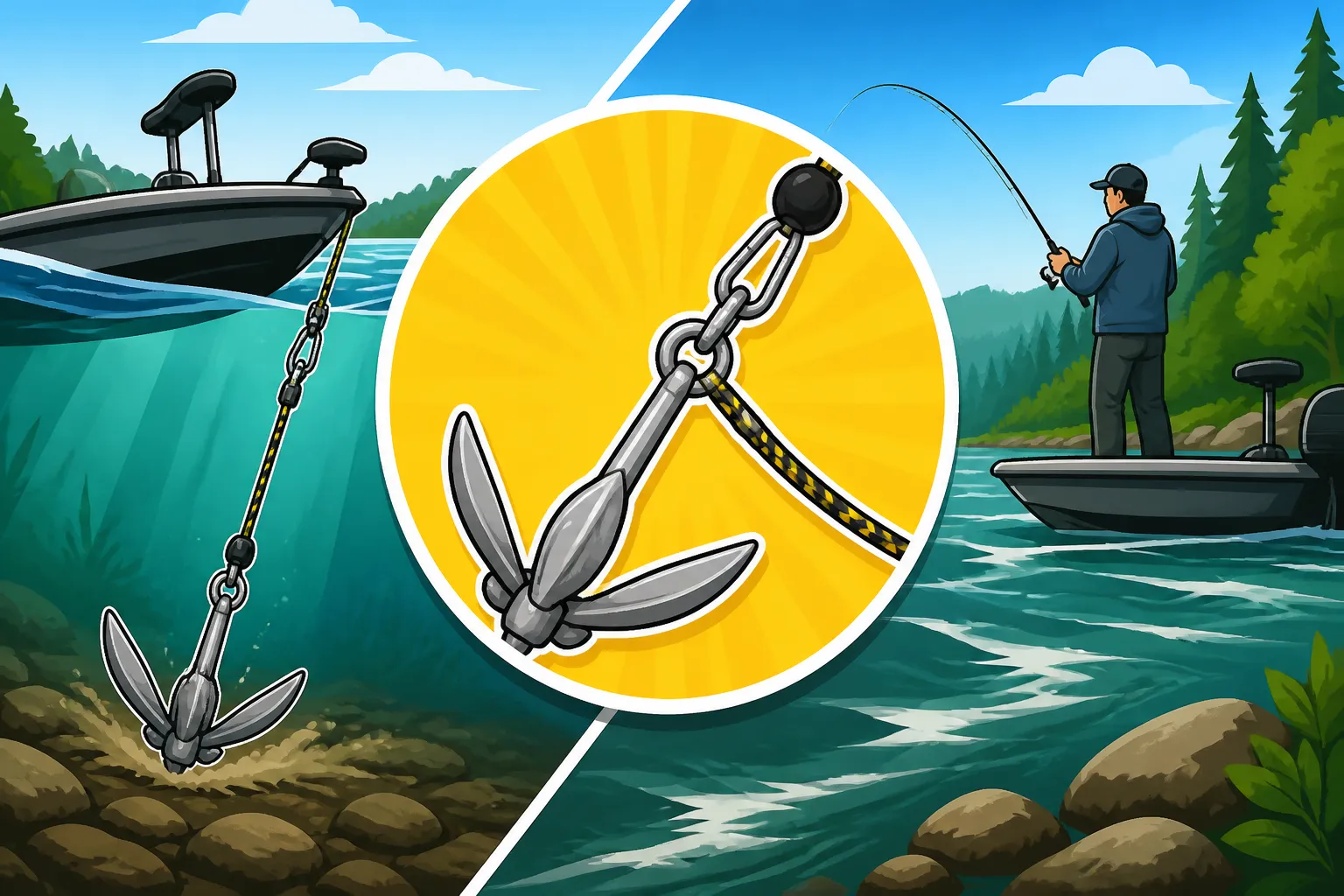
The beauty of a grapple anchor in a rocky river lies in its ability to grip irregular surfaces. However, this is also its biggest potential downfall: it can get truly, deeply snagged. Many experienced river anglers will modify their grapple anchors with a "breakaway" or "zip-tie" system. This involves securing the anchor line to the crown (the top) of the anchor rather than the shank, with a heavy-duty zip tie or a piece of light mono connecting it to the shank. If the anchor gets stuck, a strong tug from directly overhead will break the zip tie, allowing you to retrieve the anchor backwards by the crown, often dislodging it. This ingenious method can save you countless anchors and a lot of frustration when fishing particularly snag-prone stretches of rivers like those found in parts of the Severn or Trent River systems. Remember, having a Best Anchor for fishing moving river current that can deal with snags is key!
Drift Socks: Not Anchors, But Essential Current Control
While not technically anchors, drift socks (also known as sea anchors or drogue chutes) are an invaluable part of a river fishing "anchor system" for many anglers. Instead of holding you stationary, a drift sock acts as a parachute in the water, slowing your drift significantly. This allows you to present baits or lures more effectively to fish that are feeding in the current, such as walleye or smallmouth bass, without being swept downstream too quickly.
Drift socks are particularly useful for techniques like Drift Fishing for Walleye in Ontario Rivers, where maintaining a controlled, slower drift is more important than being completely stationary. They are also fantastic in situations where the current is too strong for a conventional anchor, or when the bottom is so snag-ridden that deploying a traditional anchor is too risky. Many anglers use a combination: a drift sock to control the speed and direction of their drift, and then a lighter anchor or even just a push pole to briefly hold position over a specific hotspot. This allows for fluid movement and precise boat control, enhancing your ability to target active fish.
Essential Anchor System Components Beyond Just the Anchor
Thinking you just need to buy an anchor and toss it overboard is a common rookie mistake in river fishing. A truly effective and safe river anchor system is a combination of several critical components that work together to provide optimal holding power and ease of use. Each piece plays a vital role in ensuring your anchor sets properly, holds securely, and can be retrieved safely, even in challenging conditions.
The Critical Role of Anchor Rope, Chain, and Line Markers
Your anchor rope, often called the rode, is the lifeline connecting your boat to your anchor. For river fishing, the material and length are paramount. Most anglers opt for a good quality braided nylon or polyester rope, as these materials offer excellent strength, stretch, and abrasion resistance. The stretch in nylon is particularly beneficial in a current, as it acts as a shock absorber, reducing the jarring motion on your boat and helping the anchor stay set during gusts of wind or surges in current.
Crucially, you absolutely must incorporate an anchor chain between your anchor and the rope. This isn't just for weight, though that helps. The primary purpose of the chain is to keep the anchor shank lying horizontally on the riverbed. This low angle allows the anchor's flukes or claws to dig in properly. Without chain, the rope pulls the anchor shank upwards, causing it to skip or fail to set. A good rule of thumb is to have at least as much chain as the length of your boat, or even more in stronger currents. The heavier the chain, the better it keeps the anchor digging. Finally, adding line markers (coloured tape or pre-marked rope) at regular intervals (e.g., every 10 or 25 feet) is incredibly helpful. This allows you to quickly gauge how much line you've deployed, ensuring you're hitting that optimal scope for maximum hold.
Secure Cleats, Fairleads, and the Art of Line Management
Once your anchor is set, you need a secure way to hold the anchor line to your boat. This is where robust cleats and well-placed fairleads come into play. Cleats are those horn-shaped fittings on your boat designed to secure lines. For river fishing, especially with larger boats or in strong currents, ensure your cleats are strong, securely bolted, and appropriately sized for your anchor rope. A small, flimsy cleat can fail under stress, leading to a runaway boat – or worse.
Fairleads are fittings that guide the anchor line smoothly from the bow of your boat to the cleat, preventing abrasion against the boat's hull or deck. They ensure the line runs freely without snagging during deployment or retrieval. Proper line management is also critical. Always coil your anchor rope neatly after use to prevent tangles that could cause dangerous delays when deploying, especially in an emergency. Many boats, particularly those designed for fishing, come equipped with suitable cleats. If you're upgrading or modifying a smaller boat, prioritize these components for safety and efficiency.
Quick Release Systems and Safety Buoys: Preparing for the Unexpected
River fishing inherently carries a higher risk of snags. A quick release system is not just a convenience; it's a vital safety feature. This can be as simple as having a knife readily accessible to cut the anchor line in an emergency, or a more sophisticated mechanical release that instantly frees your boat from a stuck anchor. Losing an anchor is frustrating, but being stuck in a strong current with a fixed anchor can be dangerous, potentially swamping your boat or pulling you into hazards like rapids or submerged trees.
A simple yet effective quick-release method involves tying the anchor line to a sturdy buoy (often a fender or a specialized anchor buoy) with a small loop, then feeding the main anchor line through this loop before tying it to your boat's cleat. If the anchor snags, you can untie your boat from the main line, and the buoy will mark the anchor's location, allowing you to return later to try and free it from a different angle. Another common practice, especially for smaller boats or kayaks, is an Best kayak anchor trolley system that allows you to move the anchor point from the bow to the stern (or anywhere along the side), improving boat positioning and making it easier to release a snagged anchor by pulling from the opposite direction. These are crucial considerations for anyone venturing into strong river currents.
Choosing the Right Anchor for Your Boat and River Type
Selecting the perfect anchor system for river fishing is less about finding a universally "best" option and more about matching the gear to your specific vessel, the prevalent river conditions you'll encounter, and your fishing style. There's no one-size-fits-all solution when dealing with Ontario's diverse river systems, from the narrow, rocky tributaries of Algonquin Park to the broad, silty expanse of the lower Grand River.
Matching Anchor Weight and Type to Boat Size and Weight
The size and weight of your boat are fundamental factors. A 14-foot aluminum jon boat fishing for pike in a slow-moving channel will require a vastly different anchor than a 20-foot fibreglass bass boat targeting muskie in a fast, deep river. Heavier boats naturally require heavier anchors or anchors with significantly more holding power (surface area) to resist the same current.
| Boat Type/Size | Typical Anchor Weight (Approx.) | Recommended Anchor Types | Best for River Conditions |
|---|---|---|---|
| Kayak/Canoe (10-14 ft) | 1.5 – 5 lbs | Grapple, River Anchor (folding or fixed pyramid) | Slow to Moderate Current, Rocky/Weedy Bottoms |
| Small Jon Boat (12-16 ft) | 8 – 15 lbs | River Anchor (pyramid/mushroom), Small Claw | Moderate Current, Varied Bottoms (sand, gravel, mud) |
| Aluminum V-Hull (16-18 ft) | 15 – 25 lbs | Claw, Fluke (with chain), Heavy River Anchor | Moderate to Strong Current, Soft to Mixed Bottoms |
| Larger Bass Boat (18-22 ft) | 25 – 40 lbs | Heavy Claw, Large Fluke (with substantial chain), Box Anchor | Strong Current, Varied Bottoms, Open Water Drifting |
Note: These are general guidelines. Actual requirements depend on current strength and specific bottom conditions.
A common mistake is using an anchor that is too light. While it might save space and effort, it will inevitably lead to frustration as your boat drags. Always err on the side of a slightly heavier anchor, especially for river conditions. Also, consider the type of boat: a flat-bottom Best Jon Boats for Shallow Rivers will react differently to current than a deep-V hull. The larger the surface area of your boat exposed to the current, the more holding power your anchor needs.
Considering the Specific River Bottom You'll Encounter
As we discussed, river bottoms are incredibly diverse, and the anchor you choose needs to be able to "grab" or "dig" into whatever lies beneath. If you predominantly fish a specific stretch of river, identifying the typical bottom composition will greatly inform your choice.
- Soft Mud/Silt: Fluke (Danforth) anchors excel here, burying deep and creating significant suction. Heavy pyramid or mushroom anchors can also work for lighter craft.
- Sand/Gravel: Claw anchors and fluke anchors perform well, as they can dig and hold. Heavier river anchors (pyramid style) can also get a good bite.
- Rocky/Bouldery: Grapple anchors are the champions here, designed to hook onto crevices and irregular surfaces. Ensure you use a breakaway system to avoid permanent snags. Heavy river anchors (pyramid or box) can also hold by sheer weight, especially if they can wedge themselves between rocks.
- Weedy/Grassy: This is a tough one. Fluke anchors can get tangled. Claw anchors might work if they can get through the vegetation to the substrate below. Often, in heavily vegetated areas, a drift sock to control speed and a light grapple to briefly hold onto a weed bed edge might be the most practical approach.
If you fish a river with highly variable bottoms, you might consider carrying two different types of anchors to swap out as needed, or opting for a more versatile design like a claw that performs reasonably well across several bottom types.
The Strategy of Combining Anchor Types and Current Control
Sometimes, the "best" anchor system isn't a single anchor but a combination of tools and techniques. For serious river anglers, having a primary anchor and a secondary current control device offers superior versatility and safety.
A common and highly effective strategy is to use a primary anchor (e.g., a heavy claw or river anchor) off the bow for holding your main position, and then deploying a drift sock off the stern. The drift sock helps to stabilize the boat, preventing it from swinging wildly in the current and reducing the strain on your main anchor. This setup allows for much finer boat control and a more comfortable fishing platform. It's particularly useful when trying to hold parallel to a current seam or structure.
Another approach, especially in fast or very snaggy water, is to use a large, heavy anchor to slow your boat significantly, without trying to stop it completely. Then, use a secondary lighter anchor or even a push pole to "fine-tune" your position or briefly hold over a specific spot. This minimizes the risk of getting completely stuck while still allowing for precise fishing. Remember that effective boat control is about more than just holding still; it's about being able to react to the river and position yourself optimally for success. You can find specialized river anchor setups and heavy-duty ropes suitable for these combined strategies at reputable outdoor retailers.
Safe Anchoring Practices and Troubleshooting Common Issues
River currents demand respect, and nowhere is that more evident than when deploying and retrieving your anchor. Improper anchoring can be more than just an inconvenience; it can be dangerous, leading to lost gear, boat damage, or even putting you and your passengers at risk. Developing good habits and understanding how to troubleshoot common problems will make your river fishing experiences safer and more enjoyable.
Flawless Deployment and Retrieval Techniques
The way you deploy and retrieve your anchor in a river is critical. Never simply throw your anchor overboard, especially in a current. This can cause the rope to tangle around your boat, your motor, or even worse, around a person in the boat. It also increases the chances of the anchor setting improperly or immediately snagging.
Here's a safer approach:
- Motor Upstream: Position your boat a good distance upstream of your desired fishing spot.
- Prepare Your Rode: Ensure your anchor rope is neatly coiled and free of tangles, with the chain attached to the anchor.
- Gentle Drop: Slowly lower the anchor (don't throw it!) over the bow. Allow the boat to drift downstream naturally as you pay out the anchor rode. This allows the anchor to settle gently and drag along the bottom, increasing its chances of digging in properly.
- Optimal Scope: Continue paying out line until you have sufficient scope (ideally 7:1 or more in strong currents). You'll feel the anchor bite and the boat will slow down and eventually hold its position over your desired spot.
- Secure the Line: Once the anchor is set, secure the line to a strong cleat.
- Retrieval: When it's time to move, motor slowly upstream towards the anchor. As you approach, retrieve the slack line. Once directly over the anchor, pull straight up to dislodge it. This minimizes the chance of snagging and makes retrieval much easier. If it's a very heavy anchor, consider an anchor winch if your boat is equipped for it, or use the boat's momentum as you motor slowly to assist in breaking it free.
Remember, the goal is always a controlled deployment and retrieval, allowing the anchor to do its job without unnecessary drama.
Avoiding Snags and What to Do When They Happen
Snags are an inevitable part of river fishing. Submerged trees, rock piles, discarded debris – rivers are full of anchor-eating hazards. The best defense is proactive avoidance and smart anchoring. When approaching a new spot, use your fish finder or a mapping app to identify potential snags before you drop anchor. Look for clear stretches of bottom if possible, or target areas where you know the bottom composition is more forgiving.
However, even the most careful angler will get snagged eventually. When it happens, stay calm. Your first instinct might be to pull harder, but this often just embeds the anchor deeper.
- Move the Boat: Try motoring around the snagged anchor in a wide circle (if safe) or moving directly upstream of it. This changes the angle of pull and can often free a stuck fluke or claw.
- Use an Anchor Buoy/Trip Line: If you've used a quick-release buoy system (as mentioned earlier), detach your main anchor line from the boat and let the buoy mark the spot. Then, you can approach the anchor from a different angle, perhaps pulling it from the stern or side, which might be enough to dislodge it.
- Breakaway System: If you've rigged your grapple anchor with a breakaway zip-tie, pull firmly and steadily from directly overhead. The zip tie should break, allowing you to retrieve the anchor backwards by the crown.
- The Cut: As a last resort, if the anchor is hopelessly snagged and no other method works, you must be prepared to cut your anchor line. This is why having a sharp, sturdy knife readily accessible at all times is non-negotiable for river fishing. It's better to lose an anchor than to risk your boat and safety by being stuck in a dangerous current.
Emergency Procedures for Anchor Failure or Line Snags
Emergencies can escalate quickly in a river, especially if your anchor system fails. Imagine a sudden squall hits, or you're caught in an unexpected surge of current, and your anchor begins to drag or, worse, gets stuck and won't release. Being prepared is key.
- Anchor Dragging: If your anchor starts to drag, immediately let out more anchor line to increase your scope. Sometimes, this extra length is all it takes for the anchor to find a new bite and reset. If that doesn't work, slowly motor forward, retrieving your anchor, and try to redeploy it further upstream in a potentially better bottom area. Don't wait until you're dangerously close to rapids or other hazards.
- Anchor Line Stuck (No Release): This is the scenario where your emergency knife comes into play. If your boat is being pulled into a dangerous situation (e.g., towards rapids, a dam, or heavy debris), and you cannot free the anchor or use your quick-release system, cut the line. It’s a tough decision, but boat and personal safety always come first. Ensure your knife is sharp, easily accessible, and designed for cutting rope even when wet or under tension. Having a Life Jacket Requirements for Ontario Boaters for everyone on board is also paramount for safety.
- Lost Anchor: While frustrating, a lost anchor isn't a catastrophe if you've handled it safely. If possible, mark the location on your GPS so you can return later with grappling hooks or diving gear if you’re determined to retrieve it. Otherwise, accept the loss and move on. Always carry a spare, especially for longer river trips, or at least have a plan for how to acquire a replacement. Retailers like Amazon can often ship a replacement quickly if you're near a major centre.
Maintenance and Storage for Your River Anchor System
Just like any other piece of essential fishing gear, your river anchor system requires proper care and maintenance to ensure its longevity and reliable performance. Neglecting your anchor, rope, or chain can lead to premature wear, corrosion, and potentially catastrophic failure when you need it most. A little bit of attention after each outing can save you a lot of hassle and expense down the line.
Cleaning and Inspection After Every Outing
Rivers, by their nature, are full of mud, silt, sand, and organic debris. Every time you pull your anchor up, it's likely to be coated in a gritty, corrosive cocktail.
- Rinse Thoroughly: After each trip, especially if you've been in muddy or silty waters, rinse your anchor, chain, and rope thoroughly with fresh water. Use a hose to blast away all mud, sand, and debris. Pay particular attention to the crevices of claw or grapple anchors where mud can really pack in. Leaving river muck on your gear allows it to dry and harden, making it harder to remove later, and it can accelerate corrosion on metal parts.
- Inspect for Damage: As you rinse, take the opportunity to inspect your entire anchor system.
- Anchor: Check the anchor flukes, claws, or pyramid shape for bends, cracks, or excessive wear. If a fluke is bent, it might not set properly.
- Chain: Look for rusted links, stretched sections, or sharp edges that could fray your rope.
- Rope: Examine the anchor rope for fraying, cuts, or weak spots, especially where it connects to the chain and where it passes through fairleads or around cleats. Any significant damage warrants replacement. A frayed rope is a ticking time bomb in a strong current.
- Connections: Ensure all shackle pins are tight and secure. Consider using Lok-Tite or wiring the pins to prevent them from loosening due to vibration.
Regular cleaning and inspection will catch minor issues before they become major problems, ensuring your anchor is always ready for your next adventure on Ontario's waters.
Proper Storage to Extend Lifespan
How you store your anchor system when not in use is just as important as how you deploy and maintain it. Improper storage can lead to tangles, damage, and premature wear, taking up valuable boat space and frustrating you when you're eager to hit the water.
- Dry Thoroughly: Before storing, ensure your anchor rope and chain are completely dry. Storing wet rope can lead to mildew, rot, and a weakened line. Metal components stored wet are much more prone to rust and corrosion. Hang ropes in a well-ventilated area to dry, and allow chain to air dry as well.
- Coil Neatly: Coil your anchor rope neatly. This not only keeps it organized but also prevents kinks and tangles that can weaken the line over time. Many anglers use an anchor box or bucket to store their coiled rope and chain, keeping everything contained and preventing it from rolling around the boat.
- Secure the Anchor: Store the anchor itself securely so it doesn't bang against the boat's hull or other gear, which could cause damage to both the anchor and your boat. Anchor mounts are available for various boat types, from specialized bow mounts for larger fishing boats to simple brackets for kayaks. For kayaks and smaller boats, a compact folding grapple anchor that stows away neatly is often preferred.
- Protection from Elements: If your boat is stored outdoors, consider covering your anchor system or storing it indoors to protect it from prolonged exposure to UV rays and harsh weather, which can degrade rope and accelerate rust.
Taking these simple steps ensures that your anchor system remains in prime condition, ready to tackle the diverse currents and bottoms of Ontario's rivers for many seasons to come.
Disclaimer
This article is for general informational purposes only and does not constitute professional advice. Laws, prices and regulations vary by location and change over time. Consult a qualified professional for guidance on your specific situation.