Best Fish Finder for Deep Lake Fishing
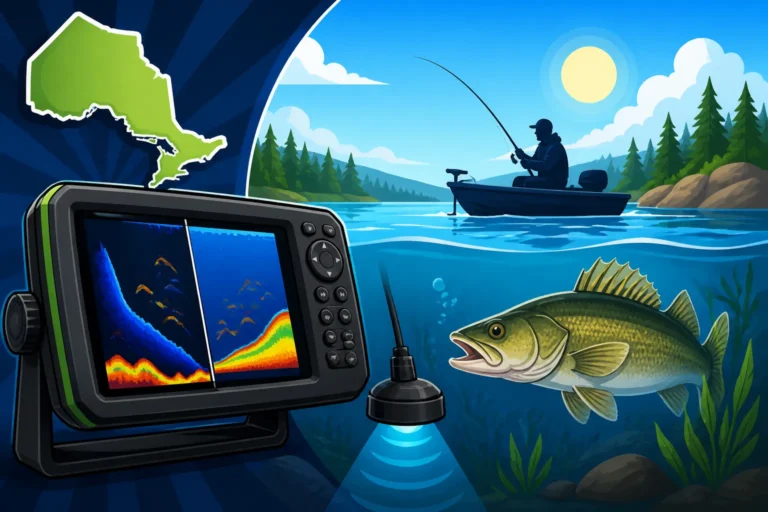
One of the most persistent frustrations for anglers on Ontario's massive, deep lakes like Nipissing, Superior, or Simcoe is the sheer mystery of what lies beneath the surface. You're out there, surrounded by incredible natural beauty, but the fish often feel like ghosts in the abyss. It can be incredibly disheartening to motor over vast expanses of water, blindly casting, knowing that trophy lake trout or elusive walleye are down there somewhere, just beyond your sight. This guide is dedicated to lifting that veil, helping you understand how a fish finder designed for deep water can transform your Ontario fishing experience, making those invisible depths finally reveal their secrets.
The Deep-Water Challenge: Why Standard Fish Finders Fall Short
Fishing in Ontario's deep lakes presents a unique set of challenges that can leave even seasoned anglers scratching their heads. It's not like fishing a shallow, weedy pond where you can practically see the bass cruising. When you're talking about depths that can easily exceed 50, 100, or even several hundred feet, conventional methods often fall short. A standard, entry-level fish finder might show you something at those depths, but it often lacks the power and precision to truly interpret what you're seeing.
Understanding the Limitations of Basic Sonar
Many basic fish finders use a single-frequency 2D sonar system. While perfectly adequate for shallower waters, sending a single, wide cone of sound into deep water comes with significant drawbacks. The signal weakens dramatically as it travels further, leading to a loss of detail and accuracy. Imagine trying to see a tiny object in a dimly lit room with only a weak flashlight – you might know something is there, but distinguishing its shape or size becomes impossible. In deep water, this translates to fuzzy returns, ambiguous arches, and a general lack of confidence in what your screen is telling you. You might see a faint line and wonder if it's a fish, a thermocline, or just noise. This uncertainty can waste valuable fishing time, causing you to deploy your Best Techniques for Deep Water Summer Lake Trout in the wrong spots.
The Problem of Target Separation in Deep Water
Another critical issue in deep water is target separation. This refers to the fish finder's ability to distinguish between individual fish, between a fish and the bottom, or between fish and structure. In shallow water, a basic unit can often show distinct fish arches. But when you're 80 feet down, and fish are tight to the bottom or schooled together, a less capable fish finder might just display a single, blob-like return. This makes it impossible to tell if you're seeing one big fish, a cluster of smaller ones, or just a piece of submerged debris. For anglers targeting specific species like lake trout, which often hug contours or school near baitfish in deep areas, this lack of clarity is a major hindrance. Without good target separation, you're essentially guessing, even with technology on board.
Essential Sonar Technologies for Deep Water Fishing
To truly conquer Ontario's deep lakes, you need more than just basic sonar. Modern fish finders employ advanced technologies that send more powerful and detailed signals, allowing for clearer images and better target identification at significant depths. Understanding these technologies is the first step in choosing the right unit for your adventures on waters like Lake Superior or even the deeper sections of Lake Nipissing.
CHIRP Sonar: The Game Changer
CHIRP (Compressed High-Intensity Radiated Pulse) sonar is arguably the most significant advancement in fish finding technology for deep water. Instead of sending a single-frequency pulse, a CHIRP transducer sends a continuous sweep of frequencies, from low to high. When these pulses return, the fish finder processes them to create a much clearer, more detailed image. Think of it like comparing an old black-and-white photo to a high-definition colour image.
This continuous sweep offers several key advantages for deep water. Firstly, it provides superior target separation. You'll be able to distinguish individual fish in a school, tell a fish apart from the bottom, and even see your lure dropping in real-time alongside fish. Secondly, CHIRP offers exceptional clarity and less noise, meaning fewer ambiguous readings and more confident interpretations. This is especially vital when you're trying to locate bait balls that attract predator fish in the deep, vast expanses of the Great Lakes. A good CHIRP unit will make those bait schools pop, making it much easier to position your boat and deploy your Trolling Techniques for Ontario Lake Trout. You'll see precise arches for fish even at 150 feet, giving you a real advantage.
Down Imaging and Side Imaging: Seeing the Structure
While traditional 2D sonar and CHIRP excel at showing fish directly beneath your boat, Down Imaging (often called DownScan) and Side Imaging (or SideScan) provide photographic-like views of the water column and bottom structure. These technologies use high-frequency, thin beams that scan directly down or to the sides of your boat.
-
Down Imaging: This creates a picture-like representation of what's directly beneath your boat. It's incredibly effective for identifying structure like submerged trees, rock piles, ledges, and distinguishing fish from that structure. In deep water, where fish often relate to subtle bottom changes, Down Imaging can reveal those hidden hotspots that 2D sonar might only show as a vague bump. For example, if you're fishing a deep section of the French River, Down Imaging can clearly show you a submerged log jam or a defined rock shelf where walleye might be lurking.
-
Side Imaging: This is truly revolutionary for covering vast areas quickly. Side Imaging sends beams out to the left and right of your boat, scanning hundreds of feet to either side. This allows you to literally "see" ledges, humps, weed lines, and baitfish schools that you're not even driving directly over. When exploring new, deep water on a lake like Rainy Lake, Side Imaging can help you pinpoint significant structure or schools of baitfish far off to the side, allowing you to mark them with your GPS and then go back to fish them directly. It's like having underwater binoculars that expand your view dramatically, drastically cutting down on unproductive searching time. Combining these with your CHIRP 2D sonar gives you a comprehensive view of the entire water column and surrounding terrain.
Key Features to Prioritize for Deep Water Performance
When you're shelling out for a fish finder that can handle the depths of Ontario's large lakes, you need to focus on specific technical features. It's not just about a pretty screen; it's about the raw power and processing capability that enables that screen to show you what you need to see.
Transducer Frequency and Power Output (RMS)
These two factors are intrinsically linked to deep water performance.
- Frequency: Lower frequencies penetrate deeper into the water column. While higher frequencies (e.g., 200 kHz, 455 kHz, 800 kHz, 1.2 MHz) offer amazing detail and target separation in shallower water or for Down/Side Imaging, they lose power quickly in deep environments. For deep 2D sonar, look for transducers that offer lower frequencies like 50 kHz or even a dedicated low CHIRP band (e.g., 28-60 kHz or 40-75 kHz). Many excellent deep-water transducers are dual-frequency, offering both a low frequency for depth and a higher one for detail when fish are shallower. A transducer that can operate efficiently at 50 kHz will give you much better returns at 100+ feet than one capped at 200 kHz.
- Power Output (RMS): This is measured in watts RMS (Root Mean Square) and indicates the continuous power of the sonar signal. More power means the signal can travel further and return with more strength, resulting in clearer images at greater depths. For serious deep-water fishing, you'll want a unit with at least 500 watts RMS, and ideally 1000 watts RMS or more, especially if you're consistently fishing beyond 100 feet. Don't confuse RMS with peak-to-peak power; RMS is the true indicator of consistent performance. A robust power output is critical for accurately reading the bottom and distinguishing fish in Best Fishing Lakes in Ontario that have significant depths.
Screen Size and Resolution
While not directly impacting sonar performance, a larger screen with higher resolution dramatically improves your ability to interpret the data, especially when you're looking at complex deep-water readings.
- Screen Size: Trying to decipher tiny fish arches or subtle structure on a small screen is like looking through a keyhole – you'll miss a lot. For deep water, where every pixel of information counts, a screen of 7 inches or larger is highly recommended. Many serious deep-water anglers opt for 9, 12, or even 16-inch displays, especially if they plan to run multiple sonar views (e.g., 2D CHIRP, Down Imaging, Side Imaging, and mapping) simultaneously. This allows you to split the screen and still have a clear, readable view of each individual sonar pane.
- Resolution: Measured in pixels (e.g., 800×480, 1024×600, 1280×720), higher resolution means more detail. This is crucial for distinguishing between small baitfish and larger predators, identifying subtle changes in bottom composition, or picking out your jig as it descends. Low resolution can make deep-water returns appear blocky and difficult to interpret, turning distinct fish into blurry blobs. When fishing for Ontario Lake Trout Limit and Possession Rules in their deep-water haunts, crisp, high-resolution images are invaluable.
GPS and Mapping Integration
A truly effective deep-water fish finder for Ontario isn't just about seeing fish; it's about finding them again, and efficiently navigating vast bodies of water. Integrated GPS and detailed mapping capabilities are non-negotiable for serious deep-water anglers.
- Precise GPS: Once you've found a promising deep-water hump, a school of bait, or a significant drop-off, a precise GPS allows you to mark that exact spot (a waypoint) and return to it later. This is critical in lakes where landmarks are few and far between. Modern units offer incredibly accurate GPS, often with WAAS/EGNOS capabilities, allowing for pinpoint accuracy down to a few feet.
- Detailed Lake Maps (Charts): Pre-loaded or downloadable mapping charts, especially those with high-definition contour lines, are invaluable. These maps can reveal underwater structure, depth changes, and navigation hazards before you even turn on your sonar. For deep lake fishing, contour maps showing 5-foot or even 1-foot increments are ideal. They help you identify potential fishing spots (like deep points, submerged islands, or steep breaks) on the map, allowing you to run to them efficiently and then use your sonar to confirm the presence of fish. Brands often partner with mapping providers, so check if the unit comes with Canada-specific or Ontario-specific lake charts. How to use the Fish ON-Line interactive zone map can provide good pre-trip planning, but on-board mapping takes it to the next level.
Understanding Your Fish Finder Readings in Deep Water
Getting the right fish finder is only half the battle. Learning to accurately interpret what you're seeing on the screen is where the real magic happens. Deep water readings can sometimes be challenging, but with practice, you'll become a master at deciphering the underwater world.
Interpreting Fish Arches and Marks
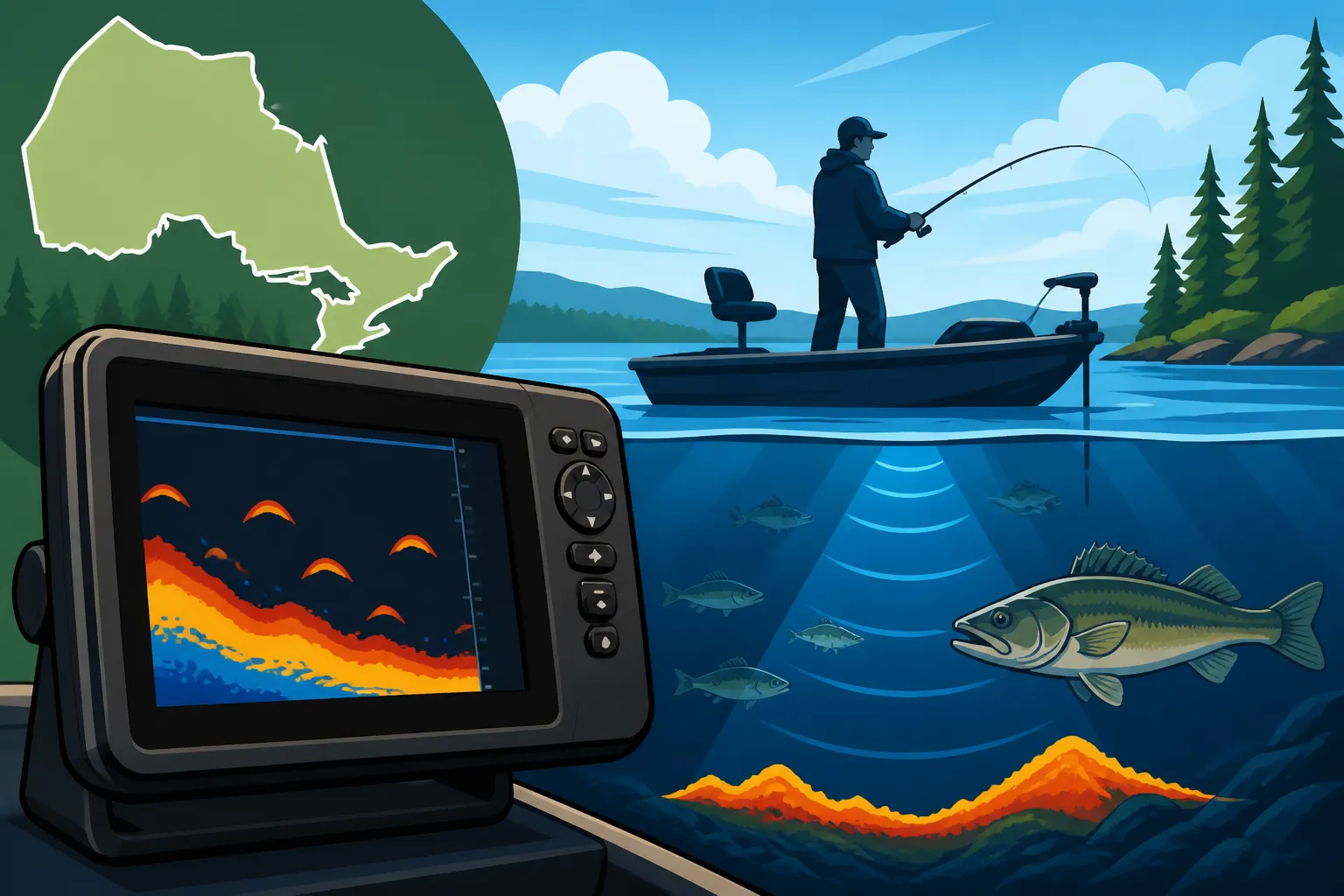
On 2D CHIRP sonar, fish typically appear as arches. In deep water, these arches need careful interpretation.
- Clear, Strong Arches: A well-defined, thick, and brightly coloured arch (on a colour screen) usually indicates a larger fish or a fish directly in the centre of your sonar cone. The thicker the arch, generally the larger the fish. In deep water, especially for species like lake trout or large walleye, seeing these clear arches is a very positive sign.
- Partial Arches or Lines: If a fish is only briefly in your sonar cone, or on the edge of it, you might see a partial arch or even just a thick horizontal line. Don't dismiss these! They still indicate fish presence. Practice makes perfect here; understanding your boat's speed and the cone angle will help you interpret these fainter marks.
- Bait Balls: In deep water, baitfish often congregate in dense schools, appearing as large, amorphous blobs or clouds on your screen. These are critical to find, as larger predator fish are almost always nearby. When you see a large bait ball, start looking for those stronger, individual arches around its edges or within it. Best Bait for Walleye on Lake Erie are often smaller fish that form these schools.
Identifying Structure and Bottom Composition
Knowing what the bottom looks like is just as important as finding fish. Deep-water structure holds bait and provides ambush points for predators.
- Hard vs. Soft Bottom: A hard bottom (rock, gravel) will typically show up as a thicker, brighter return on your 2D sonar screen, often with a distinct "second return" echo below the first. A soft bottom (mud, silt) will appear thinner, less intense, and often without a clear second return. This distinction is crucial; many species prefer to relate to hard bottom areas, even in deep water. Down Imaging will provide an even clearer, almost photographic view of rock piles, ledges, and transition lines.
- Ledges, Humps, and Drop-Offs: These are prime deep-water structure. On 2D sonar, a ledge or hump will appear as a significant change in the bottom line, often with fish arches relating to the contour change. Side Imaging is incredibly powerful for spotting these features when you're covering water, showing them stretching out to the sides of your boat. For example, when exploring a complex area on Georgian Bay, Side Imaging can reveal a series of deep humps and trenches that you would completely miss with 2D sonar alone.
- Thermoclines: In deeper lakes, especially during summer, water stratifies into layers of different temperatures. The boundary between these layers is called a thermocline. On sonar, a thermocline often appears as a distinct, often fuzzy, horizontal line or band across the screen. Many fish, including walleye and lake trout, will suspend at or just above the thermocline, as it offers comfortable water temperatures and often concentrates baitfish. Learning to identify these can help you determine the depth at which fish are actively feeding. Best water temperature for lake trout fishing will often be found right around these temperature breaks.
Installation and Setup for Optimal Deep Water Performance
Even the most advanced fish finder won't perform optimally if it's not installed and configured correctly. This is especially true for deep water, where every bit of signal integrity matters.
Transducer Mounting Considerations
The transducer is the "eye" of your fish finder, sending and receiving sonar signals. Its placement is paramount.
- Transom Mount: This is the most common and generally easiest installation for trailered boats. Ensure the transducer is mounted securely on the transom, below the hull but above the prop wash, in an area of clean, undisturbed water. Angle it slightly forward to ensure the beam projects correctly. For deep water, you want minimal interference from air bubbles or turbulence, as this can severely degrade signal quality at depth.
- Thru-Hull Mount: For larger boats or those with planing hulls, a thru-hull transducer can provide the cleanest signal, as it's mounted directly through the bottom of the boat, ensuring it's always in clean water. While more complex to install, it often yields superior deep-water performance.
- In-Hull (Shoot-Thru) Mount: This involves mounting the transducer inside the hull, shooting through the fibreglass. It's a great option for minimizing drag and protecting the transducer, but there's typically some signal loss. This might be acceptable for moderate depths but could compromise extreme deep-water performance, especially if you're consistently fishing beyond 150 feet. Always check the manufacturer's recommendations for your specific hull material and transducer.
Powering Your Unit for Reliability
A stable and adequate power supply is critical. Deep-water fish finders, especially those with powerful CHIRP and large screens, draw significant current.
- Dedicated Battery: Ideally, run your fish finder directly to its own power source or a dedicated fuse panel that is cleanly wired to your main starting battery or a separate deep-cycle battery. Avoid tapping into accessory circuits that might have voltage fluctuations from other electronics or bilge pumps.
- Proper Wiring: Use the correct gauge wire recommended by the manufacturer, ensuring it's long enough to reach the battery without excessive splicing. Secure all connections tightly to prevent corrosion and signal interruption. A loose connection can lead to intermittent power, flickering screens, or degraded sonar performance, which is the last thing you want when you're trying to track walleye in the dark depths of the Bay of Quinte.
Initial Settings and Fine-Tuning
Once installed, take the time to set up your fish finder properly. Don't just turn it on and go!
- Sensitivity/Gain: This controls how much detail the unit shows. In deep water, you often need to increase the sensitivity to pick up faint returns. However, too high, and you'll get excessive clutter and noise. Start at an auto setting, then experiment by slowly increasing it until you start seeing noise, then back it off slightly.
- Scroll Speed: This controls how fast the sonar image moves across the screen. A faster scroll speed can provide a more real-time view, which is useful when actively jigging or trolling. A slower speed can compress the image, making it easier to see subtle bottom changes over longer periods. Find what works best for your fishing style.
- Noise Rejection/Surface Clarity: Most units have settings to filter out surface clutter (air bubbles, waves) and other electrical interference. Adjust these to minimize screen noise, especially when fishing in choppy conditions or near other electrical devices on your boat.
- Range/Depth Scale: Always set your depth range appropriately. If you're fishing in 100 feet, setting the range to 500 feet will compress the image and make fish harder to see. Conversely, if you set it too shallow, you'll constantly be running off the bottom of the screen. Utilize auto-range or adjust manually to keep the bottom visible and clear. For detailed How deep to troll for lake trout in summer information, ensuring your depth scale is precise is critical.
Choosing the Right Fish Finder for Your Deep Water Adventures
With so many options on the market, selecting the perfect deep-water fish finder can feel overwhelming. Let's break down how to narrow your choices, considering your budget, your boat, and your primary target species. You can often find a wide array of options to compare at stores like Bass Pro Shops or online retailers like Amazon.
Budget Considerations and Value Tiers
Fish finders range dramatically in price, from a few hundred dollars to several thousand. It's important to set a realistic budget but also understand that deep-water performance usually comes at a higher cost.
- Entry-Level (Deep Water Capable): For anglers on a tighter budget, look for units with dedicated 50/200 kHz traditional sonar or basic CHIRP sonar, and a screen size of 5-7 inches. These will get you started in deep water but might lack the advanced imaging or processing power of higher-end models. They might offer basic GPS but limited mapping options.
- Mid-Range (Solid Performance): This is often the sweet spot for many serious deep-water anglers. Units in this range typically feature full CHIRP sonar, often including Down Imaging, and screens of 7-9 inches. They'll have better processing power, more robust GPS, and compatibility with advanced mapping cards. This tier offers a significant leap in performance for Lake Trout Fishing in Ontario and other deep-dwelling species.
- High-End (Premium Performance): These are the top-tier units, featuring full CHIRP, Down Imaging, Side Imaging, and sometimes even 360-degree views or forward-facing sonar. They boast large, high-resolution screens (10+ inches), powerful processors, and seamless integration with trolling motors, radar, and other marine electronics. If you're consistently fishing the deepest parts of Lake Huron or targeting elusive big fish with specific Best Techniques for Deep Water Summer Lake Trout, this investment can pay off in a big way.
Matching the Unit to Your Boat Type
The size and type of your boat will also influence your choice, especially regarding transducer options and screen real estate.
- Small Boats (Jon Boats, Kayaks): For smaller vessels, compact units (5-7 inch screens) with transom-mount transducers are typically ideal. Consider portable options if you move between different boats or only fish occasionally. While deep-water performance might be slightly compromised by smaller transducers, even a mid-range unit can make a huge difference. For kayaks, look for easily mountable transducers and battery-efficient models. For options on Best Kayaks for Ontario Fishing look for transducer-ready models.
- Mid-Sized Boats (Runabouts, Walleye Boats): This category offers the most flexibility. You can easily mount transom or even thru-hull transducers. Screens from 7-12 inches are popular, allowing for multiple split-screen views. These boats often have enough battery capacity for more powerful units.
- Large Boats (Cruisers, Offshore Fishing Boats): For these vessels, larger screens (12+ inches) and multiple units are common. Thru-hull transducers are often preferred for their clean signal. These boats can handle the highest power output and benefit most from advanced network integration with other marine electronics.
Focusing on Your Target Species
Different fish species have different habits, and your fish finder choice can reflect that.
- Lake Trout: Often found suspended or relating to deep structure. A powerful CHIRP 2D sonar with excellent target separation is paramount for distinguishing individual fish. Side Imaging is great for finding deep humps and ledges, and Down Imaging helps define their relationship to those features.
- Walleye (Deep Water): While walleye can be shallow, in large clear lakes or during summer, they often go deep. Powerful 2D CHIRP is vital for seeing them near the bottom or suspending over structure. Down Imaging helps confirm bottom composition and reveal subtle breaks. For locating schools of walleye on the bottom in lakes like Lake Erie, precise returns are key.
- Muskellunge (Deep Water Suspending): While muskies are often associated with shallow weeds, they can suspend in deep open water, especially over bait balls. A robust CHIRP unit can help you spot these elusive fish suspending, and Side Imaging can cover vast amounts of water to find these suspended predators. You can learn more about these fascinating fish in our guide Muskellunge Fishing in Ontario.
| Feature/Technology | Best For | Deep Water Benefit | Considerations |
|---|---|---|---|
| CHIRP 2D Sonar | All-around fish detection | Superior target separation, less noise, clearer arches at depth. | Requires compatible transducer; higher power (RMS) is crucial. |
| Down Imaging | Identifying structure directly beneath boat | Photographic views of bottom composition, submerged timber, ledges; distinguishing fish from structure. | Best paired with 2D CHIRP; less range than Side Imaging. |
| Side Imaging | Covering wide areas, finding off-boat structure | Reveals structure, bait schools, and fish hundreds of feet to either side; efficient scouting. | Higher frequency means less deep penetration for side view; best for scouting. |
| Low Frequency (50 kHz) | Deepest water penetration | Allows sonar signals to reach and return from extreme depths effectively. | Less detail than high frequencies; often combined in dual-frequency transducers. |
| High RMS Power | Clarity and detail at depth | Stronger signal penetrates further, bounces back more powerfully for clear returns even in very deep water. | Increases battery draw; more expensive units. |
| Large, High-Res Screen | Interpreting complex data | Easier to see subtle fish marks, structure changes, and use split-screen views clearly. | More expensive; takes up more dash space; higher power consumption. |
| GPS & Mapping | Navigation, marking hotspots, returning | Pinpoint accuracy for marking deep structure/fish; detailed contour maps for pre-fishing and on-water navigation. | Requires up-to-date mapping cards; subscription fees may apply for advanced charts. |
Remember, the best fish finder for deep lake fishing in Ontario isn't necessarily the most expensive one, but the one that best suits your specific needs, boat, and fishing style, with a strong emphasis on powerful CHIRP sonar, good power output, and clear, detailed displays. Take the time to research, compare models, and even visit a local tackle shop like Bass Pro Shops to see units in person. The right fish finder will unlock a whole new dimension of angling for you on Ontario's incredible deep waters.
Disclaimer
This article is for general informational purposes only and does not constitute professional advice. Laws, prices and regulations vary by location and change over time. Consult a qualified professional for guidance on your specific situation.