Best Baits for Walleye on Lake Erie
Figuring out the absolute "best" bait for walleye on Lake Erie can feel like trying to hit a moving target – one day they're hammering a crawler harness, the next they're ignoring everything but a specific crankbait. It's enough to make even seasoned anglers scratch their heads in frustration. This comprehensive guide will cut through the noise, offering practical, in-depth advice on selecting and presenting the most effective baits to consistently catch those elusive Lake Erie walleye.
Understanding Lake Erie's Walleye Habitat and Behavior
Lake Erie is a walleye factory, but understanding where these fish live and what they eat is paramount to choosing the right bait. It's not just about throwing something in the water; it's about making a calculated presentation that triggers a strike. Think of it as matching the menu to the restaurant and the time of day.
Seasonal Migrations and Depth Preferences
Walleye are constantly on the move in Lake Erie, driven by water temperature, forage availability, and spawning instincts. In the spring, after the ice recedes and water temperatures begin to climb, walleye push into shallower areas, especially around river mouths and rocky shorelines, for their annual spawn. During this time, you'll often find them in depths of 10-30 feet, making them accessible to a wider range of techniques. As the water warms through late spring and early summer, they start to spread out, often following baitfish into more open water.
By mid-summer, the thermocline sets up, and walleye typically seek cooler, deeper water, often holding to structure or suspended over deeper flats, anywhere from 30 to 70 feet or even deeper, depending on the basin you're fishing. This deep-water habit necessitates different bait presentations, often involving trolling or vertical jigging. Come fall, as water temperatures cool again, walleye will often move back to shallower depths, especially during feeding windows, mimicking their spring patterns but often with more aggression as they feed heavily before winter. Knowing these general movements is crucial for knowing where to even start looking for them. For a broader overview of their movements, check out our guide on Where to Find Walleye in Ontario.
Forage Base and Diet
The richness of Lake Erie's walleye fishery is largely due to its incredible forage base. Walleye are opportunistic predators, and their diet in Lake Erie primarily consists of soft-rayed fish that are abundant throughout the system. Key species include emerald shiners, which are often the primary target of spring and fall walleye, as well as various smelt species, especially in the deeper, colder waters. Gizzard shad also play a significant role, particularly in the western and central basins, offering a larger meal for bigger walleye.
In recent years, the invasive round goby has also become a significant, albeit controversial, part of the walleye diet, especially in areas where gobies are prevalent. Walleye will also consume other small fish like yellow perch, especially smaller ones. When choosing your bait, whether live or artificial, the most effective strategy is often to "match the hatch" – meaning selecting a bait that closely resembles the size, color, and action of the walleye's natural prey at that particular time and location. This often means having a variety of options on hand, ready to adapt to what the fish are keying in on.
The Allure of Live Bait for Lake Erie Walleye
When it comes to consistently putting walleye in the boat, especially when they're being finicky, it's hard to beat live bait. There's just something about the natural movement, scent, and texture that artificial lures sometimes can't replicate. It's often the first choice for many anglers, and for good reason.
Minnows: The Classic Choice
Minnows are arguably the quintessential live bait for walleye, and on Lake Erie, they are absolute gold. Emerald shiners are often considered the gold standard due to their natural presence in the lake and their irresistible flash and erratic movements. Golden shiners and dace can also be effective, particularly if emerald shiners are scarce or expensive. The key with minnows is keeping them lively; a good aerated bait bucket is essential.
When fishing minnows, versatility is your friend. They can be trolled slowly on a weight-forward spinner rig, drifted under a float, or presented vertically with a jig head. For trolling or drifting, a simple snell rig with a walking sinker or a three-way swivel setup keeps the minnow near the bottom. When jigging, hook the minnow lightly through the lips or just behind the dorsal fin to allow maximum freedom of movement. Many anglers find success using a simple 1/4 to 1/2 ounce jig head, tipping it with a lively minnow and working it slowly along the bottom or through suspended schools. The natural scent trail and subtle movements are often enough to coax a strike even from hesitant walleye.
Worms: Versatility and Effectiveness
Nightcrawlers are another incredibly effective live bait for Lake Erie walleye, especially when rigged on a "crawler harness" or "worm harness." This setup, which typically consists of two or three snelled hooks dressed with beads and a spinner blade, is designed to present a nightcrawler in a tantalizing, irresistible way as it's trolled or drifted. The spinner blade adds flash and vibration, while the undulating worm provides natural scent and action.
There's an endless array of crawler harness variations, from single blade Colorado spinners to tandem blades, and a rainbow of bead colors. Popular blade colors often include metallic finishes like silver, gold, and copper, as well as bright fluorescents like chartreuse, orange, and pink, which really pop in stained water. The key is to run them at a slow enough speed (typically 0.8 to 1.5 mph) to allow the blade to spin freely and the worm to "swim." Crawler harnesses are especially productive during the summer months when walleye are spread out over deep flats. You can purchase pre-tied harnesses from your local bait shop or online at retailers like Amazon, or you can tie your own to customize color and blade combinations.
Leeches: A Cooler Water Staple
While perhaps not as widely used as minnows or nightcrawlers on Lake Erie, leeches can be incredibly effective, especially during the cooler water periods of spring and early summer. Walleye find leeches irresistible, particularly when they're sluggish and less willing to chase faster-moving baits. Their tough, rubbery bodies also make them more durable than minnows, able to withstand multiple bites, and they stay lively on the hook for a long time.
Leeches are best presented slowly. They excel when drifted under a slip bobber or slowly trolled on a plain hook with a small split shot weight. Many anglers will also use them tipped on a jig head, similar to how they'd fish a minnow. Hooking a leech through its suction cup at the tail end allows it to swim naturally in the water, mimicking an injured or vulnerable prey item. Don't overlook leeches, especially if you're out early in the season or if the walleye are being particularly stubborn.
Top Artificial Baits for Lake Erie Walleye
While live bait certainly has its place, artificial lures offer their own set of advantages: they're durable, require less maintenance, and can often be worked more aggressively to cover water and trigger reaction strikes. On a massive water body like Lake Erie, covering water efficiently is key, and artificials often shine in this regard.
Crankbaits: Trolling for Success
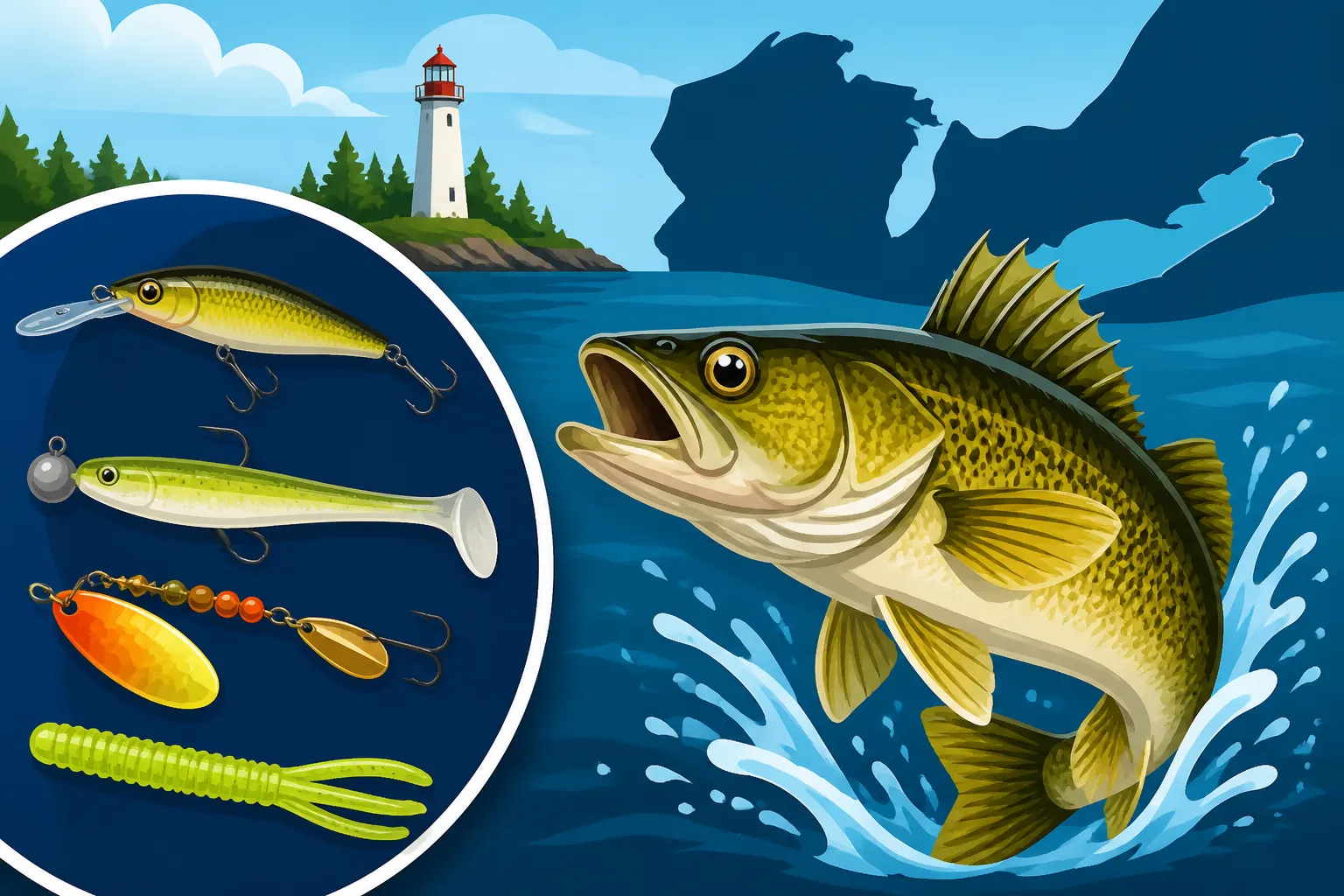
Crankbaits are arguably the most popular and productive artificial lure for Lake Erie walleye, especially for open-water trolling. These hard-bodied lures are designed to dive to specific depths, creating a fish-attracting wobble and vibration. The market is flooded with options, but certain styles and brands consistently produce. Deep-diving crankbaits, like the renowned Berkley Flicker Shad or the iconic Rapala Deep Tail Dancer, are essential for reaching walleye holding in deeper water during the summer months. Shallower-running stickbaits, such as the classic Rapala Husky Jerk or Smithwick Rattlin' Rogue, come into their own during spring and fall when walleye are in shallower depths. For more on specific lures, check out Best Crankbaits for Ontario Walleye.
The key to success with crankbaits lies in "precision trolling." This involves knowing the exact diving depth of your lure with specific line types (monofilament, fluorocarbon, braid) and lengths, and then matching that depth to where the walleye are holding. Trolling speed is also critical; generally, walleye prefer speeds between 1.0 to 2.5 mph, but daily preferences can vary. Color selection can be nuanced: natural baitfish patterns often work in clear water, while bright colors like chartreuse, orange, and firetiger can be deadly in stained or low-light conditions. Always have a diverse selection on hand, ready to swap out based on what the fish are responding to.
Jigs: Vertical and Casting Presentations
Jigs are incredibly versatile and effective for walleye, allowing for both vertical presentations directly over fish and casting presentations to cover structure. They are especially useful when walleye are tightly schooled or holding to specific pieces of cover. Soft plastic paddle-tail grubs, such as those from Berkley Gulp! or Kalin's, rigged on a lead head jig, are a go-to choice. The paddle tail creates a swimming action and vibration that walleye can't resist. Curly-tail grubs also offer a consistent action.
When walleye are holding tight to the bottom in deeper water, vertical jigging with a heavier jig can be incredibly effective. This involves dropping the jig to the bottom, lifting it a few feet, and letting it fall back, mimicking a dying baitfish. Hair jigs, though simpler in design, are also highly effective, especially in cold water. Their subtle breathing action of the hair can entice bites when fish are sluggish. For casting, lighter jigs can be worked along rocky points or weed edges in shallower water. The retrieve can vary from a slow drag to a series of hops and pauses, depending on what the walleye are looking for.
Blade Baits and Snap Jigs: Aggressive Options
When walleye are aggressive, or when you need to trigger a reaction strike, blade baits and snap jigs can be incredibly potent. Blade baits, like the Heddon Sonar or the Silver Buddy, are thin metal lures that vibrate intensely on the retrieve or when snapped up off the bottom. Their unique action and flash can draw strikes from a distance, making them excellent search baits. They are particularly effective in cold water conditions, during the spring or late fall, when walleye often respond well to aggressive, vertical presentations.
Snap jigging, often done with a jig head and a soft plastic minnow imitation, involves a sharp, upward snap of the rod to make the lure dart and then allowing it to fall on a semi-slack line. This erratic, wounded baitfish action can be deadly. It's an active fishing style that requires focus but can yield fantastic results when the walleye are willing to chase. Both blade baits and snap jigs are great for fishing around bottom structure or through suspended schools of active walleye.
Color, Size, and Presentation: Fine-Tuning Your Approach
Catching walleye on Lake Erie isn't just about having the right bait; it's about presenting it in the most appealing way. Even the best bait in the world won't work if it's the wrong color, size, or retrieved incorrectly. Mastering these nuances will dramatically improve your success.
Matching the Hatch: Color and Size Selection
The concept of "matching the hatch" extends beyond live bait to artificial lures. Walleye are visually oriented predators, and selecting the right color and size can be the difference between a full livewell and an empty one. Consider the prevalent forage in the area you're fishing. If emerald shiners are abundant, baits mimicking their silver, white, or light green hues in a 3-5 inch size will often be highly effective. If gizzard shad are present, larger, more robust baits in silver and dark back patterns might be better.
Water clarity and light conditions also play a huge role. In clear water, natural colors (silver, perch, ghost patterns) often work best, as they don't spook wary fish. However, in stained or muddy water, or on overcast days and low light conditions (dawn/dusk), brighter, more fluorescent colors like chartreuse, orange, firetiger, or bright pink can be highly visible and provoke strikes. UV-enhanced lures are also gaining popularity for their ability to be seen in deeper or darker waters. Don't be afraid to experiment, but always start by considering what the walleye are likely eating and what visibility conditions you're facing.
Varying Retrieve and Trolling Speeds
Walleye often have a preferred retrieve or trolling speed on any given day, and it can change hourly. Anglers who consistently catch fish are those who are willing to experiment and adapt. When trolling crankbaits or crawler harnesses, start with a moderate speed (e.g., 1.5 mph) and then systematically adjust up or down by 0.2-0.3 mph increments until you find what triggers bites. Watch your rod tips and feel for the subtle changes that indicate a fish is interested.
For jigging or casting artificials, vary your retrieve tempo. Some days, a slow, deliberate drag along the bottom is all it takes. Other times, a more aggressive snap-and-fall, or a steady retrieve with pauses, will prove more effective. Pay attention to when and how fish are biting. Are they hitting on the fall? On the pause? During a fast retrieve? Let the fish tell you what they want. It's a constant process of trial and error, but those who pay close attention to these details are often the most rewarded.
Rigging Techniques for Optimal Performance
Proper rigging is critical for ensuring your bait performs as intended and maximizes your hook-up ratio. For live bait, ensure hooks are sharp and sized appropriately. For minnows, hooking through the lips or dorsal fin allows natural movement without hindering the fish. For nightcrawlers on a harness, ensure the worm is stretched out straight and covering both hooks effectively to prevent it from balling up and hindering spinner blade rotation. This is where quality snell knots and leader material come into play.
When it comes to artificials, ensure your knots are strong and your leaders are appropriate for the lure and target species. For toothy walleye, a fluorocarbon leader (10-15 lb test) can offer increased abrasion resistance and stealth in clear water, without hindering the lure's action. The use of snap swivels or duo-lock snaps is common for crankbaits, allowing quick lure changes and preventing line twist, but ensure they are small enough not to negatively impact the lure's action. Every detail, from the sharpness of your hooks to the balance of your lure, contributes to the overall effectiveness of your presentation.
Adapting Baits to Different Lake Erie Conditions
Lake Erie is a dynamic environment, and conditions can change rapidly. What worked yesterday might not work today, and what works in one basin might not work in another. The best walleye anglers are those who can quickly adapt their bait and presentation to current conditions.
Clear vs. Stained Water Considerations
Water clarity is a primary factor in bait selection. In the western basin, which is often shallower and more prone to wind-induced turbidity, or after heavy rains, you might encounter stained or even muddy water. In these conditions, walleye rely more on their lateral line (to detect vibrations) and their sense of smell. This means brighter, more contrasting colors (firetiger, chartreuse, orange) that create a strong silhouette, or baits with a lot of vibration (loud crankbaits, blade baits), are often more effective. Also, baits with a strong natural scent, such as live minnows or scented soft plastics (like Berkley Gulp!), can be excellent.
Conversely, in the deeper central and eastern basins, where water often remains clearer, walleye tend to be more visually sensitive. Here, natural baitfish patterns (silver, perch, smelt imitations) in more subtle colors often outperform flashy or bold options. Fluorocarbon leaders become even more important for stealth. A good rule of thumb: when in doubt, start with natural colors in clear water and brighter colors in stained water, then adjust based on bites.
Wind, Waves, and Current: Adjusting Your Strategy
Lake Erie can get rough, and wind, waves, and current significantly impact fishing strategies. Strong winds create chop and current, which can disorient walleye but also provide cover and stir up baitfish. In choppy conditions, the added action imparted to a trolled crankbait or drifted live bait can sometimes be a positive. However, it also makes boat control challenging. Using a sea anchor or drift sock can help slow your drift and keep your boat on a more consistent path, ensuring better bait presentation.
When fishing in strong currents, whether near a river mouth or in certain areas of the lake, heavier jigs or larger trolling weights may be necessary to keep your bait in the strike zone. Conversely, in calm conditions, walleye can become more wary. You might need to scale down your bait size, use lighter leaders, and employ more subtle presentations. Sometimes, a flat calm day calls for a very slow, deliberate retrieve or trolling speed. Always observe how the conditions are affecting your bait's action and adjust to maintain optimal performance.
Seasonal Bait Transitions
Just as walleye migrate with the seasons, so too should your bait choices evolve. In the spring, as walleye stage for and recover from spawning, they are often found in shallower to mid-depths. Live minnows, slow-trolled stickbaits (like the Rapala Husky Jerk), and jigs tipped with plastics or minnows are fantastic. The Ontario Walleye Opener Dates by Zone will give you a good idea of when to target these active fish.
As summer progresses and walleye move deeper, trolling deep-diving crankbaits and crawler harnesses becomes the dominant strategy. Look for walleye suspended over deeper flats or near main lake structure. Consider our insights on Best walleye lures for Lake Erie in summer for specific recommendations.
In the fall, as water temperatures drop and walleye feed heavily in preparation for winter, they often return to shallower to mid-depth areas. This can be a prime time for aggressive jigging with minnows or plastics, as well as casting or trolling crankbaits. The fish are often very active, and you might find success with baits that create a lot of commotion. Pay attention to the Best Time of Day to Catch Walleye during these transitional periods, as feeding windows can be short but intense.
| Bait Type | Primary Use | Best Conditions | Walleye Size Targeted | Pros | Cons |
|---|---|---|---|---|---|
| Live Minnows | Jigging, Drifting, Slow Trolling | Cooler water, finicky fish, clear to stained water | All sizes | Natural scent/action, highly effective for cautious fish | Requires maintenance, can be fragile, more expensive |
| Nightcrawlers | Trolling (Harness), Drifting | Warmer water, open flats, moderate activity, stained water | All sizes | Great scent trail, durable on harness, wide appeal | Can be messy, require cooler storage |
| Leeches | Jigging, Drifting, Bobber Fishing | Cold water, sluggish fish, early season | Smaller to medium | Extremely durable, stay lively, good for slow presentations | Can be hard to source, smaller profile |
| Deep-Diving Crankbaits | Trolling (Open Water) | Deeper water, active fish, covering vast areas, clear to stained water | Medium to large | Covers water fast, specific depth control, triggers reaction strikes | Requires trolling gear, can snag, expensive per lure |
| Shallow/Stick Crankbaits | Trolling, Casting | Shallower water, aggressive fish, spring/fall | All sizes | Excellent flash/wobble, good for structure, versatile | Less effective in very deep water |
| Soft Plastic Grubs/Paddle-tails | Jigging, Casting | All depths, active to moderately active fish, all water clarities | All sizes | Versatile, wide range of colors/actions, durable, scent options | Less natural scent than live bait |
| Blade Baits | Vertical Jigging, Snap Jigging | Cold water, aggressive fish, reaction strikes, stained water | Medium to large | Intense vibration/flash, excellent for schooling fish | Can snag easily, aggressive retrieve may spook some fish |
Ultimately, becoming a successful walleye angler on Lake Erie requires a combination of knowledge, adaptability, and patience. Armed with a diverse selection of live and artificial baits, and an understanding of how to present them effectively in varying conditions, you’ll be well on your way to filling your cooler with those tasty golden fish.
Disclaimer
The information provided in this guide is for general informational purposes only and is not intended as legal advice. Fishing regulations, license requirements, and seasonal restrictions are subject to change. Always consult the most current Ontario fishing regulations summary and relevant local authorities before heading out on the water. Stay safe, fish responsibly, and prioritize conservation.