Best anchor for fishing moving river current
There are few things more frustrating than trying to hold your position on a prime fishing spot in a river, only to have the relentless current drag your boat or kayak downstream. Whether you're targeting a subtle eddy for walleye or trying to present a fly perfectly in a trout stream, maintaining your station against the flow is absolutely critical. This comprehensive guide will help you understand the unique challenges of anchoring in moving water and find the best anchor system to keep you exactly where you want to be.
Understanding the Challenges of River Anchoring
Anchoring in a river is a whole different ballgame compared to dropping a hook in a still lake. The constant, sometimes powerful, force of moving water introduces complexities that require a specific approach and, often, specialized gear. Ignoring these differences can lead to a lost anchor, a missed fish, or even a dangerous situation.
The Relentless Force of Current
Imagine trying to stand still on a treadmill that keeps speeding up – that's what your anchor is up against in a river. The water itself exerts tremendous pressure, constantly trying to push your boat downstream. This isn't a gentle breeze; it's a persistent, often violent, tug. Unlike a lake where wind might shift directions, river current is generally a one-way street, but its intensity can vary wildly. A slow, meandering river might only require a minimal hold, while a fast, turbulent section near rapids demands a robust, specialized anchor.
Furthermore, current isn't uniform. You might be in a fast main channel, but just a few feet away, a significant eddy could be spinning in the opposite direction. These swirling currents can make a conventional anchor spin and drag, unable to get a solid purchase. Even a slight increase in water flow from recent rains or dam operations can turn a manageable spot into an anchor-eating monster, leaving you helplessly drifting past that honey hole you painstakingly located. Understanding the specific current dynamics of the river you plan to fish is the first step toward successful anchoring.
Bottom Composition Matters
Just like in lakes, the riverbed underneath you plays a huge role in how well an anchor will hold. However, in a river, the current often exacerbates the problems associated with different bottom types. A sandy bottom in a lake might be fine, but a swift current over sand can quickly cause a conventional anchor to plough a furrow and drag. Muddy bottoms can be equally challenging; an anchor might sink deep, making it hard to retrieve, or simply pull through soft sediment.
Rocky bottoms present their own unique nightmare: snagging. While an anchor might find excellent purchase among rocks, the risk of it becoming permanently wedged between boulders is incredibly high. Losing an anchor in a fast current is not only a financial hit but can also be a safety hazard, especially if you suddenly find yourself unable to control your boat. Conversely, a riverbed dominated by submerged vegetation can prevent an anchor from digging in at all, leaving it to bounce along the surface of the weeds. A versatile anchor or, more often, a selection of anchors designed for different riverbed conditions, is essential for serious river anglers.
Key Features of an Effective River Anchor
Given the unique challenges presented by moving water, selecting a river anchor isn't just about picking the heaviest one off the shelf. It's about finding a design that works with the current and the riverbed, ensuring safety, effectiveness, and ease of use.
Weight and Holding Power
While weight is undeniably a factor, it's not the only one. A heavy anchor that simply sits on top of a hard riverbed or ploughs through soft mud might not hold as well as a lighter, specifically designed river anchor. The true measure is "holding power" – the anchor's ability to resist the pulling force of the current. This power comes from a combination of weight, design, and how effectively the anchor digs into or grips the bottom.
Many river anchors are designed with flukes, claws, or box shapes that maximize surface area or create suction, allowing them to dig in and hold without being excessively heavy. For instance, a pyramid or mushroom anchor might be suitable for soft, muddy lake bottoms, but in a strong river current, it might just slide along the surface. A river anchor needs to penetrate or grip the bottom quickly and reliably, even under constant strain. Sometimes, a combination of weight and specific design, like a river anchor with articulating flukes, will provide superior holding power compared to a simple, heavy chunk of lead.
Anchor Line and Scope Considerations
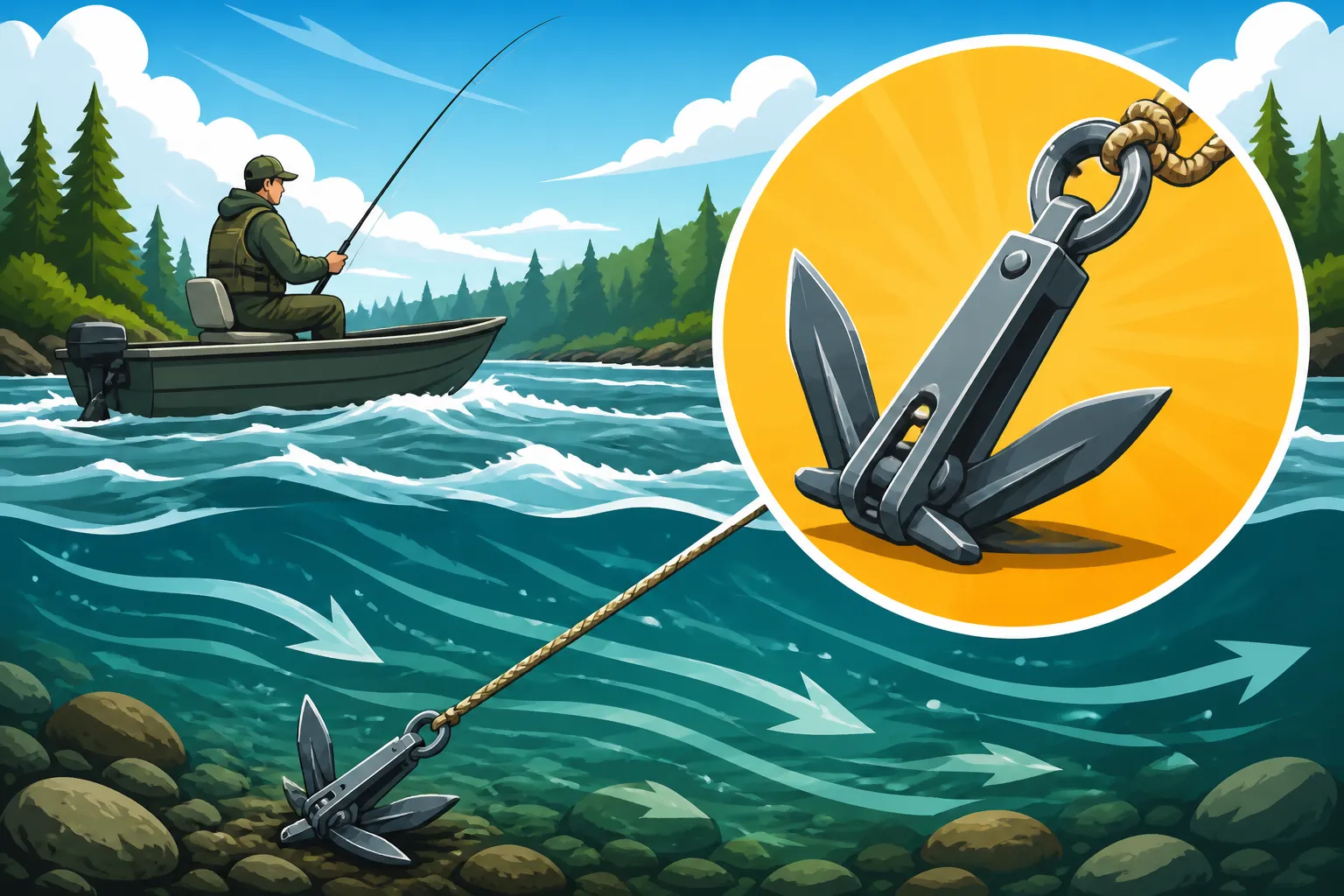
The anchor itself is only half the equation; the anchor line and its deployment, specifically the "scope," are just as crucial, especially in current. Scope refers to the ratio of the length of your anchor line to the depth of the water (and often, the height of your bow above the water). In a river, the recommended scope is often much higher than in still water – sometimes as much as a 7:1 ratio (7 feet of line for every 1 foot of depth) or even more in very strong currents. This long scope allows the anchor line to lie relatively flat along the riverbed, pulling the anchor horizontally into the bottom rather than vertically out of it.
Using a length of chain (often 6-10 feet) between your anchor and your rope is absolutely vital for river anchoring. The chain helps the anchor lie flat and dig in by providing weight close to the anchor, and it offers abrasion resistance against rocks, which is common in river environments. Without adequate scope and a proper chain leader, even the best anchor will likely drag. The anchor line itself should be strong, durable, and resistant to abrasion. While rope is common, some anglers opt for specialized lines with more stretch or increased abrasion resistance for river use. You'll often find excellent anchor rope and chain options at reputable outdoor retailers like Bass Pro Shops, or on online platforms like Amazon.
Retrieval Systems and Safety
Getting an anchor stuck in a riverbed is a very real problem, and in a strong current, it can quickly turn from an inconvenience into a dangerous situation. Imagine your anchor getting wedged, and the current starts to swing your boat sideways, potentially swamping it or even flipping it. This is why having a robust retrieval system, or at least a safety measure, is non-negotiable for river fishing.
A break-away system is a popular choice for rocky rivers. This involves attaching the anchor line to the crown (top) of the anchor, running it down the shank, and securing it to the fluke end with a weak link (like a zip tie or light monofilament line). If the anchor snags, you can break the weak link, allowing you to pull the anchor out from the fluke end, dislodging it. Another critical safety feature, especially for kayaks and smaller boats, is a quick-release system. This could be as simple as having a knife readily accessible to cut the line, or a dedicated quick-release cleat that allows you to instantly detach from the anchor in an emergency. Always prioritize your safety and know how to abandon your anchor if necessary.
Types of Anchors Best Suited for River Current
With the complexities of river currents and varied bottom compositions, it's no surprise that a few specialized anchor designs have emerged as favorites among river anglers. Each has its strengths and weaknesses, making them suitable for different scenarios.
River Anchors (Box, Claw, Grapple Variants)
When people talk about "river anchors," they're often referring to specific designs built to tackle current and variable bottoms. These include box anchors, claw anchors (sometimes called Bruce anchors), and various grapple anchor modifications.
-
Box Anchors: These are typically square or rectangular, hollow boxes with flukes that extend downwards. When deployed, the box fills with water and settles, while the flukes dig into the bottom. Their design makes them incredibly effective in softer bottoms (mud, sand) and even some gravel, providing exceptional holding power due to their large surface area and ability to scoop up sediment. They also tend to be less prone to snagging on modest obstructions compared to sharp-fluked anchors, as they can sometimes "tumble" over obstacles. However, their bulk can be a drawback for smaller boats, and they aren't always ideal for dense rock. You'll often find robust box anchors readily available from marine suppliers or through retailers like Bass Pro Shops, which cater to serious anglers.
-
Claw/Bruce Anchors: These anchors resemble a scoop or claw, designed to dig in quickly and hold firmly across a variety of bottoms including mud, sand, and even some rock. Their shape allows them to re-set rapidly if the current shifts or the boat swings. While originally designed for larger vessels in varied conditions, smaller versions are popular for river fishing, especially where the bottom is a mix of sand, gravel, and smaller rocks. Their digging action is generally reliable, but they can occasionally get snagged in very large, irregular rock formations.
-
Grapple Anchors: A traditional grapple anchor, with its multiple arms, is excellent for snagging onto rocky bottoms. However, in a river, its primary purpose often shifts. Many river anglers modify grapple anchors to act as a "break-away" system for snaggy areas. The arms can be bent or tied with weak links. This way, if an arm gets hopelessly wedged, the link breaks, allowing you to retrieve the rest of the anchor. These are particularly useful in fast-flowing, boulder-strewn rivers where conventional anchors are a liability. Their effectiveness on soft bottoms is limited, as they don't have the surface area to dig in effectively.
Drag Chains and Weighted Systems
Sometimes, you don't want to come to a complete stop; you just want to slow your drift or maintain a specific speed through a productive stretch of water. This is where drag chains or other weighted systems really shine.
-
Drag Chains: A simple, heavy chain, often 10-20 feet long or more, can be deployed off the bow or stern to create drag. It bounces along the bottom, creating friction that slows your boat down to a more manageable speed. This is perfect for Drift Fishing for Walleye in Ontario Rivers or targeting smallmouth bass that might be scattered along a longer stretch. The beauty of a drag chain is its simplicity and its ability to traverse varied bottom types without snagging severely. If it catches, a steady pull usually frees it. The weight of the chain provides constant, controlled resistance without the abrupt stop of a traditional anchor.
-
Weighted Systems (e.g., Lead Weights, Homemade Solutions): Similar in concept to drag chains, some anglers use large, heavy lead weights (like window sash weights or purpose-built river weights) tied to a long line. These can be deployed to gently bump along the bottom, slowing the boat, or precisely placed to hold a position in a very soft current. Homemade solutions often involve bags of rocks or concrete blocks, though these can be cumbersome and less environmentally friendly if lost. The key is controllable drag without getting permanently snagged. These systems are typically deployed with enough line to allow them to "bounce" rather than dig in, giving the angler a feel for the bottom and providing a flexible approach to current control. For those who want something purpose-built and reliable, online retailers like Amazon offer a range of specialized river weights that are designed for this exact purpose.
Spud Poles and Shallow Water Solutions
For those fishing in very shallow rivers with soft bottoms, spud poles offer an elegant and effective alternative to traditional anchors. They are particularly popular with kayaks, canoes, and small jon boats.
-
Spud Poles: A spud pole is essentially a sturdy stake, usually made of fiberglass, aluminum, or heavy-duty plastic, that you manually push into the riverbed to hold your boat in place. They work exceptionally well in soft mud, sand, or even mucky bottoms up to a certain depth. The advantage is silent deployment, quick adjustment, and minimal disturbance to the fishing spot. You can easily push them down, pull them up, and reposition your boat with precision. They are incredibly useful for targeting specific cover like submerged logs or weed lines in shallow water.
-
Limitations: The obvious limitation of spud poles is depth. Once the water gets beyond a few feet, or if the bottom is too hard (rock, dense gravel), a spud pole becomes impractical or ineffective. They also require a certain amount of upper body strength to deploy and retrieve, especially if you're battling a moderate current while pushing into a firm bottom. However, for wade fishing or shallow river exploration, a good spud pole or two can be an invaluable piece of gear. When you're out exploring smaller Ontario rivers in your kayak, a spud pole allows you to silently hold your position, giving you a stealthy advantage when chasing wary fish.
Choosing the Right Anchor for Your Ontario River Fishing
Making the right choice for your river anchor isn't just about knowing the types available; it's about matching the anchor to your specific needs, your boat, and the particular river environments you plan to fish across Ontario.
Matching Anchor to Boat Size and Type
The size and type of your watercraft will heavily influence your anchor choice. A large, heavy bass boat navigating a wide river will require a vastly different anchor system than a nimble kayak paddling a small stream.
-
Kayaks and Canoes: For these lighter, smaller vessels, portability and ease of deployment are paramount. A 5-10lb box or folding grapple anchor is often sufficient for moderate currents. A drag chain can be excellent for slowing a drift without stopping completely. Spud poles are ideal for shallow-water kayaks, offering silent and precise positioning. The compact nature of these anchors means you can often carry a couple of different types to adapt to changing conditions. When selecting a kayak anchor, consider how it stores and deploys without interfering with your paddling or fishing. Think about your Best Kayak for River Fishing in Ontario and its storage capabilities.
-
Jon Boats and Smaller Utility Boats: These boats, often used on medium-sized rivers, need more substantial anchors. A 10-20lb river-specific anchor (box, claw, or pyramid) is a good starting point. The extra weight of the boat and its larger profile mean more surface area for the current to push against, so more holding power is necessary. You'll definitely want to incorporate a chain leader and a reliable anchor retrieval system. For those with Best Jon Boats for Shallow Rivers, the option of a powerful electric trolling motor with a "spot lock" feature can sometimes negate the need for a physical anchor in lighter currents, but it's always wise to have a backup.
-
Larger Fishing Boats (e.g., Multi-species, Bass Boats): For heavier boats on larger, faster rivers like the Ottawa River or sections of the St. Lawrence, serious anchoring power is needed. A 20lb+ river anchor is a minimum, and some anglers will opt for dual anchors (one off the bow, one off the stern) to maintain a rock-solid position, especially in strong winds or currents. Power-pole or shallow-water anchor systems can also be invaluable for quick, silent stops in shallower zones, though they have depth limitations. Always consider the total displacement of your boat, gear, and passengers when determining the appropriate anchor weight and size.
Assessing the Specific River Environment
Ontario boasts an incredible diversity of rivers, from the slow, winding tributaries of Lake Simcoe to the powerful stretches of the French River. The characteristics of the specific river you're fishing will dictate the best anchor strategy.
-
Slow, Meandering Rivers with Soft Bottoms: For these environments, where the current is gentle and the bottom is often mud or sand, a traditional box anchor or even a mushroom-style anchor can work effectively. You might not need as much weight or as long a scope, but a short length of chain is still a good idea. These rivers often provide excellent opportunities for Float Fishing the French River in calmer sections, and a well-placed anchor can help you thoroughly work a seam or a log jam.
-
Fast, Rocky Rivers with Strong Currents: This is where specialized river anchors shine. Claw anchors and heavily built grapple anchors with break-away systems are often the best bet. The goal is to find an anchor that can dig into rocky crevices or grip securely without getting permanently stuck. A longer chain leader is essential for abrasion resistance, and a very generous scope (7:1 or more) will be needed. Safety is paramount here; always have a quick-release mechanism or a sharp knife at hand. If you're tackling high water conditions in spring, like during Best Techniques for High Water Spring Conditions, a more aggressive anchor and careful deployment are absolutely critical.
-
Mixed Bottom Rivers: Many rivers have sections of sand, gravel, and rock, making anchor choice a continuous challenge. In these situations, a versatile anchor like a heavy claw anchor or a pyramid anchor with a break-away system can be a good compromise. Alternatively, carrying two different types of anchors—say, a box anchor for softer spots and a grapple for rocky areas—allows you to adapt. Checking charts or local knowledge about specific river sections can give you a heads-up on bottom composition.
Practical Tips for Deploying and Retrieving
Anchoring in a river isn't just about the gear; it's also about the technique. Proper deployment and retrieval can prevent snags, ensure a secure hold, and keep you safe.
- Deploy Upstream: Always approach your desired spot from upstream. When you're ready to anchor, gradually lower your anchor upstream of your position, letting the current carry your boat back over the anchor's final resting place. This allows the anchor to dig in properly and for you to lay out the correct amount of scope as you drift back. If you try to drop directly on top of your spot, the anchor will likely drag.
- Use Ample Scope: As discussed, this is non-negotiable in current. The longer the scope, the better the anchor will hold. It might feel like you're using too much line, but trust the physics.
- Check Your Hold: Once deployed, feel the anchor set. You should feel a distinct "thump" as it digs in, and your boat's movement should slow to a stop without any "skipping" or dragging. If it drags, pull it up, reposition, and try again with more scope or in a slightly different spot.
- Retrieval Strategy: If your anchor is stuck, don't just pull harder. Try to motor directly upstream of the anchor and pull straight up, or use a "break-away" system if you have one. Sometimes, circling the anchor can help dislodge it. For single-person kayak fishing, a dedicated anchor trolley system can make deploying and retrieving much easier and safer, allowing you to control the anchor's position along the side of your boat. For those exploring Ontario Boating Laws for Anglers, it’s worth noting that safe anchoring practices are part of responsible boating.
- Safety First: Always have a sharp knife readily available to cut your anchor line in an emergency. In a strong current, a stuck anchor can quickly become a life-threatening situation, potentially capsizing your boat. Your life jacket, a critical piece of Life Jacket Requirements for Ontario Boaters, will be useless if you're trapped by an overturned boat.
Here's a quick comparison of common river anchor types:
| Anchor Type | Best for Riverbed Type | Current Strength | Boat Size | Pros | Cons |
|---|---|---|---|---|---|
| Box Anchor | Mud, Sand, Gravel, Soft Clay | Moderate to Strong | Small to Medium | Excellent holding, less snag-prone, good for varied bottoms | Bulky to store, less effective on hard rock |
| Claw Anchor | Mud, Sand, Rock, Mixed | Moderate to Strong | Small to Large | Digs in quickly, reliable hold, resets well | Can snag in very rocky areas, sharp points can damage deck |
| Grapple Anchor | Rocky, Snaggy | Light to Moderate | Kayak to Medium | Great for snagging rocks, often used with break-away systems | Poor holding on soft bottoms, high snag risk if not set up correctly |
| Drag Chain | Any (for slowing drift) | Light to Moderate | Any | Simple, effective for slowing, minimizes snags, easy to retrieve | Doesn't stop boat completely, can create noise |
| Spud Pole | Shallow Mud, Sand, Soft Clay | Light to Moderate | Kayak to Jon Boat | Silent, precise positioning, quick deployment/retrieval in shallow water | Only works in shallow, soft bottoms, depth limitation |
No matter which anchor you choose, remember that safe and effective river anchoring is an art form refined with practice. Be prepared, understand your gear, and always prioritize safety on the water.
Disclaimer
This article is for general informational purposes only and does not constitute professional advice. Laws, prices and regulations vary by location and change over time. Consult a qualified professional for guidance on your specific situation.