Best paddle length for a fishing kayak
There’s nothing quite like the feeling of gliding across a pristine Ontario lake or river in your fishing kayak, the early morning mist hanging heavy, and the promise of a big catch just around the bend. But let's be honest, that idyllic picture can quickly turn into a frustrating arm workout if you're battling an ill-fitting paddle. Many of us have been there, struggling with a paddle that's either too short, making you bang your knuckles on the gunwales, or too long, forcing awkward, inefficient strokes that sap your energy before you even get to your prime fishing spot. This guide is all about helping you cut through the confusion and find that "just right" paddle length that will transform your kayak fishing experience from a chore into the effortless, joyful pursuit it's meant to be.
The Critical Role of Paddle Length in Kayak Fishing
Choosing the right paddle length for your fishing kayak isn't just about comfort; it's about efficiency, control, and ultimately, your success and enjoyment on the water. Many anglers overlook this crucial piece of gear, assuming any paddle will do. But a poorly matched paddle can turn a relaxing day into an exhausting battle, leaving you too tired to even think about casting.
The Silent Struggle: Inefficiency and Frustration
Imagine this: you've launched your fishing kayak, gear loaded, spirits high. You start paddling, and almost immediately, you feel… off. If your paddle is too short, you’re constantly reaching outwards, stretching your shoulders, and dipping only the very tip of the blade into the water. This leads to a weak, ineffective stroke, making you work twice as hard to move half as far. Your kayak might wobble, tracking poorly, and you’ll find yourself correcting course more often than you’d like. On the flip side, a paddle that's too long feels cumbersome and awkward. You might over-rotate your torso, swinging the blade in a wide, inefficient arc, or the blade might dive too deep, acting like a brake rather than a propeller. Both scenarios are exhausting, quickly draining your energy reserves and turning a potential day of angling bliss into a regrettable arm workout. This inefficiency doesn't just tire you out; it means you spend more time paddling and less time actually fishing, which is a major bummer when you've got limited hours on the water.
This frustration is particularly acute for fishing kayak enthusiasts because we often spend extended periods on the water, sometimes covering significant distances to reach those honey holes. The wrong paddle can lead to early fatigue, shoulder strain, and even repetitive stress injuries over time. It makes every stroke a conscious effort rather than a fluid motion, stealing from the quiet enjoyment of being out on the water. It can even make you dread longer paddles, limiting your exploration to easily accessible spots rather than venturing out to discover new, productive areas. No one wants to cut a trip short because their arms are screaming at them, all because of an ill-suited paddle.
Optimizing for Stealth and Stamina
For kayak anglers, stealth is paramount. Fish are incredibly sensitive to vibrations and sudden movements. An efficient, quiet paddle stroke is your best friend when trying to approach a wary walleye hot spot or sneak up on bass lurking in the lily pads. A paddle that's the wrong length often results in a lot of splashing, extra effort, and jerky movements. If your paddle is too long, the blade might slap the water surface loudly as you try to pull it out, or you might hit the side of your kayak with each stroke, creating unnecessary noise. If it’s too short, you might be digging too hard, causing a deeper splash and more disturbance. Neither is ideal for a stealthy approach.
The right paddle length allows for a smooth, consistent stroke that minimizes disturbance and maximizes your ability to sneak up on fish. It promotes a natural, rhythmic motion that conserves your energy over hours of paddling. Think about those long stretches across Georgian Bay or the vast expanse of Lake Simcoe; you need every bit of stamina you can muster. A properly sized paddle lets you cover more water with less effort, meaning you arrive at your fishing destination feeling fresh and ready to cast, rather than winded and sore. This also means you have more energy for fighting a fish, or for navigating back to shore if the winds pick up unexpectedly. A good paddle becomes an extension of yourself, making the journey part of the enjoyment, not just a means to an end.
Impact on Casting and Fish Handling
Beyond just getting from point A to point B, your paddle impacts your actual fishing activities. Once you're on your spot, you'll inevitably need to make minor adjustments to your position to stay on fish or cast to a particular piece of structure. This often means quick, small paddle strokes. With a paddle of incorrect length, these fine-tuning movements become clumsy. A paddle that's too long can get tangled with your fishing line or even hit your rod as you’re trying to cast or reel in a fish. It can feel like you’re wrestling with an octopus rather than gracefully maneuvering your vessel.
Moreover, when you hook into a big one, the fight can take you all over the place. You might need to quickly back-paddle to prevent a fish from running into submerged timber, or paddle forward to follow a strong run. Having a paddle that feels natural and responsive in your hands is crucial for these moments. Imagine trying to manage a feisty Northern Pike while simultaneously struggling with an awkward paddle – it's a recipe for disaster and potentially a lost fish. A well-fitted paddle can be quickly deployed for a corrective stroke and then just as quickly stored in a paddle park or across your lap, keeping it out of the way when you need to focus on your rod. This seamless transition is vital for those critical moments when a fish is on the line. It's about maintaining control of both your kayak and your catch, ensuring you have the advantage when it matters most.
Decoding Your Personal Equation: Height, Kayak, and Stroke Style
Finding the ideal paddle length isn’t a one-size-fits-all situation. It's a highly personal calculation that takes into account several key variables unique to you and your setup. Ignoring these factors is why so many anglers end up with a paddle that just doesn’t feel right.
Your Body: The Primary Measurement
The most significant factor in determining your paddle length is your height, specifically your seated torso height. While standing height gives a general idea, what really matters is how tall you are from your rear end to the top of your head when seated in your kayak. This is because it dictates your reach over the sides of the boat and how comfortably you can maintain an efficient paddling posture. A taller paddler, naturally, will need a longer paddle to get full blade immersion and avoid reaching too far down, which can strain the back and shoulders.
However, it's not just about height; arm length and shoulder flexibility also play a subtle role. Some paddlers prefer a higher angle, more aggressive stroke, which might lean them towards a slightly shorter paddle than their height alone would suggest, allowing for quicker, more frequent strokes. Others prefer a more relaxed, lower angle stroke, which often benefits from a slightly longer paddle to compensate for the shallower entry angle of the blade. It's a delicate balance, and understanding your natural body mechanics and preferred paddling style is key. Many paddlers find that taking a general sizing recommendation and then fine-tuning based on how their body feels in the kayak provides the best results.
Your Kayak: Width and Seat Height Are Key
This is where fishing kayaks truly diverge from recreational kayaks in terms of paddle needs. Fishing kayaks are, by design, often much wider than their recreational counterparts. They prioritize stability, especially when you're standing to cast or reeling in a fish, and they need ample room for gear storage. A wider kayak means you have to reach further out over the gunwales to get your paddle blade fully into the water. If your paddle is too short for a wide kayak, you'll be constantly hitting the sides of the boat or only getting partial blade immersion, drastically reducing your stroke efficiency and making your kayak feel sluggish. This is a common complaint among new kayak anglers who upgrade to a wider, more stable fishing platform but neglect to upgrade their paddle length.
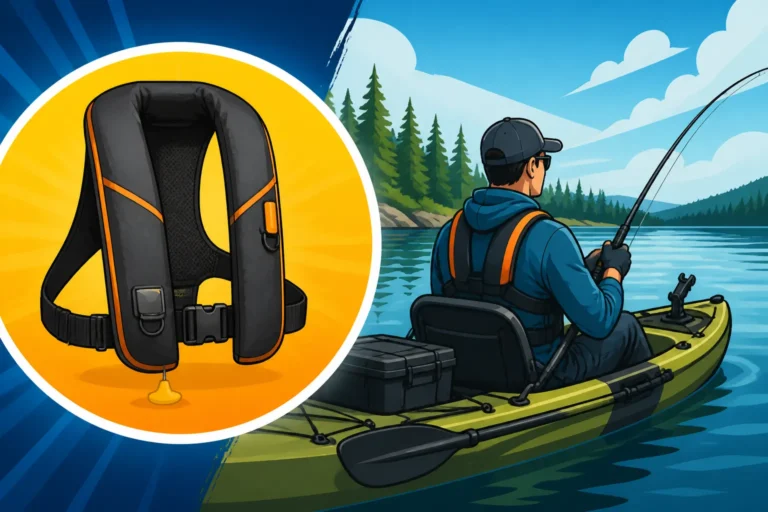
Furthermore, many modern fishing kayaks feature elevated seating, like those found in models from Bass Pro Shops, which significantly raises your seated position above the waterline. While these seats are incredibly comfortable and offer a better vantage point for spotting fish, they also mean your paddle needs to be considerably longer to maintain proper blade angle and full immersion without over-extending yourself. If you’re used to sitting low in a traditional recreational kayak, you might be surprised by how much longer a paddle you need for a sit-on-top fishing kayak with an elevated frame seat. Always factor in how high your actual sitting position is relative to the water when calculating your ideal paddle length. Don't forget to account for your Best Life Jacket for Lake Kayak Fishing too, as some bulkier PFDs can subtly affect your reach and comfort.
Your Stroke: High Angle vs. Low Angle Paddling
Believe it or not, how you prefer to paddle – your stroke style – also influences the optimal paddle length. There are generally two main types of paddling strokes: high angle and low angle.
High Angle Stroke: This is characterized by a more vertical paddle shaft during the power phase of the stroke. The blade enters the water closer to the kayak and is pulled straight back, maximizing power and quick acceleration. Paddlers who employ a high-angle stroke often engage more of their core and torso rotation. For this style, a slightly shorter paddle is generally more efficient because it allows for a quicker cadence and better control of the more vertical blade angle. If you're an aggressive paddler who likes to move fast or wants precise maneuverability, a high-angle stroke might be your go-to, and a shorter paddle within the recommended range for your height and kayak width would be beneficial. This style is often preferred when navigating currents or making quick turns, such as when river fishing in Ontario.
Low Angle Stroke: This stroke involves a more horizontal paddle shaft angle. The blade enters the water further away from the kayak and is swept in a wider arc, often allowing for a more relaxed, less strenuous pace. This style is generally more relaxed and energy-efficient for long distances, making it popular for touring or leisurely cruises. For a low-angle stroke, a slightly longer paddle is often preferred. The extra length compensates for the shallower entry angle, ensuring adequate blade immersion without excessive leaning or reaching. If your kayak fishing involves covering long distances across open water, like on Lake Erie, and you prefer a more relaxed, cruising pace, a low-angle stroke with a longer paddle might be more comfortable and efficient for you. Consider your primary fishing environment and how you naturally paddle when making your choice. Kayak Fishing Techniques for Ontario Lakes often benefit from understanding these different stroke styles.
Finding Your Perfect Fit: Sizing Guides and Practical Tests
With all these variables at play, how do you actually pinpoint that magic number for your paddle length? Thankfully, there are established methods and practical tests you can employ to get it just right. It's often a combination of using a guide as a starting point and then getting a feel for it in the real world.
Understanding Sizing Charts as a Starting Point
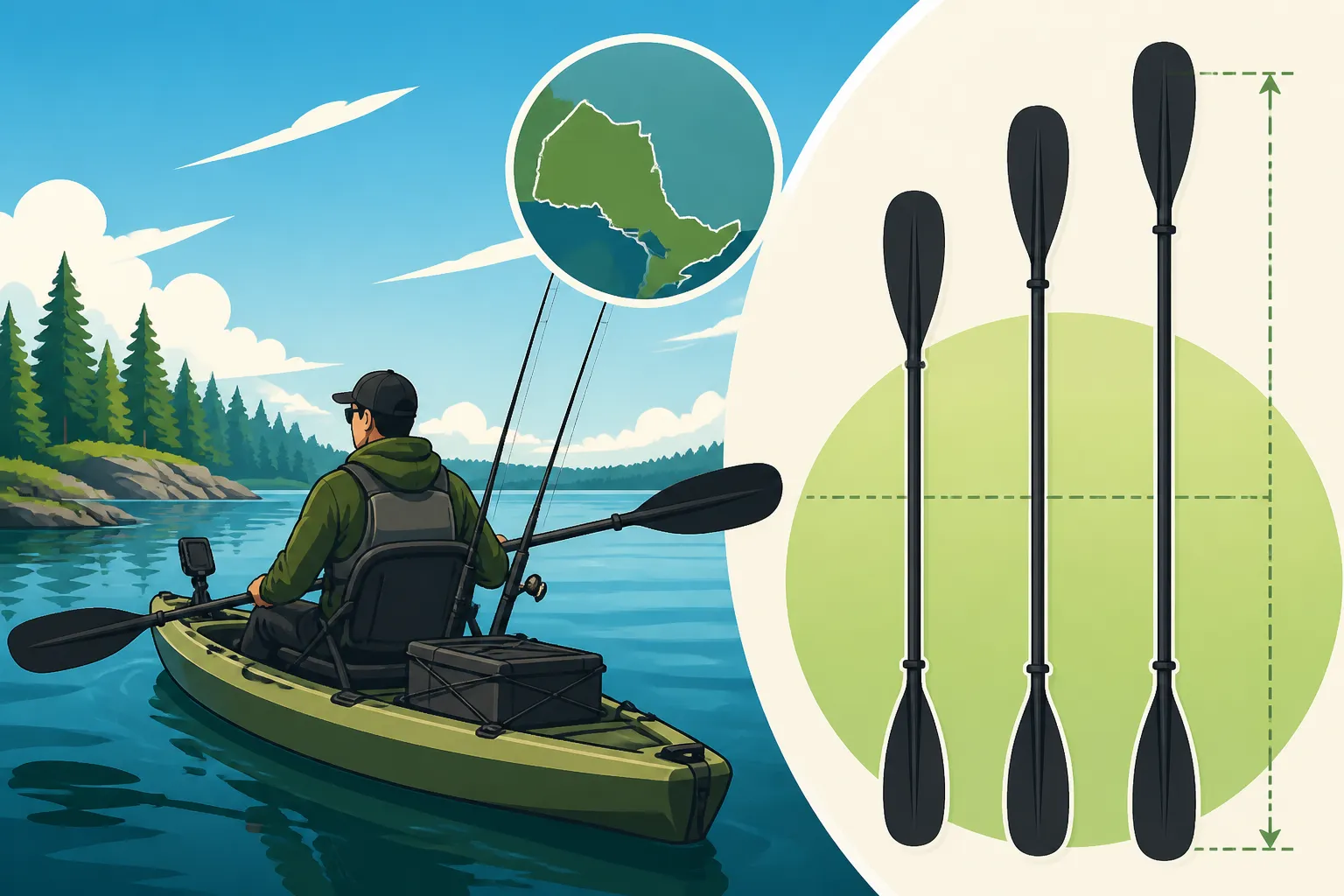
Most reputable paddle manufacturers and outdoor retailers like Bass Pro Shops provide detailed sizing charts to help you narrow down your options. These charts typically cross-reference your standing height with your kayak's width to give you a recommended paddle length range. Think of these charts as excellent baselines – they get you in the ballpark, but they aren't the absolute final word.
Here’s a general idea of what these charts might look like:
| Paddler Height | Kayak Width (under 28") | Kayak Width (28" – 32") | Kayak Width (32" – 36") | Kayak Width (over 36") |
|---|---|---|---|---|
| 5'0" – 5'4" | 210-220 cm | 220-230 cm | 230-240 cm | 240-250 cm |
| 5'5" – 5'9" | 220-230 cm | 230-240 cm | 240-250 cm | 250-260 cm |
| 5'10" – 6'2" | 230-240 cm | 240-250 cm | 250-260 cm | 260-270 cm |
| 6'3" + | 240-250 cm | 250-260 cm | 260-270 cm | 270 cm + |
Note: These are general recommendations. Individual preference, seat height, and paddling style will influence the final choice.
When you consult these charts, remember to consider your kayak’s actual width. A sit-on-top fishing kayak designed for stability, especially one capable of standing, will likely fall into the wider categories. If your kayak has an elevated frame seat, you might even consider bumping up to the next size category from what the chart suggests, as your seated height is effectively much taller. Don't be afraid to read customer reviews for specific kayak models and see what paddle lengths other anglers with similar builds are successfully using. It's all about gathering as much information as possible before making a decision, especially if you're ordering something sight unseen from a large online retailer like Amazon.
The "Real-World" Sitting Test
While sizing charts are a great start, nothing beats a real-world test. If possible, take your kayak (or the one you plan to buy) to a store like Bass Pro Shops that allows you to "test fit" paddles. This is the most accurate way to gauge what truly feels right for you in your specific kayak.
Here’s how to do the sitting test:
- Sit in your kayak on a flat surface. Mimic your actual paddling position, sitting up straight with your back against the seat. If your kayak has an adjustable seat, set it to the height you usually paddle at.
- Hold the paddle with your hands roughly shoulder-width apart. The paddle shaft should rest on top of your head, with your elbows bent at approximately a 90-degree angle.
- Observe the blade angle. When you hold the paddle like this, the blades should be angled roughly 45 degrees relative to the ground. If they're pointing almost straight up, the paddle is likely too short. If they're nearly flat, it might be too long. This isn't an exact science, but it gives you a quick visual cue.
- Simulate a stroke. Lean slightly forward, as you would at the start of a stroke, and imagine dipping the blade into the water next to your hip. The blade should be fully submerged without you having to over-reach or lean excessively. The shaft should clear the gunwales of your kayak comfortably, without your knuckles scraping. Then, imagine completing the stroke, pulling the blade back towards your hip. The exit should also be smooth, with minimal splashing.
Pay attention to how your shoulders feel during this test. Are they naturally relaxed, or are you straining? Does the paddle feel like a comfortable extension of your body, or an awkward tool you're wrestling with? This hands-on experience is invaluable and will give you confidence in your final choice. Remember, even a small difference in paddle length can make a big difference in comfort and efficiency over an entire day of fishing.
The Benefits of Adjustable Paddles
For those who are truly torn between two lengths, or perhaps share their fishing kayak with family members of different heights, an adjustable paddle can be a fantastic solution. These paddles feature a ferrule system that allows you to change the overall length, usually within a range of 10 to 20 centimeters.
Pros of Adjustable Paddles:
- Versatility: You can fine-tune the length for different paddling conditions, kayak types (if you own more than one), or even different seat heights if your kayak has an adjustable seat.
- Shareability: Easily accommodate multiple paddlers of varying heights, making it perfect for family outings or if friends borrow your boat.
- Experimentation: If you're new to kayak fishing or unsure of your preferred stroke style, an adjustable paddle allows you to experiment with different lengths to find what feels most efficient and comfortable. This can save you from buying multiple fixed-length paddles.
- Adaptability to Gear: If you add a Best Trolling Motor for a Fishing Kayak or other accessories that subtly change your paddling position, an adjustable paddle can adapt.
Cons of Adjustable Paddles:
- Cost: Generally, adjustable paddles tend to be more expensive than comparable fixed-length paddles of the same material and quality.
- Weight: The adjustable mechanism can sometimes add a small amount of weight compared to a solid-shaft paddle.
- Potential for Play: Over time, or with heavy use, the adjustable ferrule might develop a slight amount of play or looseness. High-quality adjustable paddles minimize this, but it’s something to be aware of.
- Maintenance: The adjustable parts require occasional cleaning and lubrication to ensure smooth operation and prevent grit from causing issues.
For many kayak anglers, the benefits of versatility often outweigh the minor drawbacks, making an adjustable paddle a smart investment, especially if you're just starting out or have a multifaceted paddling style.
Beyond Length: Material, Blade, and Smart Choices for Anglers
While paddle length is paramount, it’s only one piece of the puzzle. The material, blade design, and other features of your paddle also play a significant role in its performance, weight, and durability, all of which directly impact your kayak fishing experience. A great angler considers their whole setup, from their Best Kayaks for Ontario Fishing to their smallest lure.
Paddle Materials: Weight, Durability, and Cost
The material your paddle is made from dramatically affects its weight, flex, and price. For kayak anglers, lighter often means less fatigue over a long day, but durability is also a key concern given the bumps and scrapes paddles endure.
- Aluminum: These are typically the most budget-friendly option, common for entry-level paddles. They are durable and can take a beating, which is great for rocky shorelines or accidental drops. However, aluminum paddles tend to be heavier, which can lead to fatigue over long distances. They can also feel cold to the touch in cooler weather and might sometimes corrode if not properly cared for after saltwater exposure (though this is less of a concern in Ontario's freshwaters). They are a solid choice for casual paddlers or those on a tight budget.
- Fiberglass: Stepping up in quality, fiberglass paddles offer a good balance of weight, durability, and cost. They are significantly lighter than aluminum, reducing arm fatigue, and offer a bit more flex, which can be easier on the joints during extended paddling sessions. Fiberglass paddles are still quite durable, able to withstand typical angling abuse. They represent a sweet spot for many dedicated kayak anglers who want improved performance without breaking the bank. You’ll find many excellent fiberglass options on Amazon or at local outfitters.
- Carbon Fiber: These are the lightest and often the most expensive paddles available. Carbon fiber provides exceptional stiffness and power transfer, meaning almost all your effort goes directly into propelling the kayak forward. This translates to maximum efficiency and minimal fatigue, even after hours on the water. While incredibly strong for their weight, carbon fiber can be more susceptible to impact damage (e.g., hitting a sharp rock directly) than fiberglass or aluminum. However, for the serious angler who values every ounce of performance and comfort, a carbon fiber paddle is often considered a worthwhile investment, especially for tournament fishing or long expeditions.
Blade Design: Power, Efficiency, and Control
Just like the paddle shaft, the design of the blade itself impacts your paddling experience. Blade shape, size, and how they are "feathered" (the angle between the blades) all contribute to how the paddle performs.
- Blade Shape:
- Asymmetrical Dihedral: This is the most common and efficient blade design. The asymmetrical shape (one side longer than the other) and the dihedral angle (a slight ridge down the middle) allow water to flow smoothly off the blade, reducing flutter and creating a powerful, stable stroke. Most modern kayak paddles, especially for fishing, will feature this design.
- Spoon/Cupped Blades: These blades have a more pronounced curve, designed to "cup" more water for maximum power. They are often found on high-angle paddles, delivering a powerful punch with each stroke, ideal for accelerating quickly or paddling into strong currents.
- Blade Size: Larger blades move more water, offering more power and quicker acceleration, but they also require more effort. Smaller blades are easier to pull through the water, reducing fatigue over long distances, but offer less immediate power. Most fishing kayak paddles strike a balance, leaning towards slightly larger blades to help propel heavier, wider boats.
- Feathering: This refers to the angle at which the blades are offset from each other on the paddle shaft.
- Unfeathered (0 degrees): Both blades are in line. This is easy on the wrists and often preferred by beginners or those with wrist issues.
- Feathered (e.g., 30, 45, 60 degrees): The blades are angled relative to each other. Feathering helps reduce wind resistance on the "air" blade as the "water" blade is powering through the water. This can be more efficient in windy conditions, but it requires more wrist rotation with each stroke. Many modern paddles have adjustable feathering, allowing you to choose your preferred angle, or even go unfeathered.
For kayak fishing, a balance of power and efficiency is key. You need enough power to move your boat and gear, but also the efficiency to paddle for hours without excessive fatigue. An adjustable feathering feature is particularly useful, allowing you to adapt to different wind conditions or personal preferences on the fly.
Essential Paddle Features for the Dedicated Angler
Beyond length, material, and blade design, a few extra features can truly enhance your kayak fishing experience.
- Drip Rings: These are rubber rings located on the paddle shaft, just above the blades. Their simple job is to prevent water from running down the shaft onto your hands, lap, or into the kayak. It's a small detail, but a major comfort factor, especially on chilly mornings or after an hour of steady paddling.
- Paddle Leash Attachment Point: While not all paddles come with an integrated leash point, having one is a lifesaver. A paddle leash is a coiled cord that attaches your paddle to your kayak, preventing it from drifting away if you drop it while fighting a fish, taking a picture, or simply setting it aside to cast. It's a small investment that offers huge peace of mind. Losing a paddle on the open water can quickly turn into a serious safety concern, so always remember your Ontario Boating Laws for Anglers and safety equipment.
- Paddle Holders/Parks on Kayak: Ensure your fishing kayak has convenient paddle parks or holders. These allow you to quickly secure your paddle when you need your hands free for casting, reeling, or dealing with a monster fish. Often, these are bungee systems or small clips located along the gunwales. The ease of stowing your paddle can make a huge difference in the flow of your fishing day.
- Shaft Grip: Some paddles feature an ovalized shaft or a textured grip in the areas where you typically hold it. This can offer a more comfortable and secure hold, reducing hand fatigue and preventing slippage, especially when your hands are wet.
Considering all these aspects – length, material, blade design, and features – will help you select a paddle that not only gets you where you need to go but enhances every moment of your Ontario fishing adventure. Choose wisely, and you'll find that the right paddle is as essential as your rod and reel.
Disclaimer
This article is for general informational purposes only and does not constitute professional advice. Laws, prices and regulations vary by location and change over time. Consult a qualified professional for guidance on your specific situation.