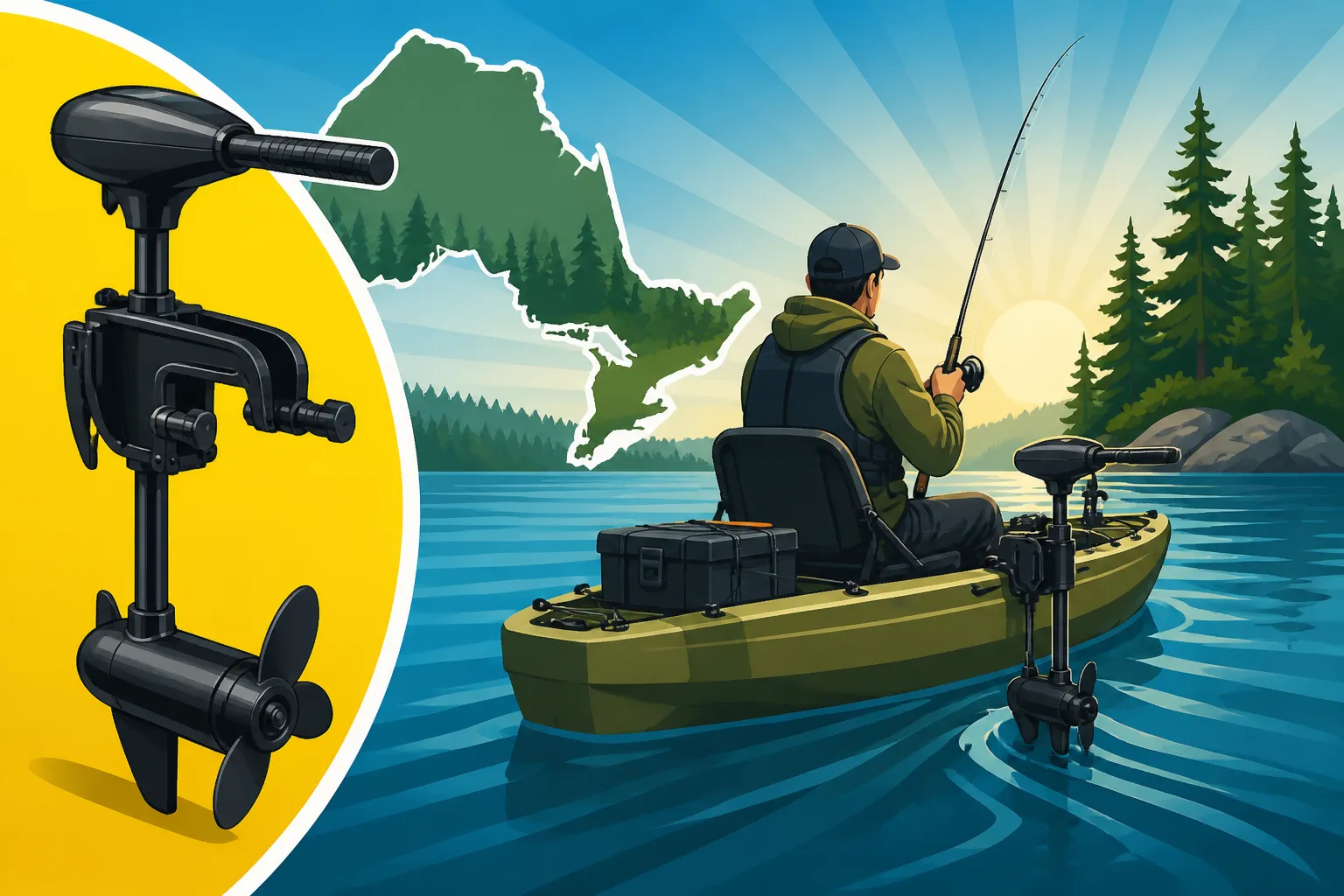
Best Trolling Motor for a Fishing Kayak
For those of us who love the tranquility and intimacy of kayak fishing but sometimes dread the sheer physical effort, especially when battling current, wind, or trying to cover vast stretches of water, a trolling motor can be an absolute game-changer. This guide is here to walk you through everything you need to know about choosing the best trolling motor to transform your fishing kayak into an efficient, stealthy, and far less strenuous angling machine.
Why a Trolling Motor is a Game-Changer for Your Fishing Kayak
Kayak fishing is truly an amazing way to connect with the water and the fish. You're low to the water, you can get into places bigger boats can't, and there's a certain quiet stealth to it. But let's be honest, there are times when paddling feels like a chore, not a pleasure. Battling a strong headwind on a big lake like Simcoe, trying to maintain position over a productive structure in a river with a decent current, or simply needing to cover five kilometers to reach that prime walleye spot can quickly zap your energy and your enthusiasm for fishing. That's where a trolling motor comes in, offering a whole new level of freedom and efficiency.
Conserving Energy and Extending Your Fishing Time
One of the biggest benefits of adding a trolling motor to your fishing kayak is the incredible energy conservation it provides. Instead of constantly paddling, you can simply press a button or use a foot pedal to move effortlessly across the water. Imagine being able to fish hard all morning, then cruise back to the launch ramp without feeling utterly spent. This means more casts, more time with your line in the water, and less time focusing on simply getting from point A to point B. It’s particularly valuable when exploring larger bodies of water like Lake Huron or trying to reach distant fishing grounds that would otherwise be too far for a comfortable paddle. When your arms aren't tired from paddling, they're fresh for reeling in those big catches!
Enhanced Maneuverability and Stealth
Trolling motors offer precise control, allowing you to hold your position against currents or wind with minimal effort. This is crucial for precise lure presentation, especially when you're trying to work a specific weed line, rock pile, or drop-off for Walleye Fishing in Ontario or Smallmouth Bass Fishing in Ontario. Instead of drifting past your target, you can slow down, inch forward, or even hover, keeping your bait right in the strike zone for longer. The electric motors are also incredibly quiet, which is a huge advantage for stealth. Fish are highly sensitive to vibrations and noise, and a silent electric motor allows you to approach your target species without spooking them. This stealth factor alone can significantly increase your success, particularly in clear waters or when targeting wary fish.
Types of Trolling Motors for Kayaks
When you start looking into trolling motors for kayaks, you'll quickly realize there's a diverse range of options, each with its own benefits and considerations. The "best" type really depends on your specific kayak, your fishing style, and the kinds of waters you typically explore in Ontario. It's not a one-size-fits-all situation, and understanding the differences will help you make an informed decision.
Transom-Mount Trolling Motors
These are perhaps the most common and often the most budget-friendly option for kayak anglers. Transom-mount motors, as the name suggests, attach directly to the stern (back) of your kayak. They're typically clamped onto a mounting plate or a purpose-built transom bracket. The beauty of these motors is their simplicity and ease of installation for many kayaks. If your kayak already has a flat stern area or a recess designed for a motor, installation can be straightforward. However, not all kayaks are naturally suited for transom mounts. You might need to add an aftermarket motor mount, which involves drilling into the kayak hull, so make sure you're comfortable with that or can have it professionally done.
While generally easy to install, controlling a transom-mount motor can be a bit more challenging than other types. You're often reaching behind you to steer with the tiller handle, which isn't always comfortable or intuitive, especially when you're trying to actively fish. Some models offer remote steering options, but those typically add to the cost and complexity. Despite this, they are a fantastic option for those who want a simple, effective way to propel their kayak, particularly for covering long distances on lakes or slow-moving rivers. Best Kayaks for Ontario Fishing might have specific recommendations for models that integrate well with transom mounts.
Bow-Mount Trolling Motors
Bow-mount trolling motors are a favorite among serious kayak anglers, especially those coming from a bass boat background, and for good reason. These motors attach to the bow (front) of your kayak and are usually deployed with a foot pedal or a remote control, similar to how larger bass boats are equipped. This forward mounting position and hands-free control offer unparalleled precision and maneuverability. You can literally steer your kayak with your feet while keeping your hands free for casting, reeling, or holding your rod. This is a huge advantage when sight fishing, working tight cover, or holding position in windy conditions.
The downside? Bow-mount installations are generally more complex and often require kayaks specifically designed to accommodate them. Many kayaks on the market now come "trolling motor ready" with mounting plates and wiring channels in the bow specifically for these motors. If your kayak isn't designed for it, a custom installation can be quite involved, sometimes requiring professional help. The motor also extends out from the front, which can sometimes be an issue in very tight spaces or dense vegetation. Brands like Minn Kota and MotorGuide offer robust bow-mount options that many kayak manufacturers build around. If you're looking for the ultimate in control and precision for your kayak, and your budget allows, a bow-mount is hard to beat.
Integrated Trolling Motors
Integrated trolling motors are the sleekest and often the most seamlessly designed option. These motors are built directly into the kayak's hull, usually in the stern or sometimes mid-ship, often designed by the kayak manufacturer themselves. This means no external brackets, no awkward tiller handles, and a very clean, low-profile look. Control is typically via a remote or foot pedals, providing that hands-free operation anglers crave. The advantage here is pure convenience and aesthetics – everything is designed to work together, minimizing clutter and maximizing performance. They don't interfere with your paddling stroke, and they're usually protected within the hull, reducing the risk of damage.
However, the main drawback is that you're limited to kayaks that come with these integrated systems. You can't just add an integrated motor to an existing kayak that wasn't designed for one. This means if you're set on an integrated motor, you'll likely be purchasing a new kayak package that includes it. These setups can also be on the pricier side due to their specialized design and factory integration. They're becoming increasingly popular for dedicated fishing kayaks, offering a truly premium and hassle-free experience.
Key Features to Look For in a Kayak Trolling Motor
Choosing the right trolling motor isn't just about picking a type; it's also about understanding the technical specifications and features that will best suit your fishing needs on Ontario's diverse waters. From the thrust rating to the battery setup, each element plays a crucial role in performance and enjoyment.
Thrust Rating and Kayak Size
Thrust is arguably the most critical specification for a trolling motor, measured in pounds (lbs). It dictates how much pushing or pulling power the motor can generate. While bigger boats need significantly more thrust, kayaks are relatively lightweight, meaning you don't need a huge motor. For most solo fishing kayaks, a motor with 30-55 lbs of thrust is usually more than sufficient.
- 30-40 lbs of thrust: Great for smaller, lighter kayaks (under 10 feet) or for calm waters like those found in protected bays or smaller inland ponds. It'll get you where you need to go, but might struggle against strong winds or currents on larger lakes.
- 45-55 lbs of thrust: The sweet spot for most standard fishing kayaks (10-14 feet), especially those carrying a good amount of gear. This range provides a good balance of power for navigating medium winds and currents, allowing you to cover water efficiently without excessive battery drain. This is what you'd typically want if you're fishing larger lakes like Lake Erie or the French River, where conditions can change quickly.
It's always better to have a little more thrust than you think you'll need, as you can always run the motor at a lower setting to conserve battery. Overpowering your kayak isn't really a concern within these ranges, but underpowering it can lead to frustrating days on the water.
Battery Life and Power Source
The battery is the heart of your trolling motor system, and its capacity directly impacts how long you can stay on the water. Most kayak trolling motors run on 12-volt systems. The key metric to look for in a battery is its Amp-Hour (Ah) rating or its Reserve Capacity (RC).
- Lead-Acid Batteries (Deep Cycle Marine): These are the most common and often the most affordable option. They are heavy, but reliable. For a typical day of fishing, you'd want at least a 50-75 Ah deep cycle marine battery. If you plan longer excursions or frequently run your motor at higher speeds, consider a 100 Ah battery. Remember, you generally only want to discharge these batteries to about 50% to prolong their lifespan.
- Lithium-Ion Batteries (LiFePO4): While a significant upfront investment, LiFePO4 batteries are lighter, more compact, offer consistent power output, and can be discharged almost completely without damage, often lasting two to three times longer in terms of charge cycles than lead-acid. This weight saving is a huge advantage in a kayak, making your setup lighter and easier to transport. A 20-50 Ah LiFePO4 battery can often outperform a much larger lead-acid battery in terms of usable power and overall lifespan.
Consider where you'll store the battery in your kayak for balance and accessibility. Many kayaks have dedicated battery boxes or compartments. Proper Best Trolling Motor for a Fishing Kayak battery choice is crucial for a successful trip, so don't skimp here.
Control Mechanisms: Tiller, Foot Pedal, or Remote
How you control your trolling motor significantly impacts your fishing experience.
- Tiller Handle: Common on transom-mount motors, this is a direct, manual steering and throttle control. It's simple and reliable, but requires you to reach back, which can interrupt your casting rhythm. It's perfectly fine for cruising but less ideal for precise maneuvering while actively fishing.
- Foot Pedal Control: Mostly found on bow-mount motors, foot pedals offer hands-free steering and speed control. This allows you to keep your hands on your rod at all times, making it excellent for working structure, covering water, or precise lure presentation. The learning curve is usually quick, and it feels very natural for many anglers.
- Wireless Remote Control: Many modern trolling motors, especially higher-end models from brands like Minn Kota or MotorGuide, offer wireless remote controls. These can be handheld or worn on a lanyard, giving you complete freedom to move around your kayak. They often include advanced features like GPS anchoring (Spot-Lock), autopilot, and cruise control. This is the ultimate in convenience, allowing you to fish from any position in your kayak without needing to physically steer the motor. For example, if you are fly fishing and need to Dry Fly Fishing Ontario Rivers but also hold your position, a remote allows for maximum flexibility.
Mounting Options and Shaft Length
The way your motor mounts to your kayak and the length of its shaft are critical for proper operation.
- Mounting: We've already touched on transom, bow, and integrated mounts. Beyond that, consider the robustness of the mount. It needs to withstand bumps, waves, and the forces of the motor. If you're installing an aftermarket mount, ensure it's secure and waterproofed properly. Kayak-specific mounts are available from manufacturers like Hobie (for their integrated systems) or various aftermarket suppliers.
- Shaft Length: This is often overlooked but incredibly important. The shaft needs to be long enough so that the propeller is always fully submerged, even in choppy water, but not so long that it drags or makes the motor difficult to deploy. As a general rule for kayaks, a shaft length of 30-42 inches is usually appropriate.
- Too short: The prop will come out of the water, cavitate, and lose thrust, especially in waves.
- Too long: The motor might hit bottom in shallow areas, or the head of the motor could be awkwardly high.
To measure, sit in your kayak as if you're fishing, measure from the mounting point to the waterline, then add about 10-15 inches. This will ensure the prop remains submerged in most conditions.
Advanced Features: GPS, Spot-Lock, and Autopilot
Modern trolling motors, particularly those designed for serious fishing, come packed with advanced features that can drastically improve your time on the water. These are often found on motors from top brands available at places like Bass Pro Shops or online at Amazon.
- GPS (Global Positioning System): Integrated GPS allows the motor to "know" where it is and where it's going. This opens up a world of possibilities for automated fishing.
- Spot-Lock/Anchor Mode: This is perhaps the most beloved feature of GPS-enabled motors. With the push of a button, your motor uses its GPS to hold your kayak precisely over a fishing spot, regardless of wind or current. No more dropping an actual anchor or constantly correcting your drift. It's invaluable when you find a productive rock pile, a school of perch, or are trying to Trolling Techniques for Ontario Lake Trout in a specific zone.
- Autopilot/Course Lock: This feature allows you to set a heading, and the motor will automatically steer to maintain that direction, correcting for wind and current. It's perfect for hands-free trolling along a contour line or across a flat.
- Cruise Control: Similar to autopilot, but focuses on maintaining a specific speed, which can be great for consistent trolling presentations.
- Integrated Sonar: Some motors come with built-in transducers that can connect to compatible fish finders, reducing clutter on your kayak and providing clear sonar images right where your motor is working. This is super handy for targeting specific species like Yellow Perch Fishing in Ontario or finding structure.
While these advanced features add to the cost, they offer an unparalleled level of convenience and efficiency that many anglers find indispensable, especially on large, windy Ontario lakes.
Powering Your Trolling Motor System
A trolling motor is only as good as the power source feeding it. Understanding battery types, charging methods, and how to manage your power consumption is crucial for maximizing your time on the water and ensuring you don't end up paddling back prematurely.
Choosing the Right Battery Type
We briefly touched on this, but let's dive a bit deeper. Your choice of battery significantly impacts weight, cost, and performance.
-
Deep Cycle Lead-Acid Batteries: These are designed for sustained power draw over long periods, unlike car batteries which are meant for short, high-amp starting bursts. They come in flooded (wet cell), AGM (Absorbed Glass Mat), and Gel variants.
- Flooded: Most affordable, but require maintenance (checking water levels) and must be kept upright.
- AGM: Maintenance-free, sealed, spill-proof, and tolerate vibration better. A great middle-ground option for kayaks, though heavier than lithium.
- Gel: Similar to AGM but generally less common for trolling motors and sensitive to overcharging.
The primary drawback of lead-acid batteries for kayaks is their weight. A 100 Ah deep cycle battery can easily weigh 60-70 pounds, which is a significant addition to a kayak. This can affect stability, transport, and overall performance.
-
Lithium Iron Phosphate (LiFePO4) Batteries: These are becoming increasingly popular despite the higher initial cost. They offer several compelling advantages for kayak fishing:
- Weight: Significantly lighter than lead-acid for the same usable capacity (often half the weight or less). This is a huge benefit for kayak stability and portability.
- Longevity: Much longer lifespan, typically 2,000-5,000 charge cycles compared to 300-500 for lead-acid.
- Consistent Power: Maintain a higher voltage throughout their discharge cycle, providing more consistent power to your motor.
- Usable Capacity: Can be safely discharged to 80-100% of their capacity without damage, meaning a 50 Ah LiFePO4 battery can offer similar usable power to a 100 Ah lead-acid battery.
While the initial cost is higher, their lighter weight, longer life, and superior performance often make them a worthwhile investment for dedicated kayak anglers. When considering a LiFePO4, ensure it has a robust Battery Management System (BMS) for safety and optimal performance. Many experienced kayak anglers swear by specific brands known for their reliability in the outdoor sector. Best Portable Fish Finder for Kayak Fishing often pair well with these lighter batteries.
Battery Capacity and Run Time
Estimating run time is a bit of an art, as it depends on many variables: motor speed, wind, current, kayak weight, and even water temperature. However, a general rule of thumb is to calculate your motor's maximum amp draw at full throttle and divide your battery's usable amp-hours by that number.
For example: A 55 lb thrust motor might draw around 50 amps at full throttle.
- With a 100 Ah lead-acid battery (50% usable capacity = 50 Ah usable): 50 Ah / 50 amps = 1 hour of run time at full throttle.
- With a 50 Ah LiFePO4 battery (80% usable capacity = 40 Ah usable): 40 Ah / 50 amps = 0.8 hours of run time at full throttle.
However, most people don't run their motors at full throttle constantly. At half throttle, the amp draw is significantly less (often less than half of the full throttle draw). So, a 55 lb thrust motor might only draw 15-20 amps at a moderate speed.
- 100 Ah lead-acid (50 Ah usable): 50 Ah / 15 amps = 3.3 hours at moderate speed.
- 50 Ah LiFePO4 (40 Ah usable): 40 Ah / 15 amps = 2.6 hours at moderate speed.
Always err on the side of caution and consider bringing a larger capacity battery or a second, smaller battery for emergencies, especially if you plan to fish remote areas. It’s better to have more power than you need than to run out miles from the launch.
Charging and Maintenance
Proper charging and maintenance are key to maximizing your battery's lifespan, regardless of type.
- Chargers: Always use a charger specifically designed for your battery type (lead-acid chargers for lead-acid, LiFePO4 chargers for LiFePO4). Automotive chargers are often not suitable for deep cycle marine batteries. A good smart charger will have multiple stages to optimize charging and prevent overcharging.
- Storage: Store batteries in a cool, dry place. Lead-acid batteries should be kept fully charged during storage, especially over winter, or they can sulfate and lose capacity. LiFePO4 batteries can typically be stored at 50-70% charge for extended periods with minimal self-discharge.
- Connections: Ensure all battery connections are clean, tight, and corrosion-free. Use dielectric grease to protect terminals. Poor connections can lead to power loss and even damage to your motor.
- Fusing: Always install an appropriate in-line fuse or circuit breaker between your battery and the trolling motor. This is a critical safety measure to protect your motor and wiring from overcurrents. A 50-amp circuit breaker is common for most kayak trolling motor setups.
Installation, Safety, and Maintenance
Once you've chosen your perfect trolling motor, the next steps are installation and understanding the ongoing care and safety protocols. A well-installed and maintained motor will serve you reliably for many seasons on the waters of Ontario.
Mounting Your Trolling Motor
The installation process will vary greatly depending on the type of motor and your kayak's design.
- Transom Mounts: For most transom-mount motors, you'll need a solid mounting board or bracket at the stern. Many kayaks can accept simple clamp-on brackets. If not, you might need to fabricate a sturdy wooden or HDPE (high-density polyethylene) plate and bolt it securely to the stern. Always use marine-grade stainless steel hardware and plenty of marine sealant to prevent water intrusion if drilling into your hull. Ensure the motor is positioned centrally for optimal steering and that the shaft length allows the propeller to be adequately submerged.
- Bow Mounts: These are more involved. If your kayak is "trolling motor ready," it will have a pre-drilled pattern on the bow and internal routing for wiring. Follow the manufacturer's specific instructions. If your kayak isn't designed for it, a custom bow mount can be complex, often requiring a sturdy mounting plate and careful internal wiring to a battery housed elsewhere in the kayak. This might involve running wires through scupper holes or via waterproof bulkhead fittings. Some anglers prefer to pay a professional shop to handle complex bow-mount installations to ensure safety and prevent leaks.
- Wiring: Regardless of the mount, ensure your wiring is robust. Use marine-grade, appropriately gauged wire (usually 8 or 10 gauge for most kayak motors) to minimize voltage drop and safely handle the current. Route wires neatly and secure them to prevent snagging or damage. Install an in-line fuse or circuit breaker close to the battery to protect your system.
Safe Operation and Ontario Regulations
Safety is paramount when operating any motorized vessel, even a kayak with a trolling motor.
- Pleasure Craft Operator Card (PCOC): In Ontario, if your kayak is propelled by a motor (even an electric trolling motor) you need a Pleasure Craft Operator Card. This card is legally required for anyone operating a powered watercraft. It's a small investment in safety and compliance. You can get yours easily online or through recognized courses. Ontario Pleasure Craft Operator Card Requirement explains this in detail.
- Life Jackets: Always wear a properly fitted PFD (Personal Flotation Device). It's not just a good idea; it's a legal requirement to have a Canadian-approved life jacket or PFD for each person on board. Kayaks can capsize unexpectedly, and a motor adds another element to manage. Life Jacket Requirements for Ontario Boaters outlines all the specifics.
- Kill Switch: Many trolling motors come with a kill switch lanyard. Always attach this to yourself or your PFD. In the event you fall out of the kayak, the motor will immediately cut power, preventing the kayak from motoring away from you or causing injury.
- Respect Water Conditions: A trolling motor extends your range, but it doesn't make your kayak an ocean liner. Be mindful of wind, waves, and currents. Even a powerful trolling motor can be overwhelmed by severe conditions. Know your limits and your kayak's capabilities.
- Navigation Lights: If you're operating between sunset and sunrise, or in periods of restricted visibility, your kayak will require appropriate navigation lights, just like any other powered vessel.
Essential Maintenance Tips
A little routine maintenance goes a long way in keeping your trolling motor running smoothly.
- Propeller Inspection: After every trip, check your propeller for fishing line, weeds, or debris. Even a small piece of line can wrap around the shaft, damage seals, and lead to serious issues. If you hit something, inspect the prop for chips or cracks. Always carry a spare prop and the necessary wrench to change it on the water.
- Cleanliness: Rinse your motor with fresh water after each use, especially if you've been in brackish or salty conditions (though most Ontario fishing is freshwater). Wipe down the motor head, shaft, and controls.
- Connections: Periodically check all electrical connections for corrosion and tightness. Apply dielectric grease to terminals to prevent rust and ensure good conductivity.
- Lubrication: Consult your motor's manual for any specific lubrication points, usually around the pivot points or shaft.
- Storage: When storing your kayak, especially long-term, ensure the motor is clean, dry, and stored in an upright position or removed entirely if possible. Disconnect the battery.
Choosing the Right Accessories for Your Motorized Kayak
Beyond the motor itself, a few key accessories can dramatically enhance the safety, convenience, and functionality of your motorized kayak fishing setup. Don't overlook these often-small but crucial additions that can make a big difference out on Ontario's waters.
Battery Boxes and Safety
Proper battery management is non-negotiable for a motorized kayak. A dedicated battery box is more than just a place to put your battery; it's a critical safety component.
- Waterproof/Water-Resistant Boxes: These protect your battery from spray, rain, and accidental splashes, which is essential for both battery longevity and preventing electrical shorts. Many feature a strap or tie-down points to secure the battery inside the box and the box to your kayak, preventing it from shifting or becoming a hazard if you capsize.
- Integrated Features: Some advanced battery boxes come with built-in voltmeters (to monitor charge level), USB ports (for charging phones or fish finders), and even external terminals for easy connection to your trolling motor and other accessories. Brands like Nocqua and Newport Vessels offer popular kayak-specific battery boxes that cater to these needs.
- Fuses/Circuit Breakers: While your motor should have an in-line fuse, a battery box with an integrated circuit breaker adds an extra layer of protection, particularly handy for the positive terminal directly off the battery.
Having a sturdy, purpose-built battery box not only protects your investment but also ensures a safer and more organized fishing experience.
Wiring and Connectors
Don't let shoddy wiring ruin your day. Investing in quality wiring and connectors is crucial for optimal performance and safety.
- Marine-Grade Wire: Always use marine-grade tinned copper wire. It's designed to resist corrosion in wet environments and is more flexible, making it ideal for routing through a kayak. The gauge (thickness) of the wire is important; consult your motor's manual, but generally 8 or 10 gauge is sufficient for kayak trolling motors to minimize voltage drop over the relatively short runs.
- Waterproof Connectors: For any connections that might be exposed to water, use heat-shrink crimp connectors or waterproof quick-disconnect plugs. These create a sealed connection, preventing corrosion and ensuring consistent power flow. This is particularly important for any quick-disconnect system you might use for easily removing your motor.
- Cable Management: Use cable ties, clips, and conduit to route your wiring neatly and securely within your kayak. This prevents snags, protects the wires from damage, and keeps your deck clear of trip hazards. Many advanced kayaks from manufacturers like Old Town or Hobie have internal wiring channels that make this a breeze.
Propellers and Spares
Your propeller is where the rubber meets the road (or rather, where the prop meets the water!). It's a wear-and-tear item and you absolutely need to be prepared for damage.
- Material: Most trolling motor props are made from durable nylon or composite plastic. These are designed to flex and absorb impacts, but they can still chip, crack, or break.
- Pitch and Blade Count: Trolling motor props typically have two or three blades. The design, including pitch, is optimized for thrust and efficiency at slower speeds.
- Spares: Always, always, always carry at least one spare propeller and the proper prop nut wrench/pin. There’s nothing more frustrating than having your motor crippled by a broken prop far from the launch, especially if you're out on a bigger lake like Georgian Bay. Changing a prop is usually a simple task that takes only a few minutes, but it's impossible without the spare parts and tools. You can often find replacement props at Bass Pro Shops or on Amazon.
- Weedless Designs: Some props are designed with a "weedless" profile, which helps them cut through heavy vegetation without getting tangled. If you frequently fish weedy areas for species like Northern Pike Fishing in Ontario, this can be a huge advantage.
By paying attention to these accessories, you're not just adding gadgets; you're building a more reliable, safer, and ultimately more enjoyable motorized kayak fishing system.
Comparison Table of Kayak Trolling Motor Types
To help you visualize the differences and make a more informed decision, here's a quick comparison of the three main types of kayak trolling motors we've discussed. Keep in mind that specific models within each category will have varying features and price points, but this table highlights the general characteristics.
| Feature | Transom-Mount Motor | Bow-Mount Motor | Integrated Motor |
|---|---|---|---|
| Mounting Location | Stern (back) of the kayak | Bow (front) of the kayak | Built directly into the kayak hull |
| Installation Ease | Generally easiest, often clamp-on | More complex, often requires specific kayak design | Pre-installed by kayak manufacturer |
| Control | Tiller handle (manual), some remotes | Foot pedal, wireless remote | Wireless remote, integrated joystick/pedals |
| Maneuverability | Good for straight-line cruising, less precise steering | Excellent, precise control, hands-free | Excellent, seamless, hands-free |
| Stealth | Very quiet operation | Very quiet operation | Very quiet operation |
| Cost (Motor Only) | Generally lowest | Mid-range to high | Highest (often included in kayak package) |
| Kayak Compatibility | Fits many kayaks, may need adapter | Requires "trolling motor ready" kayak | Only fits specific kayak models with integration |
| Common Uses | Covering distances, basic trolling | Holding position, precise structure fishing, active angling | Dedicated fishing kayaks, ultimate convenience |
| Pros | Affordable, simple, reliable | Hands-free, precise control, GPS features available | Cleanest look, protected motor, factory-tuned |
| Cons | Steering can be awkward, less precise | More expensive, complex installation if not ready | Limited to specific kayaks, highest cost |
Disclaimer
This article is for general informational purposes only and does not constitute professional advice. Laws, prices and regulations vary by location and change over time. Consult a qualified professional for guidance on your specific situation.