Best line color for clear lake water
It’s a common scenario, isn't it? You’re out on a crystal-clear Ontario lake, maybe a beautiful northern gem or a pristine section of Georgian Bay, and you’re convinced the fish are seeing your line. That nagging thought can truly mess with your confidence, making you second-guess every cast and every retrieve. Choosing the right fishing line color for these ultra-clear waters isn't just about aesthetics; it’s about making your presentation as natural and appealing as possible to those wary fish. This guide will dive deep into the science and practicalities behind line color, helping you make informed decisions for your next clearwater adventure.
Understanding Water Clarity and Fish Vision
When we talk about "clear lake water" in Ontario, we're often thinking about those sparkling, emerald-green or deep blue bodies of water, common in places like Algonquin Park, Lake Nipigon, or the deep basins of the Great Lakes. In these conditions, visibility can extend many feet, and that means fish have a much better chance of detecting your line. But what exactly are they seeing, and how does it influence their behaviour?
How Light Behaves Underwater
Light changes dramatically as it penetrates water. The deeper you go, the more certain colours are absorbed. Reds disappear first, followed by oranges and yellows, then greens, and finally blues. This is why deep water often appears blue or greenish-blue – those are the wavelengths that penetrate furthest. For an angler, this means that a line that looks bright red above water might appear dark or even black in deeper clear water, potentially creating a stark contrast against the natural environment. The sun’s angle, cloud cover, and even the time of day can also influence how light interacts with your line underwater, making it a dynamic challenge.
The Science of Fish Vision
Fish don't see the world exactly like we do. Many species have excellent vision, often adapted to detect movement, contrast, and subtle changes in light rather than vibrant colours in the way a human might perceive them. Some species, like trout and salmon, are known to have good colour vision, while others might rely more on detecting vibrations or silhouettes. In clear water, fish become more visually-oriented, making line visibility a much bigger factor. A thick, brightly colored line might cast a shadow or create a noticeable glint, especially during bright sunny conditions, potentially spooking a cautious walleye or a trophy lake trout. Understanding that fish are highly tuned to their surroundings means we need to consider how our line looks from their perspective, not just ours.
Popular Line Colors and Their Effectiveness in Clear Water
Alright, let's get down to the brass tacks: what line colors actually work in clear Ontario lakes? It's not a one-size-fits-all answer, but there are some general principles and popular choices that anglers swear by.
Clear and Fluorocarbon Lines
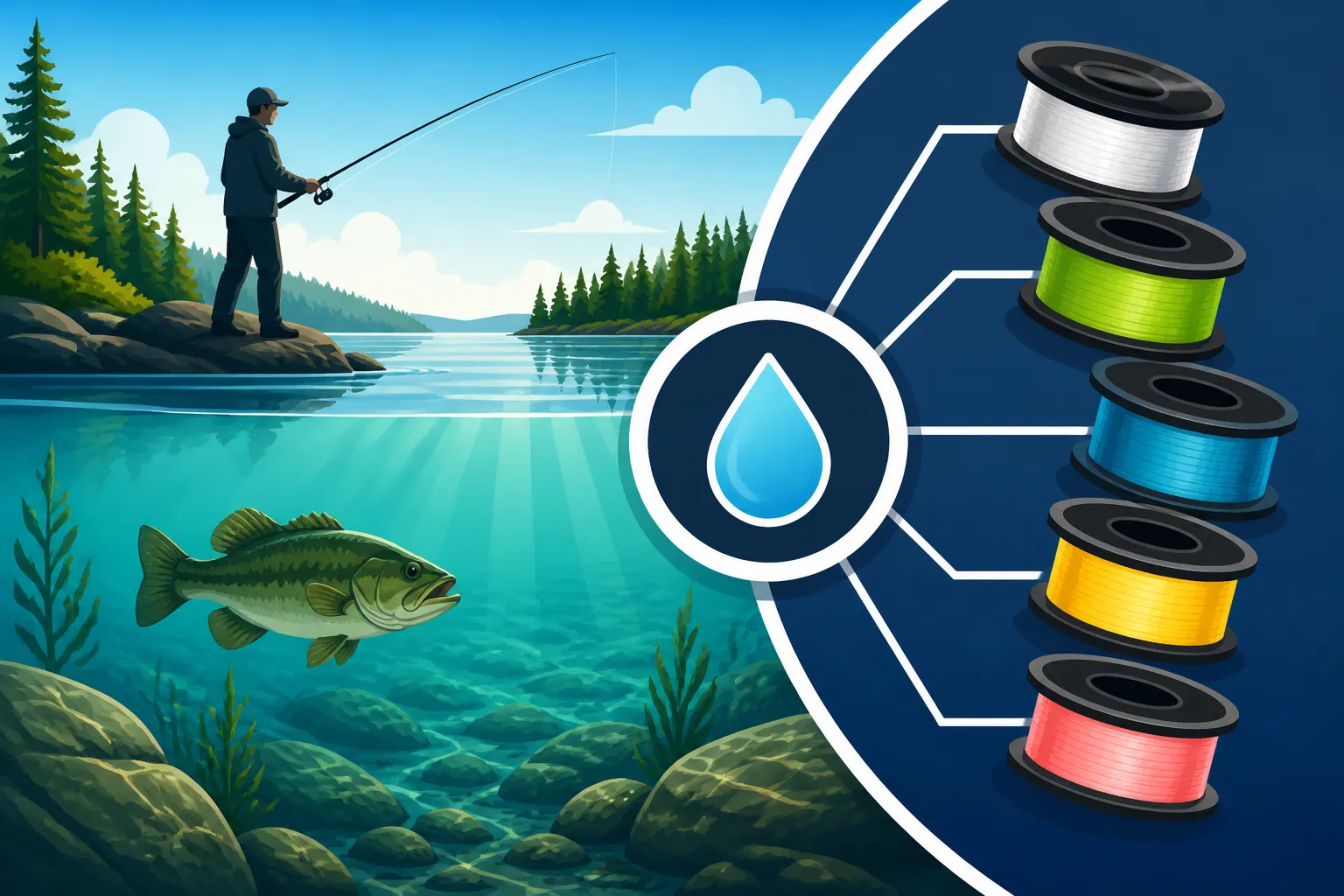
For many, the holy grail of clearwater fishing line is, well, clear. Monofilament lines come in clear options, but the true champion here is fluorocarbon. Fluorocarbon has a refractive index very similar to water, meaning it bends light at almost the same angle as water does. This makes it incredibly difficult for light to reflect off the line, essentially making it "disappear" underwater.
Imagine you're targeting really spooky smallmouth bass on a shallow, rocky flat in Georgian Bay, or trying to fool a wise old lake trout in the depths of Lake Superior. In these scenarios, every little bit of invisibility helps. Using a straight fluorocarbon main line or at least a long fluorocarbon leader can significantly increase your bites. The trade-off is often cost and handling, as fluorocarbon can be stiffer than mono and a bit pricier. But for those high-pressure, clear water situations, it’s often worth the investment. Many anglers source their fluorocarbon from reputable brands found at retailers like Bass Pro Shops.
Green Tinted Lines
Green-tinted lines are a perennial favourite for many anglers, and for good reason. Given that green light penetrates quite deeply into water, and many natural aquatic environments feature green vegetation and algae, green lines often blend in remarkably well. It's a fantastic all-around choice when you're not dealing with extreme clarity, but still want something that doesn't stand out like a sore thumb.
Consider fishing a clear but weed-choked lake in the Kawartha Lakes region for largemouth bass or northern pike. A subtle green line can disappear amongst the cabbage and lily pads, allowing you to present your lure without alarming nearby fish. It offers a good balance between low visibility and handling characteristics, often being more supple than some fluorocarbon options. Plus, for the angler, it's often easier to see above water than pure clear line, which can be a blessing when tying knots or watching for subtle bites.
Blue Tinted Lines
Blue is another colour that tends to perform well in clear water, especially in open, deep environments where the water itself takes on a blue hue. Think about those vast, deep lakes like parts of Lake Huron or Lake Ontario. In these cobalt depths, a blue line can merge seamlessly with the surroundings, making it a stealthy choice for pelagic species or fish suspended in the water column.
Some anglers specifically opt for "blue camouflage" lines that have varying shades of blue to further break up the line's profile. While not as universally popular as green or clear, a blue line can be incredibly effective in its specific niche. It's especially useful when targeting species that tend to feed in open water, far from structure or vegetation, where the background is predominantly blue water and sky.
Natural Brown and Camouflage Lines
Beyond the standard clear, green, and blue, you'll also find lines marketed as "camo" or "brown." These lines are designed to mimic natural elements like rocks, wood, or even sandy bottoms. They often feature mottled patterns or dull, earthy tones. In clear rivers with rocky beds, or in lakes with distinct bottom structures, these lines can offer excellent concealment.
If you’re fishing a pristine, clear river for brown trout, where the current is swift and the bottom is a mosaic of gravel and stones, a brown or multi-toned camouflage line might be just the ticket. It breaks up the linear shape of the line, making it less detectable against varied backgrounds. While not always the first choice for open water, they shine in areas with complex underwater topography. It's a niche option, but one worth considering for specific clearwater scenarios.
High-Visibility Lines for Specific Applications
Now, this might sound counter-intuitive when we're talking about clear water, but there are situations where a high-visibility line (like a bright yellow or orange braided line) is actually a preferred choice, especially when paired with a clear leader. The main line's colour provides excellent visibility for the angler, making it easier to detect subtle bites, track your lure, and manage your line.
The trick here is the leader. You’d tie a long (6-10 feet or more) fluorocarbon or clear monofilament leader to the end of your high-vis braid. This creates a nearly invisible section of line right at your lure, where the fish are most likely to interact with it. Meanwhile, you get all the benefits of high-vis line above the water – better strike detection, easier snag retrieval, and less line twist. This setup is incredibly popular for targeting walleye, bass, and even some trout species where strike detection is paramount. You can find a wide array of braided lines and fluorocarbon leader material on sites like Amazon, making it easy to experiment with this versatile setup.
Factors Beyond Color: Line Diameter, Material, and Presentation
While line color is certainly important in clear water, it's really just one piece of a larger puzzle. Many other factors influence how visible your line is to fish, and sometimes these can be even more critical than the hue you choose.
Line Diameter and Visibility
This is a big one, perhaps even more significant than color in many clearwater situations. A thicker line, regardless of its color, presents a larger profile to the fish. It displaces more water, creates more resistance, and simply appears bulkier. Conversely, a thinner line is inherently less visible.
Think about two lines, both clear. One is a 10 lb test, the other is a 4 lb test. The 4 lb test line will almost always be less visible than the 10 lb test line, simply because it's physically thinner. This is why light tackle enthusiasts often preach the benefits of going "light for clear water." Using the lightest line possible that still provides adequate strength for your target species and fishing conditions is a golden rule for clearwater success. If you're struggling to get bites on a crystal-clear lake, stepping down in line diameter might make a huge difference, often more so than switching from a green line to a blue one. Best Fishing Rods for Ontario Lakes often pair well with lighter lines for optimal presentation.
Line Material: Mono vs. Fluoro vs. Braid
We touched on this briefly, but let's dive a bit deeper. Each line material has its own inherent characteristics that affect visibility.
- Monofilament (Mono): Generally more visible than fluorocarbon due to its higher refractive index. It also tends to absorb some water over time, which can make it even more visible. However, it's supple, easy to cast, and inexpensive. For clear water, if using mono, opt for clear, green, or blue, and always go for the lightest test you can get away with.
- Fluorocarbon (Fluoro): The king of invisibility. Its unique light-bending properties make it virtually disappear underwater. It's also very abrasion-resistant and sinks quickly, which can be advantageous. The downsides are its stiffness (though modern fluorocarbons are much more manageable) and its higher cost. It's often used as a leader material with braided main lines. If you're fishing for wary trout or bass in highly pressured, clear lakes, pure fluorocarbon or a fluorocarbon leader is a fantastic option. Best Fluorocarbon Line for Clear Lake Water provides more detail.
- Braided Line: The most visible of the bunch in its natural state. Braid has zero stretch, incredible strength-to-diameter ratio, and excellent sensitivity. However, it's opaque and does not blend well underwater, often creating a dark silhouette. This is why braided lines are almost always paired with a long fluorocarbon or monofilament leader in clear water situations. The braid gives you the power and sensitivity, and the leader provides the invisibility right where it counts.
Here's a quick comparison of line materials:
| Line Type | Visibility in Clear Water | Stretch | Sensitivity | Abrasion Resistance | Buoyancy | Cost |
|---|---|---|---|---|---|---|
| Monofilament | Medium to High | High | Medium | Medium | Floating | Low |
| Fluorocarbon | Very Low | Low | High | High | Sinking | High |
| Braided Line | High (opaque) | Zero | Very High | High | Floating | Medium |
Presentation and Retrieval Speed
Even the most invisible line can't overcome a poor presentation. If your lure is thrashing unnaturally, or if your line is dragging heavily across the water, spooking the fish, then the color of your line becomes irrelevant.
- Smooth Casts: Aim for smooth, accurate casts that land your lure softly. A big splash can send fish scattering, no matter how stealthy your line.
- Natural Retrieval: Pay attention to how your lure or bait is moving. Is it imitating natural prey? Are you working it too fast or too slow for the conditions? A frantic retrieve in clear, still water will scream "danger" to fish.
- Slack Management: Too much slack can make your line more visible, allowing it to drift unnaturally or create a bowing effect. Conversely, too tight a line might transmit vibrations or movement that alerts fish. Mastering slack management helps keep your line discreet.
- Leader Length: When using a high-vis main line, a sufficiently long leader is absolutely crucial. A short, one-foot leader might not be enough to separate the visible main line from your lure. Often, leaders of 6-10 feet or even longer are necessary to achieve true invisibility at the business end. This is especially true for species like lake trout and salmon. If you're exploring How to Catch Lake Trout in Ontario, you'll find that stealthy presentations are often key.
Making Your Choice: Practical Tips for Ontario Anglers
Navigating the world of fishing line can feel overwhelming, but with a few practical tips, you can confidently choose the best line for your clearwater adventures in Ontario.
Match the Hatch: Blending with the Background
The most fundamental principle is to choose a line color that best blends with the predominant background of the water you're fishing.
- Open, Deep, Clear Lakes: Think blues, or clear/fluorocarbon. Lakes like parts of Lake Nipigon, Lake Superior, or even the deep sections of Lake Ontario are perfect candidates. Here, Trolling Techniques for Ontario Lake Trout often involve using stealthy lines to avoid spooking fish.
- Vegetated Lakes or Rivers: Greens are your best friend. For bass fishing in the weed beds of the Kawartha Lakes or exploring the many clear rivers for northern pike, green helps your line vanish among the aquatic plants.
- Rocky or Sandy Bottoms: Brown or natural camo lines can excel here, particularly in shallower areas or rivers where the bottom structure is varied and dominant.
- Gin-Clear, Pressured Water: When the water is exceptionally clear and the fish are educated, pure clear monofilament or fluorocarbon is often the top choice. This applies to many pristine trout streams or highly fished lakes. For Fly Fishing for Trout in Ontario, invisible tippet is a non-negotiable.
Experiment and Adapt
No single line color or type is perfect for every situation. Fish behavior and water conditions can change rapidly. Don’t be afraid to experiment! Carry spools of different line colors or pre-rigged leader spools. If you're not getting bites on one setup, try another. Keep a log of what worked (and didn't work) in specific locations and conditions. What works for walleye in one clear lake might not work for them in another. Ontario Walleye Opener Dates by Zone often represent changing conditions from ice-out to open water, and your line choice might need to adapt.
Prioritize Diameter and Leader
If you take one thing away from this guide, let it be this: in clear water, line diameter and the use of a stealthy leader (especially fluorocarbon) are often more critical than the specific hue of your main line. Even if you're using a brightly colored braided line for its strength and sensitivity, always, always pair it with a long, thin, clear, or fluorocarbon leader. This ensures that the most critical part of your setup – the section closest to the lure – is as invisible as possible to the fish. You can find robust spools of leader material at any outdoor outfitter like Bass Pro Shops or online through Amazon.
Regular Line Inspection
Finally, and this might seem obvious, but regularly inspect your line. Nicks, abrasions, or even subtle discolorations from UV exposure or environmental factors can make your line more visible and compromise its strength. In clear water, a frayed section can catch light differently and alert fish. Retie knots frequently, and respool your reels when your line shows signs of wear. A fresh, clean, properly colored line presented subtly is your best bet for success in Ontario's beautiful, clear fishing waters.
Ultimately, choosing the best line color for clear lake water in Ontario is about thoughtful consideration of the environment, the fish, and your fishing technique. While clear and fluorocarbon lines are often the go-to, judicious use of green, blue, or even high-vis braid with a long, invisible leader can make all the difference between a frustrating day and a memorable one. Tight lines, fellow anglers!
Disclaimer
This article is for general informational purposes only and does not constitute professional advice. Laws, prices and regulations vary by location and change over time. Consult a qualified professional for guidance on your specific situation.